

Last updated: August 2026 · Prices & availability verified for the 2026/2027 season
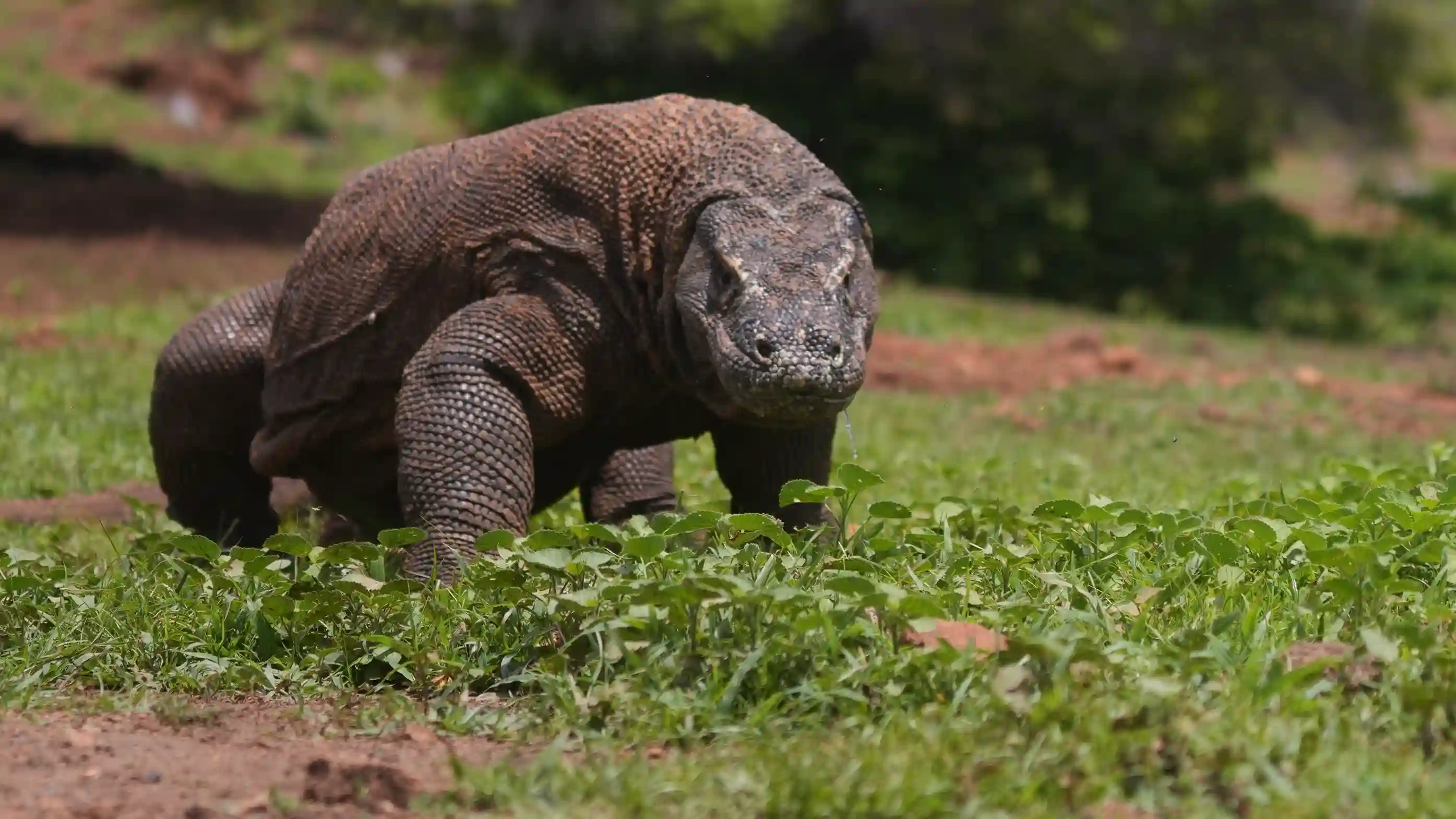
If you’re putting together a Komodo Island guide for your own trip, here’s the essential geography first: Komodo Island lies in the Flores Sea of East Nusa Tenggara, Indonesia, positioned between Sumbawa and Flores at the heart of Komodo National Park, roughly 400 kilometers east of Bali and a two-hour boat ride from Labuan Bajo. It’s the largest island of the park that carries its name, home to the world’s biggest living lizard, and reachable by exactly one method of transport: by sea.
This guide walks through exactly where the island sits, how to actually get there, what you’ll see once you land, and when to time your visit for the best conditions. Whether you’re planning your first trip to see wild Komodo dragons or trying to understand how this island fits into the broader national park, here’s everything you need before you book.
Key Takeaways
- Komodo Island lies in the Flores Sea between Flores and Sumbawa, within Komodo National Park, and is reached by boat from Labuan Bajo after flying into Komodo International Airport (LBJ).
- The island is best known for its wild Komodo dragons, but your visit can also include ranger-guided trekking, dry savanna landscapes, Pink Beach, snorkeling, diving, and diverse terrestrial and marine wildlife.
- A 3D2N Komodo tour offers a practical introduction to the island, while longer 4D3N to 11D10N sailing routes give you more time for beaches, marine activities, and slower exploration across the national park.
- You can choose between a shared trip for a more budget-conscious experience or a private yacht charter for greater privacy, flexibility, and control over your Komodo Island itinerary.
- April to November generally offers favorable conditions for visiting Komodo Island, with September and October often providing a good balance of weather, trekking conditions, and overall sailing comfort.
Where Is Komodo Island on the Map?
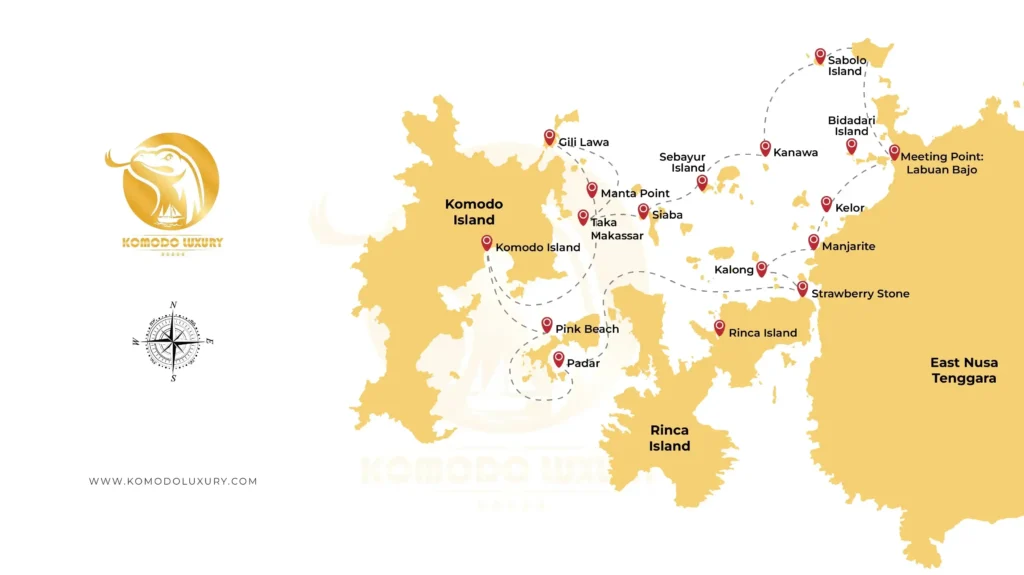
Find Flores on a map of Indonesia, slide west past Labuan Bajo, and the large island filling the strait before Sumbawa is Komodo, flanked by Rinca to the southeast, Padar sitting between the two, and a scatter of smaller satellite islands, Kelor, Kalong, Kanawa and Taka Makassar, that together make up the region’s sailing circuit.
The entire cluster forms Komodo National Park, while the island itself covers roughly 390 square kilometers of savanna ridges and fjord-like bays. For a closer look at exactly where the dragons range across these various islands, our habitat guide carries the full distribution map worth reviewing before you plan your specific trekking route.
How to Get to Komodo Island
Getting to Komodo Island follows the same three-step sequence regardless of where your trip originates, and there are no shortcuts around any of them.
Step 1: Fly to Labuan Bajo
Your first destination is Komodo International Airport (LBJ) in Labuan Bajo on Flores Island. Flights connect Labuan Bajo with major Indonesian cities, including Bali and Jakarta, making air travel the simplest option for international visitors who are already traveling through Indonesia. From Bali, the flight is typically around 75 to 90 minutes, depending on the routing and operating conditions. Once you arrive in Labuan Bajo, the journey continues by road to the harbor.
Step 2: Transfer to the Harbor
Labuan Bajo’s harbor is the main departure point for boats heading into Komodo National Park. The airport and harbor are relatively close to each other, so the transfer is usually straightforward. Your exact timing depends on your accommodation, traffic, and the departure point of your vessel.
Step 3: Board a Boat to Komodo Island
Komodo Island has no public airport, meaning the final approach is by sea. The boat journey varies considerably depending on the vessel, route, weather, and exact destination. A speedboat can reach parts of the park relatively quickly, while a luxury phinisi yacht charter or liveaboard takes longer but allows you to travel at a more relaxed pace and stay onboard.
For travelers who want more than a quick island visit, a Komodo sailing trip is particularly practical because many of Komodo’s beaches, snorkeling sites, and anchorages are accessible only by boat.
Read more: How to Visit Komodo Island 2026: Your Complete Guide to an Unforgettable Adventure
What to See on Komodo Island
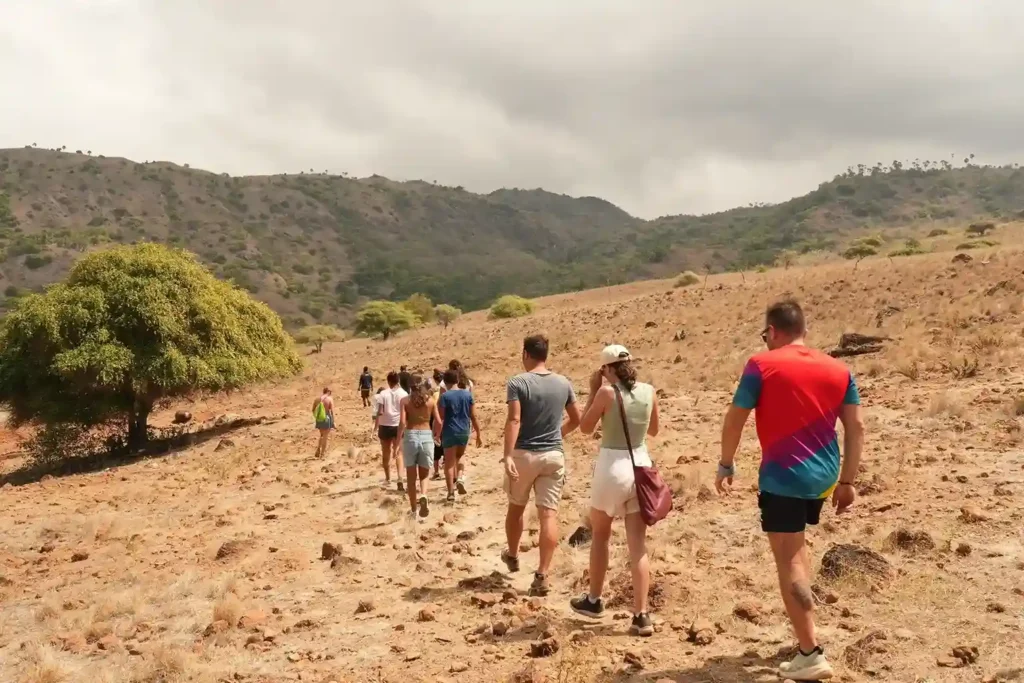
The main visitor area on Komodo Island is Loh Liang, which serves as an important gateway for visitors exploring the island. Official tourism information identifies Loh Liang as a starting point for Komodo encounters and trekking, with local guides available to support visitors.
Here are the main experiences to include in your Komodo Island itinerary:
1. Komodo Dragon Trekking at Loh Liang
The primary reason to land on Komodo Island is to walk through protected dragon habitat with an official ranger. Trekking routes can vary in length and difficulty, and the ranger determines the appropriate route based on conditions and wildlife activity. The terrain typically includes dry savanna, forested sections, hills, and areas where wildlife may gather.
Do not approach a Komodo dragon on your own. Visitors should remain with their ranger, follow instructions, keep a safe distance, and avoid sudden movements or attempts to attract the animals. Seeing a dragon is never something responsible wildlife tourism should guarantee. The animals are wild, and their position and behavior can change throughout the day.
2. Komodo’s Dry Savanna Landscape
The island’s dry terrain is one of its defining characteristics. During the dry months, the hills can become golden and brown, creating the classic landscape associated with Komodo Island scenery. During wetter periods, vegetation becomes greener and the visual character of the island changes significantly.
For photographers, the contrast between the dry hills, blue water, rugged coastline, and wildlife creates opportunities that are very different from the lush landscapes commonly associated with Indonesia.
3. Pink Beach
Pink Beach is one of the most recognizable coastal destinations associated with Komodo Island. Its color comes from a mixture of white sand and fragments of reddish organisms associated with coral ecosystems, including microscopic foraminifera.
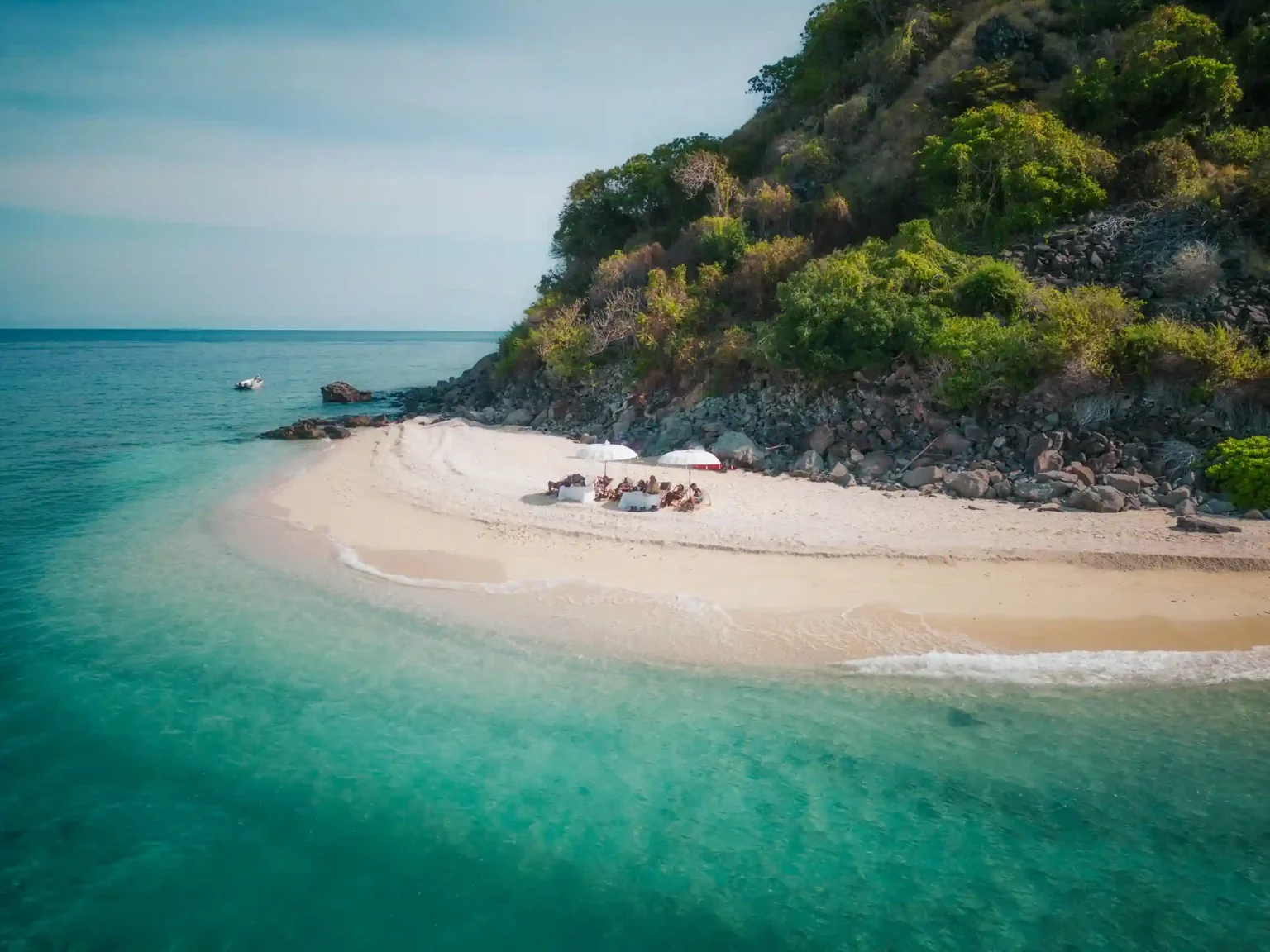
Because the beach is inside a protected national park, visitors should not remove sand, shells, or marine life. Snorkelers should also avoid touching coral and should take all waste with them. The beach is best approached as part of a broader sailing itinerary rather than as a standalone destination. Sea conditions determine whether a particular landing or snorkeling stop is suitable on the day.
4. Snorkeling and Diving Around Komodo
Although the dragons live on land, the surrounding waters are an equally important part of the ecosystem. Komodo National Park lies within the broader Coral Triangle region, and its marine environment supports diverse coral reefs and tropical marine life. UNESCO notes the presence of sea turtles, whales, dolphins, dugongs, and other marine species in the park’s waters.
A well-planned Komodo snorkeling itinerary can therefore complement your dragon trek. Depending on the route and conditions, you may encounter reef fish, turtles, rays, and other marine life. Divers should plan carefully around currents because some sites in Komodo are known for strong tidal movement. A qualified dive operator and experienced guide are important, particularly for sites where currents can change quickly.
5. Wildlife of Komodo Island Beyond the Komodo Dragons
The Komodo dragon is the headline species, but it is not the only animal you may encounter.
- Timor Deer
Timor deer are an important prey species within the Komodo ecosystem and can sometimes be seen around open areas and forest edges. - Wild Boar and Water Buffalo
Wild boar and water buffalo also inhabit the park. Their presence is part of the ecological system that supports the Komodo dragon population. - Long-Tailed Macaques
Long-tailed macaques occur in parts of the park and may be encountered around forested or coastal areas. As with all wildlife, keep your distance and never feed them. - Orange-Footed Scrubfowl
The orange-footed scrubfowl is another notable species found within Komodo National Park. These birds are megapodes, meaning they use environmental heat generated within nesting mounds to incubate their eggs. - Marine Wildlife
The marine side of the park adds another layer to the experience. Depending on your route and conditions, you may encounter green turtles, reef sharks, manta rays, dolphins, whales, and large schools of reef fish. UNESCO recognizes the park’s marine ecosystems as an important component of its Outstanding Universal Value.
Visiting Komodo Island on a Tour
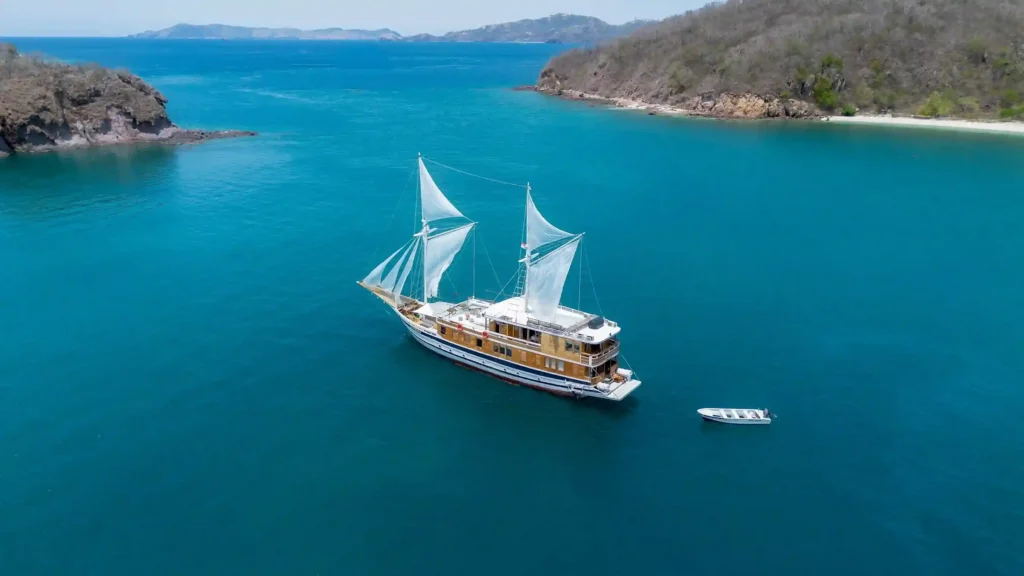
The easiest way to visit Komodo Island is by boat from Labuan Bajo, with different sailing formats available depending on your time, budget, and preferred level of privacy. From a short 3D2N itinerary to an extended private yacht charter, you can choose a route that fits how you want to experience Komodo National Park.
- 3D2N Komodo Tour
A 3D2N Komodo tour is a practical option for first-time visitors who want to see Komodo Island and several other highlights of Komodo National Park within three days and two nights. The itinerary typically includes a Komodo dragon trek alongside destinations such as Padar Island, Pink Beach, and selected snorkeling spots, subject to weather, sea conditions, and park regulations. - Longer Komodo Sailing Routes
Longer Komodo Island tour routes, ranging from 4D3N to 11D10N, give you more time to explore the national park without having to rush between destinations. With additional nights onboard, you can combine Komodo Island with more beaches, snorkeling and diving sites, remote islands, and slower-paced days at sea. - Shared Trip
A shared Komodo trip is a more budget-conscious option where you sail with other travelers while visiting the park’s main attractions on a scheduled itinerary. It works well if your priority is experiencing Komodo National Park at a lower cost and you are comfortable sharing the boat and daily activities with other guests. - Private Yacht Charter
A private yacht charter gives you exclusive use of the vessel, allowing you to plan the route, activities, and daily pace around your group’s preferences. This format is particularly suitable for travelers seeking more privacy, personalized service, and flexibility throughout their Komodo Island itinerary.
Read more: Komodo Boat Tour: Complete Guide to Komodo National Park with KomodoLuxury
Best Time to Visit Komodo Island
The best time to visit Komodo Island is from April through November, which marks the dry season sweet spot for visiting Komodo Island, offering the driest trekking conditions and the calmest sea crossings between the mainland and the park’s various anchorages.
Within that broader window, a few distinctions are worth knowing before you lock in specific dates:
- Early morning treks (7:00 to 9:00 AM) tend to offer the most active dragon sightings, since the animals are warming up after the cool night and remain genuinely mobile before the day’s heat sets in.
- Midday heat makes dragons noticeably lethargic, which can mean less dynamic viewing even though the animals themselves are still easy to spot resting in shade.
- May through August overlaps with the dragons’ breeding season, occasionally offering the chance to see more active territorial or nesting behavior on the medium and long trekking routes.
- September and October often strike a strong balance on the broader seasonal calendar, offering settled dry-season conditions without the heaviest crowds of the July-August peak.
The full month-by-month grid, including a deeper explanation of why the September-October window tends to win out on balance, is maintained in our best time to visit Komodo guide.
Planning Your Komodo Island Trip With Komodo Luxury
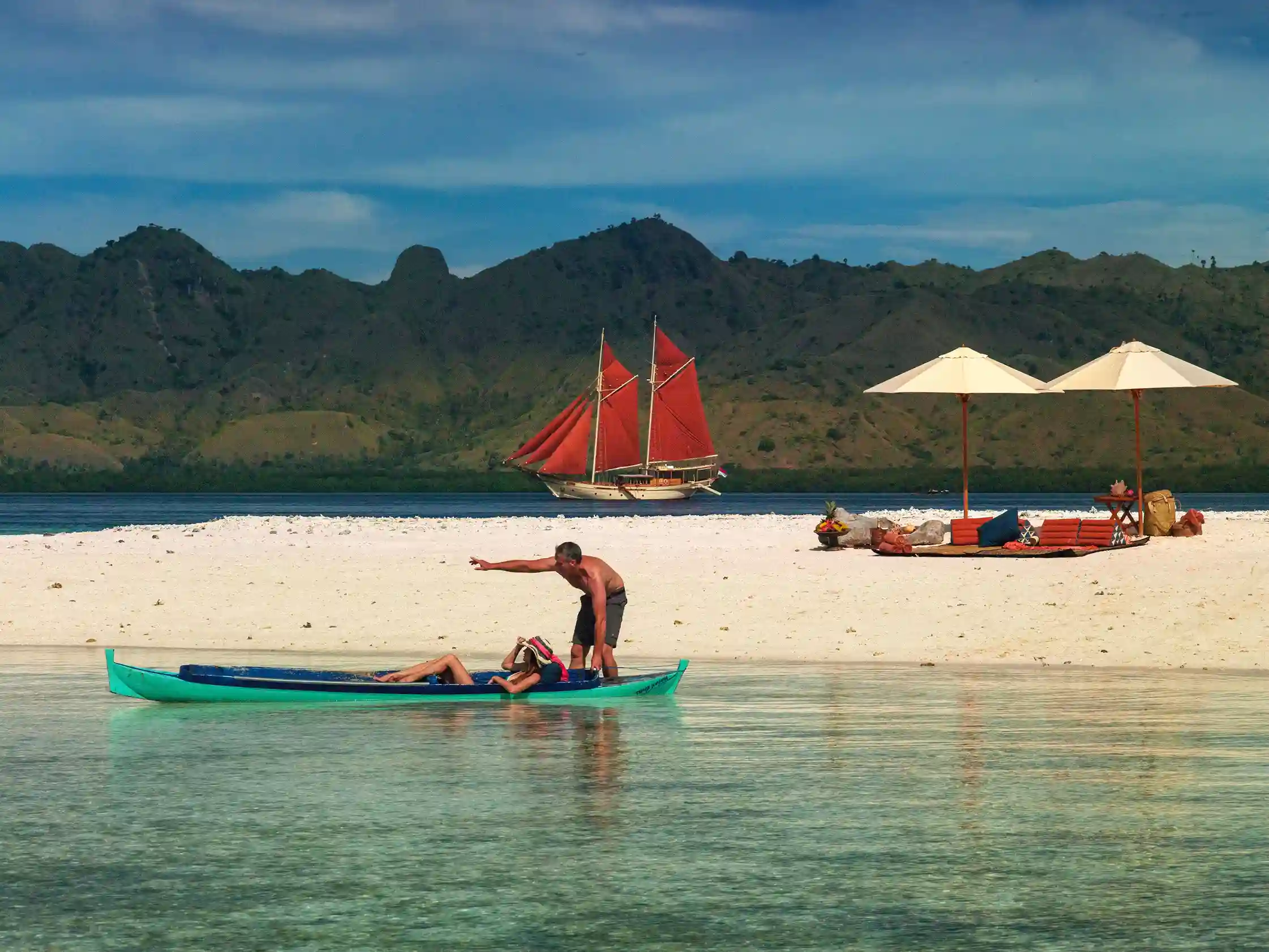
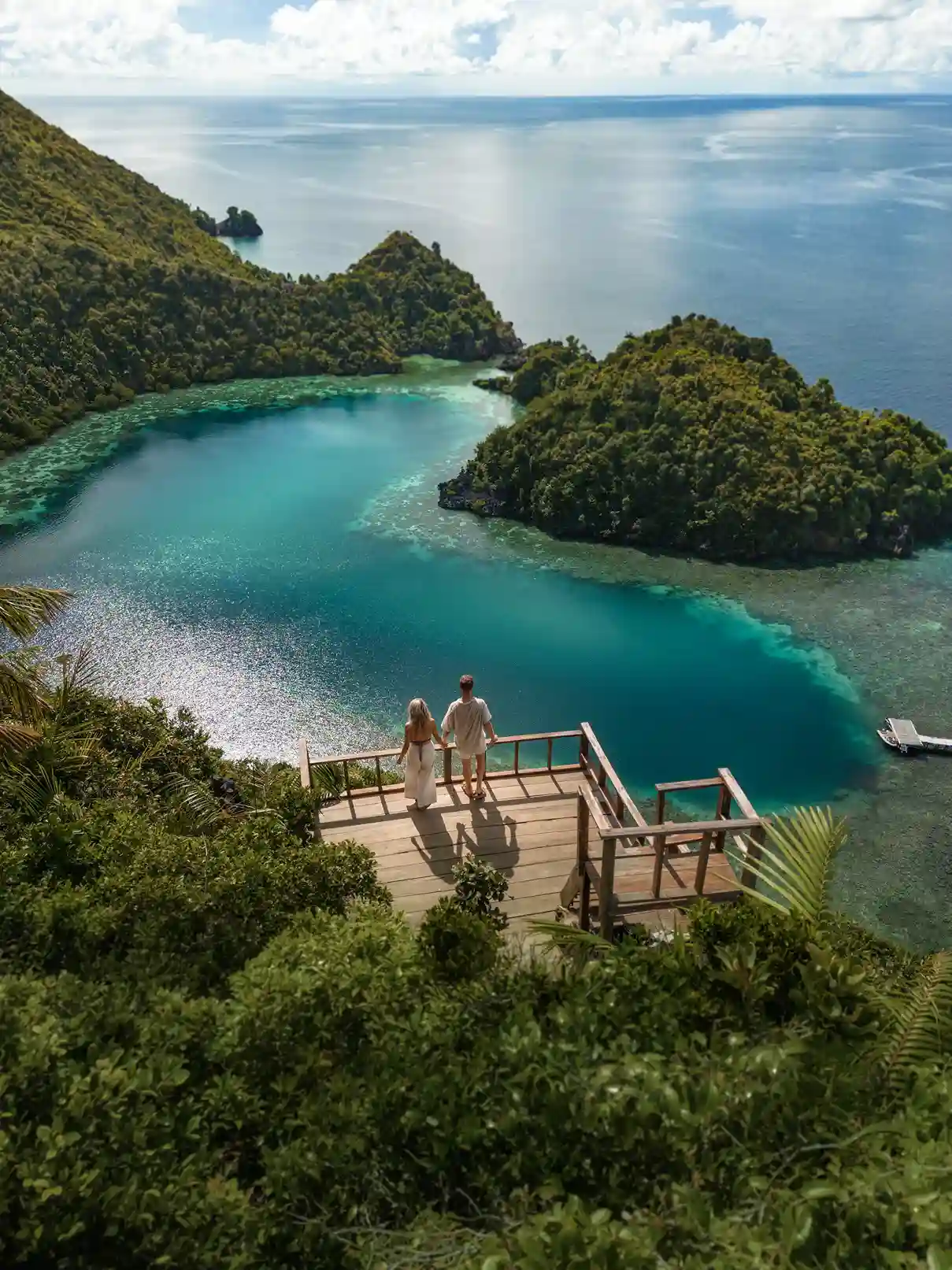
A trip to Komodo Island is ultimately about connecting several experiences into one journey: a ranger-led walk through dragon habitat, dry savanna landscapes, secluded beaches, coral-rich waters, and nights spent surrounded by the Flores Sea. Because the island itself has no public airport or hotel network, the vessel you choose plays a significant role in how comfortably and flexibly you experience the destination. For travelers who want that experience at a more private level, Komodo Luxury operates as a luxury yacht charter operator.
Because the fleet is owned and operated directly, your journey can be planned around your preferred route, onboard experience, activities, and pace while exploring Komodo National Park. If you are ready to turn this Komodo Island guide into a exclusive journey, contact our team to discuss your preferred dates, group size, yacht, and itinerary. Book your Komodo Island sailing tour package with us and experience the national park from your own luxury yacht, with the freedom to explore the islands, wildlife, beaches, and surrounding waters at your own pace.