






Last updated: September 2026 · Prices & availability verified for the 2026/2027 season
Yes—a Komodo dragon is a monitor lizard, and specifically the largest of the roughly 80 species in the genus Varanus. The two aren’t rivals from different families; the Komodo is simply the giant of the group. The key differences come down to size (up to 10 feet and around 200 pounds), venom potency, and geographic range.
Telling monitors apart is part of the dragon-trekking briefing on every one of our itineraries — from the 3D2N open trip to week-long private charters, licensed ranger-guides walk guests past both species at Loh Liang and Loh Buaya.
The field observations in this guide come from Komodo Luxury’s ranger-accompanied treks — we have operated boat trips to Komodo National Park, home of the largest monitor of all, since 2015.
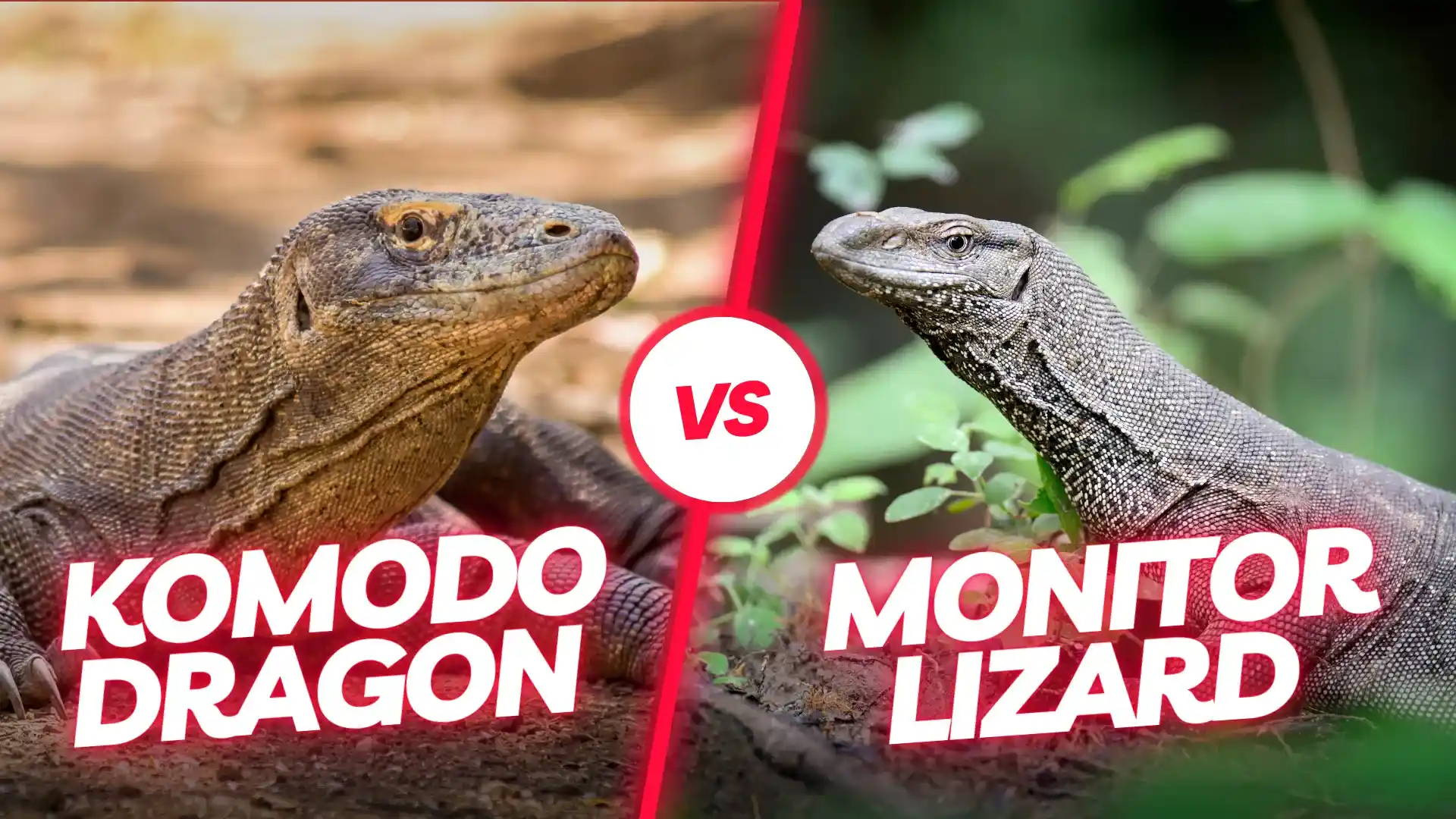
Monitor lizards vs Komodo dragons are two of the most powerful and massive reptiles we know. While they belong to the same family, their differences are just as intriguing as their similarities. Both of these creatures have earned a reputation for being formidable hunters, yet their lifestyles, habitats, and behaviors make them uniquely fascinating. Whether you’re a reptile enthusiast or just curious about these creatures, let’s dive into what sets them apart. We will discuss various important aspects of these two animals, from general descriptions, size comparisons, and appearance to who might win in a fight between the two. Let’s begin by understanding each species!
Monitor Lizard vs Komodo Dragon: Key Differences
If you only remember a handful of distinctions, these are the ones that matter most. The table below sums up how a typical monitor lizard compares with its record-breaking relative, the Komodo dragon.
| Feature | Monitor Lizard (general) | Komodo Dragon |
|---|---|---|
| Classification | One of ~80 species in the genus Varanus | The single largest Varanus species |
| Maximum size | Varies widely, from a few inches to about 10 feet | Up to 10 feet and around 200 pounds |
| Venom | Present in many species, but mild to humans | Potent venom that promotes bleeding and shock |
| Native range | Across Africa, Asia, and Australia | A few Indonesian islands only |
| IUCN status | Varies by species; many are of Least Concern | Endangered |
The Monitor Lizard: A Diverse Reptile
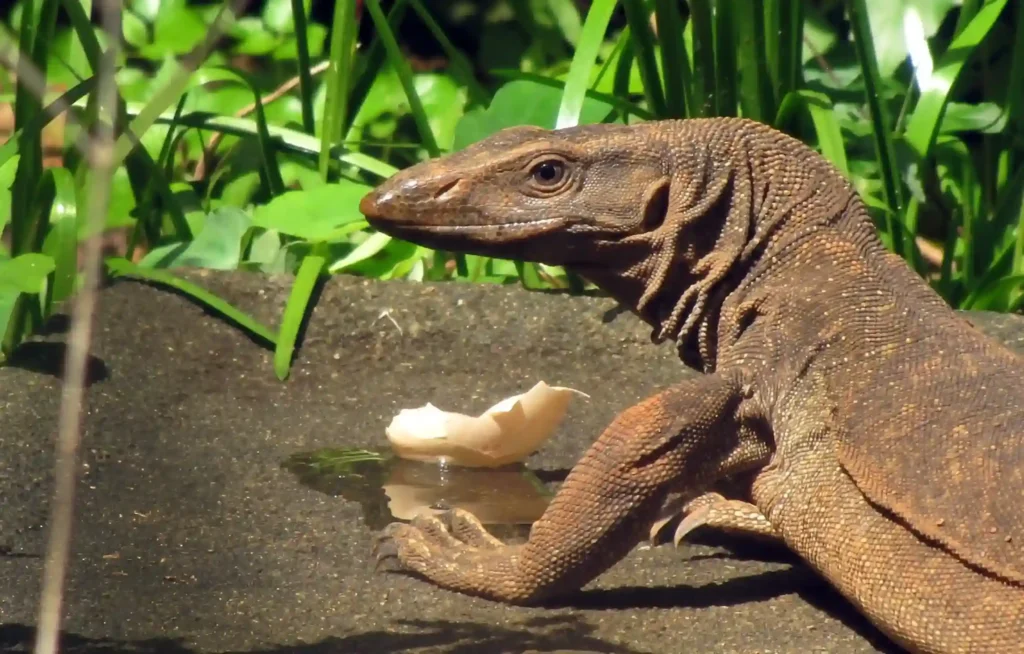
Monitor lizards, part of the Varanus genus, are found across Africa, Asia, and Australia. There are over 80 species of monitor lizards, ranging from small species that fit in your hand to giants that stretch up to 10 feet. One of their most well-known members is the Nile monitor, which is common across Africa.
A common question people ask is, “Are monitor lizards poisonous?” The answer isn’t straightforward. While most monitor lizards are not traditionally venomous like snakes, many do possess venom glands. However, their venom is generally mild to humans and primarily used to weaken their prey. These lizards rely more on their strength, sharp claws, and strong bite to catch and kill food.
Monitor lizards are remarkably adaptable, which explains their broad range across Africa, Asia, and Australia. Different species have carved out niches in tropical rainforests, arid deserts, mangrove swamps, riverbanks, and open savanna. The Asian water monitor, for example, is a strong swimmer that thrives near rivers and coastlines, while desert-dwelling species tolerate intense heat. Their diet is just as varied: depending on the species, monitors feed on insects, eggs, fish, birds, small mammals, and carrion, using keen eyesight and a forked, snake-like tongue to track prey by scent.
The Komodo Dragon: King of Lizards
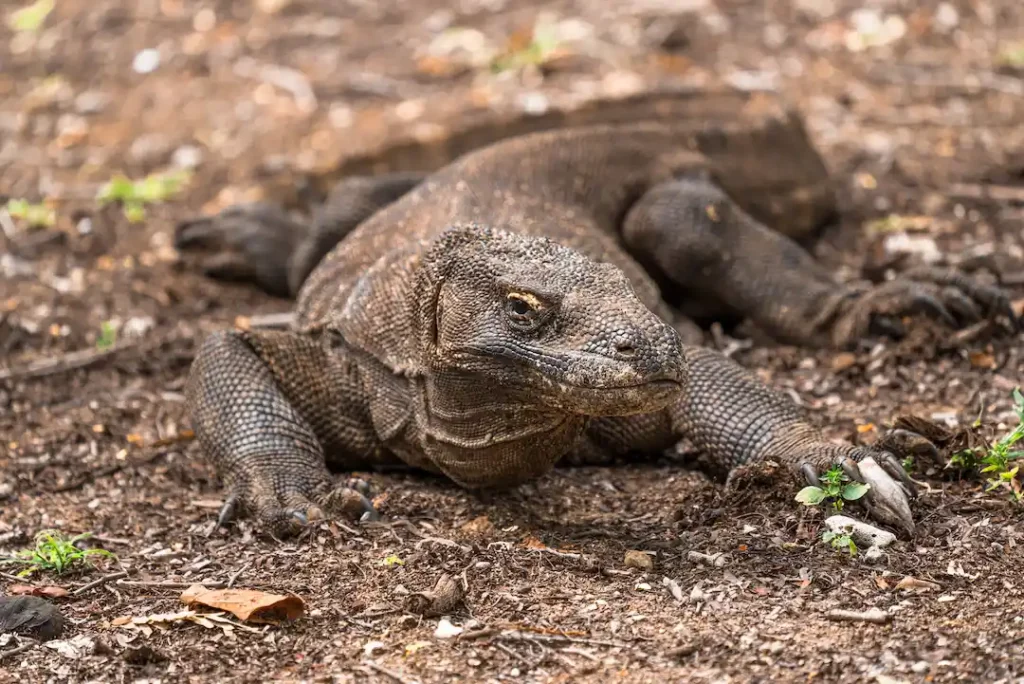
Now let’s talk about the Komodo dragon—arguably the most famous lizard on the planet. These giants are native to a few small Indonesian islands, including Komodo, Rinca, and Flores. Growing up to 10 feet long and weighing up to 200 pounds, Komodo dragons are the largest lizards in the world. Their size alone is intimidating, but it’s their deadly bite that truly sets them apart.
Komodo dragons are well-known for their venomous bite, which contains toxins that cause massive blood loss and shock in their prey. Once bitten, the prey may try to escape, but it won’t get far before collapsing from the effects of the venom. The Komodo dragon then follows its scent, finishing off the kill.
In the wild, Komodo dragons live only on a handful of Indonesian islands—Komodo, Rinca, Flores, and Gili Motang. The best known of these, Komodo and Rinca, lie within Komodo National Park. They favor hot, dry lowlands: tropical savanna, open grassland, and sun-baked forest, where the daytime warmth lets these cold-blooded reptiles raise their body temperature. Adults often dig or occupy burrows to shelter from the midday heat and to stay warm through the night.
As apex predators, adult Komodo dragons feed largely on carrion but will also ambush live prey such as Timor deer, wild boar, and even water buffalo. They are astonishingly efficient eaters, able to consume a large share of their body weight in a single meal. Young dragons, by contrast, spend much of their early life in trees, feeding on insects, geckos, and eggs—a strategy that also helps them avoid larger, occasionally cannibalistic adults.
Because the Komodo dragon sits at the very top of its island food chain, wildlife enthusiasts often wonder how this apex predator would measure up against a big cat such as the African lion.
Monitor Lizard vs Komodo Dragon: Side-by-Side Comparison
Let’s break down the differences between these two fascinating reptiles:
| Category | Monitor Lizard | Komodo Dragon |
| Size | Varies by species, typically 3-7 feet | Up to 10 feet, 150-200 pounds |
| Appearance | Sleek, muscular, with various colors and patterns | Stocky, thick scales, rough texture, brown-gray |
| Diet | Carnivorous, eats insects, birds, small mammals | Carnivorous, preys on large animals like deer |
| Lifespan | 8-20 years, depending on species | Around 30 years in the wild |
| Habitat | Found in forests, deserts, and grasslands | Limited to Indonesian islands |
| Behavior | Solitary, opportunistic hunters | Aggressive, territorial, deadly bite |
Main Differences Between Monitor Lizards and Komodo Dragons
While they are part of the same family, monitor lizards and Komodo dragons differ in significant ways. There are clear distinctions that set them apart:
- Size: Komodo dragons are much larger. While some monitor lizards like the Perentie can grow to impressive sizes, they are still no match for the massive Komodo dragon.
- Venom: While many monitor lizards possess venom glands, the venom isn’t as potent or deadly as that of the Komodo dragon. The Komodo’s venom contains toxins that significantly affect blood clotting and shock response in its prey.
- Habitat: Monitor lizards are widespread, found across continents, whereas Komodo dragons have a limited range and can only be found in a small part of Indonesia.
- Behavior: While both species are hunters, Komodo dragons are known to be more aggressive and territorial, especially when it comes to food. Monitor lizards, on the other hand, are more solitary and generally avoid confrontation unless provoked.
Are Komodo Dragons the Same as Monitor Lizards?
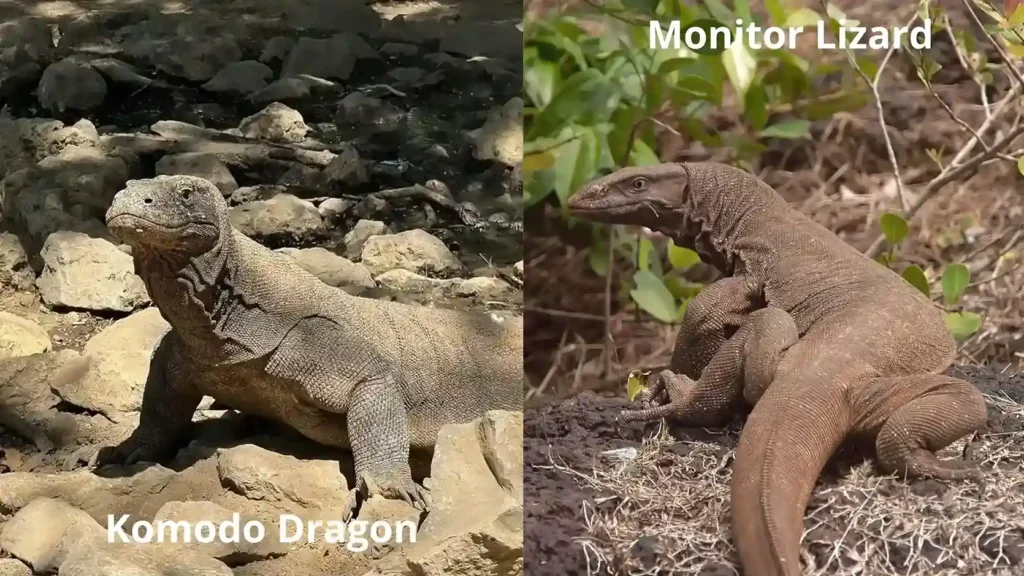
Technically, yes. According to Britannica, Komodo dragons are a type of monitor lizard. However, they are a species of their own, unique in size, power, and habitat. They are the largest living species within the monitor lizard family and are specifically adapted to survive in the remote islands they call home. While they share some similarities, like their carnivorous diet and muscular build, Komodo dragons are set apart by their massive size and powerful venom. So, while all Komodo dragons are monitor lizards, not all monitor lizards are Komodo dragons.
Since Komodo dragons can only be found in a limited part of Indonesia, seeing them in the wild is a rare and unforgettable experience. Many travelers choose to join a Komodo boat tour to explore Komodo National Park, where they can safely observe these giant lizards while also discovering the surrounding islands and marine beauty.
If you are based in Bali, you can join a Komodo tour from Bali to see them in the wild in as little as three days.
Who Would Win in a Fight: Monitor Lizard or Komodo Dragon?
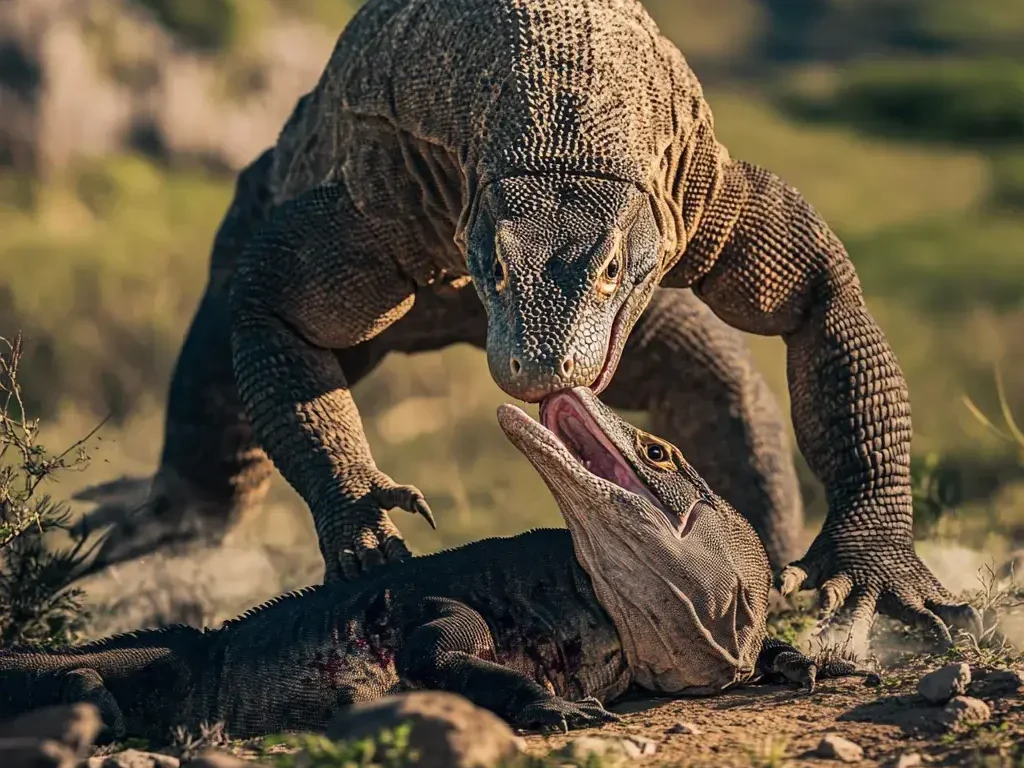
This is the question many enthusiasts ponder. In a one-on-one battle, a Komodo dragon would most likely overpower a typical monitor lizard. Komodo dragons are not only larger, but they are equipped with stronger venom and more muscular bodies. Their powerful tails, sharp claws, and ability to deliver a deadly bite give them a serious advantage.
However, if we’re talking about smaller species of monitor lizards versus a Komodo dragon, the outcome is quite clear: the Komodo dragon reigns supreme. On the other hand, if we pit a larger species, such as the Perentie monitor, against a Komodo dragon, it might be a closer match, though the dragon’s size and strength would likely still give it the upper hand.
While theoretical comparisons are fascinating, seeing the sheer power and presence of a Komodo dragon in real life is a completely different experience.
Read more: Komodo Dragon vs Crocodile: Who’s the Strongest Predator?
Are Monitor Lizards and Komodo Dragons Dangerous to Humans?
Both reptiles command respect, but the level of risk they pose to people is very different. Most monitor lizards are shy and would rather flee than fight. A large species such as the water monitor can deliver a painful bite, sharp claw scratches, or a powerful tail-lash if cornered, yet serious incidents are uncommon and their mild venom is not considered life-threatening to humans.
Komodo dragons warrant more caution. They are powerful hunters with serrated teeth and venom that can cause bleeding and shock, and while attacks on people are rare, they have happened. This is exactly why visitors never explore Komodo National Park alone. Every trek is accompanied by trained rangers who know how to read the animals’ behavior and keep everyone a safe distance away. Observed responsibly, watching a Komodo dragon in the wild is thrilling rather than frightening—an unforgettable encounter with one of the planet’s last living giants.
Conclusion
Both Monitor Lizards and Komodo dragons are incredibly fascinating creatures, each with their own unique characteristics. While monitor lizards are found across the globe in a variety of sizes and habitats, the Komodo dragon stands out as the undisputed king of the lizard world. Its sheer size, aggressive hunting techniques, and venomous bite make it one of the most awe-inspiring reptiles on the planet.
See Komodo Dragons in Their Natural Habitat
If you’re intrigued by the idea of seeing a Komodo dragon up close, the best way to do so is by visiting Komodo National Park. The Komodo Island Tour by Komodo Luxury offers an exclusive opportunity to observe these legendary creatures in their natural environment. The tour includes a Komodo Dragon Tour where you’ll be guided by expert rangers who will ensure a safe and educational experience. You’ll also explore the stunning landscapes of Komodo Island and learn about the unique wildlife that inhabits this breathtaking park. For those who want to explore Komodo National Park in a more exclusive way, choosing a private yacht charter Komodo allows you to enjoy close encounters with wildlife while traveling in comfort and privacy across these remote islands.
Book your Komodo Island Dragon tour today with Komodo Luxury and embark on an unforgettable adventure to witness the world’s largest lizard in one of the most extraordinary places on Earth.

Reading about Komodo dragons usually leads to one question: what is it like to stand a few metres from one? The only wild population lives inside Komodo National Park, and Komodo Luxury runs ranger-guided treks on Komodo and Rinca Island as part of every sailing itinerary. A 3D2N Komodo tour from Labuan Bajo is the most popular way to see them in the wild.
See also: Komodo yacht charter rates.
The fastest way to settle this comparison is to stand on the trail yourself. Dragon trekking with ranger-guides is included on every departure — join a 3D2N Komodo sailing tour or take a private charter and linger as long as the light lasts.
By the Komodo Luxury Expedition Team — a licensed Komodo National Park tour operator running daily expeditions from Labuan Bajo since 2015. Fleet, rates and itineraries: Komodo yacht charter.
Where to meet the real one: Rinca Island — dragons without the crowds, or the full Komodo Island visitor guide.
Monitor Lizard vs Komodo Dragon: The Quick Comparison
Every Komodo dragon is a monitor lizard — but of the roughly 80 recognised Varanus species (Auliya & Koch, 2019), the Komodo dragon is the largest and the only one confirmed to use venom to bring down large prey. Here is the at-a-glance difference:
- Size: common Asian water monitors average 1.5–2 m; Komodo dragons reach 2.6–3 m and 70–90 kg in the wild.
- Venom: Fry et al. (PNAS, 2009) confirmed a true venom gland in Komodo dragons — anticoagulant toxins that cause shock in prey.
- Speed: Komodo dragons sprint up to 20 km/h despite their bulk.
- Range: monitors span Africa to Australia; wild Komodo dragons survive on just five Indonesian islands (~3,400 individuals, IUCN Endangered).
Keep comparing: Komodo dragon facts — the largest living lizard and Komodo dragon vs crocodile. Meet the real thing on a Komodo sailing tour or aboard a private Komodo liveaboard.
Seeing Komodo Dragons in the Wild, Not in an Article
Everything on this page comes from the place itself — our crews walk guests past wild dragons on Komodo and Rinca every week. The most direct way to stand there is a 3D2N Komodo boat tour with a shared cabin from Labuan Bajo (from USD 300 per person), or a Komodo liveaboard if you want the ranger walks paired with the park’s best snorkelling. Park entry is set by government regulation and excluded from the trip price; our desk lists the park ticket once per person per sailing as a separate line on your invoice.