





Last updated: September 2026 · Prices & availability verified for the 2026/2027 season
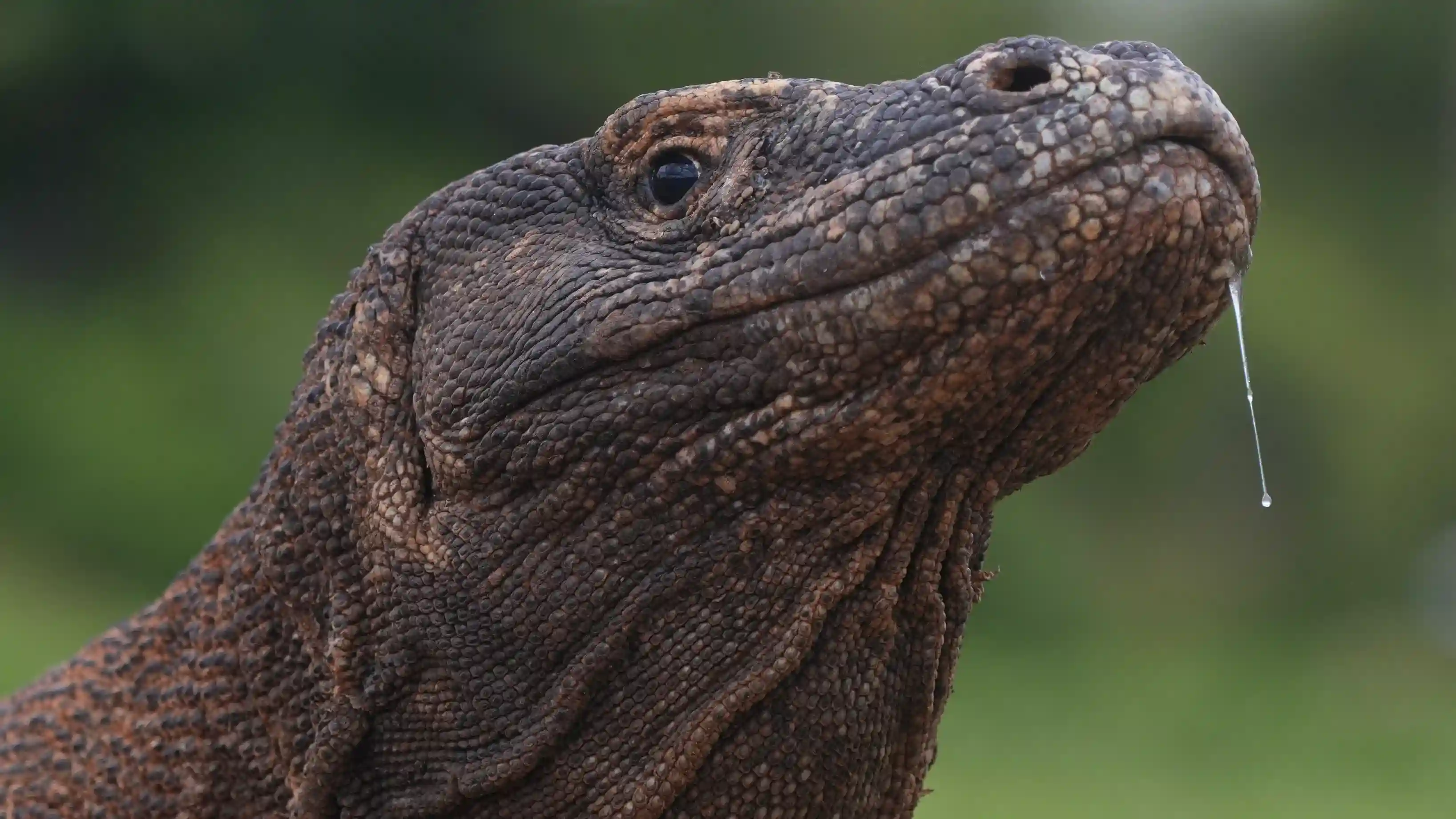
In the mythology of Komodo Island, the Komodo dragon is not a monster — it is a twin sibling. The Ora legend tells of Putri Naga, the Dragon Princess, who gave birth to twins: a human boy named Gerong and a dragon girl named Ora. To the Ata Modo people, every dragon is therefore sebae — kin born of the same mother — and harming one is akin to harming a member of the family. This origin story, documented in ethnographic studies of Komodo and western Flores, still shapes how islanders live beside the world’s largest lizard, and it explains something visitors sense immediately: on Komodo, the dragon is treated with respect, not fear.
The Ora Legend: Putri Naga, Gerong, and the Dragon Twin
The core story is remarkably consistent across Indonesian, English, and French retellings:
- On Komodo Island lived a princess known as Putri Naga, the Dragon Princess. She bore twins — a human boy, Gerong, and a giant lizard, Ora.
- Gerong was raised among people; Ora was reared in the forest, hidden so the villagers would not fear her.
- Years later, hunting deer in the forest, Gerong faced a huge dragon that seized his kill. He raised his spear.
- At that moment Putri Naga appeared in a blaze of light: “Do not kill her — she is your sister, Ora. I gave birth to you both. Treat her as your twin.”
- Gerong lowered his weapon. From that day, the people of Komodo have lived alongside the dragons as siblings.
Ethnographers highlight the legend’s closing logic as a genuine moral covenant: the twins are sebae — born together — and to kill one is to kill the other. The myth functions as conservation law centuries older than any statute.
“Sebae”: Dragons as Kin in Daily Life
On Komodo Island the kinship is not a quaint story — it is vocabulary and practice. The Komodo word for twin, sebae, is applied directly to dragons; the Ata Modo hold that dragons and humans share a common mother, so dragons are consanguineous kin owed care and non-harm. Traditional practice included offerings at the compang, the village stone altar, honouring the bond. Elders historically fed dragons that wandered into the village rather than driving them off — behaviour that startled early European visitors and still informs the island’s calm coexistence today.
One Dragon, Many Names: Ora, Sembe, Bou, Rugu
Long before science wrote Varanus komodoensis in 1912, the peoples of Flores had their own names, mapped by ethnozoological surveys (notably Gregory Forth’s work in the Journal of Ethnobiology):
| Folk name | Community / region |
|---|---|
| Ora | Komodo Island and western Flores (Manggarai-linked areas) — the name used in the twin legend |
| Rugu | Manggarai proper — broader monitor-lizard term |
| Sembe | North-central Flores |
| Bou | Sikka, eastern Flores |
In Manggarai origin myths from western Flores, the founding pair of a territory is often a dragon and a human woman — the dragon-sibling keeps to the wild, the human-sibling founds the village, and the relationship between their descendants remains one of siblinghood: recognition, care, non-harm.
Did Komodo Dragons Inspire Chinese or Western Dragons?
No — the timelines make it impossible. Chinese and European dragon traditions are thousands of years old, while the outside world only learned of Komodo dragons in 1910–1912. Local myth also imagines the ora as a giant lizard-kin, not a winged fire-breather. The connection runs the other way: when Western scientists met a three-metre carnivorous lizard on a remote island, “dragon” was simply the only word big enough — and the name turned the species into the living stand-in for a global archetype.
From Komodo to King Kong: The 1926 Burden Expedition
The dragon’s leap into world pop culture began with the American naturalist W. Douglas Burden, whose 1926 expedition for the American Museum of Natural History brought back specimens, film footage — and the phrase “Komodo dragon.” His friend Merian C. Cooper was captivated by the tale of giant reptiles on an uncharted island; for his 1933 film he swapped the lizard for a colossal ape, and King Kong was born. The DNA of the story — expedition ship, remote island, captured giant — is pure Komodo.
National Symbol: The Dragon on Coins and Stamps
Modern Indonesia has folded the dragon into its official iconography. Bank Indonesia’s 50-rupiah coin (1991–1998) carried a Komodo dragon on its reverse; Pos Indonesia has issued multiple dragon stamp series, including the collected WWF endangered-species set of 13 August 2000. As the emblem of Komodo National Park — a UNESCO World Heritage Site — the dragon now serves as the face of Indonesian biodiversity, a role the species’ Endangered status makes increasingly weighty. Where legend once protected the dragon through kinship, the state now protects it through law — two systems, one conclusion.
Hearing the Legend Where It Was Born
The Ora legend is best heard on Komodo itself — from rangers and villagers whose grandparents fed the sebae at the village edge. A visit to Komodo village alongside the ranger-guided trek adds the cultural layer most itineraries miss, and pairs naturally with the science told in our field-checked dragon facts and four-million-year origin story. Our Komodo tour packages can weave village, legend, and dragons into a single private sailing route.
The Forked Stick: Where Legend Meets Ranger Practice
One thread of the Ora story survives in plain sight on every trek. Islanders say that when Ora misbehaved as a hatchling, Putri Naga disciplined her with a Y-shaped wooden stick — and that dragons remain wary of the forked shape to this day. The rangers of Komodo National Park still carry exactly that tool, though their reasons are practical: dragons are sensitive around the neck, and the forked staff lets a ranger hold a safe distance and manage the animal’s powerful neck without harming it. Legend and field craft, resting on the same piece of wood.
The kinship belief extends beyond the family tale. Many communities on Komodo and neighbouring Flores regard the dragons as guardians of the islands — beings able to sense approaching danger and stand between the villages and misfortune. That protective reading of the animal, as much as any regulation, underpins the centuries-old local vow never to harm an ora.

Frequently Asked Questions
What is the legend of the Komodo dragon?
The Ora legend: the Dragon Princess Putri Naga bore twins — a human boy, Gerong, and a dragon, Ora. When Gerong nearly killed a dragon while hunting, his mother revealed it was his twin sister, and the people of Komodo have treated dragons as kin ever since.
What does “ora” mean?
Ora is the local name for the Komodo dragon on Komodo Island and in western Flores — and the name of the dragon twin in the origin legend. Other Flores communities say sembe, bou, or rugu.
What do Komodo dragons symbolize?
Locally, kinship between people and nature (the sebae twin bond); nationally, Indonesia’s unique biodiversity — the dragon has appeared on the 50-rupiah coin, national stamps, and as the emblem of Komodo National Park.
Did the Komodo dragon inspire King Kong?
Indirectly, yes. W. Douglas Burden’s 1926 Komodo expedition inspired Merian C. Cooper’s island-monster premise for King Kong (1933) — Cooper replaced the giant lizards with a giant ape.
Do locals worship Komodo dragons?
Not worship — kinship. The Ata Modo regard dragons as twin relatives (sebae) owed care and non-harm, historically honoured with offerings at the village compang altar.
Are Komodo dragons connected to Chinese dragons?
No historical connection — Chinese dragon myths predate Western knowledge of the species by millennia. The shared name comes from Western explorers reaching for the only word that fit a three-metre lizard.
The myths live on, but the dragons themselves are very real: you can watch them patrol the savannah with a ranger on a Komodo Island tour, or take a multi-day Komodo liveaboard that combines Komodo and Rinca with Padar and Pink Beach.