




Last updated: August 2026 · Prices & availability verified for the 2026/2027 season
Last updated: August 16, 2026 · Written from Labuan Bajo by the Komodo Luxury team
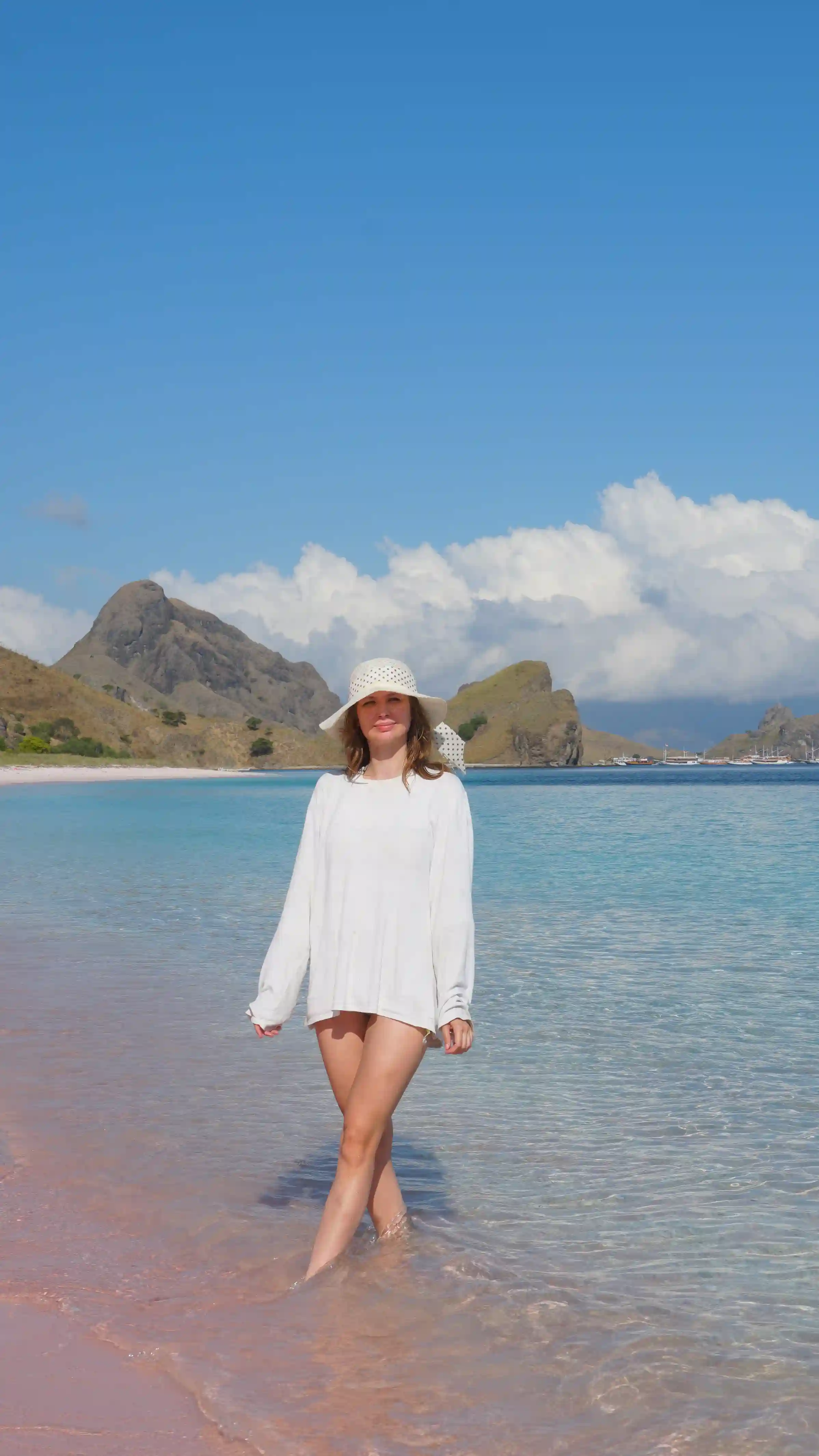
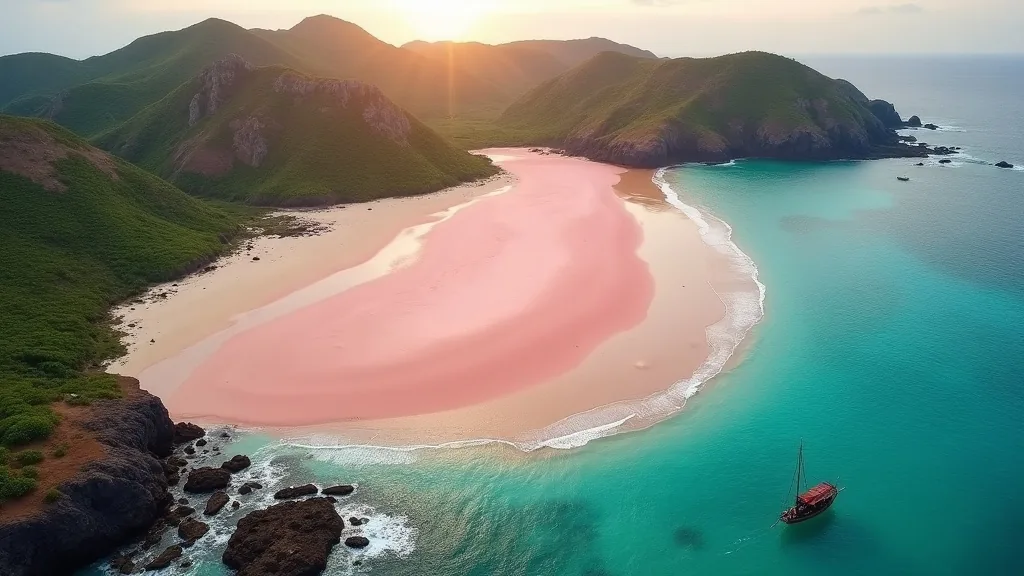
TL;DR: Pink Beach (Pantai Merah) on Komodo Island gets its color from microscopic red-shelled organisms called foraminifera — chiefly Homotrema rubrum — whose crimson fragments mix with crushed red coral and white coral sand. The beach sits inside Komodo National Park and is reachable only by boat from Labuan Bajo, either on a day trip or as a stop on a multi-day sailing itinerary. The pink is strongest at the wet waterline in soft morning light.
What should you know about Pink Beach at a glance?
| Location | East coast of Komodo Island, inside Komodo National Park |
|---|---|
| Access | Boat only — roughly 2 hours by speedboat from Labuan Bajo |
| Famous for | Rose-tinted sand and a snorkeling reef a few meters from shore |
| Best months | April–June and September–November (dry season, lighter crowds) |
| Rule #1 | Taking sand is prohibited under national park regulations |
Why is the sand at Pink Beach pink?
The color comes from biology, not minerals. Foraminifera are single-celled marine organisms that build tiny calcium-carbonate shells. One species, Homotrema rubrum, grows on the undersides of coral ledges and reef rubble and produces a shell stained deep red by an iron-based pigment. When these organisms die, waves grind their shells into fine red grains and wash them ashore.
Those red grains blend with two white ingredients: broken coral skeletons and sand processed by parrotfish, which crunch coral all day and excrete it as fine white powder. Add fragments of red organ-pipe coral (Tubipora musica), and the mix reads as pink to the eye. It takes only a small proportion of red grains — scoop up a handful and you can actually see the individual crimson specks against the white.
The intensity shifts with conditions. Wet sand at the tide line always looks pinkest, low morning or late-afternoon sun deepens the blush, and harsh midday light flattens it. This is the same mechanism behind Bermuda’s famous pink beaches — but only a handful of places on Earth have it, and Komodo National Park has several.
Where is Pink Beach and how do you get there?
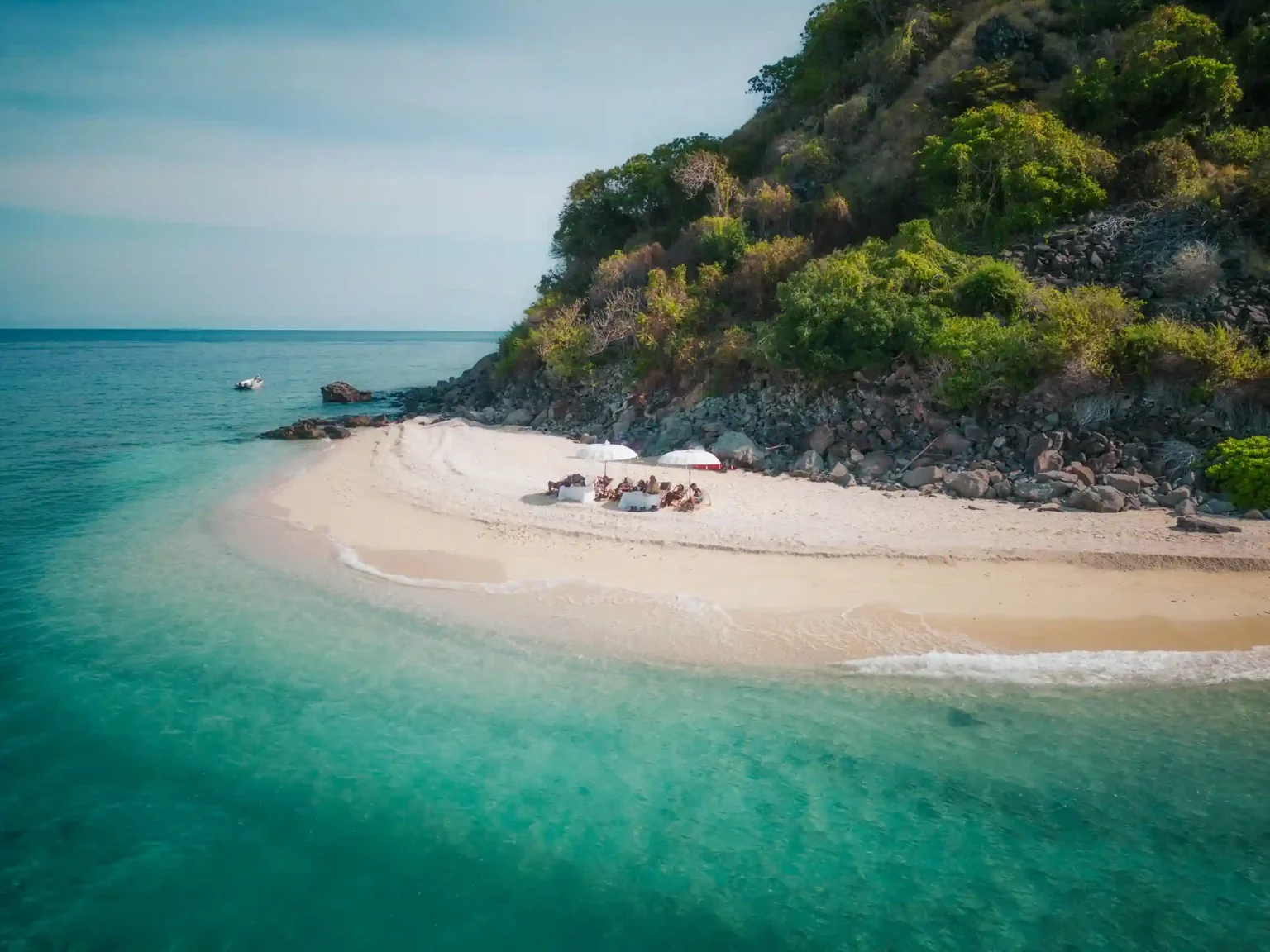
Pink Beach lies on the eastern side of Komodo Island, a short cruise from Komodo village. There are no roads, airstrips, or resorts on the island — every visitor arrives by sea from Labuan Bajo, the gateway town on Flores.
You have two practical options. A speedboat day tour from Labuan Bajo typically pairs Pink Beach with Padar Island, the Komodo dragon trekking trail, Taka Makassar sandbar, and Manta Point — see our Komodo boat tour options for how these routes are structured. Or you can visit aboard a liveaboard, sleeping on the water and reaching the beach before the day-trip fleet arrives; our 3D2N Komodo itinerary schedules Pink Beach for the quiet early-morning window. Travelers starting from Bali can connect through a short flight to Labuan Bajo — the logistics are covered in our Komodo tour from Bali guide.
What is the snorkeling like at Pink Beach?
Excellent, and unusually easy. The house reef begins a few meters from the sand: hard coral gardens in the shallows, then table corals and sea fans along a gentle drop-off. Expect anthias clouds, clownfish, angelfish, parrotfish (the sand-makers themselves), and — on lucky mornings — a hawksbill turtle. Dry-season visibility commonly runs 10–20 meters.
Currents are usually mild directly off the beach but can pick up toward the headlands, so stay within the area your crew briefs you on. Our boats carry snorkeling gear, and guides enter the water with guests — worth knowing if you’re a first-timer or traveling with children.
When is the best time to visit Pink Beach?
The dry season runs roughly April through December. Within it, April–June and September–November are the sweet spots: settled seas, strong visibility, and thinner crowds than the July–August peak. January–February brings the west monsoon, with rougher crossings and occasional sailing pauses.
Time of day matters as much as season. Day-trip traffic concentrates between about 10:00 and 14:00; arrive before 9:00 or after 15:00 and you may share the bay with only a boat or two. Photographers should aim for the morning: low sun, wet sand, and calm water produce the strongest color. This is the main reason we recommend an overnight sailing trip over a day dash — you sleep inside the park and beat the fleet. Our Labuan Bajo tour page outlines how day and multi-day formats compare.
Which Komodo tours stop at Pink Beach?
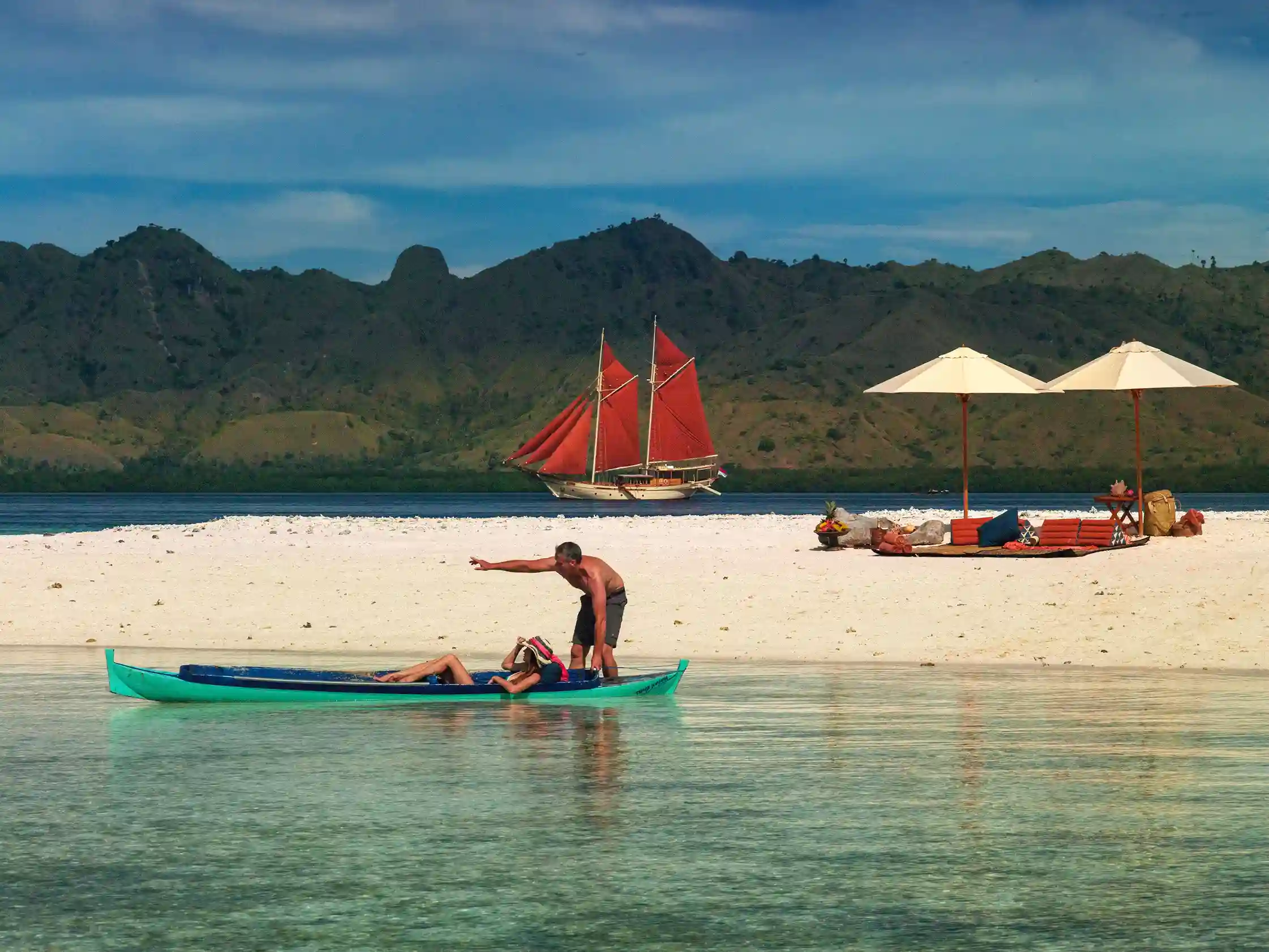
Nearly every sailing route through the central park includes it. If you’re joining solo or as a couple and want to share the boat, our open trip departures visit Pink Beach on day two, in that early calm window. Families and groups who prefer their own schedule usually book a private trip, which lets you linger past the standard 90-minute stop. For those who want the classic wooden-ship experience, a luxury phinisi anchored off the pink sand at sunset is the image most guests take home; full-vessel bookings run through our private yacht charter service.
Every itinerary above is operated by Komodo Luxury – a registered Indonesian PT under Juara Holding Group Limited with 1,500+ verified guest reviews (4.9/5 across Google and TripAdvisor) – with crews who anchor at Pink Beach week in, week out.
What should you not do at Pink Beach?
- Never take sand. Removing sand, shells, or coral is prohibited under Komodo National Park regulations — rangers and airport security do check bags, and violations carry fines. The pink exists because the reef is alive; every stolen jar chips away at something that took centuries to form.
- Don’t stand on or touch coral. Fin carefully in the shallows; a single kick can break decades of growth.
- Use reef-safe sunscreen (or better, a rash guard) — oxybenzone-based lotions damage the very organisms that color the beach.
- Pack out everything you bring ashore. There are no bins on the beach by design.
- Keep your guide close. Komodo dragons occasionally patrol beaches on Komodo Island. Sightings at Pink Beach are uncommon but real — never wander off alone.
Is there more than one pink beach in Komodo?
Yes. Pantai Merah on Komodo Island is the famous one, but the park hides several others, including Long Pink Beach on the southern side of Padar — a longer, often emptier stretch that many of our returning guests actually prefer. Multi-day routes can include both; day trips rarely have time for more than one.
Frequently asked questions
Can you swim at Pink Beach?
Yes. The bay is calm on most dry-season days, with a sandy entry and the reef starting just beyond. Follow your crew’s briefing on current conditions before entering the water.
Why is taking the sand illegal?
Pink Beach sits inside a UNESCO-listed national park, and its sand is a living by-product of the reef ecosystem. Removing it is treated the same as removing coral — prohibited, checked, and fined.
Is Komodo National Park open right now, after the August 2026 earthquake?
Yes. The park never closed, and the Labuan Bajo Harbormaster officially reopened sailing the same day (Maklumat Pelayaran No. 05/MP-VIII/2026) after BMKG declared the tsunami potential over. Our boats returned to the water that afternoon, and so far trips are running normally — see our full report on whether Labuan Bajo is safe after the earthquake.
Will I see Komodo dragons at Pink Beach?
Usually not — dragon encounters happen on the ranger-guided trails at Komodo and Rinca. But the beach is on their island, so guides stay alert and guests stay grouped.
How long should I spend there?
Day trips allow about 90 minutes, enough for a swim, a snorkel, and photos. Liveaboard guests often get two visits — afternoon and next morning — which is the relaxed way to do it.
Is there an entrance fee?
Komodo National Park fees are set by the government and subject to change; your operator arranges the permits, so you simply board the boat.
How do you plan a visit to Pink Beach?
Pink Beach rewards travelers who time it well: dry season, early light, and a boat that isn’t racing the clock. The simplest way to lock all three in is to join one of our open trip departures, which reach the beach in the quiet morning window before the day-trip fleet. If you’d like help matching a route to your dates, our team responds quickly on WhatsApp (+62 811-3823-875) or through our contact page — we’re based in Labuan Bajo and sail these waters every day.