

Last updated: September 2026 · Prices & availability verified for the 2026/2027 season
For a Komodo charter, choose a phinisi if you want the classic Indonesian liveaboard experience — ironwood decks, sail silhouette, generous cabins for multi-night routes — and a catamaran if your priority is stability in a beam swell, shallow-draft access to sandbars, and a wide, level deck plan. Both run the same park itinerary; the difference is how the boat feels doing it. In the Komodo market, whole-boat rates for either hull sit inside the USD 1,800–30,000 per night range, with a desk-quoted package total.
The Two Hulls, Defined
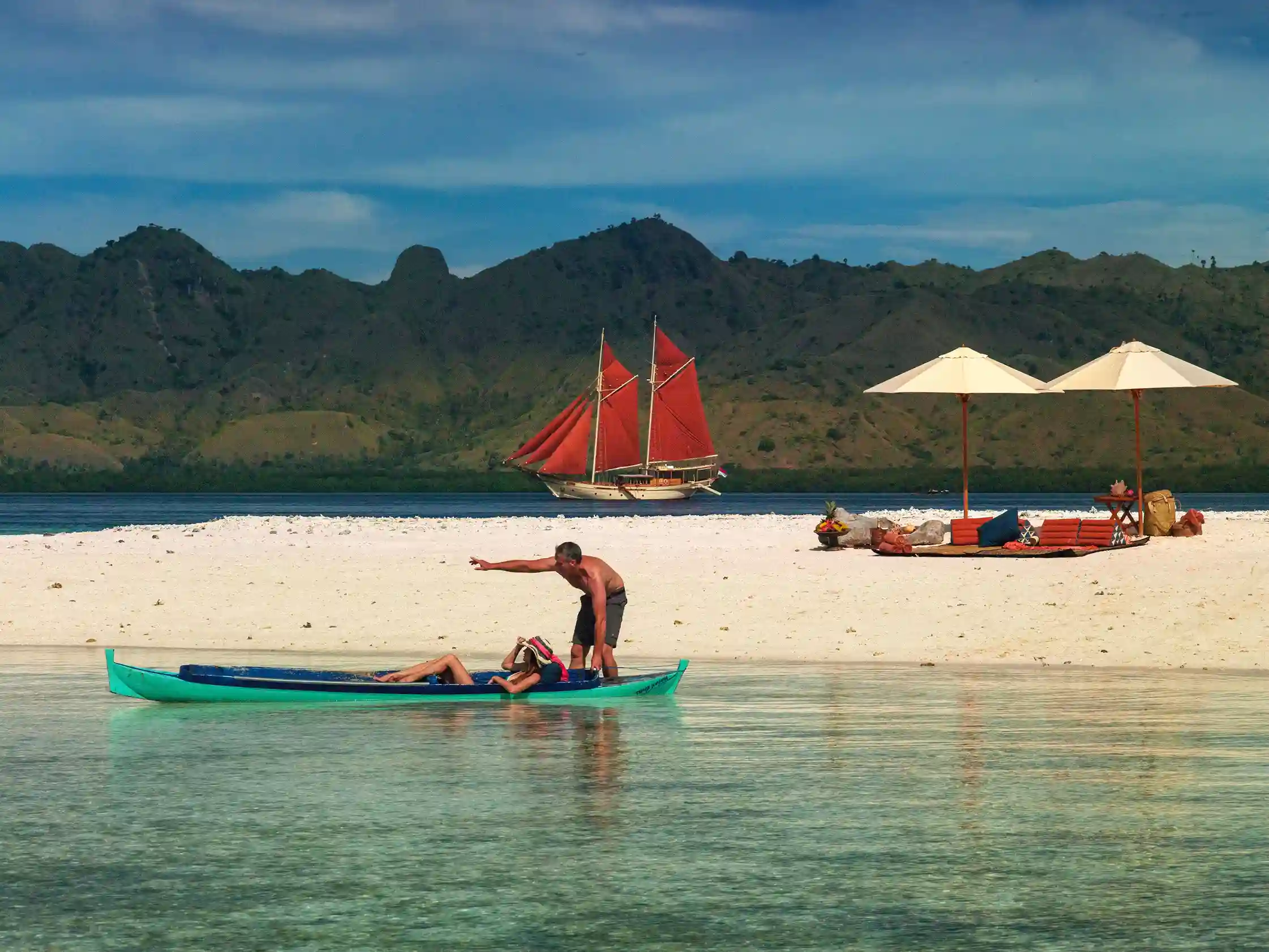
A phinisi is Indonesia’s traditional two-masted wooden vessel, built in the South Sulawesi boatbuilding tradition and refitted for charter with ensuite air-conditioned cabins, full galleys, and shaded lounging decks. It is a monohull — deep, heavy, and steady at anchor — and it is the boat most people picture when they imagine sailing Komodo. The owned and partner phinisi available for charter are collected on the luxury phinisi Komodo page.
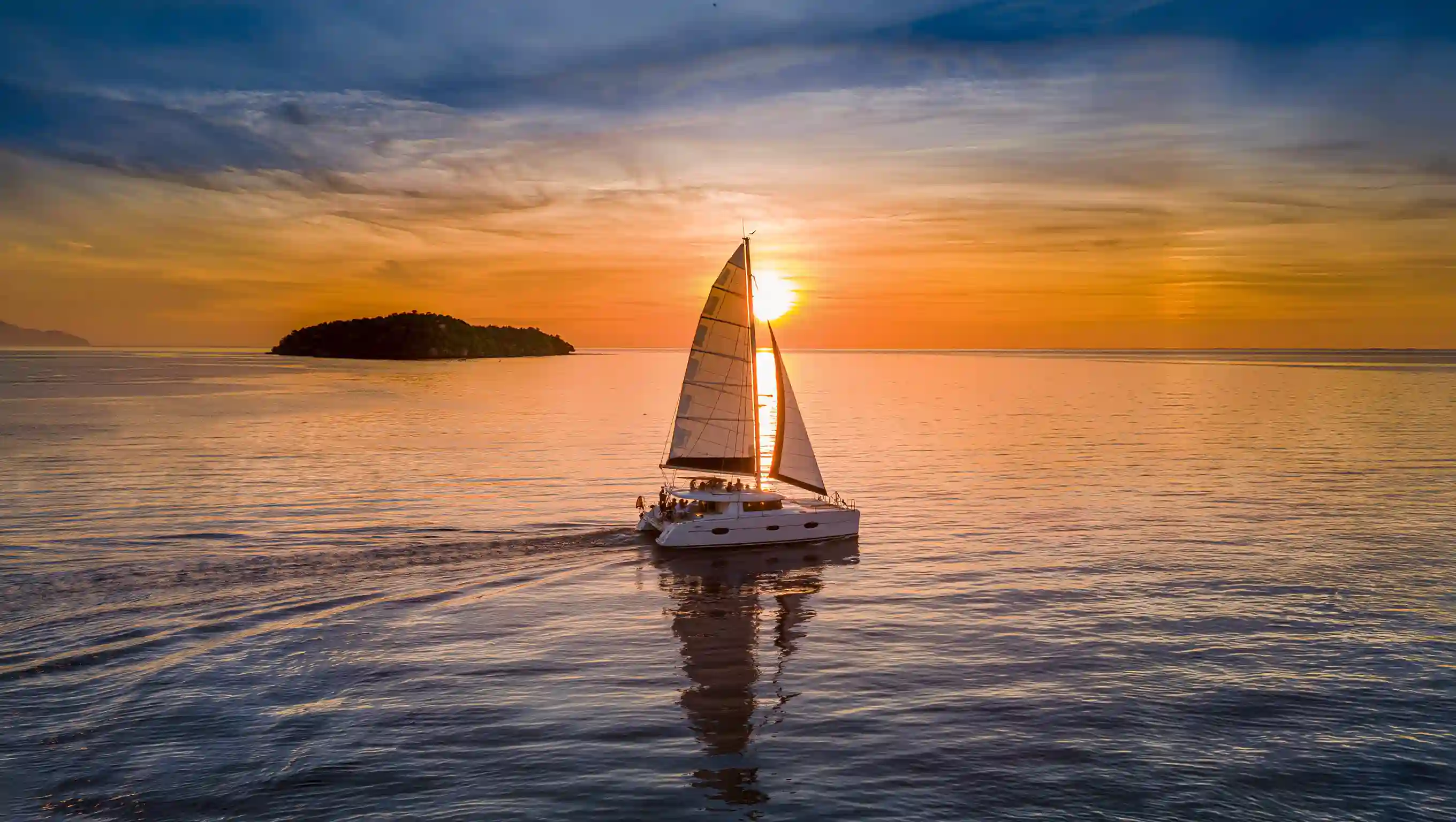
A catamaran is a twin-hulled vessel, usually fiberglass, with the saloon and deck spread across the full beam. Its draft is shallow, its motion at sea is flatter, and its layout puts everyone on one level. Komodo’s catamaran scene is younger and smaller than its phinisi fleet, which makes availability the first practical question — current options are listed on the catamaran charter Komodo page.
Comfort at Sea: Motion, Space, and Heat
Komodo’s crossings are short — most legs between anchorages run under two hours — but the Linta Strait can serve up chop when tide runs against wind. Here the catamaran’s twin hulls genuinely earn their keep: less roll, which matters for guests prone to seasickness and for families with small children. The phinisi answers with mass; a 30–50 meter ironwood hull rides swell slowly and sits rock-steady at anchor, where you will spend most of the trip anyway.
Space divides by shape. A catamaran offers width: one broad social deck, trampolines forward, easy sightlines to children in the water. A phinisi offers volume: multiple deck levels, a foredeck for sunbathing, an aft deck for dining, and cabin counts that reach seven or more on the largest hulls — around 20 guests for group celebrations, a capacity almost no catamaran in the region matches. In tropical heat, the phinisi’s shaded timber decks and the catamaran’s through-breeze saloon are honors even.
Itinerary Fit: Where Each Hull Shines
Both hulls run the classic circuit — Padar sunrise hike, ranger-led dragon trek on Komodo or Rinca, Pink Beach, manta sites, Kalong’s flying foxes at dusk. The catamaran’s shallow draft lets it nose closer to Taka Makassar’s tidal sandbar and anchor tighter to beaches, trimming tender shuttles. The phinisi carries multi-day routes better: more fuel and water capacity, more crew, and cabins built for consecutive nights aboard. For a day trip or an overnight, the catamaran’s speed and simplicity are persuasive; for 3D2N and longer — the itineraries Komodo actually rewards — the phinisi is the more complete home at sea.
Cost and Value
Charters are priced per boat per night, not per person. Deluxe phinisi start near USD 1,800 per night; premium phinisi and motor vessels sit in the mid-band; flagship hulls reach USD 30,000. Catamarans typically price in the mid-band, reflecting newer builds and smaller guest counts. Every guest additionally pays the Komodo National Park entrance fee — set under Government Regulation No. 36/2024 as displayed by the Balai (IDR 250,000 per international visitor per day, IDR 50,000 per Indonesian visitor per day), confirmed by our desk as its own line on your invoice for international visitors in 2026, issued as a dated ticket — plus ranger fees on treks. Live per-vessel rates sit on the Komodo yacht charter pricing page.
Season and Sea State
Komodo’s dry season, roughly April through November, keeps seas calm enough that the stability gap between the hulls narrows to almost nothing — in July and August either boat rides the park’s short passages comfortably. The shoulder and rainy months widen the gap: wind against tide builds chop in the straits, and that is when catamaran guests notice the flatter ride and phinisi guests appreciate a heavier hull over a lighter one. Manta activity peaks in the rainy season, so divers and snorkelers chasing mantas at the cleaning stations often accept livelier crossings in exchange — a trade both hull types handle, planned around slack tide by crews who run these channels weekly.
The Character Question
Numbers aside, this choice is mostly about what you want the trip to feel like. A phinisi is a piece of living maritime culture — the same hull form UNESCO-recognized boatbuilders in Sulawesi have raised for generations — and sunset on an ironwood deck under rigging is the image most guests carry home. A catamaran feels contemporary: bright, level, efficient, closer to a Mediterranean charter transplanted to dragon country. Neither is wrong. Honeymooners and photographers lean phinisi; young families and motion-sensitive groups lean catamaran.
How to Decide in Three Questions
1. How many nights?
One night or less: either hull, take the catamaran if swell worries you. Two nights or more: phinisi, for cabin comfort and crew depth.
2. Who is aboard?
Toddlers or seasick-prone guests favor the catamaran’s flat ride and single-level deck. Groups of 10–20 need the phinisi’s cabin count.
3. What is the occasion?
Milestone trips, proposals, and photography charters belong on a phinisi. Active day-hopping with maximum water time suits the catamaran.
Whichever hull you choose, book it as a private charter direct with the operator. Komodo Luxury — PT Komodo Bahari Nusantara, operating since 2015, rated 4.9/5 by 1,500+ verified guests with Travelers’ Choice awards in 2025 and 2026 — runs 9 owned vessels and 200+ vetted partner boats, always labeled separately. Start with the private yacht charter Komodo page, or compare hull types across the full fleet.
If neither hull feels right, motor yachts are the third option in the Komodo lineup: Ocean Angel, a vetted partner vessel in the Komodo Luxury network, runs full-day and overnight private charters out of Labuan Bajo for guests who prioritise speed over sail.