



Last updated: September 2026 · Prices & availability verified for the 2026/2027 season
Raja Ampat holds the highest recorded reef-fish diversity on earth, and in 2026 the practical formula for diving it well is unchanged: go between October and April, base yourself on a liveaboard out of Sorong, build the itinerary around Cape Kri, Blue Magic, and Misool, and arrive with an Advanced Open Water card plus genuine current experience. The archipelago’s 1,500-plus islands sit where Pacific and Indian Ocean waters exchange, which is why a single dive at Cape Kri produced a world-record fish count — and why the same currents that feed that abundance decide your season, your certification needs, and your choice of boat.
The Sites That Define Raja Ampat
Cape Kri (Dampier Strait). The record holder: ichthyologist Dr. Gerald Allen counted 374 fish species here on a single dive. A sloping reef corner where sweetlips stack nose-to-current under table corals while trevally, barracuda, and batfish school in the blue. Best dived on a planned tide window; the current that delivers the fish is moderate to strong and the briefing matters.
Blue Magic (Dampier Strait). A submerged seamount rising to about seven meters, famous for oceanic mantas at its cleaning station roughly December through March and for wobbegong sharks tucked under the coral heads all year. It is current-swept and open-water on descent — a reef-hook dive where guides expect you to hold position without touching living coral.
Misool (southern Raja Ampat). Soft-coral walls, fish-thick pinnacles, and Magic Mountain, a seamount where reef and oceanic mantas share a cleaning station. Misool sits inside a large no-take zone patrolled from ranger posts, and the biomass shows it. Boo Windows and Shadow Reef round out a southern leg that many divers rate the best reef diving of their lives.
Around these anchors, strong itineraries add Sardine Reef and Mioskon in the Dampier Strait, Melissa’s Garden on the Fam Islands’ hard-coral plateau, and The Passage — a river-like saltwater channel between Waigeo and Gam dived on the drift.
Season by Season in 2026
October through April is prime: the calmest seas, visibility routinely 20–30 meters, and the manta aggregation at Blue Magic and Magic Mountain peaking December to March. June through September the southeast trade winds blow; the south around Misool turns rough and crossings become uncomfortable, so most liveaboards either restrict themselves to the sheltered north or reposition to Komodo for those months. May and late September are shoulder windows — workable in the Dampier Strait, quieter, and easier to book late. Water temperature holds at 27–30°C year-round; a 3 mm suit covers everyone but the chronically cold. Rain can arrive in any month this close to the equator, but it rarely costs dives — wind and swell are the variables that shape an itinerary, and both are a matter of which monsoon is blowing rather than luck.
Currents, Certification, and Skills
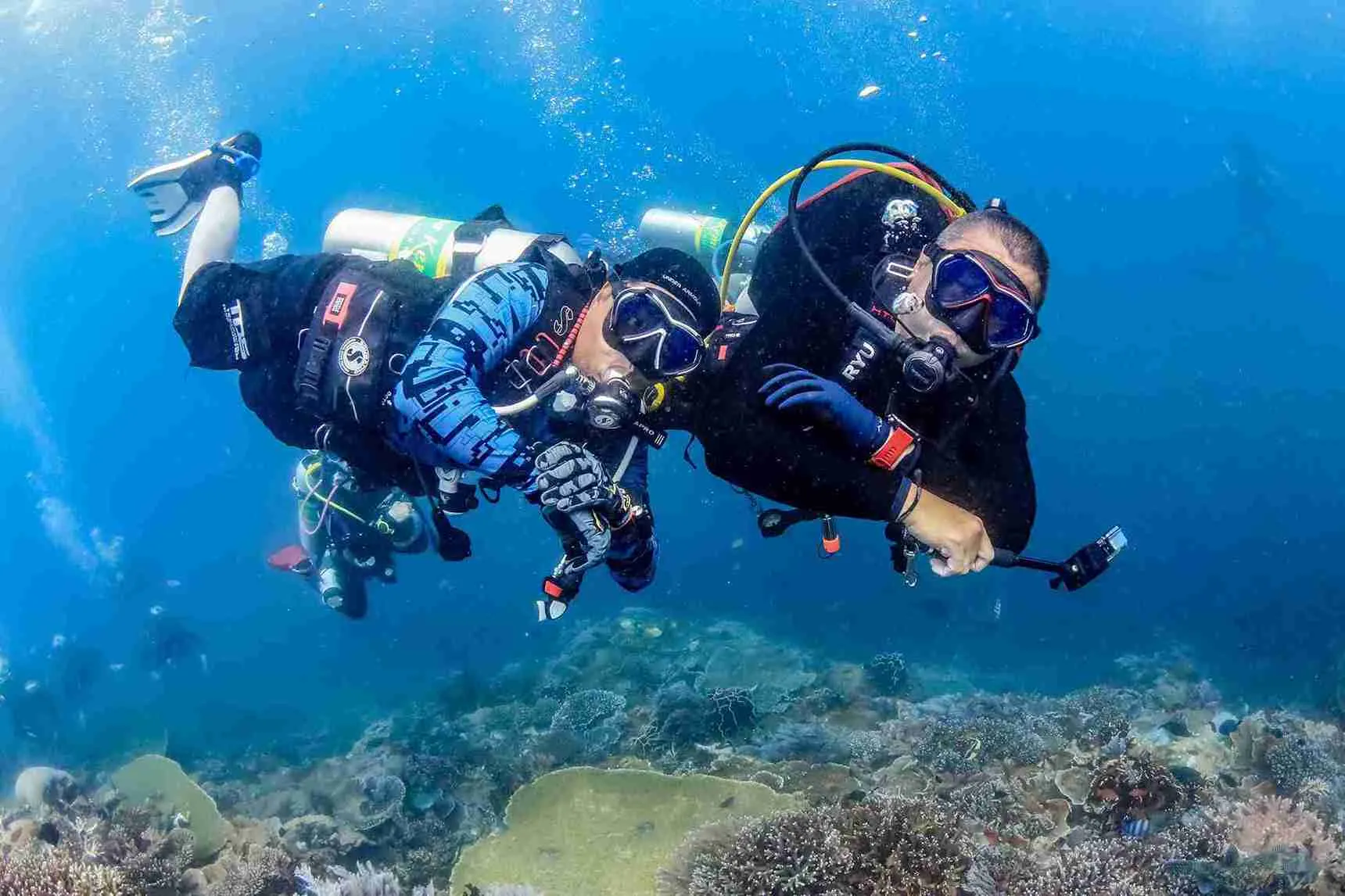
Current is the engine of the whole ecosystem, so it cannot be planned away — it is managed. Guides in Raja Ampat run schedules around tide windows, brief negative entries where the surface current demands them, and use reef hooks on bare rock or rubble only. For the signature seamounts, Advanced Open Water certification with 20–30 logged dives is the realistic floor; a dive computer and a surface marker buoy are non-negotiable, and nitrox earns its cost on a three-to-four-dive day. Open Water divers are not shut out — sheltered sites like Friwen Wall and much of Fam dive calmly — but they will sit out some of the best pinnacles, which is an argument for finishing the advanced course before the flight, not after it.
Non-Divers Aboard
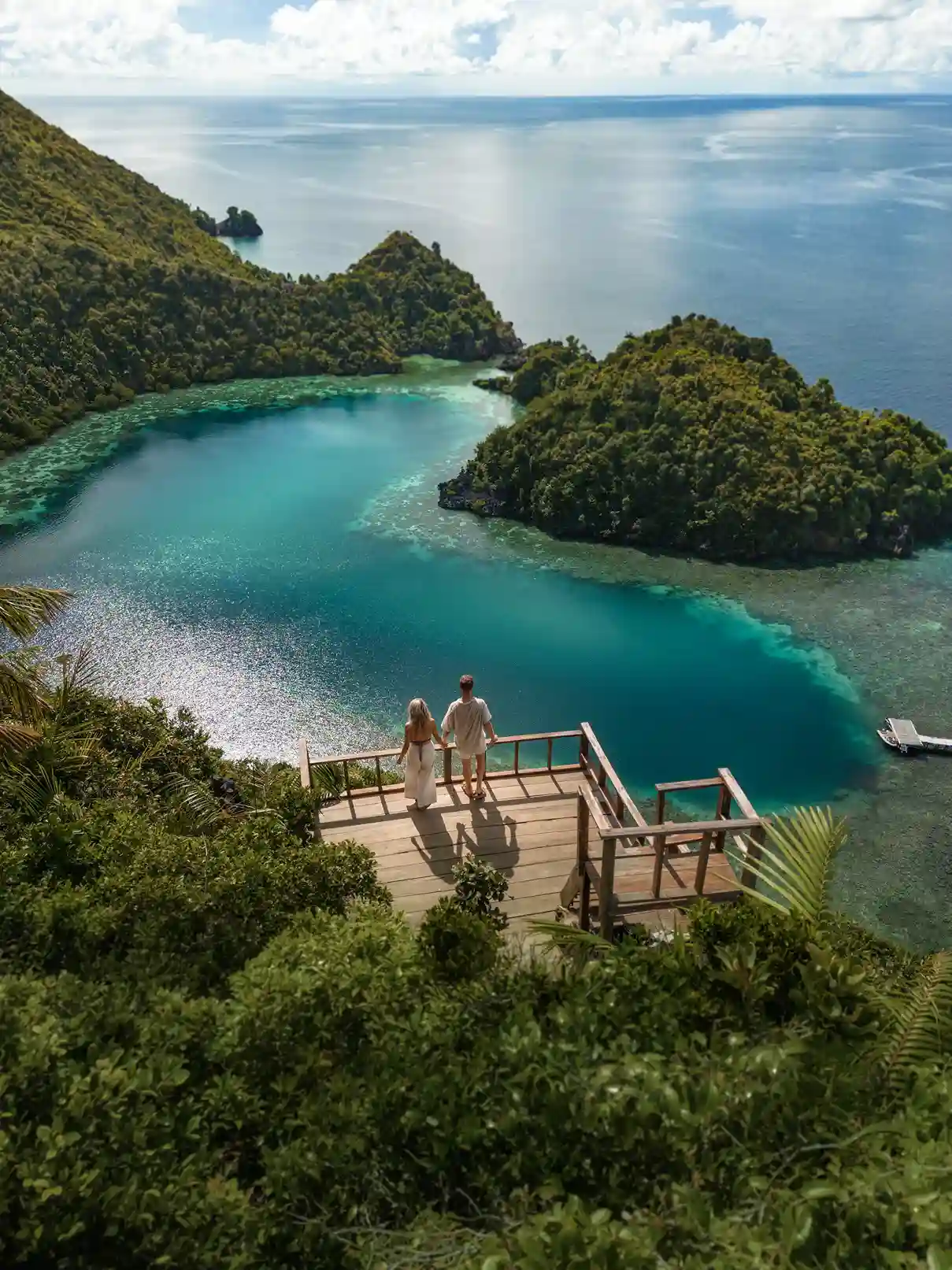
Raja Ampat is one of the few world-class dive destinations where a non-diving companion is not merely tolerated but genuinely rewarded. The snorkeling at Arborek jetty, Friwen Wall, and the Piaynemo lagoons covers the same fish life in the top five meters; the karst viewpoint hikes at Piaynemo and Wayag are the archipelago’s postcard; and a dawn walk on Gam brings you to displaying red birds-of-paradise. Mixed groups do best on a boat that sets its own rhythm — a private Raja Ampat trip lets divers run the tide windows while the rest of the party paddles, hikes, and snorkels without anyone waiting on anyone.
Liveaboard Logistics from Sorong
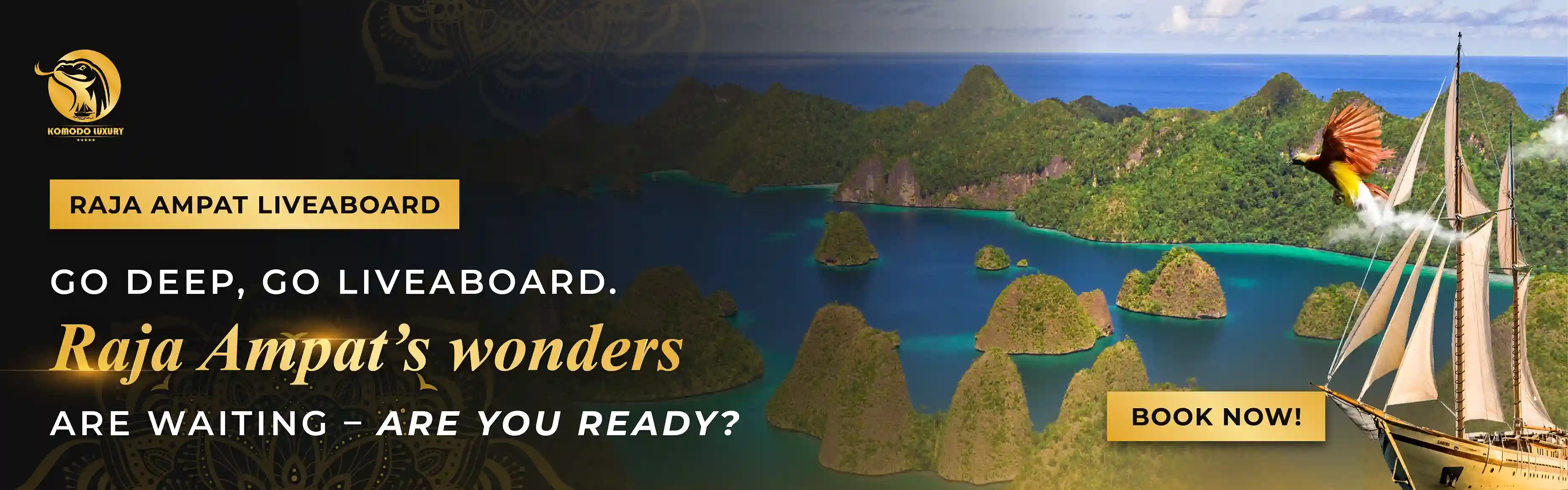
Every Raja Ampat liveaboard itinerary starts in Sorong, West Papua: fly in via Jakarta or Makassar to Domine Eduard Osok Airport, board in the harbor that afternoon, and wake up in the Dampier Strait for the first dive. North-only routes run about seven nights across Dampier, Fam, and Wayag; combined north-and-south routes need 10–12 nights to include the Misool crossing without rushing it — the distances are real, and Misool is not day-trippable. International visitors also carry the Raja Ampat marine-park entry card, around IDR 1,000,000 and valid for one calendar year; rangers do check it at the popular sites, so keep it aboard.
On booking rhythm: guests commit a median of about two months before departure, and the December–March manta window sells out earliest. For market context, whole-boat charters in Indonesia’s premier parks run USD 1,800–30,000 per night with our own liveaboards are quoted as one package total for the whole boat, while per-cabin berths on a scheduled shared Raja Ampat departure open the same reefs at a fraction of a full boat. Whole-boat options and published tiers are on the Raja Ampat yacht charter page, with expedition-style routes covered under the Raja Ampat luxury cruise program.
Choosing the Boat
The boat decision follows the same five criteria as anywhere in Indonesia: cabin-to-guest ratio, crew-to-guest ratio, safety equipment including oxygen and a registered beacon, owned-versus-brokered transparency, and verified review volume. Komodo Luxury applies them fleet-wide — 9 vessels owned and operated with in-house crew, 200+ vetted partner boats always labeled separately, a 4.9/5 rating from 1,500+ verified guests, and Travelers’ Choice recognition in 2025 and 2026. Traditionalists can run the route under the gaff-rigged lines of a luxury phinisi; every booking settles by Stripe or Airwallex with AMEX, Visa, or Mastercard against an itemized invoice. Book direct with the operator, never a middleman — in a destination this remote, the company that holds your payment should be the one holding the helm.

Diving both parks in one journey? See Komodo and Raja Ampat in one trip.