






Last updated: September 2026 · Prices & availability verified for the 2026/2027 season
Boat building materials u{2014} teak, ulin ironwood, mahogany, marine plywood, fiberglass, aluminium, and steel u{2014} determine how a vessel performs, lasts, and feels at sea. The choice of material is the single biggest factor in a boat’s character. In the world of luxury yachts, choosing the right boat building materials isn’t just a technical decision, it’s a matter of performance, comfort, lifestyle, and long-term value. Each material brings its own strengths, limitations, and design possibilities.
Whether you’re planning to build your own vessel or looking to charter a premium yacht, understanding the different types of boat building materials is an essential first step. In this article, we’ll walk you through the pros, cons, and innovations behind the materials that shape your journey at sea.
Why Boat Building Materials Matter
When it comes to boats, materials do more than hold the vessel together, they define how it moves, how long it lasts, and how it feels to live aboard. The right material can make a boat faster, more efficient, easier to maintain, or simply more beautiful. On the other hand, the wrong choice might lead to higher upkeep costs, limited design flexibility, or even safety issues in the long run.
In today’s marine industry, materials are no longer chosen solely for practicality. Aesthetic appeal, environmental impact, and compatibility with advanced technologies are now part of the decision-making process. That’s why understanding the unique characteristics of each boat building material is essential. Whether you’re designing a custom yacht, comparing charter vessels, or simply learning how your future boat is built.
Essential Boat Building Materials
From traditional sailing vessels to cutting-edge luxury yachts, the materials used in boat construction have evolved dramatically. Each type of material offers its own blend of strength, weight, durability, aesthetics, and cost, making it essential to understand how they compare before making any decision.
In the sections below, we’ll explore the most commonly used boat building materials today, ranging from time-honored wood to high-tech carbon fiber.
1. Wood

Wood has long been regarded as the soul of traditional boat building. Its warm, natural grain and handcrafted appeal give wooden boats a timeless charm that many enthusiasts still seek today. Easy to shape and naturally buoyant, wood allows for intricate, custom designs that are difficult to achieve with modern composites. When properly maintained, a wooden vessel can last for decades while retaining its classic beauty.
However, wood also demands a high level of care. It’s more vulnerable to rot, mold, and insect damage, especially in saltwater environments. Compared to fiberglass or aluminum, wooden boats generally require more frequent upkeep and aren’t ideal for high-speed or heavy-duty use. Still, for those drawn to craftsmanship and heritage, wood remains a beloved choice, perfect for traditional sailing yachts or elegant leisure crafts built with character in mind.
Indonesia’s teak-and-ironwood phinisi schooners are a living example of this tradition, and travelers can experience one under sail on a luxury phinisi charter in Komodo.
Read more: Types of Wood for Boats: The Best Wood for Your Boat
2. Fiberglass
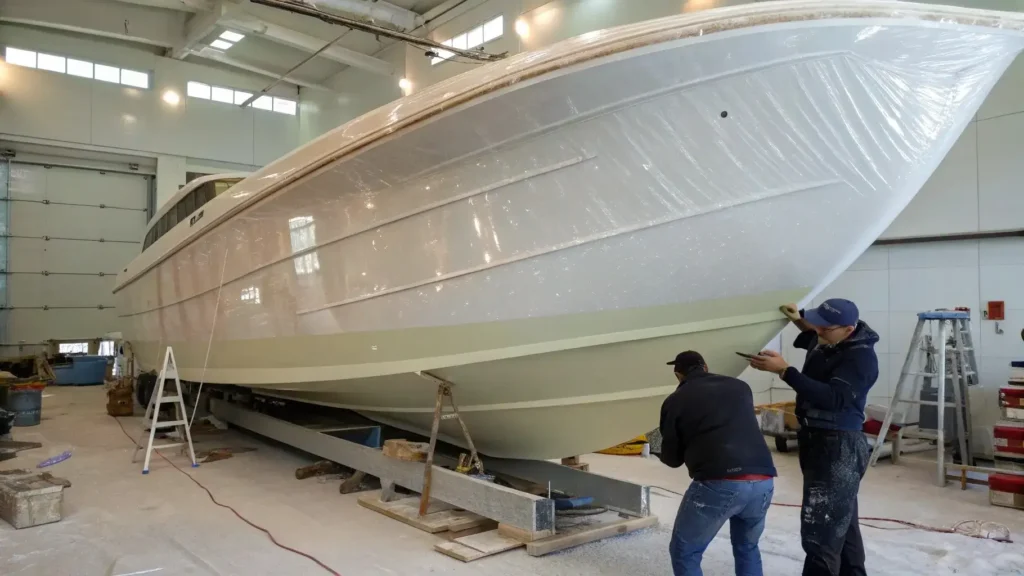
Fiberglass, also known as glass-reinforced plastic (GRP), is one of the most common materials used in modern boat building and for good reason. It’s strong, lightweight, and highly adaptable, making it ideal for a wide range of vessel sizes and styles. Fiberglass can be molded into virtually any shape, allowing for sleek hull designs and smooth finishes that enhance both performance and aesthetics. It’s also resistant to corrosion and rot, which makes it a low-maintenance option for boat owners who want durability without constant upkeep.
Still, fiberglass isn’t without its trade-offs. While generally tough, it can be prone to blistering over time if water penetrates the surface, especially in older builds. It’s also not the most eco-friendly material, as it’s difficult to recycle and energy-intensive to produce. Despite these limitations, fiberglass remains a go-to for everything from family cruisers to high-end yachts, offering a solid balance of performance, cost-efficiency, and visual appeal.
3. Aluminum

Aluminum has become a popular choice for modern boat builders, especially when weight, durability, and low maintenance are top priorities. This material offers an excellent strength-to-weight ratio, making it ideal for high-performance boats or vessels designed for long-range cruising. Aluminum is naturally resistant to corrosion, particularly when using marine-grade alloys and doesn’t rust like steel. It also handles impact better than fiberglass, making it a great option for rugged environments and expedition-style yachts.
However, aluminum isn’t perfect. While it’s strong, it can dent more easily than other materials and requires skilled welding during construction. If not properly insulated, it can also conduct heat and noise, which might affect onboard comfort. Additionally, aluminum must be paired carefully with other metals to avoid galvanic corrosion. Still, its durability, recyclability, and efficiency make it a favorite for adventurous boaters and builders who value function and reliability over ornamentation.
4. Steel

Steel is one of the strongest and most durable materials used in boat building, particularly for large vessels or those intended for long-distance travel. Its sheer toughness makes it highly resistant to impact, making it ideal for expedition yachts, cargo ships, or liveaboard vessels that must withstand extreme weather and rough seas. Steel also has a high melting point and excellent fire resistance, adding another layer of safety on long voyages. For many serious cruisers, steel offers the peace of mind that comes with strength and reliability.
The trade-off, however, is weight. Steel is significantly heavier than other materials, which affects fuel efficiency and speed. It also requires regular maintenance to prevent corrosion, especially in saltwater environments. Despite these downsides, steel remains a practical choice for owners who prioritize durability and safety over aesthetics or top-end speed. When paired with smart design and anti-corrosion coatings, a steel hull can offer unmatched resilience and longevity.
5. Carbon Fiber

Carbon fiber is considered the pinnacle of boat building materials when it comes to performance, innovation, and luxury. Known for its exceptional strength-to-weight ratio, carbon fiber is incredibly lightweight yet stronger than steel. This makes it perfect for high-speed vessels, racing yachts, or modern designs that demand maximum efficiency. Its sleek, high-tech appearance also adds to the premium aesthetic, often favored in cutting-edge superyacht construction.
But all of that performance comes at a cost. Carbon fiber is one of the most expensive materials to produce and requires advanced manufacturing techniques, which means longer build times and higher labor costs. Repairs can also be more complicated than with fiberglass or aluminum. Despite these drawbacks, carbon fiber remains the material of choice for elite vessels where speed, design, and innovation are non-negotiable. It’s ideal for those who want a yacht that stands out, both in appearance and performance.
6. Composite Materials
Composite materials combine two or more base substances, often fibers like glass, carbon, or Kevlar, with resin to create a stronger, lighter, and more adaptable structure. This approach allows builders to customize boats with specific performance goals in mind: less weight, more durability, or improved vibration resistance. Composites are also excellent for minimizing maintenance since they resist corrosion and UV damage, and don’t rot like wood.
The main challenge with composites lies in complexity. The production process requires precision, quality control, and expert knowledge to get right. And while composites tend to offer excellent long-term benefits, the initial cost can be high. Still, for custom yachts and innovative boat designs, composites offer an exciting balance of strength and style, with endless design possibilities that other materials can’t easily match.
7. Boat Interiors

While hull materials define performance and structure, it’s the interior materials that shape the emotional and sensory experience onboard. In high-end yachts, everything from the flooring to the ceiling panels must endure the challenges of a marine environment while delivering refined elegance. Premium teak and oak are favored for their water resistance, rich character, and timeless appeal, often used in decking, cabinetry, and custom furniture. For a modern touch, brushed metals, matte black fittings, and polished stone surfaces create a sleek and sophisticated contrast to classic wood textures.
But beyond aesthetics, every material choice impacts day-to-day comfort and longevity. Soft furnishings must resist salt, sun, and humidity without fading or wearing down. That’s why marine-grade upholstery, UV-resistant fabrics, and closed-cell foams are standard in luxury yacht interiors. Glass panels are often used to invite light and open up compact spaces, while sound-insulating wall layers ensure peace and privacy even while underway. When chosen with intention, interior materials don’t just fill a space, they elevate the entire onboard lifestyle.
Read more: The Ultimate Guide to Boat Construction in 2025: Everything You Need to Know
Sustainable Trends in Boat Building
In recent years, the conversation around sustainability has become a driving force in yacht design and construction. High-end owners and charterers are no longer satisfied with beauty and performance alone, they’re also looking for responsible material choices and eco-conscious innovation. Recyclable metals like marine-grade aluminum, sustainably sourced woods, and low-emission composite resins are gaining popularity among builders who want to reduce environmental impact without compromising quality.
Beyond the materials themselves, the integration of solar panels, hybrid propulsion systems, and efficient insulation reflects a broader shift toward low-footprint living at sea. Interior elements are also evolving, with yacht designers opting for vegan leathers, recycled fabrics, and natural coatings that emit fewer VOCs. It’s not about sacrificing luxury, it’s about redefining it. The future of boat building lies in smart design choices that honor both the ocean and the lifestyle it inspires.
Material choice is also the foundation of a sound boat investment: a hull built from the right timber holds its value and keeps refit costs predictable for decades.
Choosing the Right Material & Build Your Own with Komodo Luxury
Selecting the right material isn’t just a technical decision, it’s a reflection of your priorities, your vision, and the kind of experience you want at sea. Whether you’re drawn to the heritage of handcrafted wood, the quiet resilience of aluminum, or the futuristic precision of carbon fiber, each material carries its own narrative. Your intended journey, be it relaxed coastal cruising or bold, long-range expeditions, should guide this choice. Because when you understand what each material brings to the table, you’re not just building a yacht. You’re shaping how your story unfolds on the water.
For proof of how these choices translate into finished hulls, the Komodo Luxury shipbuilding portfolio publishes principal particulars for eight vessels, including the ironwood-and-teak construction of Malca Voyages and Lamborajo III.
At Komodo Luxury, we believe yacht building is deeply personal, part craftsmanship, part engineering, and fully driven by your aspirations. Through our bespoke Boat Construction service, we help you turn your vision into a vessel of purpose, beauty, and performance. From hull selection to layout design, every detail is crafted to reflect who you are and how you want to sail. Let’s bring your dream yacht to life, one material, one detail, one unforgettable journey at a time.