






Last updated: August 2026 · Prices & availability verified for the 2026/2027 season
True pink sand beaches are rare because the recipe is rare: the sand must carry enough crushed shell of red organisms – above all the coral-dwelling foraminifera Homotrema rubrum – to tint millions of white grains rose. Only a few dozen beaches on Earth manage it. Here are the 15 that matter, led by the one we know from the deck: Pink Beach in Komodo National Park, Indonesia.
Why Sand Turns Pink
Two mechanisms, usually working together. First, foraminifera – single-celled reef organisms with red to crimson calcium-carbonate shells – die, break up in the surf and mix with pale biogenic sand. Second, fragments of red coral and shell add coarser rosy grains. The higher the local foraminifera density, the deeper the blush, which is why the color varies beach to beach and even season to season.
1. Pink Beach (Pantai Merah), Komodo Island, Indonesia
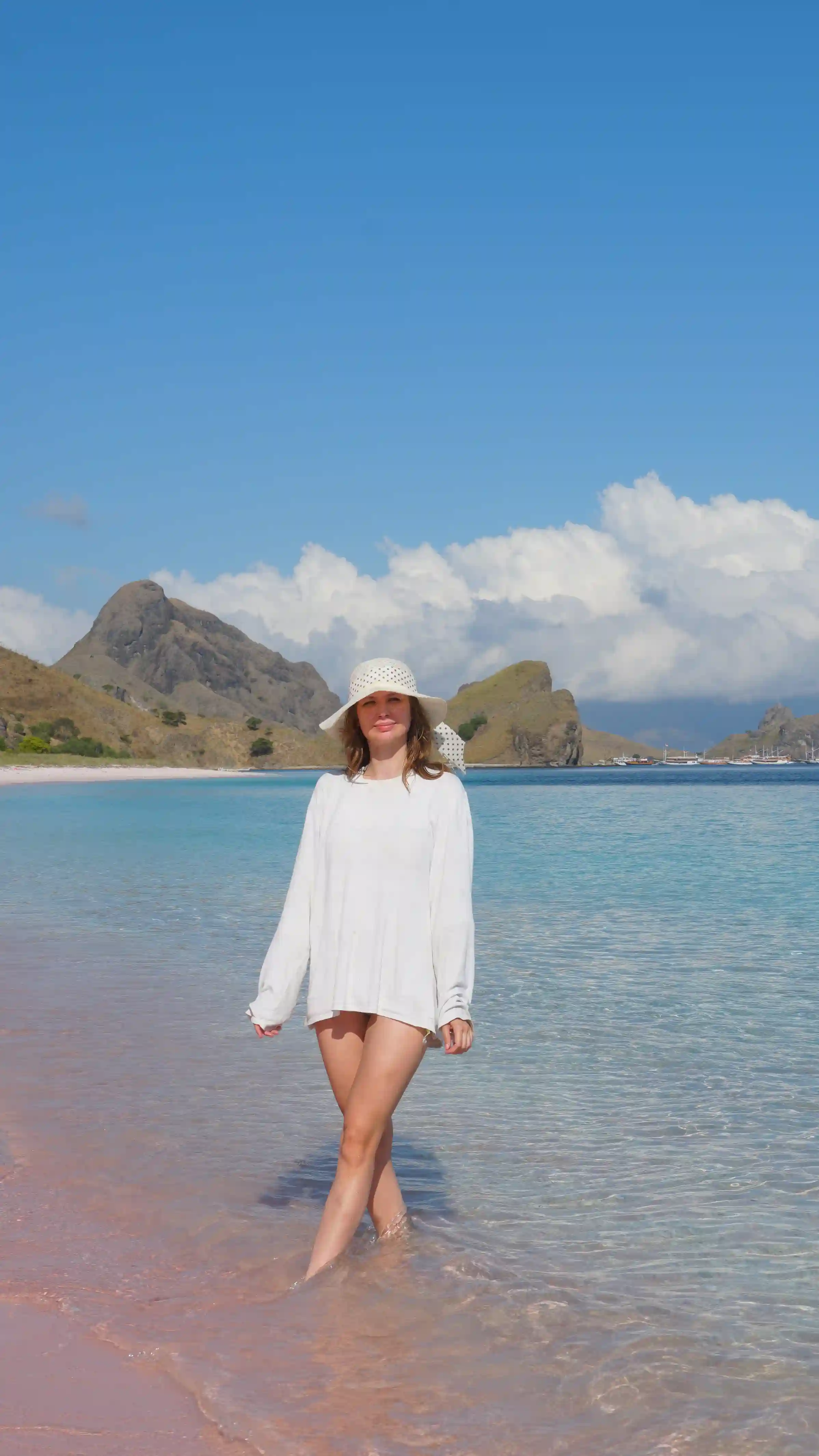
The anchor of this list and the reason to fly to Labuan Bajo: a protected national-park beach whose sand blushes rose from Homotrema rubrum fragments, backed by savannah hills and fronted by a healthy fringing reef you can snorkel straight off the sand. Park rules keep boat traffic and anchoring controlled, so the beach has kept both its color and its coral. It is regularly listed among the world’s finest beaches – and it sits 90 minutes by speedboat from an international-standard harbor town. Full guide: Pink Beach Komodo.
2. Pink Bay & Long Beach, Padar Island, Indonesia
Two more pink stretches in the same park: the crescent photographed from Padar’s viewpoint and the long, quiet southern beach – same foraminifera chemistry, a fraction of the visitors.
3. Tangsi Beach (Pink Beach Lombok), Indonesia
East Lombok’s pink strand mixes Homotrema rubrum shell with red coral fragments over fine white sand. Road-accessible, so it trades Komodo’s wilderness for convenience.
4. Pink Sands Beach, Harbour Island, Bahamas
Roughly three miles (5 km) of consistently rosy sand on Harbour Island’s Atlantic side – among the deepest, most reliable pink tints anywhere, dense foraminifera populations on the offshore reefs feeding the color even in harsh midday light.
5. Horseshoe Bay, Bermuda
Bermuda’s most famous beach carries the classic South Shore blush: red foraminifera shells crushed into coral-limestone sand. Look closely at the wet sand line and the pink particles resolve individually.
6. Warwick Long Bay, Bermuda
A half-mile of the same pink-tinged sand as Horseshoe Bay with far fewer visitors – the connoisseur’s Bermuda pink beach, backed by dunes rather than crowds.
7. Elbow Beach, Bermuda
A gentler, resort-fronted stretch of the South Shore with the same geology; the blush shows strongest after fresh wave action.
8. Elafonissi Beach, Crete, Greece
The Mediterranean’s best-known pink sand: patches of rose along the sandbar to Elafonissi islet, from crushed shell and pink foraminifera mixed into pale sand. The hue is subtle and pools in pockets – and the site is environmentally protected, so sand-taking is prohibited.
9. Balos Lagoon, Crete, Greece
Crete’s second pink: a shallow turquoise lagoon rimmed with shell-derived rosy sand, reached by boat or a rough track and hike.
10. Spiaggia Rosa, Budelli Island, Sardinia, Italy
The cautionary tale that proves how precious this sand is: Europe’s most famous pink beach has been closed to landings since 1994 after decades of souvenir-taking dulled the color. Today you view it from 70 m offshore or a boardwalk, and taking sand draws fines reported from roughly €500 to €3,500. The color has been recovering under total protection.
11. Crane Beach, Barbados
A soft pink tinge from crushed coral and shell in powdery sand beneath the island’s historic east-coast bluffs – repeatedly voted among the Caribbean’s best beaches.
12. Pink Sand Beach (Low Bay), Barbuda
Miles of undeveloped strand on Barbuda’s west coast where the waterline glows distinctly pink – the Caribbean’s emptiest major pink beach, sharing the same foraminifera-plus-coral recipe as its neighbors.
13. Great Santa Cruz Island, Zamboanga, Philippines
Southeast Asia’s other famous pink beach, colored by crushed red organ-pipe coral. Managed as a protected eco-tourism site: regulated day trips, mandatory guides, no sand removal.
14. Tikehau Atoll, French Polynesia
Pink-hued islets scatter this Tuamotu ring atoll, coral and shell fragments tinting the motu sands – Jacques Cousteau’s team famously rated its lagoon among the richest in fish they had surveyed.
15. Pink Beach, Bonaire, Dutch Caribbean
A narrow strand south of Kralendijk whose name records the rosy tint that crushed shell and foraminifera lend the coral sand – strongest at the waterline after onshore swell.
The 15 at a Glance
| Beach | Location | Color source | Access |
|---|---|---|---|
| Pink Beach, Komodo | Indonesia | Foraminifera (H. rubrum) + coral sand | National park, by boat |
| Padar Pink Bay / Long Beach | Indonesia | Foraminifera + coral sand | National park, calm-day landings |
| Tangsi Beach | Lombok, Indonesia | Foraminifera + red coral | Open, by road |
| Pink Sands Beach | Harbour Island, Bahamas | Dense foraminifera | Open |
| Horseshoe Bay | Bermuda | Foraminifera + coral-limestone sand | Open |
| Warwick Long Bay | Bermuda | Foraminifera + coral-limestone sand | Open |
| Elbow Beach | Bermuda | Foraminifera + coral-limestone sand | Open / resort |
| Elafonissi | Crete, Greece | Shell + foraminifera patches | Protected, open |
| Balos Lagoon | Crete, Greece | Crushed shell + foraminifera | Boat or hike |
| Spiaggia Rosa | Sardinia, Italy | Foraminifera + coral | Closed since 1994; view only |
| Crane Beach | Barbados | Crushed pink coral + shell | Open |
| Low Bay | Barbuda | Foraminifera + coral | Open, remote |
| Great Santa Cruz | Philippines | Crushed red organ-pipe coral | Protected, regulated trips |
| Tikehau | French Polynesia | Coral + shell fragments | Open, remote atoll |
| Pink Beach | Bonaire | Shell + foraminifera tint | Open |
Which One Should You Actually Fly For?
If you want pink sand as one highlight among many, the Caribbean and Bermuda entries reward a beach-first holiday. If you want pink sand inside a live wilderness – dragons on the next island, mantas on the next reef, and more than one pink beach in a single park – Komodo is the only entry on this list that offers all of it in one boat route. See where Pink Beach sits among the park’s ten best strands in Every Komodo Beach, Ranked, plot the route on the Komodo National Park map, and the Komodo Luxury team (operating since 2015, 4.9/5 from 1,500+ guests, USD pricing) will build it into a 3D2N sailing itinerary – WhatsApp +62 811-3823-875, [email protected].
When Pink Sand Actually Looks Pink
Every beach on this list has disappointed someone who arrived at high noon expecting bubblegum. The color lives in conditions: wet sand at the waterline shows the blush two shades deeper than dry berm sand; low-angle morning and late-afternoon light saturates it while overhead sun bleaches it; and a recent swell that has churned fresh foraminifera fragments ashore beats a flat week. Photographers should shoot along the waterline, not down at it, slightly underexposed, right after a receding wave – that is when Komodo’s Pink Beach, Harbour Island and Bermuda’s coves all deliver the color the brochures promise. And everywhere on this list, the pink stays only because visitors leave it: the sand in your pocket is the color leaving the beach.
Pink, Rose, or Just Wet Sand?
A note on honest expectations: plenty of beaches worldwide get marketed as pink on the strength of one saturated sunset photograph. The test is simple – real pink beaches show rose grains in a handful of dry sand in flat light, because the color is in the sediment itself, not the sky. Every entry above passes that test to a visible degree; the ones with the deepest, most reliable color are Harbour Island, Spiaggia Rosa (from the boat) and, in the right morning light at the waterline, Komodo’s own Pink Beach.
Frequently Asked Questions
What makes sand pink?
Crushed shells of red reef organisms – chiefly the foraminifera Homotrema rubrum – plus fragments of red coral, mixed into white biogenic sand. The denser the local foraminifera, the deeper the blush.
How many pink sand beaches are there in the world?
Only a few dozen beaches worldwide show a genuine natural pink tint, and far fewer show it strongly; this list covers the 15 most significant.
Which country has the most pink sand beaches?
Indonesia is a strong claimant: Komodo National Park alone holds several (Pink Beach, Padar’s bays and smaller coves), plus Tangsi Beach on Lombok. Bermuda’s South Shore is the other great concentration.
Is it legal to take pink sand home?
No on every beach on this list – and at Spiaggia Rosa in Sardinia, fines for taking sand have reportedly run from about €500 to €3,500. Photograph it, leave it.
Is Komodo’s Pink Beach really pink?
Yes – visibly, especially at the waterline and in morning light. It is one of the few pink beaches that also offers first-class snorkeling directly off the sand.