






Last updated: September 2026 · Prices & availability verified for the 2026/2027 season
Last updated: September 16, 2026
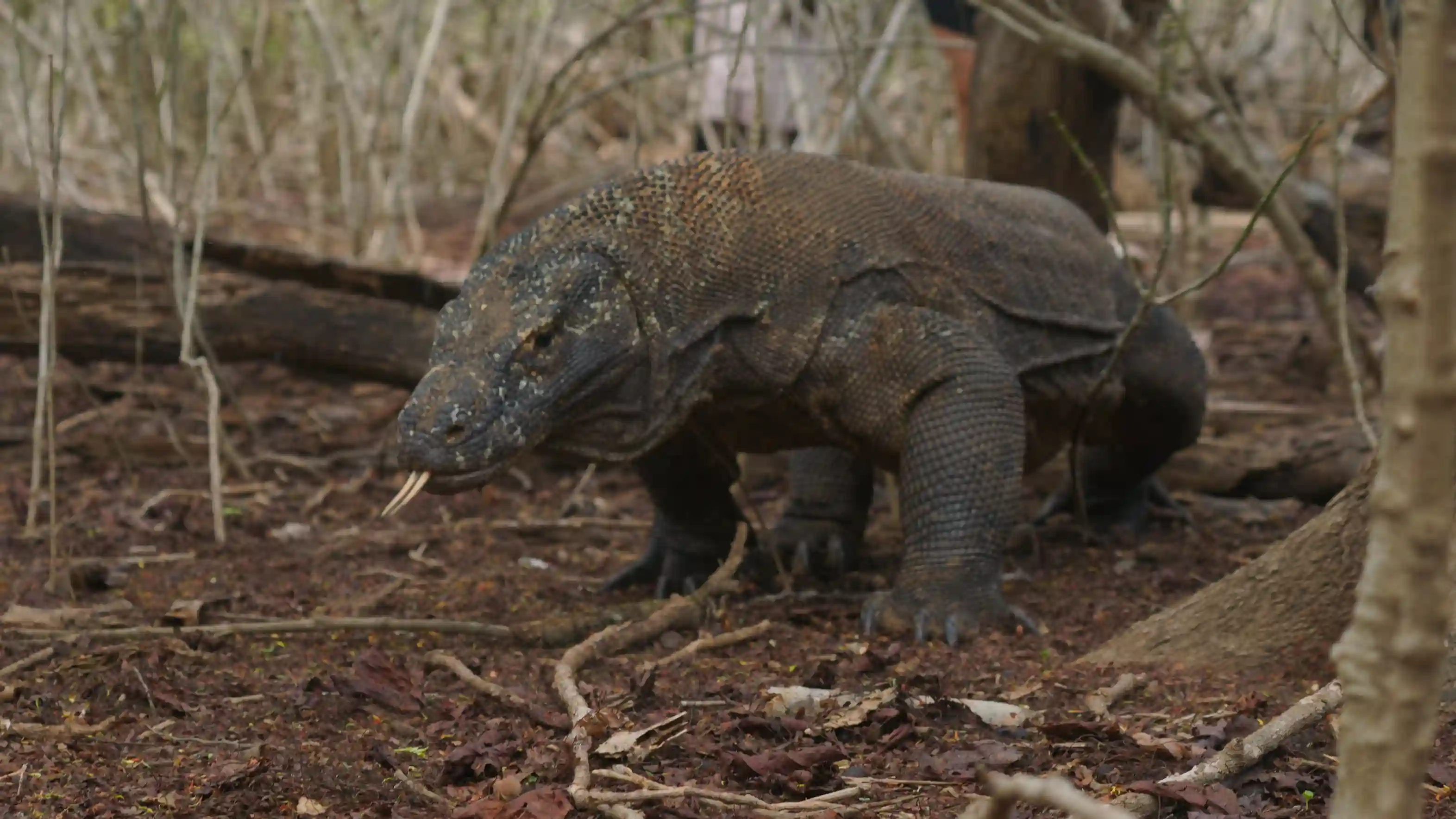
Have you ever found yourself wondering, “How long do Komodo dragons live?” These giant reptiles have captured global fascination not just for their size and power, but for the mystery surrounding their longevity. Komodo dragons live about 30 years in the wild, according to the Smithsonian’s National Zoo, and typically 20–30 years when they survive to adulthood, with individuals in professional care occasionally living longer under consistent veterinary attention.
In this article, you’ll learn the real facts about the Komodo dragon lifespan, you’ll also learn why this matters to you as a traveler, as a conservationist, and as someone who loves the natural world. So let’s dive into the life of this legendary predator and find out just how many years a Komodo dragon can actually live.
Key Takeaways
- Komodo dragons live an average of 30 years in the wild and typically 20–30 years overall, with select captive individuals like Fluffy at the Los Angeles Zoo reaching around 33 years.
- Hatchlings spend their first year almost entirely in trees to escape cannibalistic adults, gradually shifting to a mostly terrestrial life by the juvenile stage around 2–3 years old.
- Sexual maturity arrives late compared to other reptiles, females around 7–10 years and males around 8–10 years, before dragons enter full adulthood as apex predators.
- Claims of Komodo dragons living 50 years or more are not supported by peer-reviewed research; verified records top out in the low-30s to low-40s range.
- Wild dragons can only be seen in Komodo National Park, Indonesia, and the safest way to witness their full life cycle up close is through a ranger-led tour with an experienced local operator.
How Long Do Komodo Dragons Live in the Wild?
In their natural habitat across Komodo, Rinca, Flores, Gili Motang, and Gili Dasami, Komodo dragons face a harsh survival gauntlet. Most hatchlings never reach adulthood, and the ones that do typically live around 30 years, though wild females tend to disappear from long-term mark-recapture studies earlier than males, often by their late 20s, likely due to the physical toll of egg-laying and nest defense.
Males, being larger and less vulnerable to predation once mature, may push toward the upper end of that range or slightly beyond in undisturbed populations.
How Long Do Komodo Dragons Live in Captivity?
Captive Komodo dragons often benefit from steady food supply, veterinary care, and zero predation risk, factors that can modestly extend their lifespan compared to the wild. According to data from the Association of Zoos and Aquariums (AZA), the median lifespan in professional care is approximately 19.5 years for females and 12.9 years for males, though these medians reflect a mix of ages at death across a population and don’t represent a hard ceiling.
Some individuals have significantly outlived those medians. Fluffy, a Komodo dragon at the Los Angeles Zoo, lived to approximately 33 years old, one of the longest documented lifespans for the species. Loka, at the Calgary Zoo, reached around 30 years. These standout cases show that with the right conditions, Komodo dragons can substantially exceed typical captive averages.
You may encounter anecdotal claims online of Komodo dragons living 50, 60, or even 70+ years. These figures are not supported by peer-reviewed data. The most rigorous long-term studies, including genetic and mark-recapture research such as Laver et al. (2012), have not confirmed any wild or captive individual conclusively surviving past the low-40s range, and most verified records sit well below that. Treat any lifespan claim beyond roughly 30–35 years as unverified until backed by a documented, tracked individual.
Why Komodo Dragon Lifespan Matters to You
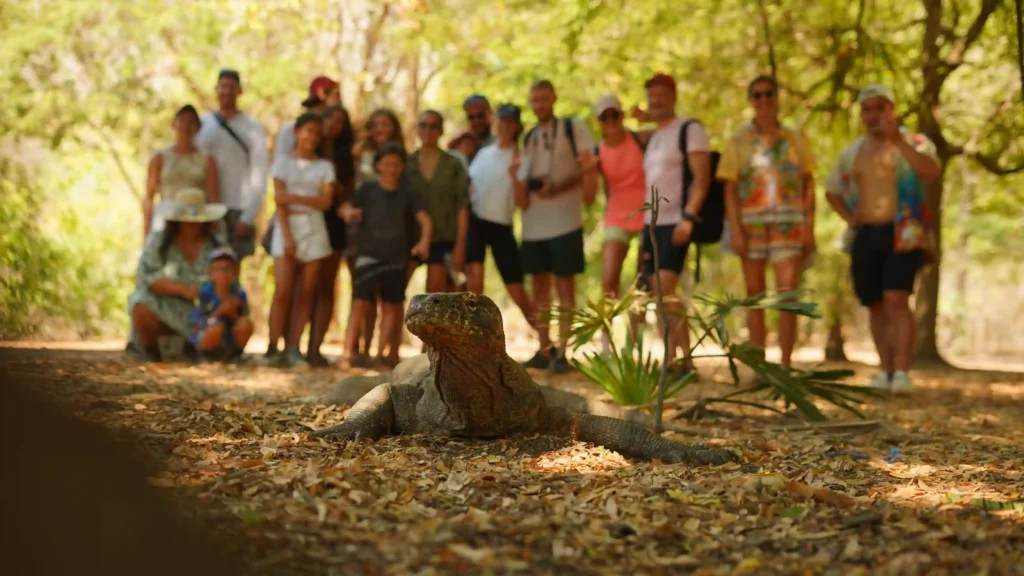
At this point, you might be thinking, “Why should I care how long Komodo dragons live?” The answer goes beyond curiosity, it’s about conservation and connection. When you visit places like Komodo National Park, you’re not just a tourist. You’re stepping into the habitat of a species that has survived for millions of years.
By understanding their life expectancy, you become more aware of the challenges they face and the importance of protecting them. Every eco-conscious choice you make, from supporting responsible tour operators to respecting park guidelines, contributes to their survival. In other words, knowing about the longevity of Komodo dragons empowers you to be part of their future.
The Komodo Dragon Life Cycle: From Egg to Apex Predator
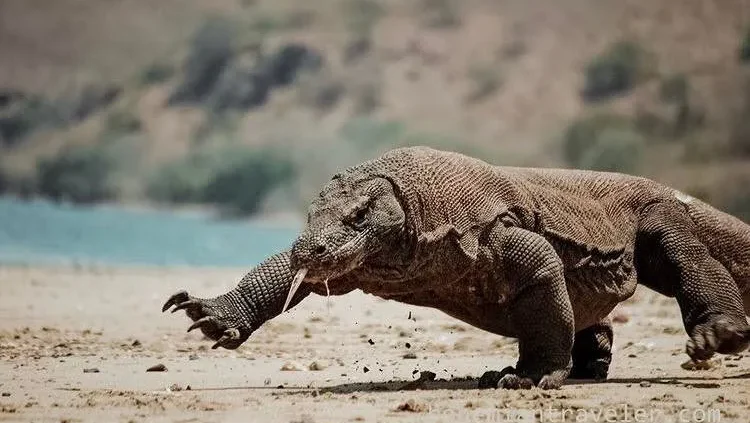
To better understand the lifespan of Komodo dragons, let’s go through their life stages step by step.
1. Incubation (7–8 Months)
Female Komodo dragons lay a clutch of around 15–30 eggs (commonly cited around 20–21) inside megapode bird mounds or self-dug burrows, which provide stable temperature and humidity. Incubation lasts roughly 220 days, or about 7–8 months, with temperature during incubation influencing hatchling sex ratios.
2. Hatchling Stage (0–1 Year): Life in the Trees
Newly hatched Komodo dragons emerge at just 30–40 cm long and 80–100 grams, a fraction of their eventual adult size. Within hours of digging out of the nest, hatchlings climb straight into the tree canopy, where they will spend nearly all their time for the next year or so.
This arboreal lifestyle isn’t optional, it’s survival. Adult Komodo dragons are cannibalistic and will readily eat hatchlings and juveniles they encounter on the ground. Living in trees keeps young dragons safely out of reach while they feed on insects, small lizards, and birds’ eggs.
3. Juvenile Stage (1–3 Years): The Transition Begins
As they grow, juveniles gradually shift from a nearly exclusive arboreal existence toward more time on the ground, though they remain cautious. Field studies tracking immature Komodo dragons found hatchlings were arboreal roughly 98% of the time, while juveniles had already shifted to spending about 71% of their time on the ground, evidence of a clear, progressive transition rather than an abrupt switch. This period typically spans the first two to three years of life, somewhat shorter than older estimates once suggested.
4. Sub-Adult Stage (3–7 Years): Building Toward Dominance
By this stage, young dragons are largely terrestrial, growing rapidly, and beginning to hunt larger prey like rodents, birds, and smaller mammals. They’re still vulnerable to larger adults and continue to avoid direct confrontation with dominant individuals.
5. Sexual Maturity (7–10 Years)
Komodo dragons reach sexual maturity later than many reptiles of comparable size. Research indicates females typically mature around 7–10 years old, while males mature slightly later, around 8–10 years. Once mature, they begin participating in the annual breeding season, typically between June and August, competing for mates and nesting sites.
6. Adulthood (10+ Years): Apex Predator Status
Fully mature Komodo dragons dominate their island ecosystems with no natural predators. Adults can reach 2.5–3 meters in length and 60–90 kg in the wild, powerful enough to take down prey as large as deer, wild boar, and water buffalo using a combination of serrated teeth and a venomous bite that impairs blood clotting and lowers prey blood pressure. This apex status defines the remainder of their 20–30 year lifespan.
What Influences Komodo Dragon Longevity?
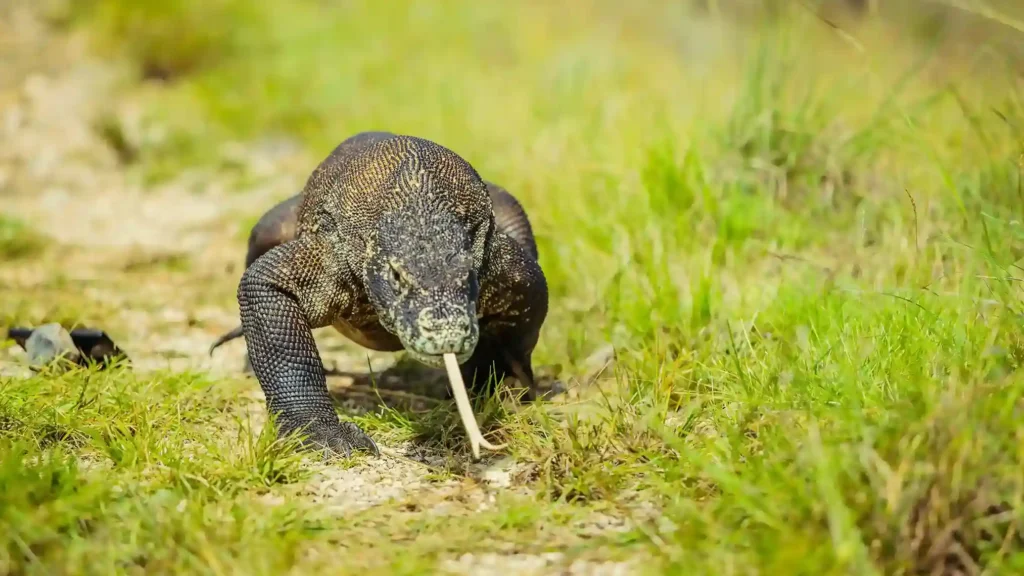
Now that you know the basics of their lifespan, let’s look at the factors that determine how long Komodo dragons live.
- Environment and Habitat
Wild Komodo dragons mostly live across several Indonesian islands, particularly in tropical savanna forests in East Nusa Tenggara where conditions are often harsh. They face constant risks from habitat loss, natural disasters, and shrinking Komodo dragon populations of prey. This reduces their life expectancy compared to those in captivity, where their body temperature and environment are carefully monitored. - Health and Nutrition
Just like humans, what Komodo dragons eat plays a huge role in their longevity. In the wild, malnutrition can occur if prey becomes scarce due to human disruption or ecosystem imbalance. In captivity, however, they receive balanced meals designed to sustain their health. This contrast explains why captive dragons can live longer and healthier lives compared to their wild counterparts. - Conservation Efforts
Programs focusing on Komodo dragon’s protection, such as those in Komodo National Park, create safer environments, allowing these endangered species to thrive longer. Without these measures, their average lifespan could be significantly shorter, and future generations might only learn about them as legends alongside tales of other dragons. - Human Activity
Poaching, illegal hunting of prey, and habitat destruction directly affect the Komodo dragon lifespan. The more responsible we are as travelers and conservation supporters, the better chance these incredible reptiles have to survive for decades to come.
Read more: Best Time of Day to See Komodo Dragons
What Kills Komodo Dragons? Mortality by Life Stage
- Eggs: nest predation (including other monitors), flooding, desiccation.
- Hatchlings/juveniles: cannibalism by adults, birds of prey, snakes, starvation.
- Adults: combat wounds from rival males, injuries from large prey such as buffalo, drought-year starvation, disease and parasites.
- Seniors: age-related decline compounding otherwise survivable injuries.
The pattern is a funnel: of a ~21-egg clutch, only a handful of dragons reach maturity, and only the toughest of those reach 25. Every big male dozing beside a ranger post is a statistical survivor several times over.
How Do Scientists Know a Dragon’s Age?
There is no birth certificate in the savanna. Researchers rely on three methods: long-term mark-recapture programs in Komodo National Park (individuals tagged and re-encountered across decades), known-age zoo records, and growth-curve modelling from body measurements. That third method is the source of the famous “62-year” figure — an extrapolated ceiling, not a measured dragon, which is why serious references stick to ~30 years.
So, How Long Do Komodo Dragons Live?
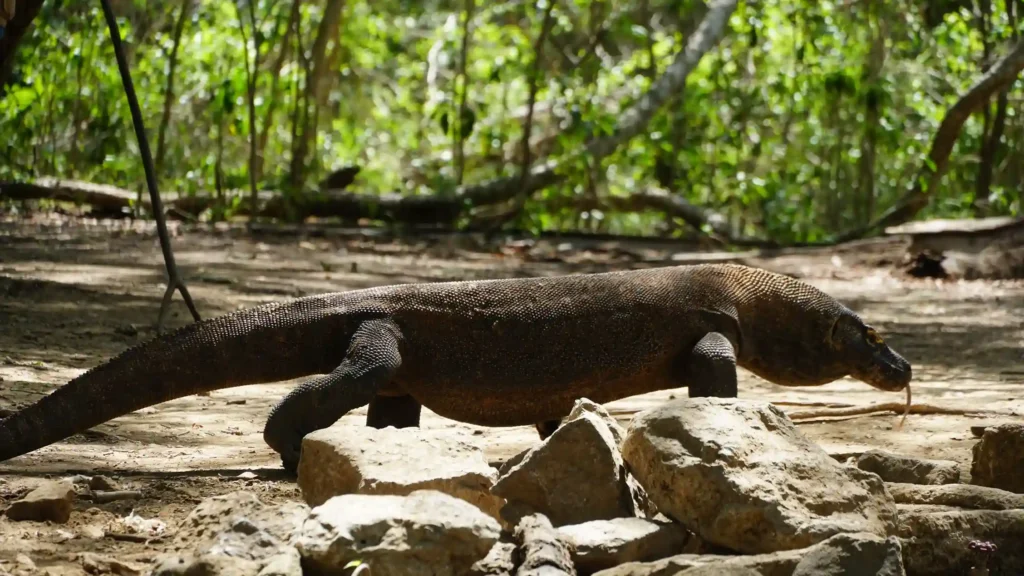
When you ask yourself, “How long do Komodo dragons live?”, the answer isn’t as simple as one number. It actually depends a lot on their living conditions, whether they grow up in the wild or under human care.
| Context | Lifespan | Source basis |
| Wild, typical | ~30 years | Smithsonian National Zoo; mark-recapture field studies |
| Captivity, typical | 20–30+ years | Zoo records |
| Captivity, median (managed care) | 19.5 yrs (males) / 12.9 yrs (females) | AZA data via San Diego Zoo fact sheet |
| Best-documented maximums | ~33 yrs (Fluffy, LA Zoo); 30 yrs (Loka, Calgary Zoo) | Zoo longevity records |
| 50–62-year claims | Unverified | Growth-curve extrapolation, anecdote (HAGR database) |
- In the wild, Komodo dragons usually live around 30 years, with most sources placing their lifespan between 15–30 years. Life in their natural habitat is full of challenges: young dragons often avoid predators like birds, snakes, and even adult Komodos, while older ones face food shortages, territorial clashes, and human interference. They need to compete with other species for food, and sometimes even hunt large prey to survive. All of these risks make it difficult for many to reach their full potential age.
- In captivity, things are quite different. With regular feeding, veterinary attention, and protection from predators, Komodo dragons can live between 20–30+ years. In fact, some individuals in well-managed zoos such as the National Zoo and breeding programs have even exceeded this average, showing that proper care can extend their longevity. In captivity, they also tend to eat insects, small mammals, and other controlled diets while relying on their sharp sense of smell to detect food, without the risk of a fatal venomous bite from rivals.
- Anecdotal estimates go even further, with claims that Komodo dragons might reach over 60 years in the wild. However, these reports remain unverified and are not widely accepted by the scientific community. Still, they spark curiosity and highlight how little we truly know about the extreme limits of the Komodo dragon lifespan.
In the end, whether in the rugged landscapes of Komodo Island or within the protective walls of a zoo, these giant reptiles showcase remarkable survival. Their life expectancy tells us not just about biology, but also about how much the environment and human involvement influence their journey through time.
Read more: Komodo Dragon Myths vs Facts: You Won’t Believe What’s Actually True!
Let’s Discover Komodo Dragons Up Close with Komodo Luxury!
So, how long do Komodo dragons live? On average, these giant reptiles can live up to 30 years in the wild and 20–30+ years in captivity, influenced by their environment, diet, and ongoing conservation. While some stories suggest they might reach 60 years or more, what truly matters is how extraordinary it is to see these ancient creatures alive today.
Spotting dragons at different life stages — from tree-dwelling juveniles to dominant adults — is far more likely on a multi-island liveaboard cruise through Komodo National Park, which visits Komodo, Rinca, and the surrounding islets.
You can experience this wonder for yourself, join a Komodo Island Tour with Komodo Luxury and witness Komodo dragons in their natural habitat. Not only will you enjoy a premium sailing journey across stunning islands, but you’ll also be part of a sustainable travel experience that supports conservation. Don’t just read about them, come face-to-face with the world’s largest lizards in an adventure you’ll never forget. This is a once-in-a-lifetime chance to meet the legendary Komodo dragons in their natural home, an adventure only Komodo Luxury can deliver.