





Last updated: August 2026 · Prices & availability verified for the 2026/2027 season
Last updated: August 16, 2026 · Written from Labuan Bajo by the Komodo Luxury field team
Komodo dragons live in the wild in only one place on Earth: a small cluster of islands in eastern Indonesia. As of 2026, roughly 3,300 wild Komodo dragons survive — on Komodo, Rinca, Gili Motang, and Nusa Kode inside Komodo National Park, plus isolated pockets along the west coast of Flores. The species has been listed as Endangered on the IUCN Red List since 2021.
TL;DR: The entire wild range of the Komodo dragon fits inside one Indonesian regency. Around 3,300 individuals remain, protected mainly by Komodo National Park, whose ranger patrols and regulated, ranger-guided tourism are the backbone of the species’ conservation. The dragons are endangered, not extinct — and a well-run visit actively funds their protection.
- Wild range: Komodo, Rinca, Gili Motang, Nusa Kode + western coastal Flores — nowhere else on the planet
- Population: approximately 3,300 wild individuals (park survey estimates)
- Status: IUCN Endangered since 2021 (previously Vulnerable)
- Protection: Komodo National Park (established 1980, UNESCO World Heritage since 1991)
- Park status: open and operating normally as of August 2026
Where Do Komodo Dragons Live in the Wild?
The Komodo dragon (Varanus komodoensis) is endemic to a handful of islands in the Lesser Sunda chain, between Sumbawa and Flores. Most of the population lives inside Komodo National Park, spread across four islands: Komodo and Rinca hold the two large, stable populations, while tiny Gili Motang and Nusa Kode each shelter fewer than a hundred dragons. Outside the park boundary, smaller and more fragmented groups survive along the western and northern coast of Flores, including the Wae Wuul reserve near Labuan Bajo.
That is the entire species. There are no wild Komodo dragons in Australia, Papua, or anywhere else — a range so compact that you can sail across most of it in a single day on a guided Komodo island sailing tour from Labuan Bajo.
| Location | Estimated wild population | Notes |
|---|---|---|
| Komodo Island | ≈ 1,700 | Largest population; savanna and monsoon forest |
| Rinca Island | ≈ 1,100 | Second stronghold; highest sighting frequency for visitors |
| Gili Motang | < 100 | Small, closely monitored island population |
| Nusa Kode (Gili Dasami) | < 100 | Remote southern islet beside Rinca |
| West coast of Flores | Several hundred | Fragmented groups outside the park, incl. Wae Wuul reserve |
Figures are rounded park survey estimates published by the Komodo National Park Authority; totals shift slightly with each annual monitoring cycle.
What Kind of Habitat Do Komodo Dragons Prefer?
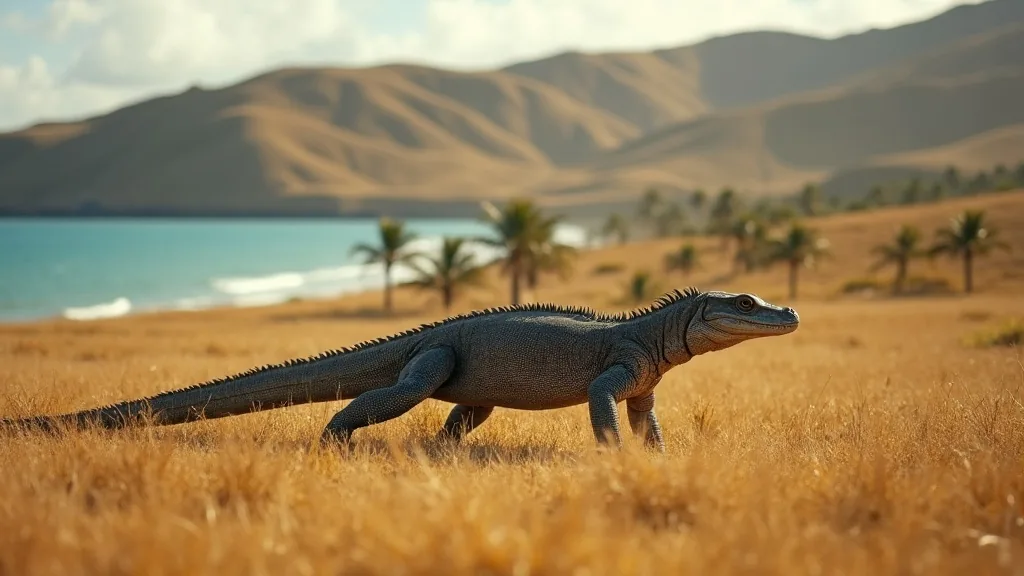
Komodo dragon habitat is defined by heat and drought. The islands sit in one of Indonesia’s driest zones, and the dragons thrive across three connected habitat types: open savanna grassland dotted with lontar palms, tropical dry monsoon forest in the valleys, and mangrove or beach fringes at the coast. They range from sea level up to about 700 metres, though most activity concentrates in the lowlands where deer — their main prey — graze.
This habitat mosaic is exactly what visitors see on the ranger-guided trails of Komodo and Rinca: golden hills, shaded forest floors where dragons rest through the midday heat, and shorelines where young dragons hunt smaller prey. Adults are ambush hunters, relying on tall grass and forest edge cover, which is why intact, undisturbed habitat matters as much as the head-count itself.
How Many Komodo Dragons Are Left in 2026?
The most reliable answer to “how many Komodo dragons are left” is approximately 3,300 wild individuals, based on the Komodo National Park Authority’s ongoing monitoring programme. The great majority live inside the park; the Flores populations outside it are smaller, harder to count, and under greater pressure from habitat conversion.
Two details behind that number are worth knowing. First, the population is considered broadly stable inside the park — a genuine conservation success given how narrow the species’ range is. Second, the number has not always held everywhere: Padar, the famous viewpoint island between Komodo and Rinca, lost its dragon population decades ago when prey species collapsed there. Padar is a reminder of how quickly a small island population can vanish, and why the park treats prey animals — Timor deer, wild boar, water buffalo — as protected species too.
Why Are Komodo Dragons Endangered?
In 2021, the IUCN Red List moved the Komodo dragon from Vulnerable to Endangered. The assessment pointed to a stark long-term threat: climate change. Rising sea levels and temperature shifts are projected to shrink the dragons’ usable lowland habitat significantly over the coming decades — and a species confined to a few small islands has nowhere to retreat to.
On Flores, outside the national park, the pressures are more immediate: agricultural expansion and burning reduce habitat, and hunting of deer depletes the prey base. Add the inherent fragility of small, isolated populations, and the endangered listing is less about today’s head-count and more about how little margin for error the species has. That is precisely why the protected islands of the park carry so much weight.
How Does Komodo National Park Protect the Dragons?
Komodo National Park was established in 1980 specifically to protect the Komodo dragon, and it became a UNESCO World Heritage Site in 1991. Today the park authority runs the ranger corps that patrols against poaching, monitors dragon and prey populations island by island, enforces visitor zoning, and requires every trekking group to be accompanied by a licensed ranger.
Park entrance and conservation fees paid by visitors flow directly into this system — rangers’ patrols, monitoring science, and community programmes in the villages inside the park. So far, the model is working: dragon numbers inside the park have remained stable while the species declined elsewhere. The park also proved its resilience in August 2026, when a strong earthquake struck far to the northeast of Labuan Bajo; the park was not closed, the Harbormaster reopened sailing the same day, and trips have continued normally — we cover that fully in our guide to whether Labuan Bajo is safe to visit after the earthquake.
How Does Ethical Tourism Help Komodo Dragon Conservation?
Well-managed tourism is not a threat to the dragons — it is one of the strongest arguments for keeping their habitat intact. Every park ticket funds ranger salaries and monitoring; every guest who follows the rules reinforces the system that keeps the islands wild. Ethical visiting comes down to a few non-negotiables: always trek with a licensed park ranger, keep the required distance, never feed or bait dragons, stay on marked trails, and pack out all waste.
Komodo Luxury – a registered Indonesian PT under Juara Holding Group Limited with 1,500+ verified guest reviews (4.9/5 across Google and TripAdvisor) – operates every itinerary to these standards, whether guests join a small-group open trip, sail on a traditional luxury phinisi, or take a fully private yacht charter around the park. Our crews work with the same licensed rangers year-round, and our briefings treat park rules as the baseline, not the fine print.
What Would Change This Outlook?
Three things could shift the picture described above: a new IUCN assessment revising the species’ status, a significant change in park survey numbers (published by the Komodo National Park Authority), or new protection measures for the unprotected Flores populations. We update this page when any of those change; so far, the 2026 outlook inside the park remains stable.
Frequently Asked Questions
Are Komodo dragons endangered or already extinct?
Endangered, not extinct. Around 3,300 wild Komodo dragons remain, and the species has been listed as Endangered on the IUCN Red List since 2021. Populations inside Komodo National Park are considered stable.
Do Komodo dragons live anywhere outside Indonesia?
Not in the wild. The only wild populations on Earth are on Komodo, Rinca, Gili Motang, Nusa Kode, and the west coast of Flores. Dragons seen elsewhere live in zoos and conservation breeding programmes.
Which island is better for seeing dragons — Komodo or Rinca?
Both offer excellent, ranger-guided sightings. Rinca has a slightly higher sighting frequency per hectare; Komodo offers the classic savanna scenery. Most sailing itineraries — including a Komodo tour from Bali — visit at least one of the two.
Do Komodo dragons live on Padar Island?
No. Padar’s dragon population died out decades ago after its prey base collapsed. Today Padar is visited for its famous three-bay viewpoint, not for dragons.
Is Komodo National Park still open after the August 2026 earthquake?
Yes. The park was not closed, Labuan Bajo’s Harbormaster officially reopened sailing on the same day (Maklumat Pelayaran No. 05/MP-VIII/2026), and tours have run normally since — so far, conditions remain fully operational.
Plan a Responsible Visit
Seeing a wild Komodo dragon in its own habitat — with a licensed ranger, on its terms — remains one of the world’s great wildlife encounters, and every responsible visit strengthens the case for protecting these islands. When you are ready to plan, explore our private Komodo sailing trips or message our Labuan Bajo team directly on WhatsApp at +62 811-3823-875 — we will help you build an itinerary that treads lightly and sees the park at its best.
Sources: IUCN Red List (2021 assessment, Varanus komodoensis); Komodo National Park Authority population monitoring; UNESCO World Heritage listing (1991).