Published August 10, 2026 · Last updated: August 2026 · From the dive logs of our own fleet
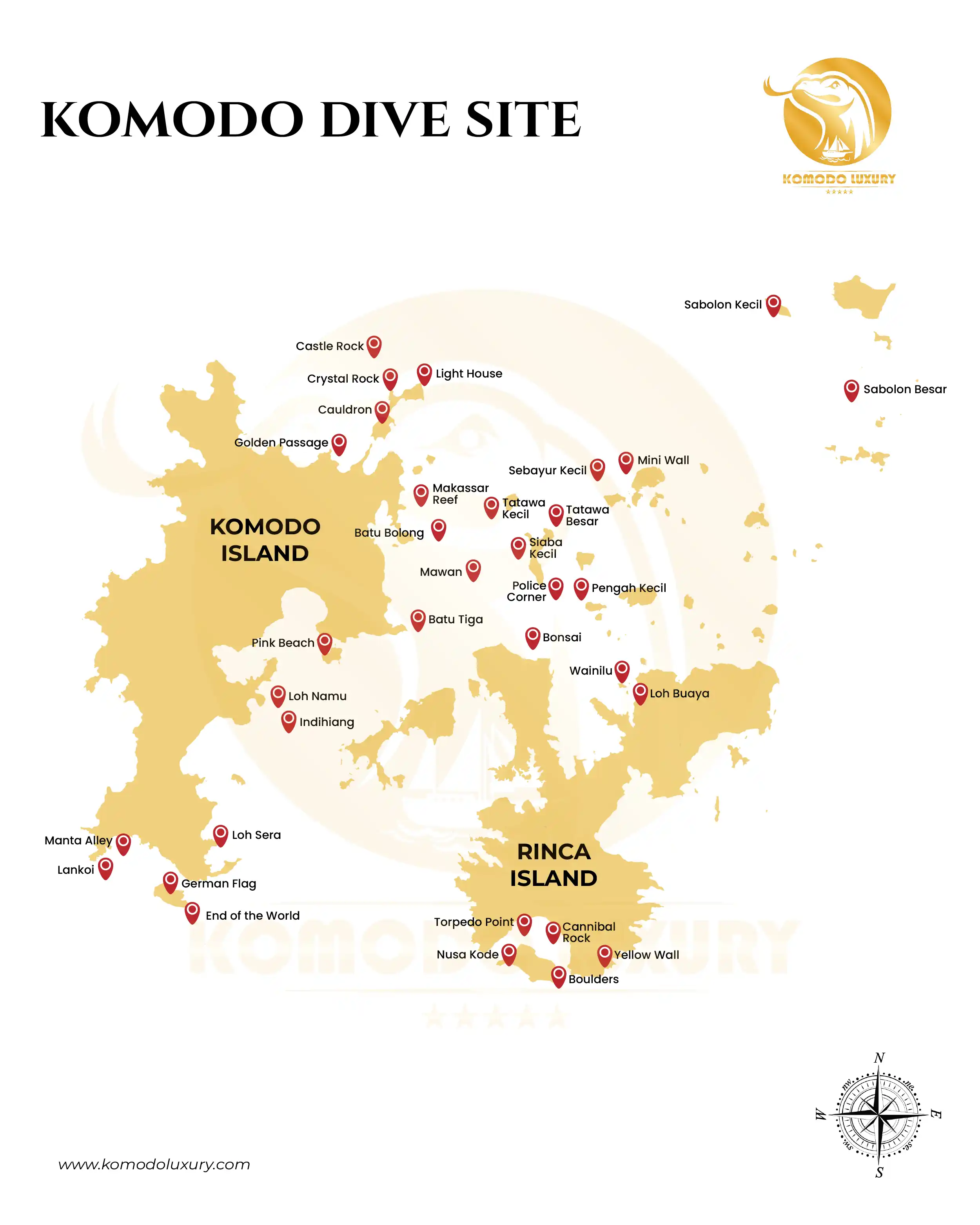
Komodo National Park has 15+ world-class dive sites across three zones: the current-swept northern pinnacles (Castle Rock, Crystal Rock), the central manta and reef sites (Batu Bolong, Manta Point/Karang Makassar, Siaba Besar), and the cooler southern macro sites of Horseshoe Bay (Cannibal Rock, Manta Alley). This guide rates every site honestly by level, current and season — and shows which liveaboard itinerary reaches each one. One honesty note up front: there is no single official park list of dive sites — operators name and group them differently — so this is the working map our cruise directors actually dive, in Komodo National Park, a UNESCO World Heritage Site in East Nusa Tenggara, Indonesia.
| Dive Site | Zone | Level (honest) | Current | Signature Life | Best Months | Snorkel-OK | Reached On |
|---|---|---|---|---|---|---|---|
| Castle Rock | North | Advanced | Strong | Sharks, GT, barracuda storms | Apr-Nov | No | 4D3N |
| Crystal Rock | North | Advanced | Strong | Soft coral heads, turtles, sharks | Apr-Nov | No | 4D3N |
| Shotgun (The Cauldron) | North | Advanced | Very strong (channel) | Mantas, eagle rays, the “shotgun” push | Apr-Nov | No | 4D3N |
| Golden Passage | North | Intermediate-Advanced | Strong drift | Reef sharks, schooling fish | Apr-Nov | No | 4D3N |
| Batu Bolong | Central | Advanced | Strong, split | The park’s densest reef pinnacle | Apr-Nov | No | 3D2N |
| Manta Point (Karang Makassar) | Central | All levels (drift) | Mild-moderate | Reef mantas at cleaning stations | Year-round | Yes | 3D2N |
| Mawan | Central | Beginner-OK | Mild | Mantas, white sand slope | Apr-Nov | Yes | 3D2N |
| Siaba Besar | Central | Beginner-OK | Mild | Green turtles, seagrass bowl | Apr-Nov | Yes | 3D2N |
| Siaba Kecil | Central | Intermediate | Moderate drift | Fast coral drift | Apr-Nov | No | 3D2N |
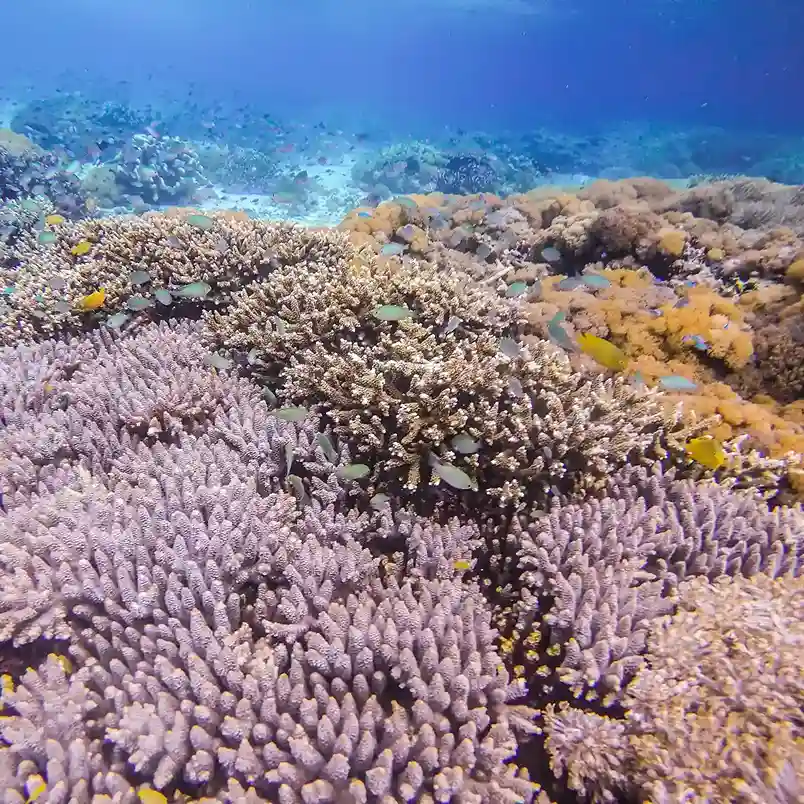
| Tatawa Besar | Central | Beginner-OK | Mild-moderate | Hard-coral drift, turtles | Apr-Nov | Yes | 3D2N |
| Tatawa Kecil | Central | Advanced | Strong | Pristine coral, pelagic action | Apr-Nov | No | 4D3N |
| Sebayur | Central | Beginner-OK (check dive) | Mild | Gentle slope, macro | Apr-Nov | Yes | 3D2N |
| Wainilu | Central | All levels (muck) | Mild | Nudibranchs, frogfish, night dives | Apr-Nov | No | 4D3N |
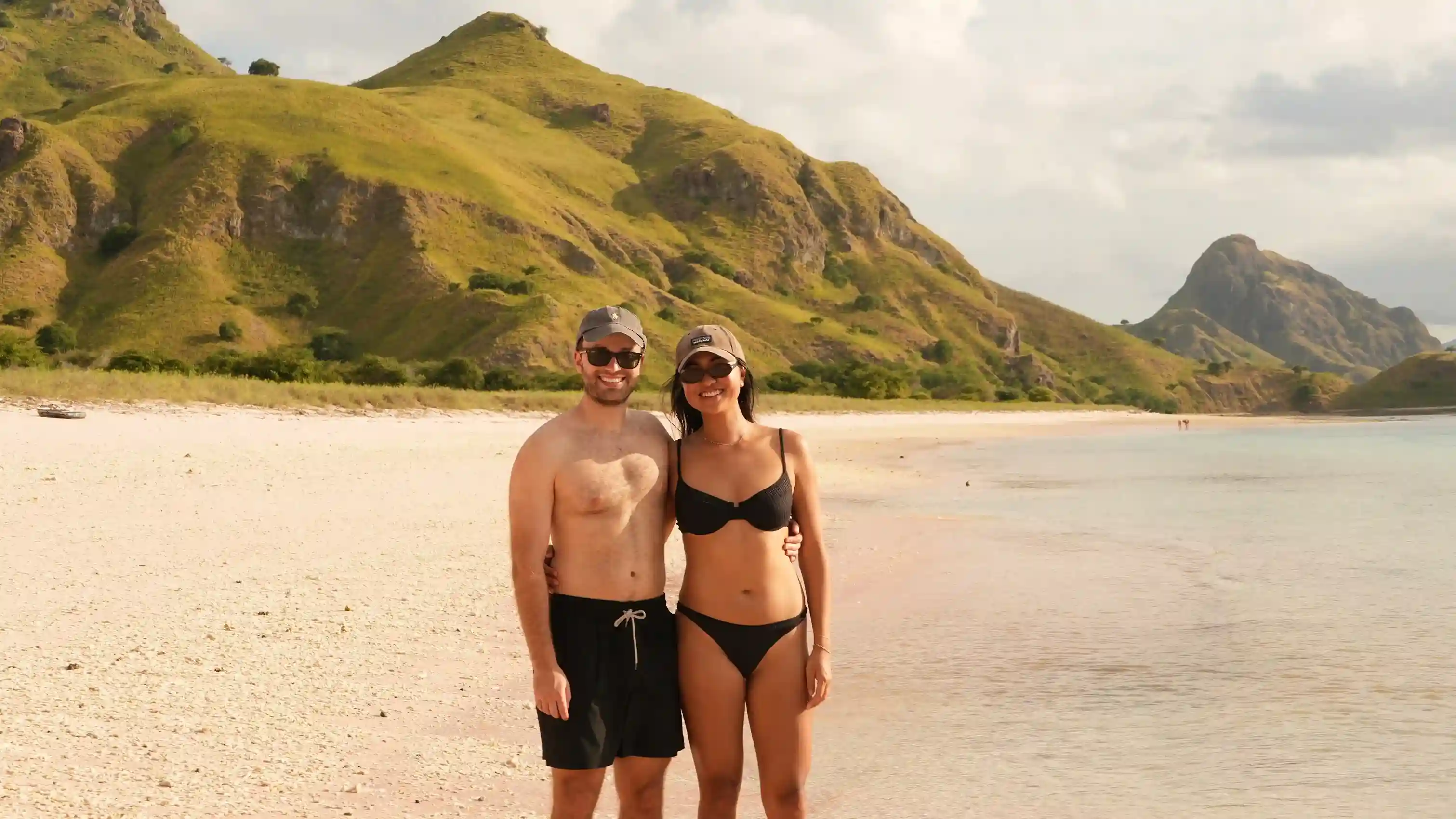
| Pink Beach | Central | All levels | Mild | Shallow reef off the pink sand | Apr-Nov | Yes | 3D2N |
| Manta Alley | South | Advanced (seasonal) | Moderate-strong | Dense manta aggregations | Dec-Feb | No | 7D6N+ |
| Cannibal Rock | South | Advanced (seasonal) | Moderate, cold | Indonesia-grade macro & colour | Dec-Feb | No | 7D6N+ |
Levels are rated the way our cruise directors brief guests, not the way brochures do: “Advanced” means real current management, negative entries or depth — sites we will not take a fresh Open Water diver, however keen.
The north is the park’s adrenaline wing: clear water, submerged pinnacles, and the current that makes both possible. Visibility here is the best in the park through the Apr-Nov season. These are advanced sites, dived at slack windows your dive guide times to the tide — negative entries are routine.
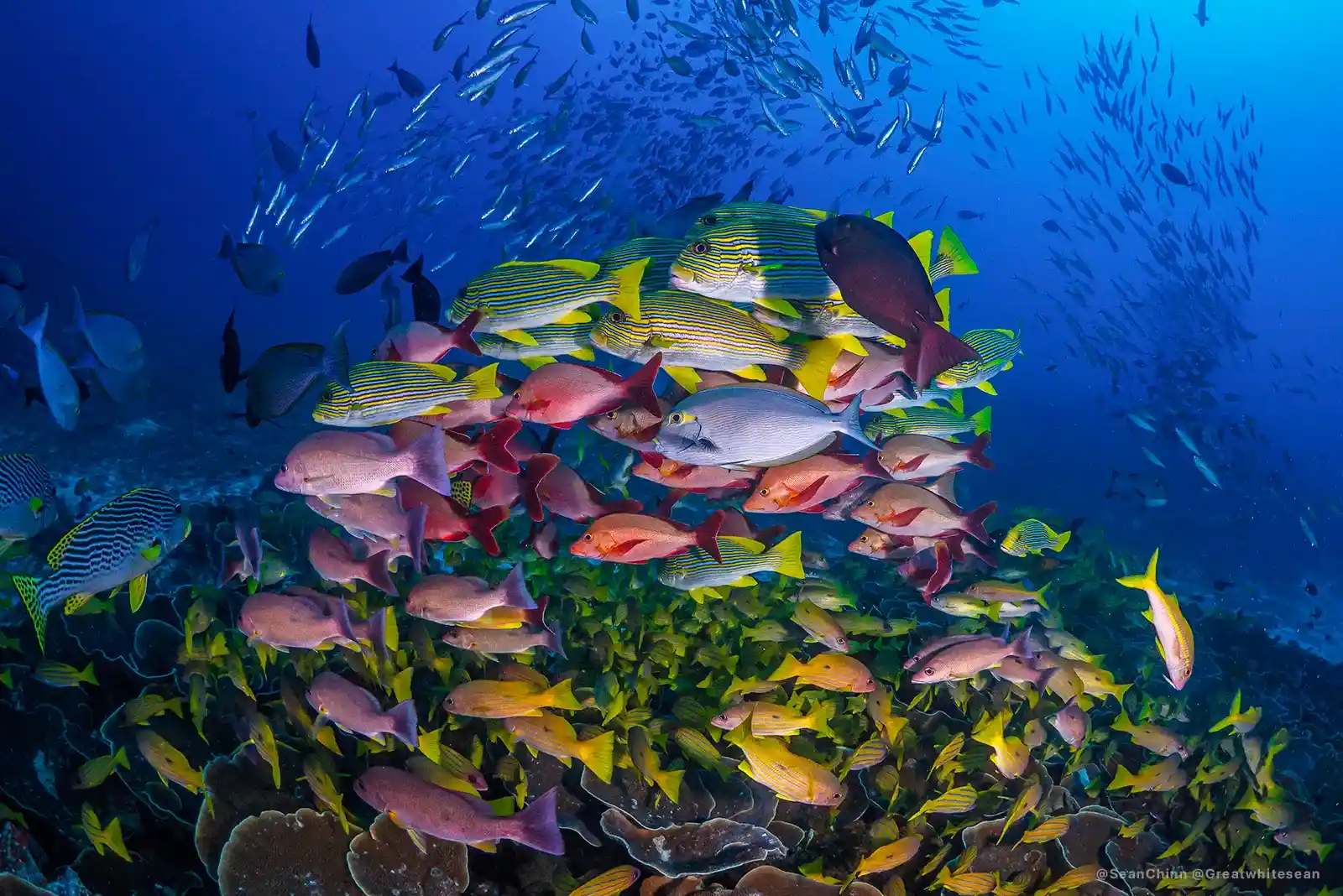
A submerged seamount that turns into a fish storm when the current runs: giant trevally hunting fusilier walls, white-tips below, dogtooth tuna passing in the blue. The classic hook-in-and-watch amphitheatre — and the reason divers add a fourth day.
Castle’s prettier neighbour, named for water so clear the rock seems suspended. Soft-coral heads at the crown, turtles mid-slope, sharks patrolling the down-current point. Marginally gentler than Castle, still not a beginner site.
The channel dive between Gili Lawa Laut and Gili Lawa Darat: a sand bowl, a manta cleaning corner, then the “shotgun” — the current fires you up over a saddle and out. Exhilarating, and strictly for divers comfortable being handled by moving water.
A drift through the channel on Gili Lawa Laut’s doorstep — reef sharks stacked along the terraces, schooling snapper in the seams. The gentlest of the northern set on the right tide, quick to turn serious on the wrong one.
Reaching the north takes an overnight boat positioned by dawn — it is the headline argument for the 4-day itinerary that adds the northern pinnacles.
The central zone is where every Komodo itinerary lives: the manta drift, the beginner-friendly bowls, and one pinnacle with an outsized reputation.
The most famous rock in the park — and, honestly rated, an advanced dive despite its central location. The pinnacle drops past 35 m, the current splits hard around it, and the divable window is the protected wedge your guide reads on arrival. Inside that wedge: the densest reef life in Komodo, top to bottom. Respect it and it is the best dive of the trip.
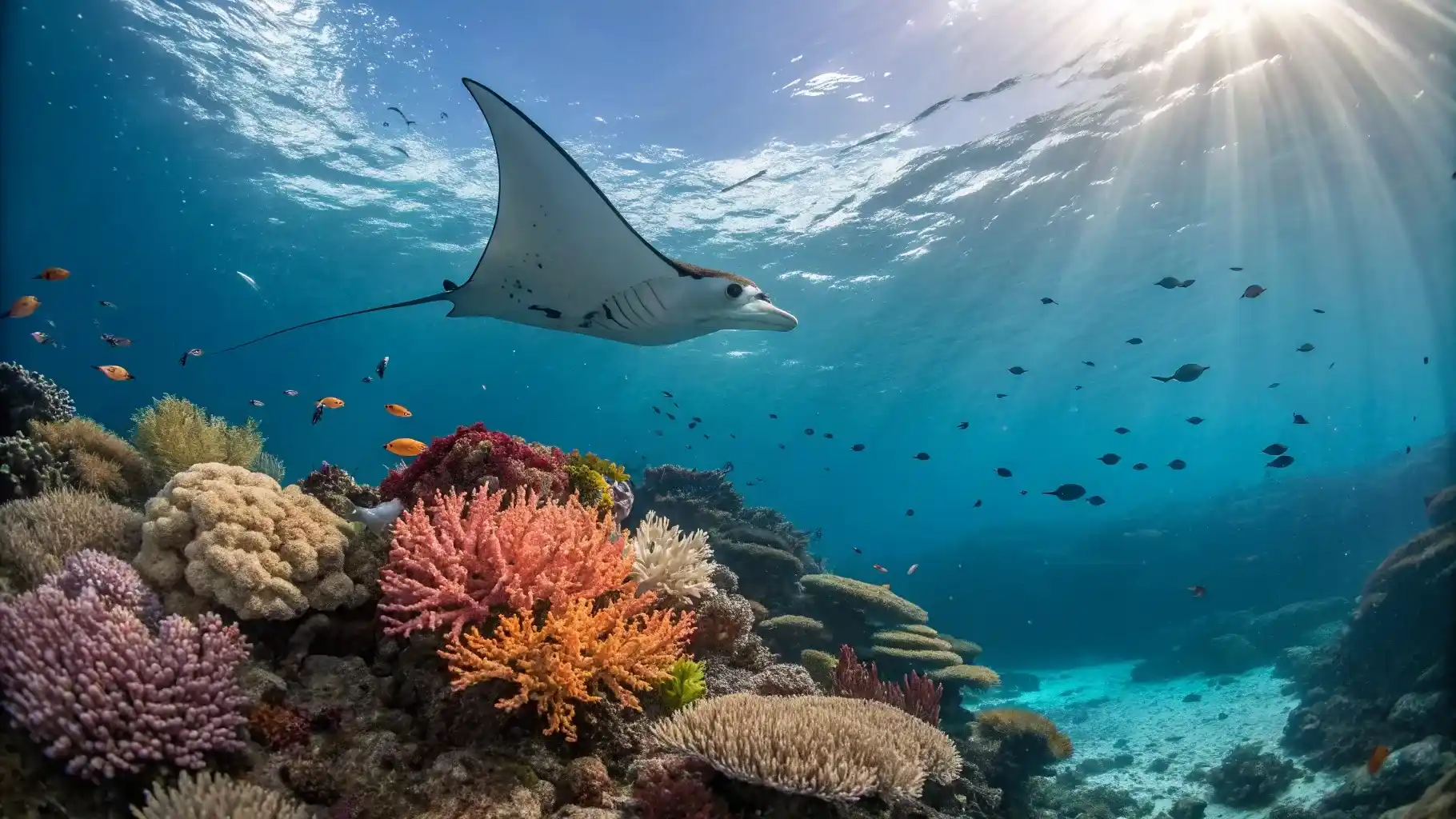
A three-kilometre rubble drift where reef mantas queue at cleaning stations year-round. Shallow, mild on most tides, and genuinely snorkeler-friendly — the one marquee site the whole boat can share.
White-sand slope, occasional mantas, easy profile — the site guides pick when the group spans four certification levels.
Siaba Besar is the park’s turtle bowl and its classic check dive: seagrass, calm water, green turtles in twos and threes. Siaba Kecil is its faster sibling — a proper drift along a coral wall that rewards divers who have their buoyancy sorted.
Tatawa Besar: a gentle hard-coral drift with turtles, beginner-OK on most tides. Tatawa Kecil: small, pristine and current-swept — pocket-sized pelagic action for experienced divers only.
The house-reef of the central anchorages: gentle slope, patient macro, and the second check-dive option when Siaba is busy.
Rinca’s rubble slope is the park’s critter theatre: nudibranch fields (yes — including the famous yellow “Pikachu” nudibranch), frogfish, ghost pipefish and the best night dive in central Komodo. Unglamorous by day, unforgettable by torchlight.
The reef off the pink sand — shallow, colourful and calm, doubling as the snorkel stop every itinerary already makes.
The south is a different ocean: upwelling pulls water down to 20-24°C, plankton drops visibility — and the same plankton feeds a biomass the north cannot match. The southern window runs roughly December-February, operator-dependent, when north-season winds close the top of the park and open Horseshoe Bay.
The southern manta magnet: when the season is on, sightings here are dense in a way even Karang Makassar cannot promise. Cold, surgy, advanced — and worth every degree.
Routinely spoken of among Indonesia’s best sites: a seamount in Horseshoe Bay carpeted in colour — sea apples, rhinopias some seasons, invertebrate life stacked on invertebrate life. Macro heaven in a 5 mm wetsuit.
The supporting cast: Yellow Wall’s afternoon light on soft coral, Torpedo Alley’s legendary night muck (torpedo rays, bobbit worms), Secret Garden and Pillarsteen’s caverns and chimneys off south Padar. Together they make Horseshoe Bay a destination, not a detour — the preserve of 7-day full-park expeditions.
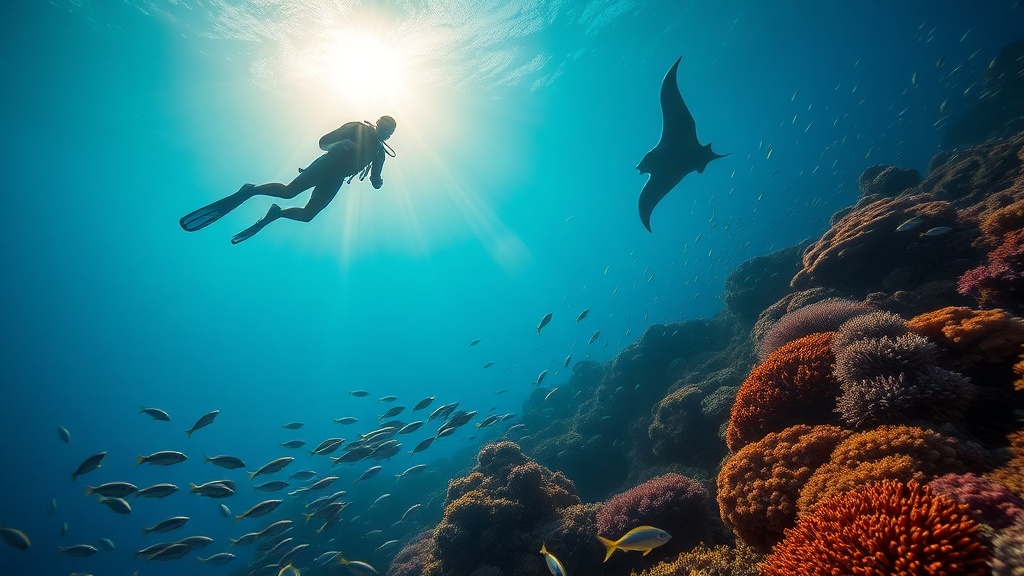
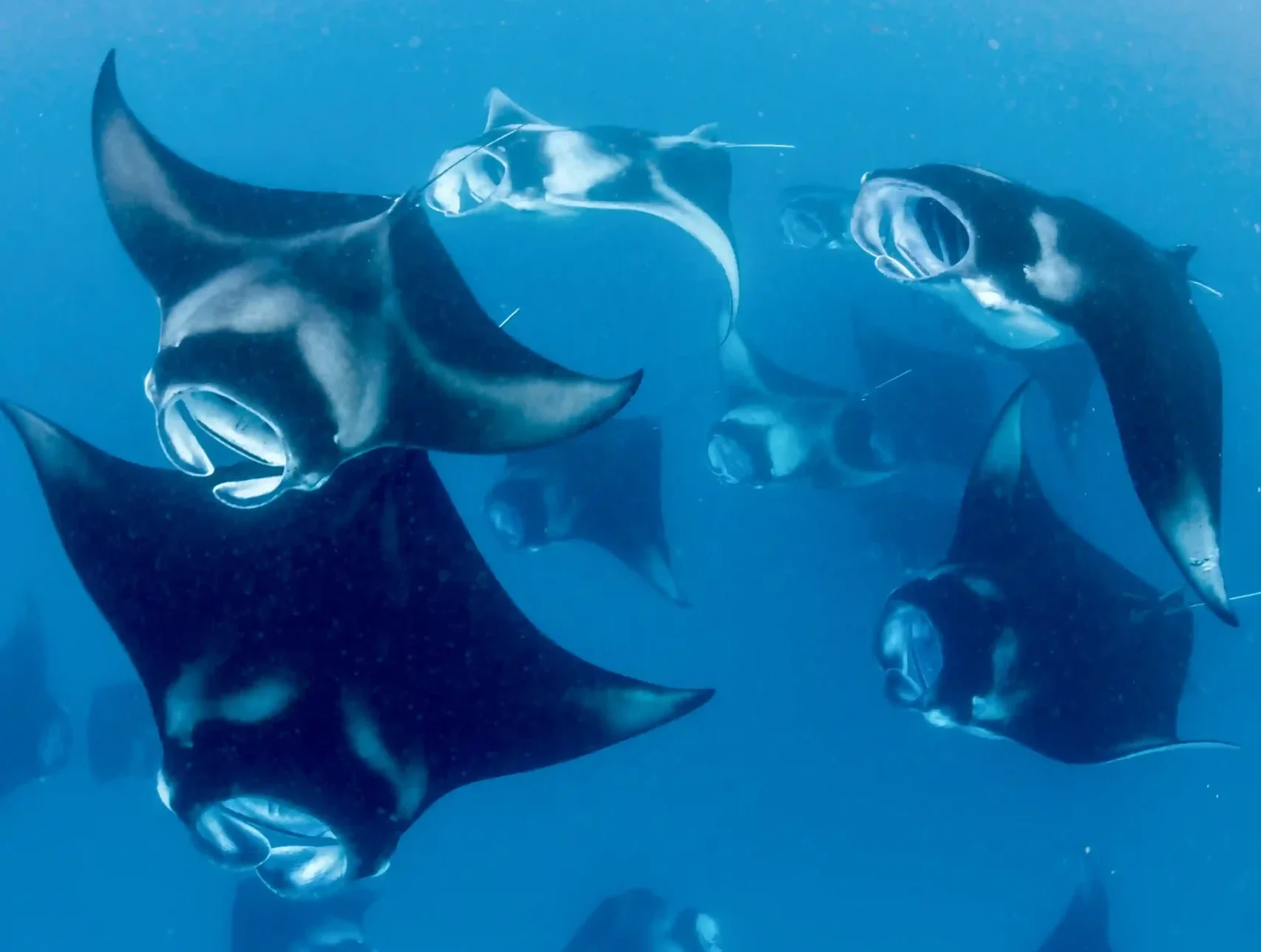
Komodo’s signature rarity is not rare here: reef mantas work the Karang Makassar cleaning stations in every month of the year, with southern-season density at Manta Alley on top. Few places on Earth pair that reliability with a national-park setting.
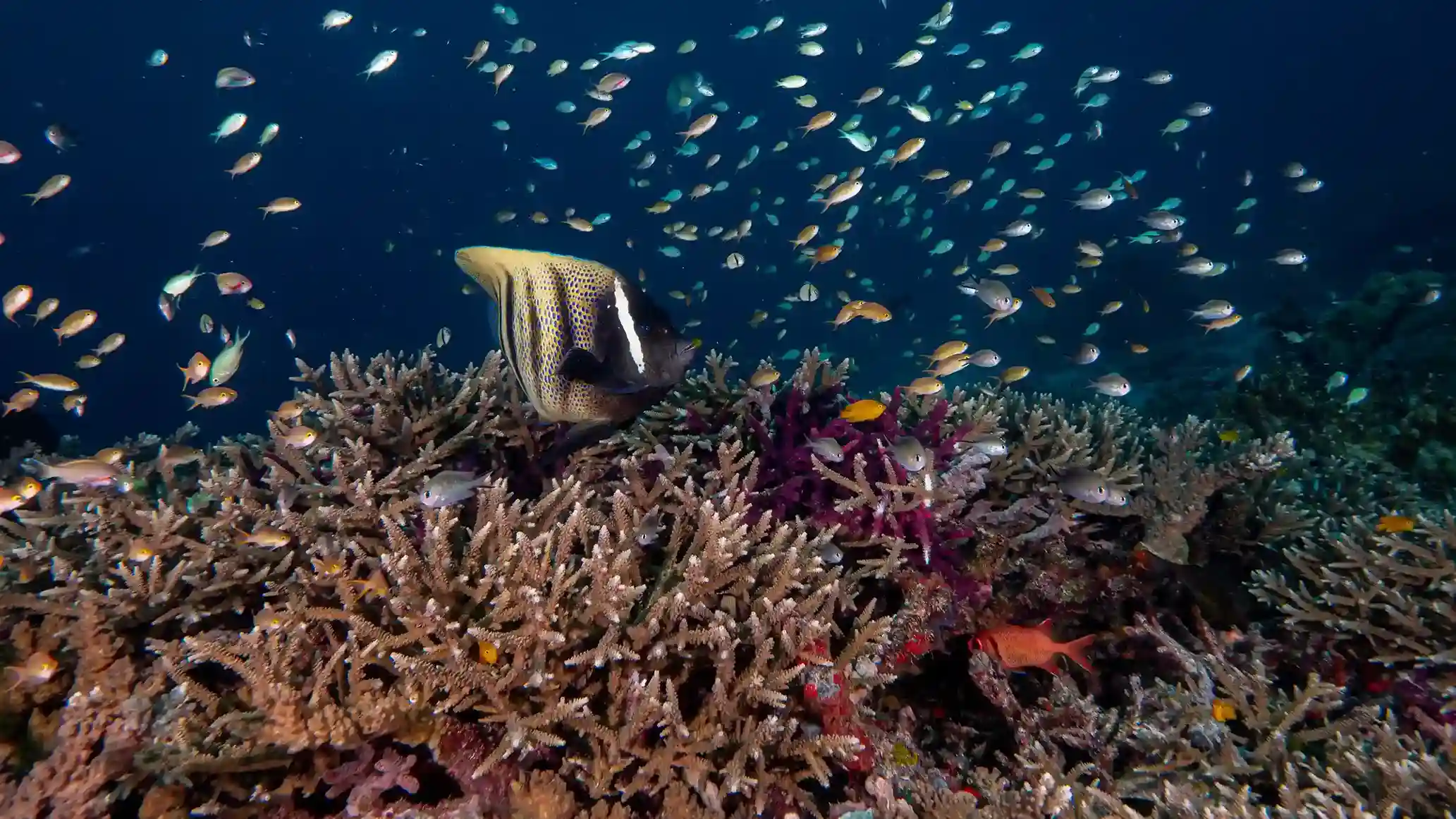
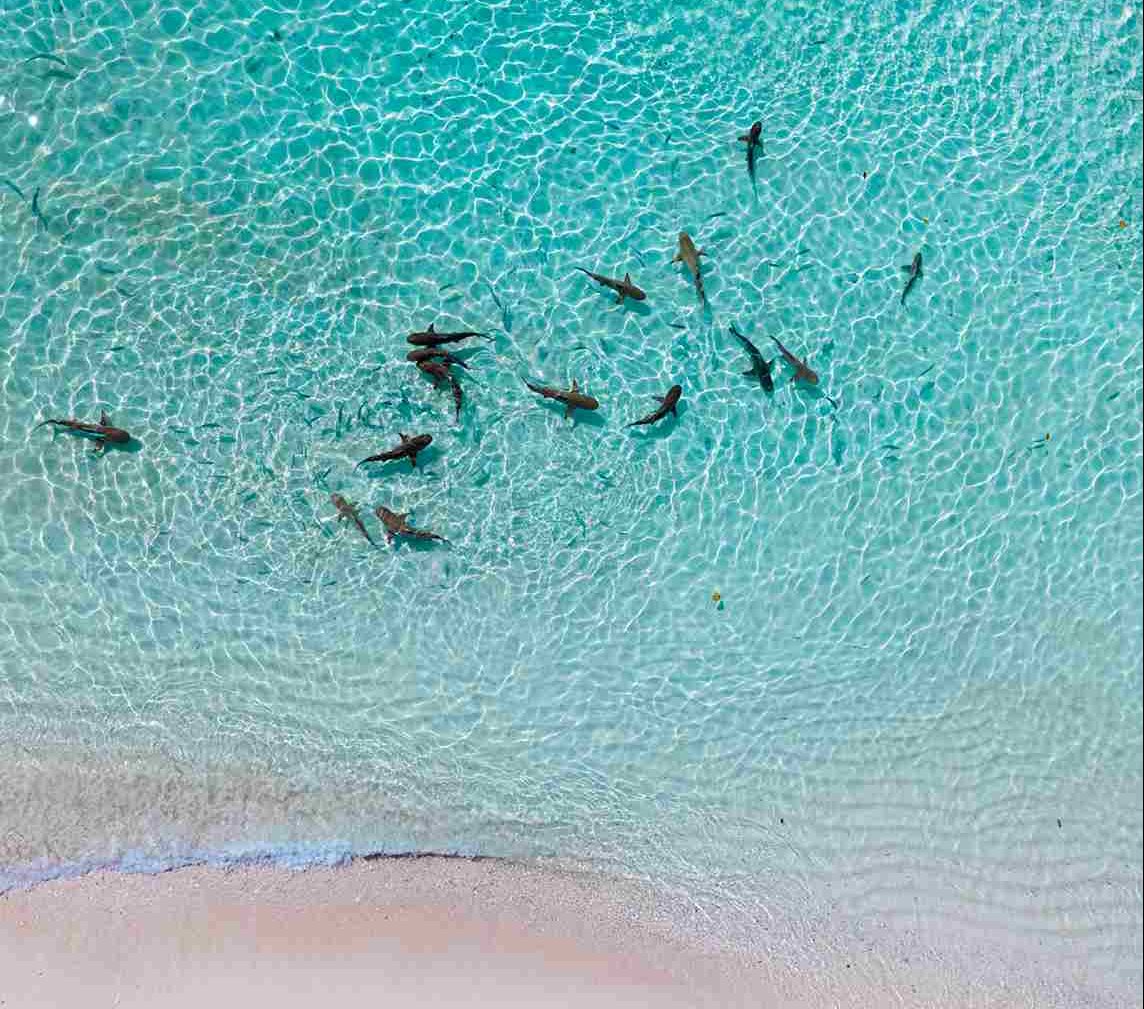
White-tip and black-tip reef sharks are daily company; grey reefs patrol the northern pinnacles; giant trevally and dogtooth tuna headline the current shows; Napoleon wrasse make cameo passes at Crystal and Castle. Dugongs are sighted some seasons around the southern bays — a privilege, never a promise.
Wainilu and the southern muck sites carry the small-things crown: nudibranch counts that keep photographers on one square metre for a whole dive, frogfish, ghost pipefish and blue-ringed octopus after dark. One honest footnote: the ocean sunfish (mola-mola) is a Bali specialty — sightings in Komodo are exceptional, and we do not sell them.
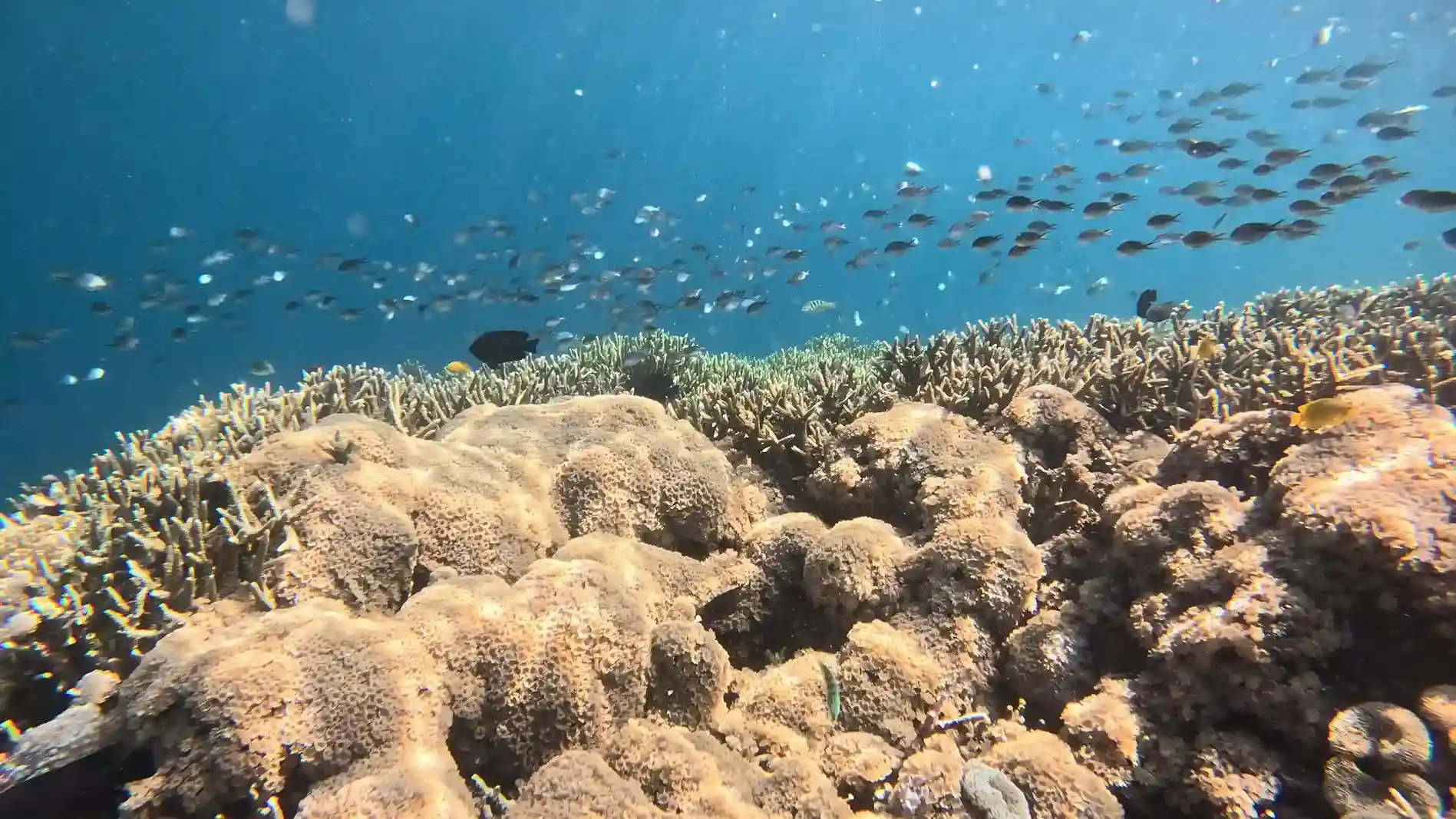
North & central: April-November is prime — 26-29°C water, the park’s best visibility, and every site in the table above in play. South: December-February opens Horseshoe Bay: 20-24°C, lower visibility, higher biomass — bring the thick wetsuit. Mantas at Karang Makassar do not read calendars: year-round.
This section covers diving conditions only. For the overall best months to visit the park — weather, crowds, sailing comfort — see our best time to visit Komodo guide.
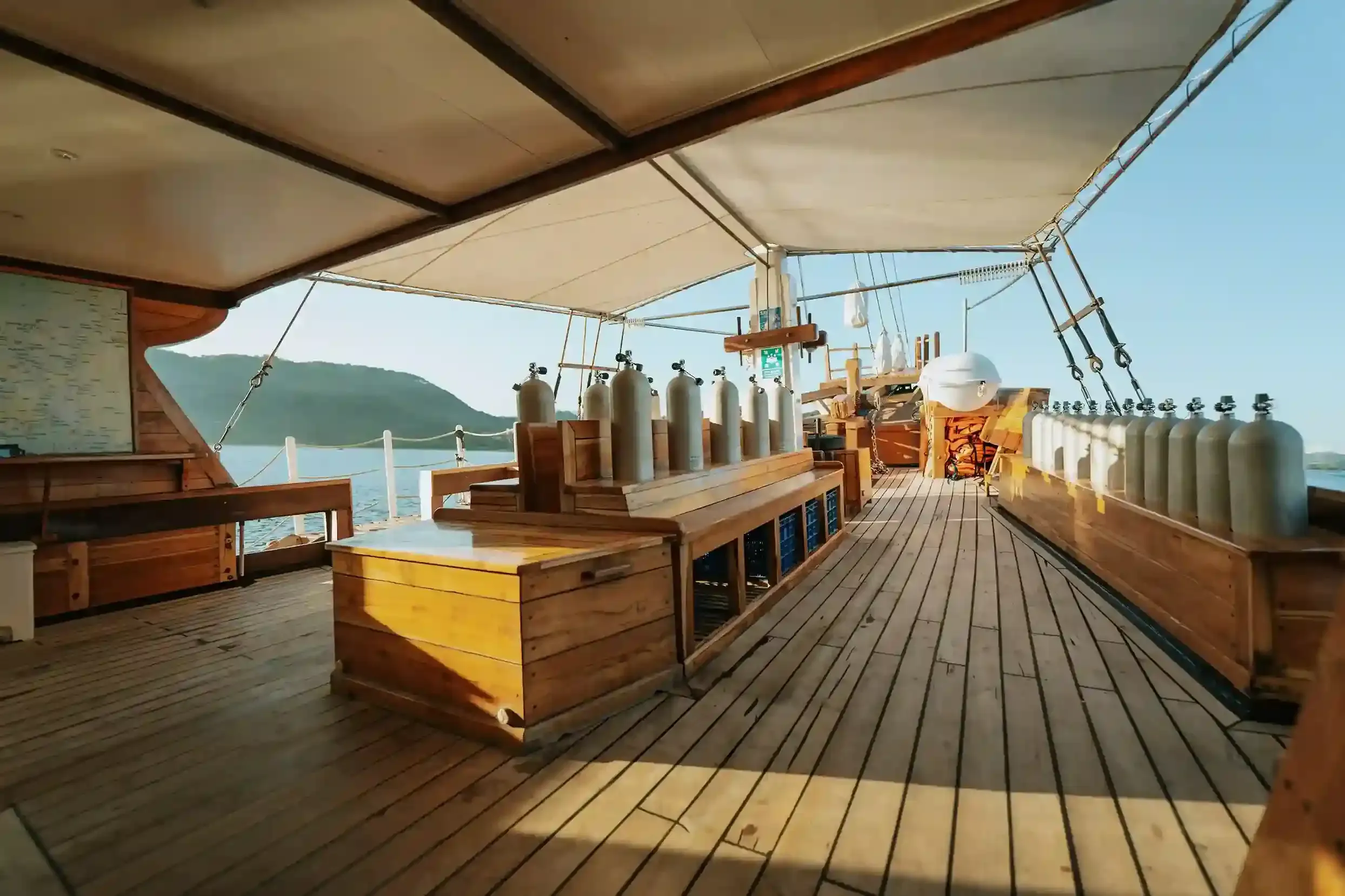
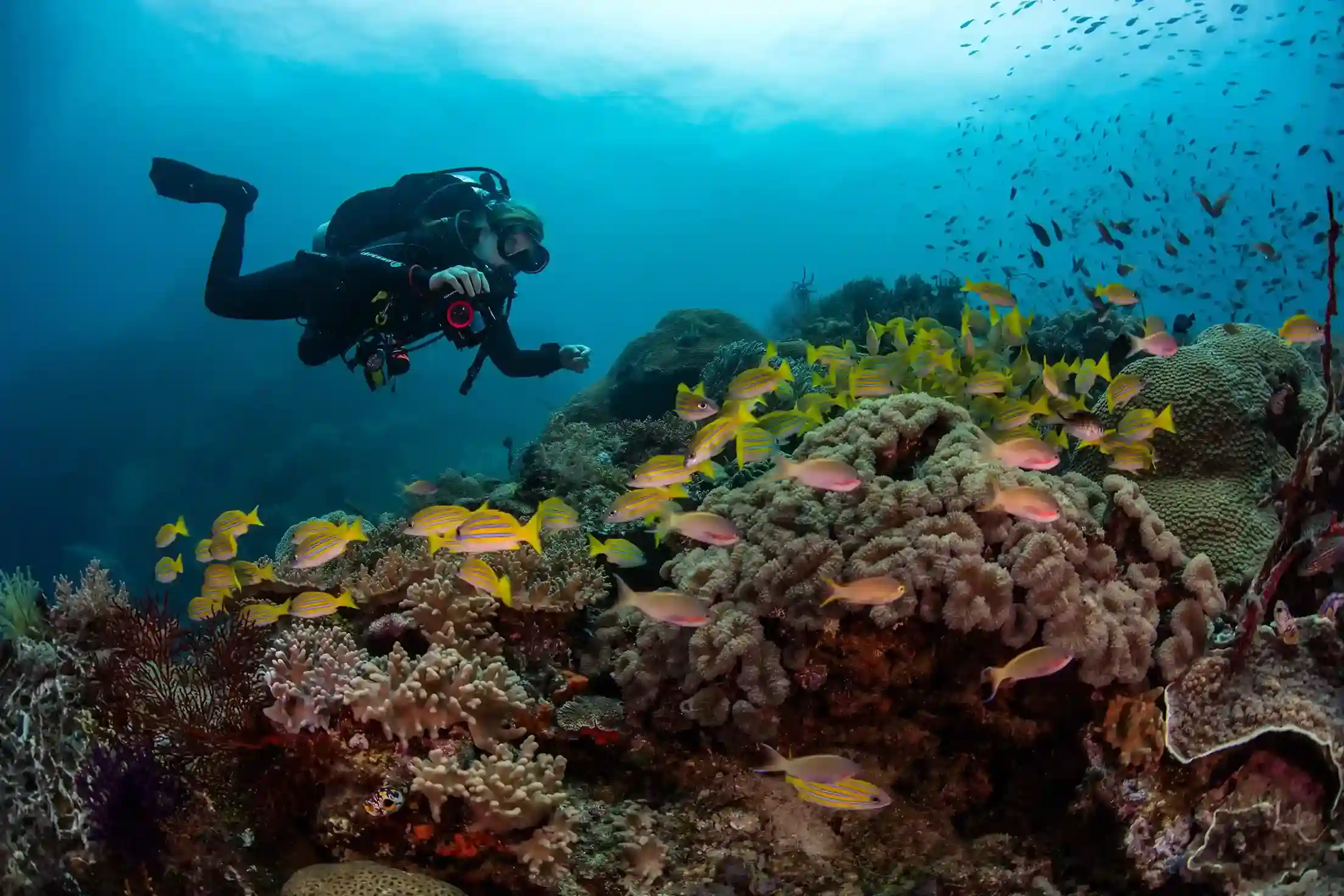
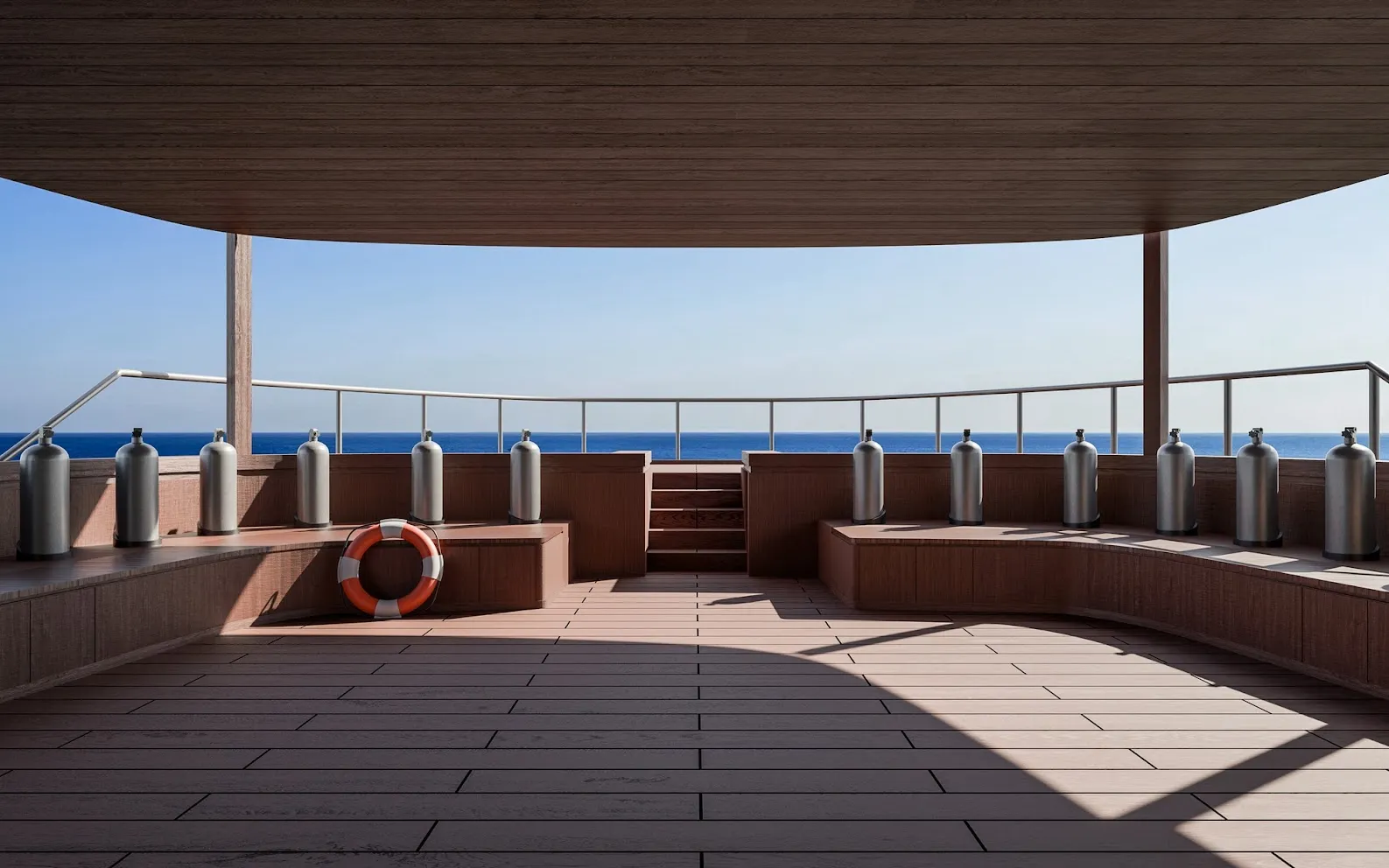
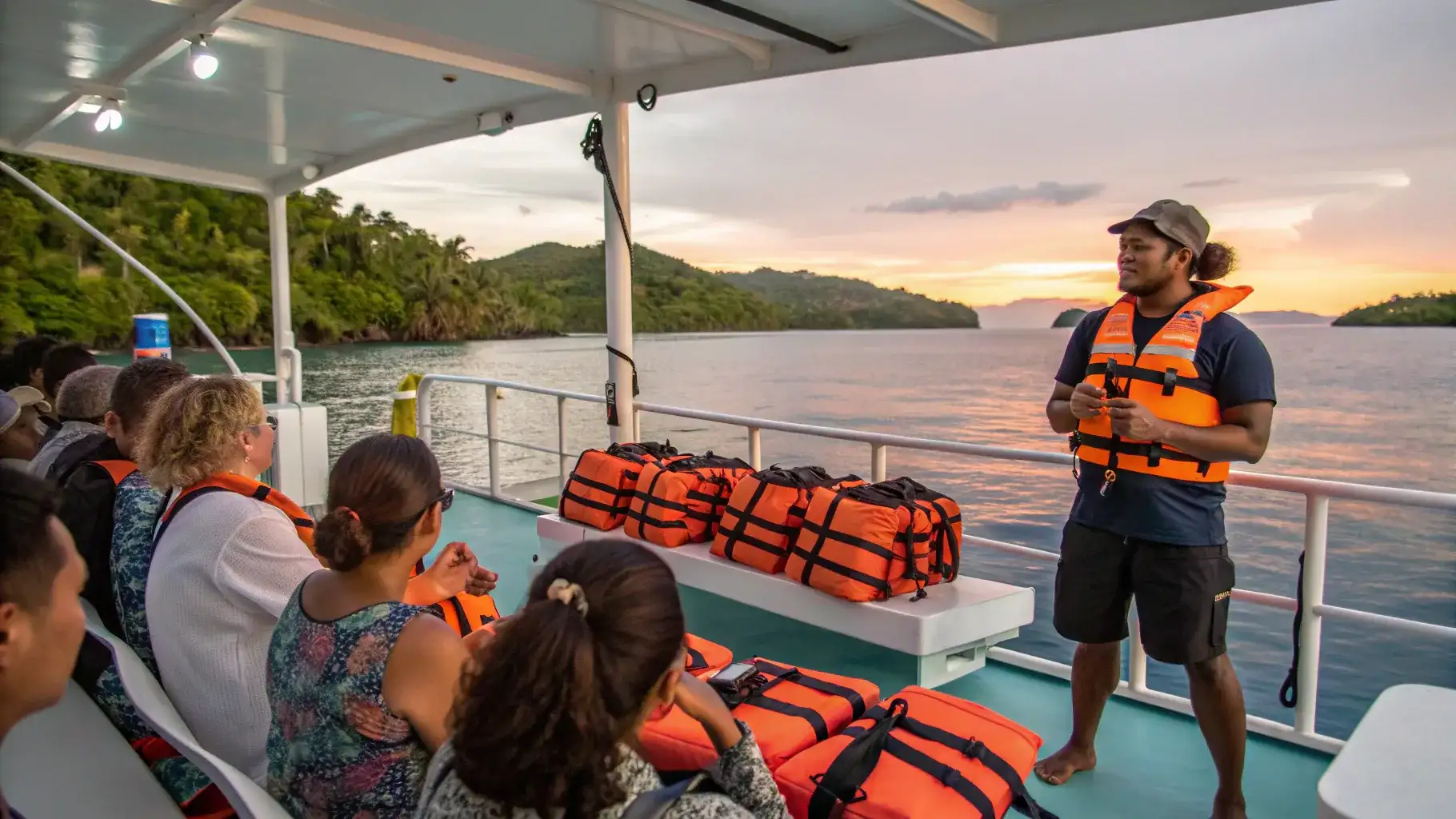
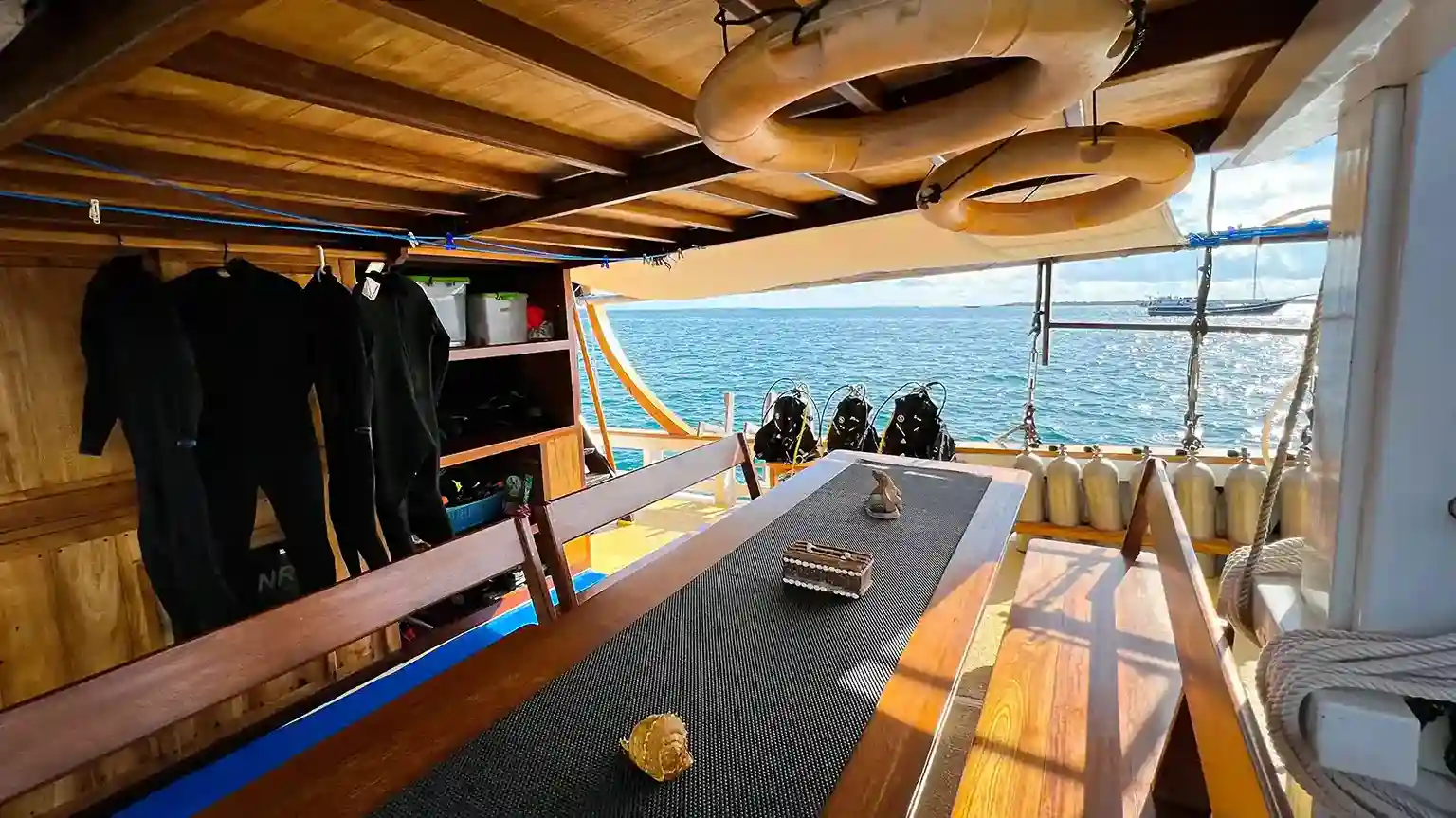
We are an operator of private phinisi and yachts, not a dive school — the distinction shapes the whole experience. Diving runs from your own vessel: typically 2-3 dives on diving days woven between the Padar hike, the dragon trek and the beach hours, with certified dive guides provided aboard through our dive partners. Courses and certifications are the dive schools’ craft, not ours — arrive certified and we put you on the water’s best version of itself.
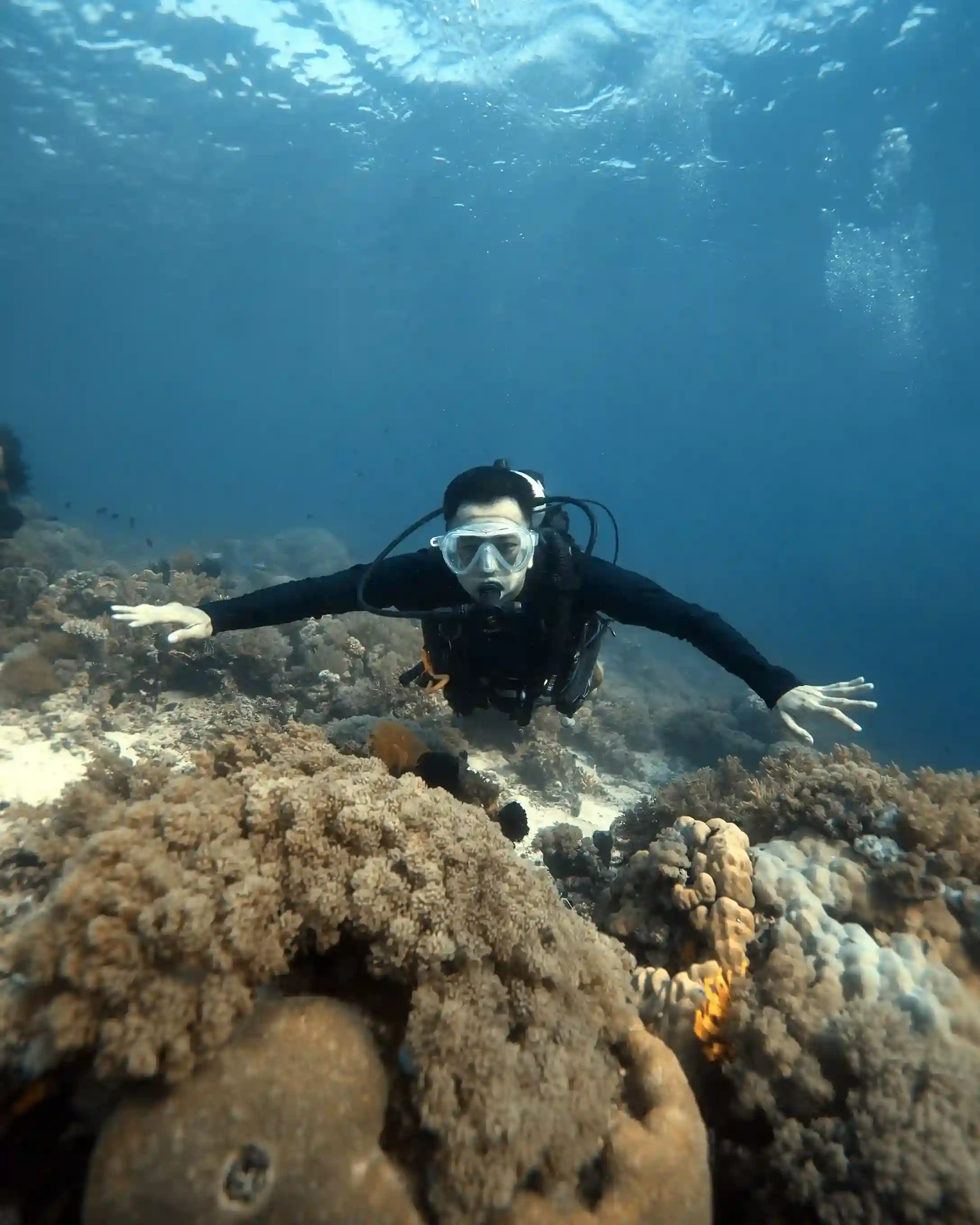
Open Water certification covers the beginner-OK sites in the table. The northern pinnacles, Batu Bolong and the south want Advanced certification and real current experience — a logbook conversation our cruise directors have before the boat leaves, not at the site.
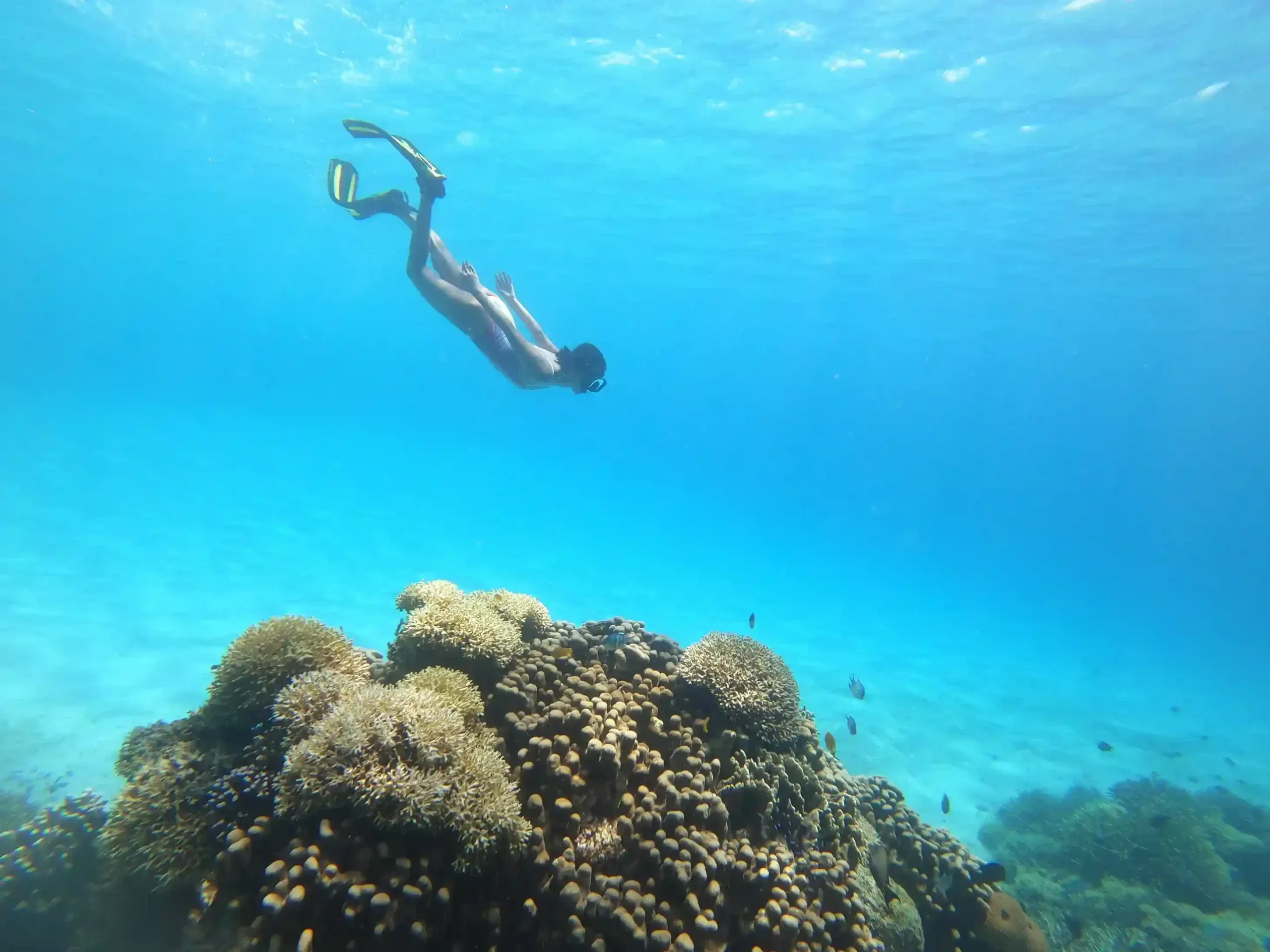
Manta Point, Siaba Besar, Tatawa Besar, Sebayur and Pink Beach are genuinely snorkeler-first sites — which is why mixed diver/non-diver groups work so well on a private boat. The whole manifest shares Manta Point; the divers add the pinnacles.
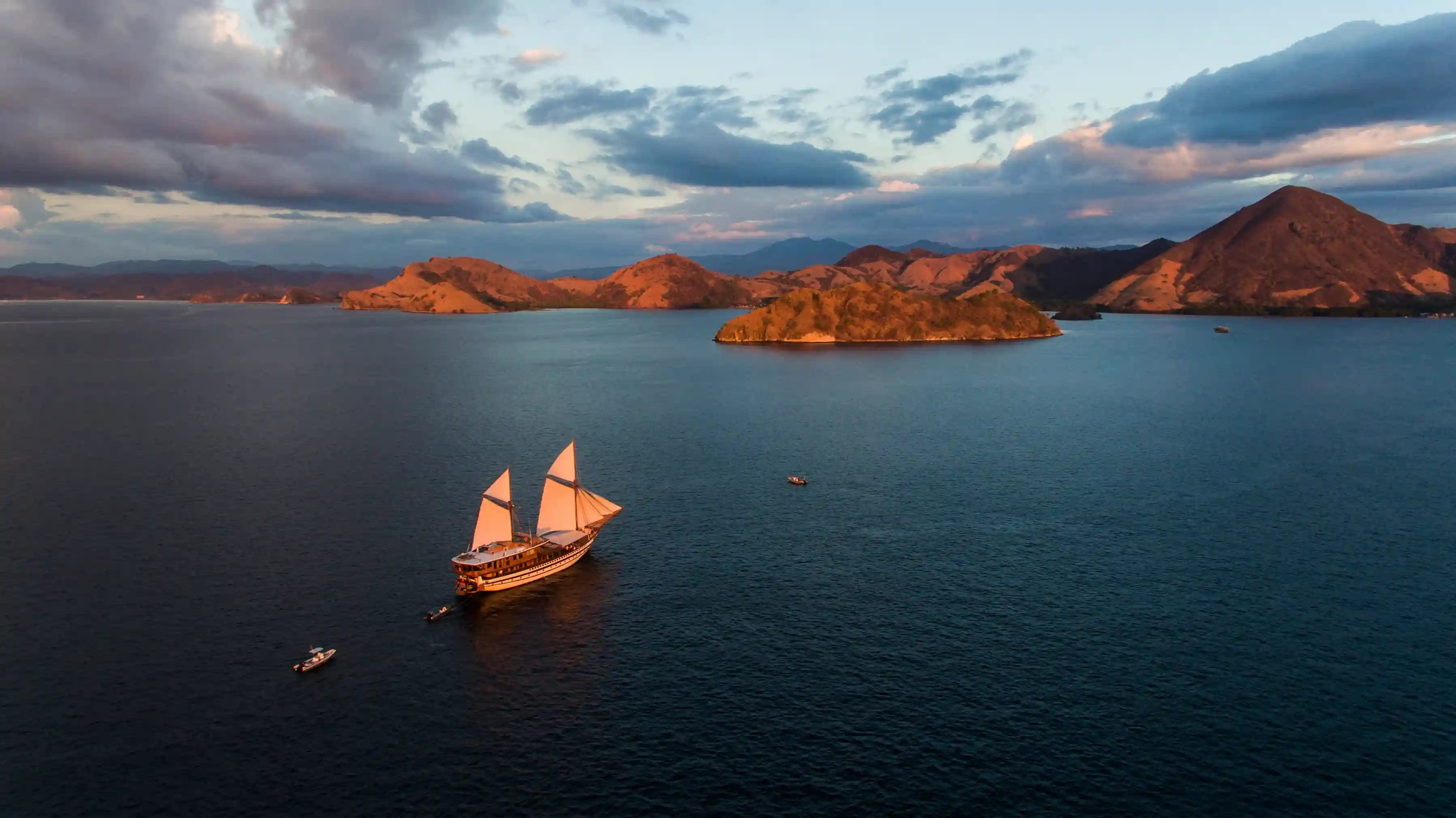
The park’s geography does the scheduling: see the 3-day, 2-night Komodo route for the central circuit (Batu Bolong, Manta Point, Siaba, Tatawa, Pink Beach); the 4-day itinerary adds the northern pinnacles at dawn; and 7-day full-park expeditions reach the seasonal south. To weigh boats, cabins and formats across all of them, compare Komodo liveaboard itineraries — or take the whole vessel via a private yacht charter and let the captain sequence the sites around your logbook. Shared-cabin divers start with the scheduled open trip departures. Coming for reefs beyond Komodo? The other half of our map is the Raja Ampat yacht charter season.
The rules that actually bind: the park’s dated entry ticket is IDR 650,000 (≈ USD 40) per international visitor, dive activity components are itemized alongside it on official receipts, and standard reef etiquette applies everywhere — no touching, no gloves, no chasing the mantas. On reef hooks: there is no single published park regulation governing them — policies are site- and operator-specific, and our own practice is hooks only on the barren-rock amphitheatres like Castle, never on living reef. Guide ratios likewise vary by operator; ours are set per group in the pre-trip brief. Full fee mechanics live in our charter FAQ.
Everything in Komodo diving reduces to one variable: water in motion. The park sits in the throat between the Pacific and Indian Oceans, and every tide exchange pushes enormous volume through a handful of narrow passes — which is precisely why the reefs are this alive, and why the same site can be a beginner’s drift at neap slack and a washing machine three hours later. Our dive teams plan around three things: the moon (spring tides double the flow), the tide tables (slack windows are dived, not hoped for), and what the water is actually doing on arrival — a two-minute current check from the tender routinely reorders the day’s plan. This is also the honest answer to why site lists differ between operators: the “best site” in Komodo is the right site for today’s water, and a crew that re-sequences without drama is worth more than any itinerary PDF.
The briefing is precise because it has to be: negative entry off the tender up-current of the seamount, drop as a group to the plateau at 20-24 m, find the rock’s shoulder, and settle low. Then the theatre starts — fusiliers compress into walls, giant trevally cut lanes through them, white-tips stack on the sand patches, and the blue delivers whatever it delivers: dogtooth tuna most days, a passing Napoleon on the good ones. Twenty minutes of holding position, a drift off the tail of the site, safety stop in open water, tender pickup on the surface marker. It is choreography, and it is why the northern sites reward divers who trust their guides.
Batu Bolong’s trick is geometry: a pinnacle splitting a strong flow leaves one protected wedge of still water on its lee side, and the entire dive lives inside it. The guide reads which side is “off”, the group zig-zags up the wedge from depth — never around the corners, where the current waits — and the reward is the park’s most concentrated reef: anthias in clouds, turtles wedged into ledges, moray density that borders on comic. The rock asks exactly one thing: discipline about the edges. Divers who give it that call it the best single dive in Indonesia; divers who freelance around the corner get a fast lesson in why we rate it advanced.
Diving from a private phinisi is rhythmically different from a dive-resort schedule, because the boat is already at the site while dive boats are still commuting. A typical central-zone day: 06.30 first briefing over coffee, 07.00 splash at Batu Bolong in the day’s best window; back aboard for the real breakfast. Mid-morning repositioning to Karang Makassar — divers drift the stations while snorkelers work the surface over the same mantas. Lunch under way toward Padar; the afternoon belongs to land — the viewpoint hike or the dragon trek — before an optional third dive or the Wainilu night dive after sunset. Two to three dives, the park’s icons, and nobody chose between diving and Komodo: the format’s whole argument in one day.
The southern season list is short but non-negotiable: a 5 mm suit (7 mm for the cold-blooded), hood or hooded vest, gloves are still off — the no-glove etiquette holds — and a surface layer for the wind between dives. Add a torch with a red mode for Torpedo Alley’s night critters and twice the memory cards you think macro needs. The north in July needs none of this; the south in January needs all of it, and repays every gram.
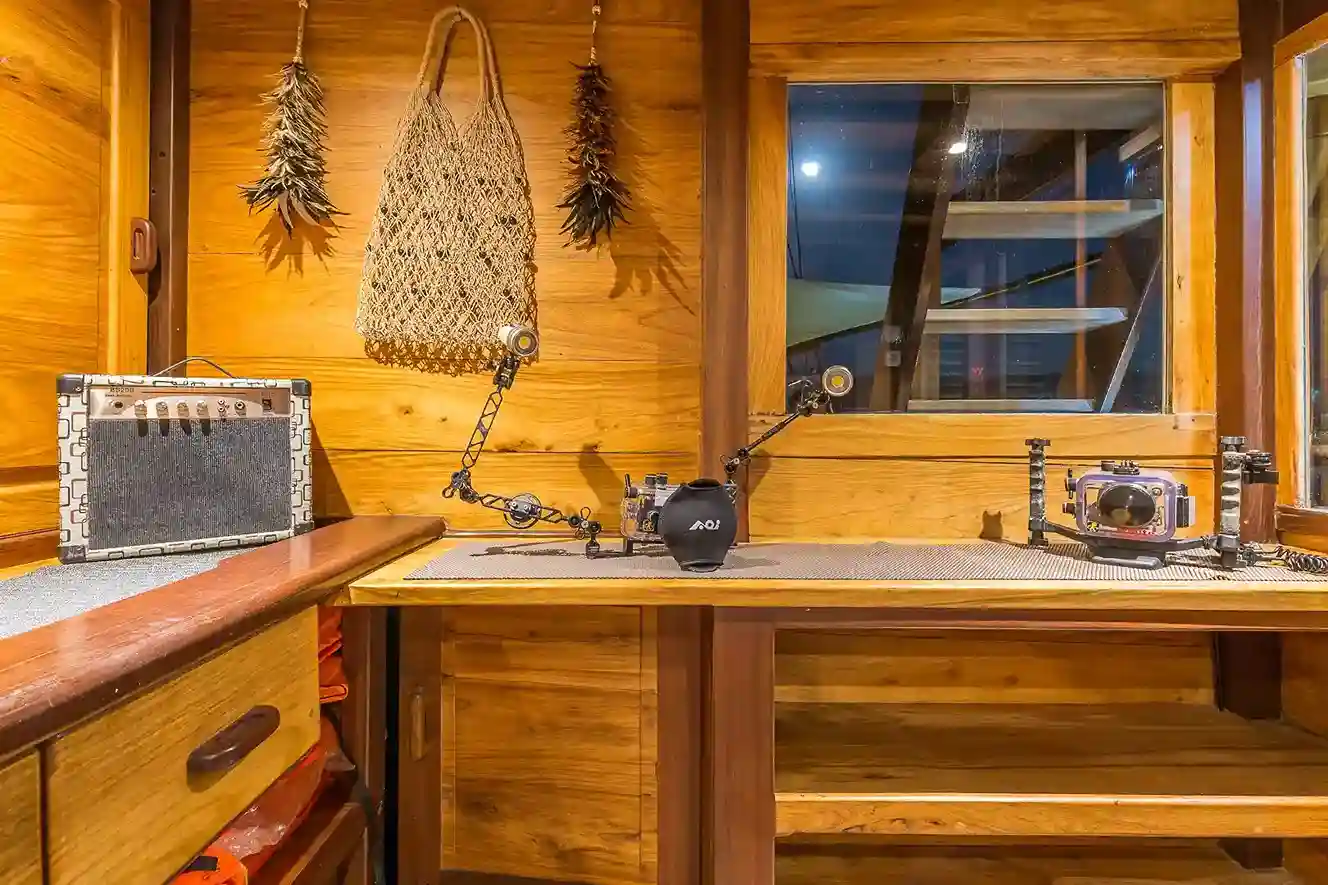
Komodo is a two-bag destination: wide-angle for the north and the mantas (the fish storms want the widest lens you own and a fast shutter), macro for Wainilu and the south (where a 60-100 mm and patience out-shoot everything). Three field notes from our guides: shoot Karang Makassar on snorkel when the light is high — the mantas sit shallow and the surface shots out-perform strobes; at Castle Rock, let the guide hold position for you and shoot up-current into the bait ball; and in Horseshoe Bay, the plankton that murders visibility is exactly what saturates the colour — expose for the reds and embrace the green water.
The two halves of our map answer different briefs: Komodo pairs world-class diving with dragons, hikes and a shorter flight; Raja Ampat is the pure-diving deep end, on the opposite season (October-April). The full comparison — months, logistics, who should choose which — lives in our Komodo vs Raja Ampat guide; the season detail for the east is in the Raja Ampat season by month table.
How the table above becomes a week on the water — the sequence our cruise directors run when the brief says “diving first, everything else close behind”.
Day 1 — settle in: board at Labuan Bajo, check dive at Siaba Besar while the crew reads the group (buoyancy, air consumption, comfort in mild current), then the first pass at Karang Makassar in the afternoon — mantas on day one sets the tone for everything after. Day 2 — the central classics: Batu Bolong in the morning window, Tatawa Besar as the relaxed second, Padar viewpoint at golden hour because diving here never has to cost you the park. Day 3 — the north: the boat positions overnight; Castle Rock at dawn slack, Crystal Rock late morning, and Shotgun if the tide chart cooperates — three advanced dives that justify the whole trip for experienced divers. Day 4 — small things and dragons: the ranger-guided trek at Loh Liang in the morning, Wainilu’s muck in the afternoon, and back into Wainilu after dark for the night dive that fills the last camera card. Day 5 — season’s choice: in the southern window, the long run to Horseshoe Bay for Manta Alley or Cannibal Rock; in the northern season, a Gili Lawa encore or a second Karang Makassar drift before the sail home.
Five days maps naturally onto the week-long itinerary with margin for weather; committed divers stretch the same shape across the full expedition routes, and mixed groups compress it into the 4D3N without losing the north. The constant in every version: the boat sleeps at the sites, so the best windows of the day are always yours.
Batu Bolong, Castle Rock, Crystal Rock, and Manta Point (Karang Makassar) are Komodo’s most celebrated dive sites; Manta Alley and Cannibal Rock in the south rank among Indonesia’s best seasonal sites.
Partly. Siaba Besar, Sebayur, and Tatawa Besar suit beginners, and Manta Point is an easy drift. Batu Bolong, Castle Rock, Crystal Rock, and the southern sites demand advanced experience due to strong currents.
April to November for the north and central sites; December to February opens the southern Horseshoe Bay sites during the upwelling season. Mantas at Karang Makassar are seen year-round.
Yes — Manta Point (Karang Makassar), Siaba Besar, Tatawa Besar, Sebayur, and Pink Beach are genuinely snorkeler-friendly. The current-swept pinnacles like Castle Rock and Batu Bolong are not.
Karang Makassar (Manta Point) in central Komodo is the most reliable aggregation site year-round; Manta Alley in the south delivers dense sightings during the December-February season.
Yes, diving requires certification, with advanced certification recommended for the current-strong sites. Non-divers join the same itinerary and snorkel the calm sites listed above.
Put your logbook on the right boat: WhatsApp +62 811 3823 875 or [email protected] — concierge desk 24/7.
Last reviewed: August 2026
Contact our charter expert specialist