






Last updated: August 2026 · Prices & availability verified for the 2026/2027 season
If you’re putting together a Raja Ampat Islands guide for your own trip, here’s the essential framework to start with: Raja Ampat, meaning the “Four Kings,” is an archipelago of roughly 1,500 islands off West Papua, Indonesia, built around four crowned giants, Waigeo, Batanta, Salawati and Misool. It holds some of the richest marine biodiversity ever recorded on Earth, and its most iconic sights, Wayag’s karst towers, Piaynemo’s viewpoint, and the Dampier Strait’s manta lanes, sit spread across distances that only a boat can realistically stitch together into one trip.
This guide walks through each major region of the archipelago, when to visit, and how the geography itself shapes the way you should plan your trip. If you’re deciding between a short island-hopping visit and a proper multi-day liveaboard, understanding how these regions connect will make that decision much easier.
Key Takeaways
- Raja Ampat spans roughly 1,500 islands around Waigeo, Batanta, Salawati and Misool, with its major attractions spread across separate cruising corridors.
- Wayag and Piaynemo deliver the archipelago’s signature karst panoramas, while the Dampier Strait combines Kri, Arborek and manta sites in a more accessible route.
- Misool sits farther south and deserves extra time for its lagoons, soft-coral reefs, rock art and quieter conservation areas rather than being treated as a quick add-on.
- A Raja Ampat liveaboard or private yacht charter makes it easier to connect remote islands, diving sites, viewpoints and villages without repeatedly returning to the same base.
- October through April is the main Raja Ampat sailing and diving season, with November through March forming the core window, while May through September generally brings more challenging wind and sea conditions.
Raja Ampat, Indonesia: the Archipelago at a Glance
Raja Ampat sits off the Bird’s Head Peninsula of West Papua, Indonesia, spread across roughly 1,500 islands, cays, and shoals within 40,000 square kilometers at the very core of the Coral Triangle. Marine surveys conducted here have recorded more fish and coral species than anywhere else measured on the planet, which is precisely why this archipelago anchors nearly every serious list of the world’s premier diving destinations.
Population across the region is thin, and infrastructure is thinner still. The four “kings,” Waigeo, Batanta, Salawati and Misool, each hold small local communities, and the sea does all of the connecting between them. That geography isn’t an inconvenience to work around, it’s genuinely the point. Raja Ampat rewards travelers who arrive by boat and treat distance itself as part of the experience, rather than something to minimize.
Comparing the Main Regions of Raja Ampat
If you’re trying to decide how to allocate your time across this archipelago, here’s how the main areas stack up against each other:
| Region | Distance from Waisai/Sorong | Best suited for | Access |
| Wayag | 6+ hours | The signature karst panorama, serious photography | Liveaboard only |
| Piaynemo and the Fam Islands | Moderate | A reachable viewpoint, hidden lagoons | Day trip possible, better overnight |
| Dampier Strait (Kri, Arborek, Manta Sandy) | Close | First-time visitors, reliable manta encounters | Widely accessible |
| Misool | 4 to 5 hours south | Soft-coral diving, rock art, low-traffic conservation areas | Liveaboard recommended |
Wayag: the Karst Icon

The single image that sells Raja Ampat to most first-time visitors is this: Wayag Island, cone-karst islets scattered across turquoise lagoons, viewed from the Wayag viewpoint after a steep 30-minute scramble up limestone terrain. Wayag sits in the archipelago’s far northwest, more than six hours from the Waisai corridor, which is exactly why this site belongs to liveaboard routes rather than day-trip itineraries.
A few practical details worth knowing before you plan a Wayag stop:
- The climb itself runs roughly 30 minutes, over uneven karst rock rather than a maintained trail, so reasonable fitness and proper footwear matter here.
- Rangers collect the site fee at a post positioned below the trailhead, part of the broader conservation-area management across the region.
- Early morning visits reward you with the calmest water and clearest light, since the lagoon’s turquoise color depends heavily on sun angle and surface stillness.
- Wayag genuinely requires a liveaboard commitment, since its distance from any land-based accommodation makes a day trip impractical for the vast majority of travelers.
Piaynemo & the Fam Islands

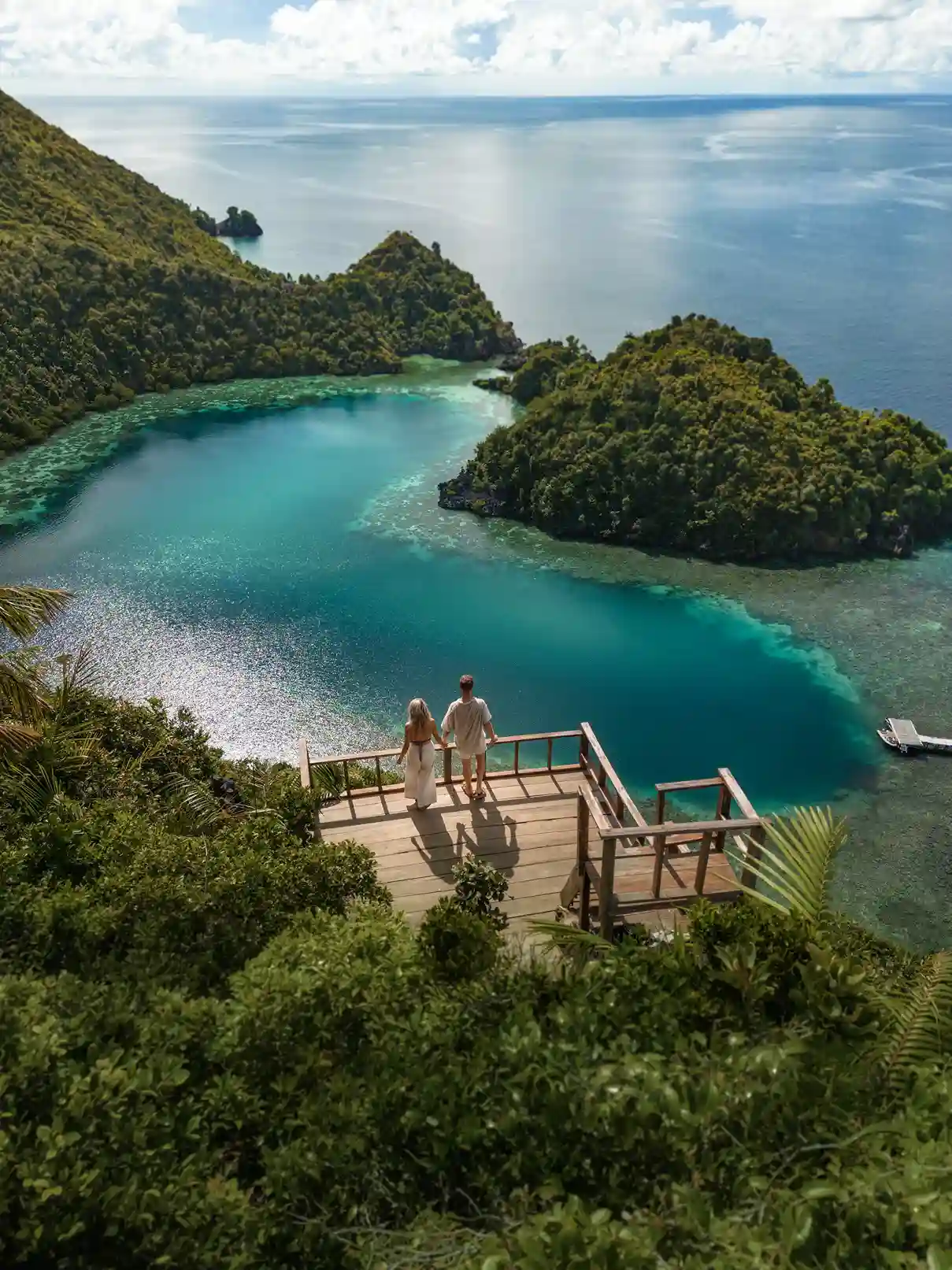
Piaynemo functions as Wayag’s more reachable sibling, sitting within the Fam Islands group and offering its own boardwalk climb up to a five-islet panorama. Unlike Wayag, this viewpoint is doable as a long day trip from Waisai, though it transforms into something genuinely different when you’ve slept at anchor beneath it the night before and catch the view at first light, before any other boat has arrived.
Nearby, the hidden lagoon of Telaga Bintang, literally the “star lagoon,” sits just a short tender ride away from Piaynemo itself, offering a quieter, more enclosed counterpart to the open viewpoint above.
The Dampier Strait: Kri, Arborek & Manta Sandy

The strait separating Waigeo and Batanta functions as the region’s marine engine, and it’s where most first-time Raja Ampat trips find their footing. Three specific sites define this corridor:
- Cape Kri holds one of the highest fish counts ever recorded on a single dive anywhere in the world, a statistic that has made it something of a benchmark site for underwater biodiversity comparisons globally.
- Arborek village pairs a genuine model homestay community with a jetty absolutely full of marine life, making it a rare spot where cultural engagement and world-class snorkeling sit side by side.
- Manta Sandy runs a regulated manta-viewing line during season, managing visitor pressure at one of the archipelago’s most reliable manta cleaning stations.
Because these three sites sit relatively close together within the Dampier Strait, this corridor is genuinely where most first Raja Ampat itineraries concentrate their time, and for good reason.
Misool: the Wild South

Misool functions as a separate expedition in its own right, sitting four to five hours’ sailing south of the main Dampier corridor. What you’ll find here differs meaningfully from the rest of the archipelago: soft-coral walls in exceptional condition, hidden lagoons like Balbulol, ancient rock art preserved on limestone overhangs, and a mosaic of conservation areas that deliberately keeps boat numbers low across the region.
Misool is the reason to extend your itinerary, not a convenient add-on to tack onto an existing Dampier-focused route. The distance and dedicated conservation management here mean it rewards travelers who build extra days specifically around reaching it, rather than trying to squeeze it into a shorter northern-focused trip.
Exploring Raja Ampat Islands by Phinisi
The archipelago’s underlying geography, icons spread hundreds of kilometers apart, no connecting roads, and limited flight infrastructure, makes a liveaboard phinisi genuinely the only honest way to see the region as a whole rather than a single fragment of it.
Our Raja Ampat yacht charter itinerary runs 5 to 12 nights, departing from either Sorong or Waisai and routing across the corridors described above depending on how much time you have available. Quiet-season macro divers often build in a detour to Aljui Bay’s pearl-farm jetties, a distinctive muck-diving site that rewards patient, detail-focused divers. Long-haul sailors with more time to spend sometimes arrive via the Banda Sea crossing, connecting this region to Komodo National Park in a single extended expedition.
Read more: Liveaboard vs Speedboat for Raja Ampat: Which Is Best for Your Trip?
Getting to Raja Ampat: The Practical Route
Reaching this archipelago requires a bit more planning than most Indonesian destinations, and understanding the sequence upfront prevents scheduling mistakes.
- Fly to Sorong (DEO), typically routing through Jakarta or Makassar, since no direct long-haul international flights land at this regional airport.
- Board your charter directly at Sorong harbor, or continue onward via a two-hour ferry crossing to Waisai if your specific itinerary departs from there instead.
- Budget for the marine-park entry tariff, a fee collected per visitor that funds the conservation management keeping this region’s reefs in the condition that made it famous. Current rates and payment points shift periodically, so these details are worth confirming directly at booking rather than relying on older published figures.
Best Time to Visit Raja Ampat Islands
The Raja Ampat diving and sailing season runs from October through April, with settled seas, prime underwater visibility, and mantas returning reliably to their cleaning stations across this window. This calendar runs almost exactly opposite to Komodo’s April through November dry season, which is precisely why serious charter operators reposition fleets between the two regions rather than trying to maintain year-round operations in just one.
Within that broader October through April season, a few distinctions are worth knowing:
- November through March forms the core prime window, delivering the calmest seas and most reliable marine life encounters of the entire year.
- October and April bracket that core season with generally strong conditions but noticeably fewer boats on the water, appealing to travelers who prioritize a quieter experience.
- December and January bring the heaviest visitor volume, coinciding with both peak manta activity and the Northern Hemisphere’s holiday travel season.
- May through September marks the region’s off-season, when wind and swell pick up considerably and most serious operators shift their attention and fleets toward Komodo instead.
The full month-by-month detail behind this calendar lives in our Raja Ampat diving season table, worth reviewing if you’re trying to pin down an exact departure window rather than a broad season.
Plan Your Raja Ampat Yacht Journey with Komodo Luxury
Raja Ampat is a destination where the route matters as much as the destinations themselves. From the dramatic karst formations of Wayag and Piaynemo to the marine-rich Dampier Strait and the remote landscapes of Misool, each region requires time, thoughtful routing, and the right access by sea. A well-planned multi-day journey allows you to experience these places at a comfortable pace, while leaving enough flexibility for diving, snorkeling, photography, village visits, and changing sea conditions along the way.
For a more private and seamless way to experience the Four Kings, Komodo Luxury offers a tailored Raja Ampat tour package aboard its own fleet of luxury phinisi yachts. As a luxury yacht charter operator that owns and operates its fleet directly, we give you a more direct approach to the yacht, crew, onboard service, and itinerary planning. Whether you want to focus on Wayag, Piaynemo, the Dampier Strait, Misool, or combine several regions into one extended sailing journey, contact our team to plan and book your Raja Ampat tour package with us for a private, comfortable, and personalized experience across Indonesia’s Four Kings.