





Last updated: August 2026 · Prices & availability verified for the 2026/2027 season
If you’re planning a dive trip and trying to pin down the exact Raja Ampat diving season, here’s the essential answer: it runs from October through April, with November through March forming the prime core. Mid-year, roughly May through September, brings wind and swell to the archipelago, which is exactly when serious dive operators shift their attention to Komodo instead. This guide walks through the month-by-month picture, drawn from real fleet operations rather than a generic seasonal brochure.
Understanding this calendar matters more than most travelers expect, because Raja Ampat’s remote location means a poorly timed trip doesn’t just mean rougher seas, it can mean entire sites becoming inaccessible for days at a time. Here’s exactly what to expect, month by month, before you commit to your own dates.
Key Takeaways
- Raja Ampat’s main diving season runs from October through April, with November through March offering the core window for favorable sea conditions, marine life activity, and liveaboard access.
- February is often associated with calmer seas, while November, late October, and March can offer an appealing balance of seasonal conditions, marine encounters, and potentially lighter vessel traffic.
- Raja Ampat’s marine life during the diving season includes manta rays, reef sharks, schooling fish, turtles, coral reefs, and macro species, although sightings and visibility naturally vary by site, currents, weather, and animal behavior.
- May through September marks the windier off-season, when stronger swell can make exposed crossings more challenging and many liveaboards reposition toward Komodo, whose seasonal conditions are more suitable during this period.
- For a 2027 Raja Ampat diving trip, January to April and October to December are the two practical seasonal windows, so choosing your dates early can give you greater flexibility in route, yacht, and overall charter experience.
Raja Ampat Conditions by Month

Raja Ampat’s diving conditions change throughout the year, mainly because of seasonal wind patterns, sea state, rainfall, and the location of each dive site. While October to April generally offers the most favorable conditions for liveaboard diving, each month has its own balance of Raja Ampat diving conditions, underwater visibility, marine life activity, and route flexibility.
Here’s a month-by-month overview of what you can typically expect during and around the main Raja Ampat diving season:
| Month | Sea state | Diving & marine life |
| January | Calm, occasional showers | Prime — mantas reliable at the known cleaning stations |
| February | Calmest stretch in many crews’ logbooks | Prime — long windows for far sites (Misool, north Waigeo) |
| March | Calm, warm | Prime tail — big weeks with thinning boats |
| April | Season closing | Good early in the month, winding down; last expedition departures |
| May | South winds building | Off-season begins — many operators pause; crossings turn uncomfortable |
| June | Windy, exposed crossings rough | Off-season — quiet archipelago; value mainly for topside photographers in sheltered corridors |
| July | Peak south-wind period | Off-season — most fleets sailing Komodo instead; only opportunistic sheltered-water trips |
| August | Wind easing late in month | Off-season tail — a few operators probe sheltered routes; conditions variable |
| September | Transition, still unsettled | Shoulder — season not yet open; crews reposition and refit ahead of October |
| October | Settling — season opens | Cleaning stations restart; mantas returning; sites uncrowded |
| November | Calm, clearing | Prime conditions begin; manta activity building |
| December | Glassy mornings | Peak season underway; festive charters at anchor |
Two honest caveats, because month tables invite false precision: visibility and current in Raja Ampat vary site-by-site and week-by-week within every month above, and wildlife keeps its own calendar, the table describes what our cruise directors plan around, not a guarantee.
Which Months Offer the Best Raja Ampat Diving Season Conditions?
Within the broader October through April window, a few specific months consistently stand out for different reasons.
- February is often associated with calmer sea conditions, which can give liveaboards greater flexibility when planning longer crossings toward areas such as Misool and northern Waigeo.
- January and March remain firmly within the core season, with favorable conditions for reef diving, marine life encounters, and underwater photography depending on the site and weather.
- December combines established seasonal conditions with higher holiday demand, so popular dive sites may experience more vessel traffic than during quieter periods.
- November offers an appealing transition into the core season, with generally settled conditions and increasing manta activity while sitting before the busiest festive travel period.
Read more: Raja Ampat Diving Guide for Beginners: What You Need to Know!
What Marine Life Can You See During Raja Ampat Diving Season?
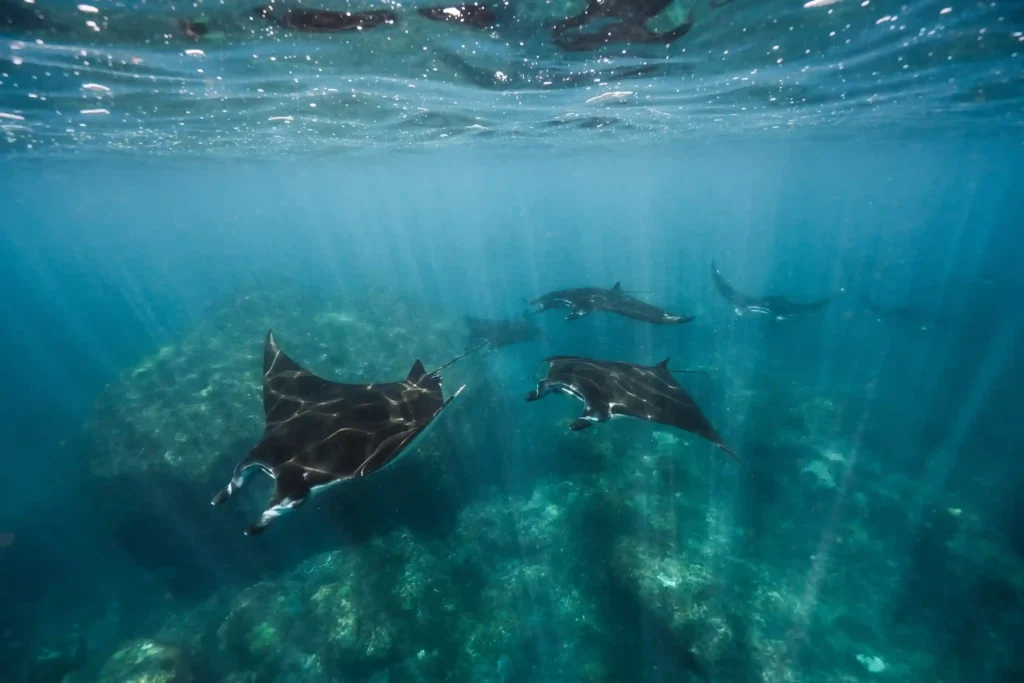
The Raja Ampat diving season brings together a wide range of marine encounters, from manta rays and reef sharks to schooling fish, turtles, coral communities, and smaller macro species. However, marine life does not follow a perfectly predictable monthly calendar, so sightings depend on the dive site, currents, food availability, weather, and animal behavior.
- Reef manta rays are a major attraction during the October to April season, particularly around established cleaning and aggregation sites in northern Raja Ampat, although individual sightings can never be guaranteed.
- Oceanic manta activity can vary by location and conditions, with encounters influenced by plankton availability and local water movement rather than a fixed monthly schedule.
- Schooling fish and reef predators remain an important part of the Raja Ampat experience, particularly around current-rich sites such as Cape Kri.
- Macro marine life can be encountered throughout the season, giving underwater photographers opportunities to look beyond large pelagic species.
- Coral and reef biodiversity remains a central attraction across the main season, with different sites offering different combinations of hard corals, soft corals, reef fish, and pelagic encounters.
Quiet Months with Prime Conditions
Late October and March deserve particular attention because they sit around the edges of the core Raja Ampat diving season.
- Late October delivers conditions that are already strong, with cleaning stations reactivating and sites still largely uncrowded, since the bulk of seasonal traffic hasn’t arrived yet.
- March, meanwhile, offers a similar trade-off from the opposite end of the season: boats thin out noticeably as the season winds toward its close, while the sea itself stays calm and often produces exceptional water clarity.
Both windows can give you access to signature sites such as Cape Kri, Manta Sandy, and the Piaynemo area during periods that may feel quieter than the December holiday peak. Actual vessel traffic still depends on departure dates, route planning, and the number of boats operating in the area. Both pair naturally with the itineraries detailed on our Raja Ampat luxury cruise hub, particularly for divers who prioritize a quieter experience over guaranteed peak-season crowds.
The Two 2027 Windows and How They Fill
If you’re mapping out a calendar-year 2027 trip to Raja Ampat, it helps to understand that your dates will fall into one of two distinct seasonal windows rather than a single continuous season.
- January through April 2027 represents the tail end of the 2026-27 season, offering prime-to-closing conditions depending on exactly where in that window you land.
- October through December 2027 represents the opening of the 2027-28 season, moving from settling conditions in October through building prime conditions by December.
Both windows tend to fill from the ends inward, meaning January and December dates book up first, while the shoulder weeks in between remain more flexible for longer. That pattern means flexibility around the middle weeks of either window is genuinely worth real money when it comes to vessel choice and availability. Specific booking-pressure data for the 2027 season belongs in a dedicated charter calendar resource; this guide focuses specifically on the water conditions themselves.
Read more: Raja Ampat Liveaboard Recommendations 2027: Boats, Prices, and Travel Tips
Experience Your Raja Ampat Diving Charter Journey with Komodo Luxury
Choosing the right Raja Ampat diving season ultimately comes down to matching your travel dates with sea conditions, marine life activity, route flexibility, and the type of experience you want onboard. Whether you prefer the calmer conditions often associated with February, the established season in November and December, or the quieter transition around late October and March, understanding the seasonal pattern helps you plan a more comfortable and rewarding diving expedition.
For an exclusive journey, Komodo Luxury operates as a luxury yacht charter operator that owns and operates its own fleet. Our team can help you match your preferred dates with the right yacht, route, and onboard setup for your Raja Ampat itinerary, so you can spend more time diving and enjoying the archipelago with the flexibility of a private charter. Contact our team to plan and book your Raja Ampat yacht charter with us.

FAQ About Raja Ampat Diving Season
Which boats sail in which months is tracked in this Raja Ampat vessel comparison.