




Last updated: August 2026 · Prices & availability verified for the 2026/2027 season
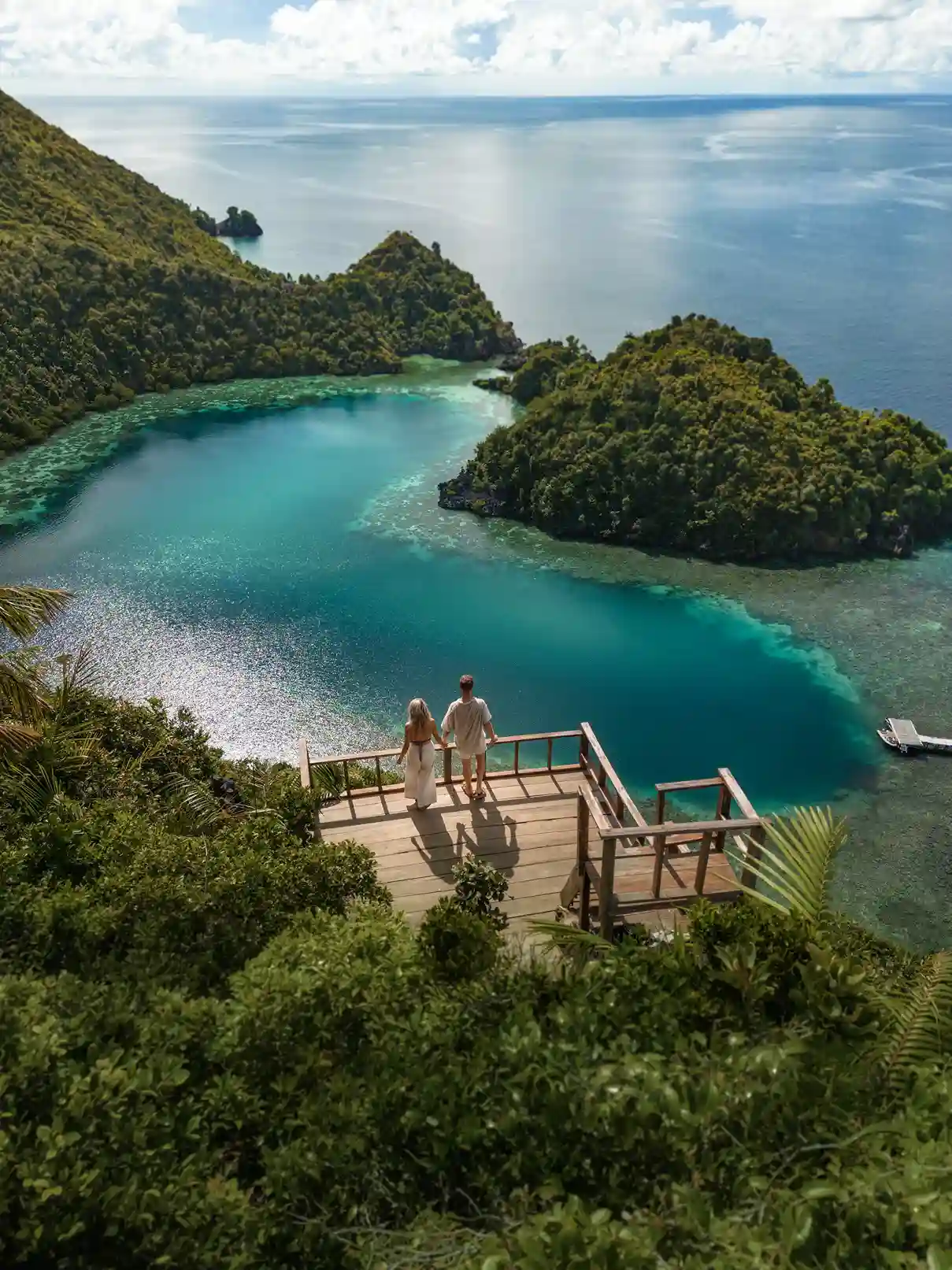
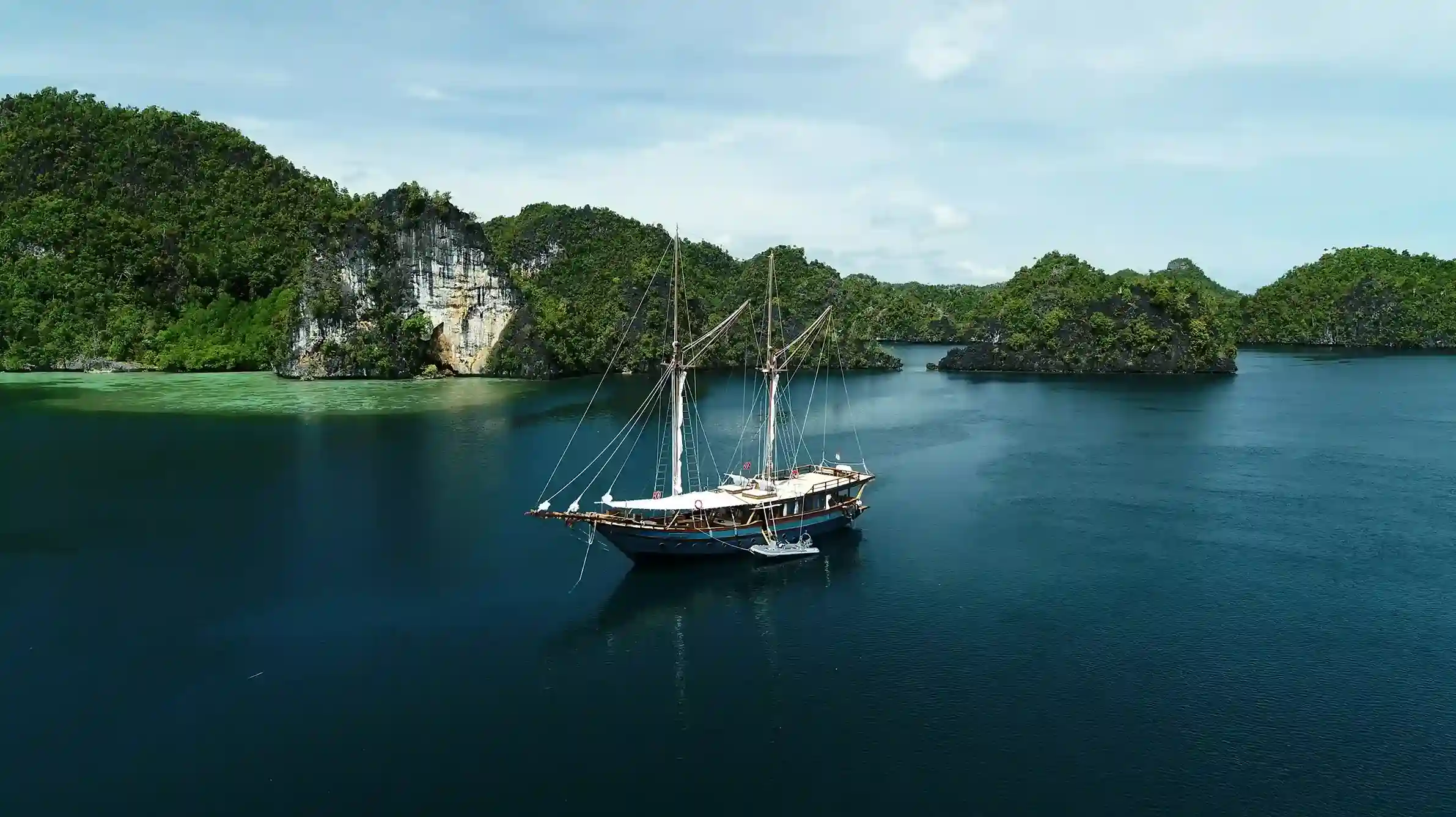
Aljui Bay is the quiet western answer to Raja Ampat’s postcard spots: a deep, sheltered fjord on west Waigeo where working pearl farms string their lines across jade water, and where night dives under the farm jetties turn up critters most divers only see in books. There is no airport, no homestay strip, and no crowd, the bay is reached by liveaboard, which is exactly why it stays the way it is.
Key Takeaways
- Aljui Bay Raja Ampat is a sheltered bay on the western side of Waigeo, known for its pearl farm, forested limestone surroundings, and marine life.
- The Alyui Bay pearl farm operated by Atlas Pearls offers educational visits by appointment, giving you an opportunity to understand South Sea pearl cultivation at the source.
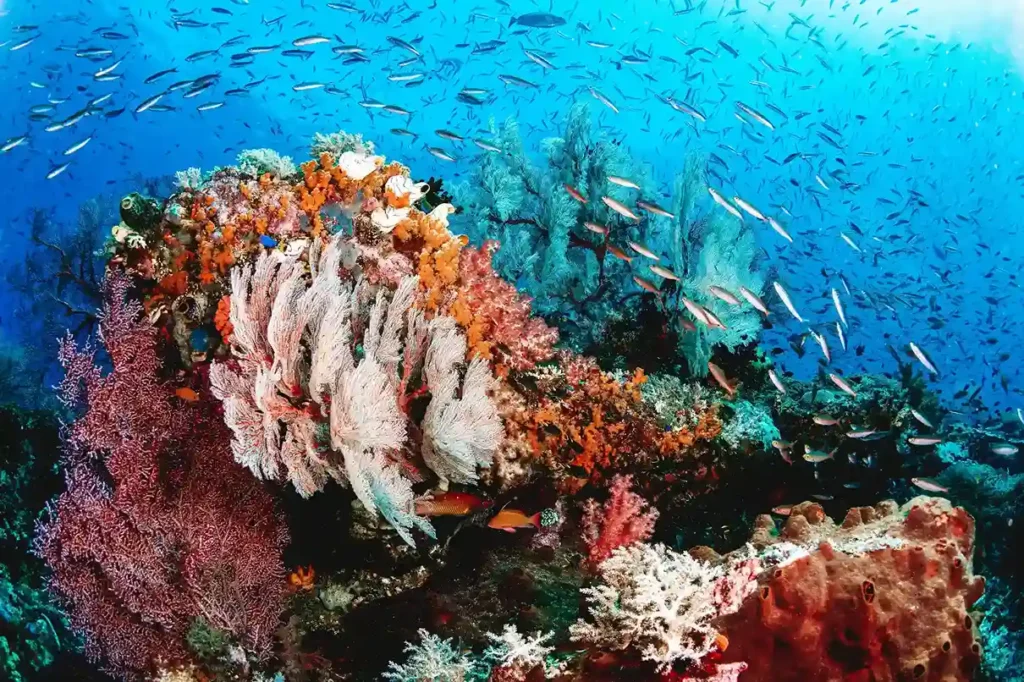
- Aljui Bay diving is particularly appealing to macro photographers and critter enthusiasts, with pygmy seahorses, nudibranchs, ghost pipefish, frogfish, crustaceans and other small marine species reported around the bay.
- The pearl farm piers are known for unusual night-diving encounters, including wobbegong sharks and the endemic walking epaulette shark, although marine sightings are never guaranteed.
- Because Aljui Bay is remote and best incorporated into a wider northern Raja Ampat sailing route, a Raja Ampat yacht charter or liveaboard provides a practical way to reach the area.
Why Aljui Bay Is Worth the Detour
Three distinct draws explain why cruise directors route their itineraries toward this particular corner of Waigeo rather than sticking to the more familiar eastern circuits.
1. The Working Pearl Farm
Aljui Bay’s calm, mineral-rich water and steady tidal flow make it genuinely well suited to South Sea pearl cultivation, and this remains one of the few places in Indonesia where you can actually watch pearls being seeded and harvested as a working operation, rather than a staged tourist demonstration built around the idea of one. The farm’s presence at the mouth of the bay is also part of what keeps its water so clean, since the same tidal exchange that nourishes the oysters cycles nutrients through the wider inlet.
2. The Muck and Macro Diving
This is where Aljui genuinely earns its reputation among people who’ve dived widely across the archipelago. The bay’s sheltered, nutrient-rich water creates one of the region’s most reliable muck-and-macro environments, the kind of terrain where wobbegong sharks rest under the jetty pylons, walking sharks emerge after dark, and mandarin fish perform their brief courtship display at dusk. This isn’t the wall-and-current diving Raja Ampat is famous for elsewhere. It’s slower, shallower, and built around patience rather than drift.
3. The Untouched Setting
Sheer, jungle-walled inlets fold into each other here, and the only traffic you’re likely to see most evenings is a farm skiff crossing the bay at sunset. If part of what draws you to Raja Ampat is the sense of being genuinely far from anywhere, Aljui delivers that more convincingly than almost anywhere else in the region still.
The Night Dive Under the Jetty
Ask any cruise director who works the west Waigeo circuit regularly which single dive they’d point you toward first, and you’ll likely hear the same answer every time: the pearl-farm jetty after dark.
Torchlight sweeping across the silty sand beneath the jetty reads almost like flipping through a field guide in real time, and a single dive here can turn up a genuinely long list of critters in one sitting.
- Epaulette sharks, more commonly known as walking sharks for the way they use their fins to move across the seabed, are a near-certainty here.
- Bobtail squid hover just above the sand, often overlooked until your torch catches their iridescent outline.
- Decorator crabs sit motionless under a coating of debris they’ve assembled as camouflage, easy to miss unless you’re moving slowly.
- Multiple octopus species show up regularly on this same jetty dive, including starry night, white-V, coconut, and the venomous blue-ringed octopus.
- Pegasus sea moths, clown frogfish, and stonefish tuck into the structure’s shadows, rewarding divers who check every crevice rather than swimming past.
- Spanish dancer nudibranchs occasionally drift through open water in a slow, unmistakable ripple of color.
What makes this dive so consistently rewarding is its profile. It’s shallow, it’s calm, and it runs long, exactly the kind of dive that fills an entire logbook page rather than a quick single entry. If underwater photography matters to you, this is precisely the environment macro shooters build entire Raja Ampat itineraries around, since a jetty dive like this rewards patience and a steady hand far more than it rewards mobility or depth.
Getting to Aljui Bay: Liveaboard Only
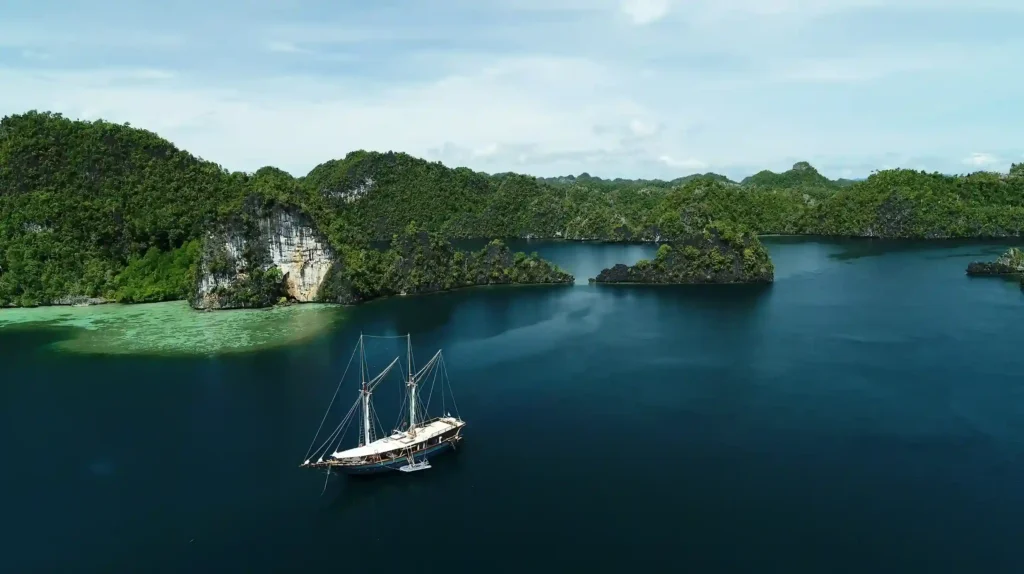
Aljui Bay sits on the far western side of Waigeo, a genuinely long run from the Sorong-Waisai corridor that most Raja Ampat visitors are familiar with, which is precisely why this destination only makes practical sense as an overnight anchorage worked into a multi-day liveaboard route rather than a day trip from anywhere.
A few practical realities shape how this stop actually gets built into an itinerary.
- No airport and no homestay infrastructure exist nearby, which keeps the bay free of the day-boat traffic you’ll encounter around more accessible dive sites closer to Waisai.
- Most well-planned itineraries pair this stop with Kabui Bay and the Fam Islands group, using the bay’s sheltered anchorage as a calm night’s rest between more exposed legs of a longer route.
- The Kabui Bay guide and the top islands of Raja Ampat guide both help clarify how a route through west Waigeo typically connects to the rest of the archipelago, useful if you’re mapping out how these different pieces fit together geographically.
- Full Raja Ampat boat trip packages outline several complete multi-day routes that can be built to include this westward detour, worth reviewing if you want a fuller sense of how a longer itinerary through this region actually flows.
When to Go to Aljui Bay Raja Ampat
Raja Ampat’s broader diving season runs from October through April, with the calmest seas and clearest visibility typically concentrated in the November-to-March window, when water temperatures hold steady around 27 to 30 degrees Celsius and visibility across the wider region reaches 20 to 30 meters or more at sheltered sites.
Aljui Bay’s specific geography makes it one of the more forgiving anchorages in the entire region even during marginal weather, which is exactly why cruise directors often hold it in reserve as a calm-water fallback when conditions elsewhere turn rougher than planned. Its enclosed, fjord-like structure shields it from the open-water swell that can disrupt itineraries at more exposed sites during shoulder-season weather.
- Macro life stays fairly consistent here year-round, since the critters that make this bay’s night dive so rewarding don’t follow the same seasonal migration patterns that draw divers to chase mantas or pelagics elsewhere in Raja Ampat.
- The water inside Aljui runs a few degrees colder than elsewhere in the archipelago, according to some divers’ observations, so packing slightly heavier exposure protection than you might for a typical Raja Ampat trip is a reasonable precaution.
Read more: Raja Ampat Islands Guide: Wayag, Piaynemo, Misool & Beyond
Route Aljui Bay Into Your Charter with Komodo Luxury
Aljui Bay Raja Ampat rewards a different kind of traveler: someone who wants to look closer, stay longer at a single experience and understand what makes a remote destination distinctive. From the South Sea pearl farm and its working environment to the tiny marine life beneath the piers, the bay gives you reasons to slow down rather than rush toward the next landmark. For a more seamless way to reach this part of Raja Ampat, Komodo Luxury operates as a luxury yacht charter operator with its own fleet.
That means your Aljui Bay experience can be planned as part of a private yacht journey around Raja Ampat, with the route, onboard experience, and remote-water logistics coordinated around the destinations you actually want to experience. If a working pearl farm, a legendary night dive, and an anchorage most visitors never reach sound like the right addition to your own Raja Ampat trip, our concierge team can route it into your charter. Reach us via, available 24/7 to help you plan the exact combination of sites that fits your dates and diving interests, then book a private Raja Ampat yacht charter and build Aljui Bay into your sailing route.