


Last updated: October 2026 · Prices & availability verified for the 2026/2027 season
Agung Afif, Founder of Juara Holding Group and Komodo Luxury, recently published a Council Post on Forbes.com about what Indonesia’s phinisi yachts can teach the luxury hospitality industry. As a member of the Forbes Business Council, he shares his own perspective on the relationship between traditional craftsmanship and modern hospitality. This article looks behind that argument at how Komodo Luxury applies these principles to vessel planning, maintenance, and guest operations.
One sentence from his Council Post captures the principle: “Heritage earns a continuing role when people have the skills and resources to care for it.” (Read the Council Post on Forbes.com)
Why UNESCO Recognition Is Not a Quality Label for a Yacht?
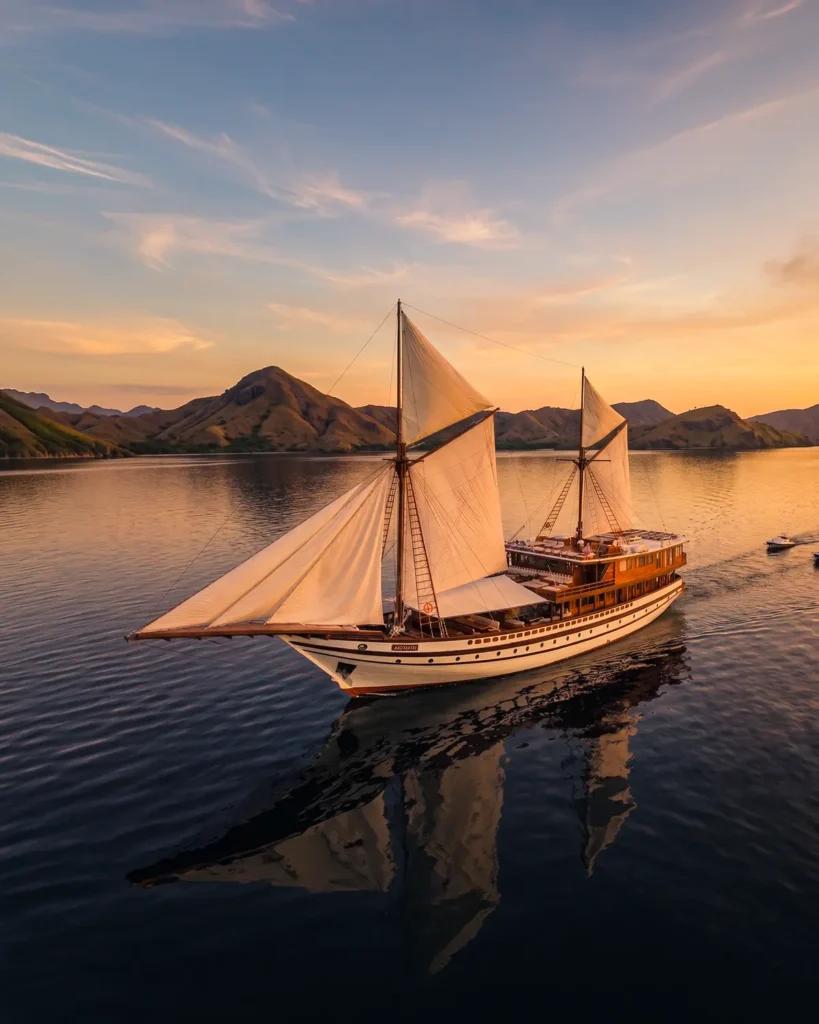
UNESCO recognized the art of phinisi boatbuilding in South Sulawesi as an Intangible Cultural Heritage in 2017. This recognition protects the knowledge and craftsmanship behind the tradition. It does not inspect, rate, or certify individual yachts or charter operators. For guests, the distinction matters: a vessel’s heritage is one part of its story, while its condition and operation determine the experience on board.
A phinisi is a traditional wooden sailing vessel from South Sulawesi. Its construction relies on knowledge passed down through generations of boatbuilders, particularly in places such as Bulukumba, including Tanah Beru and Ara. That heritage deserves more than a mention in a yacht description. It depends on the people who build, repair, and maintain these vessels. Their knowledge keeps traditional construction methods relevant while allowing the boats to serve new purposes.
At Komodo Luxury, we consider the people and craftsmanship behind a vessel as part of its long-term value. This includes working with the skills, materials, and maintenance knowledge that support wooden boat construction. For guests, we recommend looking beyond the word phinisi when comparing yachts. Ask who built the vessel, how it is maintained, and who is responsible for its upkeep. These questions provide a more practical understanding of the boat than its heritage designation alone.
Read more: Komodo Luxury CEO Agung Afif Joins Forbes Business Council
How Komodo Luxury Walks a Vessel Layout Through One Ordinary Day?

We assess a vessel layout by following a typical day on board, from breakfast and morning excursions to guest returns, housekeeping, and evening service. This helps us identify where guest and crew movements overlap, where privacy may be affected, and whether shared spaces can support daily operations. We determine the cabin count only after reviewing how the vessel functions as a whole.
Consider a typical day during a Komodo National Park sailing trip. Breakfast is served on the dining deck before guests leave for an island excursion. They return after trekking, snorkeling, or spending time in the water. Some need to rinse off and change, while others want to relax on the deck.
At the same time, the crew prepares lunch, cleans the cabins, organizes equipment, and gets the vessel ready for the afternoon. These activities happen within the same limited space. We review how each person moves through the vessel during these moments. For example, a guest carrying wet snorkeling equipment should not have to pass through the dining area. Housekeeping should be able to reach cabins without disrupting guests relaxing on the sun deck. The crew also needs practical working and resting areas.
These details influence how we evaluate a vessel’s layout:
- Cabin access: Guests should be able to reach their cabins comfortably without unnecessary interruptions to shared activities.
- Dining arrangements: The dining area needs enough room for guests to enjoy meals without interfering with crew movements.
- Deck circulation: Guests returning from excursions need a practical route to rinse off, store equipment, and access their cabins.
- Crew facilities: The crew needs dedicated spaces to work, prepare for service, and rest between duties.
- Housekeeping access: Cabin cleaning should fit naturally into the daily schedule without compromising guest privacy.
Cabin capacity is therefore not simply a matter of how many sleeping spaces fit inside a vessel. Every additional cabin also creates more work for housekeeping, the galley, and other onboard services. It can also reduce the space available for dining and crew facilities.
We would rather operate a vessel at a capacity that allows us to maintain consistent service than maximize the number of guests it can accommodate. The layout must work during an ordinary day, not only look appealing in photographs or on a floor plan.
Why Komodo Luxury’s Booking Calendar Protects Maintenance Dates?
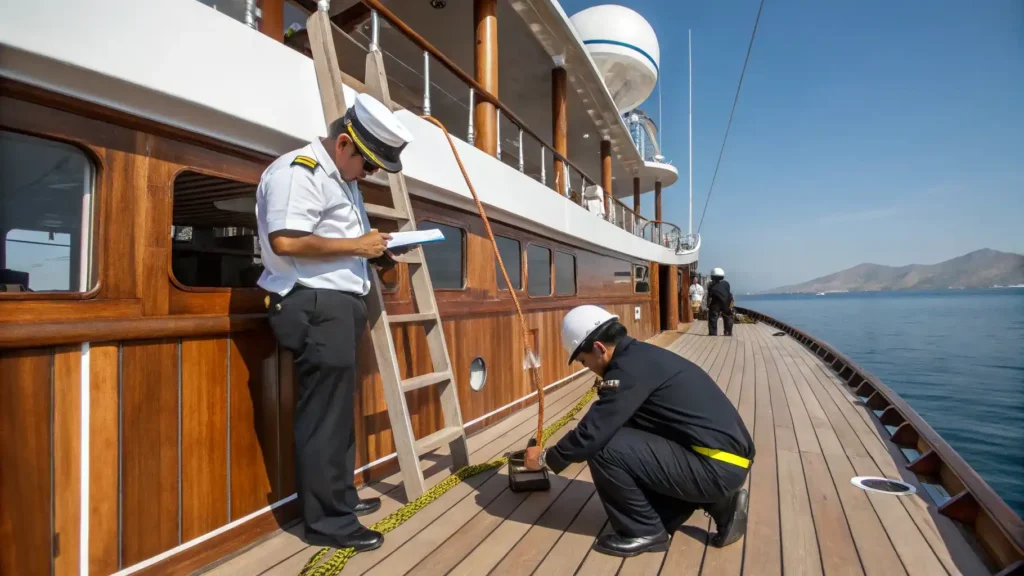
We schedule maintenance before opening charter dates for booking. Wooden vessels require regular attention to their hulls, engines, safety equipment, and interiors. By reserving time for this work in advance, we can plan around the vessel’s operational needs rather than trying to fit essential maintenance between guest departures. A vessel can look ready from the outside without being fully prepared for another charter. A recently finished interior, for example, does not confirm that its mechanical systems have been checked or that its safety equipment is ready.
Our planning considers several areas:
- Hull condition: Wooden hulls require regular inspection and care to maintain their condition.
- Engine and mechanical systems: These need scheduled checks to support reliable vessel operations.
- Safety equipment: Equipment must be inspected and kept ready for use.
- Interior and onboard facilities: Cabins, bathrooms, dining spaces, and shared areas need attention before the next departure.
- Crew readiness: The crew must be prepared to operate the vessel and provide onboard services.
We account for these requirements when organizing the booking calendar. Maintenance periods are reserved before guest availability is confirmed, helping us avoid treating essential work as something that can always be postponed. Guests may never see the maintenance calendar, but they experience the results. They notice when onboard facilities work as expected, when equipment is ready, and when the crew can focus on service instead of dealing with preventable operational issues.
For us, maintenance is part of the overall charter experience. It is not simply an expense between bookings. It is one of the responsibilities involved in operating a wooden yacht and preserving its condition over time.
What Guests are Told Before Departure About Weather, Permits and The Captain’s Call?

Before departure, we explain that weather, sea currents, and park regulations can affect the itinerary. We also clarify that the captain has the final authority over safety-related route decisions. Guests receive information about possible alternatives in advance, so they understand that a sailing itinerary is planned around actual conditions rather than guaranteed stops.
A sailing trip through Komodo National Park or Raja Ampat involves several factors that cannot be controlled by the operator. Weather conditions and sea currents may affect navigation, while access to certain destinations depends on applicable regulations and permits. This is why we explain the difference between a planned itinerary and the conditions required to carry it out.
For example, snorkeling activities may depend on sea conditions and currents. Some destinations may also have access requirements that need to be considered during trip planning. If conditions make a planned stop unsuitable, the captain may decide to adjust the route.
Our communication covers three important points:
- Weather and sea conditions: Guests are informed that conditions can influence navigation, activity schedules, and destination choices.
- Permits and park regulations: We explain that access to certain areas depends on the applicable requirements and permissions.
- The captain’s authority: Guests understand that the captain makes the final decision when safety requires a route adjustment.
We also prepare alternative options where possible. If a change becomes necessary during the trip, the crew communicates it promptly and explains the reason. This approach helps set realistic expectations before guests board. It also gives them a clearer understanding of how decisions are made during the journey.
You can explore examples of our route planning through the Komodo itinerary and Raja Ampat itinerary pages.
Where The Craft Lives: Boat Construction and Repair in South Sulawesi
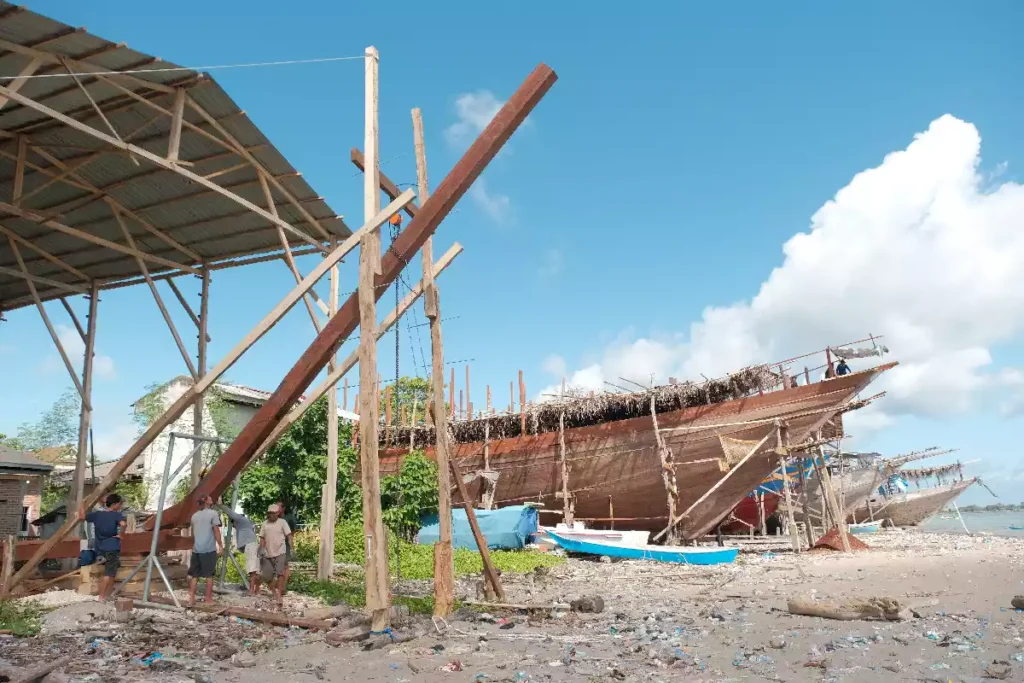
The phinisi tradition continues through the boatbuilders and shipyards of South Sulawesi, where wooden hulls are shaped, maintained, and repaired using knowledge passed down through generations. Its future depends on more than cultural recognition. It also needs consistent work, skilled people, suitable materials, and long-term investment in boat construction and maintenance.
A traditional vessel requires attention throughout its working life. The original construction is only one stage. Refits, repairs, design decisions, and ongoing management all influence how the boat performs and how long it remains in service. This is why our involvement in the maritime industry extends beyond charter operations.
At Komodo Luxury, we recognize the importance of the work that takes place before a vessel welcomes its first guest. Boat construction determines how the vessel is built. Design influences how its spaces function. Maintenance and management help preserve its condition throughout its operational life.
These areas are closely connected:
- Boat Construction: The building process brings together traditional craftsmanship, materials, and practical vessel requirements. Learn more about our Boat Construction services.
- Boat Design: Layout and design decisions influence cabin arrangements, shared spaces, and how guests and crew use the vessel. Explore our Boat Design services.
- Boat Management: Ongoing management supports vessel maintenance, operational planning, and the work required to keep a yacht in service. Discover our Boat Management services.
Supporting the craft means maintaining a working relationship with the people and skills behind it. When boatyards receive consistent work for construction, refits, and repairs, traditional craftsmanship has a practical place in the modern maritime industry. For us, this connection is an important part of understanding what it takes to operate and care for a phinisi over time.
Plan a Phinisi Stay with Komodo Luxury
A phinisi stay involves much more than choosing a beautiful wooden yacht. It requires a vessel layout that works throughout the day, maintenance periods that are protected in advance, a prepared crew, and clear communication about weather, permits, and route decisions. These are the operational considerations behind the ideas Agung Afif shared in his Council Post on Forbes.com. At Komodo Luxury, we approach each part of the process as an ongoing responsibility, from the vessel’s construction and management to the experience guests have during their stay.
If you are planning a sailing experience in Komodo National Park or Raja Ampat, contact our team to discuss available vessels and routes through our Boat Charter options. For those interested in developing a vessel or exploring a maritime investment, our team can also discuss Boat Construction and Investment opportunities.