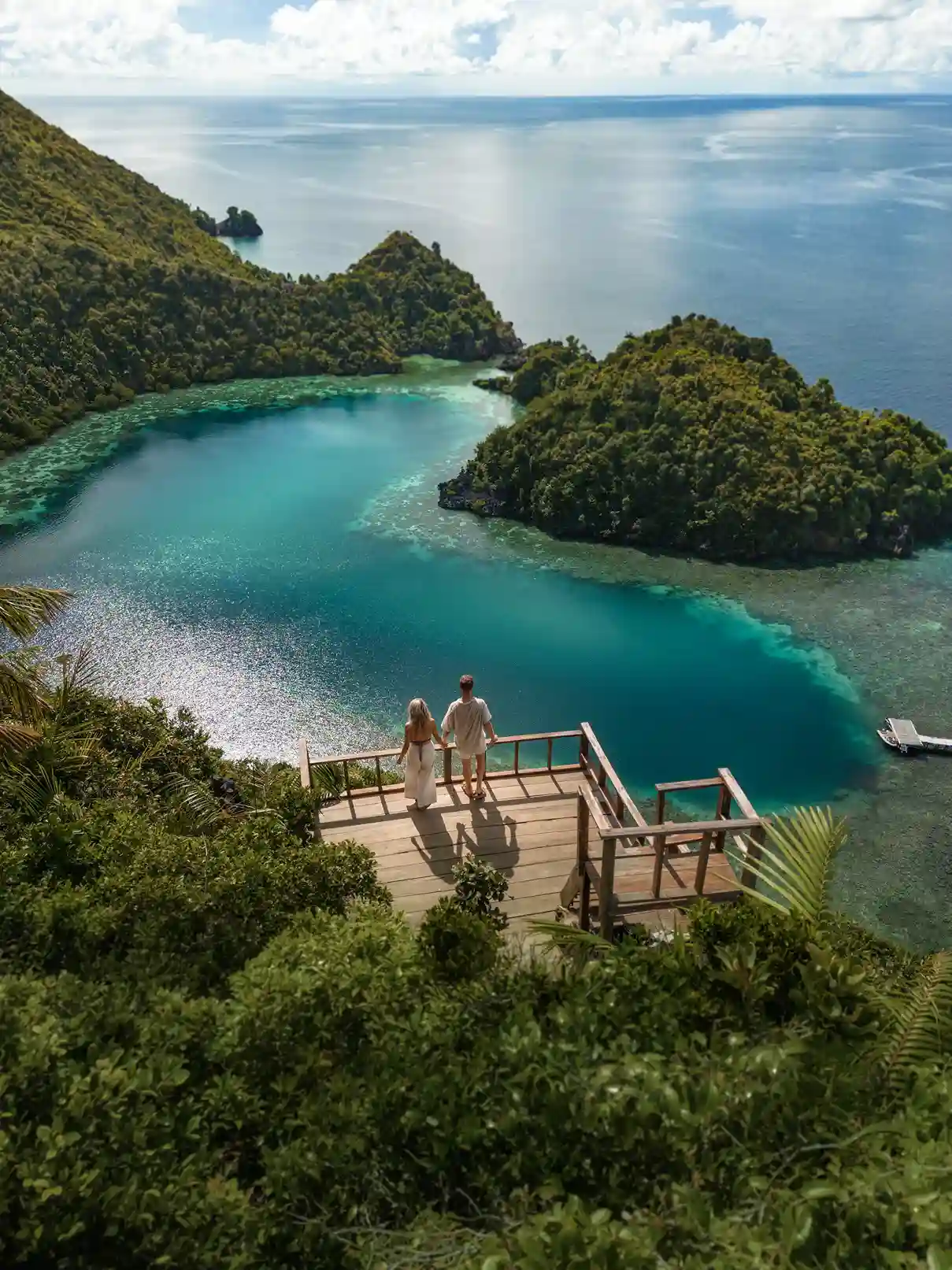


Bat Island
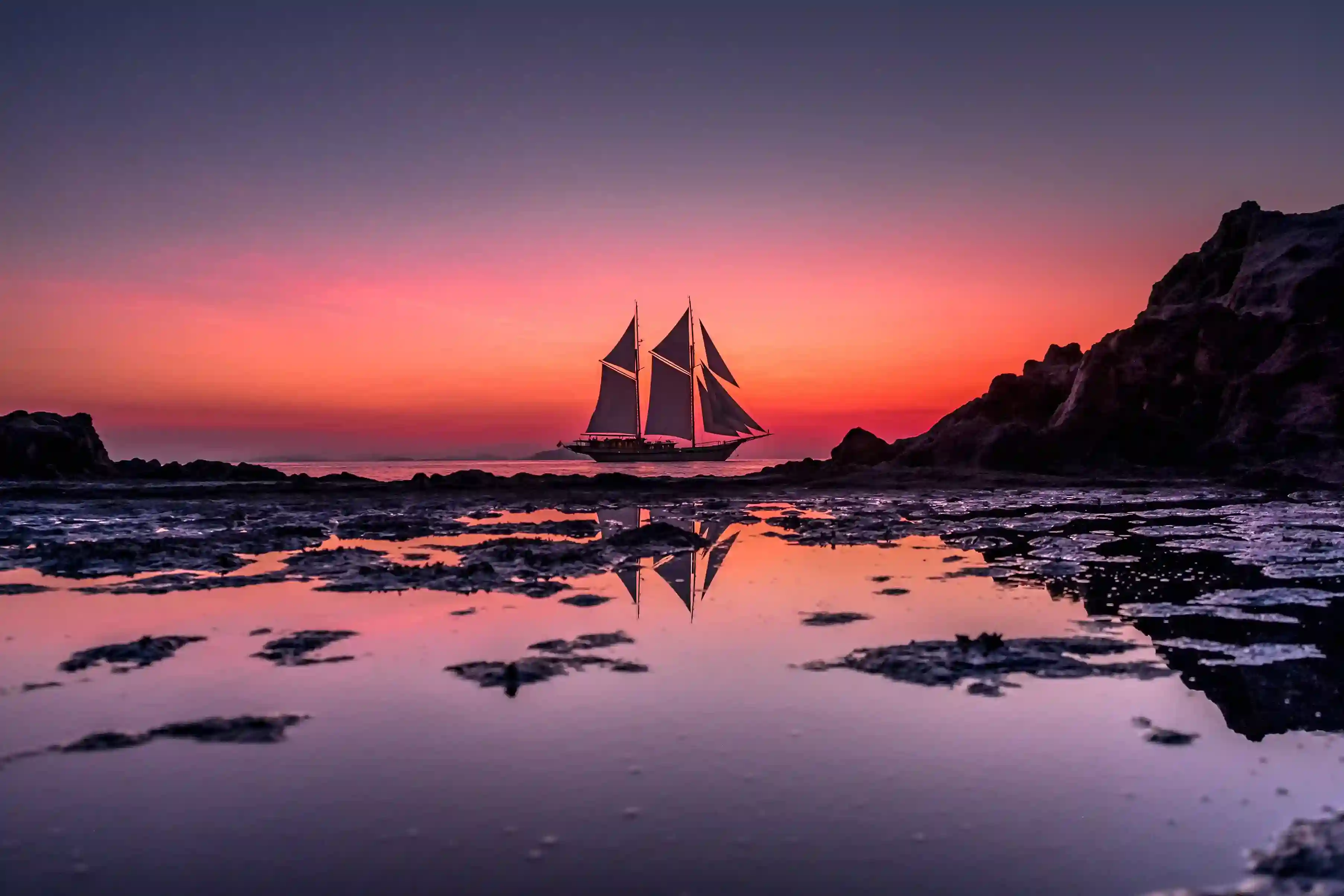
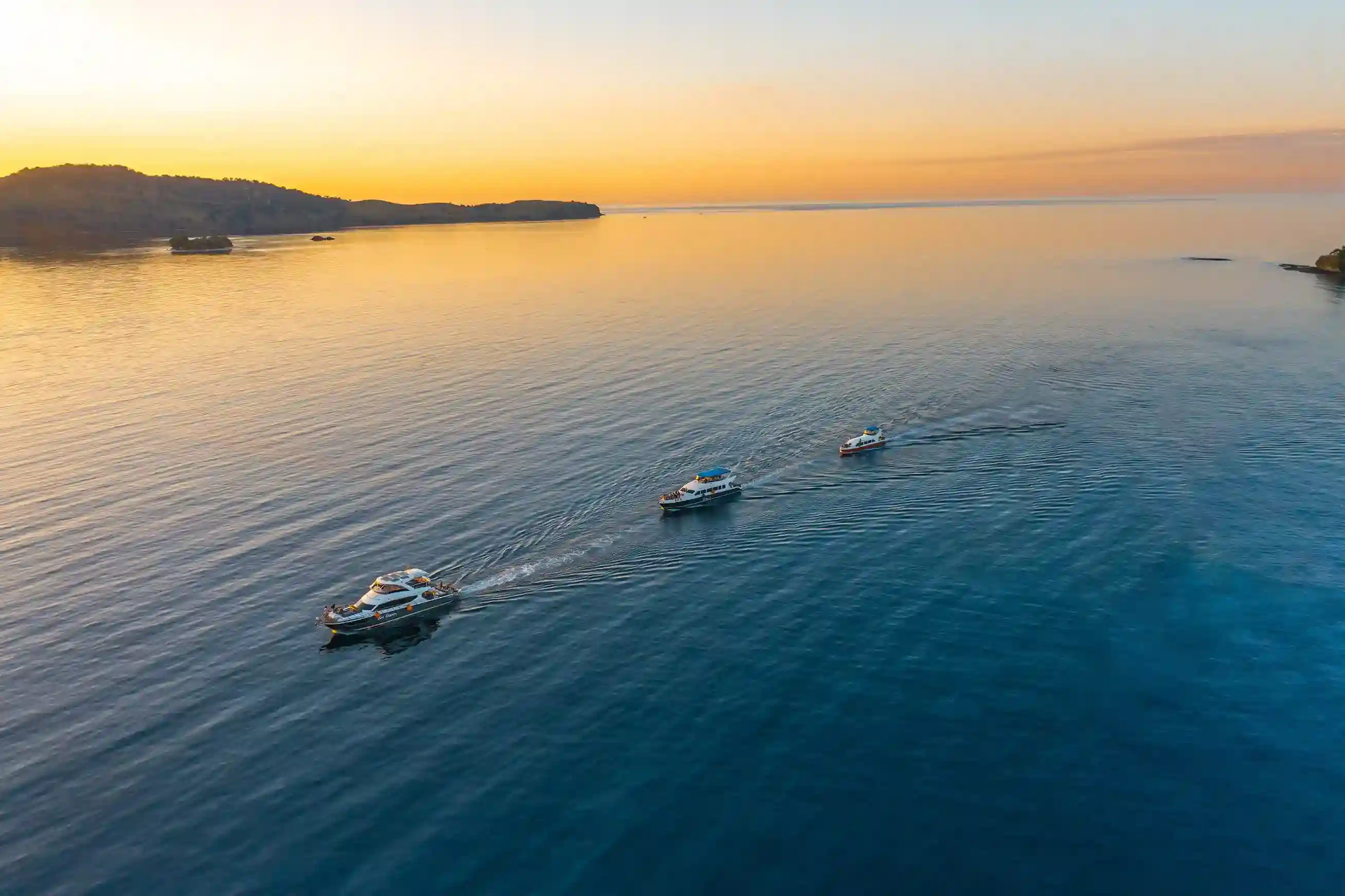
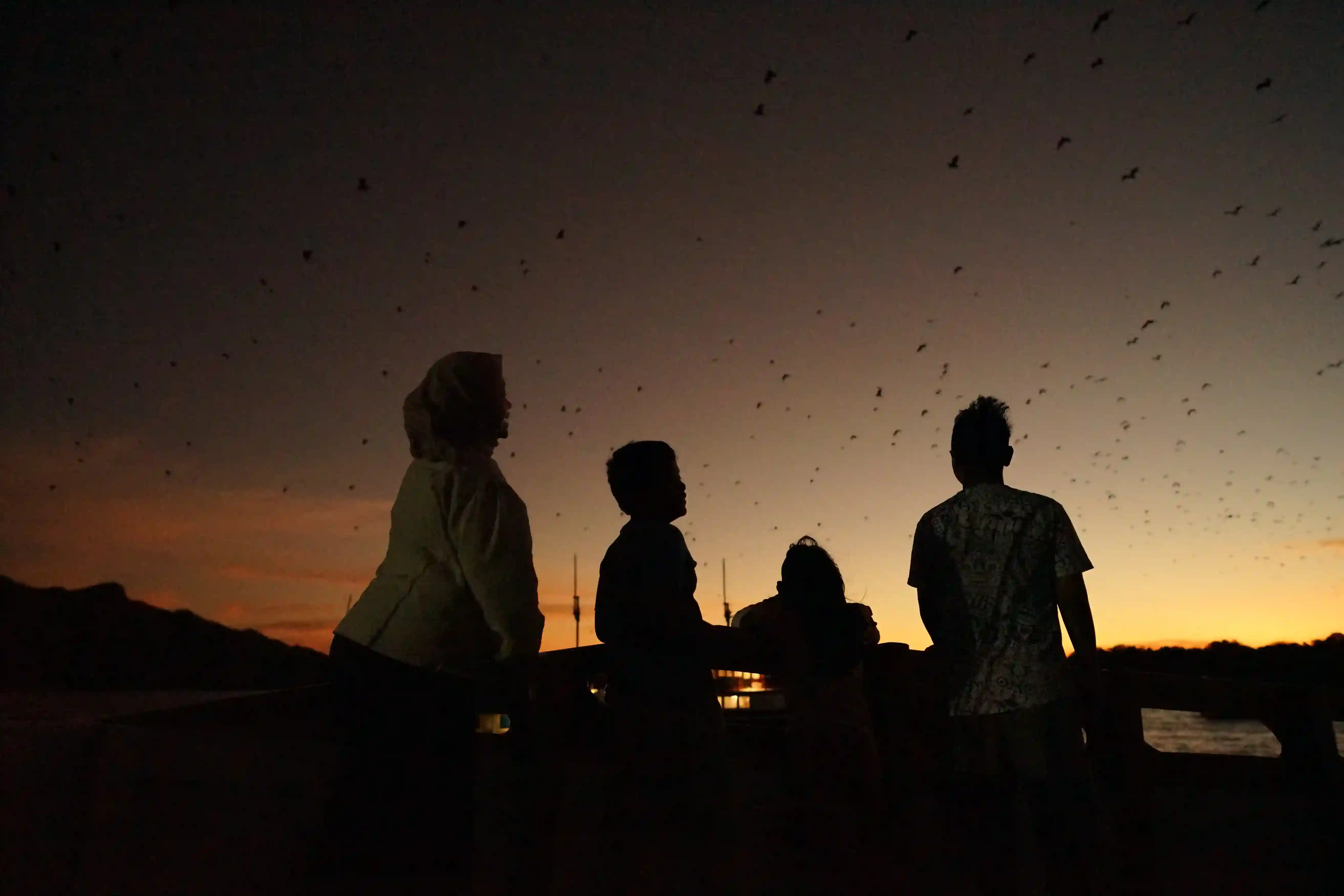
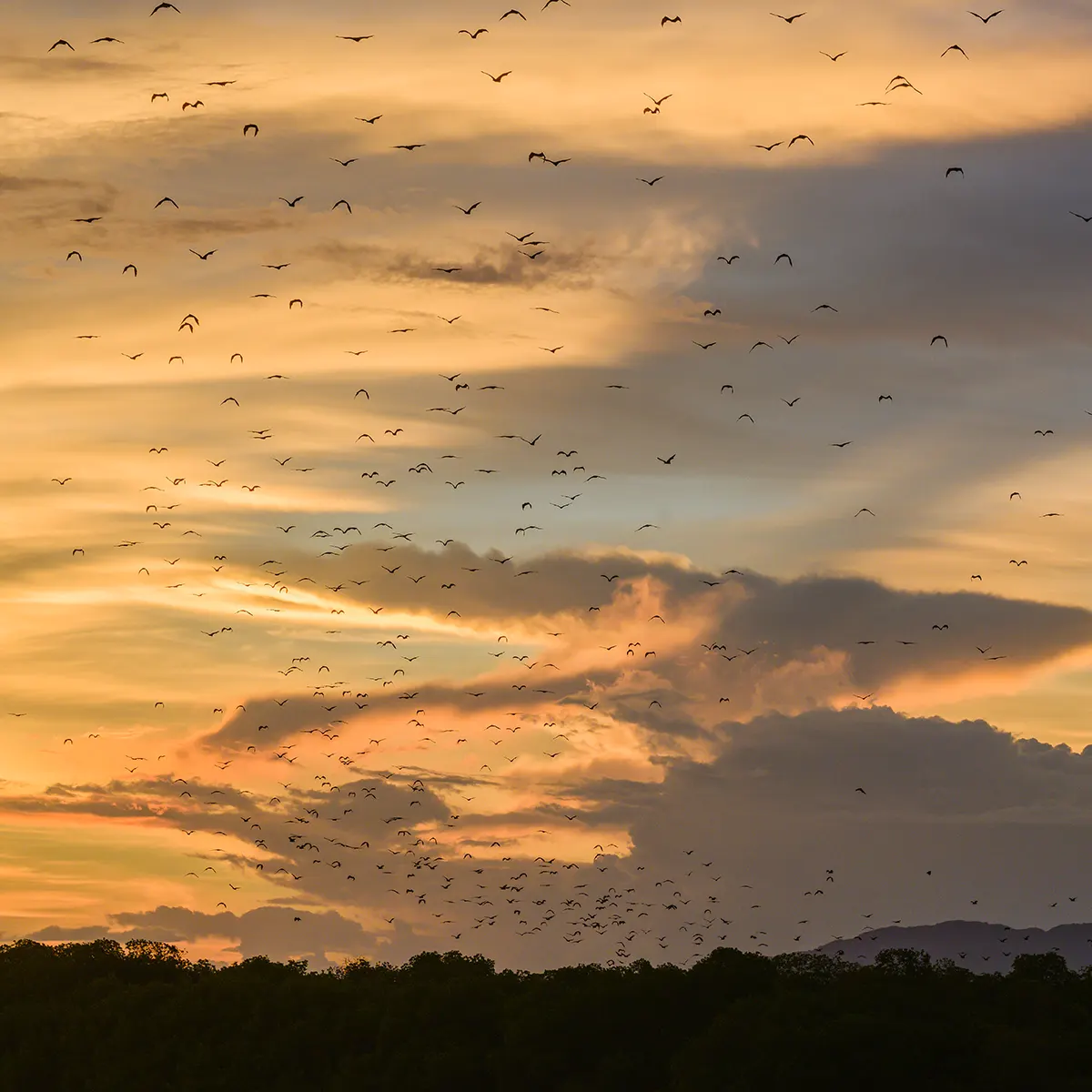
Kalong Island is often referred to as “Bat Island,” known for its remarkable sunset phenomenon when thousands of flying foxes (large fruit bats) leave the mangroves and glide across the evening sky. Set against the warm tones of dusk, this natural display has become one of the most distinctive wildlife experiences in Komodo National Park, especially for travellers seeking something beyond typical island views. The island sits a short cruise from Labuan Bajo, and most Komodo boat tour itineraries anchor offshore at dusk — the flying foxes emerge every evening, in every season. For guests joining a curated Komodo yacht charter, Kalong Island is usually positioned as a sunset highlight within the itinerary. The visit is carefully timed to match the bats’ natural movement, allowing you to enjoy the moment from a comfortable vantage point on board while the crew handles navigation, anchorage, and overall pacing of the journey.
Kalong Island (Pulau Kalong or Pulau Koaba) is a small, uninhabited mangrove island in Komodo National Park, known as a natural roosting site for thousands of flying foxes (large fruit bats). The island is entirely covered in dense mangrove forest and has no permanent human presence or visitor access. It functions as an important habitat within the Komodo ecosystem, supporting one of the largest bat colonies in the area. As a protected environment, Kalong Island plays a key role in maintaining ecological balance, particularly through the bats’ role in pollination and seed dispersal.

Kalong Island is located in the western section of Komodo National Park, within East Nusa Tenggara, Indonesia. It sits between Rinca Island and Papagarang, in a sheltered coastal zone characterised by calm waters and surrounding mangrove ecosystems. The island lies approximately eight kilometres from Labuan Bajo, the main gateway town to the Komodo region. Its position along key sailing routes makes it a naturally accessible point within the broader Komodo island network.

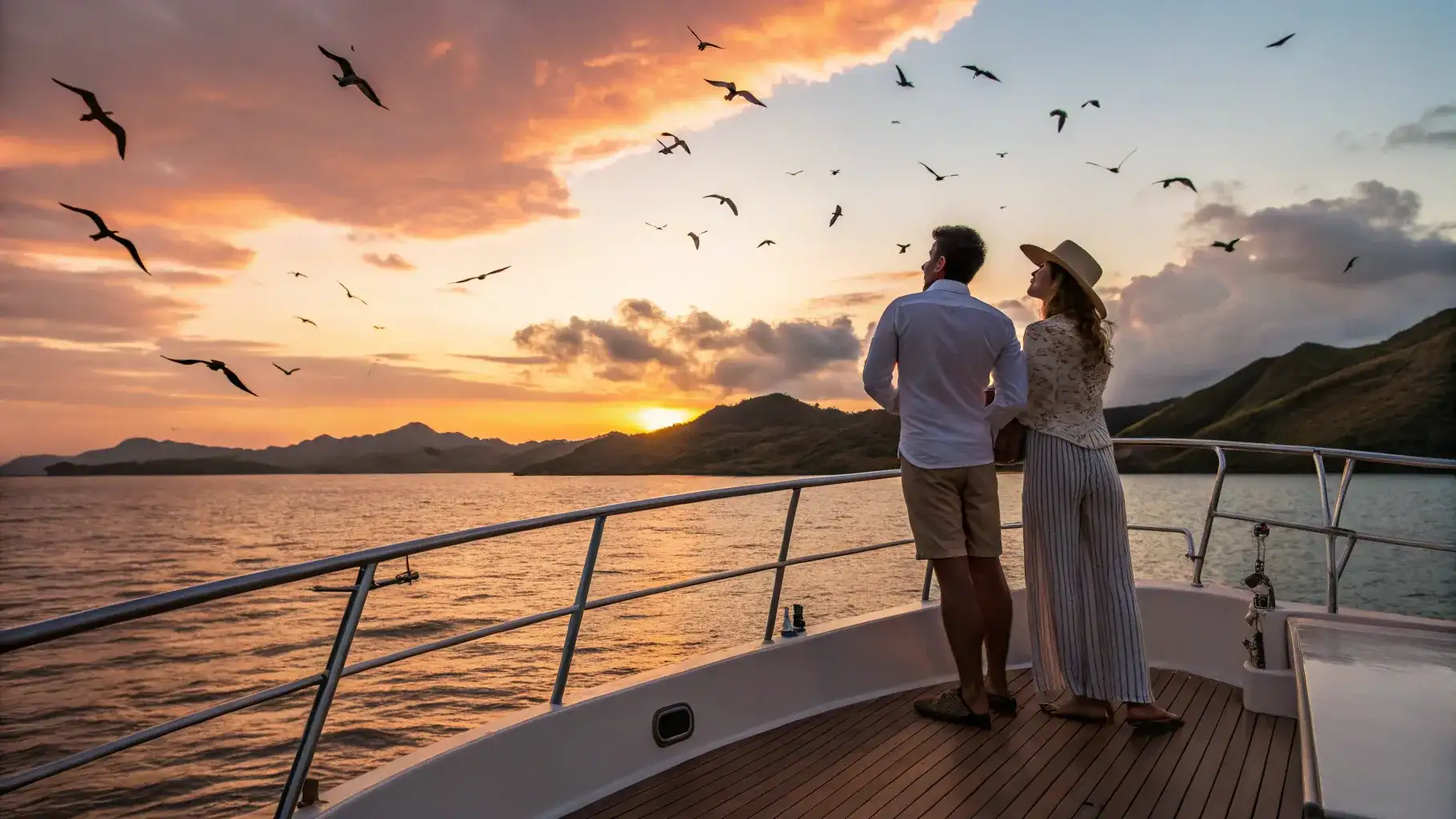


Komodo Luxury includes Kalong Island as part of its standard 3-day 2-night Komodo tour itineraries, typically scheduled on the first day as a sunset stop after a full day of exploration within the park. The yacht departs from Labuan Bajo in the morning and follows a planned route through Komodo National Park before arriving at Kalong Island in time for the bat flight at sunset. All routing, anchorage positioning, and operational coordination are handled by the crew in accordance with Komodo National Park regulations and established liveaboard safety standards.

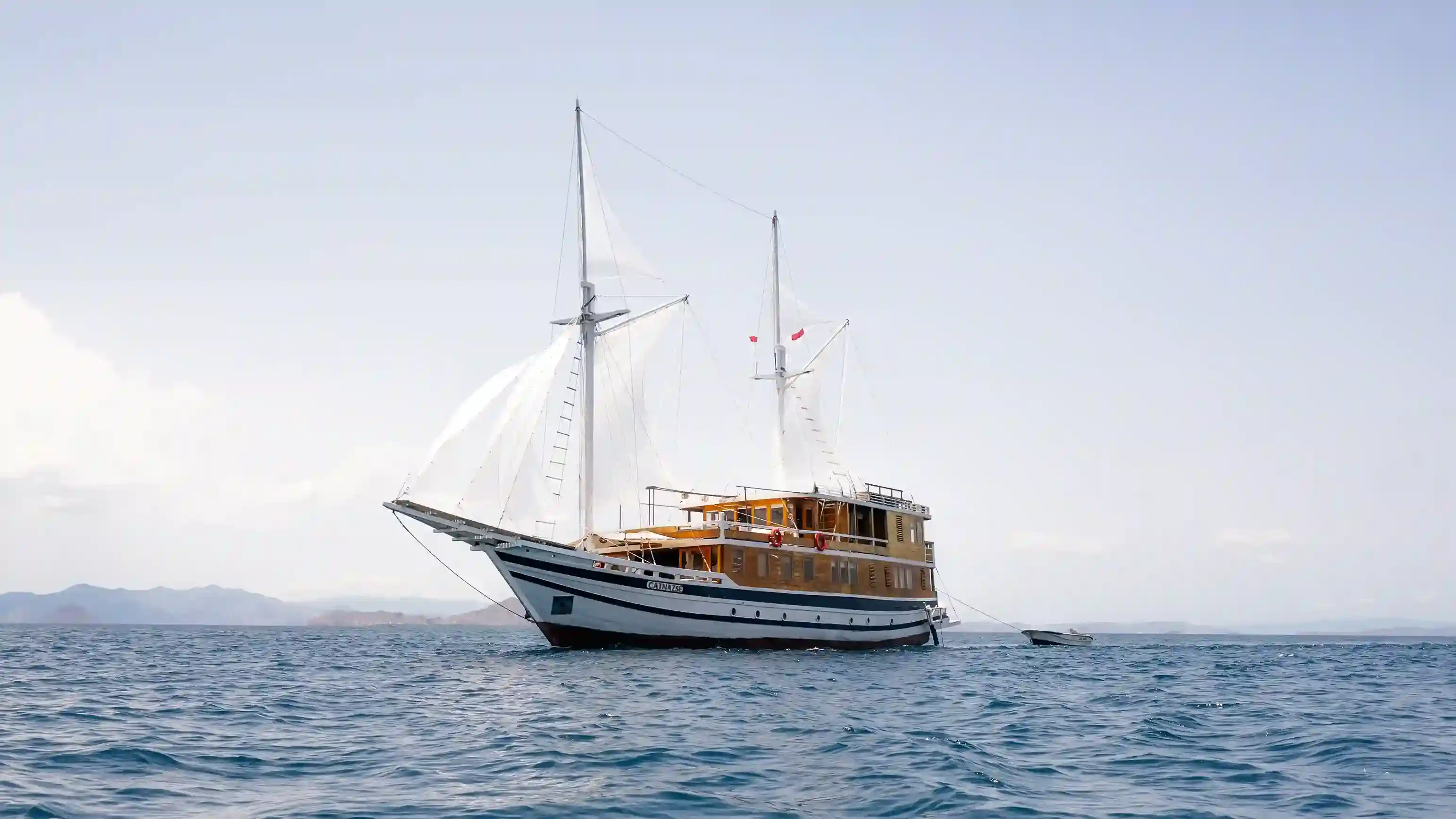
You can visit Kalong Island as part of a Komodo yacht charter and Komodo tour package with Komodo Luxury, where it is included in carefully curated Komodo National Park itineraries alongside other key island destinations. Before arrival, the crew manages full coordination of anchorage positioning and timing to align with sunset and the natural bat activity, ensuring an optimal and well-structured viewing experience. The entire visit is handled onboard in collaboration with park regulations and liveaboard safety standards, allowing Kalong Island to be experienced as part of a seamless, professionally managed sailing journey through the park.
| Distance from Labuan Bajo | ±20 km, 45–60 min by boat, on the lane toward Rinca Island |
|---|---|
| Landing | Not permitted; viewing is from anchor offshore |
| Best hour | Roughly 17:30–18:15, season-dependent |
| Combine with | Rinca trek by day, overnight at anchor nearby — positions on our Komodo National Park map |
The animals pouring off Kalong each dusk are flying foxes of the genus Pteropus — the largest bats on Earth, with wingspans that can exceed a meter on the biggest individuals. They are fruit- and nectar-eaters, not insect hunters: no echolocation, just big eyes, a keen nose and slow, powerful wingbeats that carry them across the strait to the fruiting trees of Flores each night. That commute makes them essential workers for the whole coastline — flying foxes pollinate night-blooming trees and scatter seeds across kilometers, quietly replanting the forests that feed them. They return to the mangroves before dawn, so the morning fly-back is a second, quieter show for guests anchored nearby overnight.
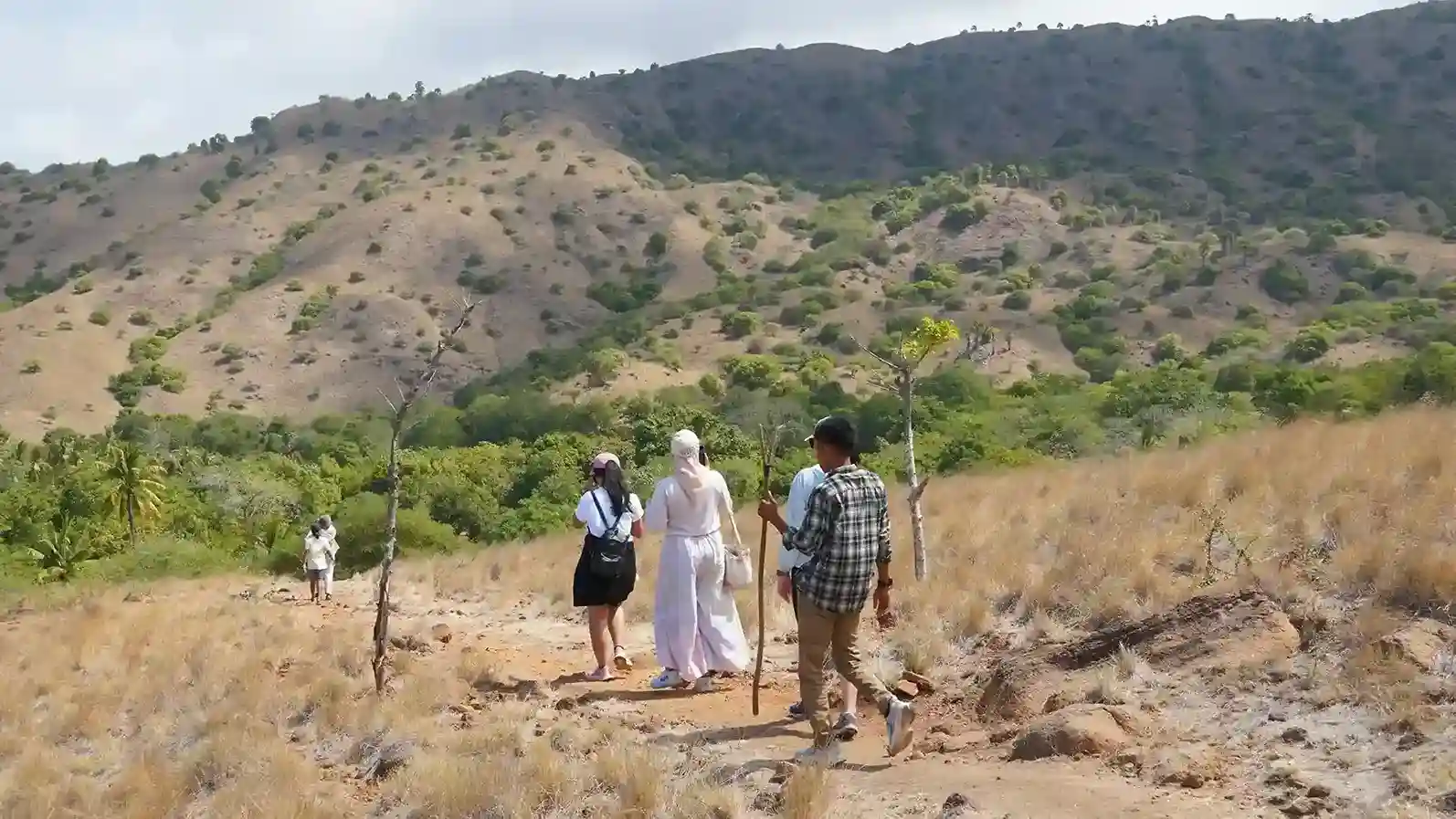
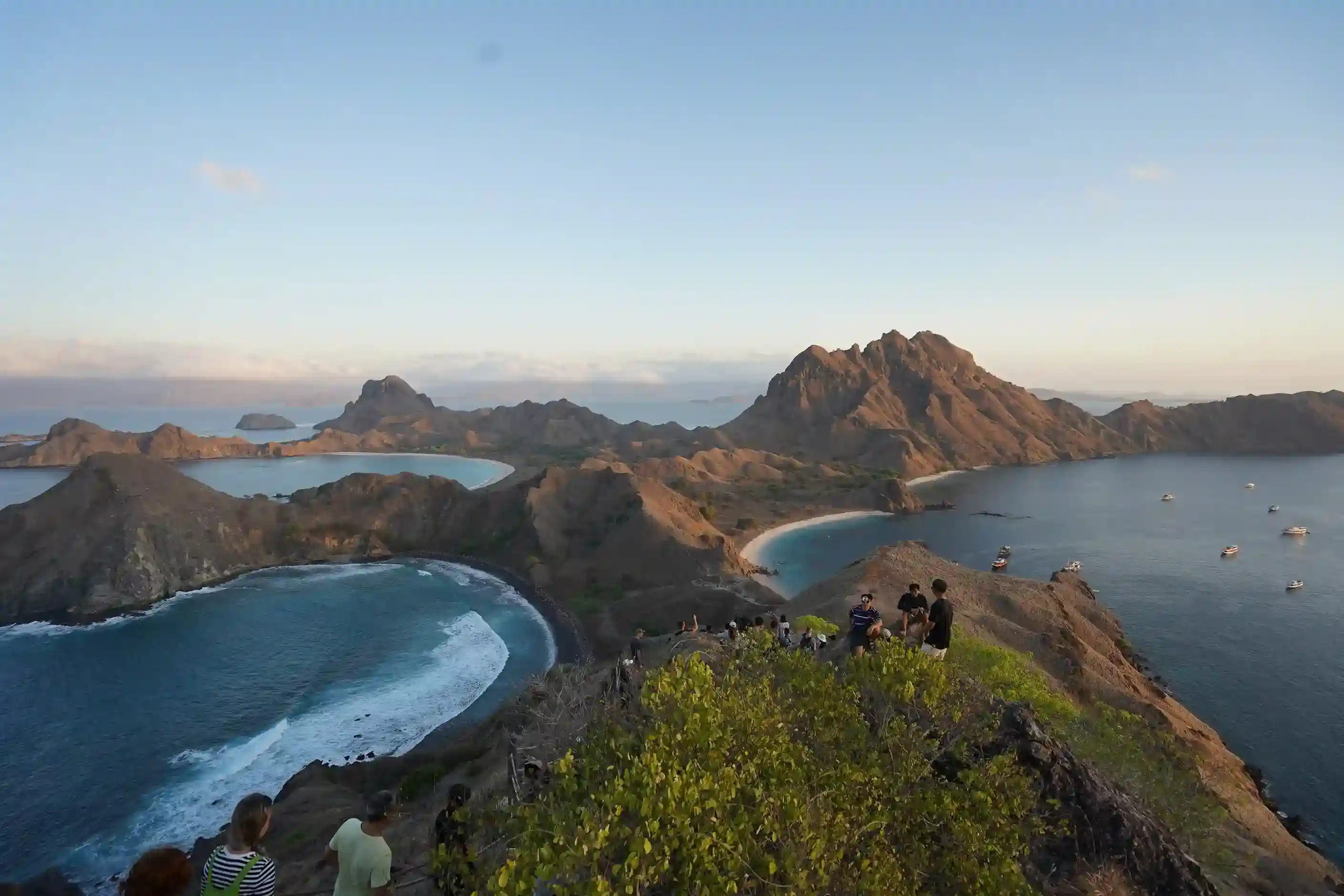
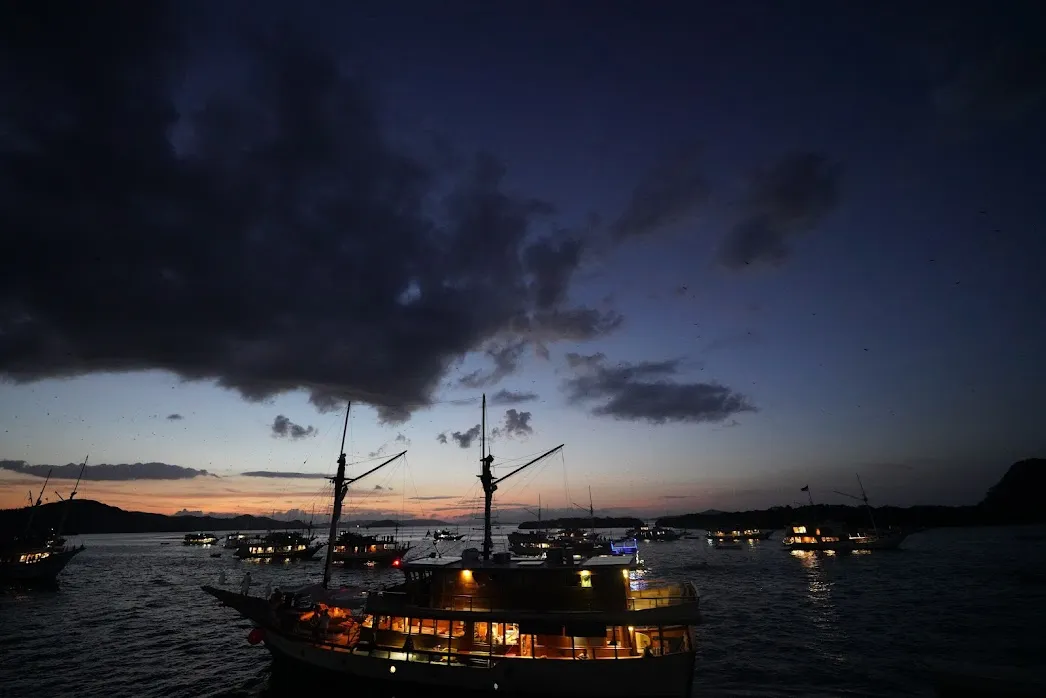
Kalong’s position writes the next chapter for you. Overnight boats usually stay put — the holding ground is decent and the morning fly-back over breakfast is the payoff — or shift twenty minutes to a calmer bay off Rinca’s coast. From either anchorage, day two opens with a Loh Buaya dragon trek before the day-boat fleet arrives, then runs west into the central channel for Padar and the reef sites — the natural final chapter of day one on a 3D2N sailing itinerary. Day-trip boats watching the exodus point straight home to Labuan Bajo, about an hour’s run in the dark — which is why crews check navigation lights before sunset, and why the overnight version of this stop is simply the better one.
Plan your visit: Komodo Luxury (PT Komodo Bahari Nusantara, sailing Komodo since 2015) operates 9 owned phinisi and works with 200+ vetted partner yachts, rated 4.9/5 by more than 1,500 guests. Message our team on WhatsApp at +62 811-3823-875 or email [email protected] and we will match the right boat and route to your dates.
Kalong is a sunset-only spectacle — day boats miss it, which is why overnight sailings pair it with Kelor for the classic first evening.
Immersive Experiences
Activity
Dive pristine reefs, trek remote islands, and encounter wildlife during our luxury sailing tours.
Signature Voyages
Curated Luxury Tours
Signature luxury tour itineraries crafted to reveal Indonesia's most exclusive destinations and experiences
Questions & Answers
Kalong Island (“kalong” is Indonesian for flying fox) is a mangrove islet between Rinca and Papagarang where, every evening at dusk, tens of thousands of giant fruit bats lift out of the trees in an unbroken river across the sunset sky — a 20–30 minute natural spectacle. Boats anchor in the channel just before sundown; nobody lands. It is the signature first-night anchorage of Komodo liveaboard itineraries.
Kalong is a sunset-timing destination: day trips that include it return to Labuan Bajo after dark, while liveaboards simply anchor in the channel for the night. It cannot be meaningfully visited in daytime — the bats are asleep in the mangroves.
At last light — typically between 17:45 and 18:15. The full exodus lasts 20–30 minutes. Your captain will position the boat in the channel with the sunset behind the flight path.
No. The mangrove roost is protected, and the spectacle is best from the water anyway — the bats stream directly overhead of anchored boats.
Only on extended day trips that return after dark. It is most naturally seen from a liveaboard or overnight charter, where Kalong is the classic first-night anchorage.
Contact our charter expert specialist