






Last updated: August 2026 · Prices & availability verified for the 2026/2027 season
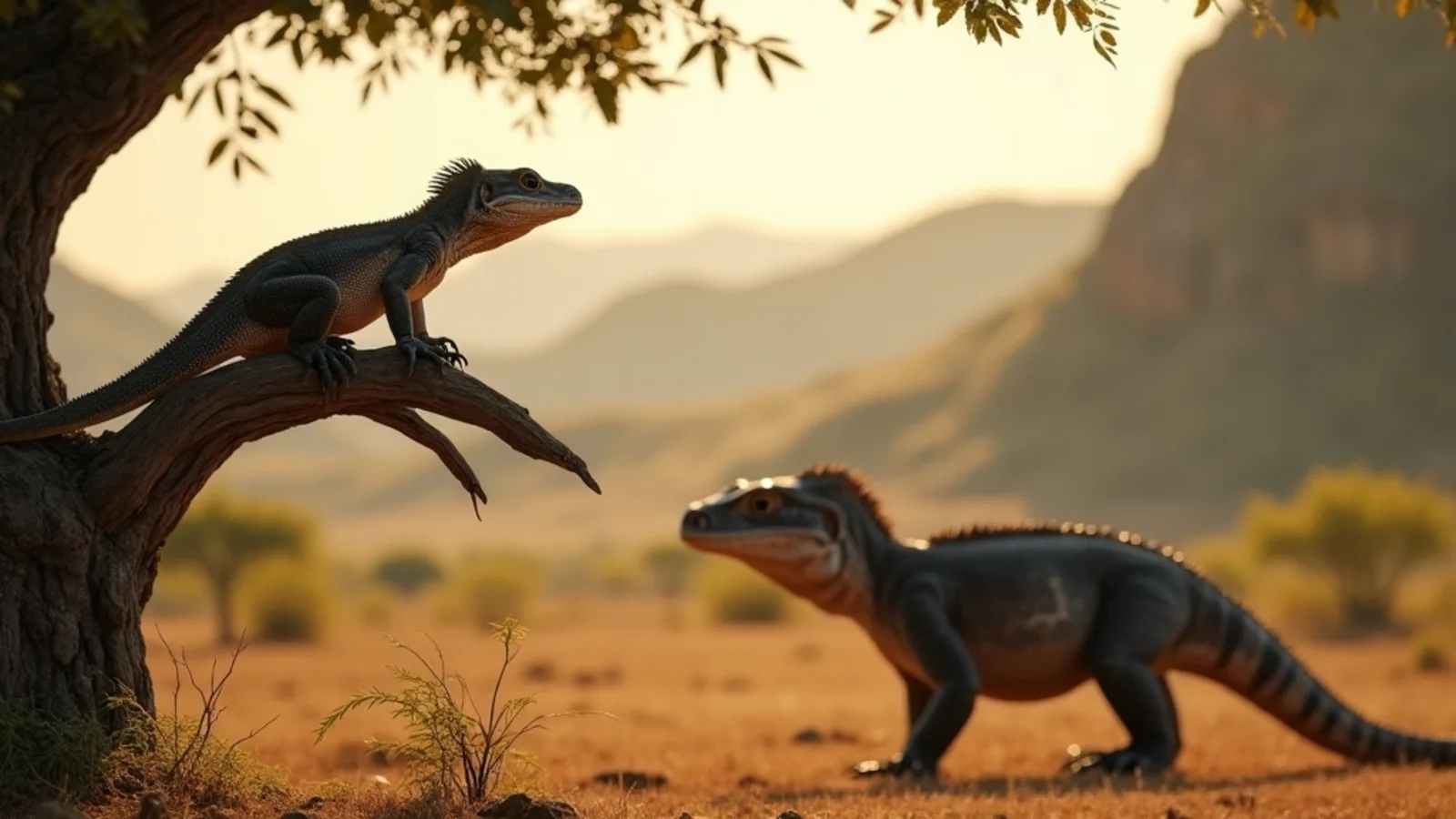
Komodo dragons live about 30 years in the wild, according to the Smithsonian’s National Zoo, and typically 20–30+ years in captivity — with the best-documented captive individuals reaching roughly 33 years. Claims of 50–62-year dragons circulate online, but those come from growth-curve extrapolations and anecdotes, not verified records. Getting to old age is the hard part: a Komodo dragon begins life as a 100-gram hatchling that must survive years of cannibal-dodging in the trees before it can grow into a savanna giant.
How Long Do Komodo Dragons Live? The Verified Numbers
| Context | Lifespan | Source basis |
|---|---|---|
| Wild, typical | ~30 years | Smithsonian National Zoo; mark–recapture field studies |
| Captivity, typical | 20–30+ years | Zoo records |
| Captivity, median (managed care) | 19.5 yrs (males) / 12.9 yrs (females) | AZA data via San Diego Zoo fact sheet |
| Best-documented maximums | ~33 yrs (Fluffy, Los Angeles Zoo); 30 yrs (Loka, Calgary Zoo) | Zoo longevity records |
| 62-year claims | Unverified | Growth-curve extrapolation, anecdote (HAGR database) |
Field researchers note an intriguing asymmetry: wild females tend to disappear from mark–recapture records after about 30 years, while males may live somewhat longer — likely because annual egg production, nest digging, and guarding exact a heavy energetic toll on females.
Wild vs Captivity: Why the Numbers Differ
It surprises many readers that the captive medians — 19.5 years for males, 12.9 for females in AZA-managed collections — sit below the wild estimate of ~30 years. The figures measure different things. Medians count every animal, including those lost young to disease or transfer stress, while the wild “~30 years” describes dragons that survived the brutal juvenile gauntlet; a wild hatchling’s odds of seeing year one are far worse than a zoo hatchling’s. What captivity removes is starvation, combat, and predation; what it cannot fully replicate is the exercise, thermal range, and foraging life of a savanna — and the female median again trails the male, echoing the reproductive cost seen in the wild. The dragons that thrive longest in either setting share one profile: large, dominant males with reliable food and few serious injuries.
The Komodo Dragon Life Cycle, Stage by Stage
Stage 1 — The Egg: 7 to 8 Months Underground
Females lay one clutch per year between July and early September — a field mean of about 21 eggs (range 1–30) per Purwandana and colleagues’ 2020 study — usually in a dug burrow or a commandeered megapode nest mound. Incubation is extraordinarily long for a lizard: around 220 days (7–8 months), with London Zoo clutches recorded at 251–256 days. Eggs that survive nest predators, flooding, and desiccation hatch around February–March, timed to the fruit- and insect-rich wet season.
Stage 2 — Hatchling: Straight Up a Tree
Hatchlings emerge at roughly 40 cm and 100 g and climb almost immediately. The ground is lethal: adult dragons eat juveniles, and cannibalism is a routine feature of the species’ ecology. Mortality in the first year is high — raptors, snakes, and larger dragons take most of each clutch.
Stage 3 — Arboreal Juvenile: Years 1–3+
Young dragons live mostly in the canopy, hunting insects, geckos, and small birds, descending cautiously as they grow. This tree-dwelling apprenticeship is unique among the world’s giant predators — the future apex carnivore of the savanna spends its childhood hiding from its own species.
Stage 4 — Subadult: Years 3–8
Now too large for most predators, subadults shift to ground level, graduating from rodents to deer fawns and carrion. Growth is fast; by this stage the size gap between the sexes is already visible — the divergence detailed in our Komodo dragon size guide.
Stage 5 — Mature Adult: 7–10 Years Onward
Females first breed at 7–10 years; males mature around 8–10 and keep bulking for years afterwards. Adults command game trails and carcasses, males wrestle upright for mates each dry season, and females enter the taxing annual rhythm of clutch, nest, and guard duty.
Stage 6 — Senior: 20–30+ Years
Old dragons are scarred veterans — slower, heavier, increasingly reliant on carrion and ambush. Senescence brings reduced healing; injuries and infections that a young dragon shrugs off become fatal. The oldest wild individuals, almost always male, are the massive, unhurried dragons guests most often photograph near Loh Liang and Loh Buaya.
What Kills Komodo Dragons? Mortality by Life Stage
- Eggs: nest predation (including other monitors), flooding, desiccation.
- Hatchlings/juveniles: cannibalism by adults, birds of prey, snakes, starvation.
- Adults: combat wounds from rival males, injuries from large prey such as buffalo, drought-year starvation, disease and parasites.
- Seniors: age-related decline compounding otherwise survivable injuries.
The pattern is a funnel: of a ~21-egg clutch, only a handful of dragons reach maturity, and only the toughest of those reach 25. Every big male dozing beside a ranger post is a statistical survivor several times over.
How Do Scientists Know a Dragon’s Age?
There is no birth certificate in the savanna. Researchers rely on three methods: long-term mark–recapture programs in Komodo National Park (individuals tagged and re-encountered across decades), known-age zoo records, and growth-curve modelling from body measurements. That third method is the source of the famous “62-year” figure — an extrapolated ceiling, not a measured dragon, which is why serious references stick to ~30 years.
Meet Every Life Stage in One Trek
A single morning in Komodo National Park can show you the whole cycle: juveniles glimpsed in the trees, subadults patrolling the beach at Rinca Island, and 25-year-old males dozing near the ranger posts. Our Komodo tour packages put licensed rangers beside you for every step — the dragons have decades; a good expedition makes the most of your days.
Frequently Asked Questions
How long do Komodo dragons live?
About 30 years in the wild, per the Smithsonian’s National Zoo, and commonly 20–30+ years in captivity. The best-documented captive dragons reached roughly 30–33 years.
What is the oldest Komodo dragon ever recorded?
Among well-documented individuals: Fluffy at the Los Angeles Zoo (~33 years) and Loka at the Calgary Zoo (30 years). Reports of 62-year dragons are extrapolations, not verified records.
How long is Komodo dragon egg incubation?
About 7–8 months (~220 days) — among the longest of any lizard. Eggs are laid July–September and hatch around February–March.
How many eggs does a Komodo dragon lay?
A single annual clutch averaging about 21 eggs (range 1–30 in field data; 15–30 typical).
At what age do Komodo dragons reach maturity?
Females first reproduce at 7–10 years; males mature at roughly 8–10 years and continue growing long afterwards.
Why do young Komodo dragons live in trees?
To escape cannibalism — adult dragons routinely eat juveniles, so the young stay arboreal for their first years until they outgrow easy-prey size.