






Last updated: September 2026 · Prices & availability verified for the 2026/2027 season
Last updated: September 15, 2026
The Komodo dragon (Varanus komodoensis) is a living legend, a giant reptile roaming the tropical islands of Indonesia with an unmatched presence. But even the fiercest creatures in the wild have to look over their shoulders. So, does the Komodo dragon have an enemy? This question may seem simple, but the answer reveals a complex story of survival, natural selection, and human impact.
Apex-versus-apex is something our guides have witnessed only twice in eleven years of daily treks — the rarest sighting on the dragon walks included in every Komodo sailing itinerary we run.
In this article, we’ll uncover what threatens Komodo dragons at different stages of life. We’ll also show you how you can witness these magnificent animals responsibly.
Key Takeaways
- Adult Komodo dragons have no natural predators and sit as the undisputed apex predator on every island they inhabit, but their greatest threat comes from within their own species.
- Cannibalism is the biggest natural danger to young dragons, with adults preying on hatchlings and juveniles, which is why hatchlings live in trees for their first few years to avoid being eaten.
- Once a Komodo dragon grows past roughly a meter and a half, nothing else on Komodo, Rinca, Flores, Gili Motang, or Nusa Kode is able to hunt it.
- The real long-term threat isn’t another predator but humans, through habitat loss, shrinking prey populations, and a warming, drying climate that threatens low-lying nesting areas.
- Only about 3,400 Komodo dragons remain in the wild, and the IUCN listed the species as Endangered in 2021, which is why ranger-led conservation tourism plays such an important role.
Komodo Dragon: Apex Predator of the Islands
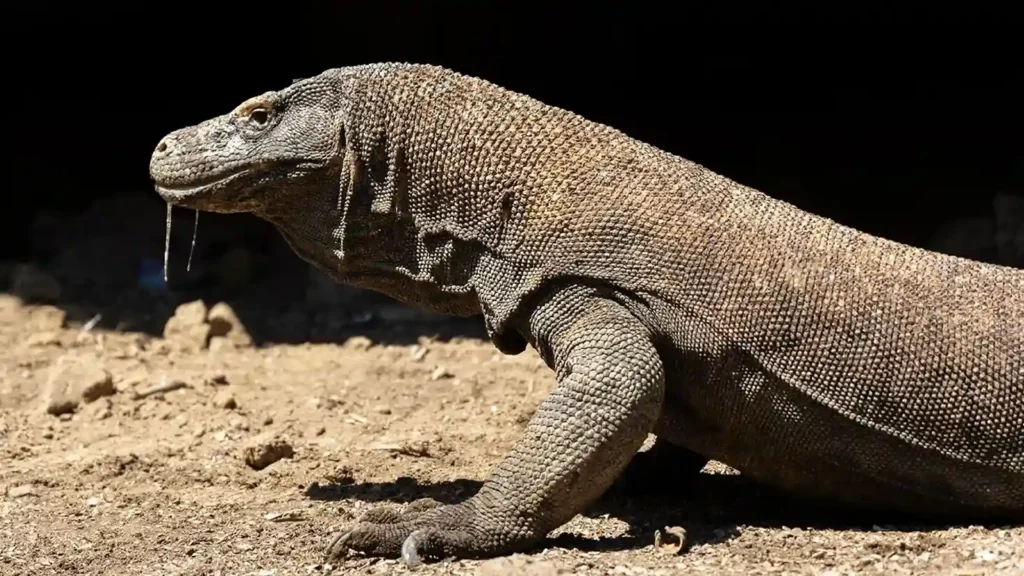
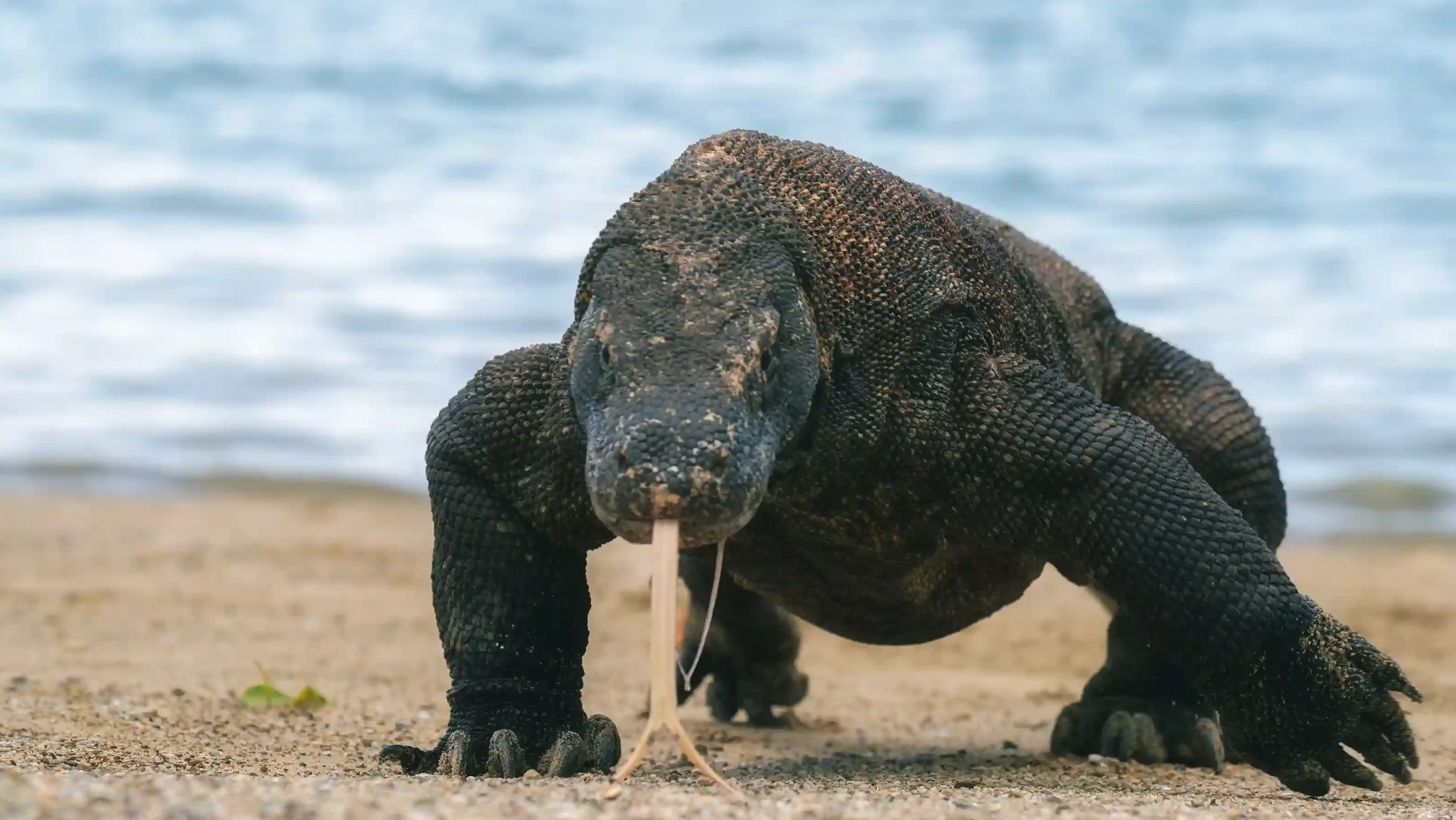
Komodo dragons are the apex predators in their ecosystem. Adults can grow over 3 meters long (10 feet) and weigh up to 150 kg (330 lbs). They hunt with stealth, power, and biological weapons: a combination of venomous saliva, sharp claws, serrated teeth coated with iron, and the ability to track wounded prey for miles. They prey on deer, pigs, water buffalo, and occasionally even horses.
Once an animal is bitten, the Komodo’s venom and bacteria begin working, causing blood loss, paralysis, and shock. The Komodo then follows the victim until it collapses, often hours or days later. In their environment, adult Komodo dragons have no natural predators. They rule the land as top-tier hunters, and no other animals in the Komodo islands can seriously challenge them, at least, not when they are healthy and full-grown.
The Hidden Threat: Cannibalism Among Komodo Dragons
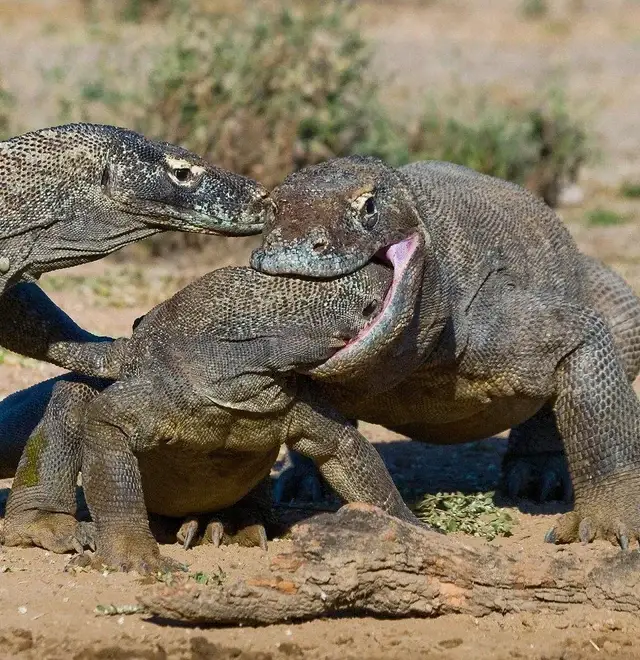
One of the most brutal and surprising threats to Komodo dragons is the danger that comes from within their own species. Cannibalism is a well-documented behavior among Komodo dragons, with adult individuals frequently preying on hatchlings and juveniles. It’s estimated that up to 10% of an adult Komodo’s diet can consist of younger Komodos. This forces hatchlings to seek refuge in trees shortly after hatching, often within just a few hours, where they spend their first years feeding on insects, small birds, and reptiles until they grow large enough to defend themselves on the ground.
This survival instinct reveals how harsh the early life of a Komodo dragon can be. Instead of facing external predators, hatchlings must constantly avoid being eaten by their older, more powerful relatives. It highlights a rarely discussed reality: the apex predator’s greatest threat in early life is not another species, it’s the apex predator itself.
Read more: How Dangerous Are Komodo Dragons? Find The Truth About These Creatures
Human Impact and Conservation Efforts
Although Komodo dragons have no natural predators once they reach adulthood, they are increasingly vulnerable to the growing presence and impact of humans. Habitat loss from deforestation, expanding agriculture, and infrastructure development has significantly reduced their natural living space, while overhunting of prey species like deer and wild pigs has made it harder for Komodos to find food. Beyond that, illegal trade, pollution, and direct human-wildlife conflict add further pressure, and rising sea levels from climate change threaten the low-lying nesting areas these dragons depend on.
To address these challenges, Indonesia has implemented conservation programs centered around Komodo National Park, a UNESCO World Heritage Site, with strict regulations on tourism, habitat protection, and population monitoring. Conservation organizations and local communities are also actively involved in sustainable tourism and educational initiatives, aiming to protect the Komodo dragon while ensuring local residents benefit economically without compromising the fragile ecosystem. Through this collaboration, conservation efforts play a vital role in keeping the Komodo dragon from becoming a mere legend of the wild.
Conservation Efforts and Why They Matter

Although Komodo dragons sit at the top of the food chain, they are not invincible. In recent decades, environmental pressures and human activity have posed significant risks to their survival. One of the most pressing threats is habitat loss, driven by infrastructure development, tourism expansion, and climate change. Rising sea levels and increasing temperatures are slowly reshaping the coastal ecosystems that Komodo dragons depend on, especially for nesting and hunting.
To address these challenges, Indonesia has implemented various conservation programs centered around Komodo National Park, a UNESCO World Heritage Site. This protected area serves as a crucial sanctuary for the species, with strict regulations on tourism, habitat protection, and population monitoring. Beyond government efforts, conservation organizations and local communities are also actively involved in sustainable tourism and educational initiatives. These programs aim not only to protect the Komodo dragons but also to ensure that local residents benefit economically without compromising the fragile ecosystem. Through collaboration and awareness, conservation efforts play a vital role in keeping the Komodo dragon from becoming a mere legend of the wild.
So, Does the Komodo Dragon Have an Enemy?
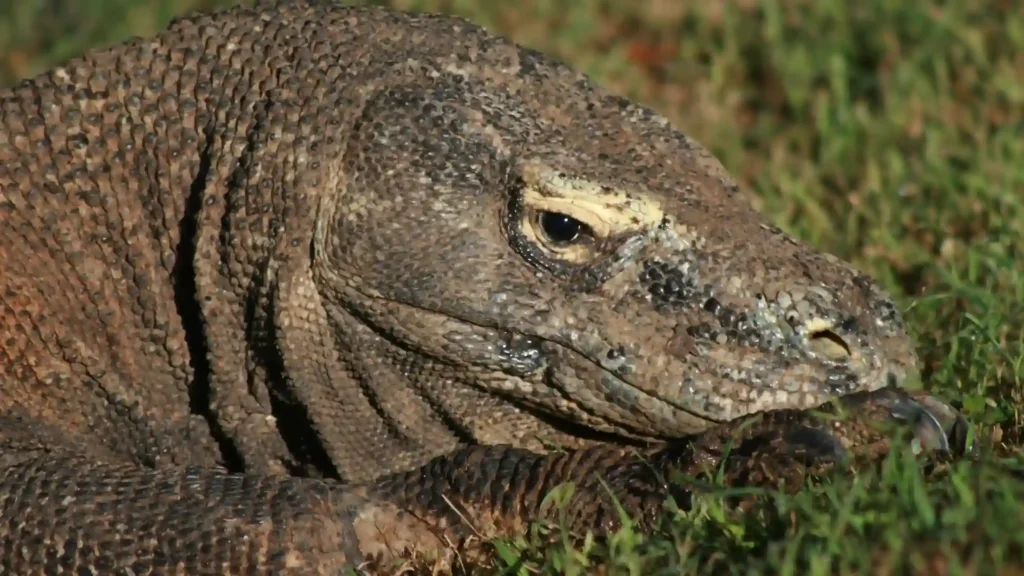
Yes, but not in the form of lions, tigers, or bears. The Komodo dragon’s real enemies are its own kind in youth, and human expansion in adulthood. Understanding these factors shifts the conversation from awe to action. Protecting this ancient reptile is no longer a matter of curiosity but of urgent responsibility. The Komodo dragon may dominate its natural world, but it’s our world that determines whether it survives. Travelers who want to observe this apex predator across several islands in one trip usually choose a multi-day Komodo liveaboard itinerary, which combines ranger-led treks with time in the park’s protected marine zones.
Read more: Komodo Dragon (Varanus komodoensis): The Complete Guide to the World’s Largest Lizard
Let’s See the Komodo Dragon Responsibly with Komodo Luxury!
If you’re fascinated by the mighty Komodo dragon and feel inspired to witness it in real life, there’s a way to do it responsibly and memorably. Join the Komodo Island Tour with Komodo Luxury, a curated sailing experience that showcases the majestic beauty of Komodo Island while aligning with sustainable travel principles. Travelers who want to observe this apex predator across several islands in one trip usually choose a multi-day Komodo liveaboard itinerary, which combines ranger-led treks with time in the park’s protected marine zones, or trek with ranger-guides on the 3D2N shared trip.
The experience goes beyond just a photo opportunity, it’s about creating meaningful, low-impact encounters that leave you in awe without leaving a trace. Whether you prefer the company of a shared open trip or want to charter a private phinisi and stay for the quiet hours, Komodo Luxury lets you witness the Komodo dragon up close while respecting national park guidelines and supporting local communities, all with expert Komodo yacht charter fleets to choose from.

By the Komodo Luxury Expedition Team — a licensed Komodo National Park tour operator running daily expeditions from Labuan Bajo since 2015. Fleet, rates and itineraries: Komodo yacht charter.