





Last updated: September 2026 · Prices & availability verified for the 2026/2027 season
Komodo works in all three Australian school-holiday blocks. July falls in peak dry season — our busiest window, so book about three months out. April brings green hills and shoulder-season space. The September–October break offers calm seas and golden light. A 3D2N shared-cabin open/shared trip from USD 300 fits a standard two-week holiday easily.
We run our own boats out of Labuan Bajo year-round, so this comparison comes from our operations calendar and booking conversations, not a weather blog. Exact term dates vary by state, but the three blocks land in the same seasonal windows every year — and each one meets a different Komodo.
Quick Answer: Which Break Fits Komodo Best

| Holiday block | Typical window (varies by state) | On the water | Booking pressure | Book by |
|---|---|---|---|---|
| July break | Late June – mid July | Peak dry season, calm seas, busiest anchorages | Highest of the year | April |
| April break | Around Easter, early–mid April | Green-season shoulder: green hills, fewer boats | Moderate | January |
| September–October break | Late September – early October | End of dry season: calm seas, golden light | Moderate to high | June |
The book-by column is not padding. Our bookings run on a real three-month lead time, so each school-holiday block has a hidden deadline one term earlier.
July Holidays: Peak Dry Season — Book by April
July is Komodo at its postcard best and its most contested. Across our booking conversations, August drew 1,114 trip requests against 48 for November — and the July school holidays sit on the front slope of that same peak. Combine that with the three-month booking lead and the maths is blunt: July departures are decided in April, while Australian families are still in term one.
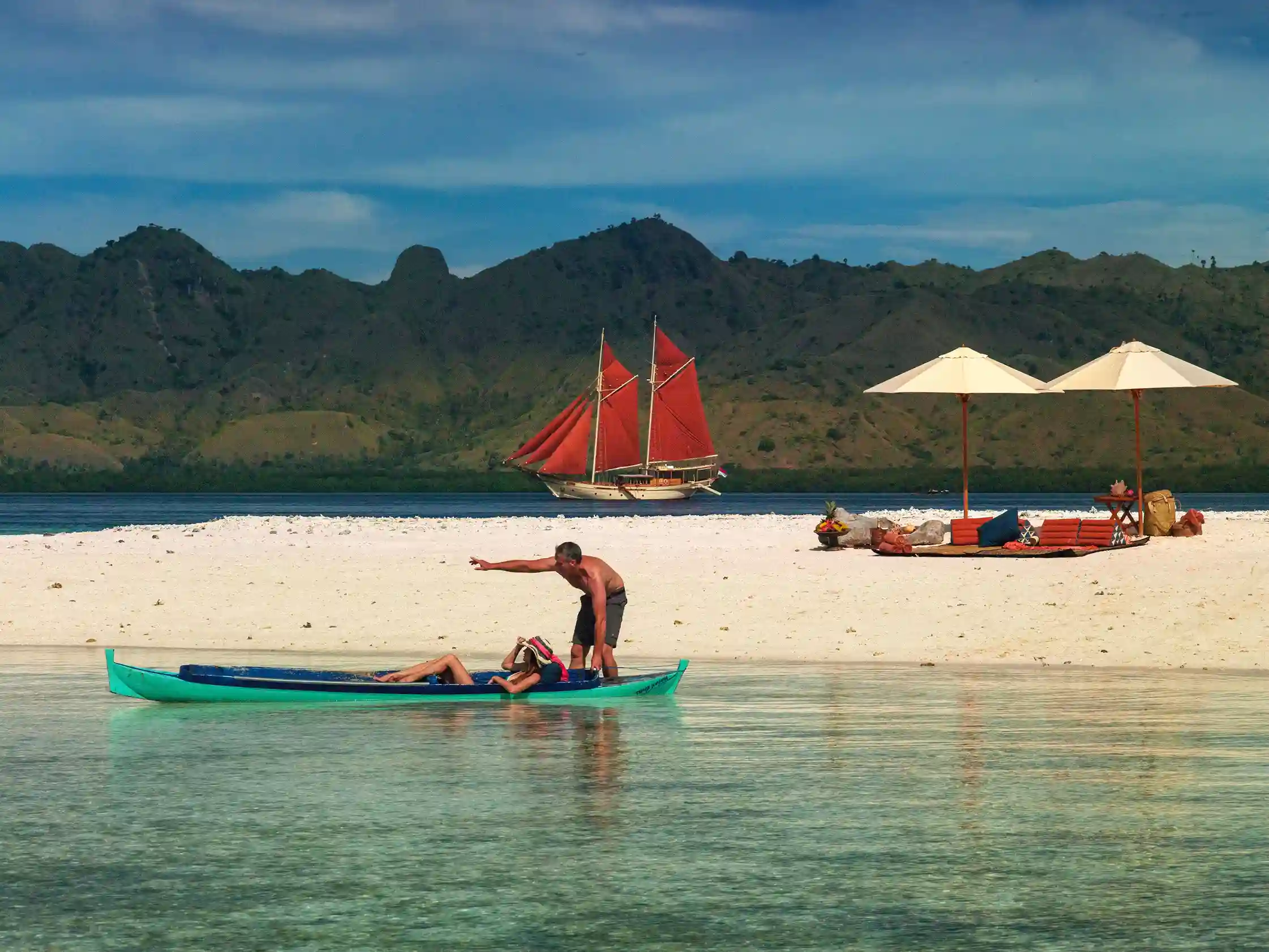
Book by April and you choose your boat and cabin configuration. Book in June and you take what is left — which, for families needing two cabins near each other, is often nothing workable. If the shared departures are gone, a private boat is the fallback worth pricing: a charter such as Catnazse Liveaboard 3D2N puts the whole schedule under your control in the busiest month.
April Holidays: Green-Season Shoulder
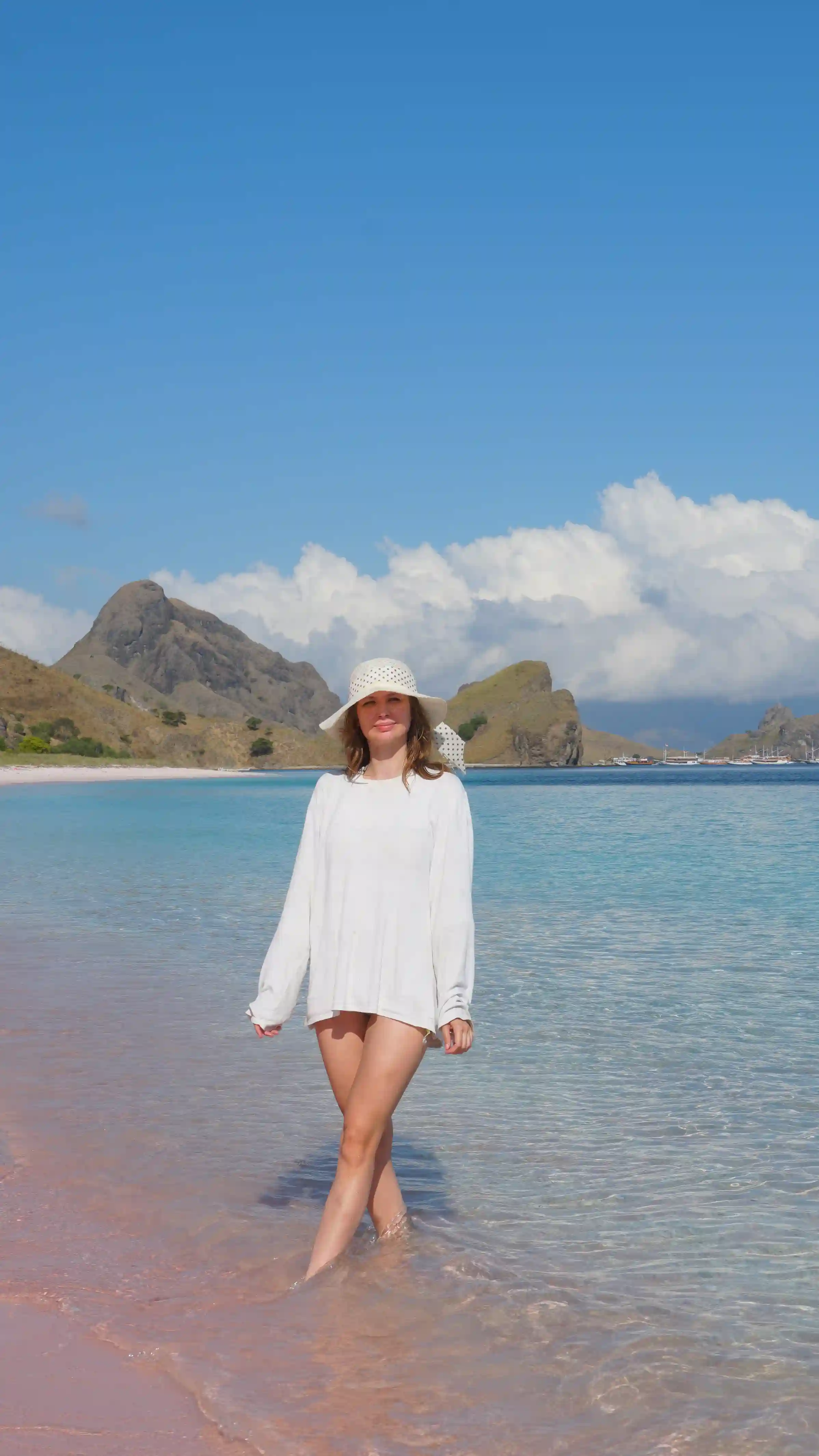
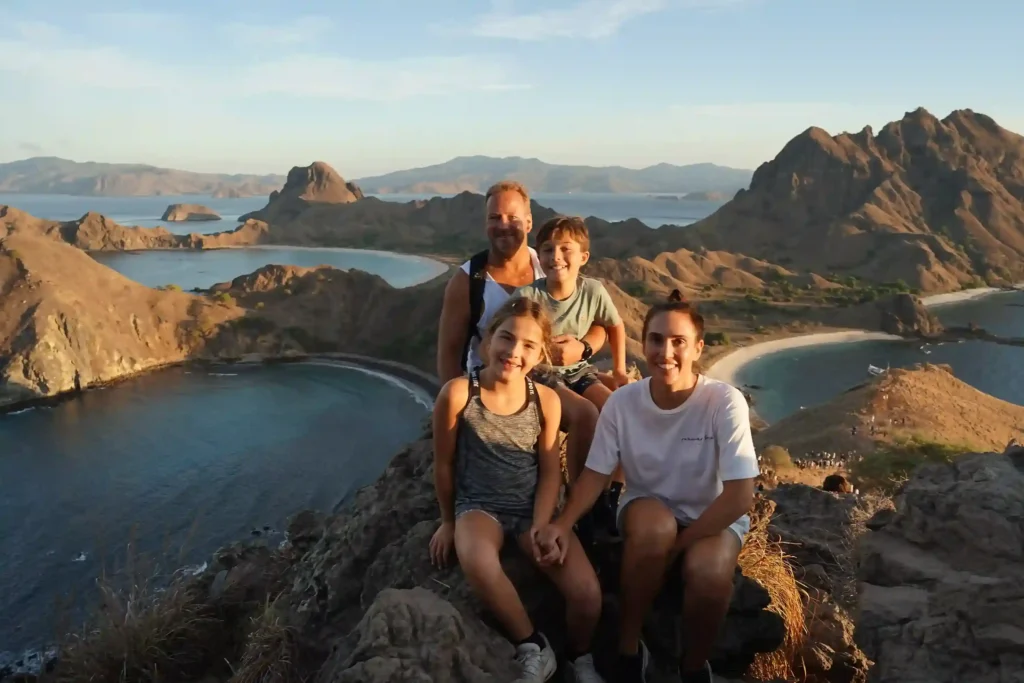
April is the sleeper pick. The rains have largely finished their work, so Padar’s hills are still green instead of the dry-season gold that fills Instagram — a version of the park most visitors never see. Fewer boats work the anchorages, cabin choice is easier, and the same three-month rule puts your booking deadline in January, right after the summer holidays.
Seas in April are transitional but settling. For families, the practical win is space: quieter beach stops and a less crowded viewpoint climb, with the itinerary unchanged.
September–October Holidays: Calm Seas and Golden Light
The spring break lands in the final stretch of the dry season — reliably calm seas, golden late-season light, and slightly thinner crowds than July. We rate it highly enough that we wrote a full month guide: see Komodo in September: calm seas, golden light and fewer boats for the day-by-day picture. For this block, count back three months and book by June — the tail of peak season still bites.
What a Family Trip Costs Across the Three Windows
The base price does not swing with the school calendar: a family-friendly Komodo shared trip 3D2N starts from USD 300 per person in a shared cabin in all three windows. What changes by season is which cabins are still available when you book — the real cost of booking late in July is being pushed into higher cabin classes, not a higher list price.
Add the Komodo National Park fee of USD 40 per person, paid once for the whole trip — never per day — which our team handles on arrival. For a family of four, the fixed core is 4 × USD 300 boat plus 4 × USD 40 park fee: USD 1,360 before flights and hotels. Alcohol, diving and travel insurance are never included in any Komodo package, so budget those lines separately.
Taking Kids on a 3D2N Boat: What Actually Works
Ages, cabin configurations and who sleeps where
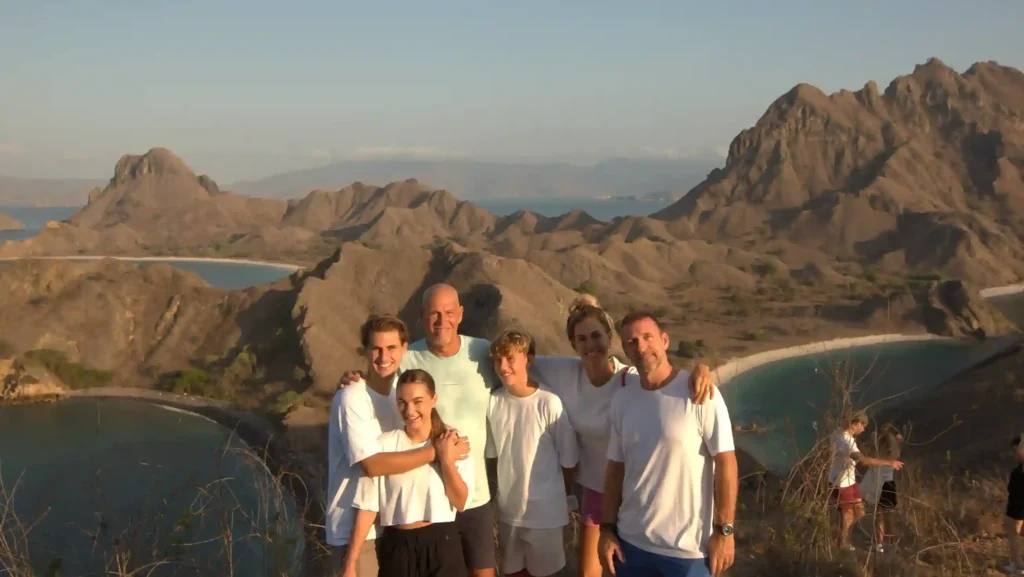
Shared/open trips are shared adult departures, so the family setups that work are specific. Couples with teens usually take two twin cabins; parents with younger kids are happiest in one private cabin on the shared boat — a small premium over two shared berths, and children sleep better behind their own door. For under-primary ages, we steer families to a private charter like Malca Voyages family charter, where the deck, the schedule and the nap times are all yours.
The dragon trek with children: ranger rules and realistic distances
The dragons are the headline for kids — 21% of our 82 Australian booking chats ask about them, the top activity question. The trek is ranger-led without exception: rangers walk front and rear, children stay between adults, and nobody leaves the path. Distances are shorter than parents expect — there is a short route option that rangers match to the group. Our own scheduling habit: put families on the earliest trek slot, when the air is cooler and the dragons are more active near the ranger station.
Seasickness planning for the crossing days
Seasickness comes up in 9% of our Australian chats, and school-holiday timing is actually on your side: all three blocks sit in or beside the dry season, when crossings are at their calmest. The routine that works — take tablets before the boat moves, not after; keep kids midship on deck with eyes on the horizon; save screens and cabin time for anchor. Most families find day two easier than day one.
Flights That Line Up With School Terms
No direct flights connect Australia to Labuan Bajo. Fly to Denpasar — about six and a half hours from Sydney or Melbourne, under four from Perth, under three from Darwin — then a roughly 70-minute hop to Labuan Bajo. Boats board in the morning, so land in Labuan Bajo the day before and sleep near the harbor. Build one buffer day on the return side before school restarts; tight same-day international connections out of a boat trip are a stress no holiday needs.
The next step is simple: pick your block, find its book-by month in the table above, and check live family cabin availability on the Komodo shared trip 3D2N page before that deadline passes — April books in January, July books in April, September books in June.

FAQ: Komodo in the Australian School Holidays