



Last updated: February 2026 · Prices & availability verified for the 2026/2027 season
If you’re planning a yacht charter or liveaboard journey through Komodo, understanding KSOP regulations in Labuan Bajo is a part of ensuring your safety, legal compliance, and overall peace of mind while sailing in Indonesian waters. Labuan Bajo is the official maritime gateway to Komodo National Park, one of the world’s most iconic marine destinations. However, before any vessel can depart, it must comply with regulations issued by Kantor Kesyahbandaran dan Otoritas Pelabuhan Labuan Bajo (KSOP Labuan Bajo). These rules are enforced under Indonesia’s national maritime laws and international safety standards. So, what exactly does that mean for you as a traveler? Let’s break it down!
This guide is written from the operator’s side of the counter: Komodo Luxury has filed KSOP paperwork in Labuan Bajo for its own fleet of nine boats since 2015.
Key Takeaways
- If you’re planning a Komodo liveaboard journey from Labuan Bajo to Komodo, you should understand that every departure is regulated under Undang-Undang Nomor 17 Tahun 2008 tentang Pelayaran and supervised by KSOP as the local harbormaster authority.
- In practice, this means your vessel must pass document verification, safety inspection, and crew validation before it is legally cleared to sail.
- Only after all requirements are fulfilled will the Sailing Approval Letter (SPB) be issued, serving as the final legal confirmation that your voyage complies with Indonesian maritime regulations.
- Beyond departure clearance, KSOP also holds authority over accident examinations, port activity approvals, and crew documentation management, ensuring structured oversight rather than informal operations.
- Ultimately, these regulations are not administrative formalities, they exist to protect you as a passenger by ensuring that the yacht you board is seaworthy, properly crewed, and legally authorized to operate in Komodo waters.
What Is KSOP?
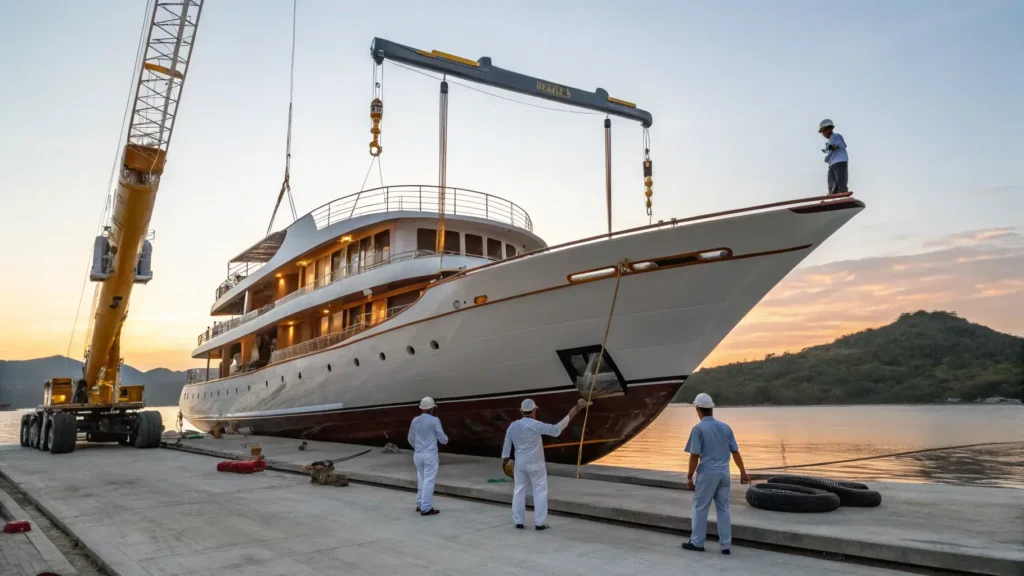
KSOP stands for Kantor Kesyahbandaran dan Otoritas Pelabuhan, which translates to the Harbourmaster and Port Authority Office. In Labuan Bajo, this authority operates under the Ministry of Transportation of the Republic of Indonesia (Kementerian Perhubungan Republik Indonesia). The local office responsible for Komodo departures is KSOP Labuan Bajo, which oversees maritime safety, vessel documentation, port clearance, and sailing permits in the region. Every commercial yacht, phinisi, speedboat, or liveaboard departing Labuan Bajo must comply with its regulations. In other words, before you set foot on a luxury yacht, there is an official authority verifying that the vessel is seaworthy, properly crewed, and legally cleared to sail.
What Are KSOP Regulations in Labuan Bajo?
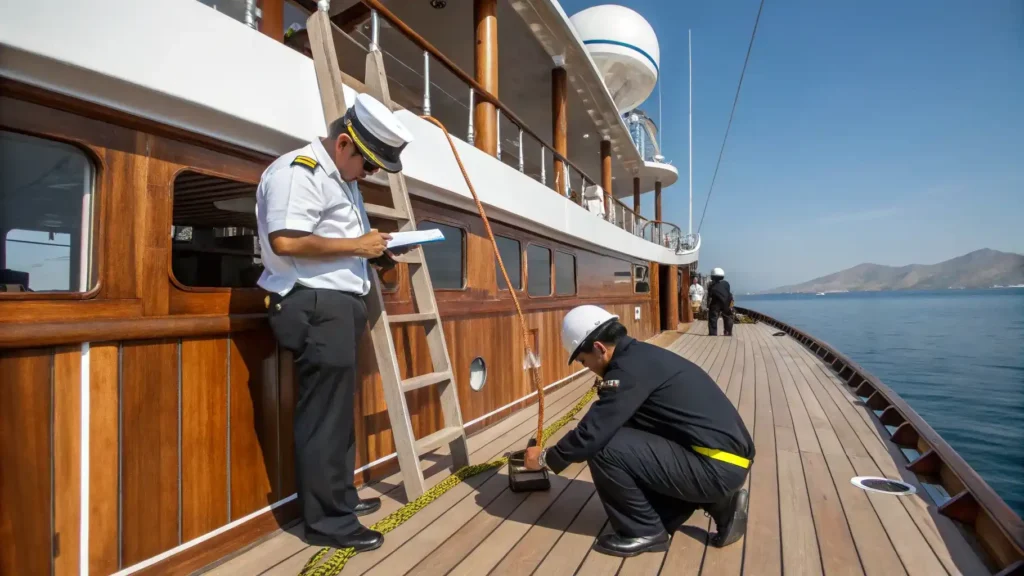
The regulatory authority of KSOP is grounded in Undang-Undang Nomor 17 Tahun 2008 tentang Pelayaran (Indonesian Shipping Law No. 17 of 2008). This law establishes Indonesia’s maritime governance system, including vessel safety, port management, and shipping operations. Here is how legal authority under Article 207 is implemented in Komodo’s real operational conditions:
1. Coordinating Government Activities Within Labuan Bajo Port
Under Article 207 letter (a) of Undang-Undang Nomor 17 Tahun 2008 tentang Pelayaran, the Harbormaster is authorized to coordinate all governmental activities within the port area. In Labuan Bajo, this authority is exercised by KSOP Labuan Bajo as the official maritime gatekeeper to Komodo National Park. Because this port serves both domestic charter vessels and international yachts, inter-agency coordination is operationally essential rather than administrative formality. Here’s what this includes:
- Harbor traffic control and vessel movement supervision
- Docking and anchoring allocation within port jurisdiction
- Coordination with Immigration for foreign crew or passengers
- Coordination with Customs for foreign-flagged yacht clearance
- Ensuring departure compliance before issuing sailing approval
In practice, this means your yacht cannot depart unless all relevant authorities are aligned under port supervision. While KSOP does not replace Immigration or Customs, it ensures no vessel sails without completing mandatory cross-agency requirements. As a result, you benefit from a structured maritime governance system that prioritizes legality and operational clarity.
2. Examining and Safekeeping Ship Documents
Under Article 207 letter (b) of Undang-Undang Nomor 17 Tahun 2008 tentang Pelayaran, the Harbormaster is authorized to examine and retain ship documents. In Labuan Bajo, this function is carried out by KSOP before a vessel is granted departure clearance. Because Labuan Bajo serves as the primary maritime gateway to Komodo waters, document verification is a mandatory compliance checkpoint. Here’s what this includes:
- Verification of vessel registration and nationality certificate
- Validation of seaworthiness and safety certificates
- Review of crew competency documentation
- Submission and confirmation of passenger manifest
- Archiving required voyage documentation
A vessel cannot legally depart unless these documents are valid and complete. If certifications are expired or incomplete, sailing approval will not be issued. For you, this ensures that the yacht you board operates under recognized national maritime standards.
3. Issuing Approval for Ship Activities in the Port
Under Article 207 letter (c) of Undang-Undang Nomor 17 Tahun 2008 tentang Pelayaran, the Harbormaster has authority to issue approval for ship activities within the port. In Labuan Bajo, this applies to commercial passenger vessels operating from the official port area. Given the increasing number of tourism vessels serving Komodo routes, structured port authorization is essential for navigational order. Here’s what this includes:
- Approval for passenger embarkation and disembarkation within port jurisdiction
- Docking and anchoring allocation inside designated port limits
- Authorization of commercial vessel operations at berth
- Monitoring vessel movements within harbor waters
This authority applies strictly within port boundaries. Once a vessel exits the port area, maritime navigation continues under general shipping regulations and other applicable authorities. For you, this structured approval process ensures organized and legally compliant departure procedures.
4. Conducting Vessel Inspections
Under Article 207 letter (d) of Undang-Undang Nomor 17 Tahun 2008 tentang Pelayaran, the Harbormaster is authorized to conduct vessel inspections. In Labuan Bajo, inspections are carried out to verify compliance with Indonesian maritime safety standards before departure. This is particularly relevant for passenger vessels operating in open-water conditions around Komodo. Here’s what this includes:
- Verification of life-saving appliances onboard
- Inspection of fire safety equipment
- Examination of navigation and communication systems
- Confirmation of vessel capacity compliance
- General seaworthiness assessment
Inspections may be periodic or conducted when necessary. If deficiencies are identified, corrective action must be completed before sailing approval is granted. This regulatory oversight is designed to ensure operational safety rather than delay voyages.
Read more: Komodo Boat Safety Standards 2026: Sailing Safely in Luxury
5. Issuing the Sailing Approval Letter (Surat Persetujuan Berlayar/SPB)
Under Article 207 letter (e) of Undang-Undang Nomor 17 Tahun 2008 tentang Pelayaran, the Harbormaster issues the mandatory Sailing Approval Letter (SPB). In Labuan Bajo, no commercial passenger vessel may depart without SPB issued by KSOP Labuan Bajo. This requirement applies to all vessels carrying passengers from the port. Here’s what this includes:
- Submission of updated passenger manifest
- Verification of crew list and certifications
- Confirmation of valid ship certificates
- Review of voyage documentation
- Consideration of marine weather information issued by Badan Meteorologi, Klimatologi, dan Geofisika (BMKG)
SPB is issued only after required documentation is verified and regulatory conditions are satisfied. If safety requirements are not met, departure authorization will be withheld. For you, SPB represents the final legal confirmation that your voyage has been cleared under Indonesian maritime law.
6. Conducting Ship Accident Investigations
Under Article 207 letter (f) of Undang-Undang Nomor 17 Tahun 2008 tentang Pelayaran, the Harbormaster is authorized to conduct ship accident examinations. In Labuan Bajo, this authority applies to vessels operating under the jurisdiction of the local port authority, including commercial passenger vessels. The purpose of this examination is to determine the circumstances of the incident and assess compliance with maritime safety regulations. Here’s what this includes:
- Examination of the vessel’s logbook and voyage records
- Review of crew certifications and operational conduct
- Documentation of damages or safety deficiencies
- Collection of statements from the captain and relevant crew
- Reporting findings in accordance with maritime procedures
This authority applies when an incident occurs within Indonesian waters under port supervision. In cases requiring further technical investigation, coordination may involve higher maritime authorities in accordance with national procedures. For you, this framework ensures that maritime incidents are formally reviewed under established legal standards rather than handled informally.
7. Detaining Ships by Court Order
Under Article 207 letter (g) of Undang-Undang Nomor 17 Tahun 2008 tentang Pelayaran, the Harbormaster may detain a vessel based on a court order. In Labuan Bajo, this authority is exercised strictly within legal parameters and only when supported by formal judicial instruction. The detention power is not discretionary but must be grounded in lawful process. Here’s what this includes:
- Execution of vessel detention following a court directive
- Prevention of vessel departure during legal proceedings
- Securing vessel documentation while under detention
- Ensuring compliance with maritime legal enforcement
This authority is rarely relevant in standard tourism operations but remains part of the legal maritime framework. It reinforces that commercial vessels operate within enforceable legal boundaries. For you, this underscores the structured governance of maritime activity rather than informal oversight.
8. Issuing and Managing Crew Seaman Documentation (Sijil Awak Kapal)
Under Article 207 letter (h) of Undang-Undang Nomor 17 Tahun 2008 tentang Pelayaran, the Harbormaster is authorized to administer crew documentation known as “sijil awak kapal.” In Labuan Bajo, this relates to the official registration and validation of crew members serving onboard Indonesian-registered vessels. This system supports traceability and professional accountability within maritime operations. Here’s what this includes:
- Registration of crew identity and position onboard
- Recording rank and service details in official documentation
- Verification of valid maritime competency certificates
- Maintaining updated crew records for operational oversight
This documentation ensures that captains and crew operating from Labuan Bajo meet recognized maritime standards. It does not replace national certification systems but complements them through port-level registration. For you, this confirms that crew members serving onboard commercial vessels are formally documented under Indonesian maritime law.
Read more: How Komodo Luxury Ensures Safe Sailing in Komodo National Park
In practice, passengers never queue at KSOP themselves — a licensed operator files everything for you. Komodo Luxury’s crews lodge sailing permits and manifests before every Komodo yacht charter departure.
Tips for Joining a Komodo Tour Safely and in Compliance with Regulations
When you plan a Komodo tour from Labuan Bajo, your safety depends not only on the destination but also on how the voyage is managed. Maritime tourism operates under Indonesia’s shipping framework, including Undang-Undang Nomor 17 Tahun 2008 tentang Pelayaran, and is supervised locally by the harbormaster (KSOP). Here’s what you should personally check before booking:
- Choose a Tour Operator That Follows KSOP Procedures
You should select an operator that clearly follows official port clearance procedures before departure. This means the vessel undergoes administrative and safety verification under harbormaster supervision. Operators such as Komodo Luxury place regulatory compliance as part of their operational standards, ensuring each trip aligns with maritime requirements. - Make Sure the Vessel Has a Valid Sailing Approval (SPB)
Before you sail, confirm that the vessel has obtained a Surat Persetujuan Berlayar (SPB). This document indicates that the harbormaster has reviewed the vessel’s readiness to depart. A professional operator will treat this as a mandatory step, not a formality. - Check the Onboard Safety Briefing and Equipment
When you board, pay attention to whether life jackets are accessible and sufficient for all passengers. You should also receive a clear safety briefing before departure. These are basic safety standards that responsible operators consistently implement. - Ensure the Crew Is Properly Documented
You have the right to travel with a crew that is properly registered and certified. Crew documentation (sijil awak kapal) forms part of the regulatory oversight at the port level. Established operators ensure their captains and crew meet these professional and administrative requirements. - Avoid Informal or Unofficial Departures
If a departure seems rushed, informal, or outside recognized port procedures, you should reconsider. Passenger manifests must be properly recorded before sailing. Operators that consistently follow these processes demonstrate alignment with KSOP supervision and national maritime regulations.
Let’s Enjoy Komodo Island Tour Safely and Legally with Komodo Luxury!
If you’re planning a Komodo yacht charter or Komodo trip journey through Komodo, understanding how maritime regulations work in Labuan Bajo is more than just legal knowledge, it directly relates to your safety. From vessel inspections, document verification, crew certification, port activity approval, Sailing Approval Letters (SPB), to accident examination procedures, all departures are governed under Undang-Undang Nomor 17 Tahun 2008 tentang Pelayaran and supervised locally by KSOP Labuan Bajo. These regulations ensure that every commercial vessel operating to Komodo National Park meets administrative, technical, and safety standards before leaving the harbor.
Now that you understand why these regulations matter, and the safest way to explore Komodo is to travel with an experienced and professional operator such as Komodo Luxury, which has operated for years while consistently aligning with maritime safety procedures and port clearance requirements. Our vessels follow official KSOP protocols, our crew members are professionally certified and locally experienced, and we have earned numerous positive reviews from travelers who value safety, service, and authenticity.
Contact our team now and book your Komodo Island tour with us, where regulatory compliance, safety standards, and exceptional travel experiences sail together!

FAQs About KSOP Regulations in Labuan Bajo
Experience It with Komodo Luxury
The simplest way to sail Komodo fully compliant is with an operator whose paperwork is already in order. Every private yacht charter and Komodo liveaboard in the Komodo Luxury fleet departs with permits, manifests, and licensed crew filed before you step aboard.