





Last updated: December 2025 · Prices & availability verified for the 2026/2027 season
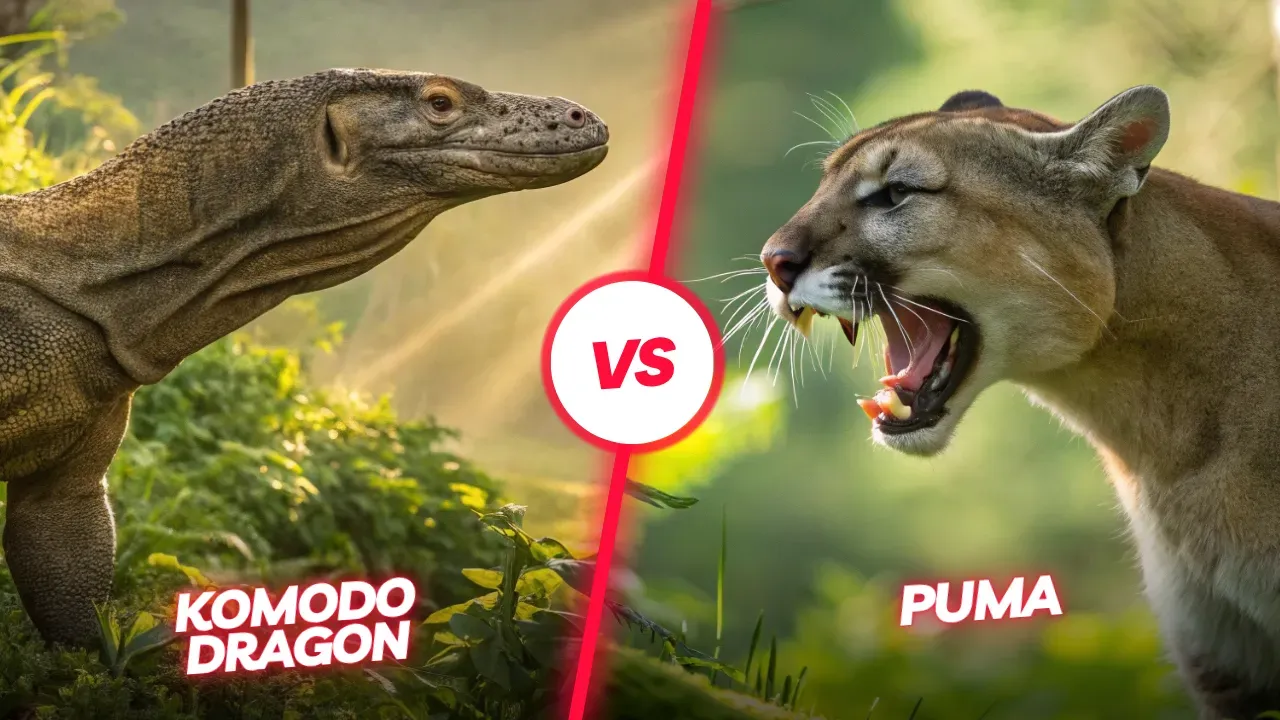
What if the world’s largest venomous lizard met the silent stalker of the American wilderness? Two predators, two continents, and two wildly different evolutionary paths. On one side, the Komodo dragon, a prehistoric giant from Indonesia, armored and venomous. On the other hand, the puma, a sleek, solitary cat that dominates mountain ranges with agility and precision.They may never cross paths in nature, but comparing these two powerful hunters gives us a rare perspective on survival, strength, and nature’s brilliance. Let’s take a closer look at what sets them apart and what unites them as icons of the wild.
Komodo Dragon: Indonesia’s Ancient Hunter
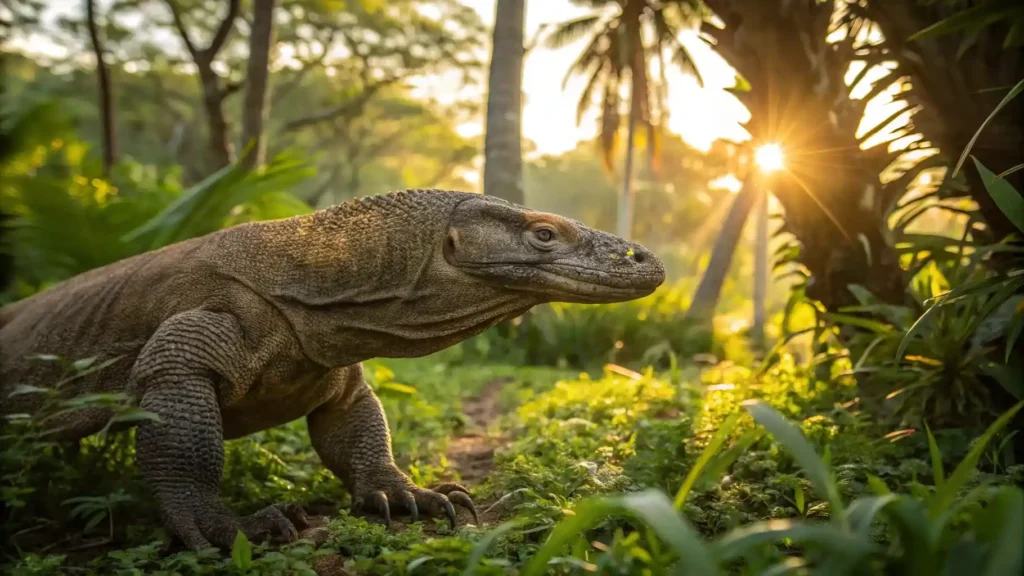
Endemic to the rugged islands of Komodo, Rinca, and Flores, the Komodo dragon (Varanus komodoensis) is a beast straight out of legend. Growing up to 3 meters long and weighing more than 150 pounds, it’s the largest living lizard on Earth. But this isn’t just about size. The Komodo dragon is armed with razor-sharp teeth, venom glands, and a jaw-dropping ability to take down prey many times its size, including deer, wild boar, and even buffalo. Its bite doesn’t kill instantly; instead, venom lowers blood pressure and prevents clotting, leaving victims in shock as the dragon follows them patiently to the end.
Puma: The Stealthy Master of the Americas
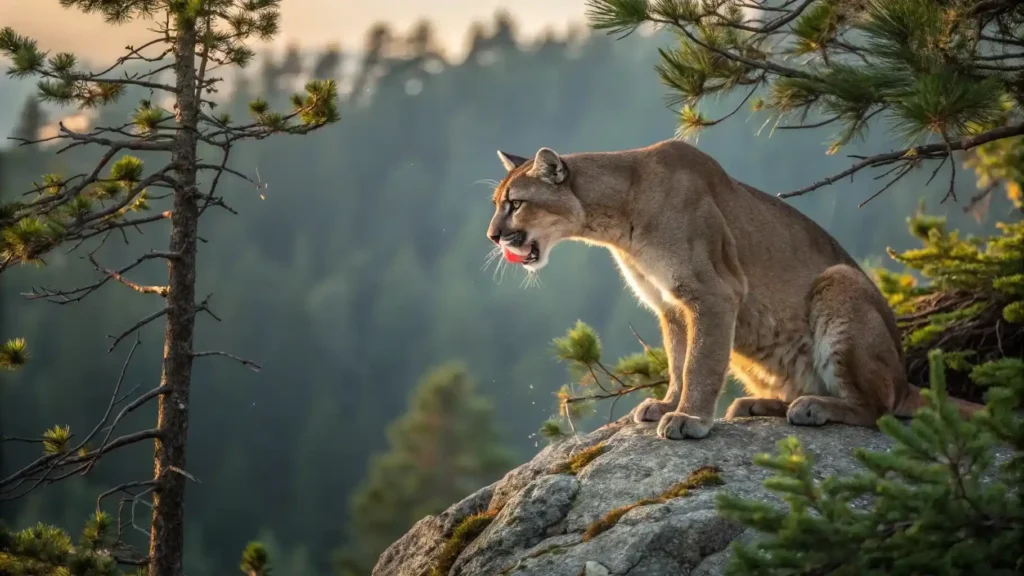
Known by many names, mountain lion, cougar, panther, the puma (Puma concolor) is found from Canada to Patagonia. Unlike big cats like lions or tigers, the puma is a solitary, silent hunter, relying on stealth, speed, and devastating bursts of strength. Weighing up to 220 pounds, this cat is all muscle and focus. It can leap up to 18 feet in a single bound, sprint at speeds of up to 80 km/h, and deliver a precise bite to the neck that ends the hunt in seconds. What it lacks in size compared to lions, it makes up for in grace and adaptability.
Read more: Komodo Dragon vs Black Panther: Who Wins the Wild Battle?
Komodo Dragon vs Puma: A Complete Comparison
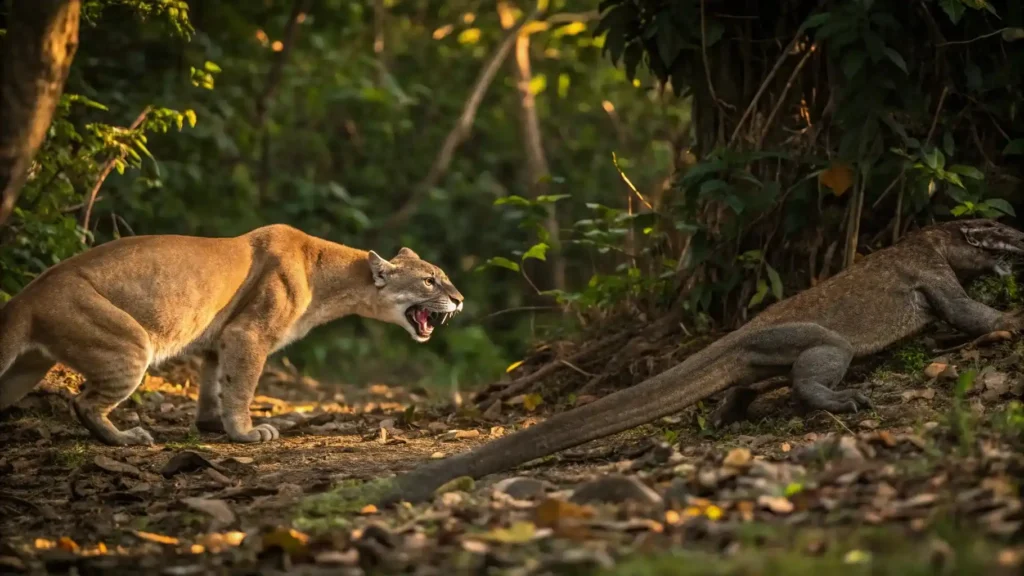
While both the Komodo dragon and the puma are apex predators in their own right, their differences go far beyond appearance. To truly understand how each dominates its domain, let’s break down their strengths in detail, starting with where they live.
| Category | Komodo Dragon | Puma |
| Habitat | Dry savannas, coastal forests on a few Indonesian islands | Mountains, forests, deserts across the Americas |
| Geographic Range | Extremely limited (Komodo, Rinca, Flores) | Very wide (Canada to Patagonia) |
| Physical Tools | Serrated teeth, venom glands, powerful tail | Claws, strong jaws, explosive speed |
| Hunting Style | Ambush + track wounded prey | Stealth stalk + swift neck bite |
| Speed | Up to 20 km/h (short bursts) | Up to 80 km/h |
| Intelligence | Opportunistic, strategic, instinct-driven | Solitary, efficient, high spatial memory |
| Cultural Role | Sacred in local Komodo myths | Symbol of strength in Native American lore |
| Conservation Status | Endangered (IUCN) | Least Concern, but locally threatened |
| Tourism Access | Viewable on Komodo Island via guided trekking | Rarely seen in the wild |
Habitat Showdown
The Komodo dragon is native to a handful of Indonesian islands, thriving in dry savanna, open forests, and rocky hills. Its range is extremely limited, making it a true island specialist adapted to harsh, arid conditions. Meanwhile, the puma roams across vast territories from Canada to South America, showing remarkable flexibility in environments ranging from deserts to snow-covered mountains. While the dragon dominates a small, unique ecosystem, the puma survives by mastering many.
Power & Predatory Tools
Built for brute strength, the Komodo dragon uses its heavy body, serrated teeth, and venom to overpower large prey. A single bite can send victims into shock, while its strong tail can deliver bone-breaking strikes. In contrast, the puma relies on stealth and explosive speed, using powerful jaws and razor-sharp claws to take down animals swiftly. Both predators are lethal, but with very different strategies rooted in their evolutionary paths.
Instinct & Intelligence
The Komodo dragon may be a reptile, but it exhibits surprising cunning, from ambushing prey to tracking scent trails over long distances. Its instincts are driven by survival in a competitive, resource-scarce environment. The puma, as a solitary mammal, uses advanced spatial memory and hunting tactics that minimize effort while maximizing success. Each predator’s intelligence reflects the demands of its ecosystem, proving that smart doesn’t look the same for every species.
Myth & Meaning
To the people of Komodo Island, the dragon is more than a predator, it’s part of local legend and regarded with deep cultural respect. Stories often portray the dragons as ancient siblings of humans, forging a sacred coexistence. The puma also holds symbolic power in many Indigenous American cultures, representing strength, guardianship, and the spirit of the land. Though thousands of miles apart, both creatures are deeply woven into the identity of their native regions.
Conservation
The Komodo dragon is currently listed as Endangered, facing threats from climate change, rising sea levels, and habitat degradation. Efforts within Komodo National Park and sustainable tourism initiatives aim to protect its shrinking population. On the other hand, the puma is categorized as Least Concern but still faces growing risks due to habitat loss and human-wildlife conflict. While their conservation status differs, both animals need continued protection to thrive in the wild.
Komodo Dragon vs Puma: Who Would Win?
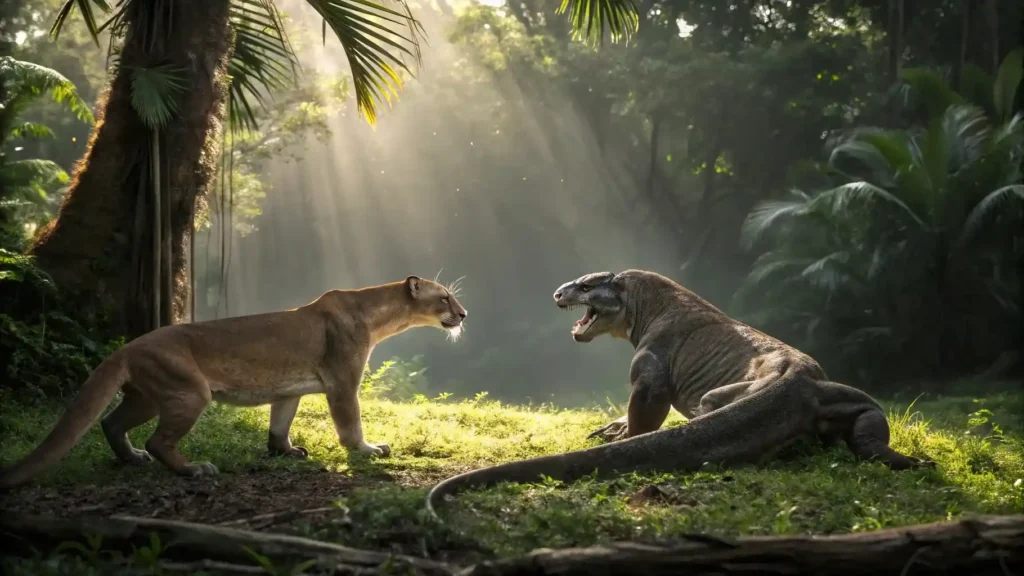
It’s the kind of question that sparks the imagination, what if these two apex predators ever came face to face? The Komodo dragon, with its venomous bite, armor-like skin, and relentless patience, is built for endurance and overwhelming force. The puma, on the other hand, relies on stealth, speed, and precision, using ambush tactics and powerful leaps to end a hunt in seconds. On paper, the dragon looks like a tank, while the puma moves like a ghost. But the outcome of a confrontation would depend entirely on the environment and circumstances.
In open terrain, the puma’s agility and speed would likely give it the upper hand, it could strike fast and retreat before the dragon reacts. But in close quarters, like dense underbrush or rocky ground, the Komodo dragon’s tough hide and venomous bite could wear the puma down. Realistically though, pumas avoid unnecessary fights, especially with unfamiliar or dangerous animals. So while the battle might make for an exciting thought experiment, nature favors survival over showdowns and both of these predators are masters of that game.
Read more: Komodo Dragon vs Lion: Who Would Win?
See Komodo Dragon in the Wild with Komodo Luxury
While the puma may remain a shadowy presence in the highlands of the Americas, the Komodo dragon is waiting for you in plain sight, roaming the sun-baked savannas of Komodo Island, basking under tropical skies, and reminding us of Earth’s ancient past. It’s one thing to read about them or see them in documentaries, but nothing compares to standing just meters away from a living, breathing Komodo dragon in its natural habitat. This experience is raw, humbling, and unforgettable.
With the Komodo Island Tour by Komodo Luxury, you can witness these legendary creatures with comfort, safety, and style. Our private yacht tours to Komodo National Park combine expert-guided trekking with world-class service, letting you explore wild islands by day and relax in luxurious cabins by night. This isn’t just a wildlife tour; it’s a curated adventure designed for those who seek the extraordinary. Book your Komodo Island journey today, and come face to face with the last dragons on Earth only with Komodo Luxury!