
Komodo Luxury 頂級科莫多船遊 拉賈安帕特潛水之旅

Labuan Bajo to Maumere Tour 6D5N: Trans-Flores Overland

The drive from Labuan Bajo to Maumere crosses the full length of Flores — roughly 605 km on the Trans-Flores Highway as driven on this route, split into six days. Along the way: Cancar’s spider-web rice fields, Bena traditional village, the 17 Islands Marine Park at Riung, and sunrise over Kelimutu’s three-colored crater lakes.

This is the itinerary we drive most often from our home base in Labuan Bajo. Komodo Luxury has operated from the western tip of Flores since 2015, rated 4.9/5 by 1,500+ verified guests and awarded TripAdvisor Travelers’ Choice in 2025 and 2026. The overland crossing is the land-side counterpart to everything we do at sea, and it belongs on the same shortlist as our Flores tour packages. Below is the honest, day-by-day version — with the distances, driving times and component costs that most itineraries leave out.

Route Overview: Labuan Bajo to Maumere in 6 Days

Labuan Bajo to Maumere is approximately 605 km as driven on this itinerary, spread over five driving days of 1.5–5 hours each plus a sunrise finale. The direct Trans-Flores spine is just over 500 km; our route adds the Riung coastal detour because the 17 Islands Marine Park earns it.

The Trans-Flores Highway is a sealed national road, but it is a mountain road: it climbs, drops and switchbacks almost continuously, so real average speeds sit around 30–40 km/h. That is why a distance a highway driver would cover in a day takes six here — and why the six-day pace is the one guests actually enjoy. If you want the geography first, start with our Flores island guide, then come back for the road.

Distance Driving time 隔夜
Day 1 · Labuan Bajo → Ruteng ±130 km 4–5 h Ruteng (±1,200 m)
Day 2 · Ruteng → Bajawa ±130 km ±4 h Bajawa (±1,100 m)
Day 3 · Bajawa → Riung ±70 km 2–3 h Riung (sea level)
Day 4 · Riung → Ende → Moni ±182 km 5–5.5 h Moni village
Day 5 · Moni → Kelimutu car park park road 30–45 min pre-dawn
Day 5 · Moni → Maumere ±95 km ±3 h 毛梅雷
Total as driven ±605 km ±19–20 h 5晚

Every transfer runs in a private, air-conditioned vehicle with an English-speaking driver-guide from Flores. Departures are daily, year-round, and the same route works mirrored — see the reverse section below.

The daily rhythm is deliberate: on the road by 08:00, the day’s main sight before or after a local lunch, and checked in by late afternoon with light to spare. Nothing on this route rewards rushing — the villages keep their own ceremonial calendars, the passes keep their own weather, and the itinerary leaves room for both.

Day 1 — Labuan Bajo to Ruteng: Spider Web Rice Fields of Cancar

Day 1 climbs from sea level in Labuan Bajo to Ruteng at about 1,200 m — roughly 130 km in 4–5 hours. The highlight is the lodok of Cancar: circular rice fields laid out like giant spider webs, viewed from the hilltop at Cara village.

We collect you at your hotel or at Komodo Airport around 08:00. The first hour out of Labuan Bajo sets the tone for the whole crossing: the road leaves the harbor town, finds the ridge line, and from there Flores unrolls in green folds all the way to the horizon. The wide rice plains around Lembor make the first natural leg-stretch, and lunch is in a local rumah makan en route — simple, fresh, and better than it has any right to be.

Mid-afternoon you reach Cancar, where the Manggarai people divide communal rice land radially from a central point, producing the famous spider-web pattern. The short walk up to the Cara viewpoint takes about ten minutes and is the best photograph of the day. From there it is under an hour into Ruteng, a cool, church-studded hill town where clergy, coffee and cloud sit at 1,200 m. Evenings are genuinely cold by Indonesian standards — pack a layer. For more on the town itself, our Ruteng travel guide covers it street by street.

Day 2 — Ruteng to Bajawa: Bena Traditional Village & Mangeruda Hot Springs

Day 2 covers about 130 km in four hours, from Manggarai country into the Ngada highlands around Bajawa at roughly 1,100 m. The two stops that define it are Bena, a megalithic village beneath Mount Inerie, and the Mangeruda hot springs at Soa.

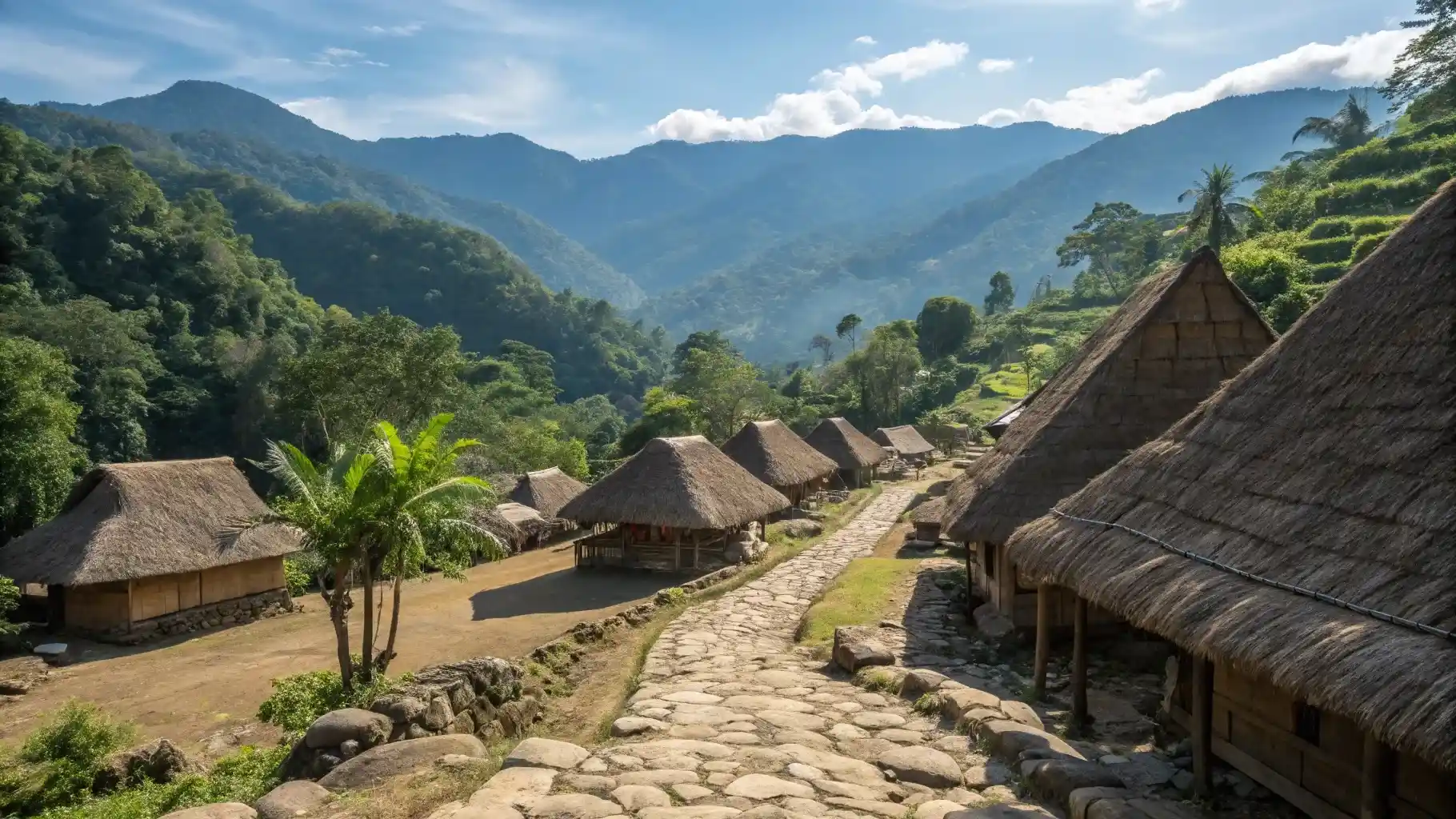
The Trans-Flores Highway earns its reputation on this stretch: volcano views, bamboo forest, and a brief drop to the south coast at Aimere before the road climbs again. Bena is the reason most travelers cross Flores at all — a terraced village of high-roofed clan houses, megalith altars and ikat looms that has kept its form for centuries, sitting under the perfect cone of Inerie. Visits are hosted by the village itself; entrance contributions are paid on arrival, and your driver-guide will introduce you properly rather than walking you through like a museum.

Late afternoon belongs to the Mangeruda hot springs near Soa, where a warm volcanic river meets a cold stream — you pick your temperature by picking your spot. Overnight in Bajawa, the coldest town on the route and the best coffee stop on the island: the surrounding Ngada highlands grow some of Indonesia’s most respected arabica, and your driver-guide knows which warung roasts it properly. Order it kopi hitam, no sugar, and understand why Flores coffee leaves the island in export sacks.

Day 3 — Bajawa to Riung: 17 Islands Marine Park Boat Trip

Day 3 is the short driving day — about 70 km, two to three hours downhill from Bajawa’s highlands to the fishing town of Riung on the north coast. It exists for one reason: a private boat day through the 17 Islands Marine Park.

This is the sea leg in the middle of the overland, and it is where traveling with a boat operator pays off. We run vessels for a living, so the Riung day is organized to the same standard as our Komodo departures: a sound boat, a briefed crew, proper snorkeling gear, and a route timed for light and tide. A typical day covers four to five stops — snorkeling over hard-coral gardens, a beach landing for a grilled-fish lunch, and a pass by Ontoloe island, where thousands of flying foxes hang in the mangroves like dark fruit.

Despite the name, the park counts more islets than seventeen — the number honors Indonesia’s independence day, 17 August. The water here is glass-calm for most of the dry season, and you will often have an entire white-sand islet to yourselves. Overnight in a simple guesthouse in Riung; this is the most remote night of the trip, and the stars behave accordingly.

Day 4 — Riung to Moni via Ende: The South Coast Road

Day 4 is the longest drive: about 182 km in five to five and a half hours, crossing from the north coast to the south at Ende, then climbing to Moni village at the foot of Kelimutu. It is a day of coastline, history and altitude.

From Riung the road rejoins the Trans-Flores spine near Aegela, then descends to Ende, the largest town on the island’s south coast. Two stops are worth the pause: the house where Sukarno, Indonesia’s first president, lived in exile in the 1930s and sketched out ideas that became the nation’s founding philosophy; and Penggajawa beach, where the shore is heaped with blue-green pebbles polished by the surf — locals harvest and export them by the sack.

The final 52 km from Ende to Moni take about an hour and a half, winding up a valley of rice terraces that turns gold before harvest. Moni is a one-street mountain village that exists in gentle orbit around Kelimutu. Dinner is early and so is bed: tomorrow starts at 04:00.

Day 5 — Kelimutu Sunrise: Three-Colored Crater Lakes, then Moni to Maumere

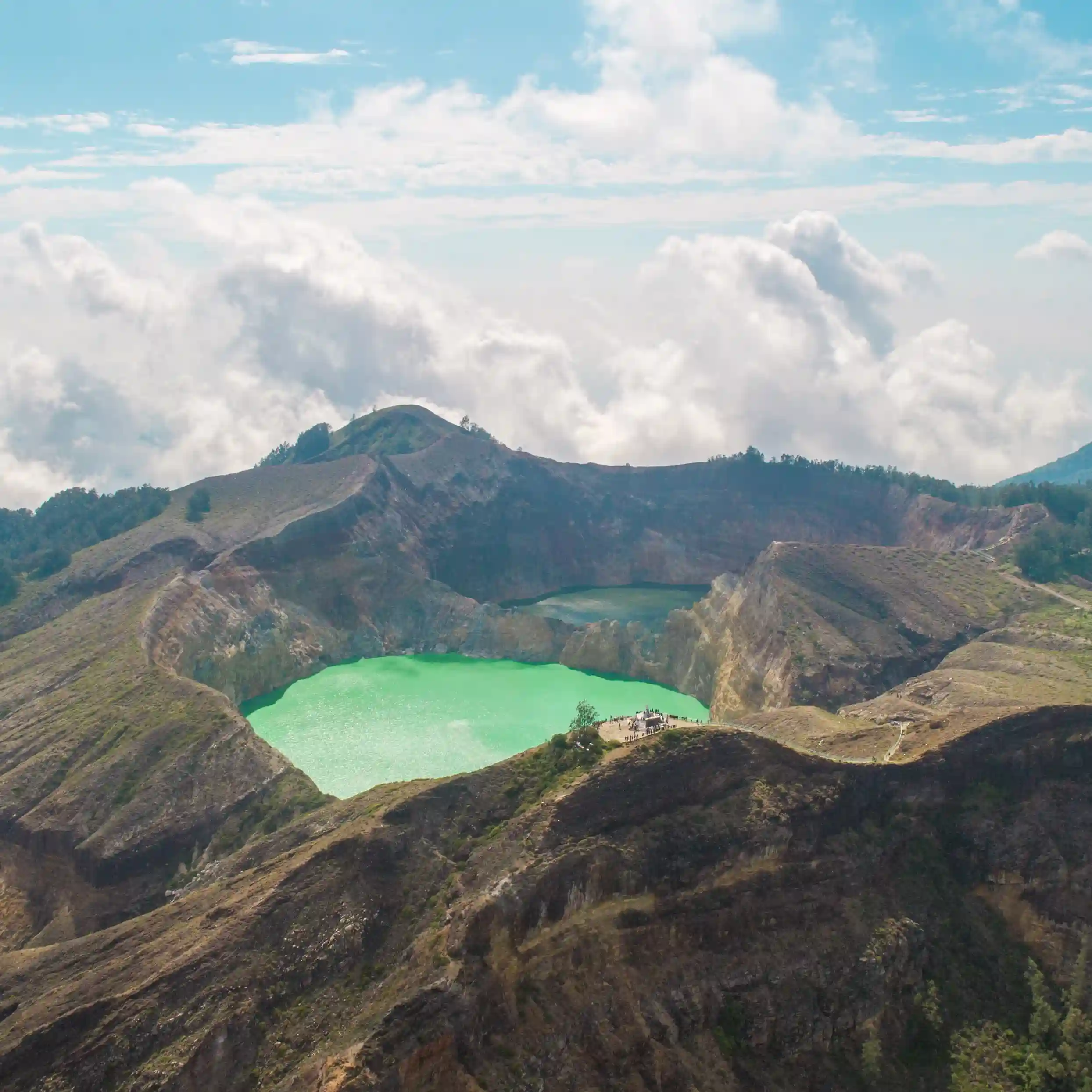
Kelimutu’s summit area holds three crater lakes that hold three different colors at once — and change them over time. The park gate opens around 04:30 for sunrise; from the car park it is an easy 30–40 minute walk to Inspiration Point at 1,639 m.

Your driver-guide handles tickets at the gate while you climb the last stretch on a maintained path and stairs — no technical hiking, just a cold pre-dawn and a warm thermos. Then the light arrives, and the lakes do the thing photographs keep failing to prepare people for: Tiwu Ata Mbupu, Tiwu Nuwa Muri Koo Fai and Tiwu Ata Polo, each a different color — turquoise beside rust beside near-black — separated only by knife-edge crater walls. Local Lio tradition holds the lakes as a resting place for souls, which is easier to believe at 05:30 than it sounds at noon. The colors shift with volcanic chemistry over months and years; our blogs on the facts behind Kelimutu’s lakes and why the lakes change color cover the science.

Back in Moni for a late breakfast, then the final leg: about 95 km, three hours, dropping through Wolowaru to meet the sea near Paga, where the coast road runs within meters of the surf. The detour that earns its ten minutes is Koka Beach — twin white-sand coves split by a green headland, and reliably close to empty on a weekday. From there it is an easy run into Maumere by mid-afternoon, with the odd sensation of having driven from one sea to the other across an entire island.

Day 6 — Maumere: Departure or Dive Extension

Day 6 is departure day — or the start of something else. Maumere’s Frans Seda Airport (MOF) offers short domestic connections, and Maumere Bay is one of eastern Indonesia’s quiet diving names.

If you are flying out, we transfer you to the airport for your onward connection; schedules are seasonal, so we verify flights for your exact dates when we build your quote. If you have a spare morning, the ikat-weaving villages of the Sikka coast south of town show the textile tradition that Ende and Maumere are known for — looms under stilt houses, patterns tied and dyed from memory.

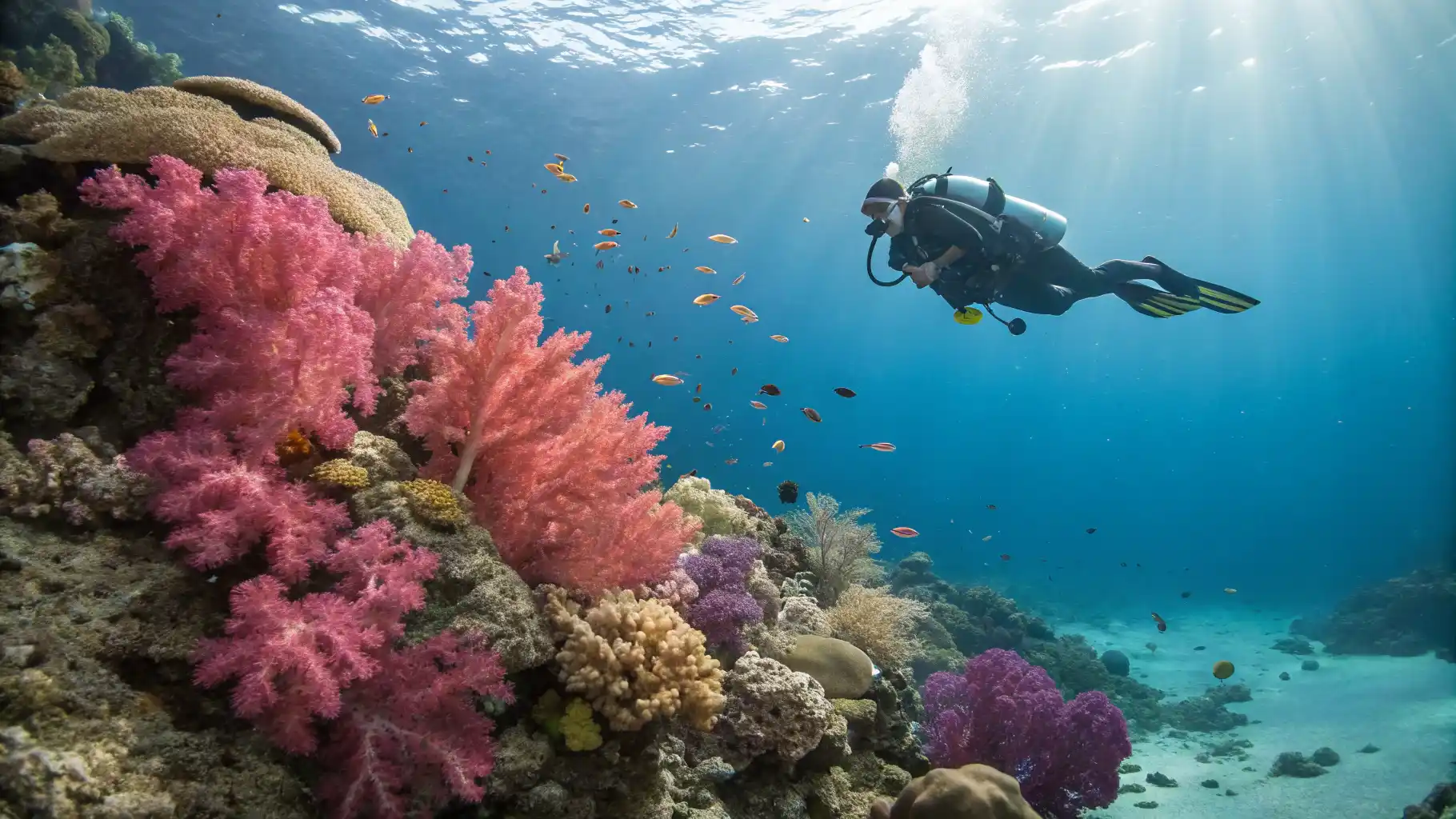
If you are not done with Flores at all, stay: the reef walls of Maumere Bay and the islands off the coast reward divers and snorkelers who like their sites empty. From here the map keeps going east — see our guide to Alor & Maumere for how the dive extension works and what lies beyond.

Doing It in Reverse: Maumere to Labuan Bajo

The same six days run mirrored as a Maumere to Labuan Bajo tour: fly into Maumere, catch Kelimutu at sunrise on day two while you are freshest, and finish at the gateway to Komodo National Park. Most guests who plan a boat trip choose this direction — the trip ends where the boats begin.

  • Day 1: Arrive Maumere, drive to Moni (±95 km, ±3 h), early night.
  • Day 2: Kelimutu sunrise, then the south coast road to Ende and on to Riung (±182 km).
  • Day 3: 17 Islands Marine Park private boat day.
  • Day 4: Riung to Bajawa (±70 km) — Mangeruda hot springs and Bena village.
  • Day 5: Bajawa to Ruteng (±130 km) — Cancar spider-web rice fields late afternoon.
  • Day 6: Ruteng to Labuan Bajo (±130 km), arriving by early afternoon — in time for a harbor sunset, or a boat the next morning.

Westbound has one more practical advantage: Komodo Airport in Labuan Bajo has the island’s best flight connections, including the 90-minute hop to Bali, so ending your overland there keeps departure day simple.

Add a Komodo Boat Trip Before or After

Labuan Bajo is the gateway to Komodo National Park, so the natural pairing is obvious: cross Flores by road, then see it from the water. Sea and land combine into one 8–9 day journey with a single WhatsApp thread and one operator responsible for all of it.

Three formats cover almost everyone. Shared-cabin travelers join our 3D2N Komodo open trip, from USD 300 per person with meals and guide included — the published, live price on that page, not a from-price with an asterisk. Couples and small groups who want the itinerary to themselves step up to a Komodo liveaboard, sleeping on the water inside the park. And for the full expression of it, a private phinisi puts a traditional two-masted sailing yacht — crewed, catered, yours — under the same dragons and pink beaches.

Across all formats we operate 9 owned vessels and work with 200+ vetted partner yachts, always labeled separately, so you book with the operator, never a middleman. Note the park’s entrance system: Komodo National Park tickets for 2026 are IDR 650,000 (about USD 40) per person as an official dated ticket, arranged for your exact sailing dates.

Wae Rebo Extension (+1 Day)

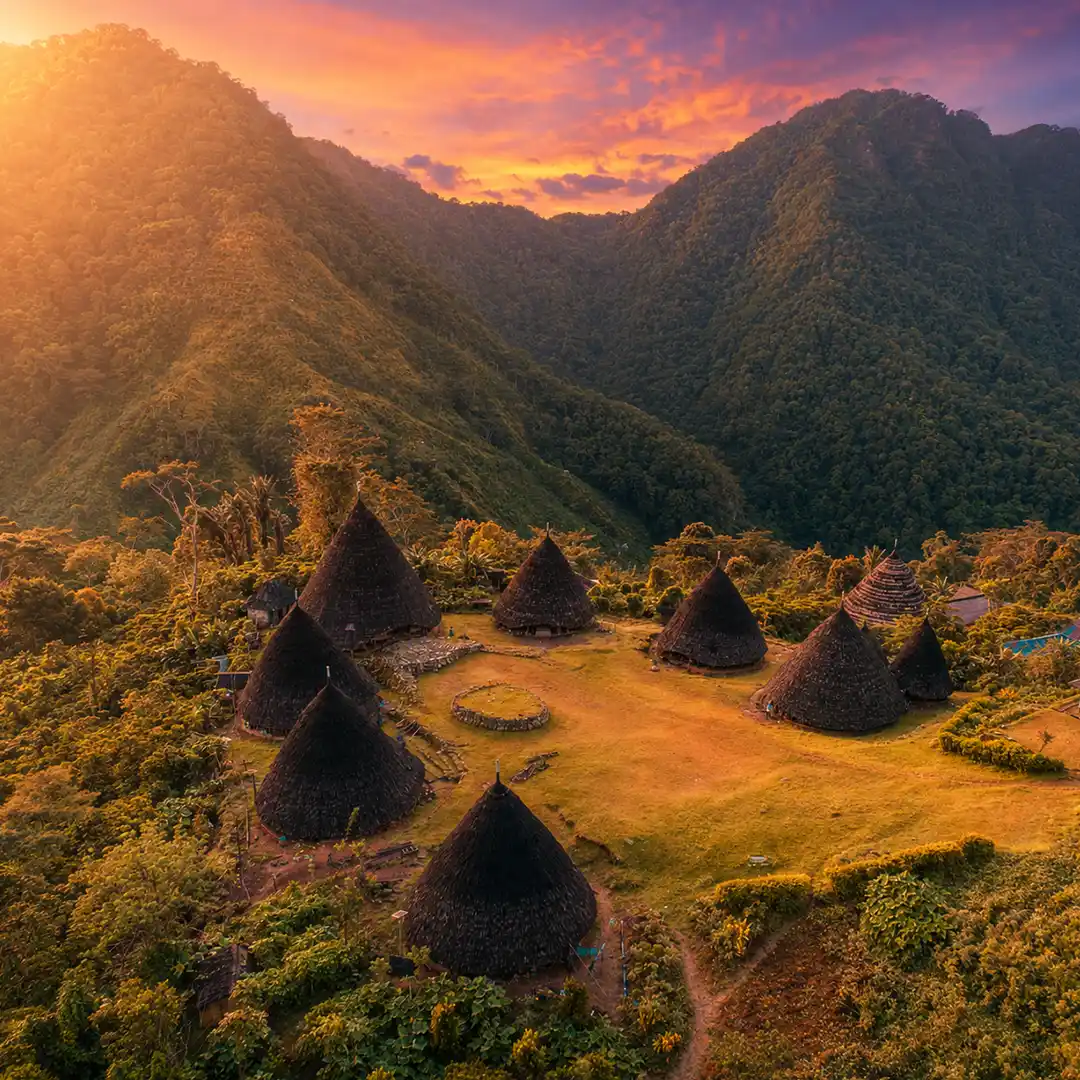
Adding Wae Rebo turns the 6D5N crossing into 7D6N. The village — seven cone-shaped mbaru niang houses on a mountain shelf at about 1,100 m — is reached only on foot, via a 2.5–3 hour forest trek from Denge, and the overnight in a clan house is the point.

The extension slots in after Day 1: from Ruteng you drive the narrow south-coast road to Denge, trek up with a local porter, and sleep under a communal roof that has hosted guests the same way for generations. Wae Rebo’s restoration earned a UNESCO Asia-Pacific Award for Cultural Heritage Conservation, and the community hosts visitors on its own terms — unhurried, ceremonial, and worth every step. You rejoin the Trans-Flores route at Ruteng the next afternoon.

Our transport division’s published rate for the Wae Rebo 2D1N component is IDR 3,000,000 (about USD 185), including the Denge transfer logistics; village contributions are paid directly in the village. Read the full story in our Wae Rebo guide before you decide — most people decide yes.

Price & What’s Included

We build Labuan Bajo to Maumere quotes from transparent components rather than a one-size sticker price, because group size, hotel class and season genuinely change the number. Send your dates and party size on WhatsApp and you receive a tailored quote within 24 hours.

These are the real numbers underneath every quote — our transport division’s published rates, not estimates:

Component 基礎 評分
Toyota Innova + driver-guide + fuel per vehicle per day, up to 4 guests IDR 1,500,000 (about USD 92)
Toyota Hiace + driver-guide + fuel per vehicle per day, groups up to 12 IDR 2,500,000 (about USD 154)
Wae Rebo 2D1N extension per trip component IDR 3,000,000 (about USD 185)
Hotels — Ruteng, Bajawa, Riung, Moni, Maumere per room per night, 3-star or best-available class quoted by class, no markup games
Riung boat day — vessel, crew, snorkeling gear, lunch full-day private charter quoted per boat
Park & village entrance fees — Kelimutu, Bena, 17 Islands official tickets at each gate at published government rates

The arithmetic is honest and easy to check: six days of private Innova at IDR 1,500,000 per day is IDR 9,000,000 (about USD 554) for the vehicle, driver-guide and fuel across the entire crossing — that figure is the backbone of the trip, and it is the same whether two of you travel or four. Your quote adds the nights, the boat day and the tickets at cost basis, itemized so you can see exactly where every rupiah goes.

Included as standard: private vehicle with English-speaking driver-guide, fuel and parking, hotel accommodation with breakfast, the Riung boat day, and all routing logistics. Not included: flights, lunches and dinners (your driver-guide knows the best warungs — budget modestly), and personal expenses. WhatsApp us at +62 811 3823 875 or write to [email protected] — a real itinerary with real numbers comes back within 24 hours.

Best Time to Drive the Trans-Flores Highway

The dry season from April to November is the best time for the Trans-Flores crossing: clear mountain views, reliable road conditions and calm seas for the Riung boat day. The route runs year-round, but December to March brings rain, fog on the high passes and occasional landslide clearing.

個月 Conditions on the road Verdict
4月至6月 Landscape still green from the rains, clear mornings, quiet viewpoints Excellent — our favorite window
7月至9月 Driest months, coolest highland nights, peak visibility at Kelimutu Excellent — book hotels early
10月 – 11月 Warm, dry, low season quiet before the rains return 非常好
12月至3月 Rain and fog on the passes, some clearing works, dramatic skies Possible, with flexible pacing

Two timing notes from the operator’s side. Kelimutu sunrise is a cloud lottery in the wet months — in the dry season the odds are firmly with you. And the Flores Sea is at its calmest from April to October, which matters twice on this trip: once at Riung, and once more if you add a Komodo sailing before or after the crossing.

Last reviewed: August 2026