






Last updated: September 2026 · Prices & availability verified for the 2026/2027 season
Last updated: September 07, 2026
The Komodo dragon is one of the most fascinating creatures on Earth. With its large body, sharp claws, and impressive hunting skills, this prehistoric reptile captures the attention of both scientists and adventurers. But where exactly do Komodo dragons live, what kind of environment allows them to thrive, and how many are actually left? In this guide we cover the natural habitat of the Komodo dragon, where they live on land or water, how the species is protected, and how you can experience their habitat firsthand.
Our routes cross every habitat in this article in a single sailing day, savannah ridges, monsoon forest and mangrove edge all feature on the ranger-guided treks within our Komodo tour packages. The field notes in this article come from Komodo Luxury’s ranger-partnered treks, which have taken guests into the dragon’s home terrain since 2015.
Puntos clave
- Wild Komodo dragons survive on just five islands in Indonesia, Komodo, Rinca, Gili Motang, Nusa Kode, and pockets of western Flores, and nowhere else on Earth.
- The species has been listed as Endangered on the IUCN Red List since 2021, with roughly 3,300 individuals left as of 2026, though the population inside the park is considered stable.
- Habitat, not head-count, is the main long-term risk: climate change and rising sea levels are projected to shrink the dragons’ lowland range, since there’s no larger landmass for them to retreat to.
- Padar Island is a cautionary tale, its dragon population collapsed decades ago after the prey base disappeared, which is why the park now protects deer, wild boar, and water buffalo alongside the dragons themselves.
- Ethical, ranger-guided tourism directly funds the patrols and monitoring that keep the population stable, making a responsible visit part of the conservation model rather than a threat to it.
¿Dónde Dragones de Komodo ?
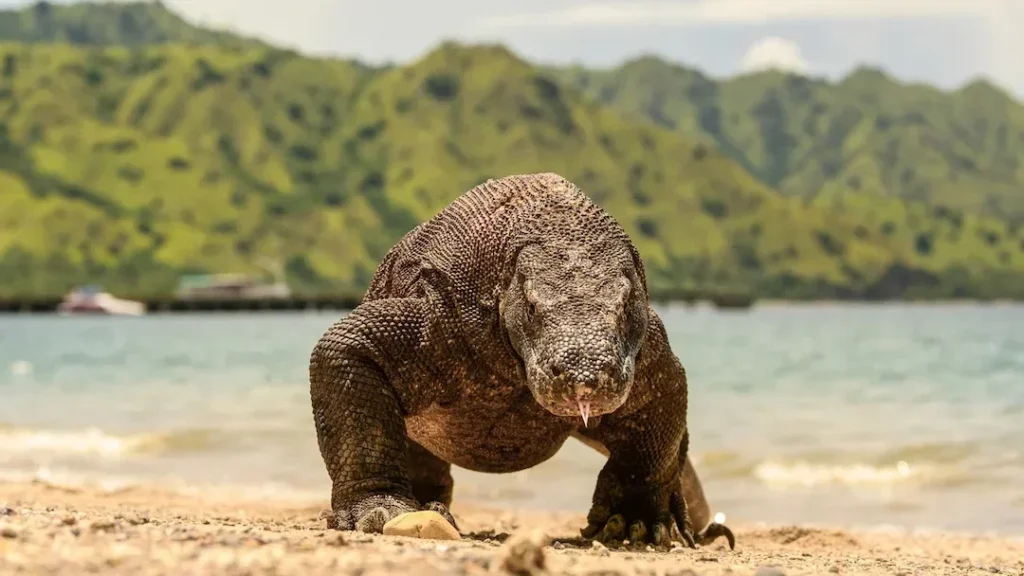
Komodo dragons are endemic to a handful of islands in Indonesia’s Lesser Sunda chain, meaning they are found nowhere else in the world. These islands include Komodo Island, Rinca Island, Gili Motang, Nusa Kode (Gili Dasami), and scattered coastal pockets of western Flores. Together, the four main islands form the core of Komodo National Park, a UNESCO World Heritage Site and the only place where you can see Komodo dragons living in the wild.
Why here and nowhere else? Deep straits along the Wallace and Weber Lines isolated these islands from both the Asian and Australian mainland millions of years ago, cutting the dragons off from the wider world. Geological shifts, plate tectonics, and rising sea levels later separated the Nusa Tenggara islands further from the mainland, leaving a unique environment where only these giant lizards evolved to thrive. The tropical savanna climate suits a large ambush reptile perfectly, and East Nusa Tenggara has few competing large predators, grasslands, shrubs, and dry forests here support just enough prey (deer, wild boar, and other smaller animals) for the dragon to sit unchallenged at the top of the food chain, hunting Timor deer and wild boar. That exact combination exists nowhere else, which is also why the species is strictly protected under Indonesian law.
Isla de Komodo es bastante extensa, Isla de Komodo ofrece a los dragones de Isla de Komodo mucho espacio para deambular. Las islas que habitan son de origen volcánico, con paisajes montañosos, densos bosques y sabanas abiertas. El clima aquí es tropical, con una estación seca de mayo a octubre y una estación lluviosa de noviembre a abril. El clima seco y la escasa vegetación proporcionan un entorno ideal para Dragones de Komodo prosperen.
¿En qué islas viven los « Dragones de Komodo »?
Wild Komodo dragons live on just five islands on Earth, all inside or beside Komodo National Park. Here’s how the population breaks down:
| Ubicación | Estimated wild population | Notas |
| Isla de Komodo | ≈ 1,700 | Largest population; savanna and monsoon forest |
| Rinca Isla | ≈ 1,100 | Second stronghold; highest sighting frequency for visitors |
| Gili Motang | < 100 | Small, closely monitored island population |
| Nusa Kode (Gili Dasami) | < 100 | Remote southern islet beside Rinca |
| West coast of Flores | Several hundred | Fragmented groups outside the park, incl. Wae Wuul reserve |
Figures are rounded park survey estimates published by the Komodo National Park Authority; totals shift slightly with each annual monitoring cycle. Padar Island, once home to a dragon population, is not included, see below.
1. Isla de Komodo
Komodo Island isn’t just famous for having the most significant number of Komodos — it boasts breathtaking scenery. The island suits them because there’s plenty of deer, wild boar, and water buffalo, plus there aren’t many other large predators competing for food, so Komodos rule this island. You usually go along a trekking path when you visit with a guide. Don’t be surprised if a Komodo wanders across your path since they’re free to move around. Always alert your guide’s instructions, the Komodo dragon behavior can be unpredictable and they can sprint fast when hunting.
2. Rinca Isla
Rinca Island is near Komodo Island and feels quite similar. However, the Komodos here are often seen in bigger groups, especially around guard posts or trekking routes. Like Komodo Island, you need a guide because Komodos can appear unexpectedly.
Younger Komodo dragons seek shelter in trees to escape from larger Komodo dragons. Why do Komodos thrive on Rinca Island? First, the environment suits them perfectly. The land is still well-preserved, and there’s little human disturbance. Second, Komodos still find enough prey even if you rarely see the animals. The dry climate typical of Nusa Tenggara also encourages Komodos to hide under bushes and come out to hunt at certain times.
3. Padar Isla
Padar Island is a favorite tourist spot in Komodo National Park, but many don’t realize it also hosts a smaller Komodo population. There aren’t as many Komodos here as on Komodo or Rinca Island, but Padar is still part of the Komodo National Park ecosystem, which means it has a smaller and more fragile prey base, beyond though bushes and the island has enough prey for these dragons to survive.
Smaller Komodo dragons are also present on Padar Island. They play a crucial role in the ecosystem and are part of the diet of adult Komodo dragons, which showcases their cannibalistic behavior. You might have to work harder to spot a Komodo on Padar because their numbers are lower and the space is vast, if lucky, you could see one resting under a bush or crossing your path during a trek.
Historically, Padar’s larger dragon population died out decades ago after its prey base collapsed, a reminder of how quickly a small island population can vanish, and why the park now treats prey animals (Timor deer, wild boar, water buffalo) as protected species too.
4. Nusa Kode (Gili Dasami)
Located in the southern part of Komodo National Park, Nusa Kode (also known as Gili Dasami) is more remote. Getting here is more complex than Komodo, Rinca, or Padar, so fewer visitors exist. The Komodos here remain untouched since the island doesn’t see many humans.
Young Komodo dragons seek refuge in trees to evade larger prey, including adult Komodo dragons. They face numerous challenges in the wild, such as finding food and avoiding threats. Nusa Kode’s landscape features savanna grasslands and dry forests that still feel natural. It’s quiet and provides a sense of adventure. Komodos thrive here because there’s enough prey, minimal human pressure, and relatively little development. They have a large area to wander and hunt on their terms.
5. Gili Motang
Gili Motang is another small island inhabited by Komodos. It’s not far from Nusa Kode but even more challenging to reach, making it a place tourists rarely visit. The island’s topography is much like the rest of Komodo National Park, dry hills covered with savanna. However, since the island is smaller, it holds fewer Komodos. Even though they’re limited in number, these dragons live entirely in the wild.
Komodo dragon saliva plays a role in their hunting strategy here too, containing bacteria that help weaken larger prey, making it easier for the dragons to overpower them. Like Nusa Kode, Gili Motang suits Komodos thanks to minimal disturbance, the right conditions, and enough prey. Although it might look barren, some prey species still exist. This is why Gili Motang remains suitable and supports Komodo dragons in their ecosystem.
¿ Dragones de Komodo en tierra o en el agua?
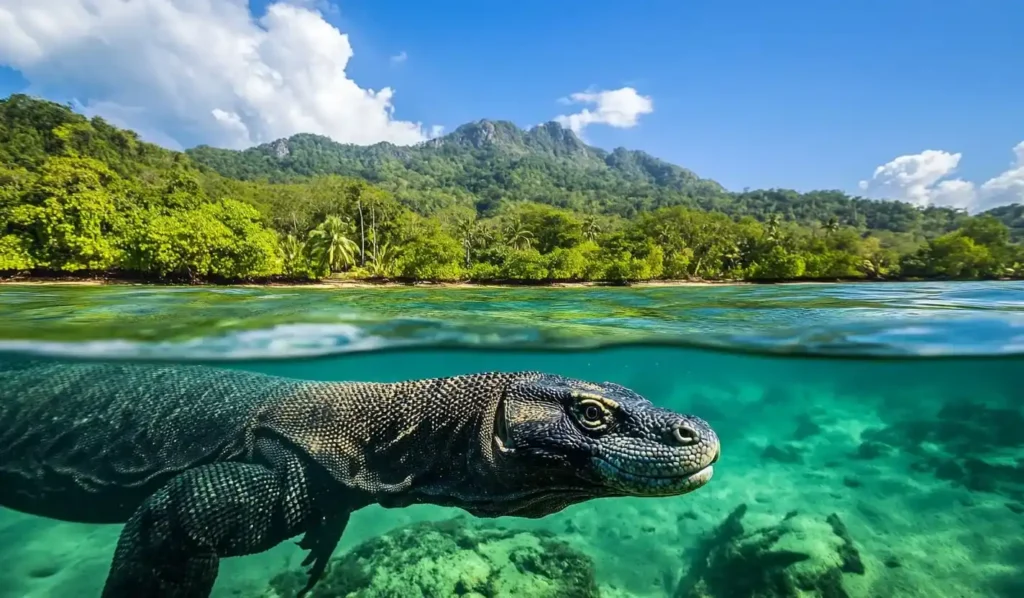
Aunque Dragones de Komodo excelentes nadadores, son principalmente animales terrestres. Prefieren vivir en tierra firme, donde pueden aprovechar su tamaño, fuerza y velocidad para cazar a sus presas. Si bien pueden nadar de una isla a otra si es necesario, no viven en el agua. Pasan la mayor parte del tiempo en tierra patrullando su territorio, cazando o tomando el sol para regular su temperatura corporal.
Sus habilidades como nadadores les resultan muy útiles cuando necesitan desplazarse de una isla a otra dentro Parque Nacional de Komodo. Por ejemplo, si los recursos alimenticios escasean en una isla, un dragón de Komodo nadar hasta otra isla en busca de presas. A pesar de esta capacidad, pasan la mayor parte del tiempo en tierra, dedicándose a cazar y a sobrevivir en su entorno natural.
Leer Más: ¿Qué tamaño tienen Dragones de Komodo? ¡Aquí tienes algunos datos sobre estas criaturas gigantes!
¿Qué hace que su hábitat sea ideal?
El hábitat de Dragones de Komodo adapta perfectamente a sus necesidades como depredadores de cima. Estas son algunas de las características principales de su entorno:
Praderas de la sabana
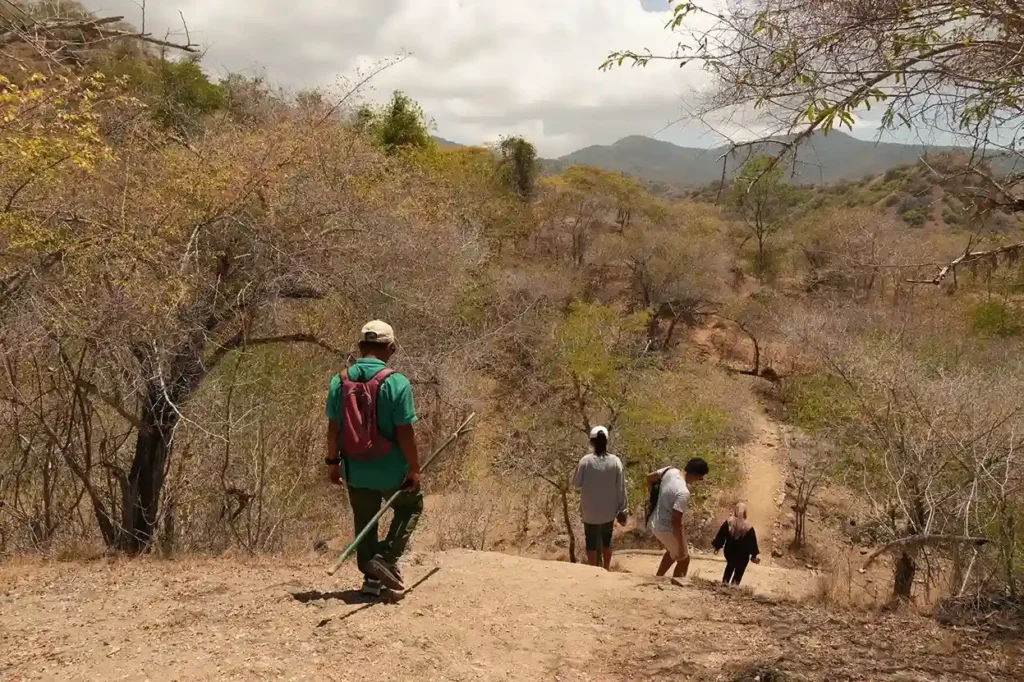
Dragones de Komodo en zonas abiertas donde pueden avistar y acechar fácilmente a sus presas. Las sabanas de Isla de Komodo las islas circundantes constituyen un terreno de caza ideal, con una vegetación escasa que les facilita tender emboscadas a ciervos y jabalíes.
Bosques
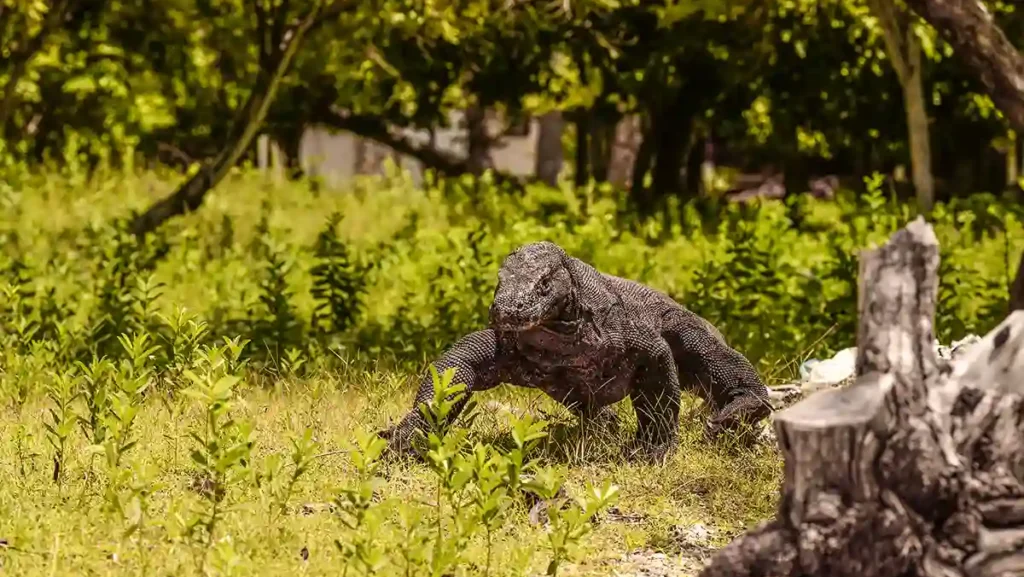
Las zonas boscosas proporcionan Dragones de Komodo refugio y un entorno más fresco, sobre todo durante las horas de más calor del día. Dragones de Komodo jóvenes Dragones de Komodo refugiarse en los árboles para escapar de los depredadores, incluidos Dragones de Komodo más grandes.
Zonas costeras
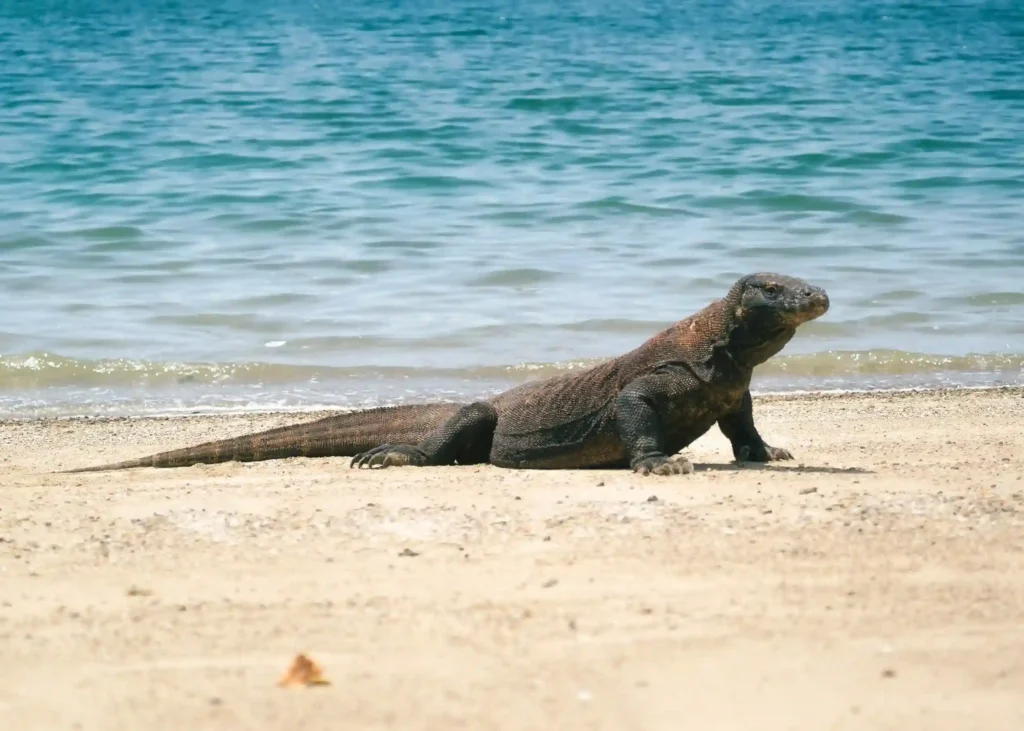
Dragones de Komodo a lo largo de las costas de las islas en las que habitan. Estas zonas costeras les proporcionan fuentes de alimento que van desde aves marinas hasta cadáveres que llegan a la orilla. Además, pueden acceder al agua dulce de los ríos cercanos o de los charcos de agua de lluvia.
Terreno volcánico
Debido al origen volcánico de estas islas, el terreno accidentado y irregular ofrece numerosos escondites a Dragones de Komodo, ya sea para tender emboscadas a sus presas o para descansar a la sombra durante las calurosas tardes.
La vida en tierra: cómo Dragones de Komodo y sobreviven Dragones de Komodo
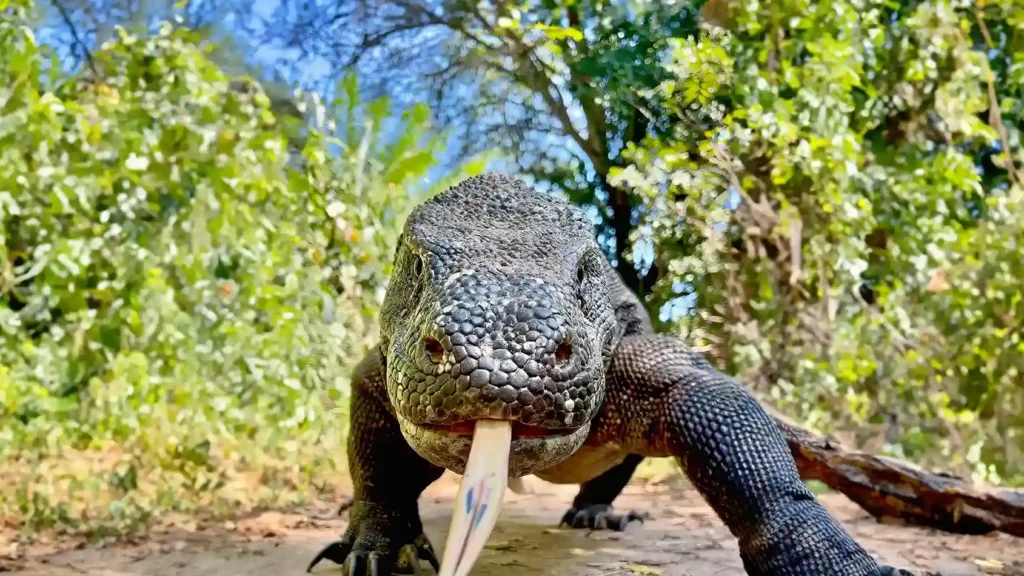
Dragones de Komodo animales solitarios perfectamente adaptados a la vida en tierra firme. Al ser los lagartos más grandes del mundo, con una longitud de hasta 3 metros y un peso superior a los 70 kilogramos, su tamaño los convierte en depredadores formidables. Son carnívoros, y su dieta incluye ciervos, jabalíes, Dragones de Komodo más pequeños e incluso búfalos de agua. Dragones de Komodo conocidos por sus tácticas de emboscada, utilizando su agudo sentido del olfato para detectar a sus presas a kilómetros de distancia. Con sus poderosas patas y afiladas garras, pueden moverse rápidamente, sorprendiendo a su presa antes de asestarle una mordedura mortal.
Uno de los aspectos más fascinantes del dragón de Komodo su mordedura venenosa. Su saliva contiene bacterias tóxicas y veneno que pueden provocar un shock o la muerte por infección. Tras morder a su presa, Dragones de Komodo seguir al animal herido durante horas o incluso días, esperando a que se debilite antes de devorarlo.
Los komodos adultos dominan el terreno, mientras que los más jóvenes suelen refugiarse en los árboles para escapar de los depredadores. Se alimentan de insectos, pequeños reptiles y aves hasta que alcanzan el tamaño suficiente para competir con los adultos.
Leer Más: Dragones de Komodo en Bali? ¡Aquí te contamos dónde encontrarlos!
Why Are Komodo Dragons Endangered?
You might ask, “So if Komodos live only in Indonesia, how many are there today?” According to the most recent park data, their population reached about 3,270 in 2024 and sits at roughly 3,300 as of 2026. In 2021, the IUCN Red List moved the Komodo dragon from Vulnerable to Endangered.
Two forces drive that listing.
- First, in 2022 the population dropped sharply in some areas, a real warning sign. This was largely due to habitat disruption: rising sea levels and extreme weather worsen threats, especially near the coast, though illegal poaching remains rare. Climate change is the stark long-term threat, rising sea levels and temperature shifts are projected to shrink the dragons’ usable lowland habitat significantly over the coming decades, and a species confined to a few small islands has nowhere to retreat to.
- Second, on Flores, outside the national park, the pressures are more immediate: agricultural expansion and burning reduce habitat, and hunting of deer depletes the prey base. Female Komodo dragons also have unique nesting and reproductive behaviors influenced by environmental factors, which makes the population especially sensitive to disturbance during breeding season.
How Does Komodo National Park Protect the Dragons?
Because they can’t be found anywhere else, and because they give enormous scientific and ecological value, Komodo dragons are a top priority for conservation. With fewer than 3,500 left globally, every individual matters. As apex predators, they also keep deer, wild boar, and water buffalo populations in check, without them, these prey species could multiply out of control, throwing the whole ecosystem’s balance off. Komodo dragons are also a big draw for tourism, and losing them would hurt local tourism industries and the surrounding communities’ economy.
Komodo National Park was established in 1980 specifically to protect the Komodo dragon, and it became a UNESCO World Heritage Site in 1991. Today the park authority runs the ranger corps that patrols against poaching, monitors dragon and prey populations island by island, enforces visitor zoning, and requires every trekking group to be accompanied by a licensed ranger, the strict monitoring, community education, and off-limits special zones have been in place, stabilizing the population since 2022.
Park entrance and conservation fees paid by visitors flow directly into this system, rangers’ patrols, monitoring science, and community programmes in the villages inside the park. So far, the model is working: dragon numbers inside the park have remained stable while the species declined elsewhere, and there’s hope the population will continue to grow. The park also proved its resilience in August 2026, when a strong earthquake struck far to the northeast of Labuan Bajo; the park was not closed, the Harbormaster reopened sailing the same day, and trips have continued normally, we cover that fully in our guide to whether Labuan Bajo is safe to visit after the earthquake.
How Does Ethical Tourism Help Komodo Dragon Conservation?
Well-managed tourism is not a threat to the dragons, it is one of the strongest arguments for keeping their habitat intact. Every park ticket funds ranger salaries and monitoring; every guest who follows the rules reinforces the system that keeps the islands wild. Ethical visiting comes down to a few non-negotiables: always trek with a licensed park ranger, keep the required distance, never feed or bait dragons, stay on marked trails, and pack out all waste.
Komodo Luxury, a registered Indonesian PT under Juara Holding Group Limited with 1,500+ verified guest reviews (4.9/5 across Google and TripAdvisor), operates every itinerary to these standards, whether guests join a small-group open/shared trip, sail on a traditional luxury phinisi, or take a fully private yacht charter around the park. Our crews work with the same licensed rangers year-round, and our briefings treat park rules as the baseline, not the fine print.
Cómo ver a Dragones de Komodo su hábitat natural
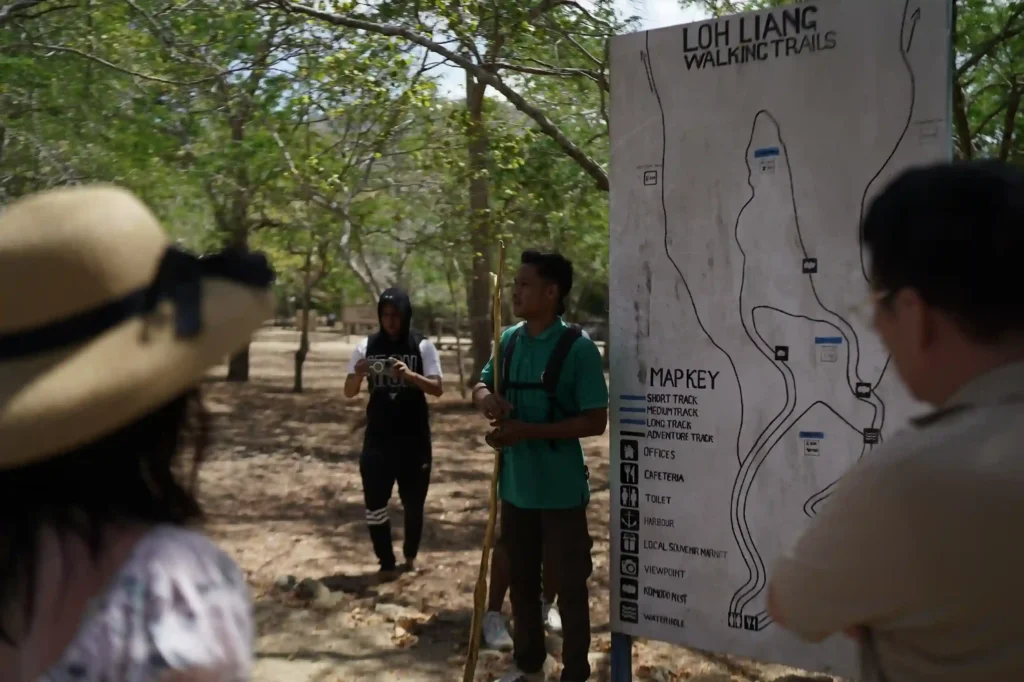
¿Te gustaría ver a Dragones de Komodo cerca? El único lugar donde se pueden observar Dragones de Komodo su hábitat natural es el Parque Nacional de Komodo. Isla de Komodo ofrece una oportunidad única en la vida para explorar estas hermosas islas y ver a los dragones de Komodo vagando en libertad.
Durante la excursión, recorrerás las sabanas y los bosques donde habitan los dragones, guiado por guardabosques experimentados que te ayudarán a comprender su comportamiento. Además de avistar Dragones de Komodo, también podrás disfrutar de otras maravillas naturales de la zona, como playas de arena rosa, arrecifes de coral y una rica vida marina.
Getting around the islands often becomes just as memorable as the time spent on land, especially when the journey follows the natural rhythm of Komodo National Park at sea level, where every crossing reveals shifting views of rugged islands, open water, and untouched coastlines. In this kind of experience, options like a Catamaran Charter Komodo by Komodo Luxury feel like a natural fit, giving you a more open and relaxed way to move between islands while enjoying wide sea views, gentle sea breeze, and the changing silhouettes of Komodo’s dramatic landscapes along the way.
Let’s See Komodo Dragons in Their Land-Based Habitat with Komodo Luxury
Komodo dragons are the rulers of their habitat, perfectly adapted to the rugged and rocky environment of Komodo National Park. From open savannas to dense forests, these islands provide the ideal conditions for this ancient creature to thrive. Reading about savannas is one thing; standing on a ridge while a wild dragon crosses the trail is another.
Komodo Luxury’s ranger-accompanied guided Komodo Island tours visit every habitat described in this guide, and multi-day liveaboard itineraries add the quieter valleys of Rinca that few day-trippers ever reach. Want to walk all three habitats, savanna, forest, and coast, before lunch? Our 3D2N open trips land at both Loh Liang and Loh Buaya in a single itinerary.
Ready to see them for yourself? Browse our Komodo Island Tour Packages or talk to our Labuan Bajo team on WhatsApp at +62 811-3823-875, we’ll help you build an itinerary around the best dragon-sighting conditions of the season.

By the Komodo Luxury Expedition Team, a licensed Komodo National Park tour operator running daily expeditions from Labuan Bajo since 2015. Fleet, rates and itineraries: Komodo yacht charter.