





Last updated: September 2026 · Prices & availability verified for the 2026/2027 season
Last updated: September 07, 2026
The Komodo dragon is one of the most fascinating creatures on Earth. With its large body, sharp claws, and impressive hunting skills, this prehistoric reptile captures the attention of both scientists and adventurers. But where exactly do Komodo dragons live, what kind of environment allows them to thrive, and how many are actually left? In this guide we cover the natural habitat of the Komodo dragon, where they live on land or water, how the species is protected, and how you can experience their habitat firsthand.
Our routes cross every habitat in this article in a single sailing day, savannah ridges, monsoon forest and mangrove edge all feature on the ranger-guided treks within our Komodo tour packages. The field notes in this article come from Komodo Luxury’s ranger-partnered treks, which have taken guests into the dragon’s home terrain since 2015.
重點摘要
- Wild Komodo dragons survive on just five islands in Indonesia, Komodo, Rinca, Gili Motang, Nusa Kode, and pockets of western Flores, and nowhere else on Earth.
- The species has been listed as Endangered on the IUCN Red List since 2021, with roughly 3,300 individuals left as of 2026, though the population inside the park is considered stable.
- Habitat, not head-count, is the main long-term risk: climate change and rising sea levels are projected to shrink the dragons’ lowland range, since there’s no larger landmass for them to retreat to.
- Padar Island is a cautionary tale, its dragon population collapsed decades ago after the prey base disappeared, which is why the park now protects deer, wild boar, and water buffalo alongside the dragons themselves.
- Ethical, ranger-guided tourism directly funds the patrols and monitoring that keep the population stable, making a responsible visit part of the conservation model rather than a threat to it.
科莫多龍 於何處?
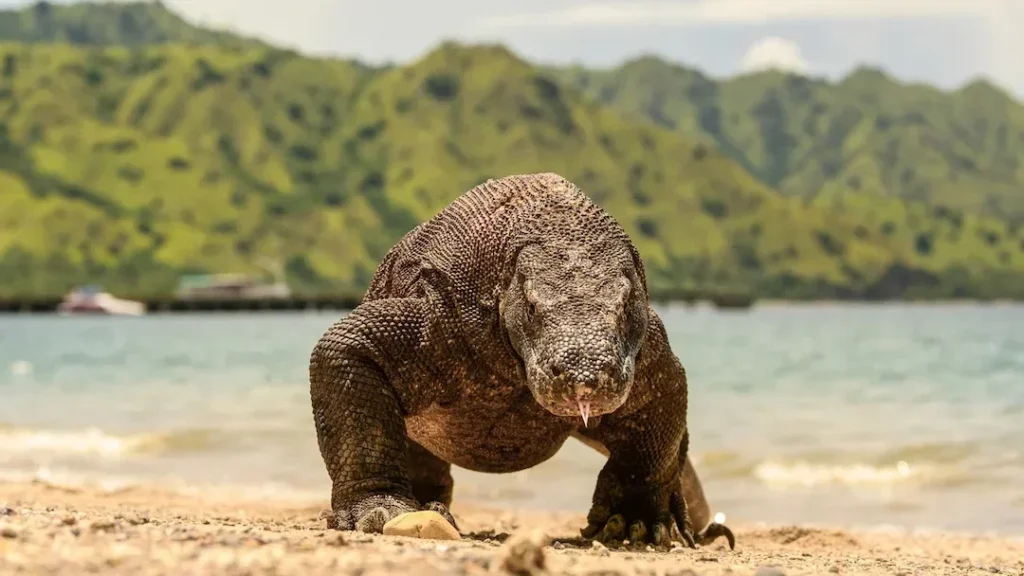
Komodo dragons are endemic to a handful of islands in Indonesia’s Lesser Sunda chain, meaning they are found nowhere else in the world. These islands include Komodo Island, Rinca Island, Gili Motang, Nusa Kode (Gili Dasami), and scattered coastal pockets of western Flores. Together, the four main islands form the core of Komodo National Park, a UNESCO World Heritage Site and the only place where you can see Komodo dragons living in the wild.
Why here and nowhere else? Deep straits along the Wallace and Weber Lines isolated these islands from both the Asian and Australian mainland millions of years ago, cutting the dragons off from the wider world. Geological shifts, plate tectonics, and rising sea levels later separated the Nusa Tenggara islands further from the mainland, leaving a unique environment where only these giant lizards evolved to thrive. The tropical savanna climate suits a large ambush reptile perfectly, and East Nusa Tenggara has few competing large predators, grasslands, shrubs, and dry forests here support just enough prey (deer, wild boar, and other smaller animals) for the dragon to sit unchallenged at the top of the food chain, hunting Timor deer and wild boar. That exact combination exists nowhere else, which is also why the species is strictly protected under Indonesian law.
科莫多島 相當廣闊,為科莫多龍提供了充足的活動空間。牠們棲息的島嶼屬火山島,地勢起伏,既有茂密的森林,也有開闊的草原。此處氣候屬熱帶型,5月至10月為旱季,11月至4月為雨季。乾燥的氣候與稀疏的植被科莫多龍 提供了理想的環境。
科莫多龍 棲息在哪些島嶼上?
Wild Komodo dragons live on just five islands on Earth, all inside or beside Komodo National Park. Here’s how the population breaks down:
| 地點 | Estimated wild population | 註釋 |
| 科莫多島 | ≈ 1,700 | Largest population; savanna and monsoon forest |
| 林卡島 | ≈ 1,100 | Second stronghold; highest sighting frequency for visitors |
| Gili Motang | < 100 | Small, closely monitored island population |
| Nusa Kode (Gili Dasami) | < 100 | Remote southern islet beside Rinca |
| West coast of Flores | Several hundred | Fragmented groups outside the park, incl. Wae Wuul reserve |
Figures are rounded park survey estimates published by the Komodo National Park Authority; totals shift slightly with each annual monitoring cycle. Padar Island, once home to a dragon population, is not included, see below.
1.科莫多島
Komodo Island isn’t just famous for having the most significant number of Komodos — it boasts breathtaking scenery. The island suits them because there’s plenty of deer, wild boar, and water buffalo, plus there aren’t many other large predators competing for food, so Komodos rule this island. You usually go along a trekking path when you visit with a guide. Don’t be surprised if a Komodo wanders across your path since they’re free to move around. Always alert your guide’s instructions, the Komodo dragon behavior can be unpredictable and they can sprint fast when hunting.
2. 林卡島
Rinca Island is near Komodo Island and feels quite similar. However, the Komodos here are often seen in bigger groups, especially around guard posts or trekking routes. Like Komodo Island, you need a guide because Komodos can appear unexpectedly.
Younger Komodo dragons seek shelter in trees to escape from larger Komodo dragons. Why do Komodos thrive on Rinca Island? First, the environment suits them perfectly. The land is still well-preserved, and there’s little human disturbance. Second, Komodos still find enough prey even if you rarely see the animals. The dry climate typical of Nusa Tenggara also encourages Komodos to hide under bushes and come out to hunt at certain times.
3. 帕達爾島
Padar Island is a favorite tourist spot in Komodo National Park, but many don’t realize it also hosts a smaller Komodo population. There aren’t as many Komodos here as on Komodo or Rinca Island, but Padar is still part of the Komodo National Park ecosystem, which means it has a smaller and more fragile prey base, beyond though bushes and the island has enough prey for these dragons to survive.
Smaller Komodo dragons are also present on Padar Island. They play a crucial role in the ecosystem and are part of the diet of adult Komodo dragons, which showcases their cannibalistic behavior. You might have to work harder to spot a Komodo on Padar because their numbers are lower and the space is vast, if lucky, you could see one resting under a bush or crossing your path during a trek.
Historically, Padar’s larger dragon population died out decades ago after its prey base collapsed, a reminder of how quickly a small island population can vanish, and why the park now treats prey animals (Timor deer, wild boar, water buffalo) as protected species too.
4. Nusa Kode (Gili Dasami)
Located in the southern part of Komodo National Park, Nusa Kode (also known as Gili Dasami) is more remote. Getting here is more complex than Komodo, Rinca, or Padar, so fewer visitors exist. The Komodos here remain untouched since the island doesn’t see many humans.
Young Komodo dragons seek refuge in trees to evade larger prey, including adult Komodo dragons. They face numerous challenges in the wild, such as finding food and avoiding threats. Nusa Kode’s landscape features savanna grasslands and dry forests that still feel natural. It’s quiet and provides a sense of adventure. Komodos thrive here because there’s enough prey, minimal human pressure, and relatively little development. They have a large area to wander and hunt on their terms.
5. Gili Motang
Gili Motang is another small island inhabited by Komodos. It’s not far from Nusa Kode but even more challenging to reach, making it a place tourists rarely visit. The island’s topography is much like the rest of Komodo National Park, dry hills covered with savanna. However, since the island is smaller, it holds fewer Komodos. Even though they’re limited in number, these dragons live entirely in the wild.
Komodo dragon saliva plays a role in their hunting strategy here too, containing bacteria that help weaken larger prey, making it easier for the dragons to overpower them. Like Nusa Kode, Gili Motang suits Komodos thanks to minimal disturbance, the right conditions, and enough prey. Although it might look barren, some prey species still exist. This is why Gili Motang remains suitable and supports Komodo dragons in their ecosystem.
科莫多龍 陸地上還是水中?
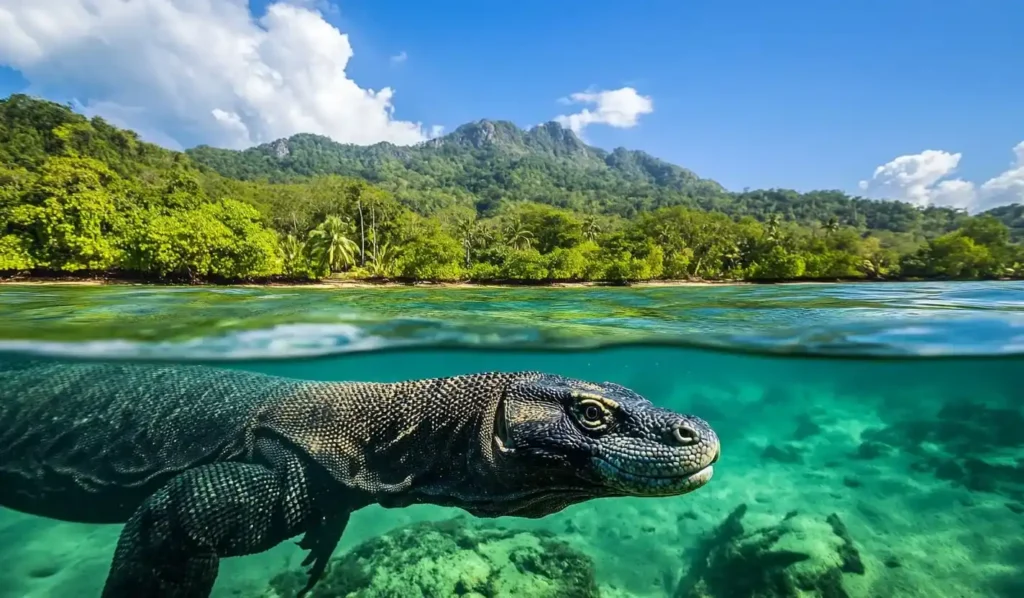
科莫多龍 出色的游泳能手,但牠們主要還是陸地生物。牠們偏好在陸地上生活,藉此利用自身的體型、力量和速度來獵捕獵物。雖然必要時牠們也能在島嶼之間游動,但牠們並不以水為家。牠們大部分時間都在陸地上巡邏領地、獵食,或是曬太陽以調節體溫。
當牠們需要在科莫多國家公園內的各島嶼間移動時,這項游泳能力便派上了用場。例如,若某座島嶼上的食物供應告急,科莫多龍可能會游往另一座島嶼尋找獵物。儘管具備這項能力,牠們仍將大部分時間花在陸地上,專注於在自然環境中狩獵與生存。
閱讀更多: 科莫多龍有多大?關於這些巨獸的真相在此!
是什麼讓他們的棲息地如此理想?
科莫多龍 的棲息地完全科莫多龍 牠們作為頂端掠食者的需求。以下是牠們所處環境的一些主要特徵:
薩凡納草原
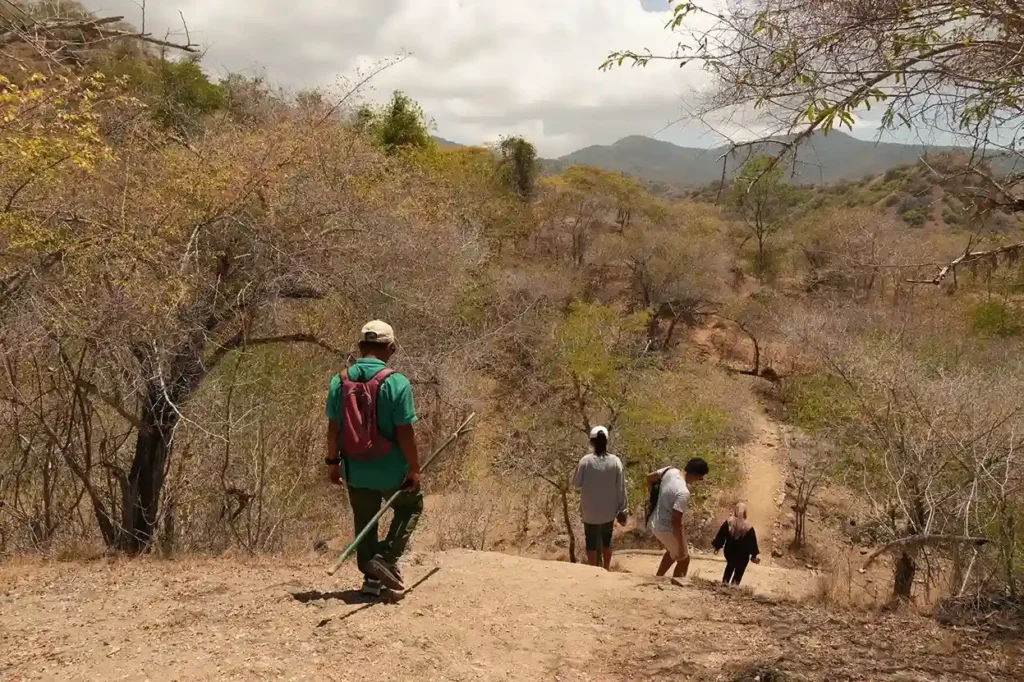
科莫多龍 在開闊地帶科莫多龍 因為在那裡牠們能輕易發現並潛行接近獵物。科莫多島 周邊島嶼上的稀樹草原提供了理想的狩獵場地,稀疏的植被使牠們更容易伏擊鹿群和野豬。
森林
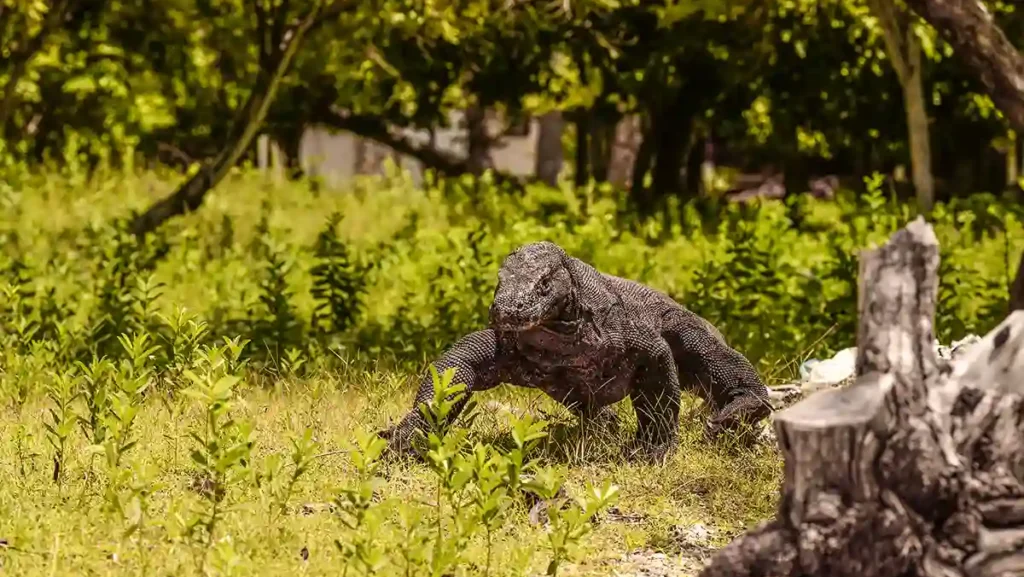
森林科莫多龍 和較涼爽的環境,特別是在白天的酷熱時段。科莫多龍 藏在樹上,以躲避捕食者,包括體型科莫多龍。
沿海地區
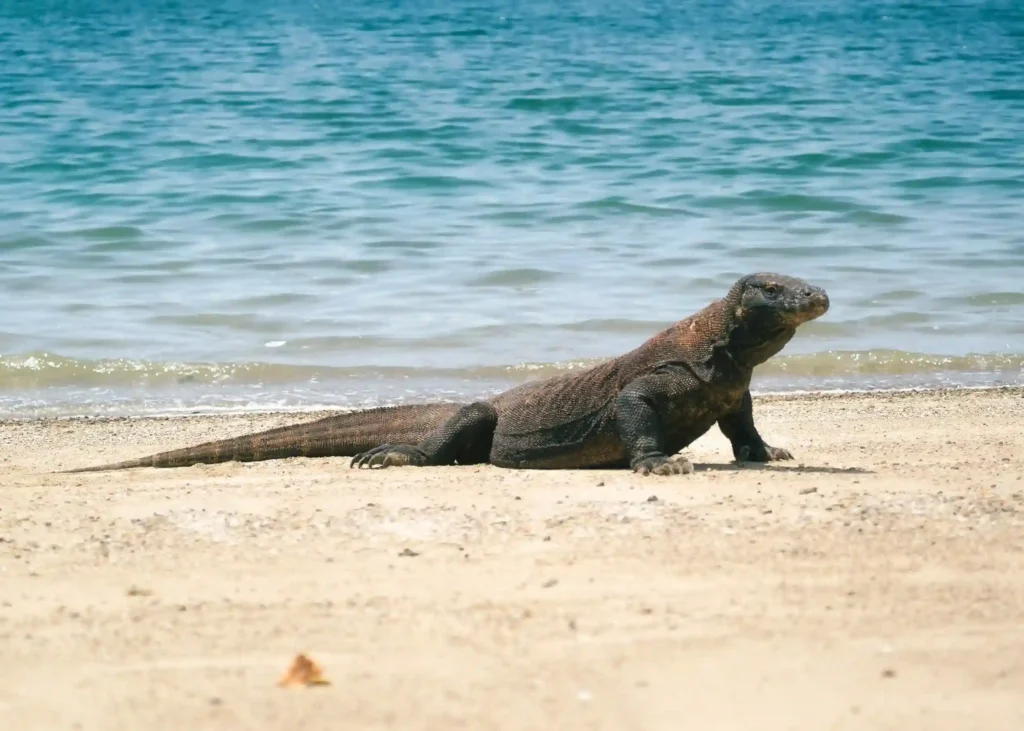
科莫多龍 通常科莫多龍 其所居住島嶼的海岸線附近。這些沿海地區提供了豐富的食物來源,從海鳥到沖上岸的獸屍皆有。此外,牠們還能從附近的河流或雨水積水處獲取淡水。
火山地形
由於這些島嶼具有火山地質特徵,崎嶇不平的地形為科莫多龍提供了許多藏身之處,無論是伏擊獵物,還是趁著炎熱的午後在樹蔭下休息。
陸地上的生命:科莫多龍 如何科莫多龍 與生存
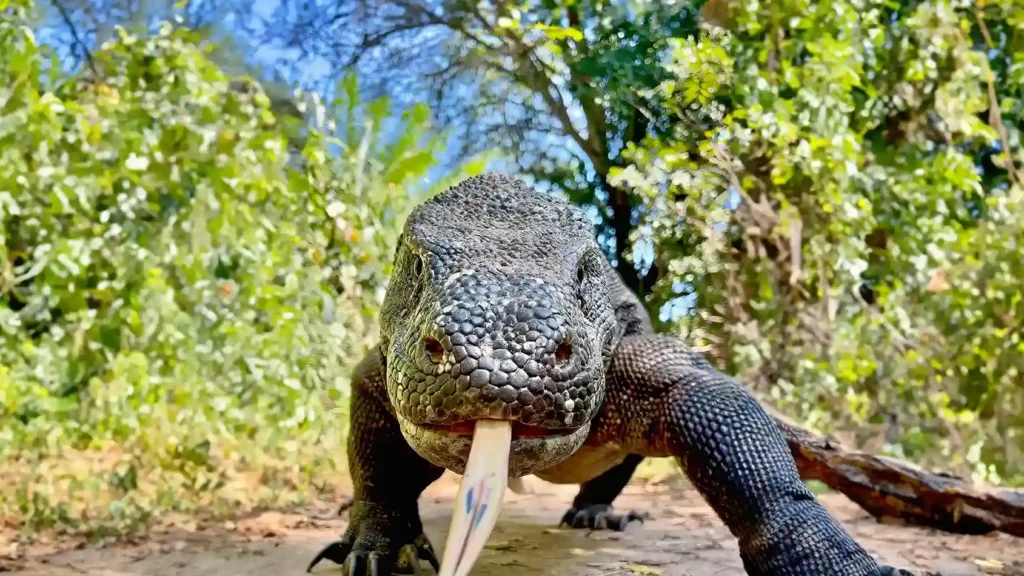
科莫多龍 獨居生物,極適於陸地生活。作為世界上最大的蜥蜴,牠們體長可達10英尺(3公尺),體重超過150磅(70公斤),其龐大的體型使牠們成為令人望而生畏的掠食者。牠們是肉食性動物,食性包括鹿、野豬、科莫多龍甚至水牛。科莫多龍 伏擊戰術科莫多龍 憑藉敏銳的嗅覺在數英里外嗅出獵物。憑藉強健的四肢與鋒利的爪子,牠們能迅速移動,在發動致命咬擊前出其不意地襲擊獵物。
科莫多龍最引人入勝的特徵之一,便是其具毒性的咬傷。牠們的唾液中含有有毒細菌和毒液,可能導致受害者因感染而陷入休克甚至死亡。咬傷獵物後科莫多龍 跟隨這隻受傷的動物數小時甚至數天,等待牠體力耗盡後才大快朵頤。
成年科莫多龍主宰地面,而幼體則常棲身樹上以躲避天敵。牠們以昆蟲、小型爬行動物和鳥類為食,直到長大到足以與成年個體競爭為止。
閱讀更多: 科莫多龍 峇里島?這裡告訴你哪裡可以找到牠們!
Why Are Komodo Dragons Endangered?
You might ask, “So if Komodos live only in Indonesia, how many are there today?” According to the most recent park data, their population reached about 3,270 in 2024 and sits at roughly 3,300 as of 2026. In 2021, the IUCN Red List moved the Komodo dragon from Vulnerable to Endangered.
Two forces drive that listing.
- First, in 2022 the population dropped sharply in some areas, a real warning sign. This was largely due to habitat disruption: rising sea levels and extreme weather worsen threats, especially near the coast, though illegal poaching remains rare. Climate change is the stark long-term threat, rising sea levels and temperature shifts are projected to shrink the dragons’ usable lowland habitat significantly over the coming decades, and a species confined to a few small islands has nowhere to retreat to.
- Second, on Flores, outside the national park, the pressures are more immediate: agricultural expansion and burning reduce habitat, and hunting of deer depletes the prey base. Female Komodo dragons also have unique nesting and reproductive behaviors influenced by environmental factors, which makes the population especially sensitive to disturbance during breeding season.
How Does Komodo National Park Protect the Dragons?
Because they can’t be found anywhere else, and because they give enormous scientific and ecological value, Komodo dragons are a top priority for conservation. With fewer than 3,500 left globally, every individual matters. As apex predators, they also keep deer, wild boar, and water buffalo populations in check, without them, these prey species could multiply out of control, throwing the whole ecosystem’s balance off. Komodo dragons are also a big draw for tourism, and losing them would hurt local tourism industries and the surrounding communities’ economy.
Komodo National Park was established in 1980 specifically to protect the Komodo dragon, and it became a UNESCO World Heritage Site in 1991. Today the park authority runs the ranger corps that patrols against poaching, monitors dragon and prey populations island by island, enforces visitor zoning, and requires every trekking group to be accompanied by a licensed ranger, the strict monitoring, community education, and off-limits special zones have been in place, stabilizing the population since 2022.
Park entrance and conservation fees paid by visitors flow directly into this system, rangers’ patrols, monitoring science, and community programmes in the villages inside the park. So far, the model is working: dragon numbers inside the park have remained stable while the species declined elsewhere, and there’s hope the population will continue to grow. The park also proved its resilience in August 2026, when a strong earthquake struck far to the northeast of Labuan Bajo; the park was not closed, the Harbormaster reopened sailing the same day, and trips have continued normally, we cover that fully in our guide to whether Labuan Bajo is safe to visit after the earthquake.
How Does Ethical Tourism Help Komodo Dragon Conservation?
Well-managed tourism is not a threat to the dragons, it is one of the strongest arguments for keeping their habitat intact. Every park ticket funds ranger salaries and monitoring; every guest who follows the rules reinforces the system that keeps the islands wild. Ethical visiting comes down to a few non-negotiables: always trek with a licensed park ranger, keep the required distance, never feed or bait dragons, stay on marked trails, and pack out all waste.
Komodo Luxury, a registered Indonesian PT under Juara Holding Group Limited with 1,500+ verified guest reviews (4.9/5 across Google and TripAdvisor), operates every itinerary to these standards, whether guests join a small-group open/shared trip, sail on a traditional luxury phinisi, or take a fully private yacht charter around the park. Our crews work with the same licensed rangers year-round, and our briefings treat park rules as the baseline, not the fine print.
如何科莫多龍 自然棲息地觀賞科莫多龍
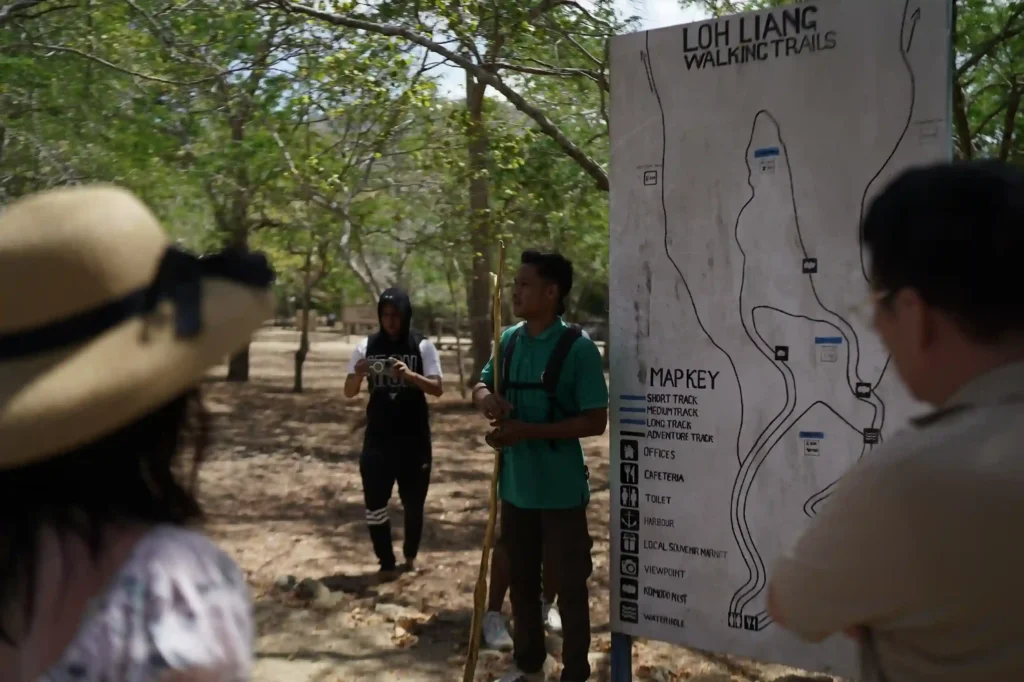
想科莫多龍 觀賞科莫多龍 嗎?科莫多國家公園是唯一能親眼目睹科莫多龍 自然棲息地生活的地點。科莫多島 將為您提供千載難逢的機會,帶您探索這些美麗的島嶼,並觀賞科莫多龍在島上自由漫步的景象。
在行程中,您將在經驗豐富的嚮導帶領下,穿越龍類棲息的草原與森林,並透過嚮導的解說,深入了解牠們的行為習性。除了觀賞科莫多龍,您還能欣賞該地區的其他自然奇觀,例如粉紅沙灘、珊瑚礁以及豐富多樣的海洋生物。
Getting around the islands often becomes just as memorable as the time spent on land, especially when the journey follows the natural rhythm of Komodo National Park at sea level, where every crossing reveals shifting views of rugged islands, open water, and untouched coastlines. In this kind of experience, options like a Catamaran Charter Komodo by Komodo Luxury feel like a natural fit, giving you a more open and relaxed way to move between islands while enjoying wide sea views, gentle sea breeze, and the changing silhouettes of Komodo’s dramatic landscapes along the way.
閱讀更多: 科莫多龍:您需要知道的一切!
Let’s See Komodo Dragons in Their Land-Based Habitat with Komodo Luxury
Komodo dragons are the rulers of their habitat, perfectly adapted to the rugged and rocky environment of Komodo National Park. From open savannas to dense forests, these islands provide the ideal conditions for this ancient creature to thrive. Reading about savannas is one thing; standing on a ridge while a wild dragon crosses the trail is another.
Komodo Luxury’s ranger-accompanied guided Komodo Island tours visit every habitat described in this guide, and multi-day liveaboard itineraries add the quieter valleys of Rinca that few day-trippers ever reach. Want to walk all three habitats, savanna, forest, and coast, before lunch? Our 3D2N open trips land at both Loh Liang and Loh Buaya in a single itinerary.
Ready to see them for yourself? Browse our Komodo Island Tour Packages or talk to our Labuan Bajo team on WhatsApp at +62 811-3823-875, we’ll help you build an itinerary around the best dragon-sighting conditions of the season.

By the Komodo Luxury Expedition Team, a licensed Komodo National Park tour operator running daily expeditions from Labuan Bajo since 2015. Fleet, rates and itineraries: Komodo yacht charter.