





Laatst bijgewerkt: augustus 2026 · Prijzen en beschikbaarheid gecontroleerd voor het seizoen 2026/2027
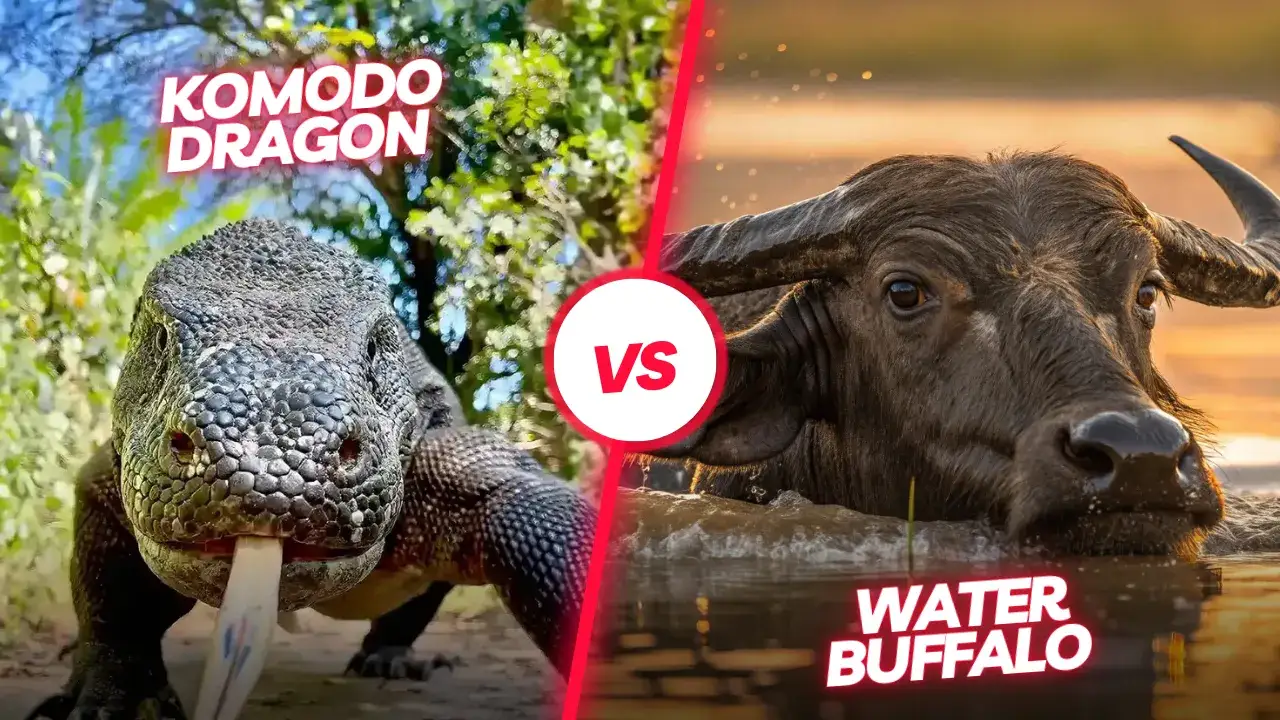
Heb je je ooit afgevraagd wat er zou gebeuren als een oud roofdier zoals de komodovaraan het zou opnemen tegen een enorme planteneter zoals de waterbuffel? Beide komen uit Azië, hebben unieke kenmerken en zijn krachtig. Voor liefhebbers van avonturen in de buitenlucht is het volgen van een komodovaraan in zijn natuurlijke leefomgeving —Nationaal Park Komodo— een spannende en fascinerende ervaring. Misschien ben je benieuwd naar het uiterlijk en het gedrag van beide dieren in het wild, vooral als hun paden elkaar ooit kruisen. Dus, wat gebeurt er nu echt als een komodovaraan in het echt een waterbuffel tegenkomt?
komodovaraan: De koning van de reptielen
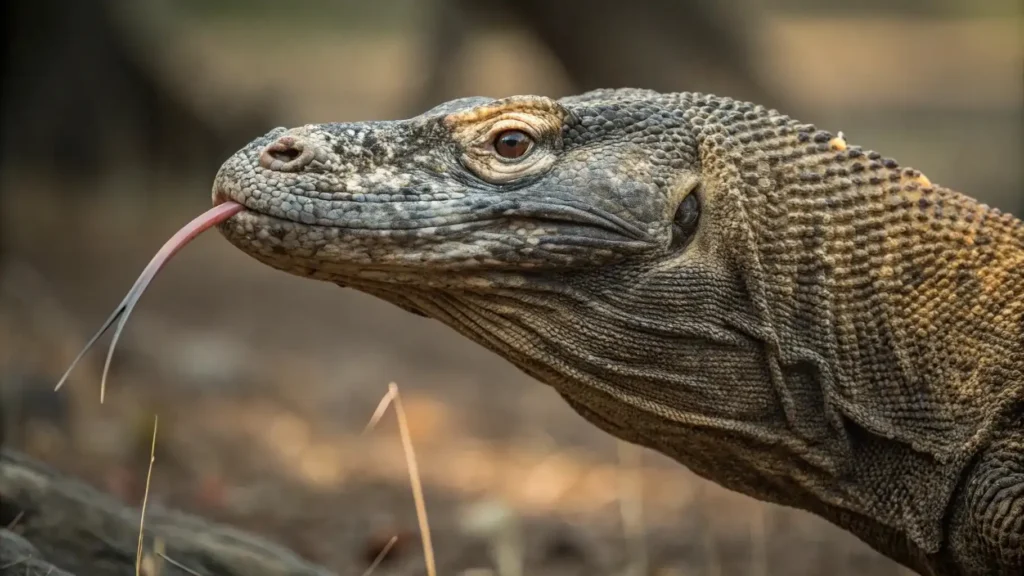
komodovaraan (Varanus komodoensis) wordt door de lokale bevolking ook wel „ora“ genoemd. Het is de grootste hagedis ter wereld. Hij kan tot 3 meter lang worden en 70 tot 90 kg wegen. Op het eerste gezicht lijkt hij op een reptiel uit de oertijd. Hoewel hij zich langzaam voortbeweegt, kan een komodovaraan over korte afstanden tot 20 km/u rennen. Hij heeft scherpe ogen, een gevorkte tong en zijn speeksel zit vol dodelijke bacteriën – een onmisbaar hulpmiddel bij het jagen op prooien.
Naast zijn fysieke kracht beschikt een komodovaraan over een scherp reukvermogen dankzij het orgaan van Jacobson in zijn gehemelte. Wanneer de draak met zijn tong flitst, ‘proeft’ hij in feite de lucht om de aanwezigheid van prooien of aas op enkele kilometers afstand te detecteren. Daarom wordt hij een opportunistisch roofdier genoemd: hij jaagt niet alleen op levende dieren, maar eet ook kadavers. Komodovaranen jagen door hun prooi in een hinderlaag te lokken, waarbij ze hun reukzin en onopvallendheid gebruiken om nietsvermoedende dieren te vangen.
Zijn natuurlijke leefgebied is beperkt tot een aantal Indonesische eilanden, met name in de Nationaal Park Komodo , waaronder Komodo eiland, Rinca, Gili Motang, Nusa Kode en Padar eiland. Deze reusachtige reptielen geven de voorkeur aan savanneachtige vlaktes en struikgewas met hoge temperaturen en een hoge luchtvochtigheid, evenals kustgebieden waar ze beschutting en voedsel kunnen vinden. Vrouwtjes van de soort „ Komodovaranen “ leggen hun eieren in een zelfgegraven nestkuil of in verlaten megapodennesten, waar de eieren 7-8 maanden worden uitgebroed. Hoewel ze lui lijken, zijn „ Komodovaranen “ geduchte jagers die grote dieren zoals Timorherten, wilde zwijnen, geiten en zelfs paarden kunnen vangen. Maar wat als een „ komodovaraan “ besluit een waterbuffel aan te vallen?
Waterbuffel: het sterke en veerkrachtige dier
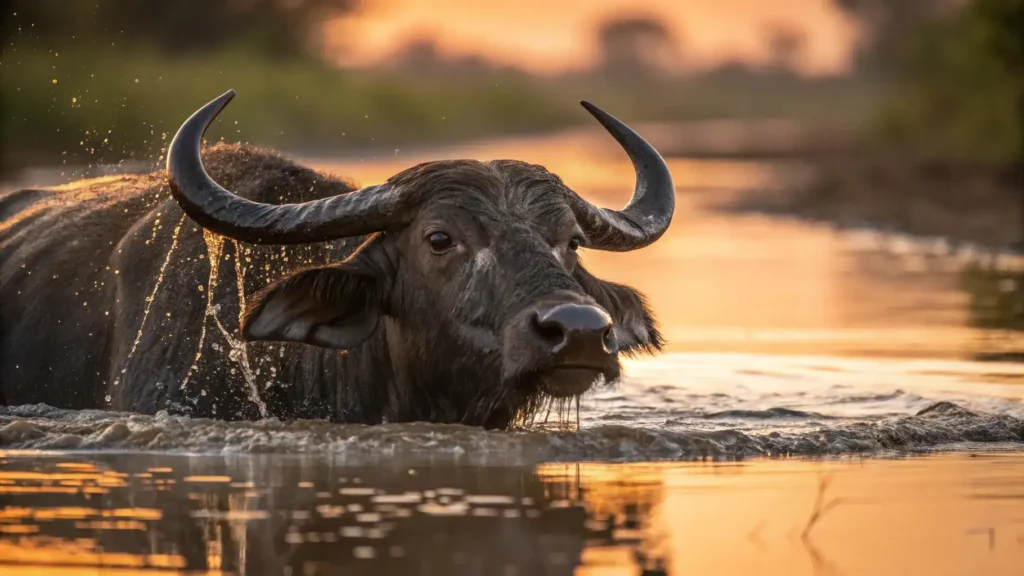
De waterbuffel wordt in veel delen van Azië beschouwd als een werkdier. Het dier heeft een groot en robuust lichaam met een schouderhoogte van 1,5 meter en een gewicht van meer dan 600 kg. De kleur varieert van donkergrijs tot diepbruin en het dier heeft lange, gebogen hoorns die meer dan een meter lang kunnen worden. Als herbivoor bestaat het dieet voornamelijk uit gras, waterplanten en diverse bladeren.
De naam „waterbuffel“ is afgeleid van hun gewoonte om zich in modderig water te wentelen om hun lichaamstemperatuur te reguleren en zich te ontdoen van parasieten. Ze komen voor in Zuid- en Zuidoost-Azië, onder meer op Indonesië. Naast hun rol in de landbouw beschikken waterbuffels ook over een sterk overlevingsinstinct in het wild.
Onderschat het verdedigingsinstinct van de waterbuffel niet. Als ze worden bedreigd, kunnen ze terugslaan met hun scherpe hoorns, waarmee ze een roofdier ernstig kunnen verwonden. Ook verzamelen ze zich vaak in kuddes om elkaar te beschermen.
Lees meer: komodovaraan blauwe adder: de strijd tussen twee giftige reptielen
komodovaraan vs. waterbuffel: een uitgebreide vergelijking
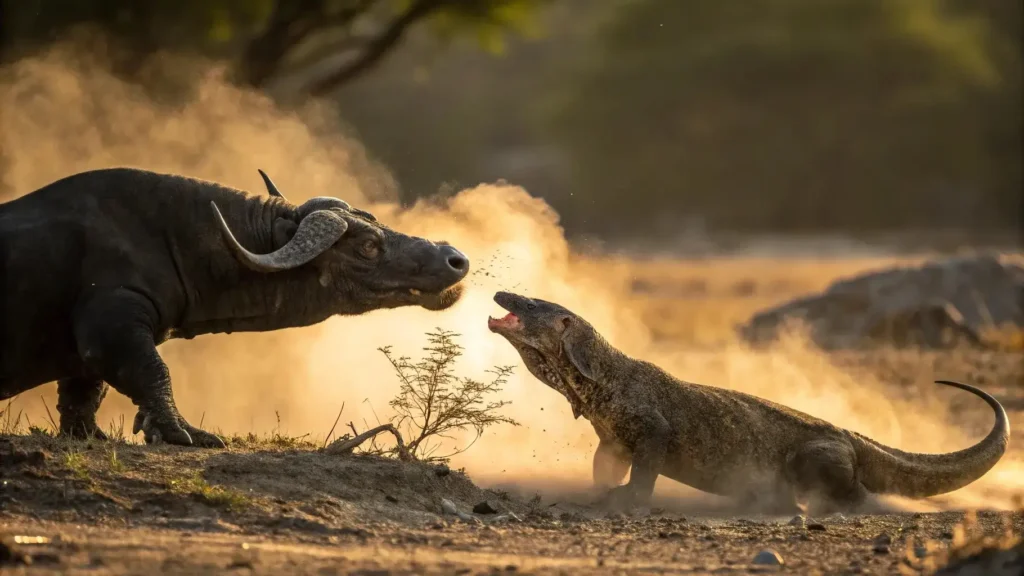
Bij de bespreking van het onderwerp „komodovaraan us versus waterbuffel“ komen verschillende interessante punten aan bod, variërend van fysieke kenmerken en lichaamsgrootte tot voedingsgewoonten, verdedigingsgedrag, leefgebied en aanpassing.
| Aspect | Komodovaraan | Waterbuffel |
| Lengte/Gewicht | 2–3 m / 70–90 kg | 1,3–1,5 m hoog / 400–600 kg |
| Dieet | Vleeseter | Planteneter |
| Hoofdwapen | Giftige beet, klauwen | Lange, gebogen hoorns |
| Distributie | Komodo eiland & nabijgelegen eilanden | Zuid- en Zuidoost-Azië |
| Belangrijkste aanpassing | Uitstekend reukvermogen (van Jacobson) | Zich in de modder wentelen om de lichaamstemperatuur te reguleren |
| Verdedigingsgedrag | Hinderlaagtactieken | Tegenaanvallen in groepen |
Lichamelijke kenmerken
Het komodovaraan heeft een lang, gespierd lichaam dat wordt gedragen door vier sterke poten, waardoor hij laag bij de grond staat maar krachtig overkomt. Zijn dikke, geschubde huid is meestal grijsbruin en gaat op in de droge, rotsachtige omgeving. Hij heeft sterke kaken en scherpe tanden waarmee hij gemakkelijk vlees kan verscheuren. De Komodo, zoals hij ook wel wordt genoemd, is een toproofdier in zijn ecosysteem. Zijn krachtige klauwen dienen om te graven, te klimmen en prooien aan te vallen. Onder zijn ruwe uiterlijk schuilt een uiterst efficiënt spijsverteringsstelsel dat in één keer grote hoeveelheden rauw vlees kan verwerken.
De waterbuffel heeft een groot, imposant lichaam met een dikke, gespierde nek en een brede borst. Zijn huid is relatief dik en bedekt met kort haar, dat in kleur varieert van donkergrijs tot zwart. Een van zijn meest opvallende kenmerken zijn zijn lange, gebogen hoorns, die in een indrukwekkende boog naar buiten en omhoog kunnen staan. Deze hoorns dienen ter verdediging en om zijn dominantie ten opzichte van rivalen te tonen. Dankzij zijn sterke, stevige poten kan de waterbuffel zich gemakkelijk door modderige moerassen voortbewegen en zijn enorme lichaamsgewicht dragen.
Maat
De komodovaraan is de grootste levende hagedis ter wereld. Hij wordt tussen de 2 en 3 meter (6,5 tot 10 voet) lang en weegt 70 tot 90 kilogram (154 tot 198 pond), of zelfs 100 kilogram (220 pond) bij grotere exemplaren. Zijn lange staart maakt een groot deel uit van zijn lichaamslengte en helpt hem bij het behouden van zijn evenwicht en behendigheid.
De waterbuffel daarentegen is veel zwaarder en groter. Hij heeft een gemiddelde schouderhoogte van 1,3 tot 1,5 meter en weegt tussen de 400 en 600 kilogram, of zelfs 800 kilogram voor grotere exemplaren. Alleen al zijn enorme omvang kan potentiële roofdieren afschrikken.
Voeding en jachtstrategie
Een komodovaraan is een carnivoor en voedt zich uitsluitend met vlees. Het is zowel een jager als een aaseter en jaagt op herten, varkens en zelfs grote waterbuffels. Zijn jachtstrategie is gebaseerd op heimelijkheid en geduld. Hij verstopt zich langs paden en wacht tot er nietsvermoedende prooien langskomen, waarna hij een snelle aanval uitvoert. Met een krachtige beet injecteert hij gif en schadelijke bacteriën in de bloedbaan van zijn slachtoffer, waardoor dit na verloop van tijd verzwakt of verlamd raakt. Zodra de prooi instort, komt de komodovaraan in actie om de prooi te doden en zich te goed te doen. Komodovaranen vallen soms mensen aan, vooral in gebieden waar ze samenleven met mensen, wat hun aanwezigheid in het ecosysteem aantoont.
De waterbuffel is een planteneter; hij voedt zich met grassen, waterplanten en bladeren. Hij brengt het grootste deel van de dag door met grazen in moerasgebieden of op open velden. Hoewel hij niet jaagt, is hij niet weerloos. Als hij wordt bedreigd, aarzelt een waterbuffel niet om zijn kracht en scherpe hoorns in te zetten om roofdieren af te weren.
Verdediging
Het komodovaraan vertrouwt op brute kracht, gif en strategie om zichzelf te verdedigen. Zijn scherpe klauwen en krachtige kaken kunnen ernstig letsel veroorzaken, terwijl zijn giftige beet ervoor zorgt dat zelfs een gewonde vijand het niet lang zal overleven. Hoewel hij traag lijkt, kan hij snel rennen wanneer dat nodig is om bedreigingen te achtervolgen of te ontwijken. De waterbuffel vertrouwt op zijn omvang, dikke huid en hoorns ter verdediging. Als een roofdier te dichtbij komt, zal hij frontaal aanvallen en zijn hoorns als dodelijke wapens gebruiken. Waterbuffels leven zelden alleen; ze verblijven in kuddes en wanneer ze worden bedreigd, groeperen ze zich om roofdieren af te schrikken. Deze collectieve verdediging maakt hen tot een van de moeilijkst te vangen dieren voor roofdieren zoals tijgers en krokodillen.
Leefgebied en verspreiding
De komodovaraan komt alleen voor in enkele geïsoleerde gebieden in Oost-Nusa Tenggara, Indonesië waaronder Komodo eiland, het eiland Rinca, Gili Motang en delen van Flores. Hij gedijt goed in droge savannes, open tropische bossen en kustgebieden waar hij goed kan opgaan in de omgeving en effectief kan jagen. Vanwege zijn beperkte verspreidingsgebied is natuurbehoud cruciaal voor zijn voortbestaan.
De waterbuffel daarentegen komt op grotere schaal voor. Hij komt voor in verschillende Aziatische landen , waaronder Indonesië, India, Nepal, de Filippijnen en Thailand. Hij geeft de voorkeur aan moerasachtige gebieden zoals moerassen, rivieren en ondergelopen graslanden, waar hij kan grazen en zich in het water kan afkoelen. Gedomesticeerde waterbuffels komen ook veel voor op het platteland, waar ze worden ingezet voor landbouw en transport.
Aanpassingen om te overleven
De komodovaraan heeft verschillende aanpassingen die hem tot een toproofdier maken. Dankzij zijn sterk ontwikkelde reukzin, die mogelijk wordt gemaakt door het orgaan van Jacobson, kan hij de geur van dode of gewonde dieren al op kilometers afstand waarnemen. Door zijn trage stofwisseling kan hij na een grote maaltijd wekenlang zonder voedsel overleven. En zijn krachtige beet en giftig speeksel zorgen ervoor dat zelfs als een prooi in eerste instantie ontsnapt, deze waarschijnlijk zal bezwijken aan een infectie of uitputting, waardoor de komodovaraan een uiterst effectieve jager is. Jonge Komodovaranen verblijven vaak in bomen om roofdieren te ontwijken en vertonen uniek gedrag, zoals zich in uitwerpselen wentelen om bedreigingen af te schrikken. Ook de waterbuffel beschikt over vele overlevingskenmerken. Zijn dikke huid beschermt hem tegen insectenbeten en kleine wondjes. Zijn grote hoorns worden gebruikt als wapen en als statussymbool onder andere buffels. Een van zijn belangrijkste aanpassingen is het wentelen in modder, wat helpt bij het reguleren van de lichaamstemperatuur en de huid vrij houdt van parasieten. Het belangrijkste is dat waterbuffels vertrouwen op hun kuddegedrag, aangezien het verblijf in groepen de kans dat ze ten prooi vallen aanzienlijk vermindert.
Deze twee verbazingwekkende dieren hebben unieke eigenschappen ontwikkeld om in hun respectievelijke leefomgevingen te kunnen overleven. De komodovaraan, een onopvallend en giftig roofdier, heerst over de eilanden van Indonesië , terwijl de waterbuffel, een reusachtige en veerkrachtige planteneter, gedijt in de moerasgebieden van Azië.
Lees meer: komodovaraan vs Olifant: een leuke vergelijking tussen twee machtige reuzen
komodovaraan vs. waterbuffel: wie zou er winnen?
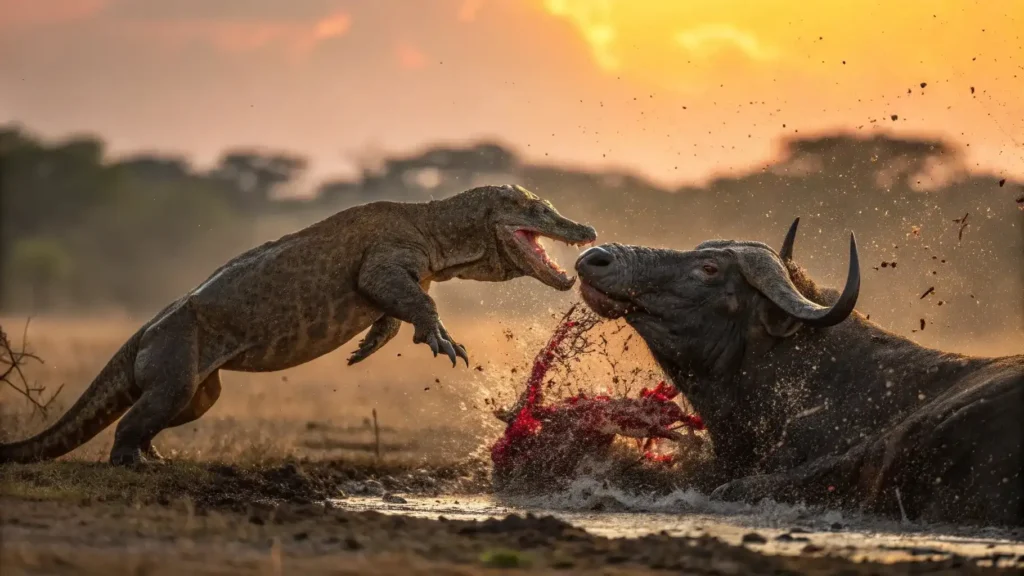
Het is niet eenvoudig om te bepalen wie er zou winnen in een confrontatie tussen een komodovaraan en een waterbuffel. Beide dieren hebben hun voordelen. Aan de ene kant is een komodovaraan kleiner dan een waterbuffel. Aan de andere kant moet je de behendigheid en de giftige beet van dit oeroude reptiel nooit onderschatten. In de reptielenwereld maken de jachtstrategieën en de giftige beet van de komodovaraanhem tot een geduchte tegenstander.
Een volwassen waterbuffel is groter en zijn hoorns kunnen dodelijk zijn als ze rechtstreeks raken. Een komodovaraan kan in de poten of de buik van de waterbuffel bijten en vervolgens wachten tot de gifstoffen hun werk doen. Als de beet succesvol is en de waterbuffel niet kan vluchten of zich verdedigen – vooral als hij alleen is en niet bij zijn kudde – zal de waterbuffel verzwakken of ernstig geïnfecteerd raken.Hoewel de beet van een komodovaraanzelden onmiddellijk dodelijk is, kan het cumulatieve effect van de bacteriën en het gif de buffel uitputten. Komodovaranen hanteren vaak een ‘bijten en afwachten’-strategie. Dus als iemand vraagt: ‘Wie zou er winnen?’, hangt het antwoord af van de situatie. Als de buffel bij zijn kudde is, zijn zijn kansen groter. Maar als een komodovaraan de buffel kan bijten wanneer deze alleen is, kan het tij snel keren.
In het wild gaan deze twee dieren meestal geen hevig gevecht aan zoals in een arena. Maar er kunnen wel spannende confrontaties plaatsvinden, vooral als een hongerige komodovaraan een kans ziet.
Getuige zijn van de ‘ komodovaraan ’ in Nationaal Park Komodo
Zoals we hebben besproken, gaat het bij „komodovaraan us versus waterbuffel“ niet alleen om grootte en kracht. Elk dier heeft unieke kenmerken – van hun fysieke bouw tot hun gedrag en overlevingsstrategieën. De komodovaraan beschikt over biologische wapens zoals gif en bacteriën in zijn speeksel, terwijl de waterbuffel vertrouwt op zijn enorme lichaam, scherpe hoorns en kuddegedrag om zich te verdedigen. Als je al eens een waterbuffel in het echt hebt gezien, is het nu tijd om ook eens een komodovaraan in het echt te bekijken.
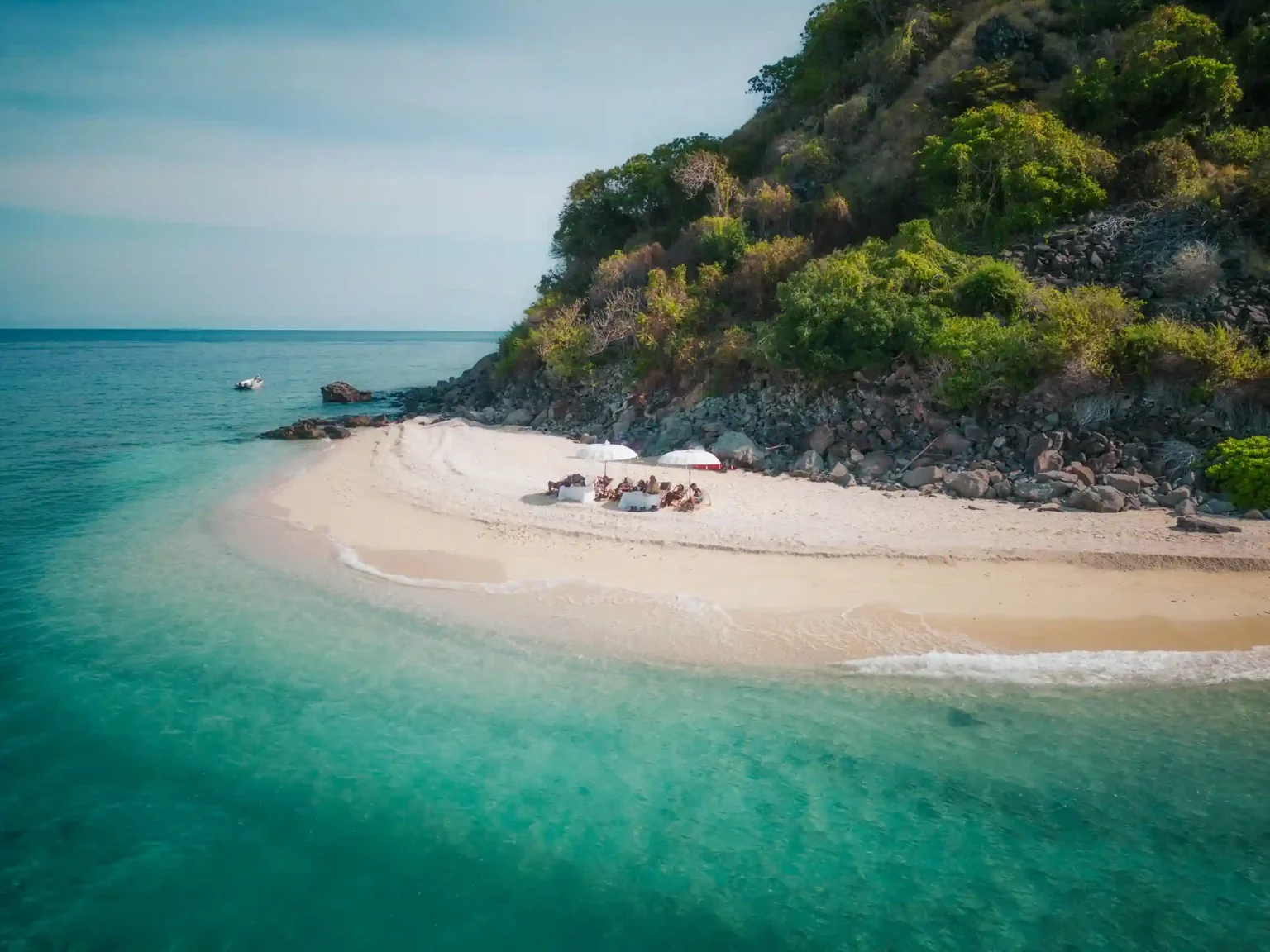
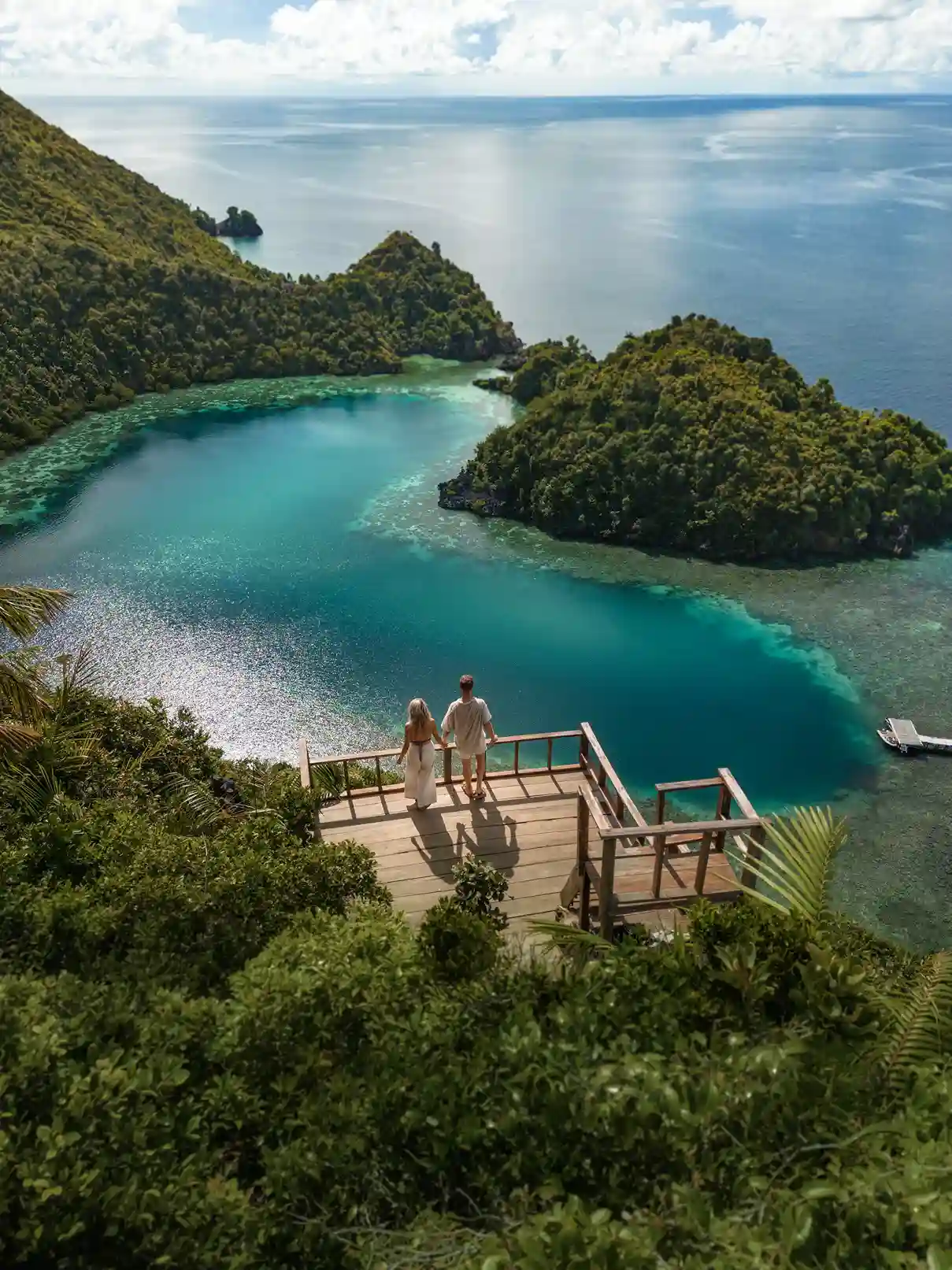
Als je „ Komodovaranen ” in hun natuurlijke leefomgeving wilt zien, is er geen betere plek dan „ Nationaal Park Komodo ” in Oost-Nusa Tenggara. Deze regio biedt adembenemende landschappen – van witte zandstranden en kristalhelder water tot droge savannes waar „ Komodovaranen ” rondlopen.

Voor een complete ervaring – zeilen over turquoise wateren, wandelen over exotische eilanden en de ‘ Komodovaranen ’ van dichtbij meemaken – neem dan deel aan een ‘Komodo eiland ’-tour via Komodo Luxury. Een professioneel team zorgt ervoor dat je een onvergetelijke reis beleeft, waarbij veiligheid voorop staat en ze beschikken over diepgaande kennis van de wilde dieren in het gebied. Mis deze kans niet om de wildernis te verkennen, de spanning te voelen bij een ontmoeting met een oeroud roofdier en te ontspannen op een comfortabel tourvaartuig.
boek nu. Klik op de link om een ‘Komodo eiland ’-tour te boeken via Komodo Luxury en bereid je voor op het avontuur van je leven. Een ‘ komodovaraan ’ in het echt zien, zijn leefgebied verkennen en de pure sensatie van de natuur in je opnemen: dat wordt een ervaring die je je hele leven lang zult koesteren.