





Laatst bijgewerkt: november 2025 · Prijzen en beschikbaarheid gecontroleerd voor het seizoen 2026/2027
Onlangs ging er op het sociale-mediaplatform X (voorheen Twitter) een video viraal waarin naar verluidt te zien was hoe een ‘ komodovaraan ’ werd aangevallen door twee blauwe giftige slangen, beter bekend als de ‘blauwe adder’ (Trimeresurus insularis), een prachtige maar dodelijke groefkopadder. Dit incident leidde al snel tot verhitte discussies en speculaties.
Beide dieren komen kort aan bod in ons wandelprogramma — draken dagelijks, de witlippige adder als een terzijde langs het pad — tijdens de door een parkwachter begeleide wandelingen die deel uitmaken van elke 3D2N-Komodo-reis.
Deze vergelijking is geschreven door Komodo Luxury, de exploitant van Labuan Bajo , wiens bemanningen sinds 2015 deze eilanden met beide reptielensoorten delen.
Velen begonnen zich een ‘epische strijd’ voor te stellen tussen de reusachtige komodovaraan en de exotische blauwe adder, waarvan wordt aangenomen dat hij dodelijk gif bezit. Nog intrigerender is dat beide wezens naar verluidt afkomstig zijn van Komodo eiland en Indonesië. Dit riep de vraag op: zou de machtige komodovaraan— die vaak wordt beschouwd als de ‘draak’ van Indonesië— werkelijk ten prooi kunnen vallen aan de dodelijke beet van de blauwe adder? Of zou de komodovaraan, met zijn enorme omvang, de slang simpelweg verpletteren?
Om verwarring te voorkomen, laten we eerst even de kenmerken van deze fascinerende wezens bekijken, voordat we ze met elkaar vergelijken om te zien „wie er zou winnen“.
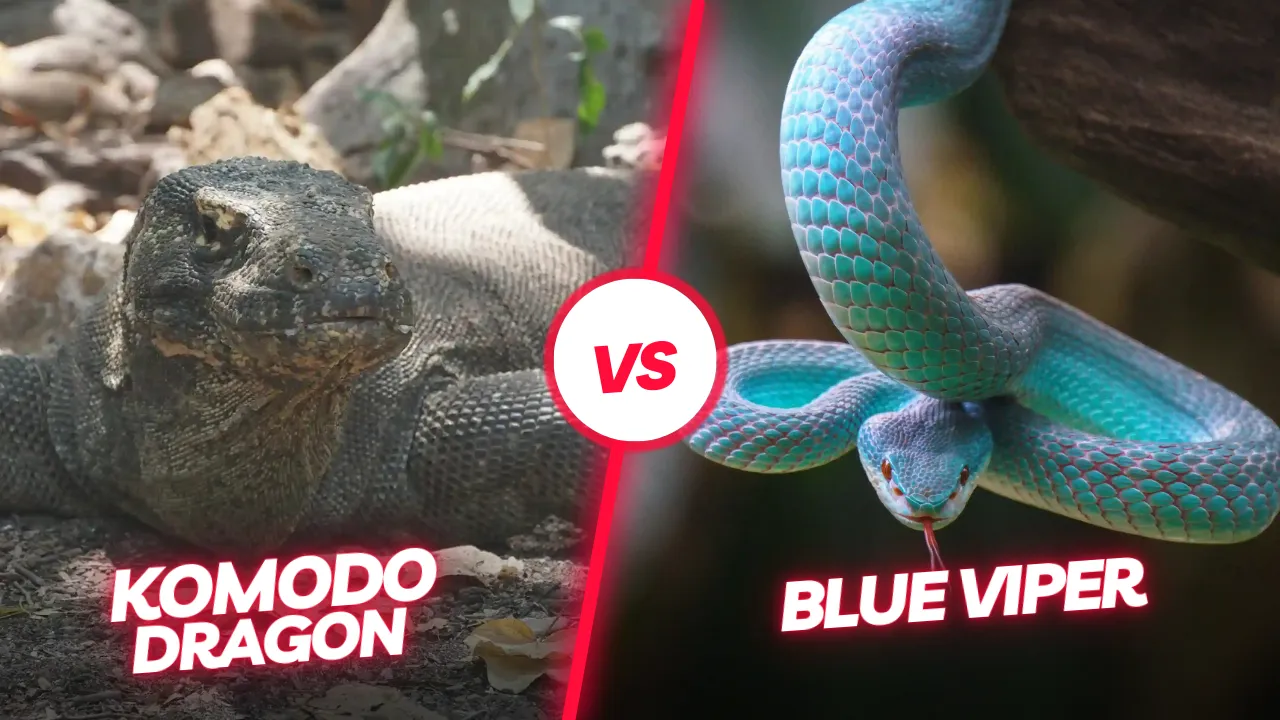
komodovaraan vs Blue Viper: een reusachtig reptiel met een giftige beet
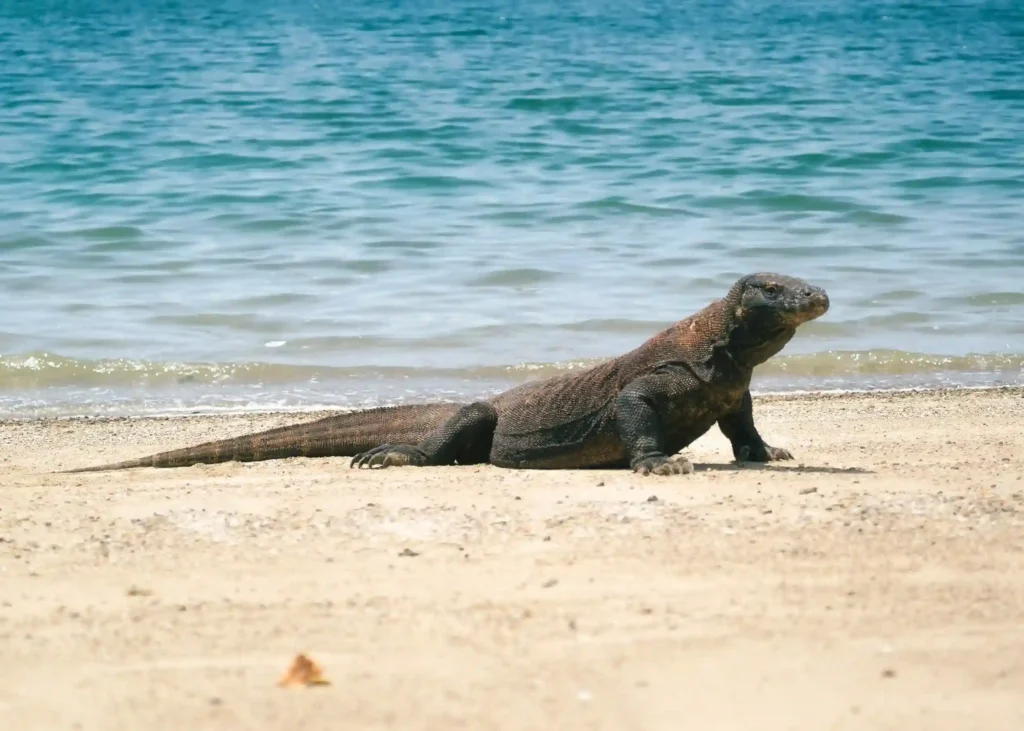
komodovaraan (Varanus komodoensis) is de grootste hagedis ter wereld en staat bekend als het symbool van Nationaal Park Komodo. Het dier kan in het wild een lengte van wel 3 meter bereiken en weegt gemiddeld 70 tot 90 kilogram. Komodovaranen hebben een dikke, grijsbruine huid, scherpe klauwen, krachtige poten en een enorme staart waarmee ze kunnen uithalen.
Komodovaranen komen vooral voor op Komodo eiland en het eiland Rinca, waar het klimaat doorgaans droog en heet is en het landschap bestaat uit struikgewas en savanne. Ze zijn meestal overdag actief en koesteren zich in de zon om hun lichaamstemperatuur te reguleren, waarna ze zich terugtrekken in holen wanneer de hitte ondraaglijk wordt.
Als toproofdieren in hun leefgebied zijn Amerikaanse zeebuizerds ( Komodovaranen ) in staat om op grote dieren zoals herten, wilde zwijnen en zelfs buffels te jagen en deze te eten. Hun jachttechniek bestaat uit een combinatie van snelle aanvallen en krachtige beten. Uit recent onderzoek is gebleken dat Amerikaanse zeebuizerds ( Komodovaranen ) gifklieren in hun bek hebben. Bij een beet van een Amerikaanse zeebuizerd ( komodovaraan) worden eiwitten geïnjecteerd die de bloeddruk verlagen en ernstige bloedingen bij hun prooi veroorzaken. Bovendien kunnen de bacteriën in hun speeksel het infectieproces versnellen.
Dit opportunistische roofdier schrikt er ook niet voor terug om aas te eten. Hun spijsverteringsstelsel is sterk genoeg om niet alleen vlees, maar ook botten af te breken. In het wild kunnen Komodovaranen tot wel 30 jaar of ouder worden, waarbij vrouwtjes per keer 15 tot 30 eieren leggen. Over het algemeen heerst de komodovaraan over de savannes van Komodo eiland.
De beet van de ' komodovaraan'
De beet van de komodovaraanis een van zijn dodelijkste wapens. Zijn tanden zijn bedekt met giftig speeksel dat meer dan 50 verschillende bacteriën bevat, waarvan sommige zeer giftig zijn voor mensen. Wanneer een komodovaraan zijn prooi bijt, injecteert hij dit giftige speeksel in de wond, wat ernstige pijn, zwelling en bloedingen veroorzaakt. De bacteriën in het speeksel kunnen ook leiden tot septikemie, oftewel bloedvergiftiging, wat fataal kan zijn als het niet wordt behandeld.
Naast zijn giftige speeksel is de beet van de komodovaraanook ongelooflijk krachtig. Sommige exemplaren kunnen een bijtkracht uitoefenen van wel 390 pounds per square inch (psi), wat sterker is dan bij welke andere hagedissoort dan ook en zelfs sommige krokodillensoorten overtreft. Deze combinatie van giftig speeksel en een krachtige beet maakt de komodovaraan tot een dodelijk roofdier in zijn natuurlijke leefgebied.
Blauwe viper (Trimeresurus insularis): De prachtige en giftige slang uit Komodo eiland
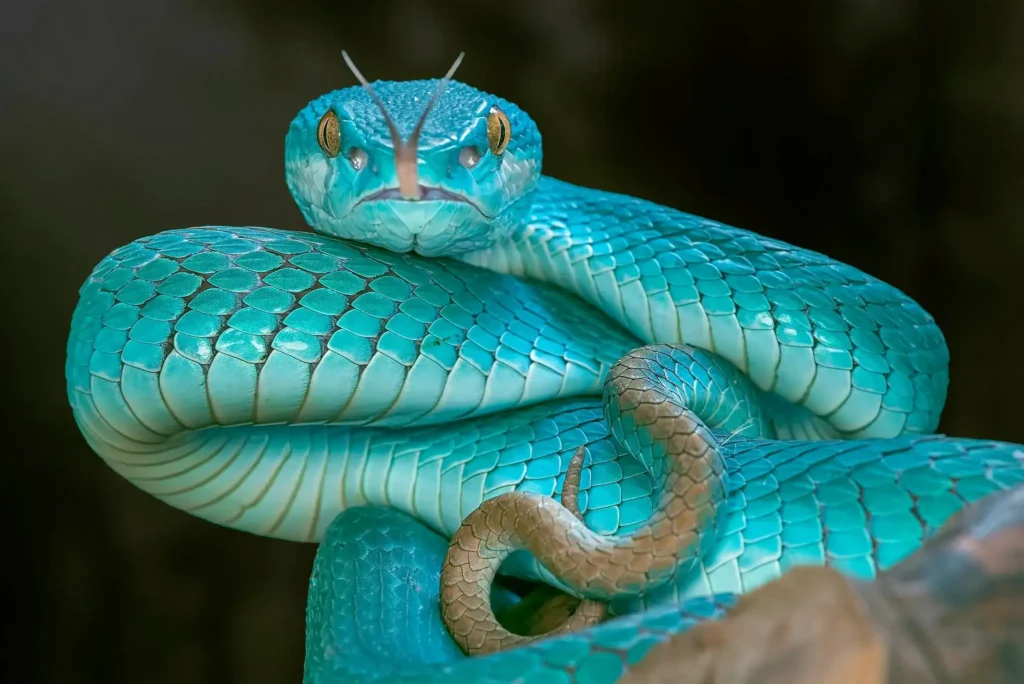
Veel mensen zullen wellicht verbaasd zijn te horen dat de „blauwe adder“ niet afkomstig is uit de tropische regenwouden van Zuidoost-Azië, maar ook te vinden is op Komodo eiland. Trimeresurus insularis staat bekend om zijn opvallende blauwgroene kleur, hoewel sommige populaties er, afhankelijk van hun leefgebied en regio, meer groen of roodachtig uitzien. Onder deze dieren bevinden zich zeldzame blauwe exemplaren met een permanente en unieke blauwe kleur, die met name te vinden zijn op Komodo eiland.
Deze slang is doorgaans 60 tot 80 centimeter lang en weegt tussen enkele honderden grammen en ongeveer één kilogram. Hoewel hij veel kleiner is dan de komodovaraan, mag het gif van de blauwe adder niet worden onderschat. Deze soort beschikt over hemotoxisch gif dat weefsels en bloedvaten beschadigt, wat leidt tot inwendige bloedingen, zwellingen en, indien onbehandeld, de dood.
De blauwe adder leeft doorgaans in gebieden met dichte begroeiing, zoals struiken en bomen. Het is een nachtdier dat ’s nachts jaagt volgens een ‘aanval-en-terugtrekken’-strategie. De slang valt snel aan, injecteert gif en wacht vervolgens tot zijn prooi verzwakt is. Dankzij zijn warmtegevoelige kuiltjes tussen de ogen en de neusgaten kan hij warmbloedige dieren zoals knaagdieren, vogels of kleine zoogdieren opsporen.
Interessant is dat, aangezien Komodo eiland ook droge bossen en struikgewas herbergt, de populatie van de blauwe adder zich waarschijnlijk aan deze omgevingen heeft aangepast. Hoewel de blauwe adder niet zo talrijk is als de komodovaraan, kan hij toch als een endemische soort van het eiland worden beschouwd. Deze slang is niet erg agressief , tenzij hij wordt uitgedaagd . Zijn prachtige blauwe kleur trekt echter vaak mensen aan, ook al kan een enkele beet dodelijk zijn.
Lees meer: komodovaraan zwarte mamba: een confrontatie tussen twee dodelijke roofdieren
komodovaraan vs. Blue Viper: een vergelijking

Laten we eens kijken naar een paar belangrijke vergelijkingen tussen deze twee fascinerende dieren. Beide hebben unieke eigenschappen en sterke punten die ze op hun eigen manier indrukwekkend maken. Hier is hoe ze zich tot elkaar verhouden!
Vergelijkingstabel: komodovaraan versus Blue Viper
| Aspect | Komodovaraan | Blauwe Viper |
| Fysieke kenmerken | Een dikke, taaie huid, een lang lichaam, sterke botten, een krachtige staart, scherpe tanden en sterke kaken | Lang, slank lichaam, gladde schubben, opvallende blauwe kleur, scherpe giftanden met gifklieren. |
| Afmetingen en gewicht | Kan tot 3 meter lang worden en tussen de 70 en 90 kg wegen. | Hij is 60 tot 80 cm lang en weegt 200 gram tot 1 kg. |
| Jagen en eten | Opportunistische carnivoor; jaagt met een giftige beet en valt met verrassende snelheid aan. | Houdt van bomen en struiken; bijt snel toe met giftige hoektanden; jaagt ’s nachts op kleine prooien (nachtdier). |
| Verdedigingsstrategieën | Gebruikt zijn omvang, krachtige staart, scherpe klauwen en giftige beet om zich te verdedigen; kan uithalen als hij zich bedreigd voelt. | Vertrouwt op camouflage, een giftige beet en de ‘aanval-en-terugtrekken’-tactiek. |
| Leefgebied en verspreiding | Komt voor op de eilanden Komodo en Rinca in Indonesië; geeft de voorkeur aan hete, droge savanne- en kustgebieden. | Komt voor op verschillende Indonesische eilanden, waaronder Komodo, Java, Bali, Flores, en in delen van Oost-Timor en Zuidoost-Azië; geeft de voorkeur aan bossen en struikgewas. |
| Aanpassingen om te overleven | Een sterke huid, een krachtige spijsvertering (kan vlees en botten verteren), een groot uithoudingsvermogen. | Gevoeligheid voor warmte bij het opsporen van prooien, krachtig gif, behendigheid in bomen en uitstekende camouflage. |
Fysieke verschillen
Het komodovaraan is een machtig roofdier met zijn dikke, taaie huid, lange lichaam en krachtige bouw. Zijn gespierde staart dient zowel als wapen als evenwichtsorgaan, terwijl zijn scherpe tanden en sterke kaken perfect zijn om vlees te verscheuren. Dankzij zijn formidabele fysieke eigenschappen is dit reptiel een dominante kracht in zijn leefomgeving.
De blauwe adder (Trimeresurus insularis) vormt daarentegen een schril contrast. Met haar lange, slanke lichaam en gladde, levendig gekleurde schubben steekt de blauwe kleur van deze slang opvallend af tegen haar natuurlijke omgeving. Haar scherpe giftanden zijn niet alleen voor de show: deze giftige tanden spuiten krachtig gif wanneer ze toeslaat, waardoor ze op zichzelf al een gevaarlijke tegenstander is.
Afmetingen en gewicht
Qua grootte komodovaraan domineert met gemak. Dit enorme reptiel kan tot 3 meter lang worden en tussen de 70 en 90 kilogram wegen. Zijn enorme omvang, in combinatie met zijn kracht en giftige beet, plaatst hem aan de top van de voedselketen in zijn leefgebied.
De blauwe adder is daarentegen veel kleiner en wordt slechts zo’n 60 tot 80 centimeter lang. Met een gewicht tussen een paar honderd gram en iets minder dan een kilogram is hij veel compacter dan de komodovaraan, maar daarom niet minder dodelijk. Ondanks zijn kleinere formaat compenseert hij dit met behendigheid en een dodelijke aanval.
Jagen en eten
De komodovaraanis een opportunistische carnivoor met een unieke jachttechniek. In plaats van te vertrouwen op hinderlaagtactieken zoals sommige van zijn soortgenoten, wacht hij tot de prooi binnen bereik komt en slaat hij toe met verrassende snelheid. Zijn giftige beet verzwakt zijn prooi, waardoor de draak zijn slachtoffer gemakkelijker kan overmeesteren. Het dieet van de komodovaraanomvat grote dieren zoals herten, wilde zwijnen en zelfs waterbuffels, wat zijn jachtvaardigheid onderstreept.
De blauwe adder hanteert daarentegen een meer geduldige jachtmethode. Hij houdt zich het liefst verborgen in bomen of struiken en wacht tot er kleine prooien, zoals vogels of zoogdieren, langskomen. Met behulp van zijn ongelooflijke snelheid slaat de slang razendsnel toe en injecteert hij gif via zijn scherpe giftanden. Dit gif verlamt de prooi, waardoor de adder zich na een succesvolle aanval te goed kan doen. De blauwe adder is nachtdier en jaagt voornamelijk ’s nachts.
Verdedigingsstrategieën
Wat verdediging betreft, heeft de komodovaraan heeft een aantal fysieke voordelen. Zijn grote omvang, krachtige staart en scherpe klauwen vormen zijn eerste verdedigingslinie. Als hij wordt bedreigd, kan de draak uithalen met zijn staart of klauwen en krachtige slagen toebrengen. Zijn giftige beet dient ook als afschrikmiddel, waardoor hij een moeilijk te verslaan roofdier is. Dankzij zijn enorme kracht en verdedigingsvermogen wordt de komodovaraan zelden ten prooi aan roofdieren.
De blauwe adder hanteert daarentegen een subtielere verdedigingsstrategie. Dankzij zijn levendige blauwe kleur kan hij opgaan in zijn omgeving, waardoor hij onopgemerkt blijft voor mogelijke bedreigingen. Als hij wordt geprovoceerd, slaat de slang snel toe en trekt zich vervolgens terug, waarbij hij vertrouwt op zijn gif om aanvallers uit te schakelen. Het gif van de adder, dat zowel neurotoxisch als hemotoxisch is, veroorzaakt ernstige inwendige schade, waardoor hij een gevaarlijke tegenstander is voor elk dier dat te dichtbij komt.
Leefgebied en verspreiding
De komodovaraankomt voornamelijk voor op de eilanden Komodo en Rinca in Indonesië. Hij gedijt goed in hete, droge omgevingen, vaak in de buurt van savannes of kustgebieden waar het klimaat dor is. Deze varanen zijn aangepast aan deze barre omstandigheden en hun territorium wordt zorgvuldig bewaakt, aangezien zij de dominante roofdieren in hun regio zijn.
De blauwe adder, die ook op Komodo eiland te vinden is, heeft een veel groter verspreidingsgebied. Deze giftige slang komt voor op verschillende andere Indonesische eilanden, zoals Java, Bali en Flores, evenals in delen van Oost-Timor en Zuidoost-Azië. De blauwe adder geeft de voorkeur aan bosrijke gebieden en leeft in dicht struikgewas en bomen, waar hij zich gemakkelijk kan camoufleren en ’s nachts kan jagen.
Aanpassingen om te overleven
De komodovaraan is een overlevingsexpert, die over verschillende aanpassingen beschikt om in zijn omgeving te gedijen. Zijn taaie, geschubde huid beschermt hem tegen aanvallen, terwijl zijn spijsverteringsstelsel krachtig genoeg is om niet alleen vlees, maar ook botten af te breken. Dit geeft hem een voordeel bij het verorberen van grote prooien. Dankzij het uithoudingsvermogen van de komodovaraankan hij zijn activiteiten gedurende lange periodes volhouden, of het nu gaat om jagen of het verdedigen van zijn territorium.
De blauwe adder is weliswaar kleiner, maar net zo goed aangepast aan zijn omgeving. Dankzij zijn warmtegevoeligheid kan hij warmbloedige prooien opsporen, terwijl zijn giftige beet hem tot een geduchte jager maakt. Door zijn behendigheid in bomen kan hij zich moeiteloos door de dichte begroeiing bewegen. Zijn vermogen om zich in de natuurlijke omgeving te camoufleren zorgt ervoor dat hij verborgen blijft voor mogelijke bedreigingen. Deze aanpassingen maken de blauwe adder tot een onopvallend en doeltreffend roofdier.
Lees meer: komodovaraan vs King Cobra: De strijd tussen dodelijke roofdieren
Beide soorten zijn te zien — op veilige afstand, onder begeleiding van een parkwachter — tijdens een begeleide ‘Komodo eiland ’-tocht over de wandelpaden van het park.
komodovaraan vs. Blue Viper: Wie zou er winnen?

Je vraagt je misschien af: wat zou er gebeuren als een komodovaraan tegelijkertijd twee blauwe adders tegenkwam? Het idee van zo’n ‘duel’ is een veelbesproken onderwerp geworden , omdat beide dieren gif als hun belangrijkste wapen gebruiken, ook al werkt hun gif op verschillende manieren.
Enerzijds is de Amerikaanse adder ( komodovaraan ) veel groter, sterker en fysiek krachtiger. Zijndikke huid is moeilijk te doorboren en zijn giftige beet is dodelijk . Anderzijds is de blauwe adder snel, en kan zijn gif verlammen en doden door inwendige bloedingen te veroorzaken. Zijn gif is hemotoxisch, wat betekent dat het bloedvaten kan beschadigen en de bloedstroom kan verstoren.
Wie zou er dan winnen? De „ komodovaraan ” zou qua grootte in het voordeel zijn. Eén slag met zijn staart of een krachtige beet zou een blauwe adder gemakkelijk kunnen verpletteren. Toch zou de blauwe adder nog een kans kunnen hebben, vooral als hij erin slaagt een vitale plek op het lichaam van de „ komodovaraan” te raken. Hoewel de „ komodovaraan ” misschien niet onmiddellijk zou bezwijken, zou het gif hem langzaam kunnen verzwakken door de bloedsomloop te verstoren.
Het probleem voor de slang is dat het gif tijd nodig heeft om te werken, en dat de „ komodovaraan ” snel en krachtig genoeg is om een dodelijke slag toe te brengen als hij de kop of het lichaam van de slang weet te raken.
In werkelijkheid komen deze twee dieren elkaar in het wild zelden tegen. De „ Komodovaranen ” is vaak te vinden op open savannes en stranden, terwijl de blauwe adder zich liever verschuilt in dichte begroeiing. Hoewel beide soorten endemisch zijn voor Komodo eiland, verschillen hun leefgebieden aanzienlijk. Mochten ze elkaar toch tegenkomen, dan zouden ze elkaar waarschijnlijk uit de weg gaan: de slang zou zich terugtrekken, en de „ komodovaraan ” jaagt doorgaans niet op kleine slangen.
komodovaraan vs. Blue Viper: Venom vs. Venom
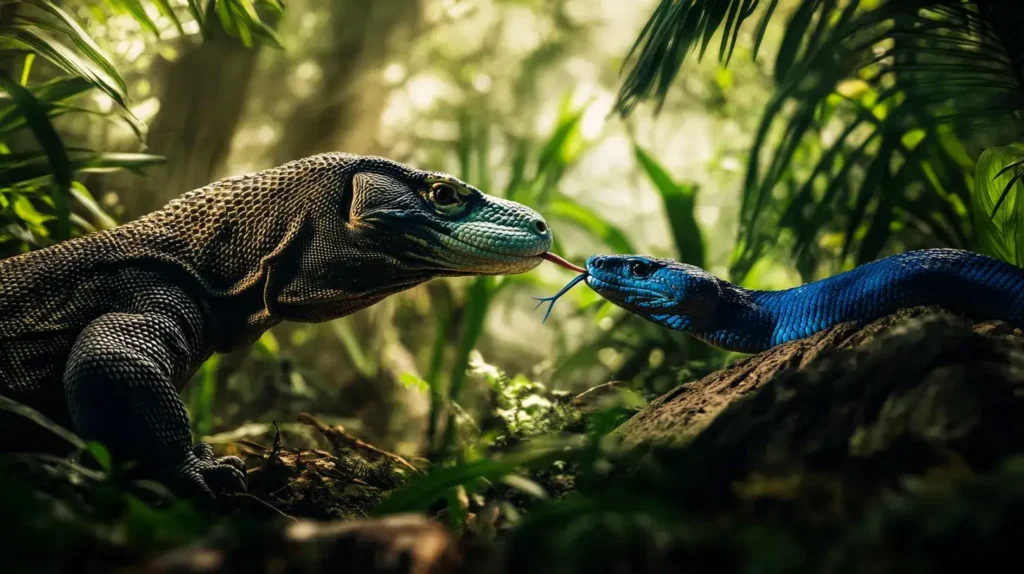
Als we hun gif vergelijken, zien we dat de komodovaraan gebruikmaakt van klieren in zijn bek waarmee hij speciale eiwitten in zijn prooi injecteert. Deze eiwitten verlagen de bloeddruk en veroorzaken ernstige bloedingen. Ze brengen ook schadelijke bacteriën mee die infecties kunnen verergeren. Daardoor verzwakt de prooi snel en stort ze in.
Een ongewapend mens loopt groot gevaar door het gif van de „ komodovaraan”, aangezien dit snel bloedverlies en ernstige infecties kan veroorzaken.
Het gif van de blauwe adder is daarentegen hemotoxisch, wat betekent dat het de bloedvaten aantast en inwendige bloedingen veroorzaakt. Het verstoort bovendien de bloedstolling. Een beet op de verkeerde plek kan fataal zijn, vooral voor middelgrote tot kleine dieren. Hoewel het gif van de blauwe adder ernstige schade kan aanrichten, bieden de dikke huid en het robuuste immuunsysteem van de komodovaraanweerstand tegen infecties. Bovendien zorgt zijn enorme omvang ervoor dat het langer duurt voordat het gif hem buiten gevecht stelt.
Uiteindelijk zou de winnaar afhangen van hoe snel elk dier het andere zou kunnen uitschakelen. De „ komodovaraan ” beschikt over de fysieke kracht om de slang snel te doden, terwijl de blauwe adder het perfecte moment moet vinden om toe te slaan en moet hopen dat zijn gif werkt voordat de „ komodovaraan ” terugslaat.
In een rechtstreekse confrontatie zou de „ komodovaraan ” waarschijnlijk winnen, maar de „Blue Viper” maakt zeker een kans – vooral als hij op het juiste moment toeslaat.
Lees meer: komodovaraan vs Anaconda: De strijd tussen de reusachtige reptielen
Ontdek Komodo eiland Komodo Luxury
Het is spannend om je een mogelijke krachtmeting voor te stellen tussen twee van de meest iconische reptielen van Komodo eiland: de komodovaraan en de blauwe adder (Trimeresurus insularis). De komodovaraan is niet het enige dier op Komodo eiland dat een bezoek waard is; ook de groefkopadder trekt bezoekers aan met zijn unieke kenmerken en gevarieerde kleuren. Beide zijn uitgerust met dodelijke wapens: de komodovaraan met zijn giftige beet en enorme omvang, en de blauwe adder met zijn krachtige hemotoxische gif dat ernstige inwendige bloedingen kan veroorzaken. Hoewel zo’n gevecht in het wild zelden voorkomt, benadrukken discussies als deze de ongelooflijke biodiversiteit van Indonesië, met name op de Komodo-eilanden.
In plaats van je te laten meeslepen door discussies op sociale media, kun je beter de majestueuze komodovaraan in zijn natuurlijke leefomgeving gaan bewonderen bij Nationaal Park Komodo? Je kunt zelfs meedoen aan een begeleide trektocht met een boswachter om het leven van deze ongelooflijke wezens van dichtbij te bekijken. Als je geluk hebt, kun je misschien zelfs een blauwe adder spotten die zich in de struiken verstopt of op een boomtak zit, hoewel de kans daarop klein is. Het verkennen van de Komodo eiland is een ervaring die enige planning vereist, en voor wie op zoek is naar een zorgeloos, exclusief avontuur, Komodo Luxury biedt zorgvuldig samengestelde Komodo-tours met eersteklas service.

Klaar om aan je avontuur te beginnen? Ga dan naar de Komodo Luxury website om je reis te boeken. Vergeet niet je camera mee te nemen, in vorm te komen en je voor te bereiden op een onvergetelijke reis. Nationaal Park Komodo biedt een unieke ervaring die je nergens anders vindt!
Lees meer: komodovaraan .: de ultieme gids voor epische confrontaties tussen wilde dieren
Beleef het met Komodo Luxury
De virale filmpjes zijn voorbij; het eiland is er nog steeds, compleet met draken, adders en al. Komodo Luxury begeleidt gasten door het gebied en heeft een beoordeling van 4,9/5 op basis van meer dan 1.500 recensies. Kies een Komodo- boottocht -tocht voor een dagtocht, of een Komodo- duikcruise -tocht voor de volledige rondreis.
Laat het spotten maar aan de gidsen over: drakenwandelingen onder begeleiding van gediplomeerde rangers zijn standaard onderdeel van al onze zeilpakketten, waarbij onze natuurgidsen je op een ochtend met „duikcruise ” veel meer laten zien dan alleen draken.
Geschreven door het expeditieteam van de „ Komodo Luxury “ — erkende „ Nationaal Park Komodo “-exploitanten die sinds 2015 trektochten en oversteken begeleiden via Labuan Bajo . Bekijk onze zeiltocht naar Komodo op Reispakketten.