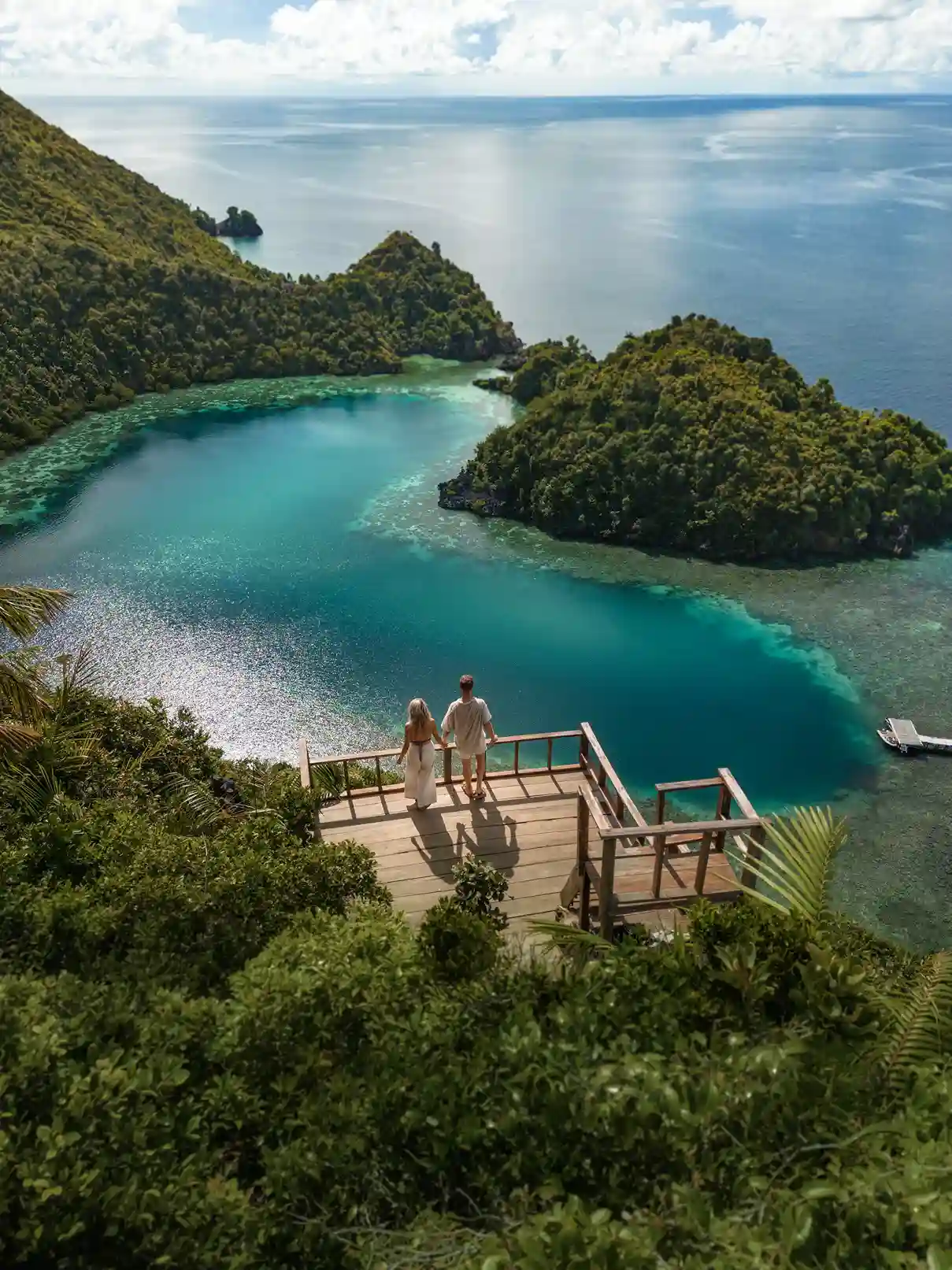


Zwem met de reuzen


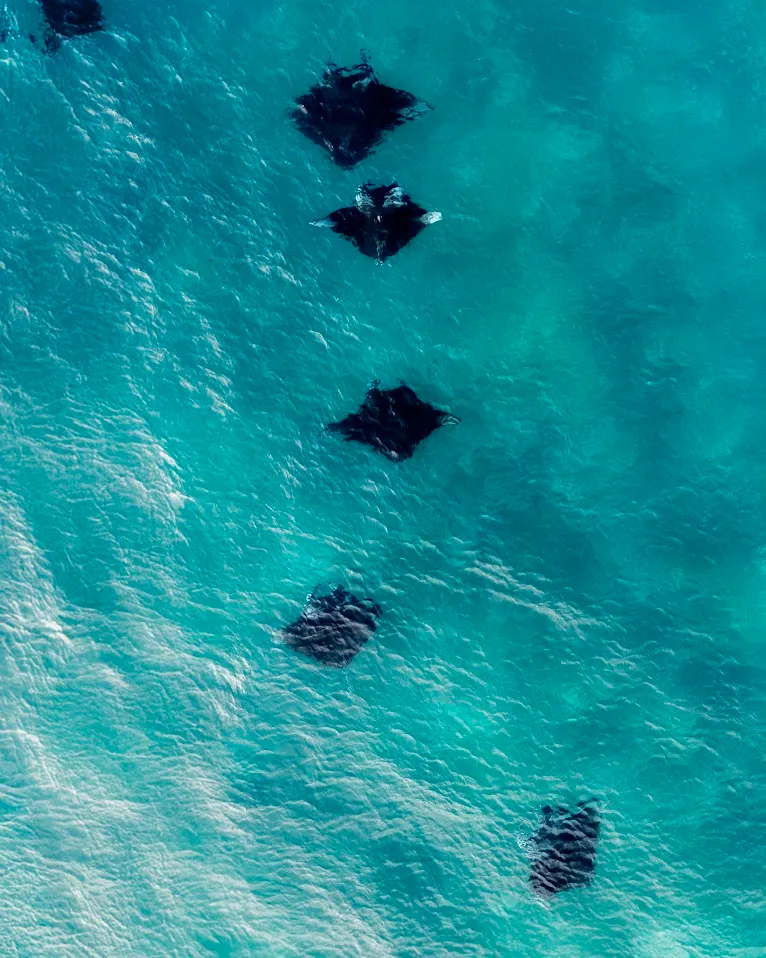
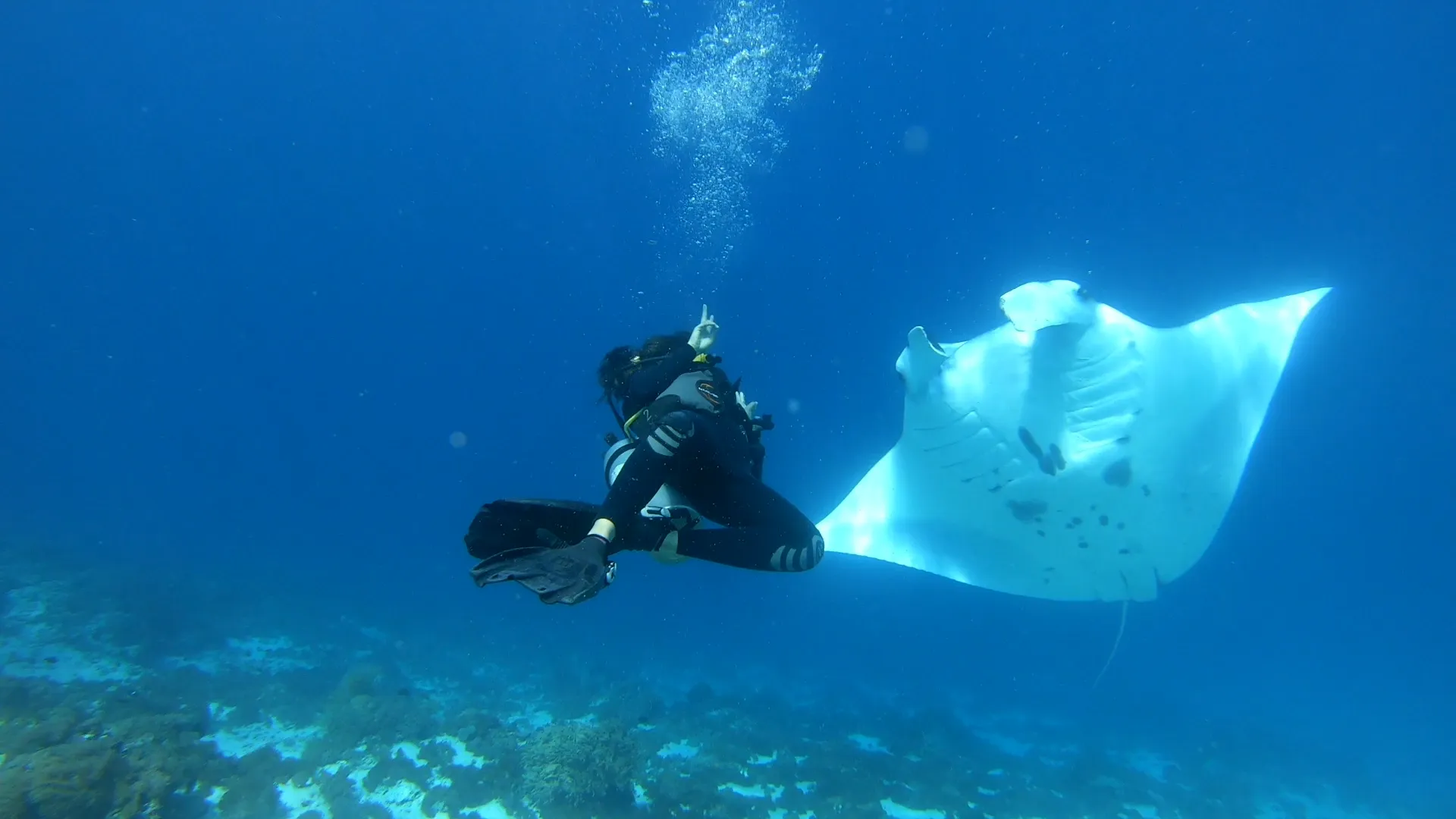
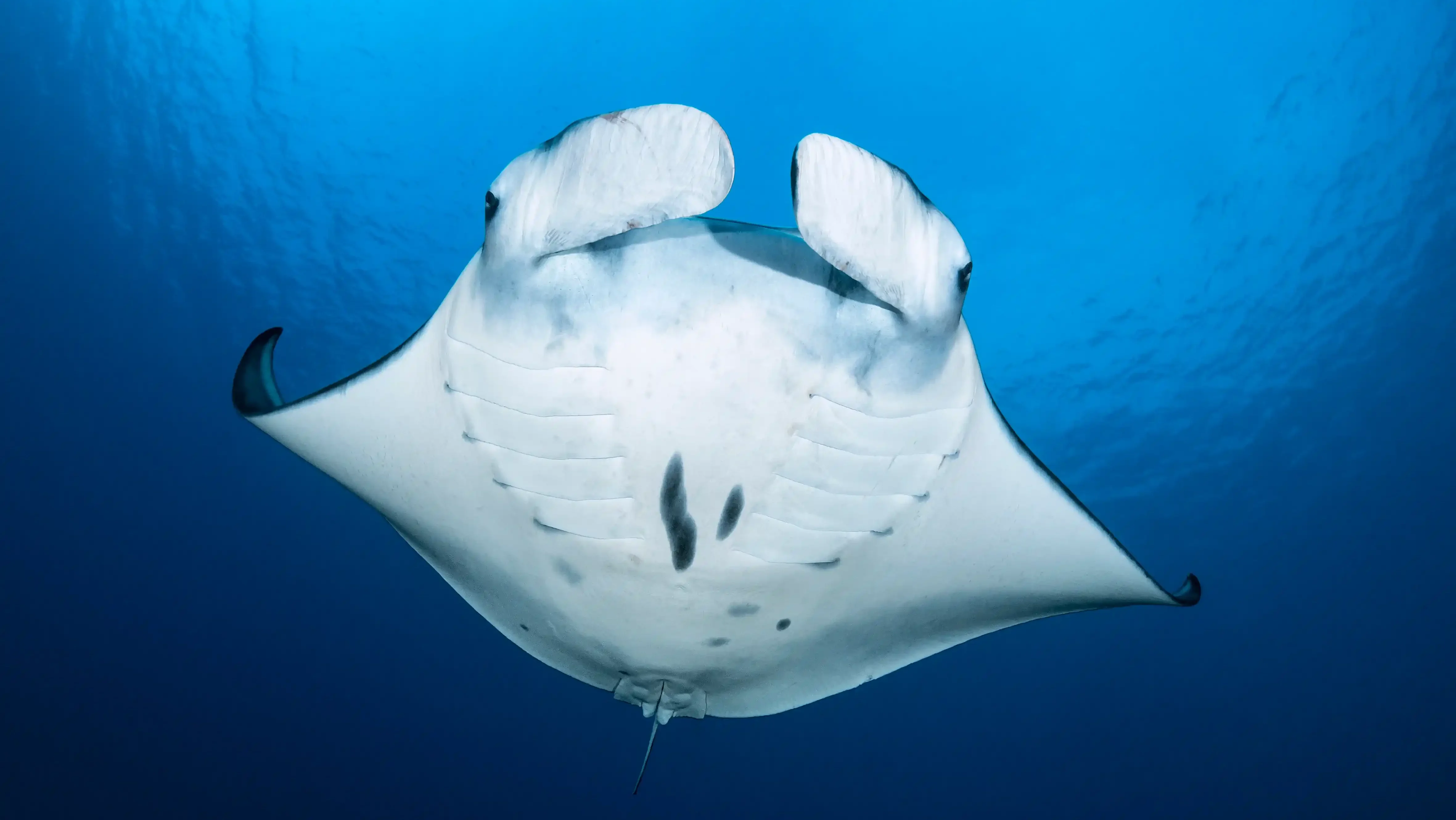
| Wat het is | Karang Makassar — a kilometers-long shallow reef bank in the channel east of Komodo Island |
|---|---|
| Depth | Rubble-and-sand plateau in roughly 5–15 m of water |
| Toegang | ±1.5 hr by speedboat from Labuan Bajo; minutes from Taka Makassar |
| Seizoen | Sightings year-round; largest feeding aggregations December–March |
| Formaat | Drift by snorkel or scuba; guides read the tide and set the line |
| Full positions | See our Komodo National Park map |
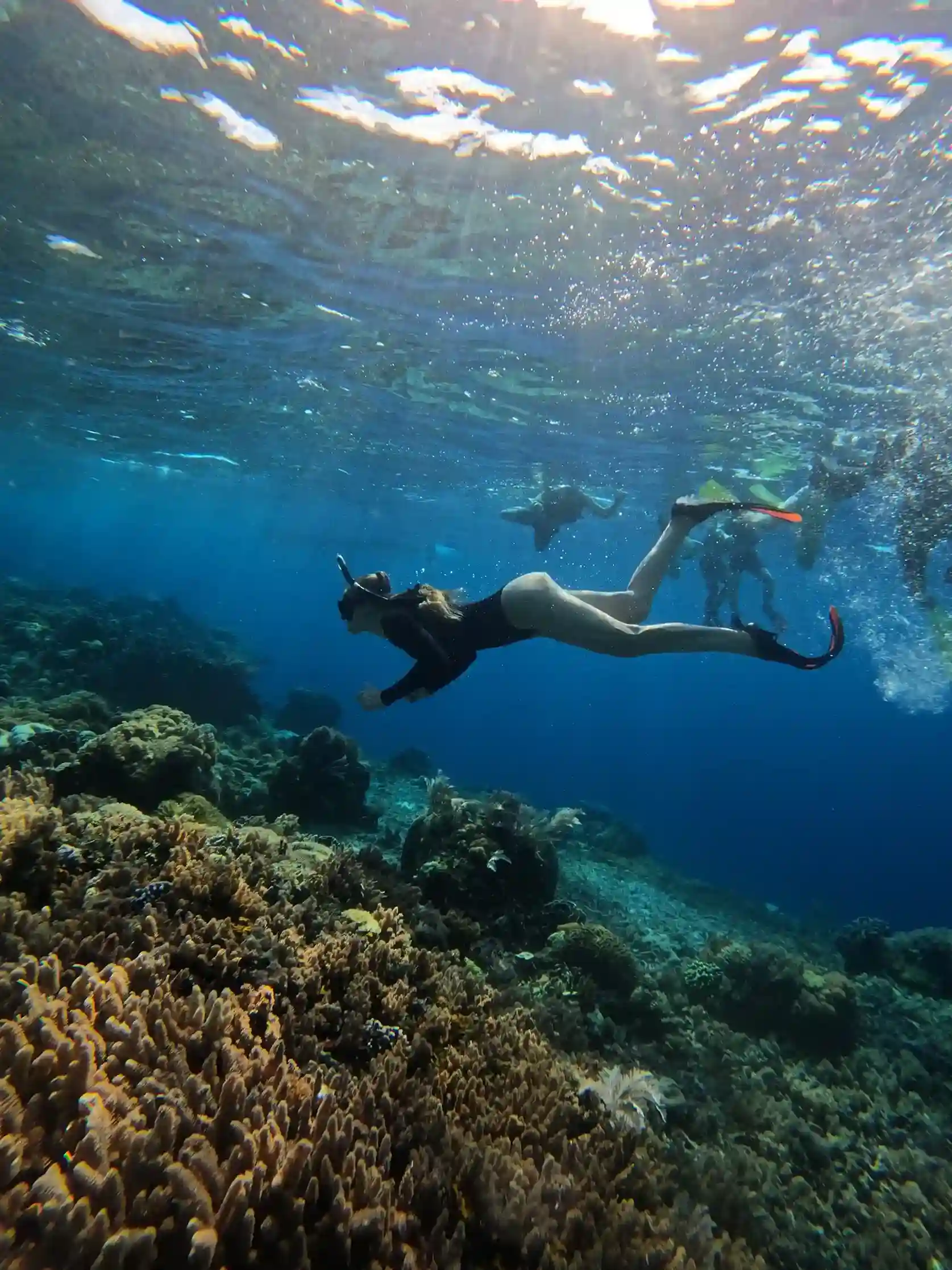
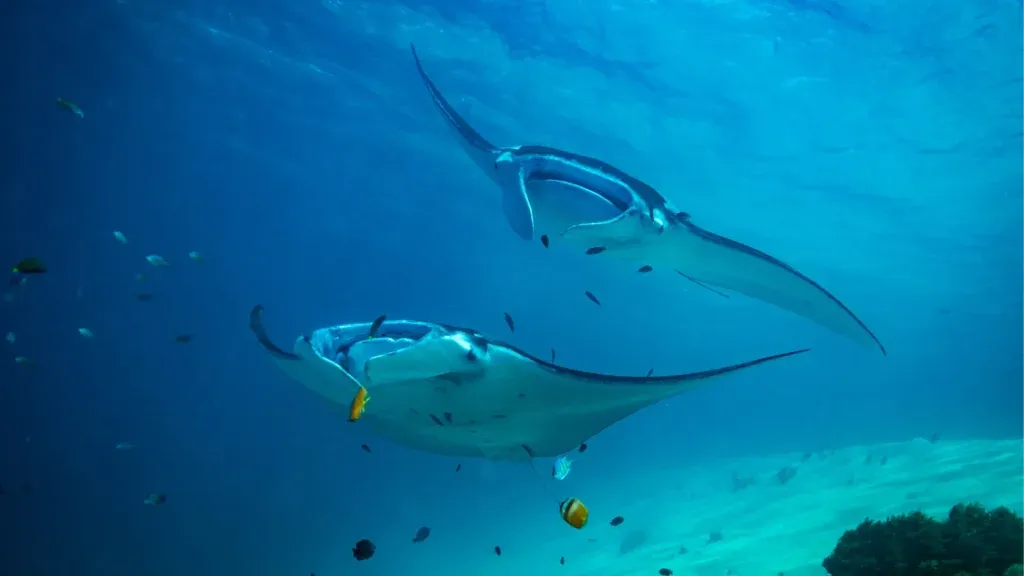
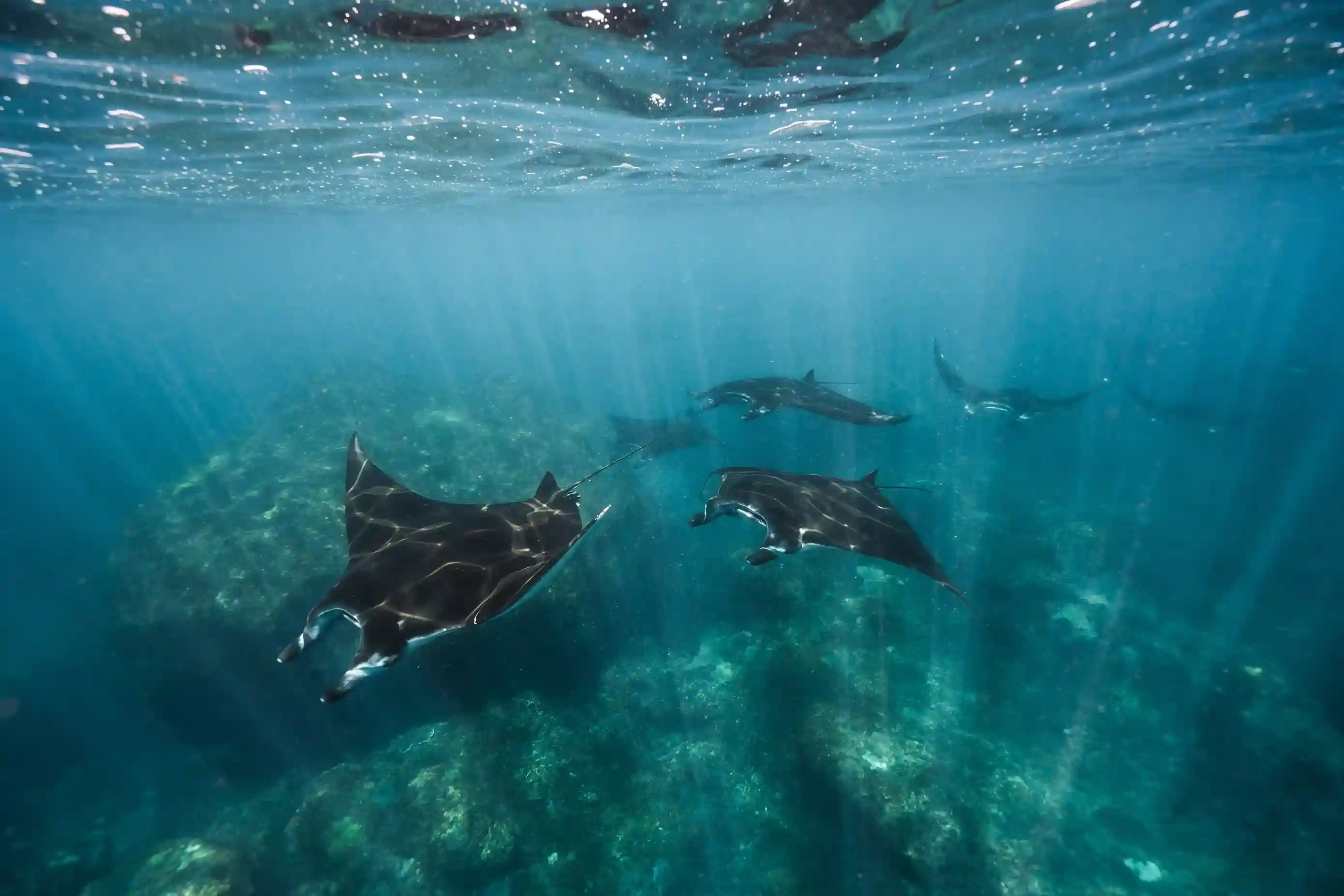
The mantas of Karang Makassar are reef manta rays, Mobula alfredi — filter feeders with wingspans commonly in the 3–4 m range, no barb and no teeth of concern. Each carries a unique pattern of spots on its belly, which is how researchers photo-identify individuals; Komodo’s protected waters are one of Indonesia’s strongholds for the species, and manta rays have been legally protected across Indonesian waters since 2014 — one of the largest manta sanctuaries in the world. They come to the plateau for two services: plankton carried on the tide, and cleaning stations where small wrasse pick their skin and gills clean.
| Factor | Drift snorkel | Scuba dive |
|---|---|---|
| View | Mantas gliding below and rising to the surface to feed | Eye-level at the cleaning stations |
| Skill needed | Confident open-water swimming; fins mandatory | Comfort with drift diving and hook-free buoyancy |
| Best tide | Moderate flow, feeding lines near surface | Slack-to-building tide at the stations |
| Time in water | 20–40 min per drift, repeatable | ±50 min, one pass |
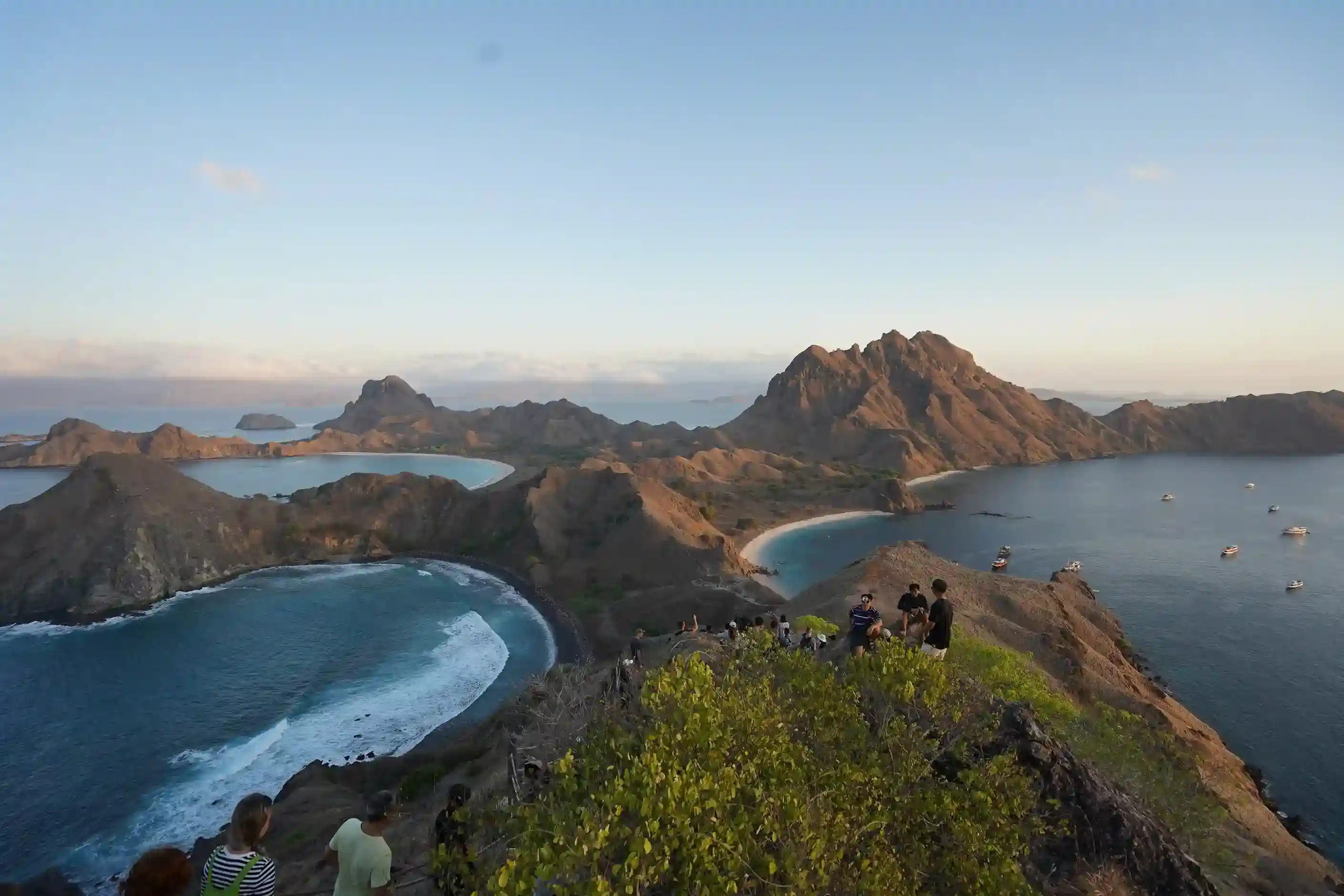
Honest operators say it plainly: Karang Makassar is a wild aggregation site, not an aquarium, and one drift in perfect conditions can still come up empty. The site itself softens the risk — the drift over the rubble bank turns up turtles, eagle rays, reef sharks resting in the rubble and thick snapper schools even on a manta-less pass — and geography does the rest: Taka Makassar is 10–15 minutes away for the surface interval, and a second drift on the next tide window is standard practice on our charters rather than a favor. Over a two- or three-day route the odds compound in your favor; that, more than luck, is why liveaboard guests almost always leave with their manta. The classic day loop runs Padar viewpoint at first light, Pink Beach mid-morning, Manta Point on the tide, then the sandbar — and snorkelers who want a calmer second water stop finish at Siaba’s turtle seagrass beds.
Plan your visit: Komodo Luxury (PT Komodo Bahari Nusantara, sailing Komodo since 2015) operates 9 owned phinisi and works with 200+ vetted partner yachts, rated 4.9/5 by more than 1,500 guests. Message our team on WhatsApp at +62 811-3810-8110 or email [email protected] and we will match the right boat and route to your dates.
“Do we get to see sharks and mantas, or only the national park?” is one of the questions we hear most — at Karang Makassar, mantas are resident year-round with the strongest aggregations December to March; see the manta season guide.
Meeslepende ervaringen
Activiteit
Duik langs ongerepte riffen, maak trektochten naar afgelegen eilanden en maak kennis met de wilde dieren tijdens onze luxe zeilreizen.
Exclusieve reizen
Zorgvuldig samengestelde luxereizen
Exclusieve luxe reisroutes, speciaal samengesteld om exclusief meest exclusief en ervaringen Indonesië te ontdekken
Vragen en antwoorden
Nee. Mantaroggen zijn ongevaarlijke filtervoeders zonder giftige stekels en hebben geen interesse in mensen. Ze komen vaak rustig naar zwemmers toe. De enige regel – raak ze niet aan – is bedoeld voor het behoud van de soort, niet voor de veiligheid.
Manta's zijn het hele jaar door aanwezig. De grootste concentraties doen zich voor in september–november, met een tweede piekperiode in februari–april (minder druk). Mei–augustus biedt goede omstandigheden, hoewel het in juli–augustus het drukst is.
Vroeg in de ochtend (vóór 9 uur) is het beste – dan zijn er minder boten en is het rustiger. Privécharters kunnen al eerder naar de locatie varen voor een rustigere ervaring.
Meestal 2 tot 6 mantaroggen per bezoek. Tijdens het hoogseizoen zijn groepen van meer dan 10 dieren mogelijk. Waarnemingen komen zeer regelmatig voor, maar zijn nooit gegarandeerd.
Ja, voor ervaren zwemmers die zich op hun gemak voelen in open water. Ouders dienen te beoordelen of hun kind hier klaar voor is; voor jongere gasten kunnen de voorzieningen worden aangepast.
Niet aanbevolen als je al meer dan 12 maanden niet hebt gedoken. Er kunnen sterke stromingen staan – overweeg dan eerst een opfrisdive (bijvoorbeeld bij Siaba Besar).
Dit staat meestal op het programma van meerdaagse tochten, maar de routes worden aangepast aan de wensen van de gasten, de timing en de omstandigheden. Geef dit van tevoren aan als u hier prioriteit aan wilt geven.
Manta Point Karang Makassar) is een relatief ondiepe duiklocatie, met dieptes die variëren van ongeveer 5 meter bij de ondiepste reinigingsplaatsen tot zo’n 15 meter op het hoofdplateau. Dit ondiepe profiel is een van de kenmerkende eigenschappen van deze locatie: hierdoor zijn mantaroggen zowel voor snorkelaars als voor duikers goed te zien, en zorgt het licht aan de oppervlakte voor uitstekende omstandigheden voor onderwaterfotografie. Je hoeft niet diep te duiken om een geweldige Manta Point te beleven.
Ja — Manta Point een van de weinige plekken ter wereld waar het hele jaar door met zekerheid mantaroggen te zien zijn. Nationaal Park Komodo een vaste populatie van ongeveer 1.200 rifmantaroggen, en de voedselrijke wateren en reinigingsstations bij Karang Makassar trekken ze het hele jaar door aan. De grootste concentraties vinden doorgaans plaats van oktober tot juni, met de hoogste aantallen vaak te zien van november tot maart, wanneer koeler, planktonrijk water de mantaroggen naar de centrale zone trekt. Waarnemingen blijven de rest van het jaar betrouwbaar.
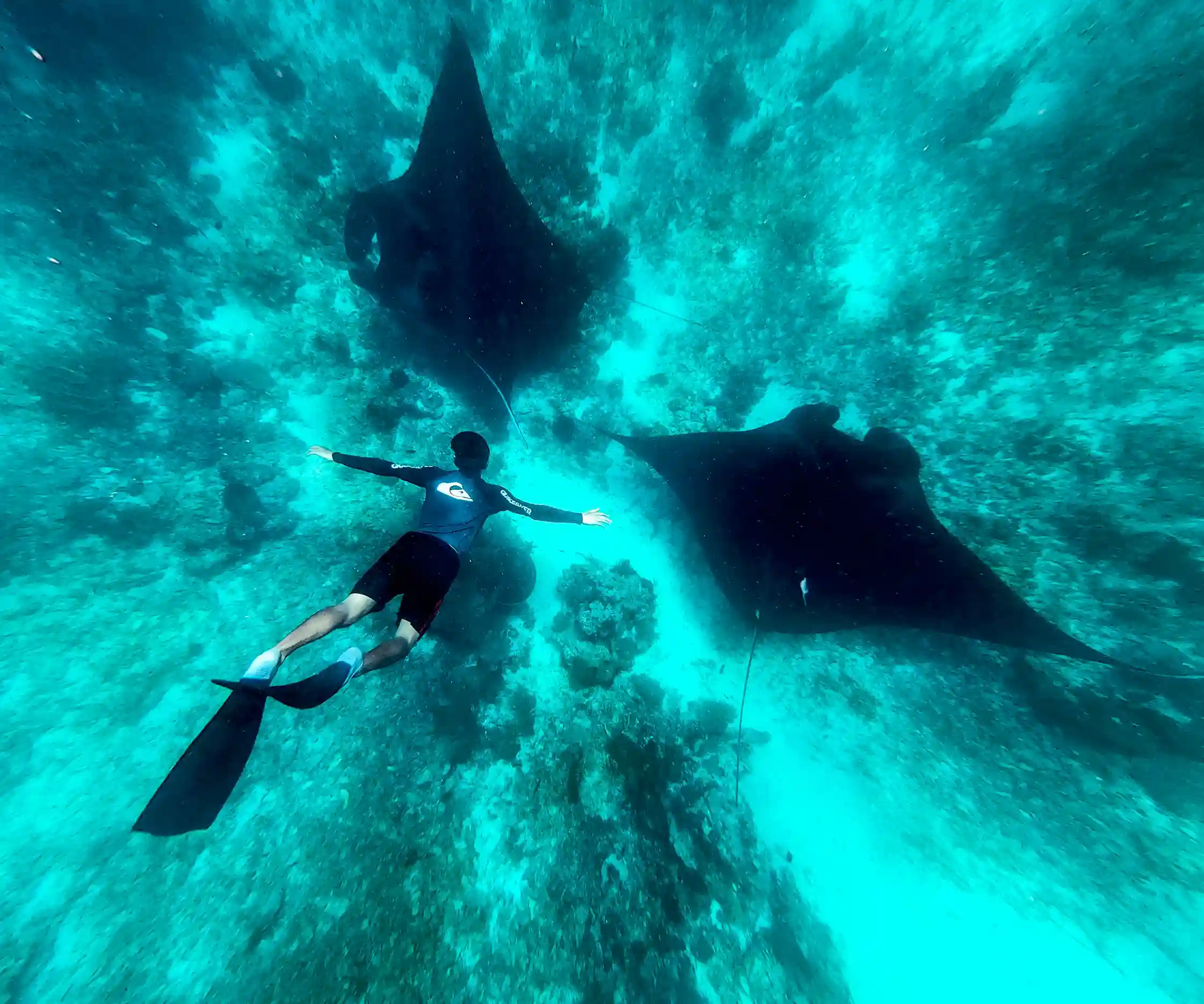
Manta Point — officially Karang Makassar — is a 1.5 km drift over a rubble reef where reef manta rays gather to be cleaned, feed and, in season, train in courtship lines. It is the most reliable place in Komodo National Park to swim alongside mantas: boats drop snorkelers or divers up-current and the drift carries you over the cleaning stations. Sightings happen year-round, with the densest aggregations roughly December to February.
Manta Point is a boat-only site on the standard day-trip loop, usually visited right after Taka Makassar. The crew scans for wingtips from the flybridge, positions up-current, and guests drift the site in small groups. Park tickets apply; see current entrance fees.
High by wildlife standards — Karang Makassar is a cleaning-station aggregation site, not a random encounter spot. No operator can honestly promise a sighting, but most days deliver, and crews will make multiple drift passes when needed.
You should be comfortable in open water — it is a drift, so the current does the work while the boat follows the group. Life jackets and guide escort are standard for snorkelers.
Mantas are present all year. The biggest groups are usually seen from about December to February, when plankton-rich water draws feeding trains to the site.