





Última actualización: noviembre de 2025 · Precios y disponibilidad verificados para la temporada 2026/2027
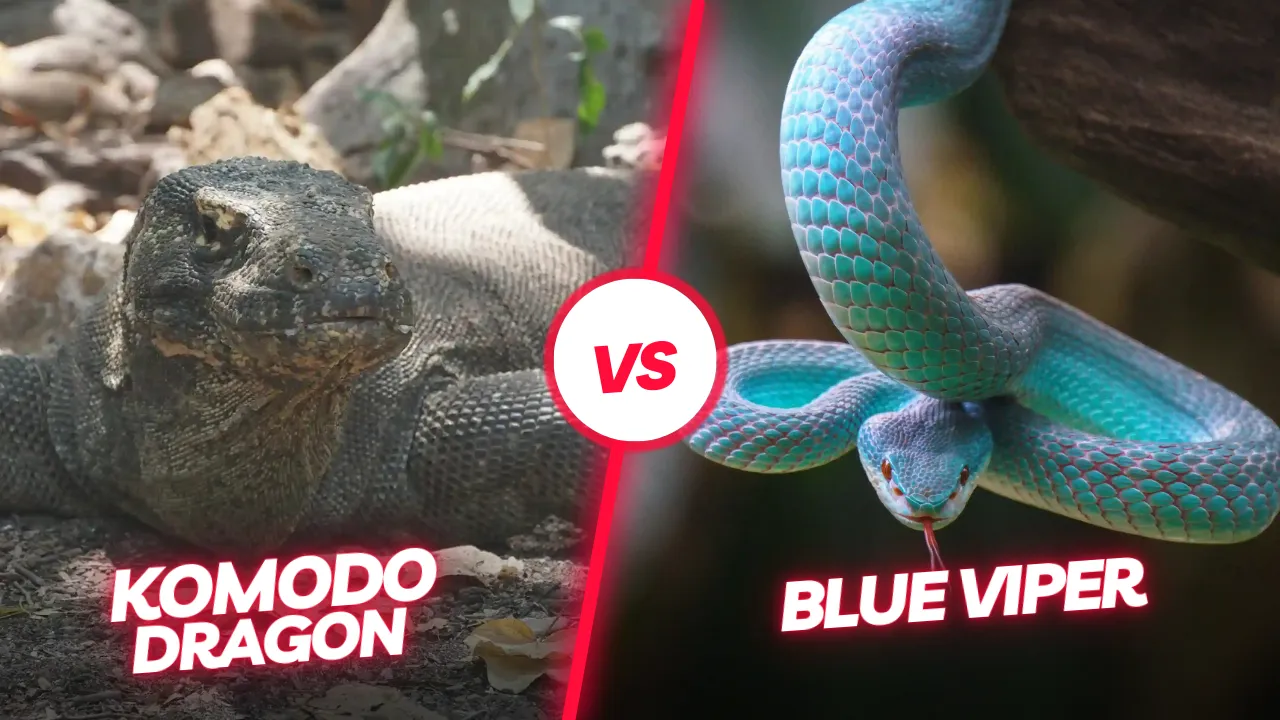
Recientemente, la red social X (antes Twitter) se llenó de comentarios sobre un vídeo en el que, al parecer, se veía a un dragón de Komodo atacado por dos serpientes venenosas azules, conocidas comúnmente como «víboras azules» (Trimeresurus insularis), una especie de víbora de fosa hermosa pero letal. Este incidente desató rápidamente acalorados debates y especulaciones.
Ambos animales forman parte de nuestro programa de excursiones —los dragones a diario y la víbora de labios blancos como nota al margen junto al sendero— en las caminatas guiadas por guardabosques que se incluyen en cada salida de «3 días 2 noches » a Komodo.
Esta comparación la ha escrito Komodo Luxury, el Labuan Bajo operador cuyas tripulaciones han compartido estas islas con ambos reptiles desde 2015.
Muchos empezaron a imaginar una «batalla épica» entre el gigantesco dragón de Komodo la exótica víbora azul, cuyo veneno se considera letal. Y lo que resulta aún más intrigante es que se dice que ambas criaturas son originarias de Isla de Komodo, Indonesia. Esto planteó la pregunta: ¿Podría el poderoso dragón de Komodo—a menudo considerado el «dragón» de Indonesiacaer realmente víctima de la mordedura mortal de la víbora azul? ¿O acaso el dragón de Komodo, con su enorme tamaño, simplemente aplastaría a la serpiente?
Para evitar cualquier confusión, echemos primero un vistazo rápido a las características de estas fascinantes criaturas antes de compararlas para ver «quién ganaría».
dragón de Komodo víbora azul: un reptil gigante con una mordedura venenosa
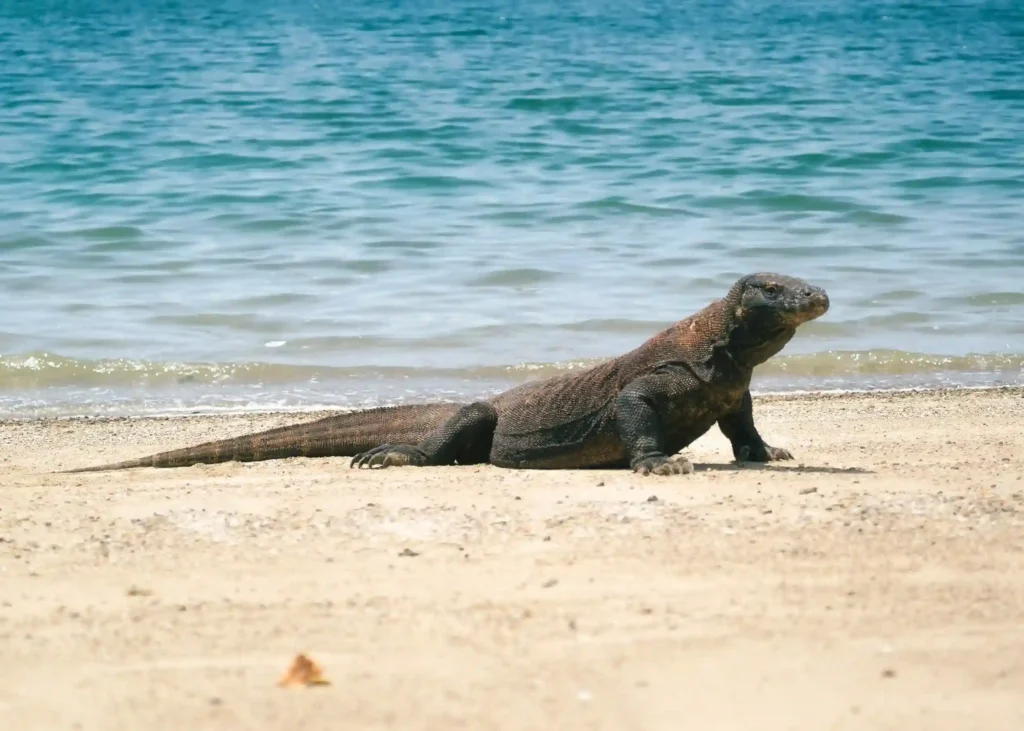
dragón de Komodo (Varanus komodoensis) es el lagarto más grande del mundo y es famoso por ser el símbolo del Parque Nacional de Komodo. Su cuerpo puede alcanzar hasta 3 metros de longitud, con un peso medio de entre 70 y 90 kilogramos en estado salvaje. Dragones de Komodo una piel gruesa de color marrón grisáceo, garras afiladas, patas poderosas y una cola enorme que pueden utilizar para golpear.
Los dragones de Komodo se encuentran principalmente en Isla de Komodo en Rinca , donde el entorno suele ser seco, cálido y está cubierto de matorrales y sabana. Suelen estar activos durante el día, tomando el sol para regular su temperatura corporal antes de retirarse a sus madrigueras cuando el calor se vuelve insoportable.
Como depredadores alfa de su hábitat, Dragones de Komodo capaces de cazar y devorar animales de gran tamaño, como ciervos, jabalíes e incluso búfalos. Su técnica de caza combina ataques rápidos y mordeduras poderosas. Estudios recientes han revelado que Dragones de Komodo glándulas venenosas en la boca. La mordedura dragón de Komodoinyecta proteínas que reducen la presión arterial y provocan hemorragias graves en sus presas. Además, las bacterias presentes en su saliva pueden acelerar la infección.
Este carnívoro oportunista tampoco tiene reparos en alimentarse de animales muertos. Su sistema digestivo es lo suficientemente fuerte como para descomponer no solo la carne, sino también los huesos. En estado salvaje, Dragones de Komodo vivir hasta 30 años o más, y las hembras ponen entre 15 y 30 huevos cada vez. En definitiva, el dragón de Komodo las sabanas de Isla de Komodo.
La mordedura del dragón de Komodo
La mordedura dragón de Komodoes una de sus armas más letales. Sus dientes están recubiertos de una saliva tóxica que contiene más de 50 bacterias diferentes, algunas de las cuales son altamente tóxicas para los seres humanos. Cuando un dragón de Komodo su presa, inyecta esta saliva tóxica en la herida, lo que provoca un dolor intenso, hinchazón y sangrado. Las bacterias presentes en la saliva también pueden provocar septicemia, o envenenamiento de la sangre, que puede ser mortal si no se trata a tiempo.
Además de su saliva tóxica, la mordedura dragón de Komodoes increíblemente potente. Algunos ejemplares pueden ejercer una fuerza de mordida de hasta 390 libras por pulgada cuadrada (psi), lo que es más fuerte que la de cualquier otra especie de lagarto e incluso supera a la de algunas especies de cocodrilos. Esta combinación de saliva tóxica y mordedura potente convierte al dragón de Komodo depredador letal en su hábitat natural.
Víbora azul (Trimeresurus insularis): la hermosa y venenosa serpiente de Isla de Komodo
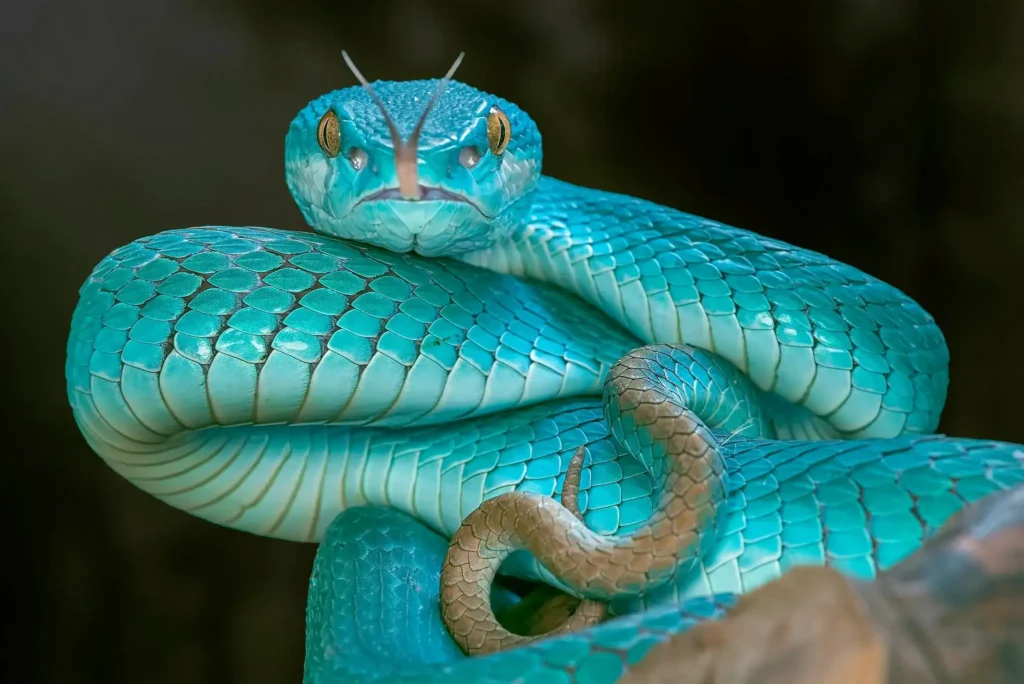
A mucha gente le sorprenderá saber que la «víbora azul» no es originaria de las selvas tropicales del sudeste asiático, sino que también se puede encontrar en Isla de Komodo. La Trimeresurus insularis es conocida por su llamativo color azul verdoso, aunque algunas poblaciones presentan tonos más verdes o rojizos, dependiendo de su hábitat y región. Entre ellas, hay ejemplares azules poco comunes que presentan una coloración azul permanente y única, que se encuentra especialmente en Isla de Komodo.
Esta serpiente suele medir entre 60 y 80 centímetros de longitud y pesa entre unos pocos cientos de gramos y aproximadamente un kilo. Aunque es mucho más pequeña que el dragón de Komodo, no hay que subestimar el veneno de la víbora azul. Esta especie posee un veneno hemotóxico que daña los tejidos y los vasos sanguíneos, provocando hemorragias internas, hinchazón y, si no se trata, la muerte.
La víbora azul suele habitar en zonas con vegetación densa, como matorrales y bosques. Es nocturna y caza por la noche siguiendo una estrategia de «atacar y retirarse». La serpiente ataca rápidamente, inyectando veneno, y luego espera a que su presa se debilite. Sus fosas termorreceptoras, situadas entre los ojos y las fosas nasales, le ayudan a detectar animales de sangre caliente, como roedores, aves o pequeños mamíferos.
Curiosamente, dado que Isla de Komodo cuenta con bosques secos y matorrales, es probable que la población de víboras azules se haya adaptado a estos entornos. Aunque no es tan abundante como el dragón de Komodo, la víbora azul puede considerarse igualmente una especie endémica de la isla. Esta serpiente no es muy agresiva a menos que se la provoque. Sin embargo, su hermoso color azul suele atraer a los humanos, a pesar de que una sola mordedura podría resultar mortal.
Leer Más: dragón de Komodo mamba negra: el enfrentamiento entre dos depredadores letales
dragón de Komodo la víbora azul: una comparación

Veamos algunas comparaciones clave entre estos dos fascinantes animales. Ambos tienen rasgos y puntos fuertes únicos que los convierten en animales formidables por derecho propio. ¡Así es como se comparan!
Tabla comparativa: dragón de Komodo víbora azul
| Aspecto | Dragón de Komodo | Víbora Azul |
| Características físicas | Piel gruesa y resistente, cuerpo alargado, huesos robustos, cola poderosa, dientes afilados y mandíbulas fuertes | Cuerpo largo y esbelto, escamas lisas, llamativo color azul, colmillos afilados con glándulas venenosas. |
| Dimensiones y peso | Puede alcanzar los 3 metros de longitud y pesar entre 70 y 90 kg. | Mide entre 60 y 80 cm de largo y pesa entre 200 gramos y 1 kg. |
| Caza y alimentación | Carnívoro oportunista; utiliza su mordedura venenosa para cazar y ataca con una rapidez sorprendente. | Prefiere los árboles y los arbustos; ataca rápidamente con sus colmillos venenosos; caza presas pequeñas por la noche (es nocturno). |
| Estrategias de defensa | Utiliza su tamaño, su potente cola, sus afiladas garras y su mordedura venenosa para defenderse; puede atacar cuando se siente amenazado. | Se basa en el camuflaje, la mordedura venenosa y la táctica de «atacar y retirarse». |
| Hábitat y distribución | Se encuentra en las islas de Komodo y Rinca en Indonesia; prefiere la sabana cálida y seca y las zonas costeras. | Se encuentra en varias islas de Indonesia, entre ellas Komodo, Java, Bali, Flores, y en algunas zonas de Timor Oriental y el sudeste asiático; prefiere los bosques y los matorrales. |
| Adaptaciones para la supervivencia | Piel resistente, digestión potente (capaz de digerir carne y huesos), gran resistencia. | Sensibilidad al calor para rastrear a sus presas, veneno potente, agilidad en los árboles y excelente camuflaje. |
Diferencias físicas
El dragón de Komodo se erige como un poderoso depredador con su piel gruesa y resistente, su cuerpo alargado y su complexión robusta. Su musculosa cola le sirve tanto de arma como de ayuda para mantener el equilibrio, mientras que sus afilados dientes y sus fuertes mandíbulas son perfectos para desgarrar la carne. Las formidables características físicas de este reptil lo convierten en una fuerza dominante en su entorno.
Por otro lado, la víbora azul (Trimeresurus insularis) ofrece un marcado contraste. Con un cuerpo largo y esbelto y unas escamas lisas y de colores vivos, la coloración azul de esta serpiente destaca sobre su entorno natural. Sus afilados colmillos no son solo para lucirlos: estos dientes venenosos inyectan un potente veneno cuando ataca, lo que la convierte en un adversario peligroso por derecho propio.
Dimensiones y peso
En cuanto al tamaño, el dragón de Komodo domina con facilidad. Este enorme reptil puede llegar a medir hasta 3 metros de largo y pesar entre 70 y 90 kilogramos. Su enorme tamaño, combinado con su fuerza y su mordedura venenosa, lo sitúa en la cima de la cadena alimentaria de su hábitat.
Por el contrario, la víbora azul es mucho más pequeña, ya que mide solo entre 60 y 80 centímetros de longitud. Con un peso que oscila entre unos pocos cientos de gramos y poco menos de un kilo, es mucho más compacta que el dragón de Komodo, pero no por ello menos letal. A pesar de su menor tamaño, lo compensa con su agilidad y un ataque letal.
Caza y alimentación
El dragón de Komodoes un carnívoro oportunista con un enfoque único a la hora de cazar. En lugar de recurrir a tácticas de emboscada como algunos de sus congéneres, espera a que la presa se acerque y ataca con una velocidad sorprendente. Su mordedura venenosa debilita a la presa, lo que facilita que el dragón pueda dominarla. La dieta dragón de Komodoincluye animales de gran tamaño como ciervos, jabalíes e incluso búfalos de agua, lo que pone de manifiesto su destreza como depredador.
Por su parte, la víbora azul adopta un enfoque más paciente a la hora de cazar. Prefiere permanecer oculta entre árboles o arbustos, a la espera de que pasen presas pequeñas, como aves o mamíferos. Aprovechando su increíble velocidad, la serpiente ataca rápidamente e inyecta veneno a través de sus afilados colmillos. Este veneno inmoviliza a su presa, lo que permite a la víbora alimentarse tras un ataque exitoso. La víbora azul es nocturna y caza principalmente durante la noche.
Estrategias de defensa
En lo que respecta a la defensa, el dragón de Komodo cuenta con una serie de ventajas físicas. Su gran tamaño, su poderosa cola y sus afiladas garras constituyen su primera línea de defensa. Si se siente amenazado, el dragón puede atacar con la cola o con las garras, asestando golpes contundentes. Su mordedura venenosa también actúa como elemento disuasorio, lo que lo convierte en un depredador difícil de desafiar. Gracias a su enorme fuerza y a sus capacidades defensivas, el dragón de Komodo rara vez dragón de Komodo presa de otros animales.
Por el contrario, la víbora azul emplea una estrategia de defensa más sutil. Su llamativa coloración azul le ayuda a camuflarse en su entorno, lo que le permite pasar desapercibida ante posibles amenazas. Si se la provoca, la serpiente ataca rápidamente y luego se retira, confiando en su veneno para incapacitar a sus atacantes. El veneno de la víbora, que es neurotóxico y hemotóxico, causa graves daños internos, lo que la convierte en un enemigo peligroso para cualquier criatura que se acerque demasiado.
Hábitat y distribución
El dragón de Komodose encuentra principalmente en las islas de Komodo y Rinca Indonesia. Prospera en entornos cálidos y secos, a menudo cerca de sabanas o zonas costeras donde el clima es árido. Estos dragones se han adaptado a estas duras condiciones y protegen celosamente su territorio, ya que son los depredadores dominantes de su región.
La víbora azul, aunque también se encuentra en Isla de Komodo, tiene una área de distribución mucho más amplia. Esta serpiente venenosa se puede encontrar en otras islas de Indonesia, como Java, Baliy Flores, así como en algunas zonas de Timor Oriental y el sudeste asiático. La víbora azul, que prefiere las zonas boscosas, habita entre la densa maleza y los árboles, donde puede camuflarse fácilmente y cazar por la noche.
Adaptaciones para la supervivencia
El dragón de Komodo un experto en supervivencia, dotado de varias adaptaciones que le permiten prosperar en su entorno. Su piel dura y escamosa le protege de los ataques, mientras que su sistema digestivo es lo suficientemente potente como para descomponer no solo la carne, sino también los huesos. Esto le da una ventaja a la hora de alimentarse de presas de gran tamaño. La resistencia dragón de Komodole permite mantener su actividad durante largos periodos de tiempo, ya sea cazando o defendiendo su territorio.
La víbora azul, aunque más pequeña, está igual de bien adaptada a su entorno. Su sensibilidad al calor le ayuda a rastrear presas de sangre caliente, mientras que su mordedura venenosa la convierte en una cazadora formidable. La agilidad de esta serpiente en los árboles le permite moverse con facilidad entre la densa vegetación. Su capacidad para camuflarse en el entorno natural le garantiza permanecer oculta ante posibles amenazas. Estas adaptaciones hacen de la víbora azul un depredador sigiloso y eficaz por derecho propio.
Leer Más: dragón de Komodo cobra real: la batalla de los depredadores mortíferos
Ambas especies pueden observarse —desde una distancia segura y en compañía de un guardaparques— en una visita guiada «Isla de Komodo » a lo largo de las rutas de senderismo del parque.
¿Quién ganaría: dragón de Komodo la víbora azul?

Quizás te preguntes: ¿qué pasaría si un dragón de Komodo dos víboras azules al mismo tiempo? La idea de un «duelo» así se ha convertido en un tema candente , ya que ambas criaturas utilizan el veneno como arma principal, aunque sus venenos actúen de forma diferente.
Por un lado, el dragón de Komodo mucho más grande, más fuerte y físicamente más poderoso. Sugruesa piel es difícil de perforar y su mordedura venenosa es mortal. Por otro lado, la víbora azul es rápida y su veneno puede paralizar y matar al provocar hemorragias internas. Su veneno es hemotóxico, lo que significa que puede dañar los vasos sanguíneos e interrumpir el flujo sanguíneo.
Entonces, ¿quién ganaría? El dragón de Komodo ventaja en cuanto a tamaño. Un solo golpe con la cola o una mordedura potente podrían acabar fácilmente con una víbora azul. Sin embargo, la víbora azul aún podría tener alguna oportunidad, sobre todo si consigue alcanzar una zona vital del cuerpo dragón de Komodo. Aunque dragón de Komodo el dragón de Komodo no caiga muerto al instante, el veneno podría debilitarlo poco a poco al afectar a la circulación sanguínea.
El problema para la serpiente es que el veneno tarda en hacer efecto, y el dragón de Komodo lo suficientemente rápido y fuerte como para asestar un golpe mortal si consigue alcanzar la cabeza o el cuerpo de la serpiente.
En realidad, estos dos animales rara vez se encuentran en la naturaleza. Dragones de Komodo en sabanas abiertas y playas, mientras que la víbora azul prefiere esconderse entre la vegetación densa. Aunque ambos son endémicos de Isla de Komodo, sus hábitats son bastante diferentes. Si se cruzaran, probablemente se evitarían mutuamente: la serpiente se retiraría y el dragón de Komodo suele cazar serpientes pequeñas.
dragón de Komodo Víbora azul: Veneno contra veneno
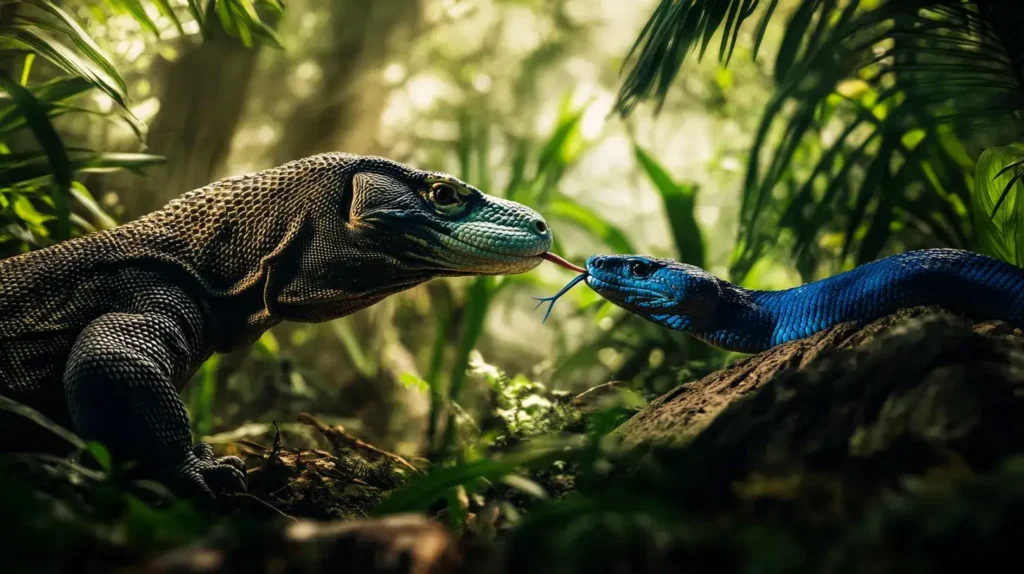
Al comparar su veneno, el dragón de Komodo unas glándulas situadas en la boca que inyectan proteínas especiales en su presa. Estas proteínas reducen la presión arterial y provocan hemorragias graves. Además, contienen bacterias nocivas que pueden agravar las infecciones. Como consecuencia, la presa se debilita rápidamente y acaba sucumbiendo.
Un ser humano desarmado corre un grave peligro ante el veneno dragón de Komodo, ya que este puede provocar una rápida pérdida de sangre y una infección grave.
Por el contrario, el veneno de la víbora azul es hemotóxico, lo que significa que ataca los vasos sanguíneos y provoca hemorragias internas. Además, altera la coagulación de la sangre. Una mordedura en la zona adecuada podría ser mortal, especialmente para animales de tamaño mediano o pequeño. Aunque el veneno de la víbora azul podría causar graves daños, la gruesa piel y el robusto sistema inmunológico dragón de Komodole confieren resistencia a las infecciones. Además, su enorme tamaño hace que el veneno tarde más en incapacitarlo.
En última instancia, el ganador dependería de la rapidez con la que cada animal pudiera neutralizar al otro. El dragón de Komodo la fuerza física necesaria para matar a la serpiente rápidamente, mientras que la víbora azul debe encontrar el momento perfecto para atacar y esperar que su veneno surta efecto antes de que el dragón de Komodo .
En un enfrentamiento directo, probablemente dragón de Komodo el dragón de Komodo , pero la víbora azul sin duda tiene posibilidades, sobre todo si logra dar un mordisco en el momento oportuno.
Leer Más: dragón de Komodo anaconda: la batalla de los reptiles gigantes
Explore Isla de Komodo Komodo Luxury
Es emocionante imaginar un posible enfrentamiento entre dos de los reptiles más emblemáticos Isla de Komodo: el dragón de Komodo la víbora azul (Trimeresurus insularis). El dragón de Komodo no dragón de Komodo el único animal de Isla de Komodo ver; la víbora azul también atrae a los visitantes por sus características únicas y su variada gama de colores. Ambos están equipados con armas letales: el dragón de Komodo su mordedura venenosa y su enorme tamaño, y la víbora azul con su potente veneno hemotóxico, capaz de provocar hemorragias internas graves. Aunque este tipo de enfrentamientos rara vez se producen en la naturaleza, debates como este ponen de relieve la increíble biodiversidad de Indonesia, especialmente en las Islas Komodo.
En lugar de enzarzarte en debates en las redes sociales, ¿por qué no vas a contemplar al majestuoso dragón de Komodo su hábitat natural en Parque Nacional de Komodo? Incluso puedes unirte a una excursión guiada con un guardabosques para observar de cerca la vida de estas increíbles criaturas. Si tienes suerte, quizá incluso veas una víbora azul escondida entre los arbustos o posada en la rama de un árbol, aunque las posibilidades son escasas. Explorar Isla de Komodo una experiencia que requiere cierta planificación, y para aquellos que buscan una exclusivo y sin complicaciones, Komodo Luxury ofrece tours personalizados por Komodo con servicios de primera categoría.

¿Listo para empezar tu aventura? Dirígete a la Komodo Luxury para reservar tu viaje. No olvides llevar tu cámara, ponerte en forma y prepararte para un viaje inolvidable. Parque Nacional de Komodo una experiencia única que no encontrarás en ningún otro lugar!
Leer Más: dragón de Komodo : La guía definitiva de los enfrentamientos épicos entre animales salvajes
Experimente Con Komodo Luxury
Los vídeos virales se acaban; la isla sigue ahí, con dragones, víboras y todo lo demás. Komodo Luxury guía a los visitantes por ella con una valoración de 4,9/5 basada en más de 1.500 opiniones. Elige un «Komodo tour en barco » para una excursión « excursión de un día », o un «Komodo crucero de buceo » para recorrer el circuito completo.
Deja que los guías se encarguen de avistar a los dragones: las excursiones para ver dragones con guardas forestales titulados son una actividad habitual en todos nuestros paquetes de crucero, y nuestros naturalistas te mostrarán mucho más que dragones durante una mañana de «crucero de buceo ».
Escrito por el Komodo Luxury equipo de la expedición — operadores con licencia de Parque Nacional de Komodo que guían rutas de senderismo y travesías desde Labuan Bajo desde 2015. Echa un vistazo a nuestro « Paquetes Turísticos » de navegación por Komodo.