





Last updated: September 2026 · Prices & availability verified for the 2026/2027 season
Last updated: September 16, 2026
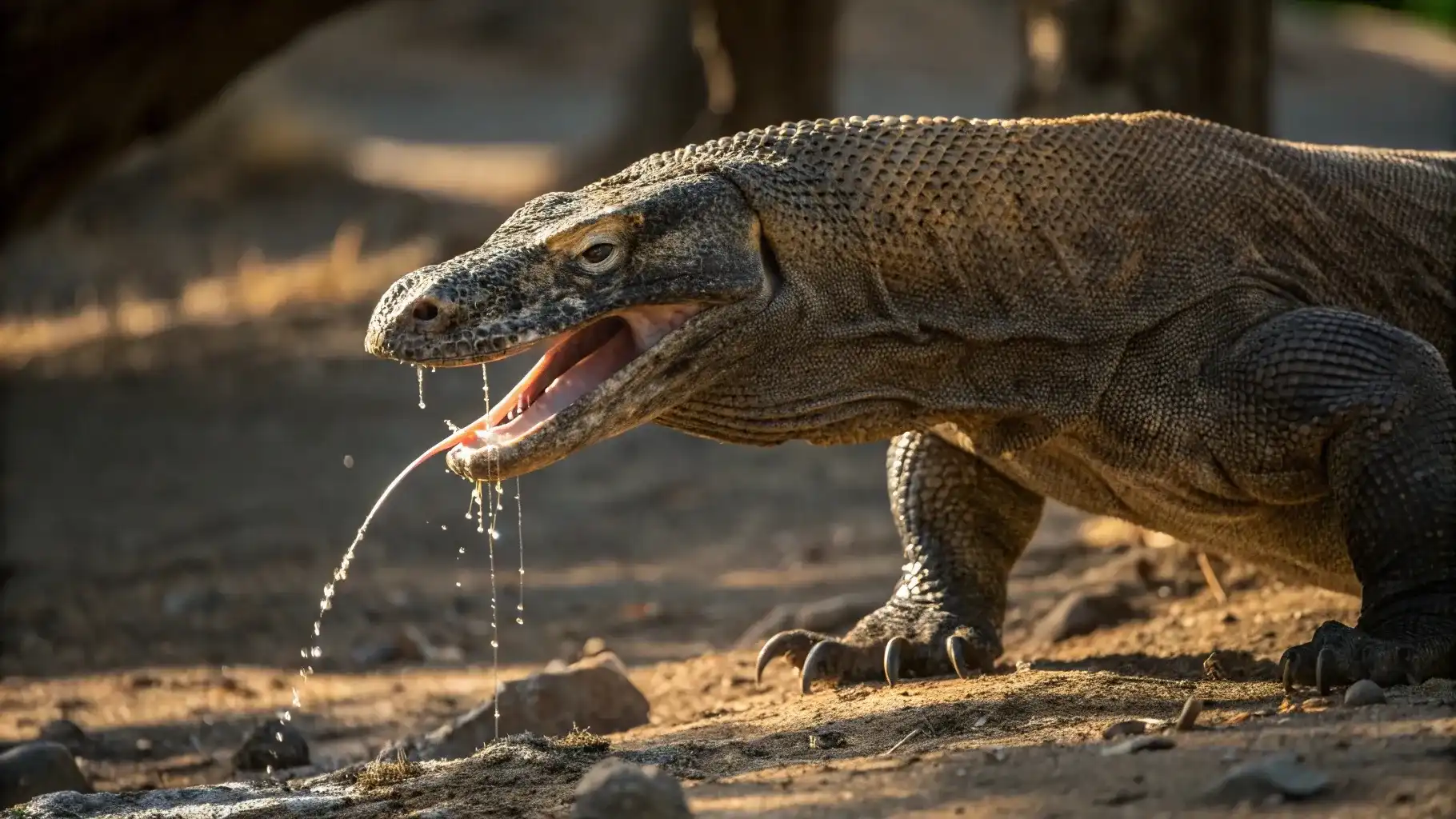
El varano de Komodo ( dragón de Komodo , Varanus komodoensis), el lagarto vivo más grande del mundo, es una criatura que despierta tanto fascinación como temor. Originario de Komodo y Rinca Indonesia—donde nuestros guías informan a todos los visitantes antes de bajar del embarcadero— y de algunas islas más pequeñas, estos reptiles ancestrales se han convertido en un símbolo de la fauna única de Komodo. Sin embargo, a pesar de su aspecto cautivador, hay una pregunta habitual que ronda por la mente de muchos viajeros curiosos y amantes de la naturaleza: ¿Hasta qué punto son peligrosos los dragones de Dragones de Komodo?
Gestionar precisamente este peligro es nuestro trabajo diario: cada excursión « itinerario » que organizamos, desde la 3 días 2 noches crucero compartido en adelante, asigna a los pasajeros un guía-guardabosques titulado para cada desembarque, y nuestro registro de incidentes desde 2015 es de cero.
En este artículo, analizaremos en profundidad el comportamiento Dragones de Komodo, los riesgos que pueden suponer y las medidas de seguridad establecidas para quienes deseen visitar a estas magníficas criaturas en su hábitat natural. Si estás planeando un viaje para ver de cerca a estos depredadores a través de un tour de lujo en Komodo, es fundamental que sepas cómo mantenerte a salvo. Así pues, exploremos la verdadera naturaleza de Dragones de Komodo y cómo apreciar su belleza salvaje sin poner en peligro tu seguridad.
Puntos clave
- Komodo dragons are genuinely dangerous wild predators, but documented attacks on humans are rare, Komodo National Park recorded just 24 attacks and 5 fatalities between 1974 and 2012.
- Their bite is dangerous because of venom, not bacteria, Fry et al. (2009) proved dragons have complex venom glands that cause anticoagulation and blood pressure drops, overturning the older “septic bite” theory.
- Dragons can sprint at 20 km/h and swim between islands, so their combined speed on land and water makes underestimating them a real risk despite their ambush-hunting style.
- The single biggest safety factor is always visiting with a licensed ranger-guide and keeping a minimum 5-meter distance, which is why Komodo National Park requires guided access for all visitors.
- Komodo Luxury has maintained a zero-incident safety record since 2015 by pairing every landing, from the 3D2N shared trip upward, with professional ranger escorts.
¿Qué son Dragones de Komodo?
Dragones de Komodo son criaturas fascinantes y poderosas, conocidas por ser los lagartos más grandes del planeta. Pueden llegar a medir hasta 3 metros de largo y pesar hasta 90 kilos, lo que los convierte en animales verdaderamente impresionantes. Son nativos de unas pocas islas de Indonesia, entre ellas Komodo y Rinca, estos reptiles son carnívoros y se alimentan principalmente de jabalíes, búfalos de agua y mamíferos más pequeños. A pesar de su temible reputación, son animales de sangre fría y dependen de su entorno para regular su temperatura corporal, lo que los hace menos activos en condiciones más frías y más enérgicos durante las horas de más calor del día.
Estos dragones son cazadores solitarios que suelen permanecer en tierra, aunque son nadadores sorprendentemente hábiles y pueden recorrer grandes distancias entre islas. Tienen una esperanza de vida de unos 30 años en estado salvaje, y algunos ejemplares pueden llegar a pesar hasta 45 kilos. Sus impresionantes características físicas, entre las que se incluyen garras afiladas, una larga cola y mandíbulas poderosas, los convierten en depredadores formidables en su hábitat natural. A pesar de su tamaño y fuerza, Dragones de Komodo evitar el contacto con los humanos y solo se vuelven agresivos cuando se sienten amenazados o acorralados.
¿Son peligrosos Dragones de Komodo?
For guided visitors, the statistical risk is very low: Komodo National Park recorded about 24 attacks on humans between 1974 and 2012, five of them fatal, roughly one incident every 18 months over four decades. What makes the species genuinely dangerous in the rare cases of an encounter gone wrong is the combination of a 20 km/h sprint, around 60 serrated teeth, and venom.
- 24 attacks / 5 deaths in official park records, 1974–2012.
- 20 km/h burst speed; ambush — not chase — is their hunting style.
- ~148 N bite force (D’Amore et al., 2011): a relatively weak bite by predator standards, compensated by slicing teeth plus venom.
- Non-negotiable safety rules: licensed ranger at all times, 5-meter minimum distance, no sudden movements, no wandering off marked trails.
En lo que respecta al grado de peligrosidad Dragones de Komodo , la realidad es un poco más compleja que limitarnos a clasificarlos como peligrosos o inofensivos. Estos reptiles se han ganado la reputación de ser feroces depredadores, pero ¿qué riesgo suponen realmente para los seres humanos? Analicémoslo:
1. Comportamiento agresivo cuando se le provoca

Dragones de Komodo , por lo general, animales solitarios, pero pueden mostrar un comportamiento agresivo si se sienten amenazados o acorralados. Su gran tamaño, sus afiladas garras y sus poderosas mandíbulas los convierten en adversarios temibles. Aunque los ataques a humanos son poco frecuentes, se han dado casos de Dragones de Komodo personas, normalmente en situaciones en las que se sienten provocados o cuando defienden su territorio. Por eso, los visitantes del Parque Nacional de Komodo ser cautelosos, mantener una distancia de seguridad y seguir las indicaciones de los guías profesionales para evitar provocar a estos poderosos reptiles.
Aunque Dragones de Komodo cazar en solitario, son depredadores oportunistas que en ocasiones pueden mostrar un comportamiento agresivo hacia sus presas potenciales, especialmente cuando tienen hambre. Utilizan el sigilo para tender emboscadas a animales como ciervos, jabalíes y reptiles más pequeños. Una vez que muerden a su presa, el veneno de su saliva provoca una rápida pérdida de sangre, lo que dificulta que la presa pueda escapar. A pesar de su temible reputación, Dragones de Komodo cazan activamente Dragones de Komodo los humanos, y es muy improbable que ataquen si no se les molesta. Sin embargo, es importante recordar que su fuerza y su veneno los hacen potencialmente peligrosos, especialmente si se les acerca de forma imprudente.
2. Mordeduras venenosas y saliva peligrosa
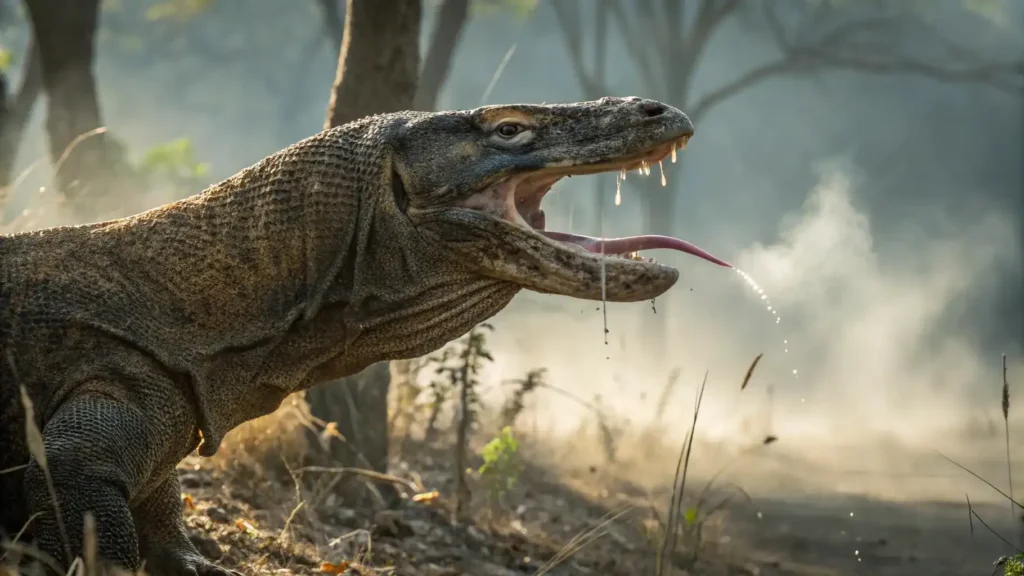
Una de las características más alarmantes del dragón de Komodo la potencia de su mordedura, que puede resultar increíblemente peligrosa. Durante años, se creyó que la mordedura dragón de Komodoera letal debido al veneno presente en su saliva, que provocaba pérdida de sangre y shock. Investigaciones más recientes han demostrado que, si bien el dragón de Komodo efectivamente glándulas venenosas situadas en la mandíbula inferior, el peligro real proviene de las bacterias nocivas que se encuentran en su saliva. Son estas bacterias, y no el veneno tradicional, las que hacen que la mordedura sea potencialmente mortal. Cuando un dragón de Komodo su presa, las bacterias de su saliva pueden provocar infecciones graves que, en última instancia, conducen a la muerte del animal. Este mismo concepto se aplica a los seres humanos: si se produce una mordedura, las bacterias pueden causar una infección grave que, si no se trata, puede tener consecuencias potencialmente mortales.
Además de la amenaza bacteriana, Dragones de Komodo unas mandíbulas increíblemente poderosas y unos dientes afilados, diseñados para desgarrar carne y huesos. Son hábiles depredadores de emboscada que utilizan el sigilo y la paciencia para acercarse a su presa antes de asestarle una mordedura mortal. Aunque el veneno en sí no suele ser mortal para los seres humanos, puede provocar una pérdida de sangre extrema al impedir la coagulación, lo que complica las posibilidades de supervivencia de la víctima. Como resultado, cualquier persona mordida por un dragón de Komodo atención médica inmediata para tratar la infección y controlar la pérdida de sangre, lo que hace que la mordedura dragón de Komodosea más peligrosa de lo que se pensaba inicialmente.
Leer Más: ¿Son Dragones de Komodo ? ¡Esto es lo que necesitas saber!
3. Dragones de Komodo correr y nadar rápido
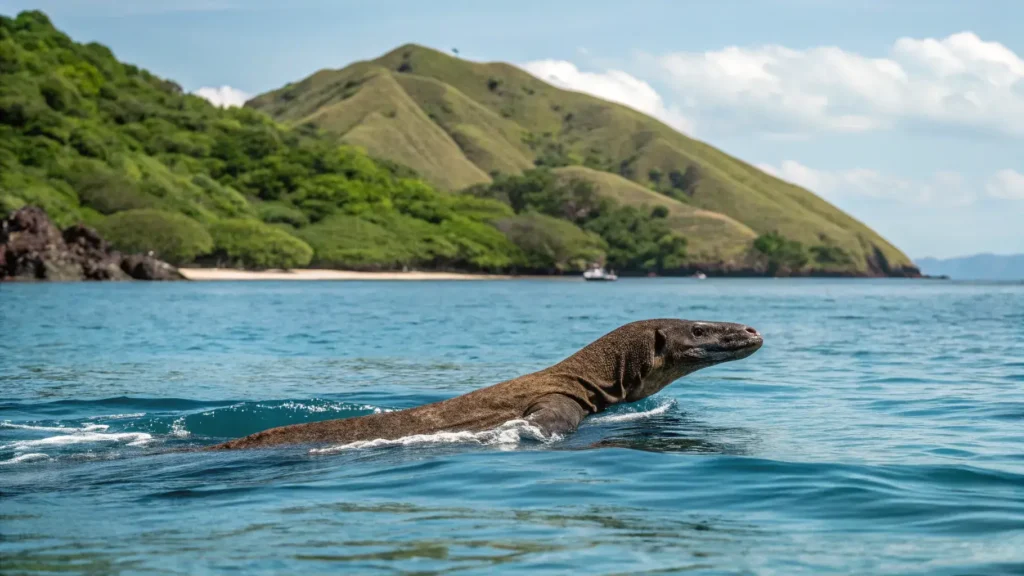
A pesar de su gran tamaño, Dragones de Komodo sorprendentemente rápidos y ágiles, lo que los convierte en depredadores formidables en su hábitat natural. En tierra, pueden correr a velocidades de hasta 19 kilómetros por hora, lo que es lo suficientemente rápido como para atrapar a una presa o escapar rápidamente. Esta velocidad también puede ser difícil de superar para un ser humano en una situación de emergencia, especialmente si el dragón de Komodo amenazado o acorralado. Su velocidad, combinada con su capacidad para moverse con facilidad por su entorno, los hace más peligrosos de lo que podrían parecer a primera vista.
Además de su velocidad en tierra, Dragones de Komodo también Dragones de Komodo excelentes nadadores. Se sabe que se desplazan entre las islas de Komodo, Rincay otras de la región con facilidad, utilizando sus fuertes extremidades y su cola para impulsarse en el agua. Esta habilidad les permite recorrer largas distancias, cazando y explorando zonas que resultarían difíciles de acceder para la mayoría de los demás animales. Si un dragón de Komodo a una presa o intenta escapar de un peligro, su velocidad combinada en tierra y en el agua le hace aún más capaz de llegar a lugares que podrían poner en peligro a un turista desprevenido.
Por eso, casi todos los visitantes recorren el parque en una excursión «Komodo tour en barco » acompañada por un guardabosques, en lugar de hacerlo por su cuenta: cada desembarque se realiza siguiendo los protocolos de seguridad de « Parque Nacional de Komodo ».
Cómo mantenerse a salvo cerca de Dragones de Komodo
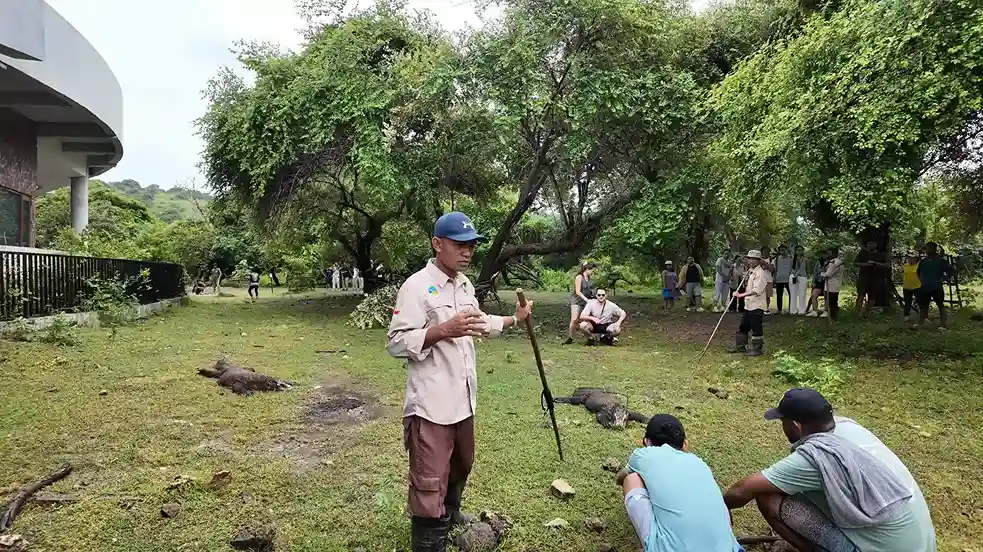
Aunque Dragones de Komodo ser peligrosos, la probabilidad de sufrir un ataque es mínima siempre y cuando se sigan las normas de seguridad adecuadas y se respete el espacio de los animales. A continuación te indicamos varias formas de garantizar tu seguridad cuando visites Parque Nacional de Komodo otras zonas donde habitan estos lagartos:
- Sigue siempre las instrucciones de tu guía
Cuando visites Parque Nacional de Komodo, se te exigirá que un guía oficial te acompañe durante toda la visita. Estos guías están capacitados para garantizar tu seguridad y poseen un amplio conocimiento del comportamiento Dragones de Komodoy del terreno del parque. Conocen bien las zonas donde los dragones son más activos y pueden guiarte con seguridad hasta puntos de observación donde es menos probable que te encuentres con estas criaturas. - Mantén una distancia de seguridad
Aunque pueda resultar tentador acercarse a un dragón de Komodo sacar una foto mejor, es fundamental mantener una distancia de seguridad. Dragones de Komodo no Dragones de Komodo mascotas y deben ser respetados como animales salvajes. Mantén una distancia de al menos 5 a 10 metros (16 a 33 pies) entre tú y los Dragones de Komodo. Esto garantiza que no los provoques y también te da tiempo suficiente para reaccionar si el animal muestra algún signo de agresividad. - No alimente ni distraiga a los Dragones de Komodo
Alimentar o distraer a dragón de Komodo un grave riesgo para la seguridad. Dragones de Komodo animales oportunistas a la hora de alimentarse, y darles de comer podría hacer que se volvieran más agresivos o que perdieran su recelo natural hacia los humanos. Evite siempre interactuar directamente con ellos y, si ve dragón de Komodo un dragón de Komodo , retroceda con calma y lentamente, sin hacer movimientos bruscos. - Mantén la calma ante un encuentro
Si te encuentras en una situación inesperada con un dragón de Komodo, es importante mantener la calma. No corras ni hagas movimientos bruscos, ya que esto puede provocar al animal. En su lugar, muévete lenta y firmemente hacia un lugar seguro, sin perder de vista al dragón de Komodo. Si estás en una visita guiada, sigue atentamente las instrucciones de tu guía.
Leer Más: dragón de Komodo ser humano: historia, datos y consejos para visitarlo con seguridad
Descubre Dragones de Komodo con Komodo Luxury
In conclusion, Komodo dragons are fascinating creatures that command both respect and admiration. Although they can be dangerous, the risk of an attack is minimal when you follow safety guidelines and maintain a respectful distance. If you’re looking to experience the thrill of observing these remarkable reptiles up close, but in a safe and luxurious environment, Komodo Luxury offers an exclusive Komodo Island Tour that guarantees a premium, secure, and unforgettable adventure. With our expert guides and stringent safety protocols, you can safely witness these ancient creatures in their natural habitat, ensuring a memorable experience.
Nuestro Isla de Komodo incluye excursiones privadas, transporte cómodo y caminatas guiadas a los mejores miradores de Isla de Komodo Rinca . Desde lujosos barcos hasta comidas gourmet, cada detalle de tu viaje está pensado para ofrecerte una experiencia excepcional y segura. Así que, si estás listo para embarcarte en una aventura inolvidable y ver Dragones de Komodo cerca a los impresionantes Dragones de Komodo , reserva tu tour con Komodo Luxury hoy mismo y aprovecha al máximo esta oportunidad única en la vida.

Respect the animal, follow the guide, and the danger becomes theatre. Trek safely on any Komodo tour package, nervous first-timers often prefer the flexibility of a private charter group.
A cargo del Komodo Luxury Equipo de Expedición — un operador turístico autorizado de Parque Nacional de Komodo que organiza expediciones diarias desde Labuan Bajo desde 2015. Flota, tarifas e itinerarios: Komodo alquiler de yate.
Full context: can a Komodo dragon eat a whole human and the complete Komodo dragon guide. Visit with professional ranger-guides on our Komodo Island tour packages or a private Komodo boat tour.