






Última actualización: diciembre de 2025 · Precios y disponibilidad verificados para la temporada 2026/2027
Cuando piensas en un « Dragones de Komodo », probablemente te imaginas a unos reptiles enormes y pesados que deambulan por las escarpadas sabanas y los bosques costeros de Isla de Komodo. Con su complexión musculosa, sus afiladas garras y sus poderosas colas, parecen criaturas diseñadas exclusivamente para la vida en tierra firme. Pero aquí está la gran pregunta: ¿puede un « dragón de Komodo » trepar a un árbol?
En este artículo, analizaremos la verdad que se esconde tras esta fascinante pregunta, descubriremos el comportamiento tanto de los ejemplares jóvenes como de los adultos de Dragones de Komodo y compartiremos consejos para observarlos de forma segura en su hábitat natural. Al final, comprenderás que Dragones de Komodo pueden trepar a los árboles o no, pero también por qué sus etapas de vida desempeñan un papel crucial en la forma en que se desplazan por su entorno.
¿Pueden los « Dragones de Komodo » trepar a los árboles?
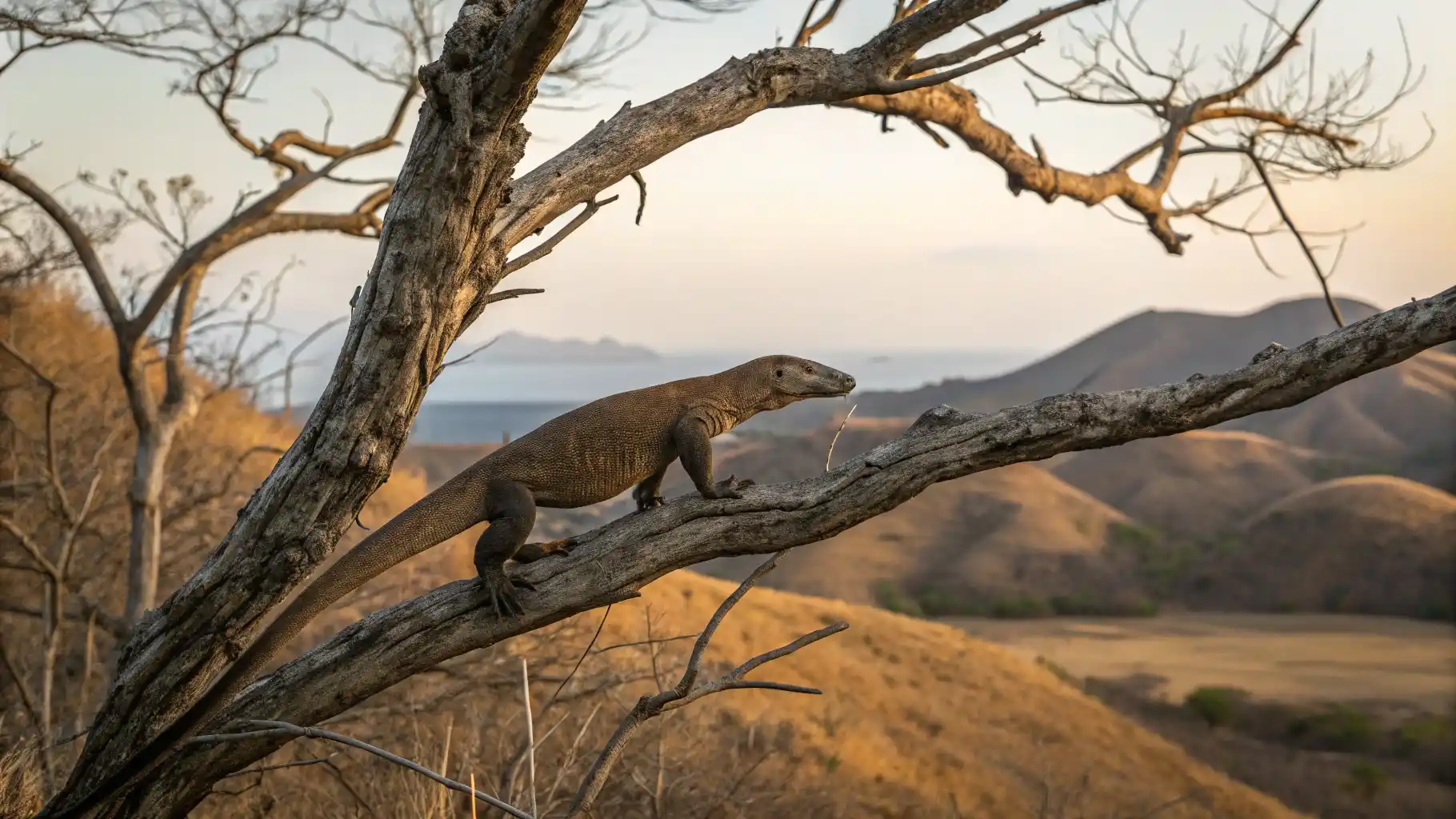
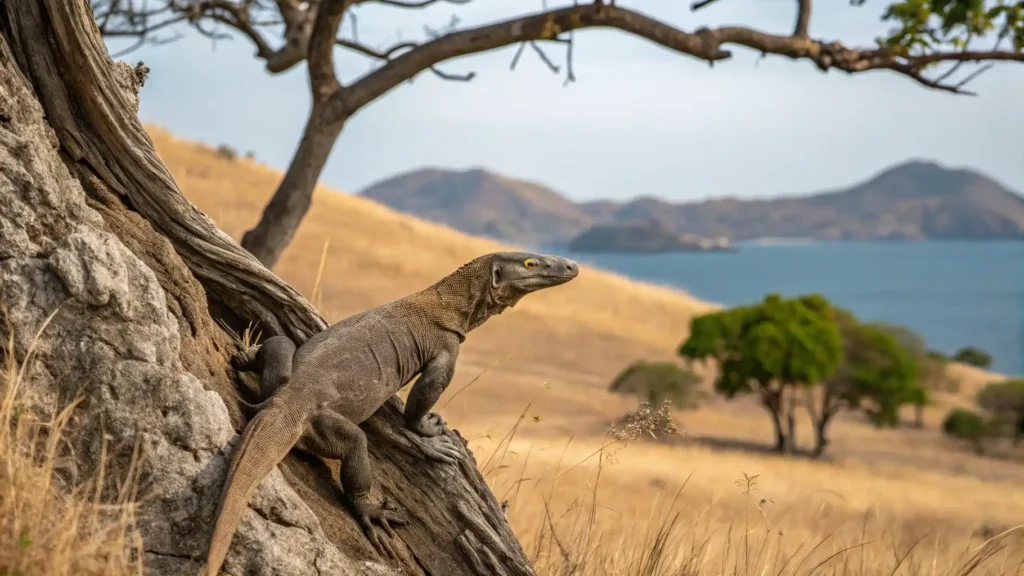
Sí, pueden, pero sobre todo cuando son jóvenes. Los « Dragones de Komodo » recién nacidos son ágiles trepadores que utilizan los árboles como refugio seguro para sobrevivir en un mundo lleno de depredadores, incluidos los dragones adultos. Estos reptiles jóvenes tienen garras fuertes y cuerpos ligeros que les permiten trepar por los troncos y posarse en las ramas, a menudo durante horas seguidas.
Sin embargo, a medida que crecen, su enorme tamaño hace que trepar sea casi imposible. Los ejemplares adultos de Dragones de Komodo, algunos de los cuales alcanzan los 3 metros de longitud y pesan más de 70 kilogramos, son totalmente terrestres. Dominan el suelo, utilizando el sigilo, el veneno y la fuerza bruta para cazar a sus presas, mientras que los árboles siguen siendo el dominio de los ágiles ejemplares jóvenes. Comprender este comportamiento ayuda a explicar una de las estrategias de supervivencia más fascinantes del mundo de los reptiles y es un conocimiento esencial para cualquiera que visite Parque Nacional de Komodo.
¿Por qué los jóvenes de « Dragones de Komodo » se suben a los árboles?
Los ejemplares jóvenes de la especie « Dragones de Komodo » dependen de la escalada de árboles por varias razones importantes, y comprender estos comportamientos nos permite hacernos una idea de los retos a los que se enfrentan durante sus primeros años de vida.
Protección frente a los depredadores
Uno de los hechos más fascinantes, aunque también más crudos, sobre los dragones de « Dragones de Komodo » es que el canibalismo es habitual entre ellos. Los dragones adultos no dudarán en devorar a los jóvenes si se les presenta la oportunidad. Trepando a los árboles, los dragones jóvenes encuentran un refugio muy necesario que los mantiene fuera del alcance de sus parientes más grandes y poderosos. Imagínate a un diminuto dragón, no más grande que un gato doméstico, trepando rápidamente por una rama para escapar de un adulto al acecho: es una táctica de supervivencia dramática que pone de relieve cómo la evolución ha moldeado su comportamiento.
Acceso a los alimentos
Los árboles no son solo un escondite, sino también una rica fuente de alimento para los dragones jóvenes. Insectos, pájaros pequeños, lagartos y salamanquesas habitan en las ramas y el follaje, lo que les proporciona una dieta menos competitiva que las presas que los adultos cazan en el suelo. Al buscar alimento entre las ramas, los jóvenes pueden subsistir al tiempo que evitan el conflicto con dragones más mayores y fuertes. Este uso inteligente del espacio vertical demuestra cómo maximizan sus posibilidades de supervivencia utilizando la agilidad y la estrategia en lugar de la fuerza bruta.
Seguridad durante el descanso
Incluso cuando los ejemplares jóvenes de Dragones de Komodo no están trepando activamente, los árboles les sirven de lugar seguro para descansar. Los depredadores nocturnos, las serpientes u otras amenazas presentes en el suelo del bosque suponen un peligro considerable, por lo que los ejemplares jóvenes suelen dormir posados entre las ramas. Allí pueden ahorrar energía de forma segura, sin dejar de estar preparados para huir si se acerca el peligro. Este comportamiento demuestra que, incluso a una edad temprana, los Dragones de Komodo han evolucionado para combinar la vigilancia con la eficiencia, lo que les garantiza crecer lo suficientemente fuertes como para, con el tiempo, unirse a los adultos que viven en el suelo.
¿Por qué los « Dragones de Komodo » adultos no se suben a los árboles?
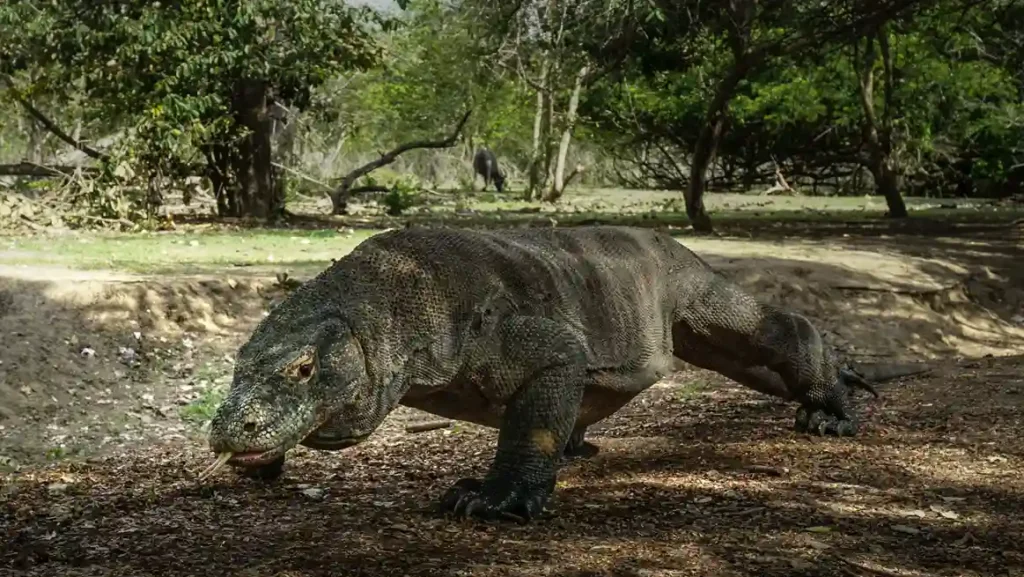
Los ejemplares adultos de la especie « Dragones de Komodo », a diferencia de los juveniles, son casi exclusivamente terrestres. Su enorme tamaño y peso hacen que trepar les resulte impracticable, y su estilo de vida gira en torno a la caza y al dominio del terreno. Estas son las principales razones por las que los adultos permanecen firmemente en tierra:
- Tamaño y peso
Los ejemplares adultos de la especie « Dragones de Komodo » pueden alcanzar más de 3 metros de longitud y pesar más de 70 kilogramos. Sus cuerpos pesados y musculosos hacen que les resulte físicamente imposible trepar a los árboles con seguridad. Incluso el mero intento de trepar podría provocarles lesiones, por lo que permanecer en el suelo es la opción más segura para su supervivencia. - Estrategia de caza
Los adultos son depredadores de cima de la cadena alimentaria que se valen del sigilo, las emboscadas y la fuerza bruta para capturar a sus presas. Los ciervos, los jabalíes y los búfalos de agua constituyen la mayor parte de su dieta, y estas presas se encuentran en el suelo. Trepar a los árboles no les ofrece ninguna ventaja a la hora de cazar, por lo que simplemente ha dejado de ser necesario. - Dominio territorial
Los adultos Dragones de Komodo patrullan bosques, praderas y playas para establecer su territorio y reducir la competencia. Permanecer en el suelo les permite controlar grandes áreas y afirmar su dominio sin gastar energía trepando a los árboles, algo que los juveniles utilizan principalmente para escapar de las amenazas.
Al permanecer en tierra, los dragones adultos optimizan su energía para sobrevivir y cazar, lo que los convierte en los gobernantes indiscutibles de los ecosistemas de Isla de Komodo.
Cómo escalar un « Dragones de Komodo »
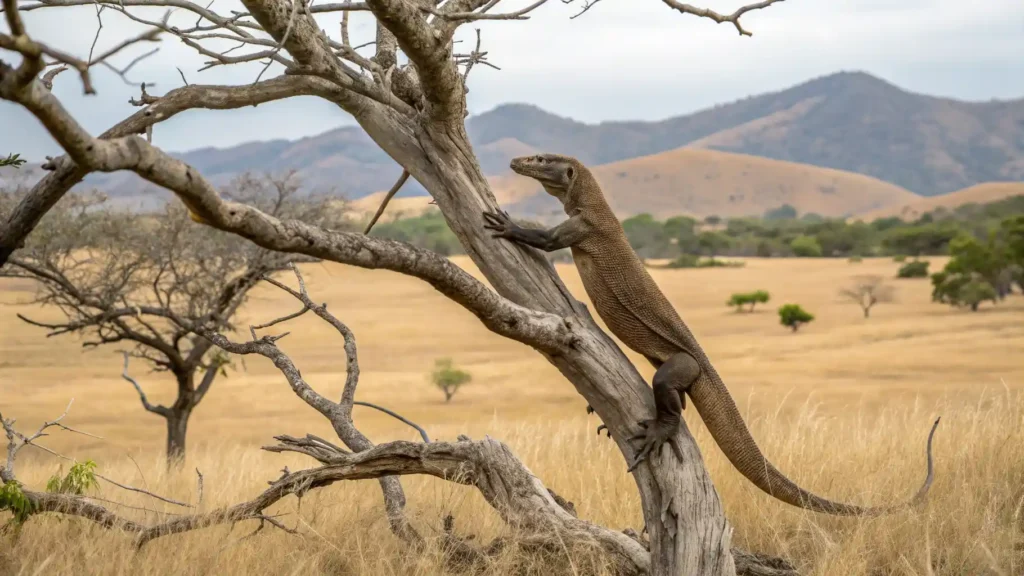
Aunque los dragones adultos Dragones de Komodo no pueden trepar, los jóvenes son sorprendentemente hábiles en ello. Su capacidad para trepar es fascinante y, además, esencial para su supervivencia. Así es como lo consiguen:
- Garras y agarre
Juveniles Dragones de Komodo tienen garras afiladas y curvadas que les permiten clavarse en la corteza y trepar por los troncos de los árboles con eficacia. Este agarre es esencial para mantener la estabilidad al desplazarse por superficies verticales. - Extremidades fuertes y flexibles
Sus extremidades, musculosas pero ligeras, les proporcionan la fuerza y la flexibilidad necesarias para impulsarse hacia arriba. Son capaces de tirarse y empujarse contra las ramas, utilizando movimientos coordinados para trepar de forma segura y rápida. - Cola de equilibrio
La cola larga y fuerte de un dragón joven actúa como contrapeso al trepar. Les ayuda a mantener la estabilidad en ramas estrechas o al dar pequeños saltos entre ramas, lo que garantiza que no se caigan mientras huyen de los depredadores o alcanzan posaderos más altos. - Agilidad y reflejos
La velocidad y los reflejos son fundamentales. Los dragones jóvenes pueden ajustar sus movimientos mientras trepan, dar pequeños saltos y reaccionar ante las amenazas con una precisión extraordinaria. Esta agilidad les permite sobrevivir en un hábitat lleno de peligros, entre los que se incluyen los adultos caníbales.
Gracias a la combinación de sus garras, extremidades, cola y agilidad, los ejemplares jóvenes de la especie « Dragones de Komodo » demuestran unas habilidades de escalada increíbles, que resultan fundamentales tanto para alimentarse como para evitar el peligro.
Consejos para observar a Dragones de Komodo
Si estás planeando un viaje para contemplar estos magníficos reptiles, seguir algunos consejos clave hará que tu experiencia sea más segura y memorable. Al comprender su comportamiento, podrás disfrutar de la maravilla de Dragones de Komodo sin correr ningún riesgo innecesario.
- Ve con un guía profesional
. Los guías expertos y los guardas forestales del parque conocen el comportamiento de los Dragones de Komodo y pueden ayudarte a recorrer la zona con seguridad. Además, se aseguran de que disfrutes de los mejores miradores para observar de cerca a estos increíbles animales. - Mantén una distancia de seguridad
Incluso las crías tienen garras y dientes afilados, por lo que es fundamental mantener una distancia de seguridad. Darles espacio os protege tanto a ti como a los dragones, y les permite comportarse con naturalidad sin estrés. - Elige el momento adecuado del día
Las primeras horas de la mañana o las últimas de la tarde son ideales para avistar dragones jóvenes trepando a los árboles o adultos cazando. En estos momentos también se disfruta de la luz más suave, perfecta para hacer fotos y apreciar sus movimientos naturales. - Utiliza las herramientas fotográficas con acierto
Un buen objetivo con zoom te permite capturar primeros planos sin tener que acercarte demasiado. De esta forma, podrás documentar su comportamiento sin perturbar a los dragones en su hábitat. - Descubre más sobre su comportamiento en
. Saber por qué los jóvenes trepan a los árboles y cómo cazan los adultos aporta una nueva dimensión a tu experiencia. Observar con estos conocimientos te permite apreciar mejor sus estrategias de supervivencia y sus extraordinarias adaptaciones.
Si sigues estos consejos, disfrutarás de una experiencia segura, envolvente y educativa mientras observas la extraordinaria vida de Dragones de Komodo en su entorno natural.
Leer Más: dragón de Komodo y realidades sobre dragón de Komodo : ¡No te vas a creer lo que es verdad!
Veamos cómo « Dragones de Komodo » trepa a los árboles con Komodo Luxury!
En conclusión, los ejemplares jóvenes de la especie « Dragones de Komodo » son hábiles trepadores que utilizan los árboles como refugio, fuente de alimento y lugar de descanso, mientras que los adultos permanecen en el suelo y se valen de su fuerza y destreza para cazar a fin de dominar su entorno. La observación de este ciclo vital te permite conocer de primera mano su capacidad de adaptación, su inteligencia y sus estrategias de supervivencia, una experiencia que resulta a la vez educativa e impresionante.
Si quieres ver a l Dragones de Komodo s de forma segura y cómoda en su hábitat natural, la mejor manera es apuntarte a un Isla de Komodo excursión con Komodo Luxury. Desde excursiones guiadas hasta miradores privados, podrás ver a los cachorros trepando a los árboles, a los adultos patrullando la sabana y todo el espectáculo que ofrecen l Parque Nacional de Komodo, todo ello mientras disfrutas de la elegancia y la comodidad de una experiencia de lujo.
Ya sea viendo a un diminuto dragón trepar a toda velocidad por una rama u observando a un enorme ejemplar adulto cazando en el suelo, Komodo Luxury te garantiza una conexión con estos increíbles reptiles de una forma segura, envolvente e inolvidable. Es la combinación perfecta de aventura, naturaleza y comodidad refinada para cualquiera que busque un encuentro con la vida salvaje único en la vida.