







Last updated: September 2026 · Prices & availability verified for the 2026/2027 season
Last updated: September 10, 2026
Komodovaranen tijgers behoren tot de meest fascinerende toproofdieren in de natuur. Beide domineren hun eigen ecosysteem, maar op totaal verschillende manieren.
The Komodo dragon, the largest lizard on Earth, relies on its venomous bite and patient hunting tactics to take down prey. Tigers, on the other hand, are majestic powerhouses with unmatched speed and brute strength, making them the kings of the jungle. And among all tiger subspecies, none pushes that power to a greater extreme than the Siberian tiger, the largest cat alive today.
Let’s explore their characteristics, strengths, and how they would perform in a one-on-one confrontation, from tigers in general down to the biggest of them all.
Belangrijkste punten
- A tiger, including the Siberian subspecies, would very likely win a direct fight against a Komodo dragon thanks to overwhelming size, speed, and raw power.
- The Komodo dragon’s real weapon isn’t strength, it’s its venomous bite, which can eventually kill even an animal many times its size, though not quickly enough to save it in a close-range fight.
- Size gaps get even more extreme with the Siberian tiger specifically, since adult males can weigh up to 320 kg, roughly four times a Komodo dragon’s average weight of 70 to 90 kg.
- Tigers win on nearly every physical category, including speed, agility, night vision, and hearing, while the Komodo dragon’s advantages are limited to smell, patience, and toxic saliva.
- The two predators never meet in the wild, since Komodo dragons live only on a few dry Indonesian islands while Siberian tigers roam the snow forests of the Russian Far East.
Komodo: het giftige beest van de wildernis
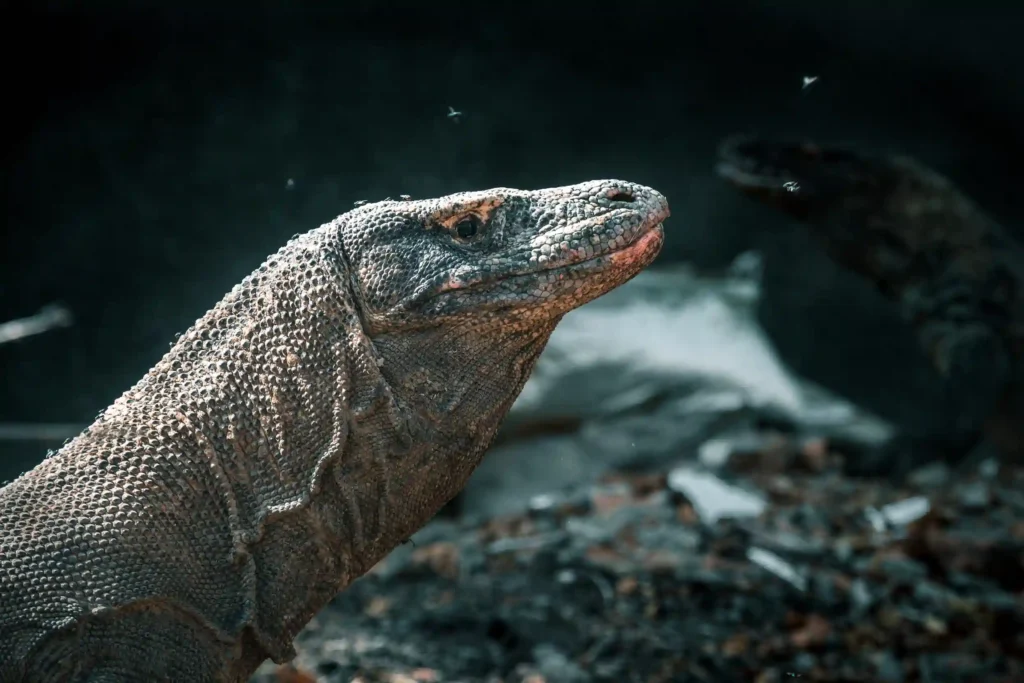
De komodovaraan is een uniek reptiel dat alleen voorkomt in Indonesië, voornamelijk in Nationaal Park Komodo. Met een lengte tot 10 feet en een gewicht van ongeveer 200 pounds is het niet alleen de grootste hagedis ter wereld, maar ook een uiterst efficiënt roofdier.
Komodovaranen zijn jachtdieren die vanuit een hinderlaag toeslaan; ze sluipen onopgemerkt naar hun prooi toe om deze vervolgens giftig te bijten. Hun speeksel bevat giftige eiwitten die bij hun slachtoffers verlamming en ernstig bloedverlies veroorzaken. Ondanks hun logge uiterlijk zijn komodovaranen wendbaar en snel over korte afstanden, waardoor ze zeer effectieve jagers zijn. Ze gedijen goed in savannes en tropische bossen, waar hun dieet varieert van herten tot waterbuffels.
De tijger: de woeste, gestreepte jager
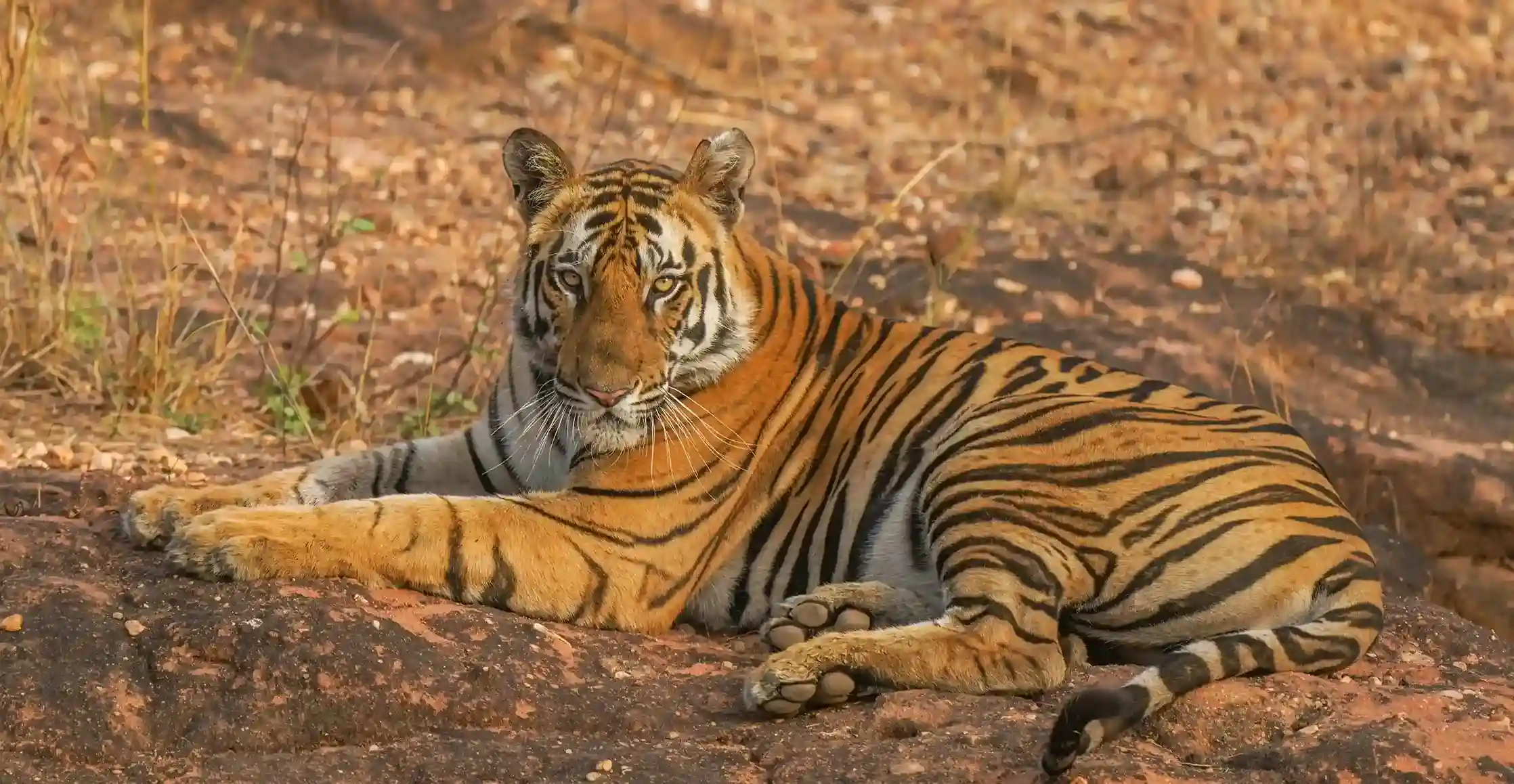
Tijgers zijn de grootste katachtigen ter wereld, waarbij de Bengaalse en Siberische tijger de bekendste ondersoorten zijn. Deze gestreepte roofdieren kunnen tot 300 kilo wegen en een lengte van meer dan 3,3 meter bereiken. Tijgers zijn gebouwd op kracht, snelheid en onopvallendheid, waardoor ze tot de meest succesvolle jagers op aarde behoren.
Ze jagen het liefst in hun eentje en besluipen hun prooi geruisloos voordat ze een snelle en dodelijke aanval uitvoeren. Met hun krachtige kaken, scherpe klauwen en gespierde lichamen kunnen tijgers prooien vangen die veel groter zijn dan zijzelf.
Tigers inhabit a wide range of environments, from dense tropical jungles to snow-covered forests in Siberia, and it’s that northernmost population, the Siberian tiger, that grows into the largest cat on the planet. We’ll come back to that specific matchup once we’ve compared the Komodo dragon against tigers as a whole.
Komodo versus Tiger: een uitgebreide vergelijking
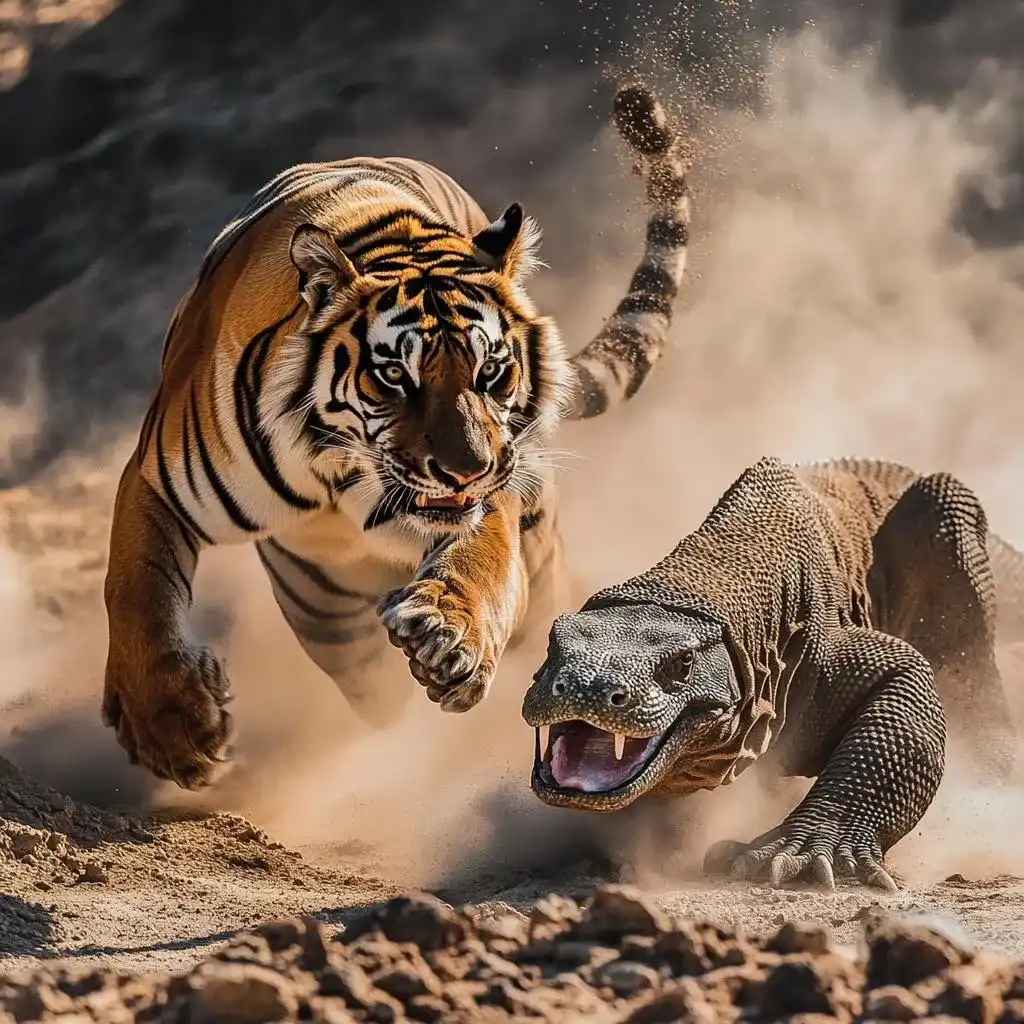
Zowel de komodovaraan ( komodovaraan ) als de tijger zijn toproofdieren, maar hun sterke punten liggen op heel verschillende gebieden. Terwijl de komodovaraan vertrouwt op gif, hinderlaagtactieken en uithoudingsvermogen, domineert de tijger met pure fysieke kracht, snelheid en agressie.
| Categorie | Komodovaraan | Tijger |
| Afmetingen en gewicht | Tot 3 meter lang, 90 kilo | Tot 3,3 meter lang, 300 kilo |
| Leefgebied | Tropische savannes en bossen in Indonesië | Jungles, graslanden en besneeuwde bossen |
| Jachtstijl | Een roofdier dat vanuit een hinderlaag toeslaat en een giftige beet heeft | Een roofdier dat zijn prooi besluipt en bespringt, met brute kracht |
| Sterke punten | Gif, harde schubben en geduld | Snelheid, behendigheid en gespierdheid |
| Zwakke punten | Traag over lange afstanden, minder fysieke kracht | Gevoelig voor infecties of gif |
Afmetingen en gewicht
De Aziatische tijgerkat ( komodovaraan ) kan tot 3 meter lang worden en weegt doorgaans zo’n 70–90 kilogram. Ter vergelijking: tijgers zijn veel groter, met een lichaamslengte tot 3,3 meter en een gewicht tot 300 kilogram, afhankelijk van de ondersoort. Wat grootte betreft, hebben tijgers duidelijk de overhand.
Leefgebied
Komodovaranen leven in tropische savannes en warme klimaten, voornamelijk op Komodo eiland en in aangrenzende gebieden. Tijgers daarentegen hebben een veel groter verspreidingsgebied. Ze kunnen gedijen in tropische oerwouden, besneeuwde Siberische bossen en alles daartussenin. Tijgers kunnen zich veel beter aanpassen aan verschillende omgevingen.
Jachtgedrag en voedingspatroon
Komodovaranen vanuit een hinderlaag en gebruiken hun giftige beet en geduld om hun prooi te verzwakken. Tijgers jagen daarentegen met kracht, snelheid en scherpe klauwen, en vangen dieren die veel groter zijn dan zijzelf, zoals herten, wilde zwijnen en zelfs buffels. Tijgers zijn agressievere en actievere jagers dan komodovaranen.
Sterke en zwakke punten
Komodovaranen hebben een dodelijke beet en een taaie huid die hen beschermt. Ze zijn echter niet erg snel en beschikken niet over de fysieke kracht om een rechtstreeks gevecht te winnen. Tijgers daarentegen zijn ongelooflijk sterk, snel en kunnen grote afstanden springen, waardoor ze lastige tegenstanders zijn. Dat gezegd hebbende, zouden tijgers nog steeds kwetsbaar zijn voor de giftige beet van een komodovaraan.
Lees meer: komodovaraan vs Cat: Kan een jaguar het opnemen tegen ’s werelds grootste hagedis?
komodovaraan vs Tiger: Wie zou er winnen in een gevecht?
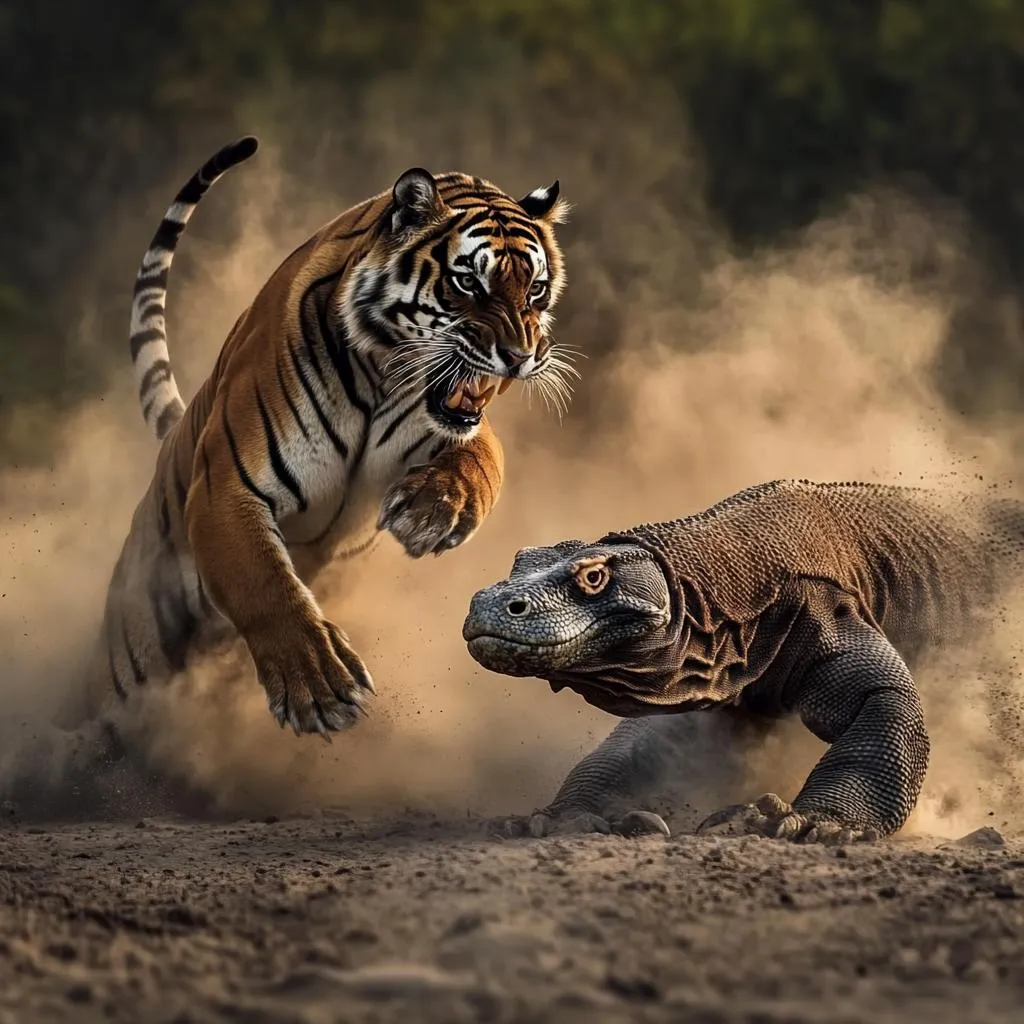
In een hypothetisch gevecht zou de uitkomst sterk afhangen van de volgende factoren:
- Voordeel in een gevecht van dichtbij: De tijger zou waarschijnlijk de overhand hebben vanwege zijn overweldigende omvang, snelheid en kracht. Met zijn klauwen en kaken zou een tijger een „ komodovaraan ” binnen enkele minuten uitschakelen.
- Gevaar door gif: Als de komodovaraan ( komodovaraan ) een beet plaatst, zou het gif in zijn speeksel de tijger uiteindelijk kunnen verzwakken en doden. Dit zou echter uren of zelfs dagen duren, en de komodovaraan zou de eerste confrontatie wellicht niet overleven.
In most scenarios, the tiger’s superior physical abilities would give it the upper hand, but the Komodo’s venomous bite is a wildcard that cannot be ignored. That’s the picture with tigers in general. But if we swap in the largest tiger subspecies on Earth, the gap only widens further.
Komodo Dragon vs Siberian Tiger: Predator Showdown in the Wild
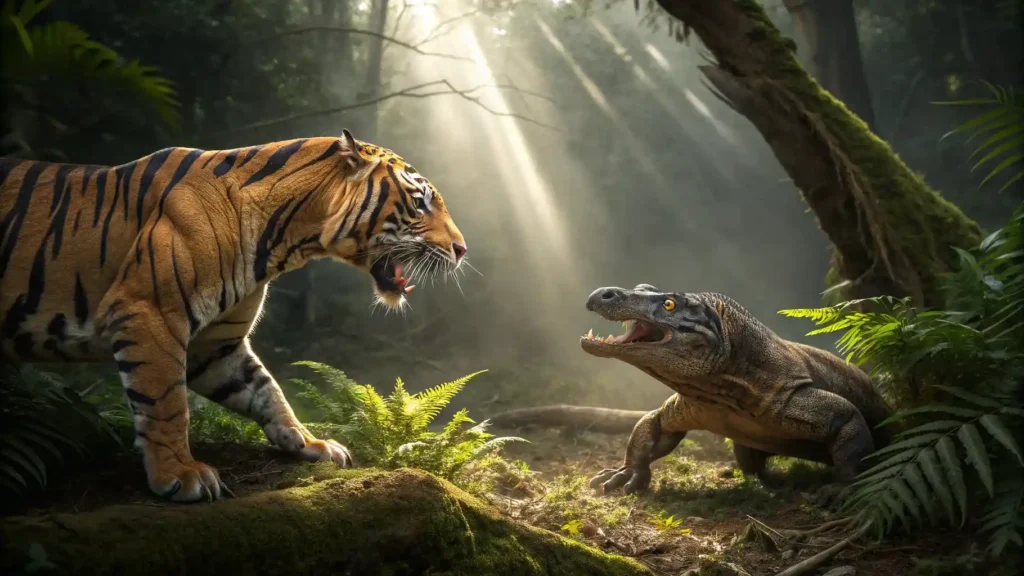
The Siberian tiger (Panthera tigris altaica), also known as the Amur tiger, is the largest tiger subspecies and an apex predator in its northern range. Adult males can reach lengths of up to 3.3 meters and weigh as much as 320 kilograms, giving them a tremendous advantage in raw strength over most predators in their habitat. Their thick, orange-and-white striped fur not only protects them from sub-zero temperatures but also provides natural camouflage in snowy forests.
Unlike the Komodo dragon, the Siberian tiger relies on stealth, patience, and explosive power to capture its prey, often targeting large ungulates such as elk, deer, or wild boar. Siberian tigers are solitary hunters, moving silently through dense forests while using keen eyesight and acute hearing to detect prey. Their combination of agility, strength, and strategic hunting techniques makes them one of the most formidable predators in the animal kingdom.
Komodo Dragon vs Siberian Tiger: A Complete Comparison
Comparing the Komodo dragon vs Siberian tiger gives fascinating insight into the different ways apex predators adapt to their environments. Let’s break it down by key aspects:
| Aspect | Komodovaraan | Siberian Tiger |
| Afmetingen en sterkte | Up to 3m long, 70-90 kg; relies on ambush and venom | Up to 3.3m long, ~320 kg; very strong and muscular |
| Snelheid en behendigheid | Slow on land, bursts of speed; good swimmer and climber | Extremely agile and fast; can sprint to ambush prey |
| Hunting Techniques | Ambush predator using stealth and venom | Solitary stalker using patience, camouflage, and power |
| Senses | Excellent sense of smell for detecting prey | Exceptional vision and hearing for hunting |
| Defensive Capabilities | Thick scales, powerful tail, venomous bite | Strength, sharp claws, and agility |
Afmetingen en sterkte
When it comes to sheer size, the Siberian tiger is the undisputed heavyweight. Adult males can weigh over four times a Komodo dragon’s average mass, giving them a massive weight advantage in any potential confrontation. The tiger’s muscular build, combined with powerful jaws and claws, enables it to overpower large prey effortlessly. The Komodo dragon, by contrast, relies on ambush tactics and its venomous bite rather than brute strength. While the dragon’s size is still intimidating within its own island ecosystem, the tiger’s strength and jaws clearly give it the upper hand here.
Snelheid en behendigheid
While the Komodo dragon may appear slow and cumbersome at first glance, it can sprint in surprising bursts and is also an adept climber and swimmer. In contrast, Siberian tigers are incredibly agile for their size, capable of quick bursts of speed to ambush prey from a distance. Comparing the two, the tiger’s reflexes and mobility are superior, making it better equipped to respond to threats or kill prey efficiently. In a direct encounter, the Komodo dragon would struggle to keep up with the tiger’s nimble movements.
Hunting Techniques
The Komodo dragon is an ambush predator that relies heavily on stealth and its deadly bite. Its venomous bite contains toxins that can cause paralysis and severe blood loss in prey, making it an incredibly effective weapon, and after striking, it may follow its prey for hours or even days while the venom weakens it. The Siberian tiger’s hunting style instead combines patience, camouflage, and explosive power to kill prey in a single strike. Both predators are highly specialized for survival, just in remarkably different ways.
Senses
The Komodo dragon has a highly developed sense of smell, allowing it to locate carrion or live prey over long distances. Siberian tigers, on the other hand, have exceptional vision, especially in low light, and acute hearing that aids in stalking and precise attacks. Both sets of senses are perfectly tuned to their environments, but the tiger’s combination of multiple heightened senses makes it the more versatile hunter overall.
Defensive Capabilities
When it comes to defense, the Komodo dragon relies on its thick scales, tail, and venomous bite to fend off threats. The Siberian tiger, however, uses its immense strength, sharp claws, and agility to avoid or neutralize danger. Here again the tiger has a significant edge, thanks to its ability to both protect itself and intimidate potential predators. Even though the Komodo dragon is formidable in its own territory, its defenses would likely be insufficient against a tiger’s raw power and speed in a hypothetical clash.
Lees meer: komodovaraan leeuw: wie zou er winnen?
Komodo Dragon vs Siberian Tiger: Who Would Win?
Scaling the matchup up to the largest tiger subspecies only confirms what the general comparison already suggested, just more decisively. In a direct confrontation, the odds favor the tiger even more heavily here: its superior size, strength, agility, and strategic hunting skills would likely lead to victory, and landing an effective bite on such a swift, powerful predator would be extremely difficult for the dragon. The dragon’s counterpunch is still real, since a single venomous bite causes rapid blood loss that no predator walks away from unharmed, but the tiger would end the fight long before venom becomes the deciding factor. The honest verdict, at any scale: the tiger wins, though the dragon makes it costly.
Of course, the two will never meet outside a hypothetical page like this one. One rules a frozen forest, the other a tropical savanna, and only one of them is a guaranteed sighting for travelers: a 3D2N Komodo tour from Labuan Bajo includes ranger-guided treks on both Komodo and Rinca Island, and ranger-guided dragon treks anchor every Komodo open trip and charter Komodo Luxury runs.
Conclusie
The Komodo dragon and tiger, right up to the mighty Siberian subspecies, are incredible predators, each a testament to nature’s ingenuity. Tigers dominate with strength, speed, and agility, and that advantage only grows more lopsided at the Siberian tiger’s scale, while the Komodo dragon’s venom and patience make it a formidable opponent in its own right, even if it would likely lose a direct confrontation at any size. Both animals deserve admiration for their unique adaptations, regardless of which one would win on paper.
Wild Komodo dragons live only within one Indonesian national park, so travelers can observe them reliably on a Komodo Island boat tour that lands on Komodo and Rinca under ranger escort. If you’re fascinated by the Komodo dragon and want to see this prehistoric predator in its natural habitat, there’s no better way than visiting Komodo National Park. Explore the beauty of Komodo Island with Komodo Luxury, offering exclusive Komodo Island Tour that combine comfort, adventure, and unforgettable memories.
Book your Komodo adventure today at Komodo Luxury and experience the wild like never before!