








What Does a Komodo Dragon Eat? Discover the Diet of the World’s Largest Lizard Here!

When you hear about Komodo dragons, the first image that comes to mind is a giant, fierce reptile roaming free on the islands of Indonesia. But beyond their scary look, one of the most common questions people ask is: what does a Komodo dragon eat? Their diet is not only the key to their survival but also an important part of understanding their role as apex predators in their environment. Learning more about their feeding behavior will make you appreciate the raw power and adaptability of these amazing reptiles.
If you’re going to see them in person, this knowledge will make the encounter even more exciting. Imagine standing just meters away, knowing exactly what fuels the life of these living dinosaurs.
The Fascination About Komodo Dragons
Komodo dragons are the largest living lizards on Earth, up to 3 meters long and 70 kilograms heavy. They are found in a few Indonesian islands, including Komodo, Rinca, Gili Motang and part of Flores. With their muscular body, sharp claws and powerful tail, they look like creatures from prehistoric times. Adult Komodo dragons are the largest and heaviest lizards, famous for their size, weight and appetite. The largest verified specimen measured 3.13 meters and weighed 166 kilograms, the benchmark for the species.
But their uniqueness goes beyond their size. Komodo dragons have evolved to be master predators perfectly adapted to their harsh environment. They have a keen sense of smell, venomous bite and remarkable patience, all of which make them the top hunter in their ecosystem. By studying their diet and feeding habits, you’ll see how they play a vital role in the balance of nature.
What Does a Komodo Dragon Eat?
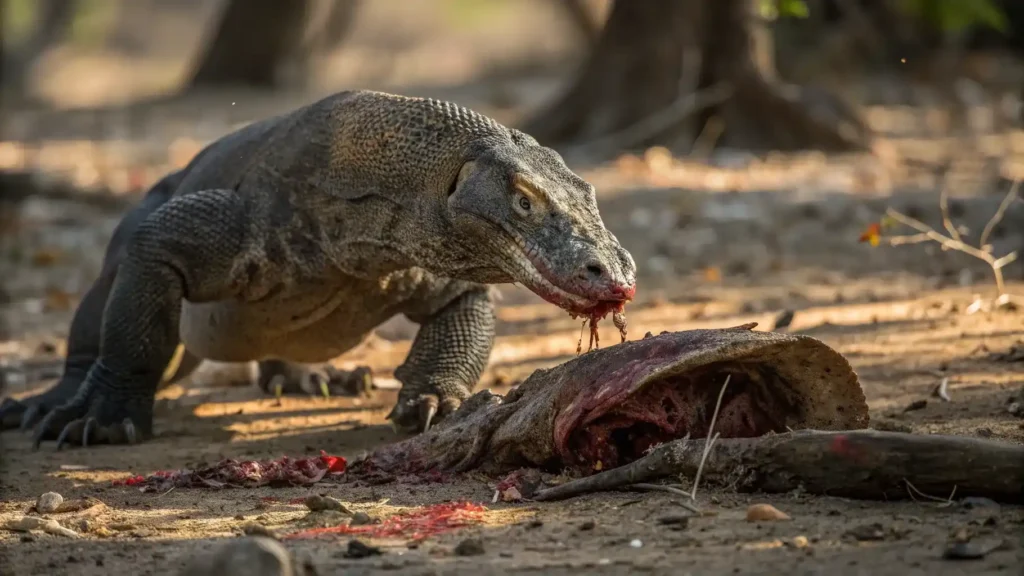
The Komodo dragon’s diet is central to understanding this remarkable reptile. As strict carnivores, Komodo dragons thrive on meat and are highly opportunistic feeders. This means they’ll consume anything from small creatures to massive animals that outweigh them several times over. The diet of Komodo dragons mainly consists of Javan rusa (Rusa timorensis), which serves as a primary food source in their natural habitat.
Adults eat water buffalo, pigs, deer, feral dogs, venomous snakes, and juvenile dragons. Komodo dragons are known to scavenge carrion and will readily feed on dead animals, making use of every possible food source available in their environment. What makes them stand out is not only the wide variety of prey but also the way they consume it, efficient, ruthless, and adapted to their survival.
A fully grown Komodo dragon can devour up to 80% of its body weight in a single meal. Considering that some weigh more than 70 kilograms, this is an astonishing display of appetite and survival strategy.
How Their Diet Changes with Age
Wild Komodo dragons don’t follow a one-size-fits-all meal plan. Instead, the Komodo dragon’s diet changes significantly as they grow, adapting to their environment and survival needs.
- Hatchlings and Juveniles: The first few years of life are the most dangerous. Young Komodo dragons must avoid being eaten by large Komodos, so they spend most of their time in trees. Juvenile dragons are marked by distinctive yellow and black bands, which help camouflage them among the branches. They eat small lizards, eggs, and insects like grasshoppers and beetles. These smaller meals provide the nutrients they need while keeping them safe. Hatchlings receive no parental care and must fend for themselves immediately after hatching.
- Sub-Adults: As they get larger, young dragons begin to hunt on the ground. They target rodents, snakes, birds, and other small mammals. Their growing size allows them to overpower bigger prey compared to their hatchling stage, thus marking the transition toward hunting larger animals.
- Adults: Once they reach adulthood, Komodo dragons sit at the very top of the food chain. They hunt and kill deer, wild boars, goats, and even water buffalo. With powerful jaws and a venomous bite, adults can take down large prey several times their size. In addition, adult Komodo dragons may also prey on juvenile Komodos, which is why younger dragons spend most of their early years in trees. Adults also scavenge carrion when the opportunity arises, proving that survival is all about adaptability.
This gradual dietary progression shows how Komodo dragons live and develop survival skills at each stage of life, eventually becoming fearsome apex predators.
Hunting Strategies: How Komodo Dragons Catch Their Food
Komodo dragons, scientifically known as Varanus komodoensis, may not be the fastest reptiles, but they are true masters of patience and power. Unlike other lizards, their hunting relies more on a stealthy approach than speed. Their unique combination of venom, persistence, and raw strength makes them one of the most feared predators in their environment.
- Ambush Technique: They often lie in wait along well-trodden trails used by prey such as deer or wild boars. By remaining still like stationary objects, they can easily avoid predators themselves while waiting for the perfect moment. Once the prey comes close, their powerful legs allow them to lunge at lightning speed and sink their teeth into the victim.
- Bite and Wait Strategy: The initial attack is crucial, as the Komodo dragon’s first strike can cause severe injury or even fatality to its prey. Their bite injects venom laced with harmful bacteria that lowers blood pressure, prevents clotting, and causes shock. This leads to severe blood loss, making it nearly impossible for the prey to survive. Even if the animal manages to escape the initial strike, the Komodo dragon simply trails it until it collapses.
- Group Feeding: While they usually hunt alone, dozens of dragons can swarm a carcass during a kill. They tear the prey into large chunks, devouring it in a chaotic but efficient feeding frenzy. This showcases the incredible effectiveness of the komodo dragon’s sense of cooperation when it comes to food.
These strategies highlight why Komodo dragons are not only powerful hunters but also an endangered species that continues to fascinate researchers worldwide.
Scavengers of the Wild: Not Just Hunters
Komodo dragons are not only deadly hunters but also skilled scavengers. With their sharp sense of smell, they can detect carrion from up to 5 kilometers away using their forked tongues. This remarkable komodo dragon’s sense gives them a survival advantage, especially when live prey is scarce.
By feeding on carcasses, they reduce the spread of disease and help maintain ecosystem balance. This dual role as both predator and scavenger makes Varanus komodoensis essential to their natural habitat. Their ability to thrive by consuming both fresh kills and decaying remains further proves why these giant lizards are among the most successful survivors in the animal kingdom.
Read more: Does the Komodo Dragon Have an Enemy? Find the Answer Here!
Favorite Prey of Komodo Dragons

Although Komodo dragons are opportunistic, several species dominate their diet in the wild:
- Timor Deer: The most common prey inside Komodo National Park, providing a steady and reliable food source.
- Wild Boars: Rich in protein and fat, wild boars are a favorite target for adult dragons.
- Water Buffalo: Despite their massive size, buffaloes are vulnerable to the dragons’ venomous bite and persistence.
- Long-Tailed Macaques: Agile but still at risk, especially when they descend to the ground.
- Rinca Rats: A staple for younger Komodo dragons, helping them develop hunting skills.
- Civets: Opportunistically hunted, these small carnivores provide extra protein.
- Birds and Smaller Mammals: While not the main diet of adults, these are crucial prey for juveniles learning survival strategies.
Nothing goes to waste. From large ungulates to tiny rodents, Komodo dragons adapt their hunting style to whatever is available, ensuring their survival as apex predators.
How Often Do Komodo Dragons Eat?
One of the most surprising aspects of Komodo dragon biology is how infrequently they need to eat. Because their metabolism is much slower than that of mammals, they can survive on fewer meals. An adult Komodo dragon might consume just 12 full meals a year, yet each meal is so massive that it sustains them for weeks.
For example, after eating up to 80% of their body weight in one sitting, a dragon may rest for several days or even weeks, digesting the food slowly. This ability to go long periods without eating gives them an advantage in an environment where prey is not always abundant. Juveniles, however, tend to eat more often since their meals are smaller and their bodies are still developing. So, when you see a Komodo dragon lounging lazily in the sun, it may not be hungry at all, it could still be full from its last enormous feast.
Why Does This Matters for Your Komodo Adventure?

Now that you know what a Komodo dragon eats, you’ll understand their behavior more clearly during your visit. For instance, if you see a dragon patrolling a trail, you’ll know it might be waiting for deer or wild boars to pass by. If you witness a group feeding, you’ll appreciate the raw intensity of nature at work.
Understanding their diet also highlights their ecological importance. By keeping deer and wild boar populations under control, Komodo dragons prevent overgrazing, which in turn protects the delicate vegetation of the islands. Their scavenging ensures a cleaner ecosystem. So, your encounter is not only exciting but also educational, you get to witness the intricate balance of predator and prey. This knowledge will make your adventure in Komodo National Park feel deeper, more meaningful, and unforgettable.
Read more: Komodo Dragon Myths vs Facts: You Won’t Believe What’s Actually True!
Let’s See a Fascinating Komodo Dragon with Komodo Luxury!
Reading about these powerful predators is one thing, but seeing them up close is an entirely different experience. If you’ve always dreamed of witnessing Komodo dragons in their natural habitat, you can make it happen with a Komodo Island Tour by Komodo Luxury. It’s the perfect way to combine adventure, comfort, and expert guidance while exploring one of the most unique destinations in the world.
With a private phinisi boat, professional guides, and carefully designed itineraries, you’ll explore Komodo National Park in style. You’ll step onto the same trails where dragons roam, watch them bask in the sun, and maybe even see them feeding in the wild. Knowing exactly what a Komodo dragon eats makes the experience even more captivating, you’ll witness firsthand how these apex predators survive and thrive. Beyond the adventure, your journey also supports conservation, helping protect Komodo dragons and their habitat for generations to come. So, are you ready to meet the world’s largest lizard face-to-face and see what truly fuels its survival? Your unforgettable adventure starts now, let’s join Komodo Island Tour with Komodo Luxury!