




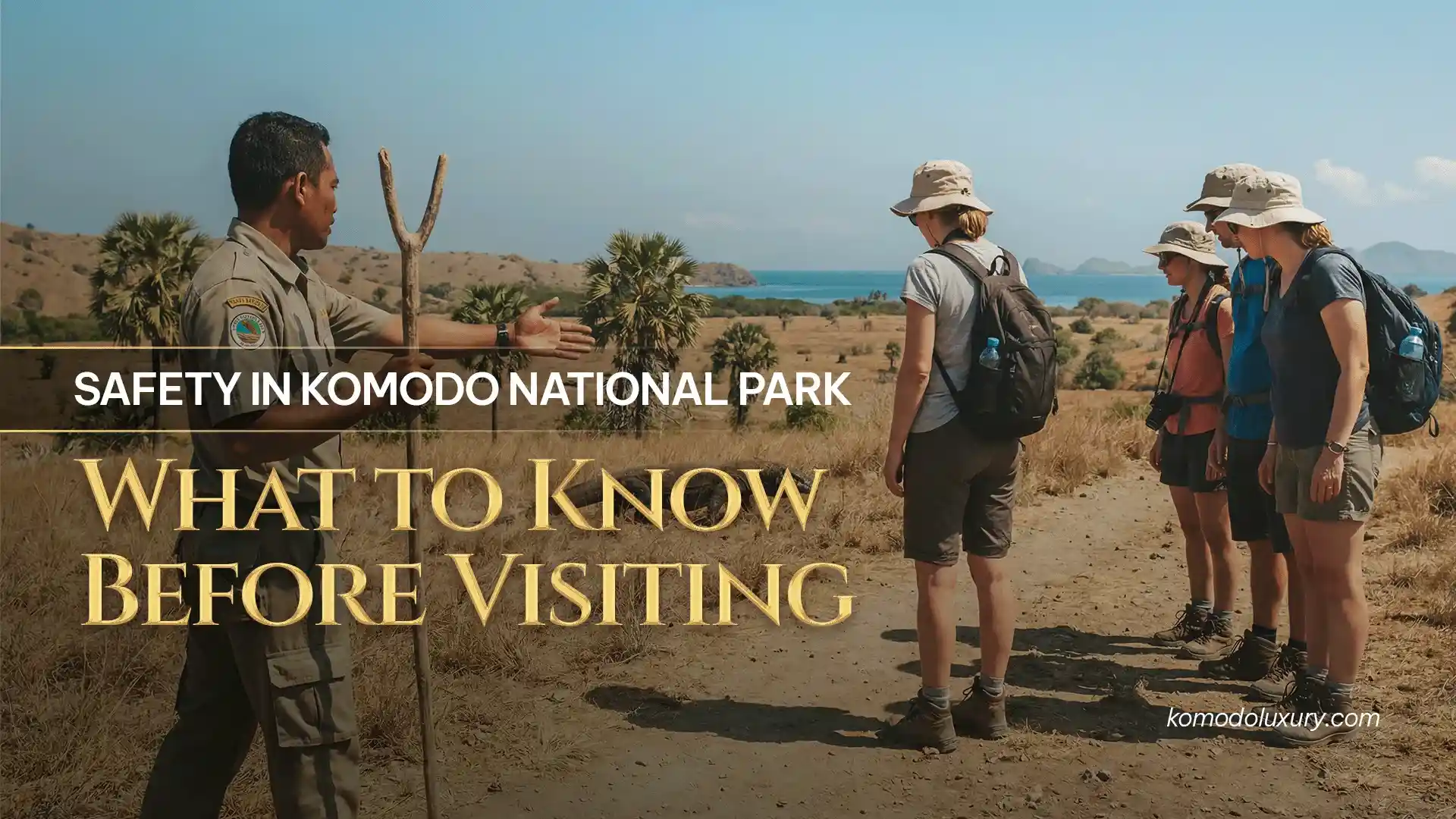
Komodo National Park is often described as one of the last true wild frontiers on Earth. From legendary Komodo dragons roaming freely to remote islands surrounded by powerful ocean currents, it’s natural if you start asking yourself: Is Komodo National Park actually safe to visit? These concerns are valid. Komodo is not a theme park, and it’s not designed to be overly commercial. However, that doesn’t mean it’s unsafe.
In fact, safety in Komodo National Park is well-managed when you understand the environment, follow proper protocols, and choose the right operator. With professional guidance, certified boats, and responsible travel practices, Komodo can be both adventurous and secure. This article will guide you through everything you need to know, so you can experience Komodo National Park with confidence and peace of mind.
Key Takeaways
- Komodo National Park is safe to visit when you follow official regulations and travel with certified operators.
- Safety covers multiple aspects: boat safety, wildlife encounters, trekking, water activities, and health precautions.
- Komodo dragons are wild animals, but encounters are strictly supervised by trained local rangers.
- Ocean activities are safe when guided by professionals who understand Komodo’s currents and conditions.
- Choosing a reputable operator like Komodo Luxury significantly increases comfort, preparedness, and overall safety.
Why Safety in Komodo National Park Matters?
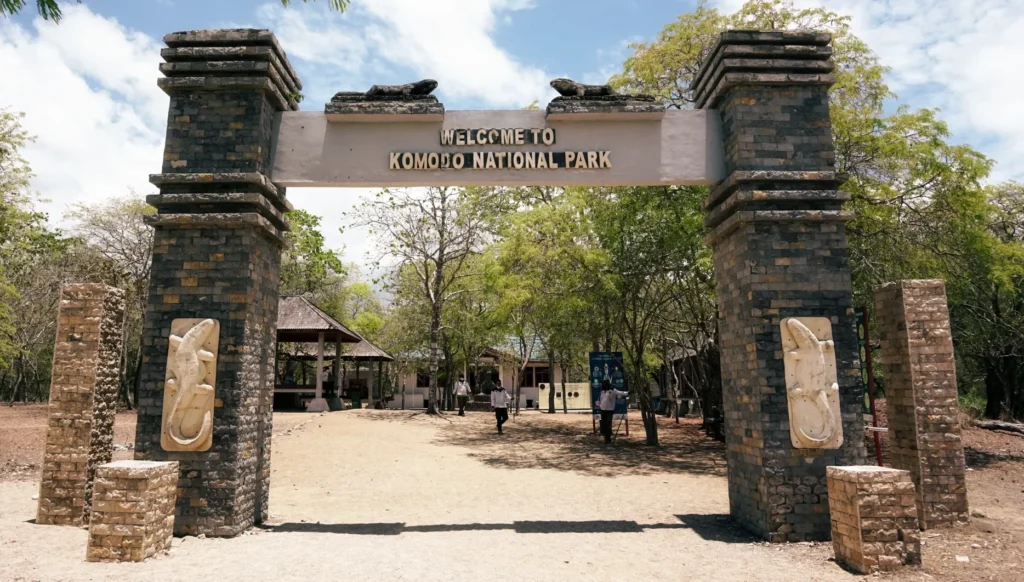
Safety in Komodo National Park matters because you are exploring a protected wilderness where nature, wildlife, and environmental conditions are still fully in control, not humans. Unlike typical tourist destinations, Komodo requires awareness, preparation, and responsible decision-making to ensure your experience remains enjoyable from start to finish. Here’s why safety should always be your top priority when exploring Komodo National Park:
- Komodo National Park is a true wild environment
Wild animals like Komodo dragons roam freely, and that’s part of what makes this destination special. However, because you’re entering their natural habitat, safety protocols exist to protect both you and the wildlife. - The park’s remote location limits immediate assistance
Komodo National Park is far from major hospitals and urban infrastructure. That’s why being prepared and traveling with experienced operators becomes essential, especially if you’re traveling with elders or multiple age groups. - Weather and sea conditions can change quickly
Komodo’s waters are known for strong currents and shifting weather patterns. When safety is prioritized, your itinerary can adapt smoothly, ensuring you stay comfortable without unnecessary risks. - Not all travelers have the same physical needs
Some travelers prefer light trekking, while others may require extra stability or rest time. By focusing on safety, you ensure that every member of your group can enjoy Komodo at a pace that feels right for them. - Responsible safety practices protect your overall experience
When safety is managed properly, you can fully immerse yourself in the scenery without constant worry. In other words, safety isn’t about restriction, it’s what allows you to explore Komodo with confidence and peace of mind.
What Is Safety in Komodo National Park?
Safety in Komodo National Park matters because you are exploring a protected wilderness where nature, wildlife, and environmental conditions are still fully in control, not humans. Unlike typical tourist destinations, Komodo requires awareness, preparation, and responsible decision-making to ensure your experience remains enjoyable from start to finish. Here’s why safety should always be your top priority when exploring Komodo National Park:
1. Komodo Boat Safety

Komodo Boat Safety is the foundation of overall safety in Komodo National Park, because almost every experience here involves sailing between islands. From short transfers to multi-day liveaboard trips, the type of boat you’re on and how it’s managed directly affects your comfort, stability, and peace of mind. Here are the key boat safety aspects you should always pay attention to when exploring Komodo National Park:
- Certified and well-maintained vessels
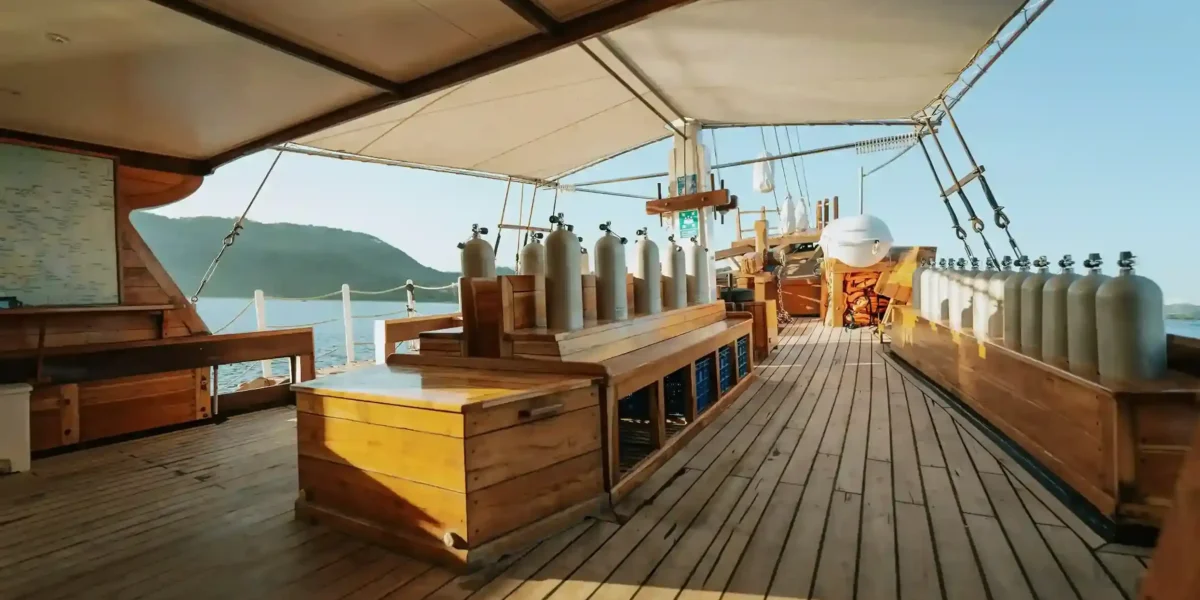
Boats operating inside Komodo National Park should comply with Indonesian maritime regulations and pass regular safety inspections. This ensures the vessel’s structure, engines, and onboard systems are reliable, especially when navigating open waters. - Complete onboard safety equipment
A safe Komodo boat must carry sufficient life jackets for all passengers, fire extinguishers, first-aid kits, and emergency signaling devices. These aren’t just formalities, having them readily accessible makes a real difference in unexpected situations. - Experienced and trained crew members
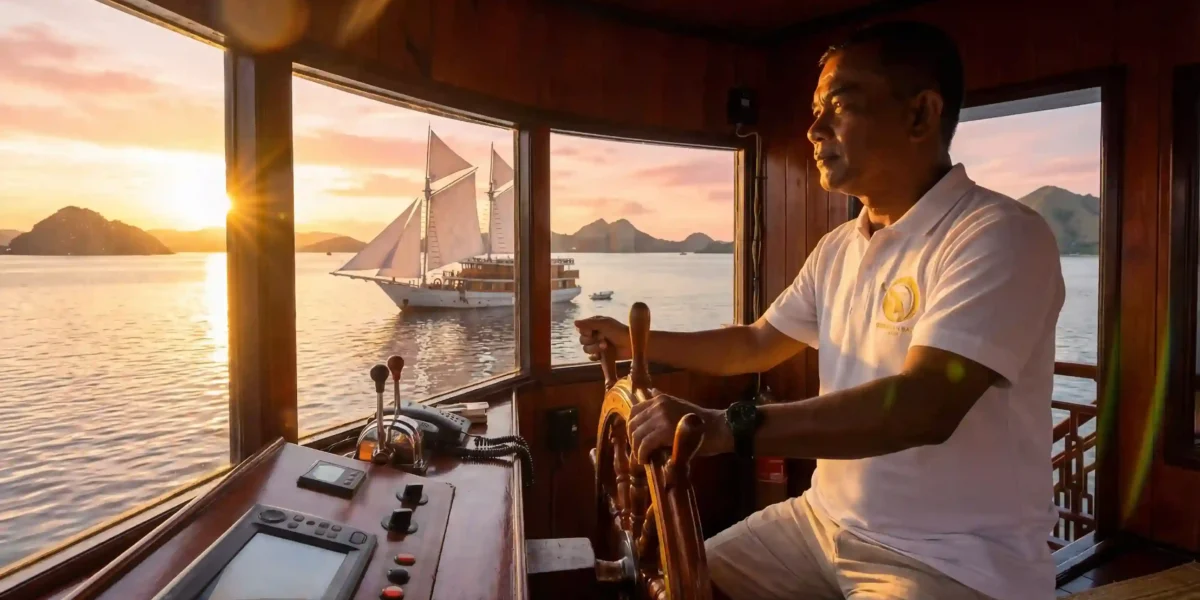
Professional crews understand Komodo’s waters, including strong currents and narrow passages between islands. Their local knowledge allows them to make smart decisions that prioritize safety over rigid schedules. - Clear safety briefings before departure
Before sailing, you should receive a proper safety briefing explaining life jacket use, emergency procedures, and onboard movement guidelines. This is especially important for elders or first-time sailors who may need extra clarity and reassurance. - Stable boat design suitable for all ages
Boats with balanced layouts, handrails, non-slip surfaces, and shaded areas provide a more secure experience for families, elders, and travelers who prefer a calmer journey. - Weather monitoring and flexible routing
Sea conditions in Komodo can change quickly. Safe operators continuously monitor weather forecasts and adjust routes or schedules when necessary, ensuring your journey remains smooth rather than risky.
This is where choosing a premium tour operator also truly matters. Providers like Komodo Luxury prioritize not only regulatory compliance but also proactive safety management, combining certified vessels, attentive crews, and thoughtful onboard comfort. As a result, you can enjoy sailing through Komodo National Park feeling confident, relaxed, and well cared for.
Read more: Komodo Boat Safety Standards 2026: Ensuring a Secure and Luxury Sailing Experience
2. Wildlife Encounters Safety

Wildlife encounters are one of the most defining experiences when you visit Komodo National Park, especially when you see Komodo dragons in their natural habitat. At the same time, this is exactly why safety in Komodo National Park matters so much, because you are stepping into a protected conservation area where wildlife lives freely and behaves naturally.
To maintain safety in Komodo National Park, wildlife encounters are governed by strict regulations designed to protect you, the animals, and the ecosystem. Here’s how safety and responsibility are applied during wildlife interactions:
- Always accompanied by licensed park rangers
Whenever you explore Komodo or Rinca Island, you will be guided by official park rangers. They are trained to read Komodo dragon behavior and position you at a safe distance throughout the visit. - Keep a safe distance and follow ranger instructions at all times
You should always maintain a safe distance of around 3–5 meters from Komodo dragons, depending on the situation and the ranger’s assessment. Just as importantly, you need to follow the ranger’s instructions closely, because they continuously adjust positioning based on the animal’s behavior and surrounding conditions. - Must not feed, touch, or interact with wildlife
Feeding or touching Komodo dragons and other wild animals is strictly prohibited. Not only does this disrupt their natural behavior, but it can also increase danger for you and other visitors. - Not allowed to disturb, damage, or take anything from the park
Inside Komodo National Park, you should not disturb wildlife, damage natural surroundings, or remove any plants, animals, or natural objects. Respecting this rule helps keep the environment balanced and safe for future visits. - Explore in organized groups for better control and safety
Wildlife encounters are conducted in small groups, allowing rangers to manage movement effectively. This approach also ensures that elders or travelers who need extra support receive proper attention.
3. Trekking and Island Safety
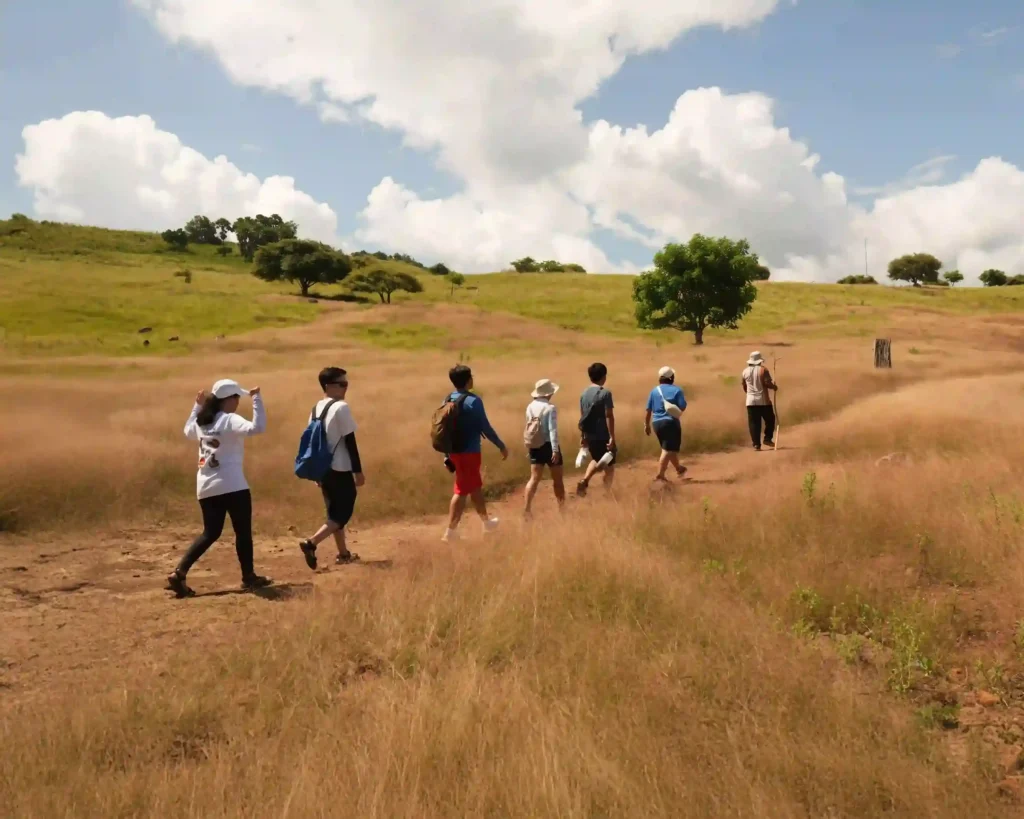
Trekking in Komodo National Park is safe and enjoyable as long as it is done on official routes and under proper supervision. Because the islands are protected conservation areas, safety in Komodo National Park during trekking depends on discipline, guidance, and choosing routes that suit your abilities. Here are the essential trekking safety principles you should keep in mind during your visit:
- Official trekking routes with mandatory guide supervision
Trekking is only allowed on designated trails approved by park authorities, and you must always be accompanied by licensed guides or park rangers. Staying on official routes reduces the risk of unexpected wildlife encounters and unsafe terrain. - Route selection based on island and physical ability
Trekking routes on Komodo Island and Rinca Island vary in distance, elevation, and difficulty. Because of this, you should choose a route that matches your physical condition rather than pushing yourself beyond your comfort level. - Pace adjustment and group management
Guides will naturally adjust walking pace, rest stops, and group formation based on the needs of the group. This is especially important when elders or less experienced trekkers are part of the journey. - Comfortable footwear and suitable clothing
Wearing comfortable, non-slip shoes and breathable clothing helps you move safely on uneven terrain and under strong sun exposure. Proper attire not only improves comfort but also reduces the risk of slips, fatigue, and overheating. - Clear briefings and ongoing instructions
Before and during the trek, guides provide clear instructions about trail boundaries, duration, and safety precautions. By listening and following their guidance, you help ensure a smooth and secure trekking experience.
4. Water Safety in Komodo National Park
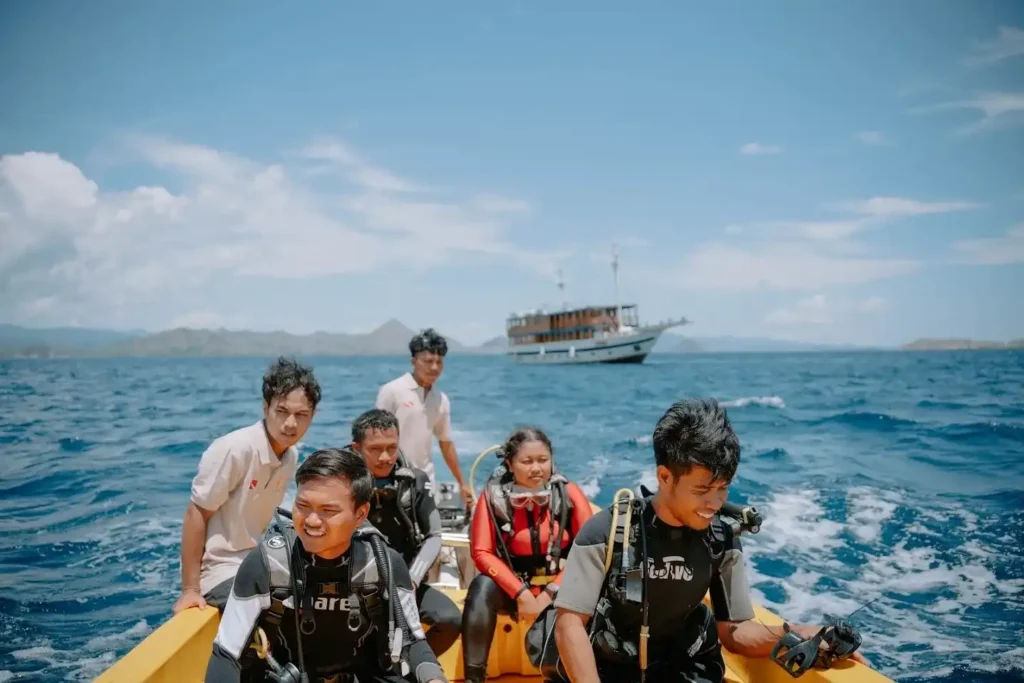
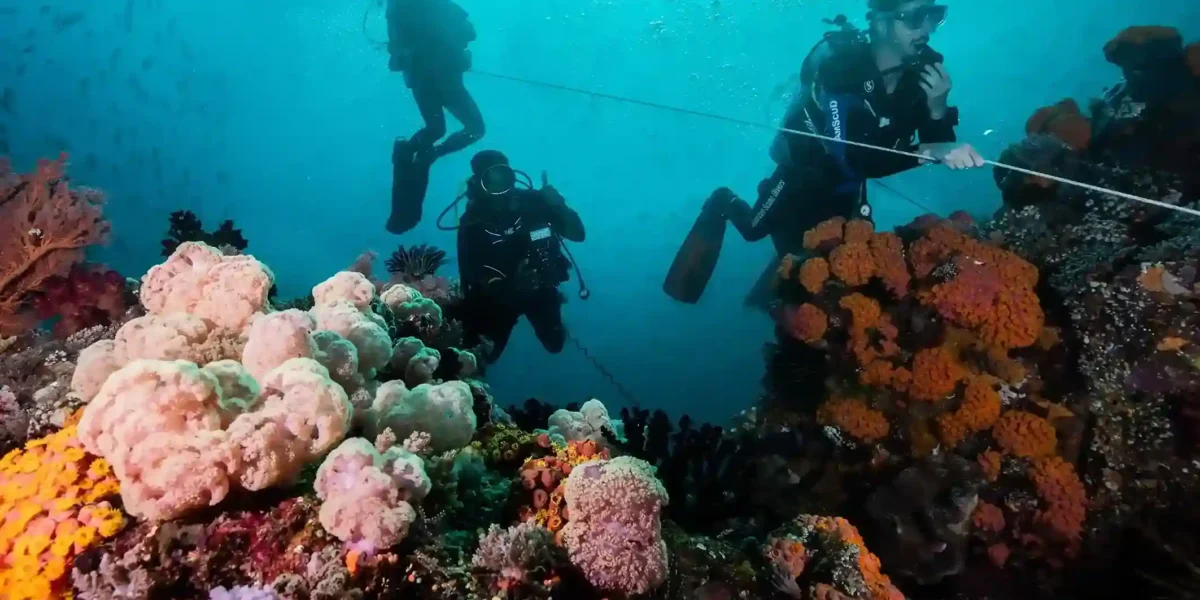
Water activities are a major highlight of visiting Komodo National Park, from snorkeling to short swims near the boat. However, because the park is located in open waters where currents can be strong, safety in Komodo National Park also depends on how well water activities are managed and supervised. To keep your experience safe and enjoyable, here are the key water safety principles you should always follow:
- Swimming and snorkeling only in designated areas
Water activities are conducted only in spots that have been assessed by guides as safe based on currents, tides, and visibility. You should never enter the water outside approved areas, even if conditions appear calm. - Mandatory supervision by guides and crew
Every water activity is monitored by experienced guides or boat crew who understand local sea conditions. They continuously observe the water and are ready to assist you if needed. - Use of life jackets and flotation devices
Wearing a life jacket is strongly recommended, especially if you are not a confident swimmer or if elders are part of the group. Even strong swimmers benefit from added buoyancy in areas with changing currents. - Awareness of changing sea conditions
Sea conditions in Komodo National Park can change quickly. Because of this, guides may limit or stop water activities at any time, and you are expected to follow their instructions for your own safety. - Respect for marine life and underwater environment
You should avoid touching corals, standing on reefs, or chasing marine animals. Respecting marine life not only protects the ecosystem but also prevents injuries caused by sharp corals or unexpected animal reactions.
5. Environmental & Health Safety
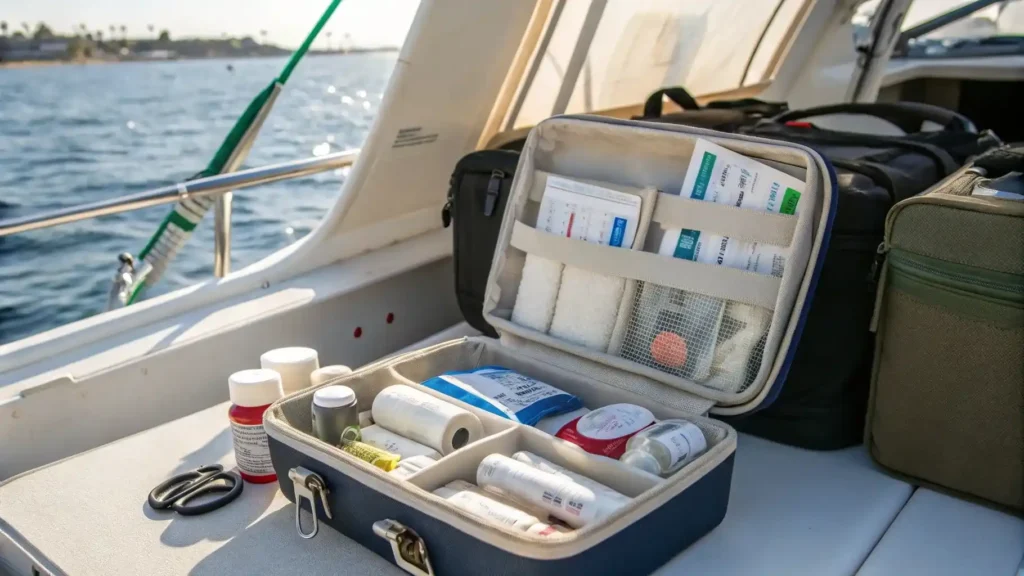
Environmental and health considerations are an essential part of safety in Komodo National Park, because your well-being is closely connected to how the environment is preserved and managed. Since the park is remote and protected, staying healthy and respecting nature go hand in hand. Here are the key environmental and health safety principles you should keep in mind during your visit:
- Respect conservation rules to maintain a safe environment
You are expected to follow all park regulations, including not littering, not damaging natural surroundings, and not taking anything from the park. These rules help maintain ecological balance and reduce safety risks caused by environmental disruption. - Sun protection and heat awareness
Komodo National Park has a dry climate with strong sun exposure. You should use sunscreen, wear a hat, and take breaks when needed to prevent dehydration or heat-related discomfort. - Hydration and basic health preparedness
Drinking enough water throughout the day is essential, especially during trekking and island exploration. You are also encouraged to carry personal medication and inform your guide if you have specific health conditions. - Limited medical facilities and emergency preparedness
Because the park is located far from major medical centers, prevention is key. Professional operators prepare first-aid equipment and emergency procedures, ensuring that you are supported if unexpected situations arise. - Responsible behavior for long-term safety
Environmental safety is not just about rules, it’s about mindset. By traveling responsibly, you help protect the park while ensuring that future visitors can enjoy Komodo National Park safely as well.
Tips for a Safe Komodo National Park Experience
Staying safe in Komodo National Park starts with following the right tips designed to help you navigate the park responsibly and confidently. These practical tips cover everything for you when visiting Komodo National Park:
- Choose licensed and experienced operators
Safety in Komodo National Park begins with choosing licensed operators who truly prioritize safety at every stage of the journey. By traveling with operators like Komodo Luxury, which has over a decade of experience, well-trained crews, and clear safety briefings, you benefit from itineraries that adapt to real-time conditions, allowing you to explore with confidence and peace of mind. - Always follow ranger and guide instructions
Rangers and guides are trained to assess real-time risks, especially during wildlife encounters and trekking activities. By following their instructions closely, you reduce unnecessary risks and allow the experience to unfold safely. - Stick to designated routes and respect wildlife distance
Always stay on official trekking paths and avoid venturing outside designated routes, as these areas are designed with safety and conservation in mind. Maintaining a safe distance of around 3–5 meters from wildlife, especially Komodo dragons, helps protect you and preserves natural behavior. - Wear proper gear and know your physical limits
Comfortable clothing and sturdy, non-slip footwear are essential for trekking across uneven terrain and hot climates. Choosing routes that match your physical ability, whether on Rinca or Komodo Island, ensures the experience remains safe and enjoyable for all ages. - Protect yourself from climate and health risks
Staying hydrated, using sun protection, and taking breaks help you manage the tropical heat effectively. These simple precautions significantly reduce the risk of fatigue, dehydration, and heat-related issues during your visit. - Respect nature and park regulations
Do not disturb, feed, capture, or remove anything from within Komodo National Park. Respecting these regulations supports conservation efforts while ensuring a safer environment for both visitors and wildlife.
Read more: Komodo Sailing Trip Safety Tips 2026: Essential Things to Know Before Sailing
Let’s Enjoy Komodo National Park Safely with Komodo Luxury!
Safety in Komodo National Park is built around a complete system that supports every part of your journey, from certified boat standards and trained crews to supervised wildlife encounters, guided trekking routes, well-managed water activities, and essential health precautions. When these elements work together, your experience feels organized and reassuring, even in a remote and truly wild environment like Komodo. Rather than limiting your adventure, proper safety measures allow you to explore more freely while staying prepared, protected, and at ease throughout the trip.
This is why choosing an experienced and responsible tour operator truly matters. Traveling with operators like Komodo Luxury, backed by over a decade of experience, well-trained crews, and consistently positive guest feedback, helps ensure those safety standards are applied thoughtfully in real situations. With itineraries that adapt to changing sea and weather conditions, safety becomes an integral part of the journey, not an afterthought.
So, let’s book your Komodo Island Tour with Komodo Luxury now and experience Komodo National Park the way it should be explored: safely, responsibly, and comfortably, with complete peace of mind from start to finish!