



Last updated: April 2026 · Prices & availability verified for the 2026/2027 season
Diving in Komodo is often described as one of the most thrilling underwater experiences in the world, but also one of the most misunderstood. If you are wondering how difficult is diving in Komodo Island, the honest answer is that it depends heavily on where you dive, your certification level, and how comfortable you are with currents and drift diving.
Unlike many tropical dive destinations that offer consistently calm conditions, diving in Komodo National Park is dynamic. It shifts between calm, easy reef dives and powerful current-driven channels that demand advanced control and awareness. And that contrast is exactly what makes it so famous among experienced divers. In this article, you will get a clear breakdown of Komodo diving difficulty, so you can plan your trip with confidence and the right expectations.
Key Takeaways
- Diving in Komodo National Park is not fixed in difficulty, but instead ranges from easy to highly challenging depending on dive site, currents, and diver experience level, making it a highly dynamic diving destination rather than a uniform one.
- The main factor that determines how difficult diving feels in Komodo is the strong and often unpredictable current system, which can turn a calm reef dive into a fast-moving drift dive within the same trip.
- Komodo diving conditions are generally divided into three regions, where South Komodo offers calmer beginner-friendly dives, Central Komodo provides balanced and moderate drift conditions, and North Komodo presents the most advanced and current-intensive environments.
- Because of this variability, Komodo is best suited for divers who understand drift diving fundamentals or are willing to adapt, making it one of the most rewarding but also skill-dependent diving destinations in the world.
How Difficult Is Diving in Komodo Island?
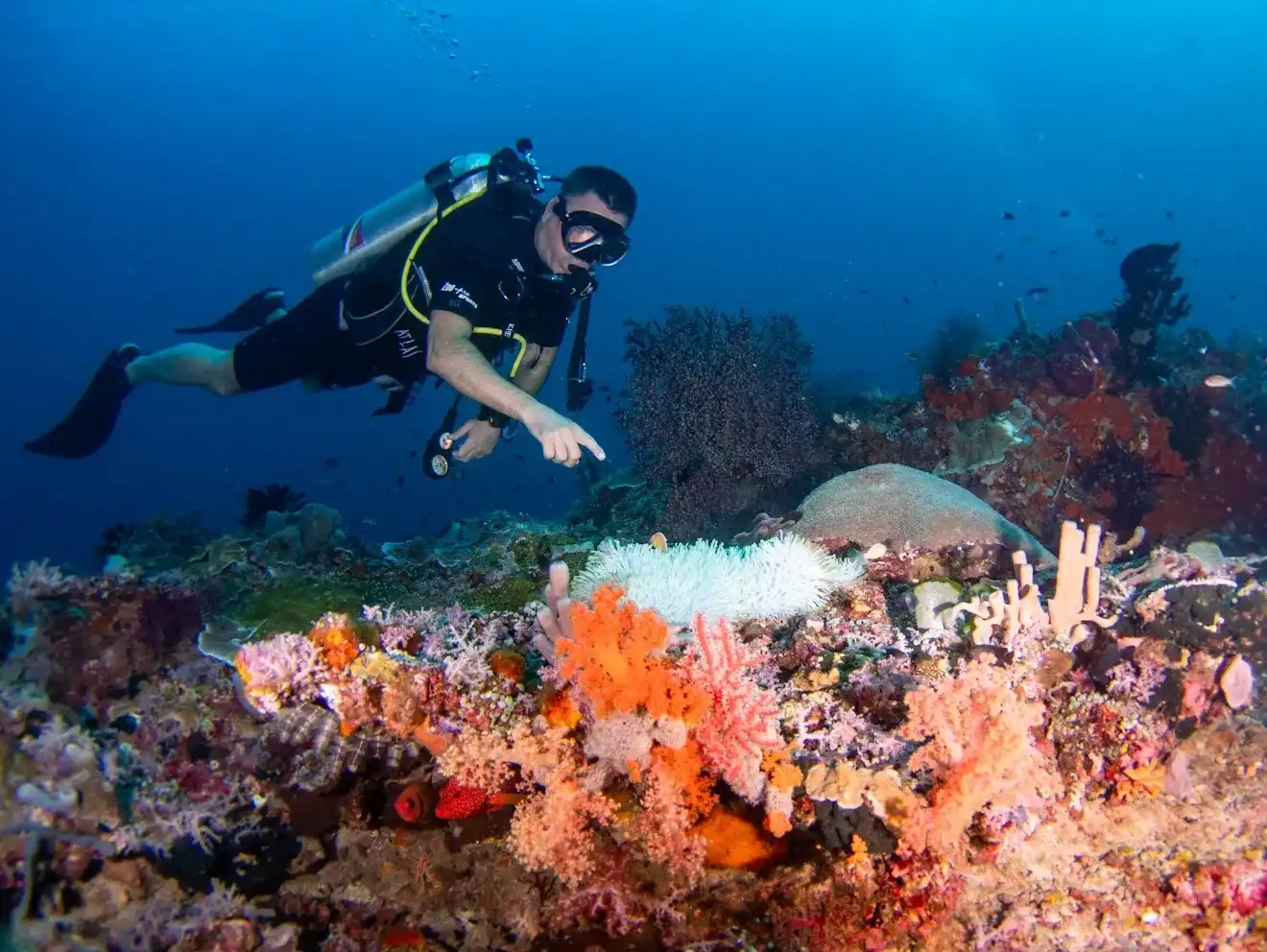
Diving in Komodo Island ranges from easy to very challenging, depending on the dive site, current strength, and your experience level. In practice, Komodo is not consistently “difficult,” but it is rarely as relaxed as typical tropical dive destinations. The main factor that defines difficulty is the strong and often unpredictable current system, which can change based on tides, location, and time of day.
To make it clearer, here is how the difficulty typically breaks down:
- Beginner Level (Easy Conditions)
Found mostly in sheltered areas, especially in South Komodo. You can dive here with an Open Water certification, but you still need basic buoyancy control and comfort in mild movement underwater. - Intermediate Level (Moderate Difficulty)
Common in Central Komodo, where you will start experiencing drift diving conditions. You are expected to handle light to moderate currents, maintain positioning, and follow your guide closely. - Advanced Level (Challenging Conditions)
Mostly in North Komodo, where strong currents, deeper dive profiles, and exposure to open water require Advanced Open Water certification and real experience in current diving.
What makes Komodo unique is that difficulty is highly variable even within a single trip. You might have a calm dive in the morning and a fast-moving drift dive in the afternoon at a different site. So overall, Komodo is best described as a dynamic diving destination, where the challenge is not constant but depends on how well your skills match the specific dive conditions you encounter.
The Three Diving Regions in Komodo and Their Difficulty Levels
One of the most important things to understand when evaluating how difficult diving in Komodo Island is that the area is divided into three main regions: North, Central, and South within Komodo National Park. Each region has distinct underwater characteristics, and this directly affects how challenging your dives will feel. Rather than being uniformly difficult, Komodo offers a gradient of conditions, which means your overall experience depends on where you dive and how those sites match your skill level.
Here’s how each region differs in terms of diving difficulty:
| Region | Difficulty | Currents | Dive Style | Best For |
| North Komodo | Advanced | Strong, unpredictable, multi-directional | Deep pinnacles, drift dives | Advanced Open Water+ divers, experienced drift divers |
| Central Komodo | Intermediate | Mild to moderate, more stable | Controlled drift, reef & manta sites | Open Water–Advanced divers |
| South Komodo | Beginner–Intermediate | Weak to mild, relatively stable | Shallow reefs, slow-paced dives | Open Water divers, skill-building |
1. North Komodo Diving: Strong Currents and Advanced Conditions
North Komodo is widely considered the most challenging diving region in Komodo National Park, and it is specifically suited for divers who are already comfortable in strong current environments and dynamic underwater conditions.
What makes North Komodo demanding in practice:
- Best suited for: Advanced Open Water divers and above with real drift diving experience; seasoned divers are especially recommended for sites like Crystal Rock and Castle Rock
- Current behavior: Strong, multi-directional, and often unpredictable tidal-driven currents
- Dive profile: Deeper pinnacles, sloping reefs, and walls with increased depth exposure, offering opportunities for deep diving and requiring careful air consumption management
- Underwater environment: Open ocean influence with minimal protection from external swell and surge; sloping reefs provide habitats for diverse marine life such as reef sharks, trevallies, Napoleon wrasse, eagle rays, and white tip sharks
In this region, dive sites like Batu Bolong and Castle Rock are not just visually impressive, but also technically demanding. The currents often wrap around pinnacles and reef structures, creating fast-moving drift scenarios where positioning is constantly adjusted rather than static observation.
Because of this, diving in North Komodo is less about “floating and watching” and more about active underwater control, where buoyancy, situational awareness, and timing directly affect both safety and enjoyment. Even experienced divers often find that conditions can shift within minutes, which is why dive briefings in this region are highly detailed and always adjusted based on real-time ocean conditions.
2. Central Komodo Diving: Balanced Conditions with Controlled Challenge
Central Komodo is the most versatile diving region in Komodo National Park, offering a balance between manageable conditions and enough current activity to make dives engaging without becoming overwhelming for most divers. This is the area where many divers first experience structured drift diving in Komodo, but in a more controlled and predictable environment compared to the north.
What defines Central Komodo diving difficulty in practice:
- Best suited for: Open Water divers with good buoyancy control to Advanced divers depending on site selection
- Current behavior: Mild to moderate tidal currents, generally more predictable and stable than North Komodo
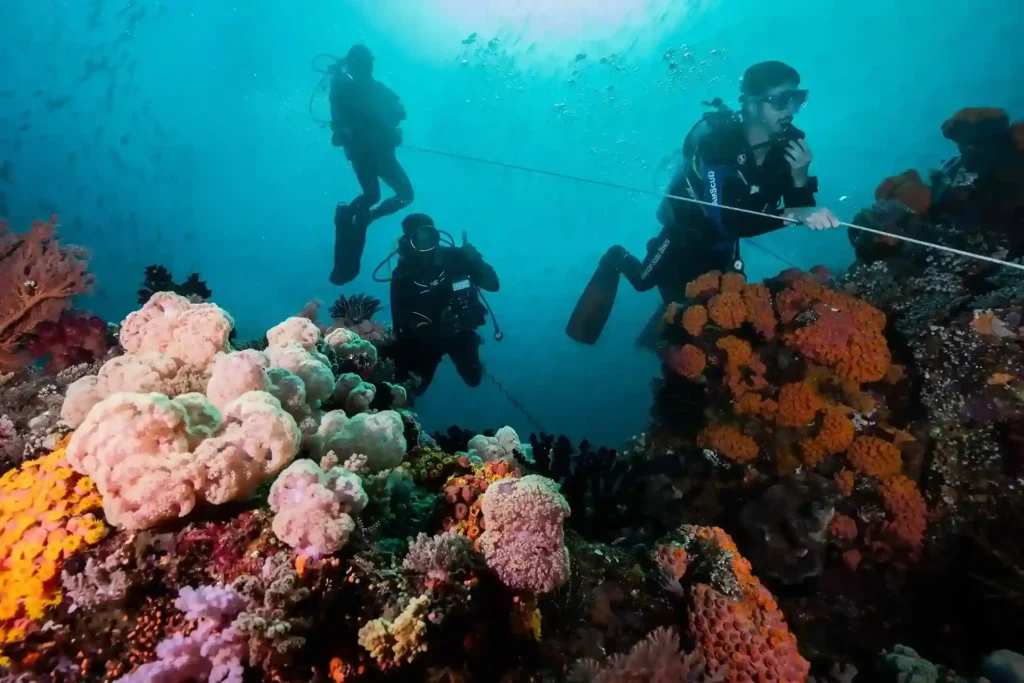
- Dive style: Controlled drift diving with guided positioning along reefs and cleaning stations
- Marine encounters: High probability of manta rays, reef fish schools, and healthy coral ecosystems
Sites such as manta cleaning stations are the highlight here, where divers often experience gentle to moderate movement in the water column while observing large pelagic species in structured cleaning behavior.
Unlike North Komodo, where diving feels more reactive, Central Komodo allows a more balanced rhythm underwater, where you still move with the current but maintain more stability and visual control throughout the dive. This region is often used by dive operators to transition divers into stronger Komodo conditions, making it a key learning and adaptation zone within most Komodo liveaboard diving itineraries.
3. South Komodo Diving: Calmer Waters with Subtle Environmental Shifts
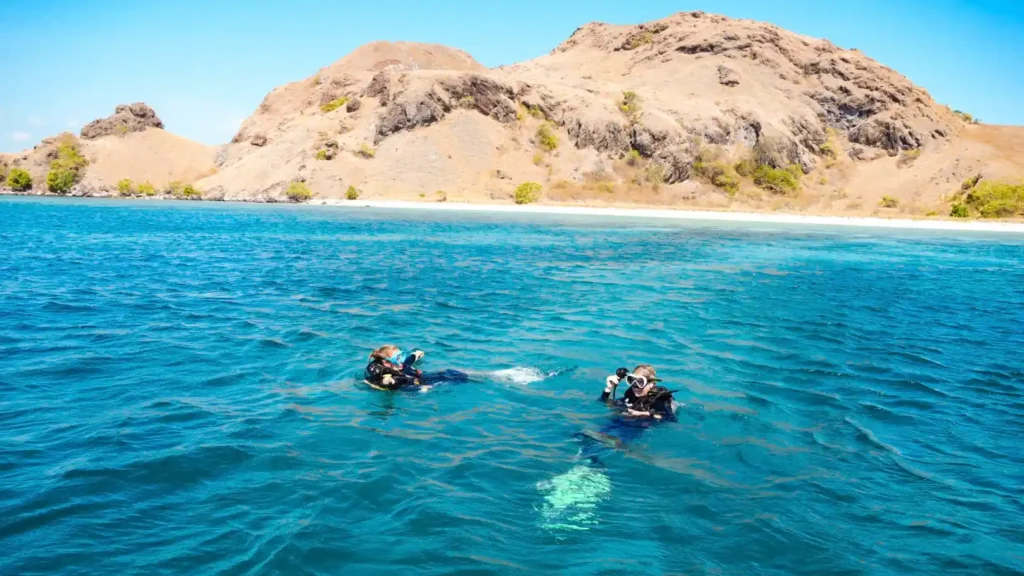
South Komodo offers the most sheltered diving conditions in Komodo National Park, making it the most accessible region for beginners or divers who prefer slower-paced underwater experiences. However, while it is calmer compared to other regions, it is still part of an active ocean system, meaning conditions remain dynamic and should not be underestimated.
What defines South Komodo diving difficulty in practice:
- Best suited for: Open Water divers under guided supervision and divers building confidence in open water environments
- Current behavior: Weak to mild currents, generally more stable but still influenced by tidal changes
- Dive environment: Shallow reef systems, gradual slopes, and longer bottom times due to calmer conditions
- Dive experience: Slow-paced exploration with focus on buoyancy control and reef observation
This region is often chosen for skill-building dives, where divers can focus on improving buoyancy, breathing control, and comfort in open water without the pressure of strong drift conditions. That said, South Komodo is not “static diving.” Conditions can still shift depending on tidal movement, so divers are still expected to maintain fundamental awareness and basic current reading skills. Because of its calmer nature, this region is often used as an introduction phase before divers progress toward more dynamic sites in Central or North Komodo within a structured Komodo liveaboard diving route.
Read more: Komodo Diving Season 2026: Timing the Perfect Dive
Tips to Handle Diving Difficulty in Komodo Island
When discussing how difficult diving in Komodo Island is, the key point is that the difficulty in Komodo National Park can be managed with the right preparation and mindset. Because conditions vary from calm reefs to strong drift currents, your experience depends heavily on how well you adapt underwater.
Here are practical tips to help you handle Komodo diving conditions more safely and comfortably:
- Match Your Dive Site Selection With Your Certification Level
Choose dive sites based on your certification and real experience, not just comfort or curiosity. Staying within your limits ensures you can enjoy Komodo safely without being overwhelmed by current conditions. - Strengthen Your Buoyancy Control Before the Trip
Good buoyancy control helps you stay stable in Komodo’s drifting conditions without unnecessary energy loss. It also protects coral ecosystems while keeping your air consumption more efficient. - Learn to Trust Drift Diving Techniques
In Komodo, many dives are drift dives where the current carries you instead of you swimming against it. Staying relaxed and following your guide is essential for safety and control underwater. - Always Pay Attention During Dive Briefings
Dive briefings in Komodo are highly specific because conditions change by site and timing. Understanding entry points, current direction, and safety procedures directly improves your underwater experience. - Manage Air Consumption in Moving Water
Currents can increase air consumption faster than in calm dive sites, especially in deeper or high-energy areas. Minimizing unnecessary movement helps you stay longer and dive more comfortably. - Choose a Well-Structured Komodo Liveaboard Experience
A Komodo liveaboard allows dive schedules to adapt based on real-time ocean conditions and diver capability. With a fleet-owned operator like Komodo Luxury, itineraries are adjusted daily to ensure safety, comfort, and optimal dive site selection.
Read more: Komodo Diving Liveaboard 2026: Your Ultimate Guide to Luxury Diving Adventures
Plan Komodo Liveaboard Diving Experience with Komodo Luxury
So, to fully understand how difficult diving in Komodo Island is, it ultimately comes down to how dynamic and location-dependent the conditions are within Komodo National Park. Depending on whether you dive in the north, central, or south, the experience can shift from calm reef diving to strong current drift dives that require advanced control and awareness. This variability is exactly what makes Komodo both challenging and highly rewarding for divers who are properly prepared.
To experience it most safely and seamlessly, a well-structured liveaboard journey makes a real difference. With Komodo Luxury, your Komodo liveaboard experience is operated through a fleet-owned luxury yacht charter, where dive planning, routing, and onboard comfort are fully managed by an experienced team. Every itinerary is adjusted daily based on real-time conditions, so you can enjoy Komodo at the right sites, at the right time, and with the right level of challenge. If you’re ready to dive in Komodo, you can simply reach out to our team and book your Komodo liveaboard experience with us now.