
科莫多奢華之旅——頂級科莫多遊船之旅與拉賈安帕特潛水之旅
Manta Point Destination

Manta Point Destination

Swim with the Giants

曼塔角

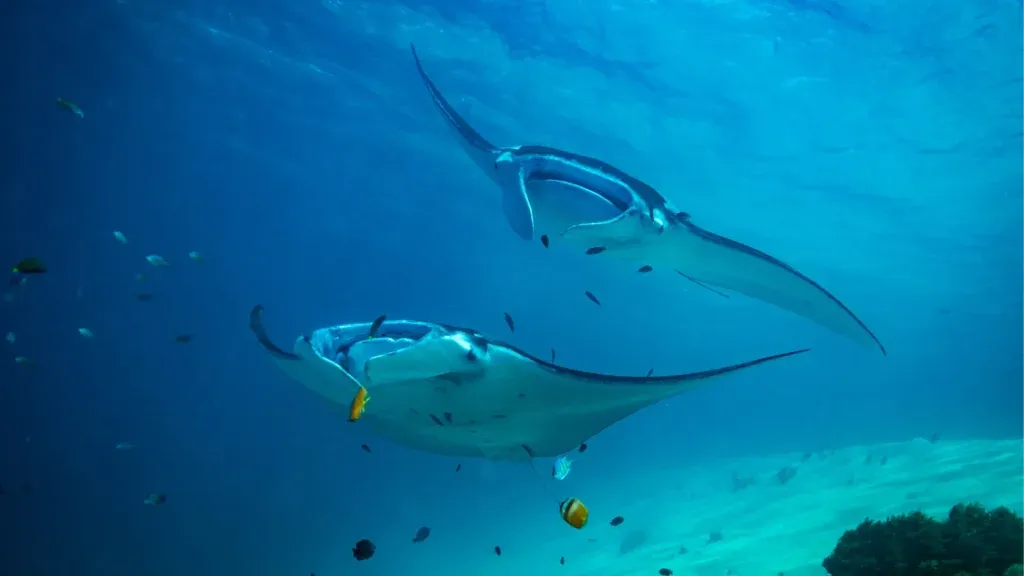
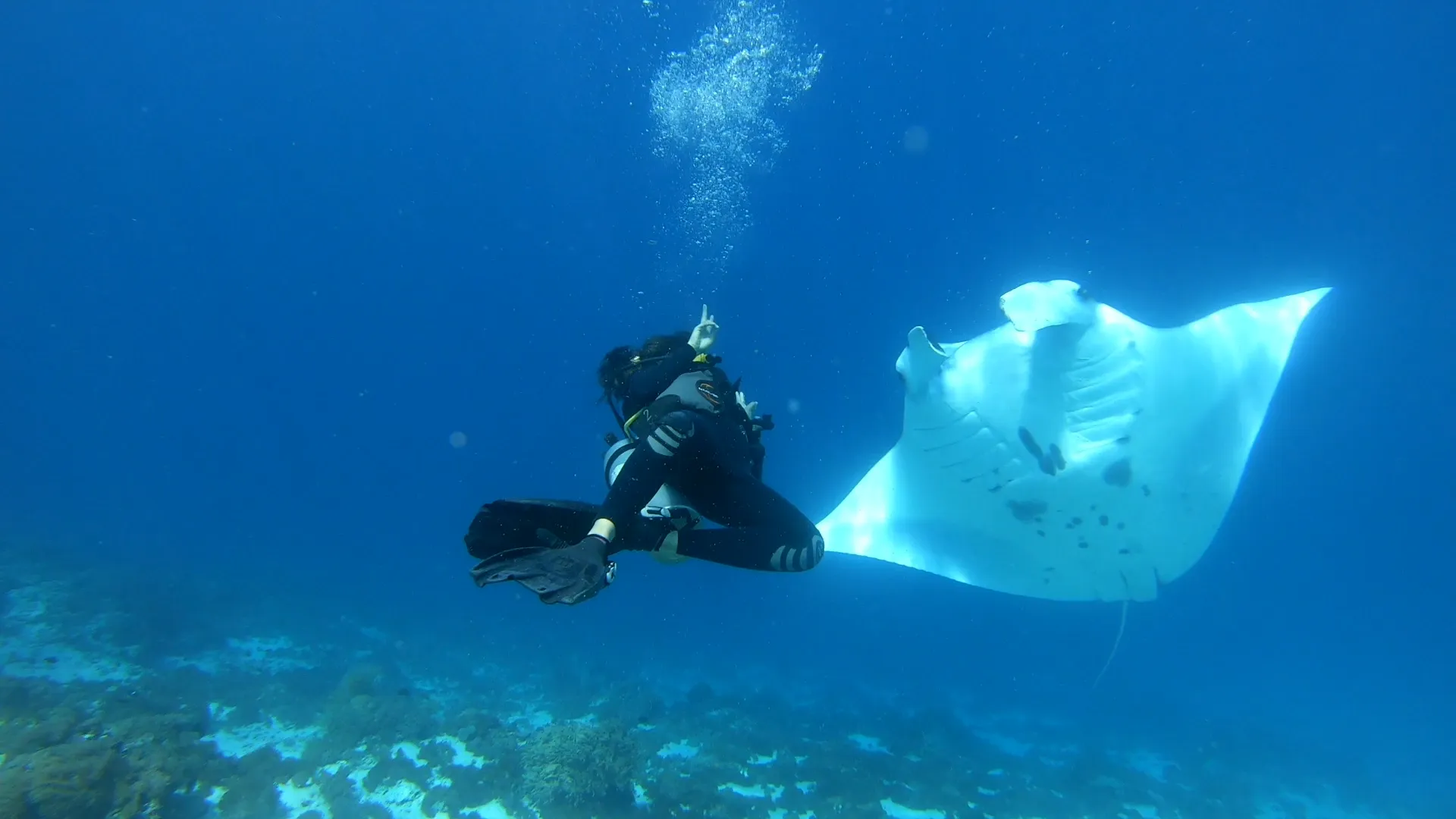
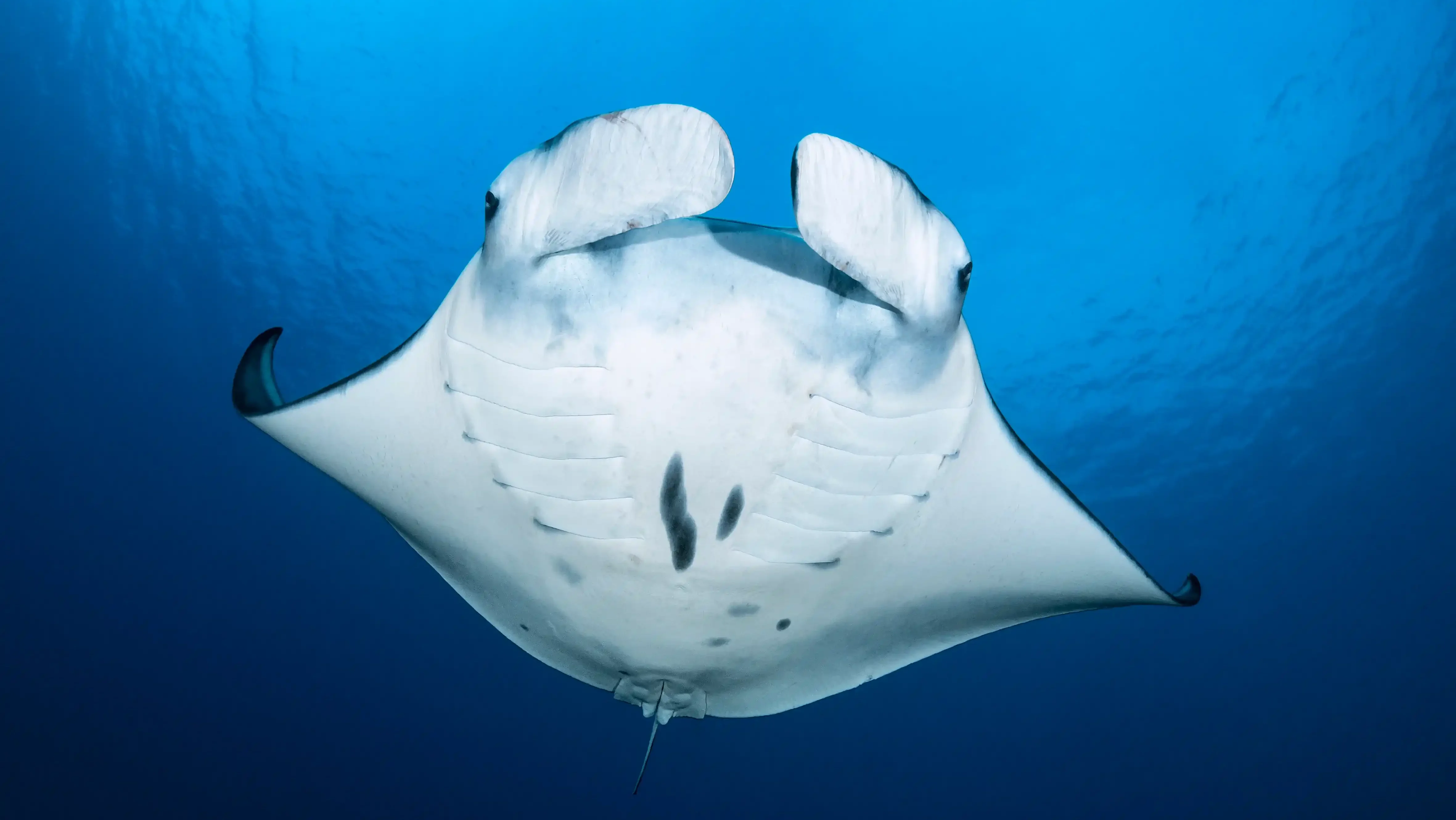
Manta Point is one of the most celebrated marine sites in Komodo National Park and among a small number of locations in the world where oceanic manta rays (Mobula birostris) can be reliably encountered by swimmers and divers. The site lies off the southern coast of Komodo Island, within the boundaries of Komodo National Park in Eastern Indonesia, and draws visitors from across the world who come specifically to enter the water alongside these animals. At full wingspan, oceanic manta rays can reach up to seven metres — making an encounter at close range a genuinely rare and striking experience. For guests aboard a Komodo Luxury private charter, Manta Point is a centrepiece of almost every central Komodo itinerary

What is Manta Point

Also known as Karang Makassar — meaning "Makassar Reef" — Manta Point is the largest single dive site in Komodo National Park and one of the most productive manta ray feeding zones in the world. The site is a shallow, largely flat rubble plateau scattered with coral bommies and sand channels — stretching approximately 3 kilometres long and up to 500 metres wide. It functions, in effect, as a natural manta ray highway: the reef sits in a channel where opposing tidal currents drive cold, plankton-rich water to the surface, creating the upwelling that draws mantas here in consistent numbers.
Manta Rays Point - Komodo Luxury
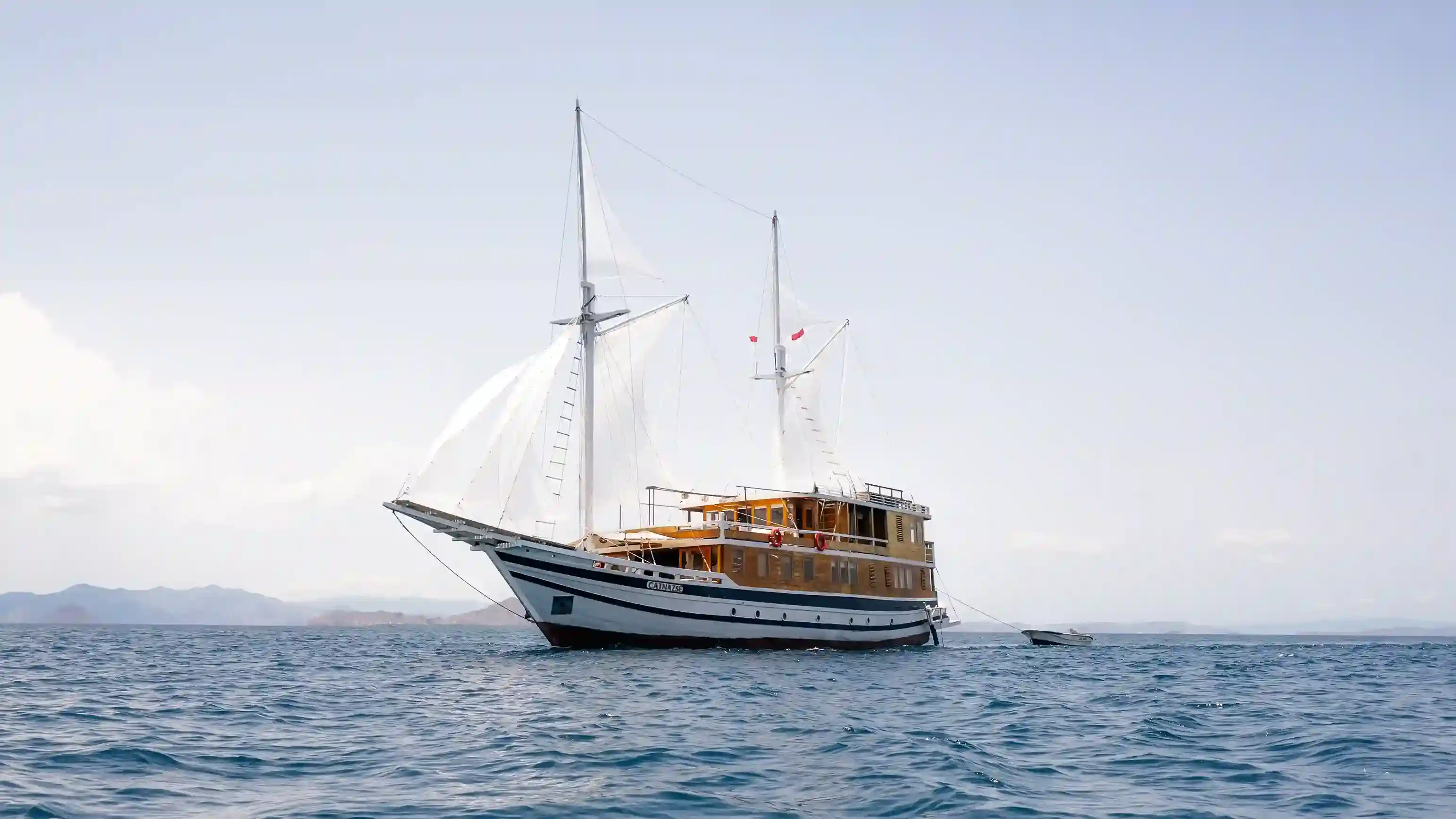
曼塔角的蝠魨 | Catnazse 遊艇式菲尼西船 | 科莫多豪華之旅

曼塔角在哪裡

Manta Point is located inside Komodo National Park, between Komodo Island and Tatawa Besar Island. The site sits in the central zone of the national park, accessible by a short boat ride from Labuan Bajo — the main gateway to Komodo. Its position between Komodo Island and Tatawa Besar places it within easy reach on any multi-day charter itinerary, typically combined with a Komodo dragon trek on the island itself. Manta Point is accessible to both snorkelers at the surface and divers descending to 5–25 metres. Visibility varies significantly depending on current phase, time of day, and season — visiting with an operator who understands the site's tidal windows makes a meaningful difference to the quality of the encounter.  

Why Manta Point is a Must Visit

  • 蝠魨的棲息地:曼塔角以蝠魨聞名,是海洋愛好者和生態旅遊者的必訪之地。
  • 生物多樣性:除了蝠魟之外,您還能欣賞到生機盎然的珊瑚礁,那裡有礁鯊、海龜和成群的魚兒。
  • 潛水與浮潛天堂:清澈且營養豐富的水質,讓此處成為初學者與經驗豐富的潛水員的理想去處
Manta point (Makassar Reef) - KomodoLuxury
Manta Rays on Komodo National Park | Komodo Island Tour

What to Expect at Manta Point

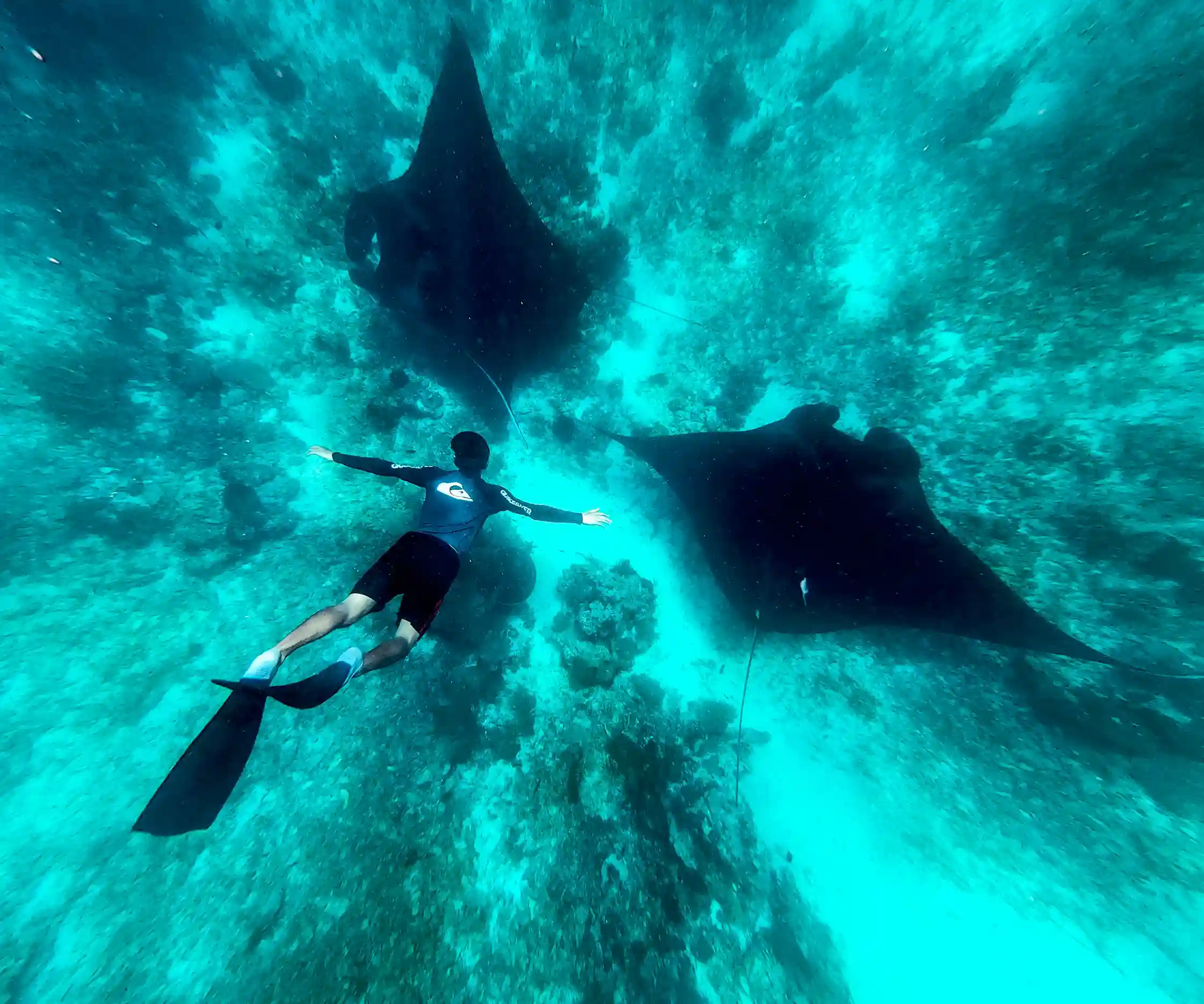
Manta Point is one of the few world-class marine encounters accessible without scuba certification. A manta drifting beneath you — wingspan reaching 3 to 5 metres — is an encounter that consistently surpasses expectation, whether you're at the surface or below.
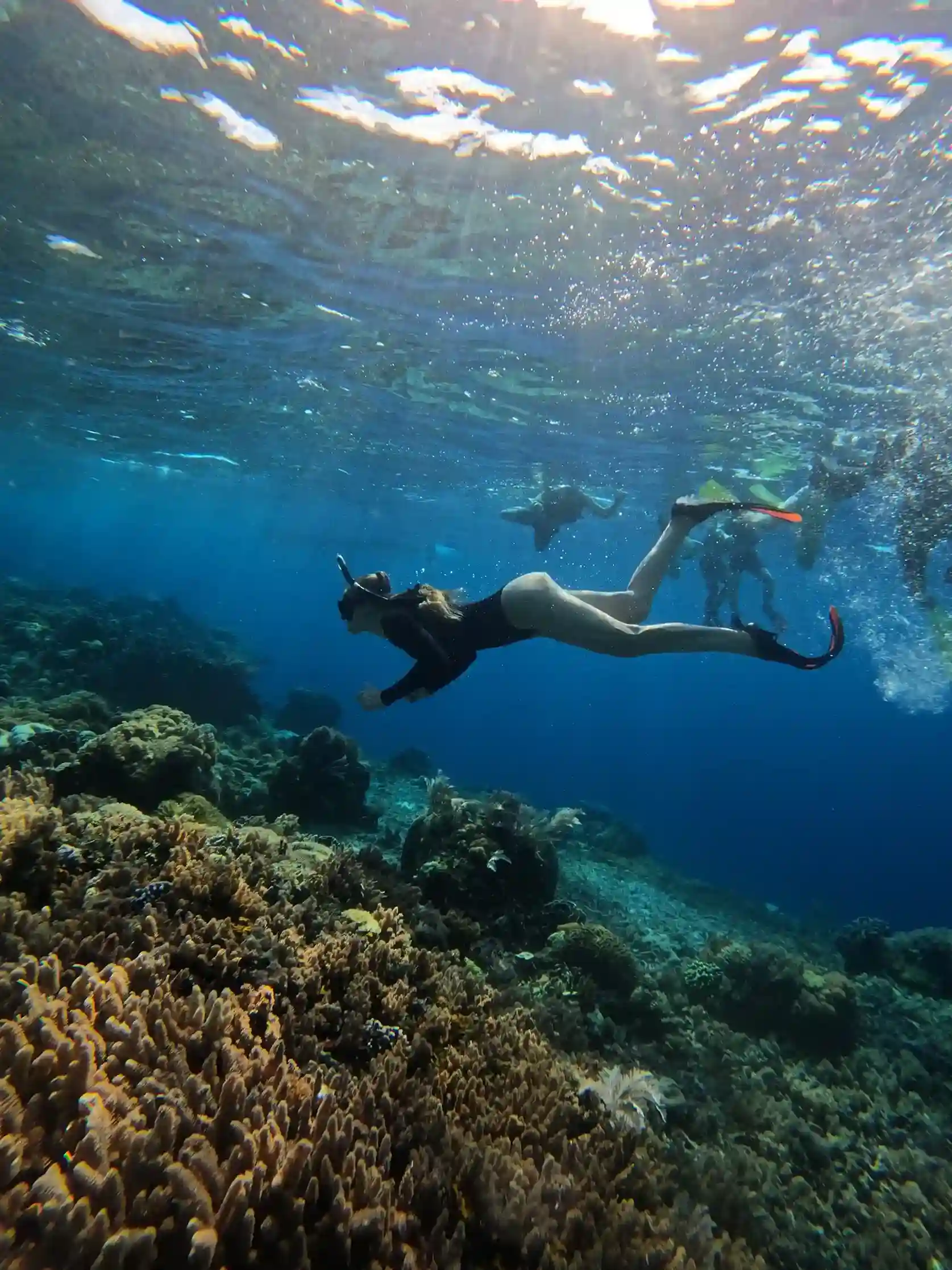
  • Snorkeling at Manta Point: Mantas feed at or near the surface on rising tide — fully visible with a mask and snorkel from just above. The scale of the animal at close range is immediately startling.
  • Diving at Manta Point: A gentle drift dive at 10–15 m across the cleaning station zone. Current is mild to moderate — one of the most forgiving drift dives in the park.
  • Other Marine Life Beyond the Mantas: Sea turtles, eagle rays, white-tip reef sharks, giant trevally, blue-spotted stingrays, and nudibranchs reward attention between manta passes.

造訪曼塔角的最佳時機

Manta rays are present at Manta Point year-round — a key advantage over many global manta destinations. Encounter quality and conditions vary by season, but reliable sightings are possible on any visit.
  • Oct – June: Peak manta activity. Strongest visibility during the dry months (April–June), with large aggregations often forming in October–December as cooler water draws mantas from the south.
  • Jul – Sep: Calmest sea conditions and best visibility for travel. Manta numbers slightly lower than peak, but sightings remain very reliable.
  • Dec – Mar: Cooler water and higher plankton draw more mantas — encounters can be extraordinary in volume. Seas are rougher and visibility occasionally reduced.
Manta Point Labuan Bajo | Komodo Luxury
Manta Ray in Komodo National Park | Komodo Luxury

曼塔角體驗

在曼塔點潛水或浮潛的體驗,彷彿進入了一個截然不同的世界。當你被成群的繽紛魚群和生機盎然的珊瑚礁環繞之際,蝠魟們——有時成群結隊——便會優雅地在你周圍游弋。

How to Visit Manta Point with Komodo Luxury

Manta Point is accessible only by boat. From Labuan Bajo, it’s around 45 minutes by speedboat or 2–2.5 hours by traditional phinisi, depending on sea conditions and route. On a Komodo Luxury multi-day charter, Manta Point is usually scheduled on day 2 or 3, combined with nearby highlights like Pink Beach, Taka Makassar sandbar, and a Tatawa Besar snorkeling session.
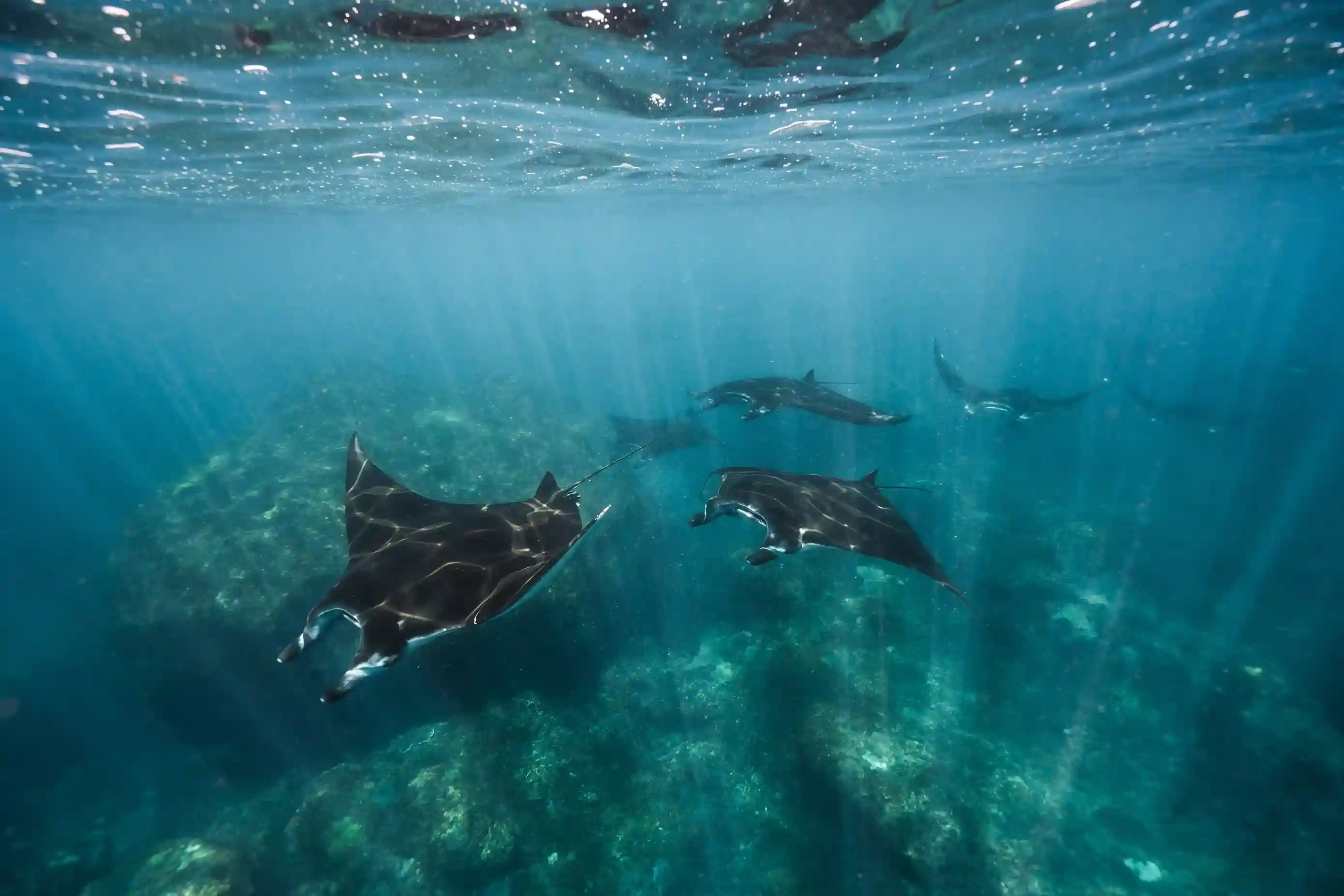
Manta Ray on Manta Point | Komodo Island Tour by Komodo Luxury
Manta Ray in Misool Raja Ampat Underwater | Komodo Luxury

搭乘科莫多豪華遊艇探索曼塔角

Manta Point is a featured destination in every Komodo Tour Package by Komodo Luxury, giving you seamless access to one of Komodo’s top snorkeling sites. With expert guides, premium equipment, and fully curated itineraries, everything is taken care of—from Labuan Bajo transfers to personalized snorkeling or diving experiences—so you can focus on the encounter.

沉浸式體驗

活動

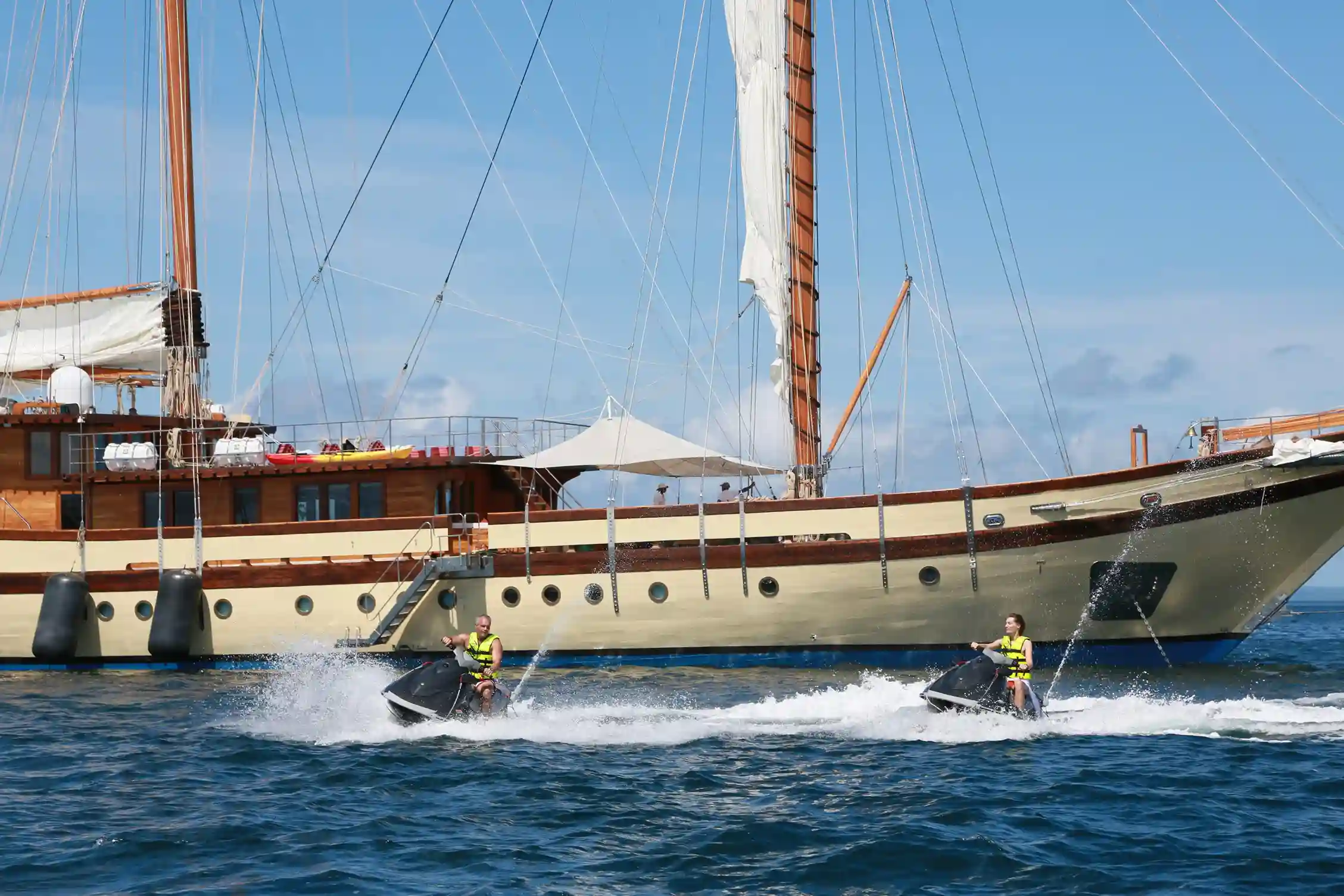
在我們的豪華帆船之旅中,您將能潛入原始珊瑚礁、探索偏遠島嶼,並邂逅豐富的野生動物。

招牌航程

精選奢華之旅

精心設計的頂級奢華行程,帶您探索印尼最獨特的景點與體驗

問答

科莫多島旅遊套裝行程 - 常見問題 (FAQ)

No. Manta rays are harmless filter feeders with no venomous spine and no interest in humans. They often approach swimmers calmly. The only rule—don’t touch them—is for conservation, not safety.

No—you don’t need any certification to snorkel at Manta Point. Mantas often feed just 2–4 meters below the surface, so surface swimming already gives you an excellent experience. However, scuba diving does require certification (minimum Open Water). Diving allows you to explore deeper areas and observe behaviors like cleaning stations, but it’s optional—snorkeling alone is already very rewarding.

Mantas are present year-round. Peak aggregations occur September–November, with another strong window in February–April (fewer crowds). May–August offers good conditions, though July–August is busiest.

Early morning (before 9am) is best—fewer boats and calmer conditions. Private charters can access the site earlier for a quieter experience.

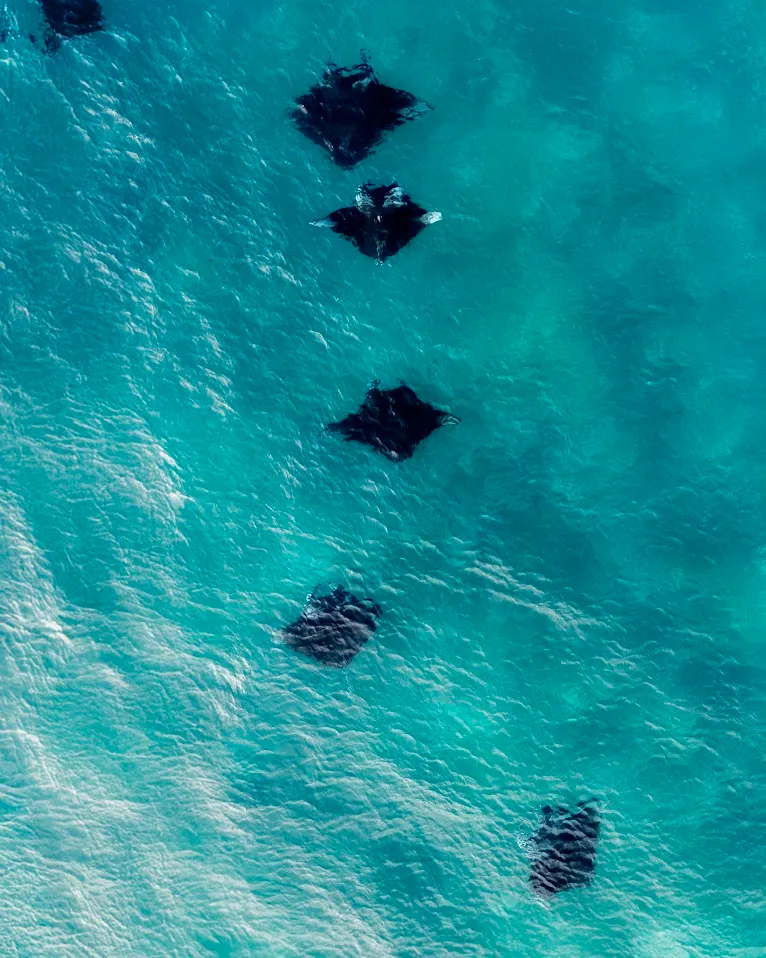
Typically 2–6 mantas per visit. During peak months, groups of 10+ are possible. Sightings are highly consistent but never guaranteed.

Yes, for confident swimmers comfortable in open water. Parents should assess readiness, and setups can be adjusted for younger guests.

Not recommended if you haven’t dived in 12+ months. Currents can be strong—consider a refresher dive (e.g., at Siaba Besar) first.

Included in most multi-day itineraries, but routes are customized based on guest preferences, timing, and conditions. Mention it in advance to prioritize your visit.

Manta Point (Karang Makassar) is a relatively shallow site, with depths ranging from approximately 5 metres at the shallowest cleaning stations to around 15 metres across the main plateau. This shallow profile is one of the site's defining characteristics — it makes manta rays accessible to snorkelers as well as divers, and the surface light creates exceptional conditions for underwater photography. There is no need to dive deep to have an outstanding Manta Point experience.

Yes — Manta Point is one of the few manta ray destinations in the world with reliable year-round sightings. Komodo National Park supports a resident population of approximately 1,200 reef manta rays, and Karang Makassar's nutrient-rich waters and cleaning stations attract them consistently across all seasons. Peak aggregations typically occur from October to June, with the highest numbers often seen from November to March when cooler, plankton-dense water draws mantas to the central zone. Sightings remain reliable throughout the rest of the year.