



Last updated: September 2026 · Prices & availability verified for the 2026/2027 season
Last updated: September 09, 2026
This is the story our guides tell on the crossing from Labuan Bajo, the context behind the ranger-led trek that anchors every itinerary we sail, from 3D2N open trips to private expeditions through Komodo National Park. We’ve been introducing travelers to these living fossils since 2015, and the backstory is stranger than most guests expect: the Komodo dragon, or Varanus komodoensis, is the largest living lizard species on Earth, and most visitors get its evolutionary origin completely wrong. Here’s the full story: where it actually came from, when the West first found out about it, and why it survives nowhere else on the planet.
重點摘要
- The Komodo dragon evolved in Australia roughly 4 million years ago, not on the Indonesian islands where it lives today, fossils place it in Flores by around 1.4 million years ago.
- It’s the largest living lizard, reaching up to 3 metres and 150 kg, and an apex predator with a venomous, bacteria-laden bite.
- It shares a common ancestor with Megalania, an extinct 5+ metre Australian giant monitor, but the two are distinct species, not the same lineage.
- Its closest living relative is the lace monitor of eastern Australia.
- It survives today only because Wallacea’s isolation shielded it from the extinctions that wiped out its Australian relatives, with the Padar Island population itself going extinct in the 20th century.
- Western science only documented the species in 1910–1912, though the Manggarai people of Flores had long known and revered it as the ora.
- It’s currently listed as Endangered by the IUCN, protected primarily within Komodo National Park, a UNESCO World Heritage Site since 1991.
- It is not related to dinosaurs, the resemblance is convergent evolution, not shared ancestry.
科莫多龍的歷史:它是何時被首次發現的?
Although the Komodo dragon has lived for thousands of years in the Lesser Sunda Islands, it wasn’t until the early 20th century that the outside world learned about it. Rumours of a “land crocodile” (buaya darat) in the Lesser Sundas reached Dutch colonial officials for years before Lieutenant van Steyn van Hensbroek sailed to Komodo in 1910, following reports from local fishermen who’d long known the animal as the “ora” in the Manggarai language.
Not believing the stories at first, van Hensbroek went to see for himself. He secured a specimen and sent its skin and photographs to Pieter Antonie Ouwens, director of the zoological museum at Buitenzorg, today’s Bogor. Ouwens published the formal scientific description in 1912, naming it Varanus komodoensis, and within three years the colonial government had granted the species legal protection, an unusually fast conservation response for the era. Since then, the Komodo dragon has drawn global attention and was even dubbed “the last dinosaur” by the media, a nickname that, as you’ll see below, is more myth than fact.
分類學與學名:科莫多龍歸屬於哪個分類群?
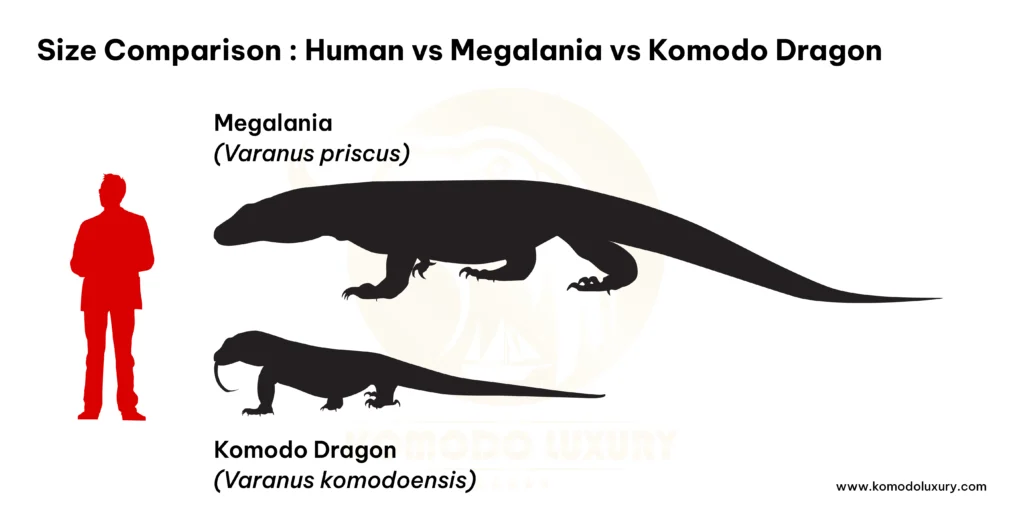
科莫多巨蜥隸屬於蜥蜴科(巨蜥),其近親包括亞洲巨蜥和澳洲巨蜥。其學名「Varanus komodoensis」由歐文斯(Ouwens)命名,以科莫多島。這些爬行動物擁有寬闊扁平的頭部、圓鈍的吻部以及強健的尾巴,這些特徵造就了牠們獨特的外觀。然而,其分類學地位曾一度備受爭議。
在1920年代,科學家曾認為科莫多龍是已滅絕的澳洲巨蜥(Megalania prisca)的一個亞種,該物種約在5萬年前滅絕。然而,DNA分析證實,儘管兩者擁有共同的祖先,但它們是不同的物種。 如今,科莫多龍已被公認為一種在印尼獨立演化而成的獨特物種。作為頂端掠食者,牠們主宰著所處的生態系統,在維持棲息地平衡方面扮演著關鍵角色。此外,科莫多龍的唾液含有潛在有害的細菌,並可能具有毒性,這在牠們的狩獵與捕食策略中發揮著關鍵作用。
Megalania: Ancient Cousin, Not Ancestor
Australia’s Pleistocene savannas were once ruled by Varanus priscus, Megalania, a monitor lizard estimated at over 5 metres long, the largest terrestrial lizard known to science. Early 20th-century scientists actually thought the Komodo dragon was a subspecies of Megalania, but DNA analysis has since proven the two are separate species that share a common ancestor rather than a direct lineage.
Komodo dragons belong to that same giant-monitor radiation, close kin, not descendants. When Australia’s megafauna collapsed in the late Pleistocene, Megalania went with it. The smaller, island-isolated Komodo dragon survived, which is why Komodo National Park is sometimes called a living window into Ice Age Australia, the one place where the age of giant monitors never actually ended.
閱讀更多: 科莫多龍 vs 巨蜥:歷史上兩大巨型蜥蜴的對比
演化史:根據科莫多龍的化石紀錄,科莫多龍究竟從何而來?
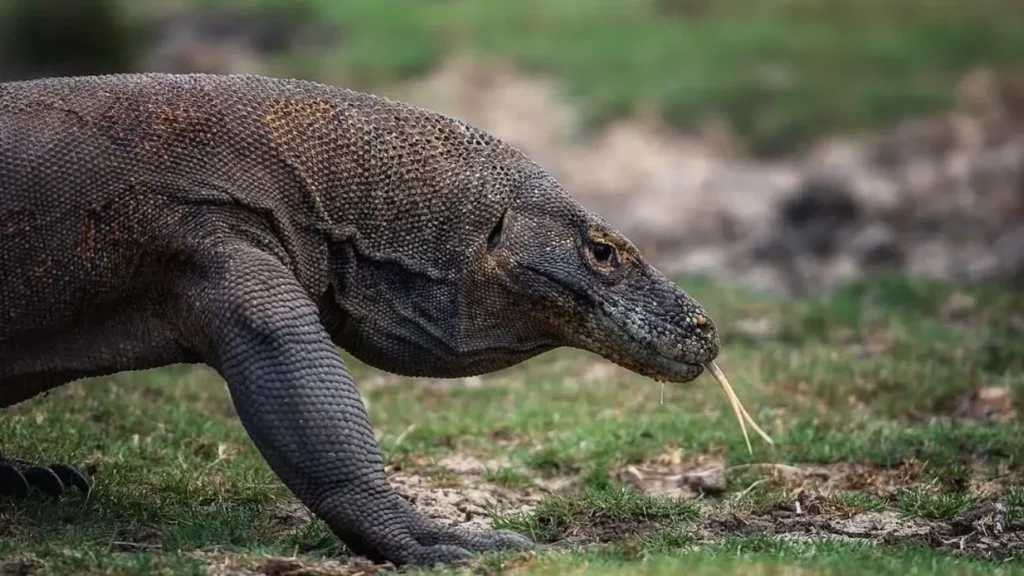
Here’s the part most people get backwards: the Komodo dragon is often assumed to be a purely Indonesian product, a modest monitor that grew huge in isolation on its islands. The fossil record tells a different story.
Fossil evidence published in 2009 by Scott Hocknull’s team, drawing on Queensland Museum material, shows the species evolved in Australia around four million years ago, as part of an entire radiation of giant monitor lizards, not a lone island oddity. Excavations in eastern Australia produced Varanus komodoensis fossils millions of years old, proving the species reached full size on a continent before it ever saw Flores. That finding quietly undermines the tidy textbook tale of “island gigantism”: the Queensland fossils indicate dragons were already dragon-sized in Australia, so the islands preserved their bulk rather than produced it.
From there, ancestors dispersed westward along the volcanic chain of the Lesser Sunda Islands using land bridges formed by falling sea levels. Fossils place dragons on Flores by roughly 1.4 million years ago, the lineage was established in Wallacea long before recorded history. On Flores, Rinca, and the surrounding islands, they evolved into apex predators, their size shaped by available prey, from small lizards to ancient pygmy elephants (Stegodon), with modern-day Javan rusa deer now their main food source.
Interestingly, a 2021 study by the Australian National University complicated the picture further, finding that the modern Komodo dragon population as we know it today actually diversified within Indonesia rather than being a simple direct transplant from Australia, opening ongoing scientific debate about exactly how the species became the dominant predator on these islands. Today’s dragons are best described as a relict giant: the last surviving member of an Australian dynasty, holding out on a handful of savanna islands.
The Evolutionary Timeline
| When | Event |
| ~4 million years ago | Komodo dragon lineage present in Australia (Hocknull et al., 2009; Queensland fossils, ~3.8–4 Ma) |
| ~1.4 million years ago | Fossils attributable to Komodo dragons appear on Flores, the lineage established in Wallacea |
| ~50,000–40,000 years ago | Giant relatives, including Megalania, vanish from Australia; the Komodo dragon becomes the last giant varanid |
| 1910 | Lieutenant van Steyn van Hensbroek investigates “land crocodile” reports on Komodo |
| 1912 | P.A. Ouwens formally describes Varanus komodoensis at Buitenzorg (Bogor) |
| 1915 | Dutch colonial authorities grant the species legal protection |
| 1980 / 1991 | Komodo National Park established; inscribed as UNESCO World Heritage Site |
Why Did Komodo Dragons Survive Only in Indonesia?
If the species evolved in Australia, why does it only exist in Indonesia today? The consensus explanation is isolation plus extinction elsewhere.
During Pleistocene ice ages, sea levels dropped by more than a hundred metres, narrowing the straits of Wallacea enough for a strong-swimming monitor lizard to island-hop westward along the volcanic chain. Crucially, Wallacea’s deep channels never closed completely, which kept Asian big cats, wild dogs, and other mainland carnivores out. When seas rose again, the populations on Flores and its satellite islands were cut off, and cut off, too, from the mainland catastrophes that later wiped out their Australian relatives. On their dry savanna islands, dragons kept what mattered: abundant deer and pig prey, no competing large carnivores, and (for most of history) no human hunting pressure heavy enough to erase them.
That balance is still dynamic, not static: the dragon population on Padar Island went extinct in the twentieth century after its prey base collapsed, which is part of why the species is now listed as Endangered on the IUCN Red List rather than the “Vulnerable” rating it held in earlier decades.
科莫多龍是恐龍的親戚嗎?
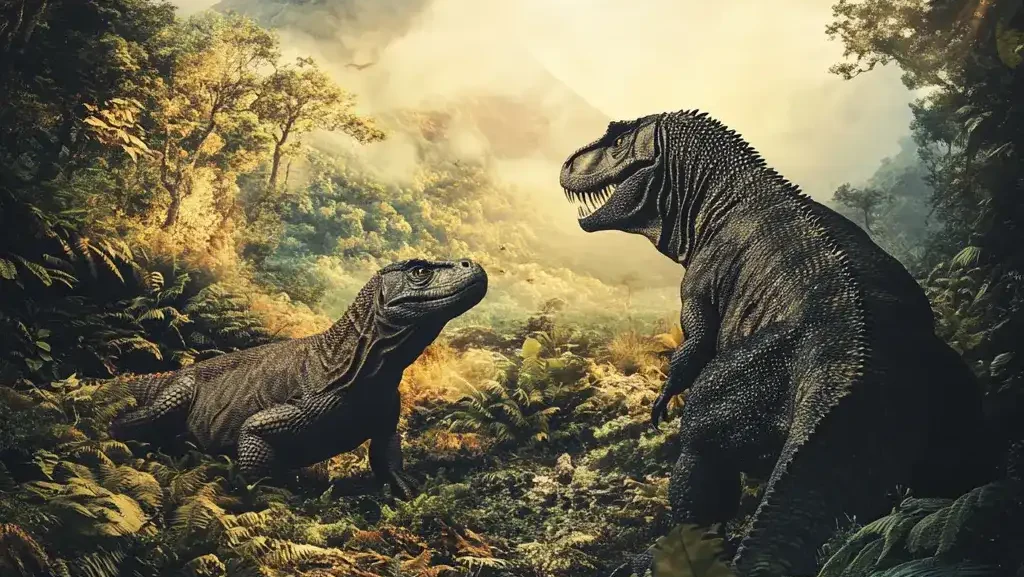
雖然科莫多龍常被稱為「活生生的恐龍」,但它與暴龍或腕龍等恐龍並無直接血緣關係。恐龍在6600萬年前便已滅絕,而蜥蜴科則是在約4000萬年前才出現的。
然而科莫多龍 確實存在一些適應上的相似之處。其中一個例子就是牠們致命的咬傷,其中含有有害細菌——這與恐龍的毒液概念相似。這種現象被稱為趨同演化,即兩個無關的物種因面臨相似的環境壓力而發展出相似的特徵。科莫多龍 的毒液科莫多龍 蛇類的毒液有相似之處,因為兩者都將毒液用作獵捕或防禦機制,以對抗獵物或威脅。雖然科莫多龍並非真正的恐龍,但它已演化出一些與古代掠食者相似的生存特徵。
科莫多龍有哪些傳說與文化意義?
For the Manggarai people of Flores, the Komodo dragon is far more than a giant lizard, it’s a mystical being intertwined with human life and spirituality. In the Komodo village telling, the Putri Naga, the Dragon Princess, bore twins: a human son, Si Gerong, and a dragon daughter, Orah. Raised apart, the two met as hunters chasing the same deer; when Si Gerong raised his spear against her, the princess appeared between them and revealed their kinship. To this day, islanders call the animals ora and treat them as kin, a living reason the community protected the species for generations before any statute did.
That belief in twin-sibling kinship has encouraged a genuine coexistence: locals traditionally avoid hunting the dragons, and in turn the dragons rarely pose a threat to people. The giant lizard is also seen as a guardian of nature, capable of sensing bad intentions and maintaining the balance of the ecosystem. You can go deeper into this tradition in the legend of the Komodo Dragon and in the Ora legend, which preserves the older, community-held version of the same story.
Why are Komodo dragons important? Ecologically, they’re the apex predator regulating deer, boar, and buffalo populations across the park. Scientifically, they’re a living window into large-varanid evolution stretching back to Australia. Culturally, they’re kin in the origin story of the island’s own people. Three reasons, one species, anchoring an entire UNESCO World Heritage Site.
關於科莫多龍的 5 個有趣事實是什麼?
While the Komodo dragon’s evolutionary history and cultural legends reveal its remarkable past and significance, there are also some fascinating biological and behavioral traits that make this giant lizard truly unique. Here are 5 interesting Komodo dragon facts that highlight their extraordinary adaptations and survival skills:
- 現存最大的 科莫多龍 3 公尺(10 英尺),體重最高可達 150 公斤(330 磅)。其龐大的體型使其成為現存最大的蜥蜴,且一眼便能辨識。
- 頂端掠食者 科莫多龍 食物鏈頂端,牠們獵捕鹿類、小型爬行動物,偶爾也會啃食腐肉。強健的四肢、鋒利的爪子以及敏銳的感官,使牠們在野外成為極其高效的獵手。
- 毒性咬傷——這些蜥蜴擁有能釋放毒素的毒腺,且唾液中含有有害細菌。這種雙重作用有助於它們削弱或麻痺獵物,從而提高狩獵效率。
- 孤雌生殖——科莫多龍 無需雄性科莫多龍 進行無性生殖,並產下可存活的雄性後代。這項罕見的能力使族群即使在孤立的環境中也能維持自身存續。
- Exceptional Swimming Ability – Komodo dragons can swim surprisingly well, allowing them to move between islands in their habitat. This skill helps them expand their territory and access new hunting grounds across the Indonesian archipelago.
這些關於科莫多龍的趣聞,讓我們得以一窺牠們非凡的生物特徵與生存策略,也突顯了牠們為何被視為地球上最令人驚嘆的爬行動物之一。
科莫多龍的棲息地:科莫多龍族群分布於何處?
科莫多龍 印尼的五座島嶼:科莫多島、林卡島、弗洛雷斯島、吉利莫唐島、努薩科德島和吉利達薩米島。牠們偏好乾燥的稀樹草原、熱帶雨林以及多岩的海岸線。雖然牠們在熱帶雨林中繁衍生息,但在這些島嶼的草原和灌木叢棲息地也能發現牠們的身影。 稀樹草原的高溫有助於牠們獵食,因為牠們在這些環境中仰賴短暫的衝刺速度來伏擊活體獵物。
不幸的是,牠們的自然棲地正面臨氣候變遷與人類活動的威脅。海平面上升對科莫多龍的棲地構成重大威脅,進一步導致其族群分隔與孤立。然而,透過 科莫多國家公園(聯合國教科文組織世界遺產)所進行的保護工作,已成功保存了全球超過80%的科莫多龍族群。這座公園不僅是科莫多龍的庇護所,也是其他稀有及瀕危物種的避風港。
閱讀更多: 科莫多龍的棲息地:牠們的棲身之所與觀賞指南
保育現況:保護科莫多龍
The Komodo dragon is currently listed as Endangered on the IUCN Red List, an uplisting from its earlier “Vulnerable” status that reflects continued habitat loss, poaching pressure, and fragmentation across its already-restricted range. The Indonesian government established Komodo National Park in 1980, a UNESCO World Heritage Site now sheltering over 1,700 dragons, with ongoing habitat restoration, research, and education programs, and international trade in the species is prohibited under IUCN protections. One added genetic wrinkle: because parthenogenesis produces only male offspring, isolated populations can face female shortages and elevated inbreeding risk, adding another layer to long-term survival planning.
在科莫多國家公園,哪裡可以安全地觀賞科莫多龍?
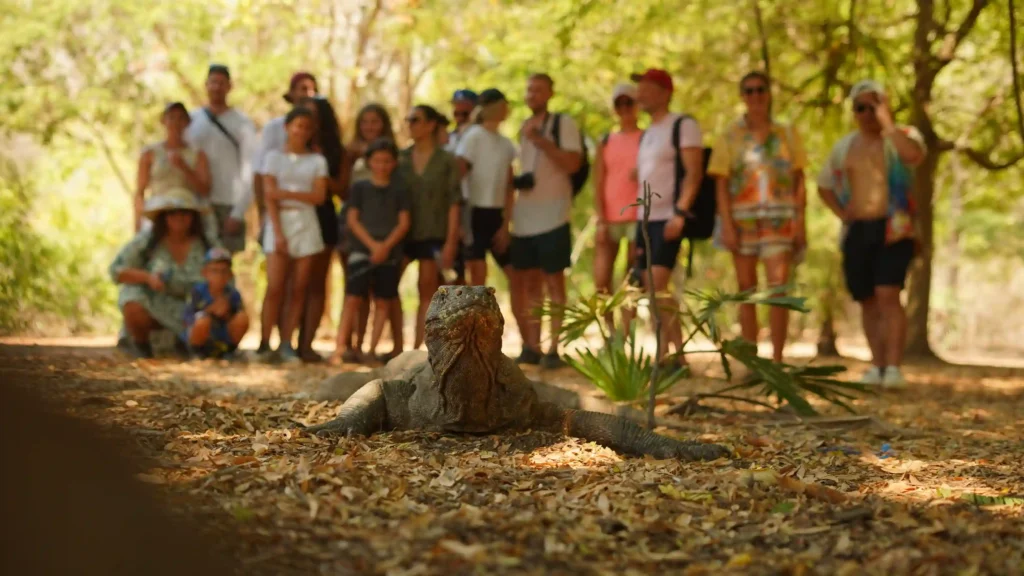
雖然科莫多龍的棲息地遍佈數座島嶼,但若想安全地觀賞牠們,最佳地點是科莫多 島和林卡島。這兩座島嶼均屬於 科莫多國家公園的一部分,受到嚴格保護。在此,遊客將由熟悉科莫多龍 行為的當地嚮導陪同科莫多龍 確保您能安全地觀察牠們。
在嚴格的規範下,遊客只要遵守規定,便能近距離接觸巨蜥而無須擔心遭到攻擊。這兩座島嶼的科莫多龍數量相當龐大,因此遇見牠們的機會非常高。您還將欣賞到令人驚嘆的自然景觀,包括美麗的海灘和清澈見底的海水。
閱讀更多: 科莫多島 林卡島:哪個最適合觀賞科科莫多龍多龍?
與Komodo Luxury一同展開一場安全的探險,親眼見證科莫多龍
For an adventure that’s not only exciting but also comfortable, Komodo Luxury offers complete tour packages to Komodo Island. Our tours include luxurious accommodations, experienced guides, and a strong focus on safety, allowing you to explore Komodo National Park with confidence.
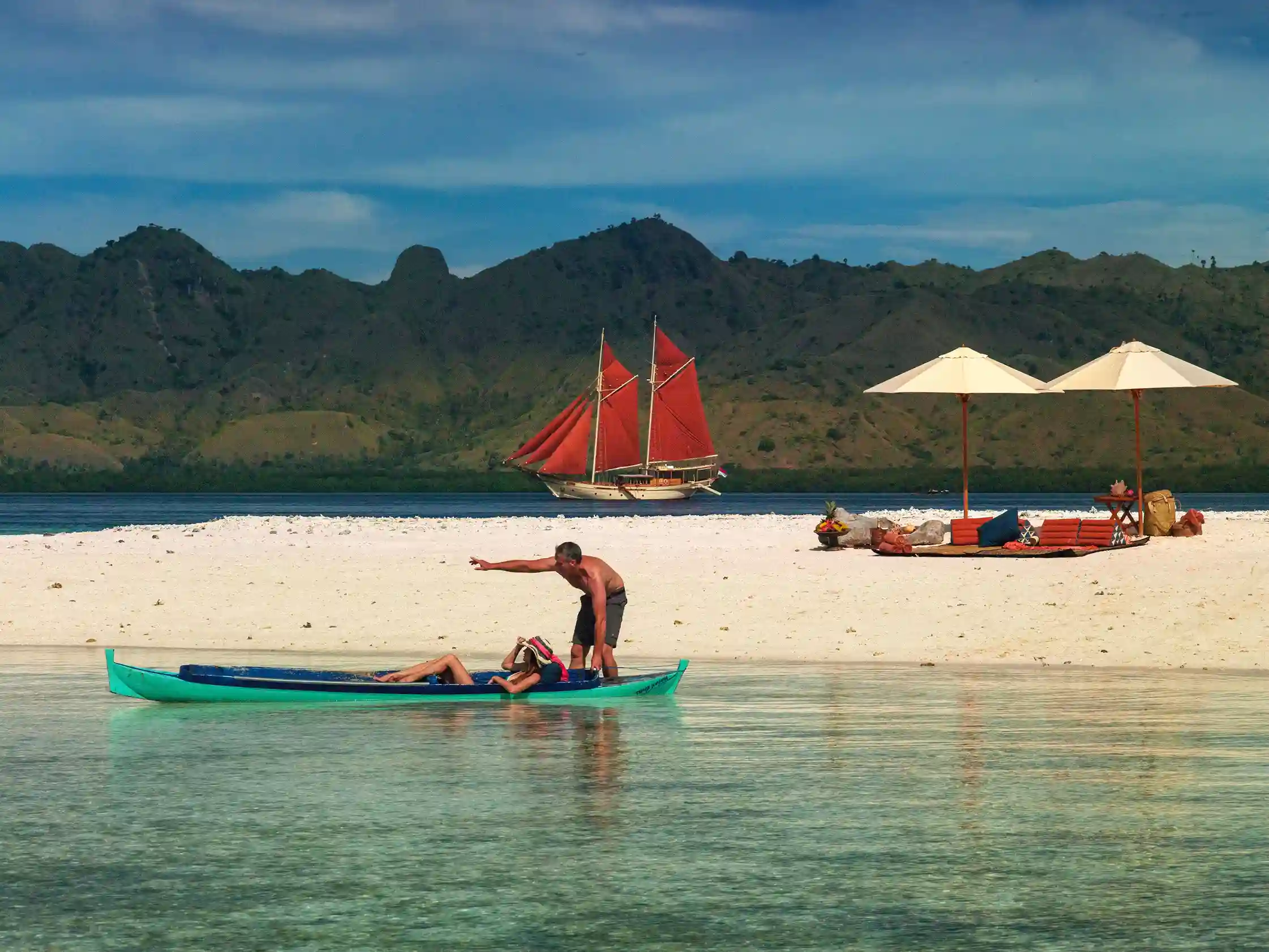
One of the most iconic ways to experience this journey is through a luxury phinisi Komodo, where you can sail across the islands on a beautifully crafted traditional vessel combined with modern luxury amenities. This experience allows you to enjoy curated island routes, personalized service, and breathtaking ocean views, giving you a seamless way to explore the habitat of Komodo dragons while traveling in comfort and style.
科莫多龍是印尼演化奇蹟的活生生見證。從遠古時期的遷徙、獨特的適應能力,到引人入勝的文化傳說,科莫多龍無疑是國家的瑰寶。親眼目睹這頭「巨龍」,不僅是一次難忘的體驗,更是關於大自然力量與印尼生物多樣性的寶貴一課。
If you want to witness this once-in-a-lifetime experience, make sure to choose a trusted tour that combines safety, comfort, and education. Don’t miss out on the chance to see history unfold right in front of you. Book your Komodo Island tour today and witness the living history of the Komodo dragon!

關於科莫多龍的歷史與觀光常見問題
Four million years of history are still walking around Komodo and Rinca Island today. Komodo Luxury brings guests face-to-face with them on sailing trips from Labuan Bajo, see the Komodo sailing trip itineraries for 2D1N and 3D2N routes.
親身走訪這段歷史發生的地點:我們的行程將洛利昂(Loh Liang)徒步路線與帕達爾(Padar)及科莫多島(Pink Beach )結合成一條環線——請參閱科莫多旅遊套裝行程,或規劃一趟以遊艇為家的悠閒路線。
By the Komodo Luxury Expedition Team, a licensed Komodo National Park tour operator running daily expeditions from Labuan Bajo since 2015. Fleet, rates and itineraries: Komodo yacht charter.