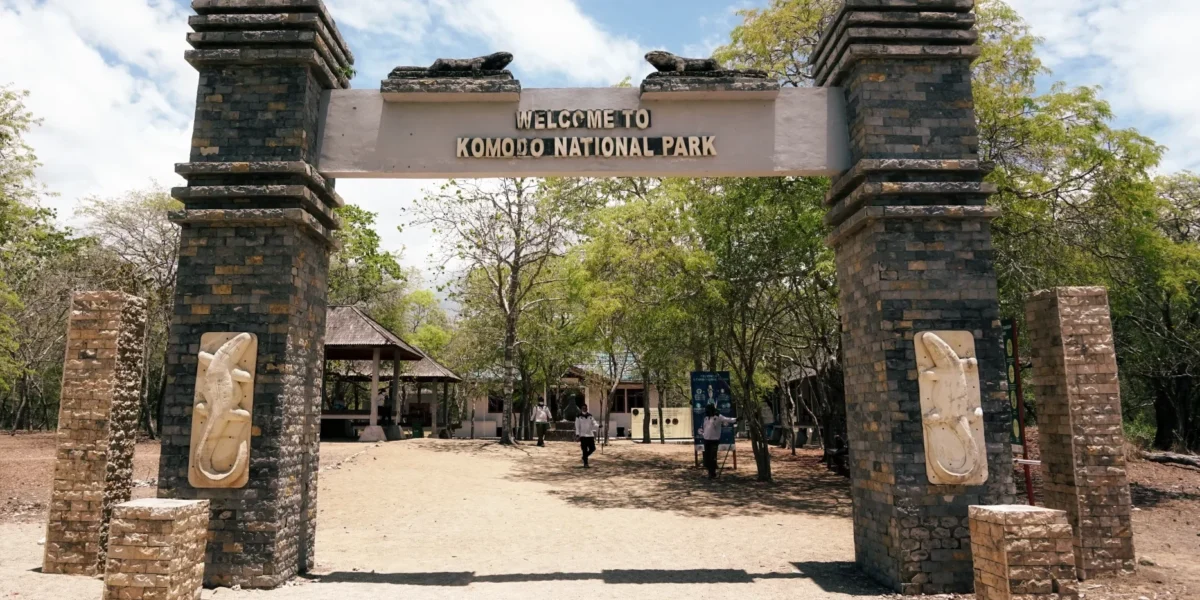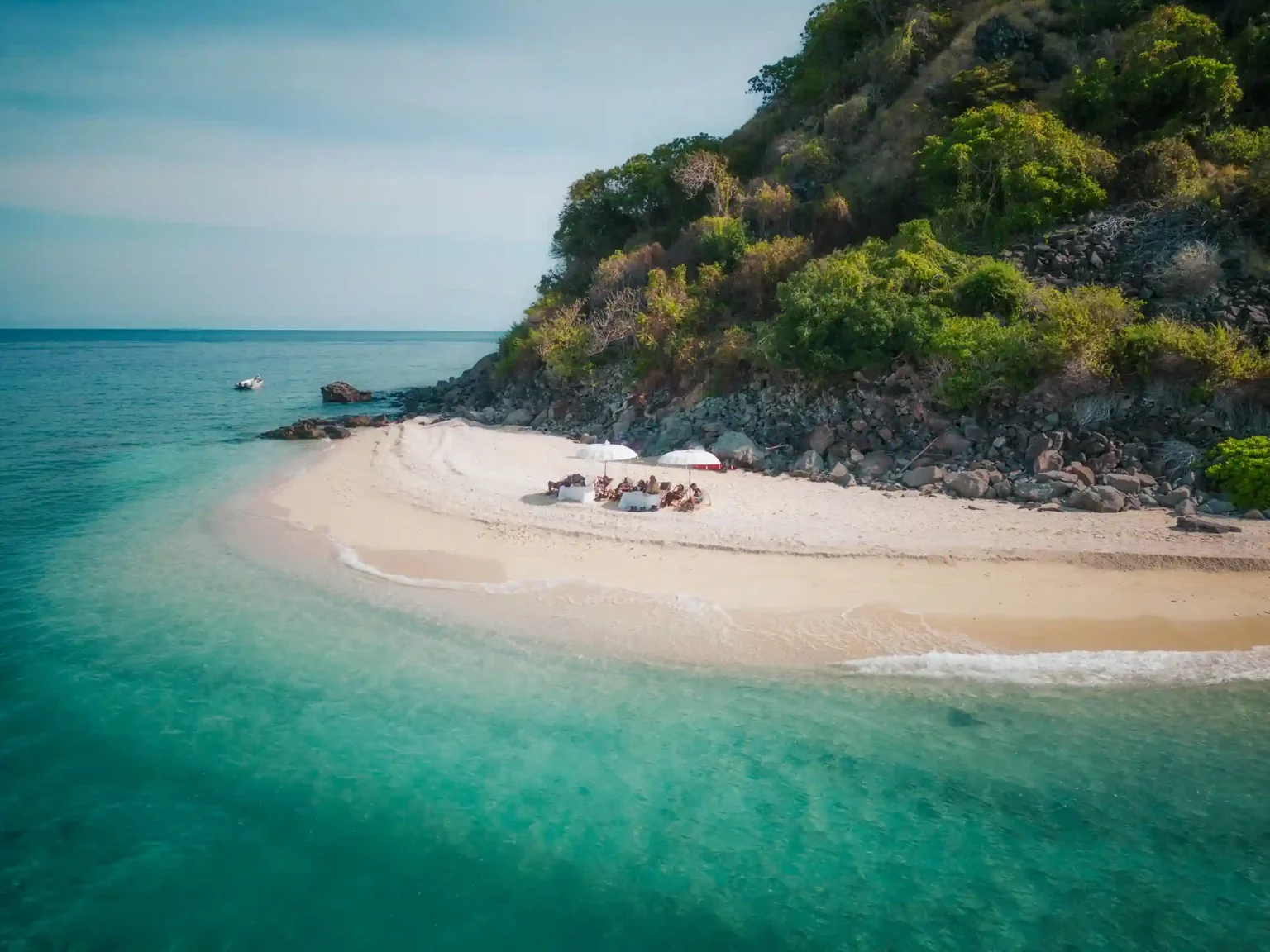






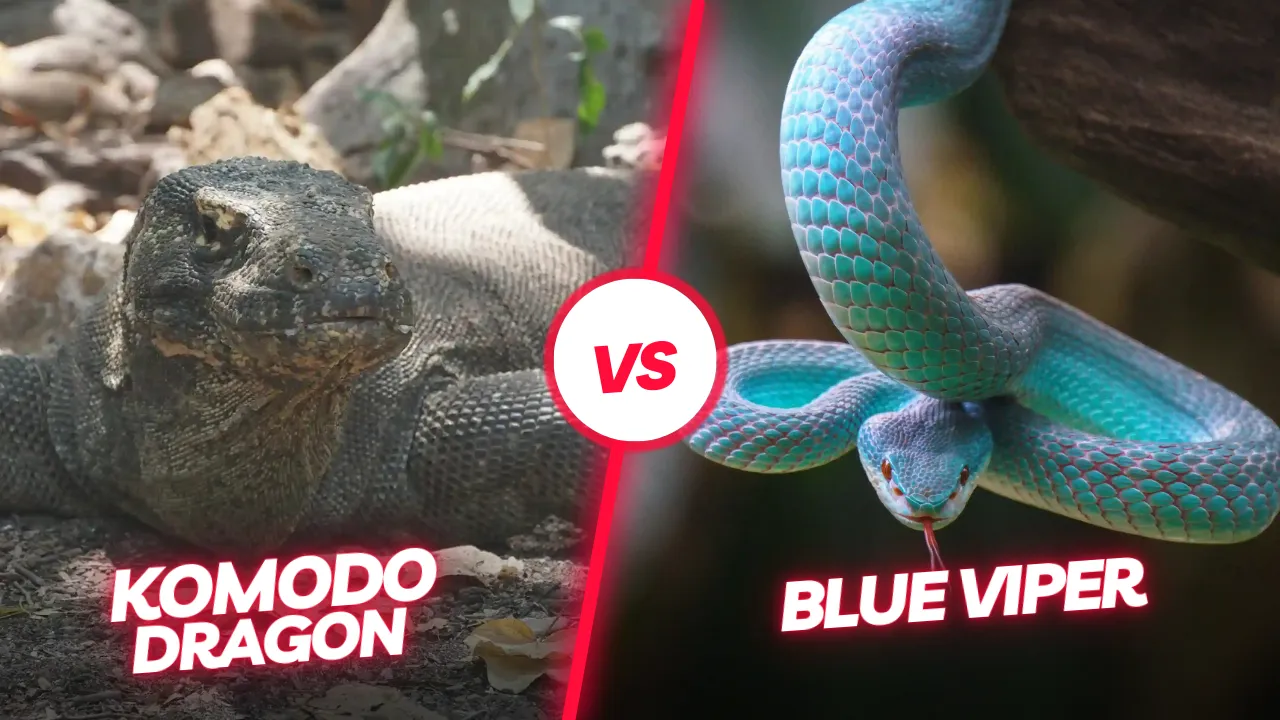
Recently, social media platform X (formerly Twitter) was buzzing with a video that allegedly showed a Komodo dragon being attacked by two blue venomous snakes, commonly known as the “blue viper” (Trimeresurus insularis), a beautiful but deadly pit viper. This incident quickly sparked heated discussions and speculations.
Many started imagining an “epic battle” between the giant Komodo dragon and the exotic blue viper, which is believed to have lethal venom. Even more intriguing is that both of these creatures are said to originate from Komodo Island, Indonesia. This raised the question: Could the mighty Komodo dragon—often regarded as the “dragon” of Indonesia—really fall victim to the deadly bite of the blue viper? Or would the Komodo dragon, with its massive size, simply crush the snake?
To avoid any confusion, let’s first take a quick look at the profiles of these fascinating creatures before comparing them in terms of “who would win.”
Komodo Dragon vs Blue Viper: A Giant Reptile with a Venomous Bite
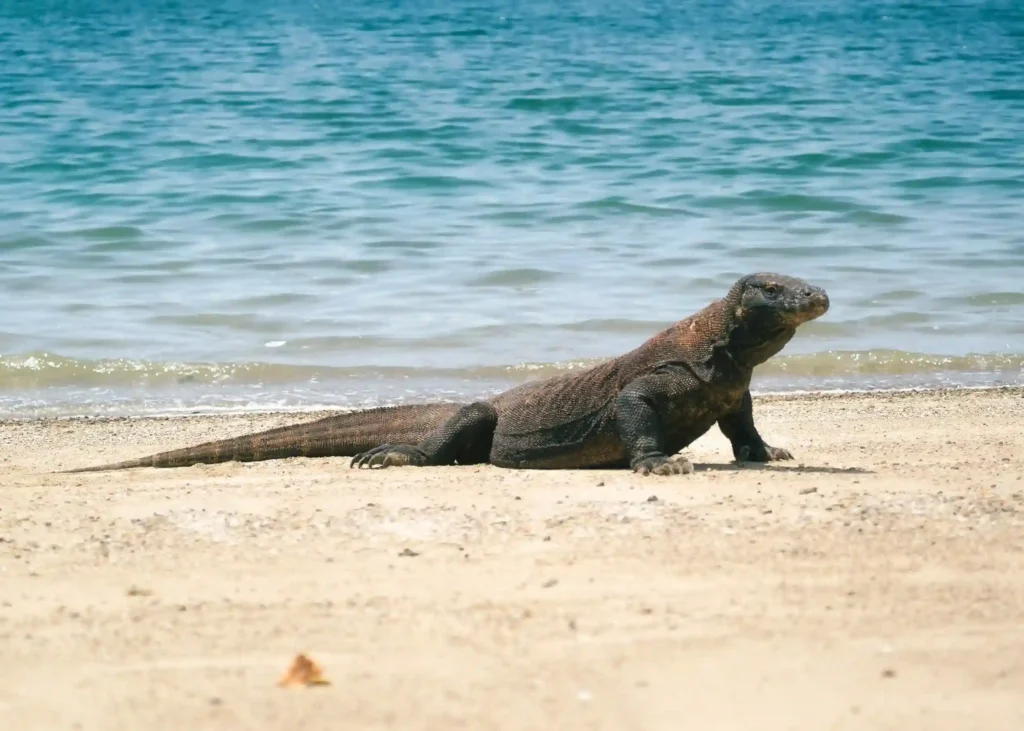
Komodo dragon (Varanus komodoensis) is the world’s largest lizard and is famous as the icon of Komodo National Park. Its body can reach up to 3 meters in length, with an average weight of 70 to 90 kilograms in the wild. Komodo dragons have thick, grayish-brown skin, sharp claws, powerful legs, and a massive tail that can be used for striking.
Komodo dragons are mainly found on Komodo Island and Rinca Island, where the environment is typically dry, hot, and filled with shrubs and savanna. They are usually active during the day, basking in the sun to regulate their body temperature before retreating to burrows when the heat becomes unbearable.
As apex predators in their habitat, Komodo dragons are capable of hunting and consuming large animals like deer, wild boars, and even buffalo. Their hunting technique combines quick strikes and powerful bites. Recent studies have revealed that Komodo dragons have venom glands in their mouths. A Komodo dragon’s bite injects proteins that lower blood pressure and cause severe bleeding in their prey. Additionally, the bacteria in their saliva can speed up infection.
This opportunistic carnivore isn’t afraid to scavenge dead animals as well. Their digestive system is strong enough to break down not only meat but also bones. In the wild, Komodo dragons can live up to 30 years or more, with females laying 15 to 30 eggs at a time. Overall, the Komodo dragon rules the savannas of Komodo Island.
The Komodo Dragon’s Bite
The Komodo dragon’s bite is one of its most lethal weapons. Its teeth are coated with toxic saliva that contains over 50 different bacteria, some of which are highly toxic to humans. When a Komodo dragon bites its prey, it injects this toxic saliva into the wound, causing severe pain, swelling, and bleeding. The bacteria in the saliva can also lead to septicemia, or blood poisoning, which can be fatal if left untreated.
In addition to its toxic saliva, the Komodo dragon’s bite is incredibly powerful. Some individuals can exert a bite force of up to 390 pounds per square inch (psi), which is stronger than any other lizard species and even surpasses some species of crocodiles. This combination of toxic saliva and powerful bite makes the Komodo dragon a deadly predator in its natural habitat.
Blue Viper (Trimeresurus insularis): The Beautiful and Venomous Snake from Komodo Island
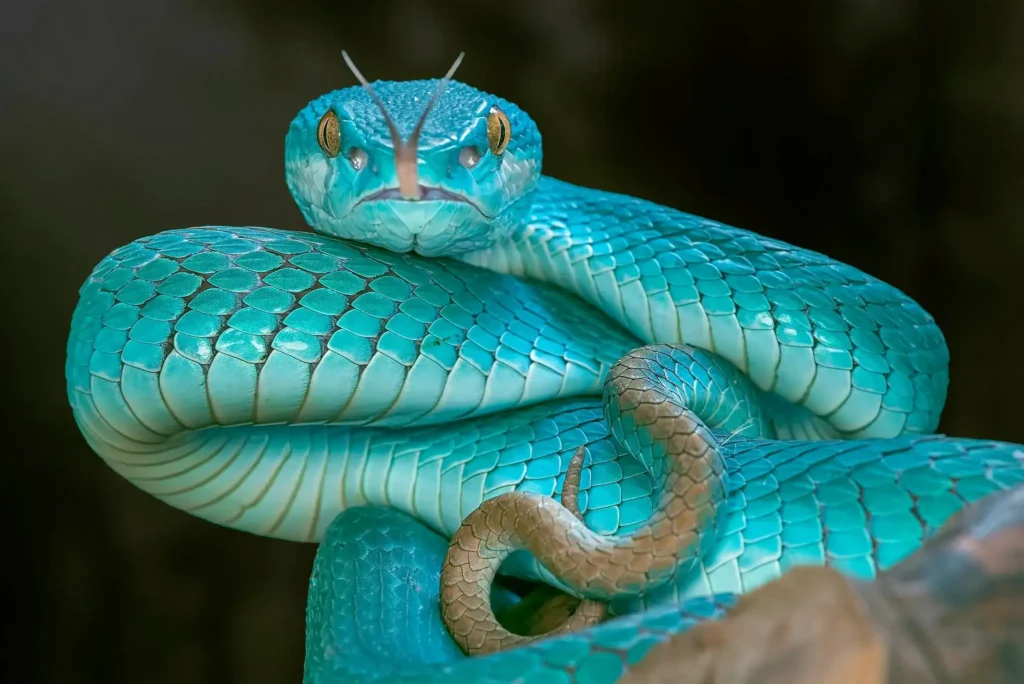
Many people might be surprised to learn that the “blue viper” doesn’t come from Southeast Asia’s tropical rainforests, but it can also be found on Komodo Island. Trimeresurus insularis is known for its striking blue-green color, though some populations appear more green or reddish depending on their habitat and region. Among these, there are rare blue individuals that exhibit a permanent and unique blue coloration, particularly found on Komodo Island.
This snake typically measures 60 to 80 centimeters in length and weighs between a few hundred grams and about one kilogram. While much smaller compared to the Komodo dragon, the blue viper’s venom should not be underestimated. This species is equipped with hemotoxic venom that damages tissues and blood vessels, causing internal bleeding, swelling, and, if left untreated, death.
The blue viper typically inhabits areas with dense vegetation such as shrubs and trees. It is nocturnal, hunting at night by employing a “strike and retreat” strategy. The snake strikes quickly, injecting venom, then waits for its prey to weaken. Its heat-sensing pits between the eyes and nostrils help it detect warm-blooded animals like rodents, birds, or small mammals.
Interestingly, because Komodo Island also features dry forests and scrublands, the blue viper population is likely adapted to these environments. While not as abundant as the Komodo dragon, the blue viper can still be considered an endemic species of the island. This snake is not very aggressive unless provoked. However, its beautiful blue color often attracts humans, even though a single bite could be deadly.
Läs mer: Komodovaranen mot svartmamban: En kamp mellan två dödliga rovdjur
Komodo Dragon vs. Blue Viper: A Comparison

Let’s dive into a few key comparisons between these two fascinating animals. Both have unique traits and strengths that make them formidable in their own right. Here’s how they stack up!
Comparison Table: Komodo dragon vs Blue Viper
| Aspekt | Komodovaran | Blue Viper |
| Physical Features | Thick, tough skin, long body, strong bones, powerful tail, sharp teeth, and strong jaws | Long, slender body, smooth scales, striking blue color, sharp fangs with venom glands. |
| Storlek och vikt | Can grow up to 3 meters long, weighing between 70-90 kg. | Measures 60-80 cm long, weighing 200 grams to 1 kg. |
| Hunting and Feeding | Opportunistic carnivore; uses venomous bite to hunt, strikes with surprising speed. | Prefers trees and shrubs; strikes quickly with venomous fangs; hunts small prey at night (nocturnal). |
| Försvarsstrategier | Uses size, powerful tail, sharp claws, and venomous bite to defend itself; can lash out when threatened. | Relies on camouflage, venomous bite, and “strike and retreat” tactic. |
| Livsmiljö och utbredning | Found on the islands of Komodo and Rinca in Indonesia; prefers hot, dry savanna and coastal areas. | Found across several Indonesian islands, including Komodo, Java, Bali, Flores, and parts of Timor Leste and Southeast Asia; prefers forests and shrubs. |
| Anpassningar för överlevnad | Tough skin, powerful digestion (able to digest meat and bones), high stamina. | Heat sensitivity for tracking prey, potent venom, agility in trees, and excellent camouflage. |
Fysiska skillnader
The Komodo dragon stands as a mighty predator with its thick, tough skin, long body, and powerful build. Its muscular tail acts as both a weapon and a balance aid, while its sharp teeth and strong jaws are perfect for tearing through flesh. This reptile’s formidable physical traits make it a dominant force in its environment.
On the other hand, the Blue viper (Trimeresurus insularis) presents a stark contrast. With a long, slender body and smooth, vibrant scales, this snake’s blue coloration is striking against its natural surroundings. Its sharp fangs are not just for show—these venomous teeth inject potent venom when it strikes, making it a dangerous adversary in its own right.
Storlek och vikt
In terms of size, the Komodo dragon easily dominates. This massive reptile can grow up to 3 meters long and weigh between 70 to 90 kilograms. Its sheer size, combined with its strength and venomous bite, places it at the top of the food chain in its habitat.
In contrast, the Blue viper is much smaller, measuring only about 60 to 80 centimeters in length. Weighing between a few hundred grams and just under a kilogram, it is far more compact than the Komodo dragon, but no less deadly. Despite its smaller size, it makes up for it with agility and a lethal strike.
Hunting and Feeding
The Komodo dragon is an opportunistic carnivore with a unique approach to hunting. Instead of relying on ambush tactics like some of its counterparts, it waits for prey to come within range and strikes with surprising speed. Its venomous bite weakens its prey, making it easier for the dragon to overpower its victim. The Komodo dragon’s diet includes large animals like deer, wild boars, and even water buffalo, showcasing its predatory prowess.
Meanwhile, the Blue viper takes a more patient approach to hunting. Preferring to stay hidden in trees or shrubs, it waits for small prey, such as birds or mammals, to pass by. Using its incredible speed, the snake strikes quickly and injects venom through its sharp fangs. This venom works to immobilize its prey, allowing the viper to feast after a successful strike. The blue viper is nocturnal, hunting primarily during the night.
Försvarsstrategier
When it comes to defense, the Komodo dragon has a number of physical advantages. Its large size, powerful tail, and sharp claws are its first line of defense. If threatened, the dragon can lash out with its tail or claws, delivering powerful blows. Its venomous bite also serves as a deterrent, making it a difficult predator to challenge. With its sheer strength and defensive capabilities, the Komodo dragon is rarely preyed upon.
In contrast, the Blue viper uses a more subtle defense strategy. Its vibrant blue coloration helps it blend into its environment, allowing it to stay undetected by potential threats. If provoked, the snake will strike quickly and then retreat, relying on its venom to incapacitate attackers. The viper’s venom, which is neurotoxic and hemotoxic, causes significant internal damage, making it a dangerous foe for any creature that gets too close.
Livsmiljö och utbredning
The Komodo dragon is found primarily on the islands of Komodo and Rinca in Indonesia. It thrives in hot, dry environments, often near savannas or coastal areas where the climate is arid. These dragons are adapted to these harsh conditions, and their territory is carefully guarded, as they are the dominant predators in their region.
The Blue viper, while also found on Komodo Island, has a much broader range. This venomous snake can be found in several other Indonesian islands, such as Java, Bali, and Flores, as well as parts of Timor Leste and Southeast Asia. Preferring forested areas, the blue viper inhabits the dense shrubbery and trees, where it can easily camouflage and hunt at night.
Anpassningar för överlevnad
The Komodo dragon is a survival expert, equipped with several adaptations to thrive in its environment. Its tough, scaly skin protects it from attacks, while its digestive system is powerful enough to break down not only meat but also bones. This gives it an edge when consuming large prey. The Komodo dragon’s stamina allows it to sustain its activity over long periods, whether it’s hunting or defending its territory.
The Blue viper, although smaller, is just as well-adapted to its environment. Its heat sensitivity helps it track warm-blooded prey, while its venomous bite makes it a formidable hunter. The snake’s agility in trees allows it to navigate the dense vegetation with ease. Its ability to camouflage in the natural surroundings ensures it remains hidden from potential threats. These adaptations make the blue viper a stealthy and effective predator in its own right.
Read more: Komodo Dragon vs King Cobra: Battle of Deadly Predators
Komodo Dragon vs. Blue Viper: Who Would Win?

You might be wondering, what would happen if a Komodo dragon encountered two blue vipers at the same time? The idea of such a “duel” has become a hot topic because both creatures use venom as their primary weapon, even though their venom works in different ways.
On one hand, the Komodo dragon is much larger, stronger, and physically more powerful. Its thick skin is hard to penetrate, and its venomous bite is deadly. On the other hand, the blue viper is quick, and its venom can paralyze and kill by causing internal bleeding. Its venom is hemotoxic, meaning it can damage blood vessels and disrupt blood flow.
So, who would win? The Komodo dragon would have the upper hand in terms of size. One strike with its tail or a powerful bite could easily crush a blue viper. However, the blue viper might still have a chance, especially if it manages to strike a vital area on the Komodo dragon’s body. While the Komodo dragon may not collapse instantly, the venom could slowly weaken it by affecting blood circulation.
The problem for the snake is that venom takes time to work, and the Komodo dragon is fast and powerful enough to deliver a lethal blow if it manages to reach the snake’s head or body.
In reality, these two animals rarely encounter each other in the wild. Komodo dragons are often found on open savannas and beaches, while the blue viper prefers hiding in dense vegetation. While both are endemic to Komodo Island, their habitats are quite different. If they did cross paths, they would likely avoid each other—the snake would retreat, and the Komodo dragon wouldn’t typically target small snakes as prey.
Komodo Dragon vs. Blue Viper: Venom vs. Venom
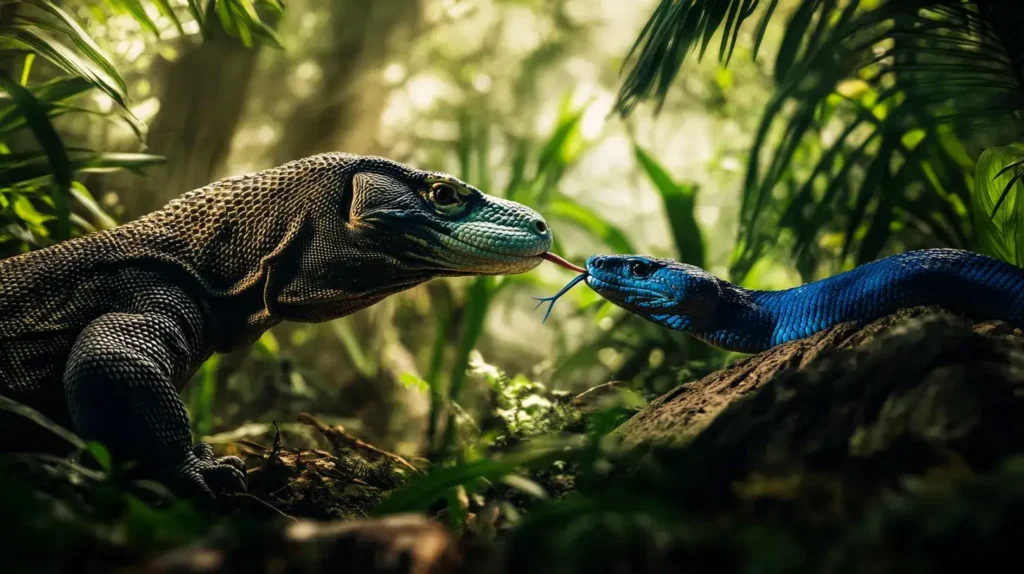
When comparing their venom, the Komodo dragon relies on glands in its mouth that inject special proteins into its prey. These proteins lower blood pressure and cause severe bleeding. They also bring harmful bacteria that can worsen infections. As a result, prey quickly weakens and collapses.
An unarmed human faces significant danger from the Komodo dragon’s venom, as it can cause rapid blood loss and severe infection.
In contrast, the blue viper’s venom is hemotoxic, meaning it attacks the blood vessels and causes internal bleeding. It also disrupts blood clotting. A bite in the right area could be fatal, especially for medium to small-sized animals. While the blue viper’s venom could cause serious damage, the Komodo dragon’s thick skin and robust immune system offer resistance to infection. Moreover, its massive size means it would take longer for the venom to incapacitate it.
Ultimately, the winner would depend on how quickly each animal could disable the other. The Komodo dragon has the physical power to kill the snake quickly, while the blue viper needs to find the perfect moment to strike and hope its venom works before the Komodo dragon retaliates.
In a direct confrontation, the Komodo dragon would likely win, but the blue viper certainly has a chance—especially if it delivers a well-timed bite.
Läs mer: Komodovaranen mot anakondan: Kampen mellan de gigantiska reptilerna
Upptäck Komodo med Komodo Luxury
It’s exciting to imagine a potential showdown between two of Komodo Island’s most iconic reptiles—the Komodo dragon and the Blue Viper (Trimeresurus insularis). The Komodo dragon is not the only animal on Komodo Island worth visiting, the Pit Viper also attracts visitors with its unique characteristics and varied colors. Both are equipped with deadly weapons, the Komodo dragon with its venomous bite and massive size, and the blue viper with its potent hemotoxic venom that can cause severe internal bleeding. Although such a battle rarely happens in the wild, discussions like this highlight the incredible biodiversity of Indonesia, especially in the Komodo Islands.
Instead of getting caught up in social media debates, why not witness the majestic Komodo dragon in its natural habitat at Komodo National Park? You can even join a guided trek with a ranger to get a closer look at the life of these incredible creatures. If you’re lucky, you might even spot a blue viper hiding in the shrubs or perched on a tree branch, though chances are slim. Exploring Komodo Island is an experience that requires some planning, and for those looking for a hassle-free, exclusive adventure, Komodo Luxury offers curated Komodo tours with top-notch services.

Ready to start your adventure? Head over to the Komodo Luxury website to book your trip. Don’t forget to pack your camera, get in shape, and prepare for an unforgettable journey. Komodo National Park offers a unique experience that you won’t find anywhere else!
Läs mer: Komodovaranen mot: Den ultimata guiden till episka naturdueller