





Last updated: September 2026 · Prices & availability verified for the 2026/2027 season
Last updated: September 16, 2026
Have you ever found yourself wondering, “How long do Komodo dragons live?” These giant reptiles have captured global fascination not just for their size and power, but for the mystery surrounding their longevity. Komodo dragons live about 30 years in the wild, according to the Smithsonian’s National Zoo, and typically 20–30 years when they survive to adulthood, with individuals in professional care occasionally living longer under consistent veterinary attention.
In this article, you’ll learn the real facts about the Komodo dragon lifespan, you’ll also learn why this matters to you as a traveler, as a conservationist, and as someone who loves the natural world. So let’s dive into the life of this legendary predator and find out just how many years a Komodo dragon can actually live.
Belangrijkste punten
- Komodo dragons live an average of 30 years in the wild and typically 20–30 years overall, with select captive individuals like Fluffy at the Los Angeles Zoo reaching around 33 years.
- Hatchlings spend their first year almost entirely in trees to escape cannibalistic adults, gradually shifting to a mostly terrestrial life by the juvenile stage around 2–3 years old.
- Sexual maturity arrives late compared to other reptiles, females around 7–10 years and males around 8–10 years, before dragons enter full adulthood as apex predators.
- Claims of Komodo dragons living 50 years or more are not supported by peer-reviewed research; verified records top out in the low-30s to low-40s range.
- Wild dragons can only be seen in Komodo National Park, Indonesia, and the safest way to witness their full life cycle up close is through a ranger-led tour with an experienced local operator.
How Long Do Komodo Dragons Live in the Wild?
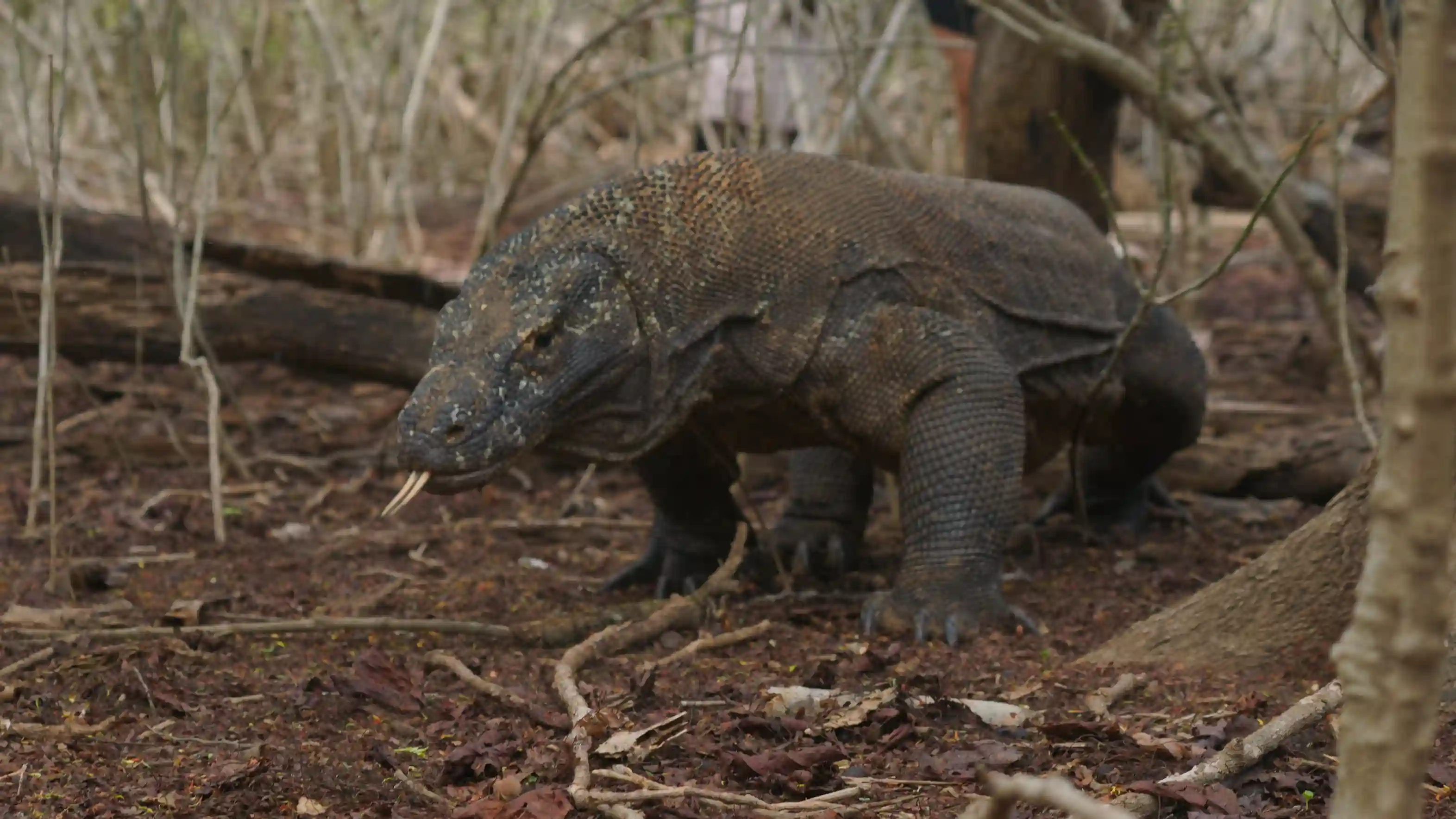
In their natural habitat across Komodo, Rinca, Flores, Gili Motang, and Gili Dasami, Komodo dragons face a harsh survival gauntlet. Most hatchlings never reach adulthood, and the ones that do typically live around 30 years, though wild females tend to disappear from long-term mark-recapture studies earlier than males, often by their late 20s, likely due to the physical toll of egg-laying and nest defense.
Males, being larger and less vulnerable to predation once mature, may push toward the upper end of that range or slightly beyond in undisturbed populations.
How Long Do Komodo Dragons Live in Captivity?
Captive Komodo dragons often benefit from steady food supply, veterinary care, and zero predation risk, factors that can modestly extend their lifespan compared to the wild. According to data from the Association of Zoos and Aquariums (AZA), the median lifespan in professional care is approximately 19.5 years for females and 12.9 years for males, though these medians reflect a mix of ages at death across a population and don’t represent a hard ceiling.
Some individuals have significantly outlived those medians. Fluffy, a Komodo dragon at the Los Angeles Zoo, lived to approximately 33 years old, one of the longest documented lifespans for the species. Loka, at the Calgary Zoo, reached around 30 years. These standout cases show that with the right conditions, Komodo dragons can substantially exceed typical captive averages.
You may encounter anecdotal claims online of Komodo dragons living 50, 60, or even 70+ years. These figures are not supported by peer-reviewed data. The most rigorous long-term studies, including genetic and mark-recapture research such as Laver et al. (2012), have not confirmed any wild or captive individual conclusively surviving past the low-40s range, and most verified records sit well below that. Treat any lifespan claim beyond roughly 30–35 years as unverified until backed by a documented, tracked individual.
Waarom de levensduur van komodovaraan belangrijk voor u is
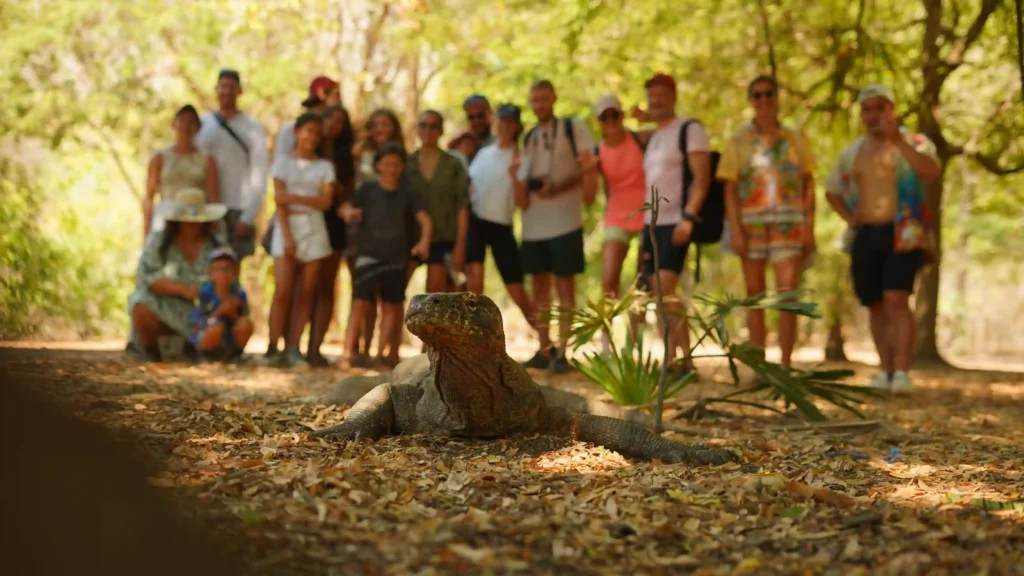
Misschien vraag je je nu af: „Waarom zou het mij iets kunnen schelen hoe lang Komodovaranen leven?“ Het antwoord gaat verder dan louter nieuwsgierigheid; het gaat om natuurbehoud en verbondenheid. Wanneer je plekken zoals Nationaal Park Komodo bezoekt, ben je niet zomaar een toerist. Je betreedt het leefgebied van een diersoort die al miljoenen jaren bestaat.
Door inzicht te krijgen in hun levensverwachting, word je je meer bewust van de uitdagingen waarmee ze te maken hebben en van het belang om hen te beschermen. Elke milieubewuste keuze die je maakt – van het steunen van verantwoorde reisorganisaties tot het naleven van de richtlijnen in het park – draagt bij aan hun voortbestaan. Met andere woorden: als je weet hoe lang Komodovaranen leven, kun je een bijdrage leveren aan hun toekomst.
The Komodo Dragon Life Cycle: From Egg to Apex Predator
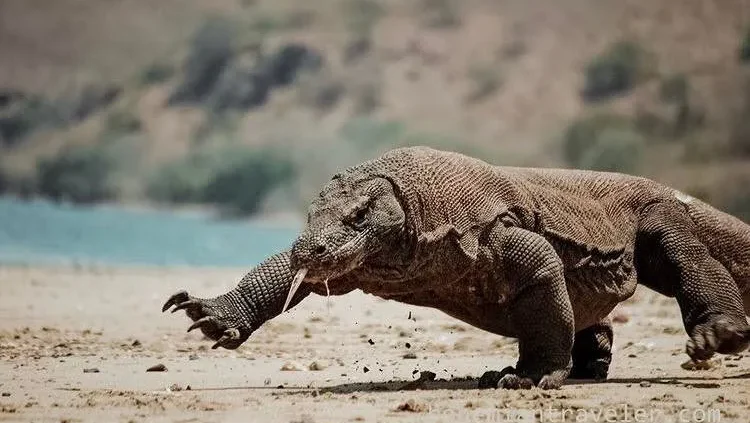
Om een beter beeld te krijgen van de levensduur van Komodovaranen, zullen we hun levensfasen stap voor stap doornemen.
1. Incubation (7–8 Months)
Female Komodo dragons lay a clutch of around 15–30 eggs (commonly cited around 20–21) inside megapode bird mounds or self-dug burrows, which provide stable temperature and humidity. Incubation lasts roughly 220 days, or about 7–8 months, with temperature during incubation influencing hatchling sex ratios.
2. Hatchling Stage (0–1 Year): Life in the Trees
Newly hatched Komodo dragons emerge at just 30–40 cm long and 80–100 grams, a fraction of their eventual adult size. Within hours of digging out of the nest, hatchlings climb straight into the tree canopy, where they will spend nearly all their time for the next year or so.
This arboreal lifestyle isn’t optional, it’s survival. Adult Komodo dragons are cannibalistic and will readily eat hatchlings and juveniles they encounter on the ground. Living in trees keeps young dragons safely out of reach while they feed on insects, small lizards, and birds’ eggs.
3. Juvenile Stage (1–3 Years): The Transition Begins
As they grow, juveniles gradually shift from a nearly exclusive arboreal existence toward more time on the ground, though they remain cautious. Field studies tracking immature Komodo dragons found hatchlings were arboreal roughly 98% of the time, while juveniles had already shifted to spending about 71% of their time on the ground, evidence of a clear, progressive transition rather than an abrupt switch. This period typically spans the first two to three years of life, somewhat shorter than older estimates once suggested.
4. Sub-Adult Stage (3–7 Years): Building Toward Dominance
By this stage, young dragons are largely terrestrial, growing rapidly, and beginning to hunt larger prey like rodents, birds, and smaller mammals. They’re still vulnerable to larger adults and continue to avoid direct confrontation with dominant individuals.
5. Sexual Maturity (7–10 Years)
Komodo dragons reach sexual maturity later than many reptiles of comparable size. Research indicates females typically mature around 7–10 years old, while males mature slightly later, around 8–10 years. Once mature, they begin participating in the annual breeding season, typically between June and August, competing for mates and nesting sites.
6. Adulthood (10+ Years): Apex Predator Status
Fully mature Komodo dragons dominate their island ecosystems with no natural predators. Adults can reach 2.5–3 meters in length and 60–90 kg in the wild, powerful enough to take down prey as large as deer, wild boar, and water buffalo using a combination of serrated teeth and a venomous bite that impairs blood clotting and lowers prey blood pressure. This apex status defines the remainder of their 20–30 year lifespan.
Wat beïnvloedt de levensduur van komodovaraan ?
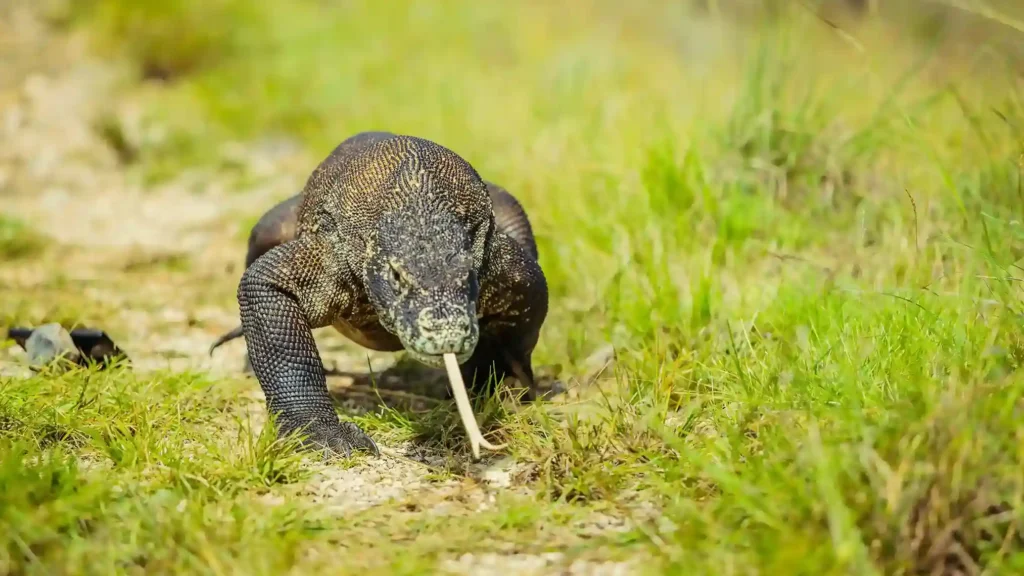
Nu je de basisprincipes van hun levensduur kent, gaan we eens kijken naar de factoren die bepalen hoe lang Komodovaranen leven.
- Leefomgeving en habitat
In het wild levende Komodovaranen 's komen voornamelijk voor op verschillende Indonesische eilanden, met name in de tropische savannebossen van Oost-Nusa Tenggara, waar de omstandigheden vaak zwaar zijn. Ze worden voortdurend bedreigd door habitatverlies, natuurrampen en de afnemende komodovaraan populaties van hun prooidieren. Hierdoor is hun levensverwachting lager dan die van dieren in gevangenschap, waar hun lichaamstemperatuur en leefomgeving zorgvuldig worden gecontroleerd. - Gezondheid en voeding
Net als bij mensen speelt de voeding van Komodovaranen een grote rol in hun levensduur. In het wild kan ondervoeding optreden als er door menselijke verstoring of een verstoorde balans in het ecosysteem te weinig prooidieren beschikbaar zijn. In gevangenschap krijgen ze echter uitgebalanceerde maaltijden die zijn samengesteld om hun gezondheid te ondersteunen. Dit verschil verklaart waarom draken in gevangenschap een langer en gezonder leven kunnen leiden dan hun soortgenoten in het wild. - Natuurbehoud
Programma's die gericht zijn op de bescherming van de ' komodovaraan', zoals die op Nationaal Park Komodo, zorgen voor een veiligere omgeving, waardoor deze bedreigde diersoorten langer kunnen voortbestaan. Zonder deze maatregelen zou hun gemiddelde levensduur aanzienlijk korter kunnen zijn, en zouden toekomstige generaties wellicht alleen nog maar over hen horen als legendes, naast verhalen over andere draken. - Menselijke activiteiten
Stroperij, illegale jacht op prooidieren en de vernietiging van leefgebieden hebben een directe invloed op de levensduur van de komodovaraan . Hoe verantwoordelijker we ons gedragen als reizigers en natuurbeschermers, hoe groter de kans dat deze ongelooflijke reptielen de komende decennia zullen overleven.
Lees meer: Het beste moment van de dag om te bekijken Komodovaranen
What Kills Komodo Dragons? Mortality by Life Stage
- Eggs: nest predation (including other monitors), flooding, desiccation.
- Hatchlings/juveniles: cannibalism by adults, birds of prey, snakes, starvation.
- Adults: combat wounds from rival males, injuries from large prey such as buffalo, drought-year starvation, disease and parasites.
- Seniors: age-related decline compounding otherwise survivable injuries.
The pattern is a funnel: of a ~21-egg clutch, only a handful of dragons reach maturity, and only the toughest of those reach 25. Every big male dozing beside a ranger post is a statistical survivor several times over.
How Do Scientists Know a Dragon’s Age?
There is no birth certificate in the savanna. Researchers rely on three methods: long-term mark-recapture programs in Komodo National Park (individuals tagged and re-encountered across decades), known-age zoo records, and growth-curve modelling from body measurements. That third method is the source of the famous “62-year” figure — an extrapolated ceiling, not a measured dragon, which is why serious references stick to ~30 years.
Hoe lang leven Komodovaranen eigenlijk?
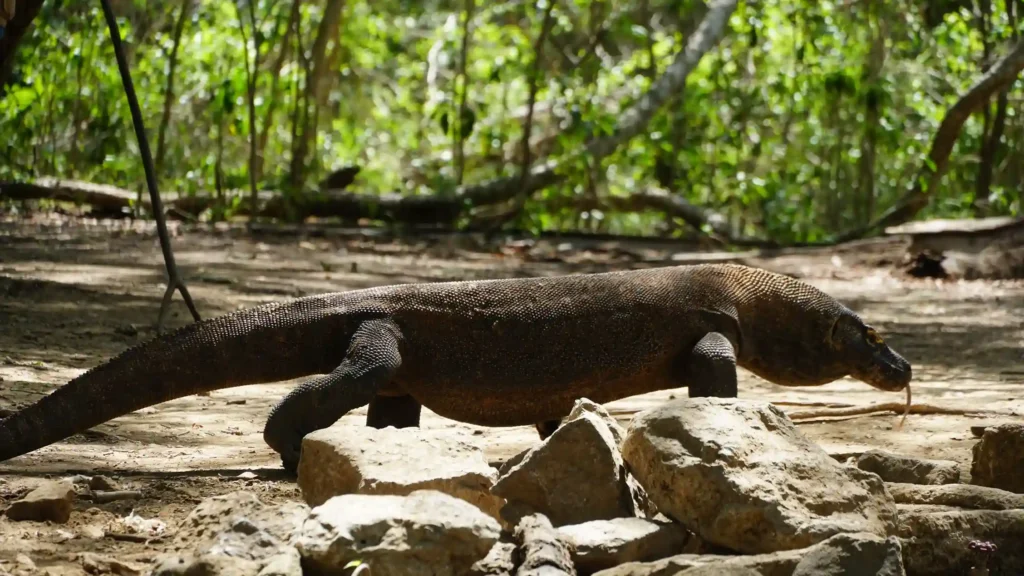
Als je jezelf afvraagt:„Hoe lang leven Komodovaranen ?”, is het antwoord niet zomaar één getal. Het hangt namelijk sterk af van hun leefomstandigheden: of ze nu in het wild opgroeien of door mensen worden verzorgd.
| Context | Levensduur | Source basis |
| Wild, typical | ~30 years | Smithsonian National Zoo; mark-recapture field studies |
| Captivity, typical | 20–30+ years | Zoo records |
| Captivity, median (managed care) | 19.5 yrs (males) / 12.9 yrs (females) | AZA data via San Diego Zoo fact sheet |
| Best-documented maximums | ~33 yrs (Fluffy, LA Zoo); 30 yrs (Loka, Calgary Zoo) | Zoo longevity records |
| 50–62-year claims | Unverified | Growth-curve extrapolation, anecdote (HAGR database) |
- In het wild worden Komodovaranen meestal zo’n 30 jaar oud; de meeste bronnen schatten hun levensduur op 15 tot 30 jaar. Het leven in hun natuurlijke leefgebied zit vol uitdagingen: jonge draken ontwijken vaak roofdieren zoals vogels, slangen en zelfs volwassen komodovaranen, terwijl oudere dieren te maken krijgen met voedseltekorten, territoriumconflicten en menselijke verstoring. Ze moeten met andere soorten concurreren om voedsel en jagen soms zelfs op grote prooien om te overleven. Al deze risico’s maken het voor velen moeilijk om hun maximale levensverwachting te bereiken.
- In gevangenschap ligt het heel anders. Dankzij regelmatige voeding, veterinaire zorg en bescherming tegen roofdieren kunnen Komodovaranen tussen de 20 en 30+ jaar oud worden. Sommige exemplaren in goed beheerde dierentuinen, zoals de National Zoo, en in fokprogramma’s hebben dit gemiddelde zelfs overschreden, wat aantoont dat goede verzorging hun levensduur kan verlengen. In gevangenschap eten ze doorgaans ook insecten, kleine zoogdieren en ander gecontroleerd voer, waarbij ze vertrouwen op hun scherpe reukzin om voedsel op te sporen, zonder het risico te lopen dodelijk gebeten te worden door rivalen.
- Anekdotische schattingen gaan zelfs nog verder: er wordt beweerd dat de Komodovaranen in het wild een leeftijd van meer dan 60 jaar zou kunnen bereiken. Deze berichten zijn echter nog niet geverifieerd en worden door de wetenschappelijke gemeenschap niet algemeen aanvaard. Toch wekken ze nieuwsgierigheid op en laten ze zien hoe weinig we werkelijk weten over de uiterste grenzen van de levensduur van de komodovaraan .
Uiteindelijk, of het nu in de ruige landschappen van Komodo eiland is of binnen de beschermende muren van een dierentuin, tonen deze reusachtige reptielen een opmerkelijk vermogen om te overleven. Hun levensverwachting vertelt ons niet alleen iets over biologie, maar ook over de mate waarin het milieu en menselijk ingrijpen hun reis door de tijd beïnvloeden.
Lees meer: komodovaraan versus feiten over komodovaraan : je gelooft nooit wat er echt waar is!
Laten we ‘ Komodovaranen ’ van dichtbij ontdekken met ‘ Komodo Luxury ’!
Hoe lang leven Komodovaranen eigenlijk ? Gemiddeld kunnen deze reusachtige reptielen in het wild tot 30 jaar oud worden en in gevangenschap 20 tot 30 jaar of meer, afhankelijk van hun leefomgeving, voeding en de voortdurende inspanningen voor hun behoud. Hoewel er verhalen de ronde doen dat ze wel 60 jaar of ouder zouden kunnen worden, is het vooral bijzonder om te zien dat deze oeroude wezens vandaag de dag nog in leven zijn.
De kans om draken in verschillende levensfasen te spotten — van in bomen levende jongen tot dominante volwassen exemplaren — is veel groter tijdens een eilandhoppende duikcruise cruise via Nationaal Park Komodo, waarbij Komodo, Rinca en de omliggende eilandjes worden bezocht.
You can experience this wonder for yourself, join a Komodo Island Tour with Komodo Luxury and witness Komodo dragons in their natural habitat. Not only will you enjoy a premium sailing journey across stunning islands, but you’ll also be part of a sustainable travel experience that supports conservation. Don’t just read about them, come face-to-face with the world’s largest lizards in an adventure you’ll never forget. This is a once-in-a-lifetime chance to meet the legendary Komodo dragons in their natural home, an adventure only Komodo Luxury can deliver.