





























Komodo Dragon vs Coyote: Find Out Which Predator Dominates!
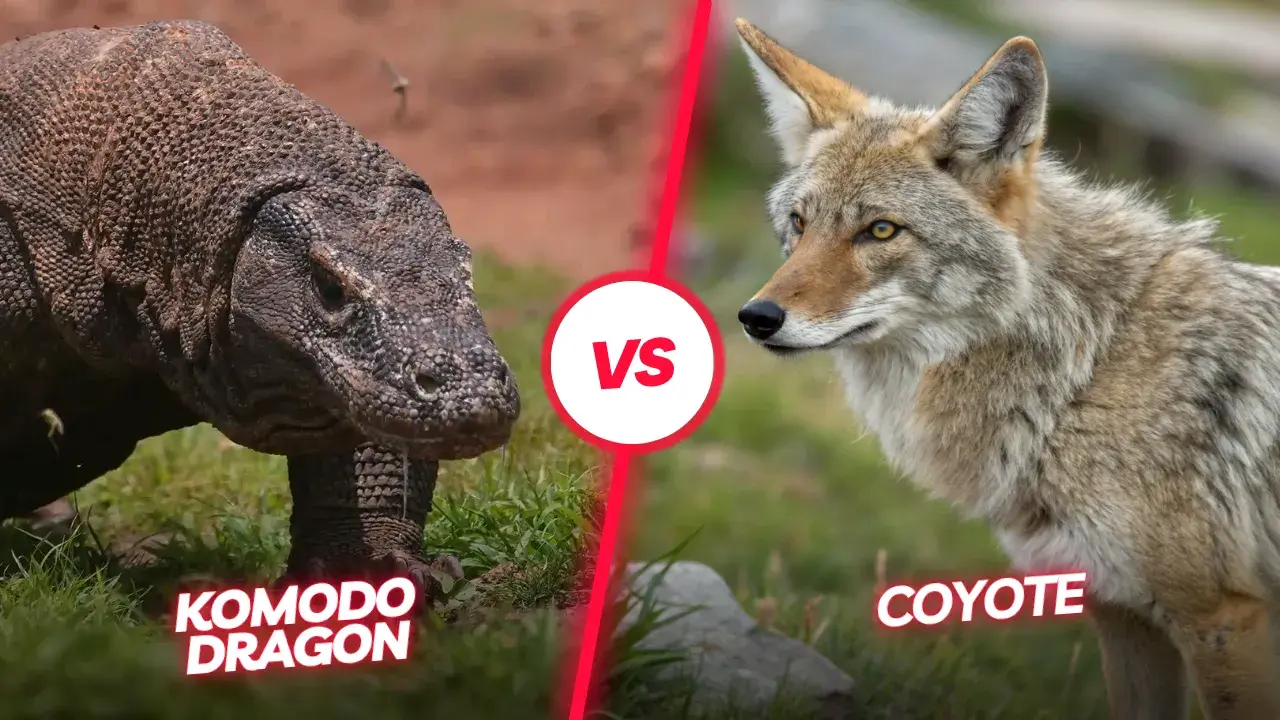
When you hear the phrase “Komodo Dragon vs Coyote,” your mind might picture a dramatic face-off between two fierce predators, one ruling the islands of Indonesia, the other roaming the wild plains of North America. It sounds like a scene straight out of a wildlife documentary, doesn’t it? Yet beyond that imagined clash lies something even more fascinating: a story about survival, intelligence, and power in two very different worlds.
In this article, you’ll discover how the mighty Komodo dragon, the world’s largest lizard, compares with the clever and adaptable Coyote, one of nature’s most resilient canines. From their size and strength to their hunting style, habitat, and social behavior, each represents a masterpiece of evolution. And as you explore this ultimate “Komodo Dragon vs Coyote” comparison, you might just find yourself inspired to witness the real dragon in its wild home, the legendary Komodo National Park.
Komodo Dragon: The Island Giant
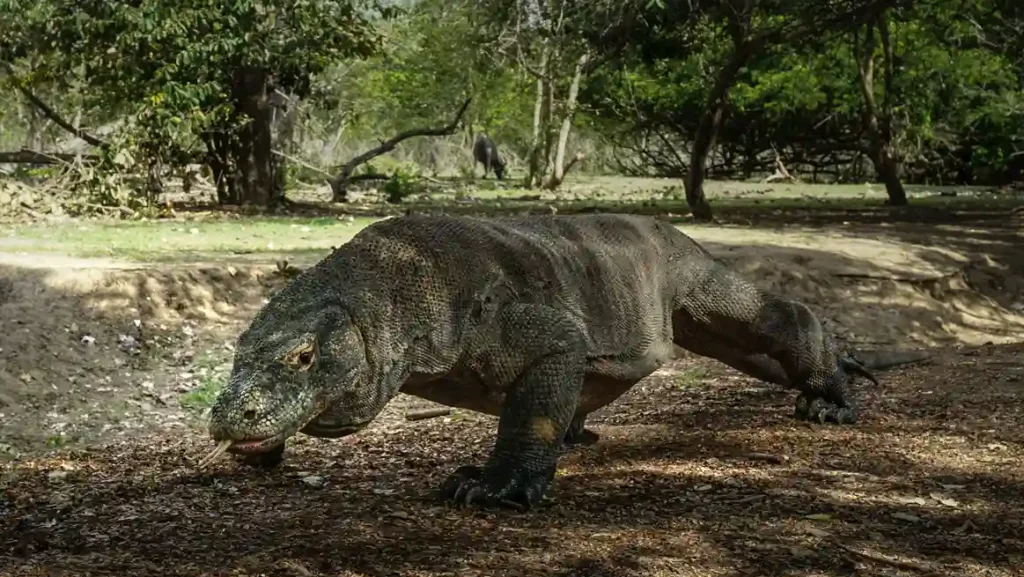
The Komodo dragon (Varanus komodoensis) is the world’s largest living lizard, an ancient predator that has roamed Indonesia’s Lesser Sunda Islands for millions of years. Reaching up to 3 meters in length and weighing more than 70 kilograms, this giant reptile rules its rugged habitat with quiet dominance. You’ll find them mainly on Komodo, Rinca, and a few nearby islands, areas of dry savanna, volcanic hills, and coastal forests that mirror their primal strength. Every movement of the Komodo dragon feels deliberate and powerful, a reminder that you’re witnessing a true relic of evolution.
But beyond its size and reputation, the Komodo dragon is a master of survival. With a forked tongue that detects the scent of prey from several kilometers away and a bite carrying venomous proteins that cause rapid blood loss, this predator hunts with patience and precision. It feeds on deer, wild boar, and sometimes even water buffalo, maintaining balance in its ecosystem as both hunter and scavenger. For you, seeing a Komodo dragon in its natural habitat isn’t just thrilling, it’s stepping into a world where nature’s raw power still reigns supreme.
Coyote: The Clever Survivor
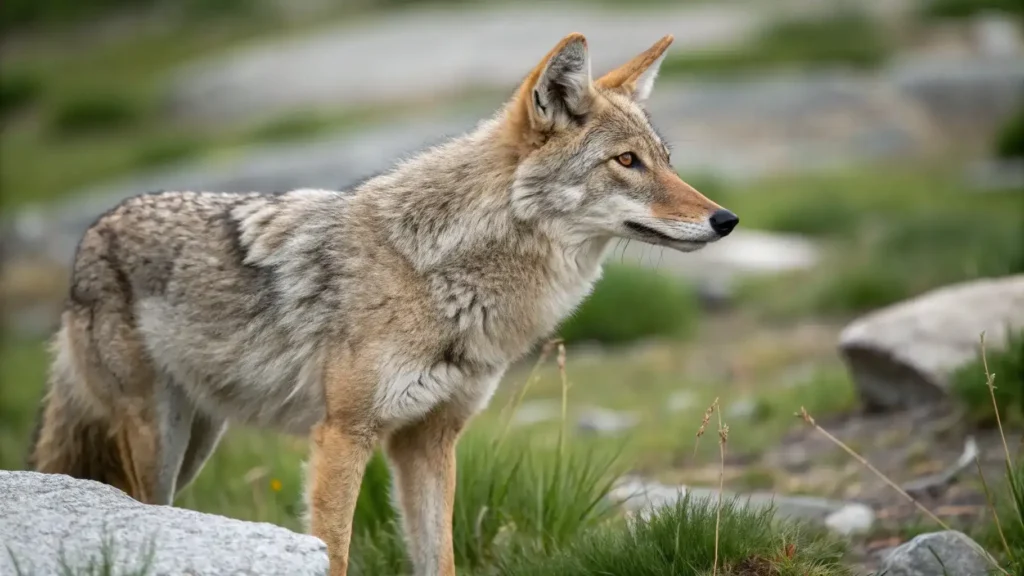
While the Komodo dragon rules its tropical islands, the Coyote, scientifically known as Canis latrans, thrives across the vast landscapes of North America. From deserts and grasslands to dense forests and even urban areas, this medium-sized canine has adapted to nearly every environment imaginable. Weighing between 9 and 22 kilograms and standing around half a meter tall, the Coyote may look modest compared to larger predators, but its intelligence and adaptability are unmatched. Whether hunting solo or working in pairs, its resourceful nature has earned it a reputation as one of the most versatile carnivores on Earth.
Unlike many predators that struggle to survive human expansion, the Coyote has flourished alongside it. Its diet is remarkably flexible, ranging from small mammals, birds, and reptiles to fruits and even leftovers from urban waste. With sharp senses, quick reflexes, and a complex communication system of howls and yips, the Coyote embodies both resilience and intelligence. For you, understanding this creature is a glimpse into how evolution favors adaptability over sheer strength, a fascinating contrast to the raw power of the Komodo dragon.
Read more: Komodo Dragon Myths vs Facts: You Won’t Believe What’s Actually True!
Komodo Dragon vs Coyote: A Complete Comparison
Both the Komodo dragon and the Coyote stand as powerful examples of how evolution shapes life in completely different worlds. One thrives in the sun-scorched islands of Indonesia, while the other roams freely across the wide plains of North America. Despite their differences in size, appearance, and behavior, each species has mastered the art of survival in its own environment. Now, let’s dive deeper into how these two remarkable predators compare:
| Aspect | Komodo Dragon | Coyote |
| Size & Strength | Up to 3 meters long, 70+ kg; muscular, powerful tail, serrated teeth; top island predator | 1–1.3 meters long, 9–22 kg; relies on agility, speed, intelligence; efficient hunter |
| Habitat | Exclusive to Komodo, Rinca, Flores; dry savannahs, volcanic hills, coastal forests; limited and vulnerable | Wide range across North America; deserts, grasslands, forests, urban areas; highly adaptable |
| Hunting Strategy | Ambush predator; uses scent to detect prey kilometers away; strikes with precision | Opportunistic hunter; combines speed, intelligence, sometimes teamwork; flexible diet |
| Social Behavior | Mostly solitary; interacts mainly during mating or near abundant food; juveniles hide from adults | Flexible social structure; hunts alone or in small packs; communicates via howls, yips, scent marks |
| Adaptability | Limited; dependent on specific prey and habitat; vulnerable to ecological changes | Extraordinary; adapts to natural and human-altered environments; adjusts diet and behavior easily |
| Conservation Status | Vulnerable (IUCN); protected in Komodo National Park; relies on conservation efforts | Least Concern (IUCN); stable population; thrives despite human pressures |
Size & Strength of Komodo Dragon and Coyote
The Komodo dragon is truly a giant among reptiles, reaching lengths of up to 3 meters and weights exceeding 70 kilograms. Its muscular body, powerful tail, and serrated teeth make it a dominant predator capable of taking down large prey such as deer and water buffalo. This impressive combination of size and strength allows it to thrive as the top predator of its island ecosystem.
In contrast, the Coyote is much smaller, typically weighing between 9 and 22 kilograms and measuring around 1 to 1.3 meters from nose to tail. Its strength lies not in brute force but in agility, speed, and intelligence, allowing it to hunt small mammals efficiently and survive in varied environments. While it may not inspire the same awe as a Komodo dragon, the Coyote’s cleverness and adaptability make it a formidable survivor in its own right.
Habitat of Komodo Dragon and Coyote
The Komodo dragon is found exclusively in Indonesia’s Lesser Sunda Islands, including Komodo, Rinca, and Flores, within the protected Komodo National Park. These islands feature dry savannahs, volcanic hills, and coastal forests that provide both hunting grounds and shelter for juveniles hiding from adults. Its restricted, island-specific habitat makes the Komodo dragon both rare and highly vulnerable to environmental changes.
The Coyote, on the other hand, occupies a vast range across North America, from deserts and grasslands to forests and urban edges. Unlike the Komodo dragon, the Coyote thrives in highly varied environments, demonstrating remarkable adaptability to human presence and seasonal changes. This ability to flourish in both wild and semi-urban landscapes highlights the Coyote’s versatility compared to the island-restricted Komodo dragon.
Hunting Strategy of Komodo Dragon and Coyote
The Komodo dragon is an ambush predator, relying on patience and stealth to catch its prey. Using its keen sense of smell, it can detect animals from several kilometers away, then strike suddenly with powerful jaws and sharp claws. Its hunting method often involves waiting near trails or water sources, ensuring that its strike is both efficient and deadly.
The Coyote, in contrast, is an opportunistic hunter, using a combination of speed, intelligence, and sometimes teamwork to capture prey. It feeds on small mammals, birds, reptiles, and even fruits or human-related food sources when necessary. This flexible hunting strategy allows the Coyote to survive in diverse environments, from wilderness to urban edges, demonstrating its adaptability compared to the more specialized Komodo dragon.
Social Behavior of Komodo Dragon and Coyote
The Komodo dragon is largely solitary, interacting with others mainly during mating season or in the presence of abundant food. Younger dragons often hide from adults to avoid cannibalism, highlighting the species’ competitive nature even within its own kind. This solitary lifestyle reinforces the Komodo dragon’s dominance in its ecosystem while minimizing conflicts over territory.
In contrast, the Coyote exhibits a flexible social structure, often living and hunting alone but sometimes forming small family units or temporary packs. Communication through howls, yips, and scent markings helps coordinate hunts and establish territories. This social adaptability allows the Coyote to thrive in a variety of environments, giving it an edge over species that rely strictly on solitary survival.
Adaptability to Change of Komodo Dragon and Coyote
The Komodo dragon has a limited adaptability due to its restricted island habitat and specialized diet. While it can survive seasonal fluctuations and occasional food shortages, its dependence on specific prey and environments makes it vulnerable to ecological changes. Conservation efforts are therefore crucial to ensure that this iconic predator continues to thrive in its natural home.
The Coyote, however, is renowned for its extraordinary adaptability to both natural and human-altered environments. From rural wilderness to urban landscapes, it adjusts its diet, behavior, and hunting tactics to survive and even flourish. This versatility has made the Coyote one of North America’s most resilient carnivores, thriving where other predators might struggle.
Conservation Status of Komodo Dragon and Coyote
The Komodo dragon is currently listed as Vulnerable on the IUCN Red List, primarily due to habitat loss, natural disasters, and limited population size. Komodo National Park provides critical protection, but ongoing conservation efforts are essential to prevent further decline. For you as a visitor, supporting responsible tourism can directly contribute to the survival of these ancient predators.
The Coyote, in contrast, is classified as Least Concern, reflecting its wide distribution and stable population across North America. Its remarkable adaptability to human activity and varied habitats has allowed it to thrive despite pressures that threaten many other predators. Observing a Coyote in the wild provides a glimpse into a species that balances survival and coexistence with humans remarkably well.
Komodo Dragon vs Coyote: Who Would Win?
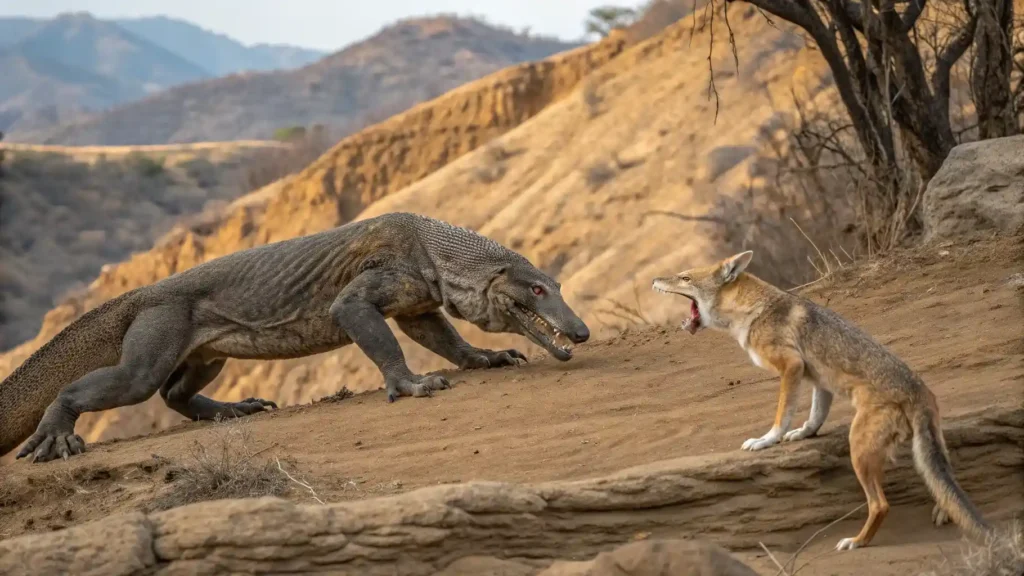
When it comes to a hypothetical showdown between the Komodo dragon and the Coyote, the answer isn’t as simple as size or strength alone. Each species dominates in its own environment, the Komodo dragon with raw power and island specialization, and the Coyote with intelligence, agility, and adaptability across diverse terrains. Considering their unique survival strategies, the “winner” really depends on the context: island versus open plains, brute force versus cunning tactics.
While you might imagine a face-off, the real fascination lies in comparing how evolution has equipped these predators to thrive in vastly different worlds. The Komodo dragon relies on stealth, patience, and precision, whereas the Coyote thrives on versatility, clever hunting, and social coordination. Thinking about who would win sparks curiosity and awe, but it also deepens your appreciation for the diverse ways nature shapes survival.
Let’s See Komodo Dragon in Its Wild Habitat with Komodo Luxury!
In the end, the Komodo dragon stands as a symbol of nature’s raw ingenuity, a predator perfectly adapted to its island world, combining patience, power, and precision. While the Coyote impresses with versatility and intelligence, the Komodo dragon reminds us that some creatures rely on sheer evolutionary refinement to thrive. Observing it in its natural environment offers an unparalleled glimpse into the complexity of life on Earth, far beyond what you can read or imagine.
If you’ve ever dreamed of seeing these legendary Komodo dragons up close, there’s no better way than joining a Komodo Island tour with Komodo Luxury. With expert guides, comfortable accommodations, and exclusive access to the islands, you can witness Komodo dragons roaming freely, explore pristine beaches, and experience the raw beauty of the Komodo National Park firsthand. For you, this isn’t just a wildlife adventure, it’s an opportunity to connect deeply with one of the planet’s most iconic predators while supporting conservation and sustainable tourism.