






















How to Repair Boat Hull Damage Fast and Effectively
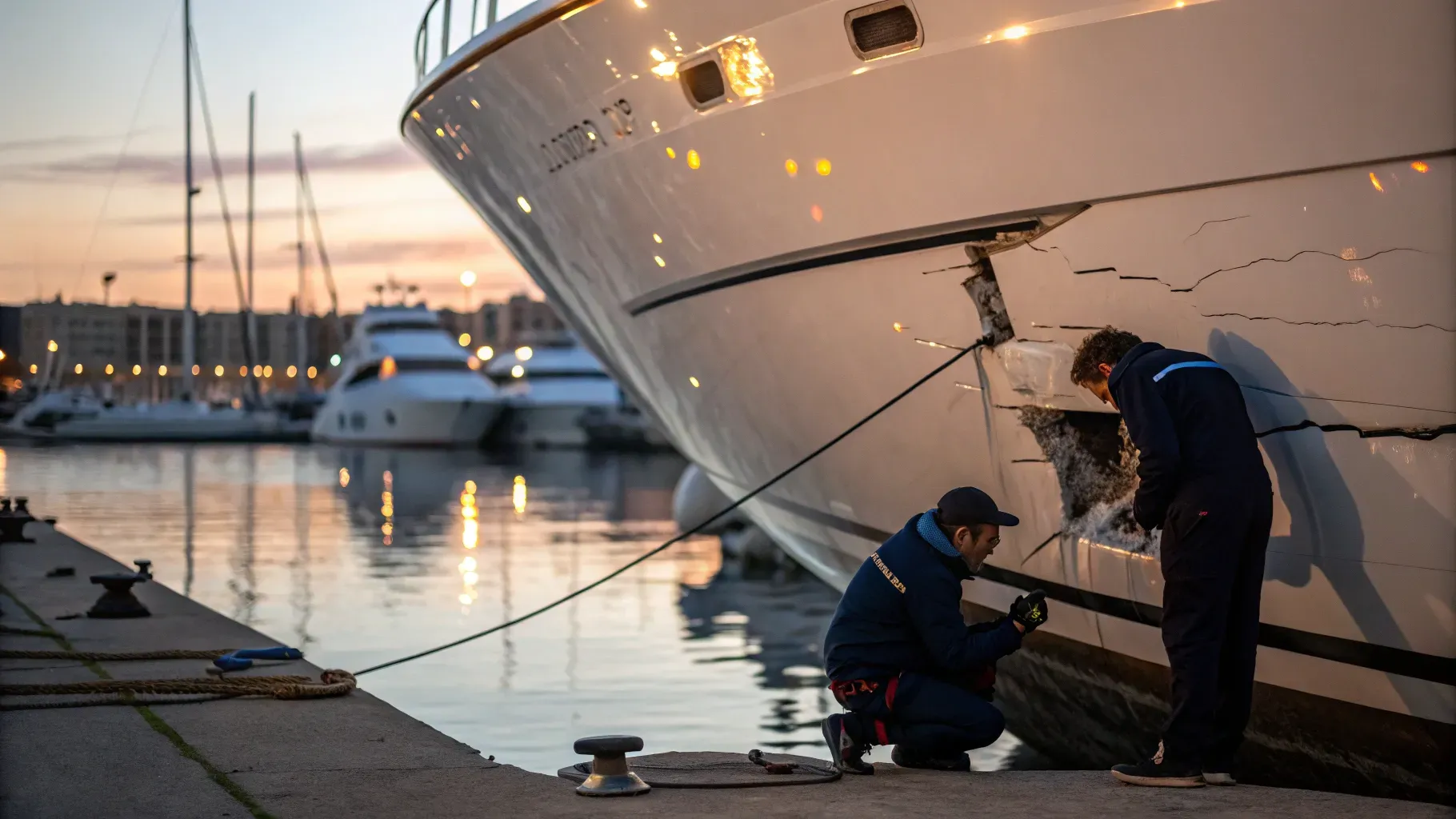
Ever noticed a strange crack or blister on your boat’s hull and wondered if it’s something to worry about? You’re not alone. Hull damage is one of the most common issues faced by boat owners. Whether you’re sailing calm lagoons or navigating unpredictable open seas.
No matter how carefully you cruise, your boat’s hull is constantly exposed to impacts, pressure, and environmental stress. In this article, we’ll walk you through how to repair boat hull damage and knowing when to call in the experts. Whether you’re maintaining a personal yacht or managing a fleet, this guide will help you make informed decisions about hull repair with confidence.
Why Hull Damage Is a Big Deal?
While it might seem minor at first glance, hull damage is never something to take lightly. The hull is the structural foundation of your vessel, it keeps you afloat, protects the interior from water intrusion, and supports the boat’s overall integrity. When this critical part of the boat is compromised, even small issues can quickly escalate into serious problems.
Here are some of the risks associated with untreated hull damage:
- Water Leaks: Even a hairline crack can allow seawater to seep into the boat.
- Reduced Fuel Efficiency: A rough or damaged hull creates more drag, which can increase fuel consumption.
- Corrosion and Delamination: Trapped moisture, especially in saltwater environments, can lead to structural deterioration.
- Loss of Resale Value: A boat with visible or poorly repaired hull damage is harder to sell or charter at a premium price.
Hull damage isn’t just a cosmetic issue, it’s a matter of safety, performance, and long-term value. That’s why knowing how to spot and properly address it, whether on your own or with professional help, is an essential part of responsible boat ownership.
Common Causes of Boat Hull Damage
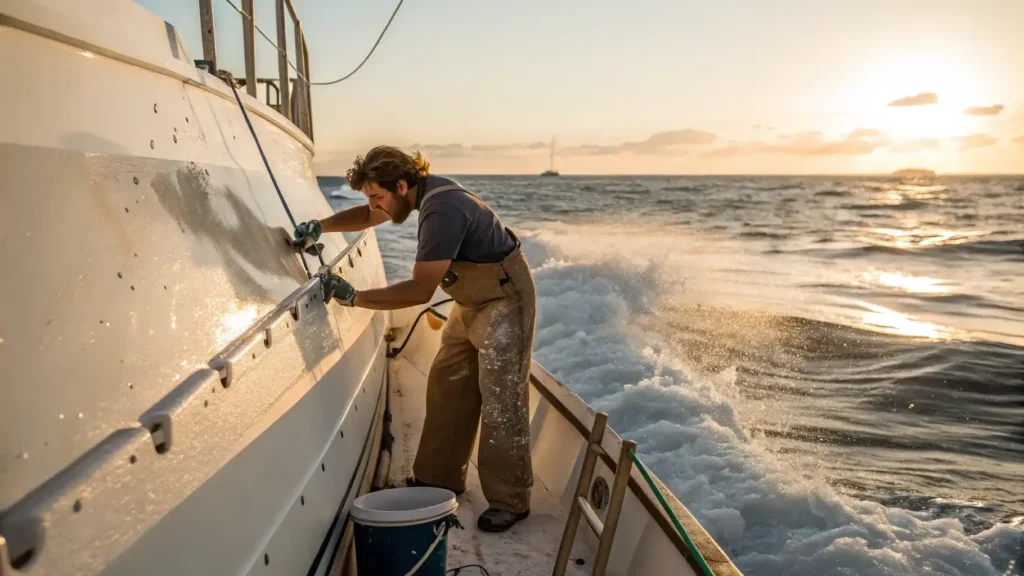
Understanding what causes hull damage is the first step to preventing it. Boats operate in a challenging environment, and the hull is constantly exposed to a variety of stressors, both natural and manmade. Here are some of the most common reasons boat hulls get damaged:
- Grounding and Collisions
One of the most serious and common causes of hull damage is running aground or hitting submerged objects like rocks, coral, logs, or debris. These incidents can result in deep gouges, cracks, or even punctures in the hull, especially below the waterline. - Docking Accidents
Improper docking techniques or strong winds pushing the boat against hard surfaces can lead to chips, scratches, or fractures in the gelcoat or fiberglass layers. Even minor impacts can cause damage over time if repeated. - Osmosis and Blistering
In fiberglass boats, water can penetrate the hull and cause a chemical reaction between water and the materials used in the fiberglass laminate. This process commonly known as osmosis forms blisters that can weaken the hull’s structure if left untreated. - Wear and Tear Over Time
General aging, UV exposure, and lack of regular maintenance can cause hull materials to degrade. Paint peels, cracks appear, and the overall strength of the hull can be compromised, especially if the boat is left in the water for extended periods without inspection. - Poor Repairs or Modifications
Inadequate past repairs, DIY fixes with the wrong materials, or unprofessional modifications can all contribute to long-term hull issues. If a repair wasn’t done properly the first time, it might fail later under pressure or load.
Read more: Luxury Boat Repair Services for Safe and Seamless Voyages
How to Identify Boat Hull Damage
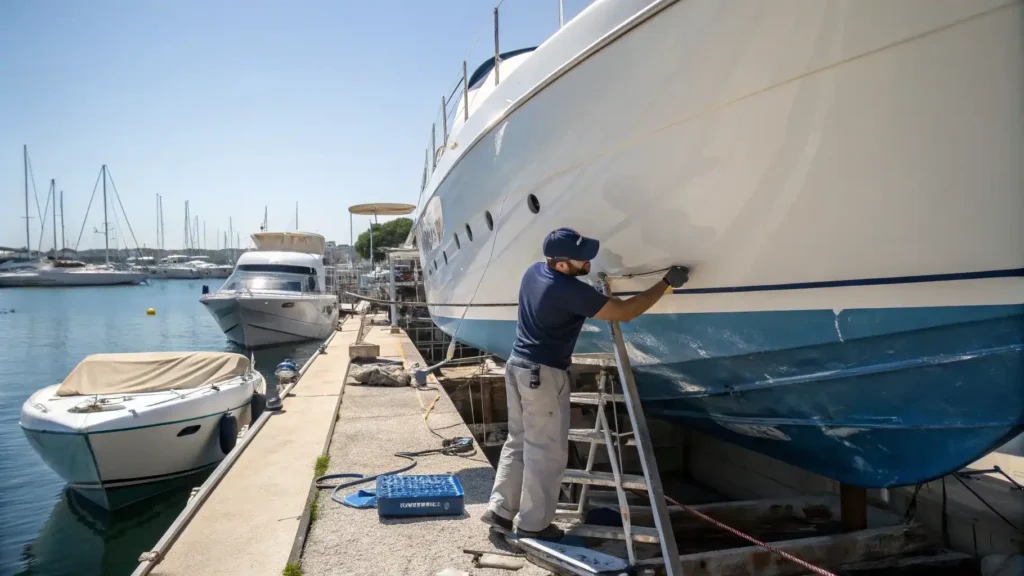
Detecting hull damage early is key to avoiding costly repairs and potential safety risks. Here are three essential steps to help you identify issues with your boat’s hull.
- Visual Inspection
Begin with a close visual examination of the entire hull surface. Look for cracks, chips, deep scratches, blisters, or deformities, especially near the waterline, keel, and transom. Blisters may indicate osmosis, while visible cracks in the gelcoat or fiberglass could point to structural damage. Discoloration or rust-like stains might signal internal corrosion or water penetration. - The Tap Test
This traditional technique is a reliable way to detect hidden delamination or voids. Tap the hull gently using a plastic hammer or a coin. If the area produces a clean, sharp sound, it’s likely solid. However, a dull or hollow tone may suggest moisture intrusion, separation of fiberglass layers, or trapped air beneath the surface. - Inside the Hull
Don’t forget to check the interior. Look into the bilge area for signs of water pooling or unusual dampness. Inspect the stringers, bulkheads, and flooring for cracks, warping, or separation. Boats with foam or wood cores are especially vulnerable to water ingress that spreads internally. Even if exterior damage seems minor, interior structural issues may still be developing silently.
How to Repair Boat Hull Damage: Step-by-Step Overview

For minor surface repairs, fixing boat hull damage yourself may seem doable but even basic fiberglass work involves multiple steps that require precision. First, the damaged area needs to be cleaned and sanded to remove loose material and prep the surface. Then, fiberglass cloth is layered over the area and saturated with marine epoxy resin. After curing, the patch must be faired (leveled), sanded smooth, and refinished, usually with gelcoat or marine paint to seal and protect the surface.
Each stage may sound simple, but in practice, it’s easy to make mistakes. Uneven layering, poor resin ratios, or improper curing can result in a weak repair that fails over time, especially when exposed to stress, water pressure, or saltwater corrosion. That’s why, for anything beyond cosmetic touch-ups, professional repair is not just a safer choice, it’s a smarter investment. This is particularly true for luxury boats, where both structural integrity and appearance matter just as much as performance.
If you’re unsure whether the damage is superficial or structural, it’s always better to err on the side of caution. Let trained marine technicians assess and repair it the right way, ensuring your vessel stays safe, seaworthy, and visually flawless.
Read more: Yacht Maintenance Tips for Long-Term Performance You Should Know
Let Komodo Luxury Handle Your Boat Hull Repairs with Precision!
No matter how experienced you are in boating, repairing hull damage isn’t something to take lightly, especially when your vessel is a symbol of luxury, performance, and safety. DIY mistakes can lead to bigger problems down the line, from hidden leaks to costly structural failures. That’s where Komodo Luxury’s Boat Repair Service comes in.
We specialize in Hull Repair and Reinforcement. Over time, boats can suffer damage, whether from rough waters, minor collisions, or improper docking. Our expert team is equipped to handle everything from sealing cracks to strengthening structural integrity. We use only high-quality, marine-grade materials to ensure your vessel is not just restored, but reinforced for long-term durability and optimal performance.
Whether it’s a fiberglass patch, a gelcoat restoration, or deep structural reinforcement, we treat every repair with the attention to detail your luxury vessel deserves. Because we understand: your boat isn’t just transportation, it’s a lifestyle.