






























Can a Komodo Dragon Climb a Tree? Find the Facts About Their Unique Behavior!
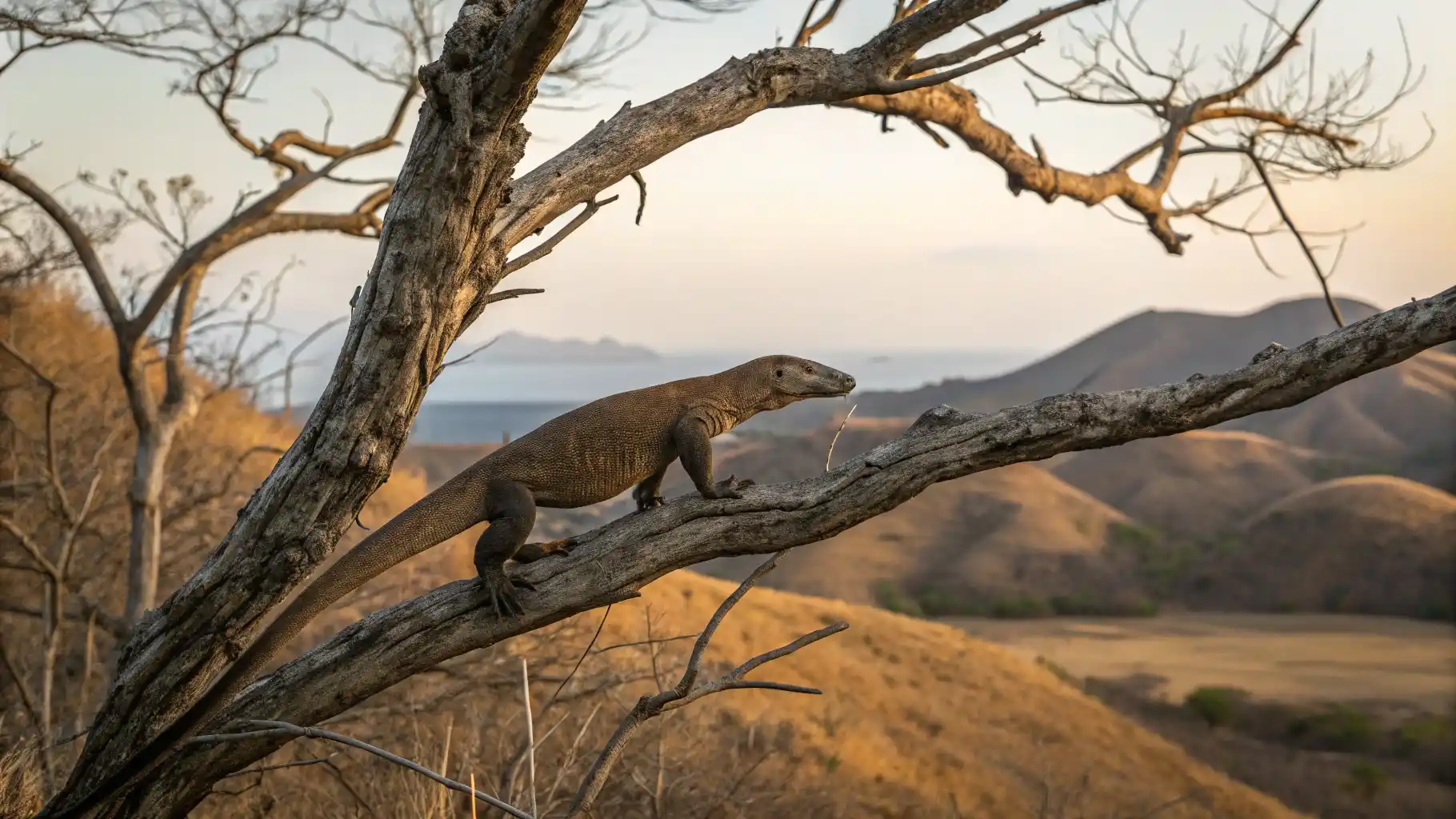
When you think of Komodo dragons, you probably picture massive, heavy reptiles roaming the rugged savannahs and coastal forests of Komodo Island. With their muscular build, sharp claws, and powerful tails, they seem like creatures designed purely for life on the ground. But here’s the big question: can a Komodo dragon climb a tree?
In this article, we’ll explore the truth behind this fascinating question, uncover the behavior of both juvenile and adult Komodo dragons, and share tips for safely observing them in their natural habitat. By the end, you’ll understand that Komodo dragons can climb trees or not, but also why their life stages play a crucial role in how they move through their environment.
Can Komodo Dragons Climb Trees?
Yes, they can, but mostly when they’re young. Newly hatched Komodo dragons are agile climbers, using trees as a safe haven to survive in a world full of predators, including adult dragons. These juvenile reptiles have strong claws and lightweight bodies that allow them to scramble up trunks and perch on branches, often for hours at a time.
As they grow, however, their massive size makes climbing nearly impossible. Adult Komodo dragons, some reaching 3 meters in length and weighing over 70 kilograms, are fully terrestrial. They dominate the ground, using stealth, venom, and brute strength to hunt prey, while the trees remain the domain of the nimble juveniles. Understanding this behavior helps explain one of the most fascinating survival strategies in the reptile world and is essential knowledge for anyone visiting Komodo National Park.
Why Young Komodo Dragons Climb Trees
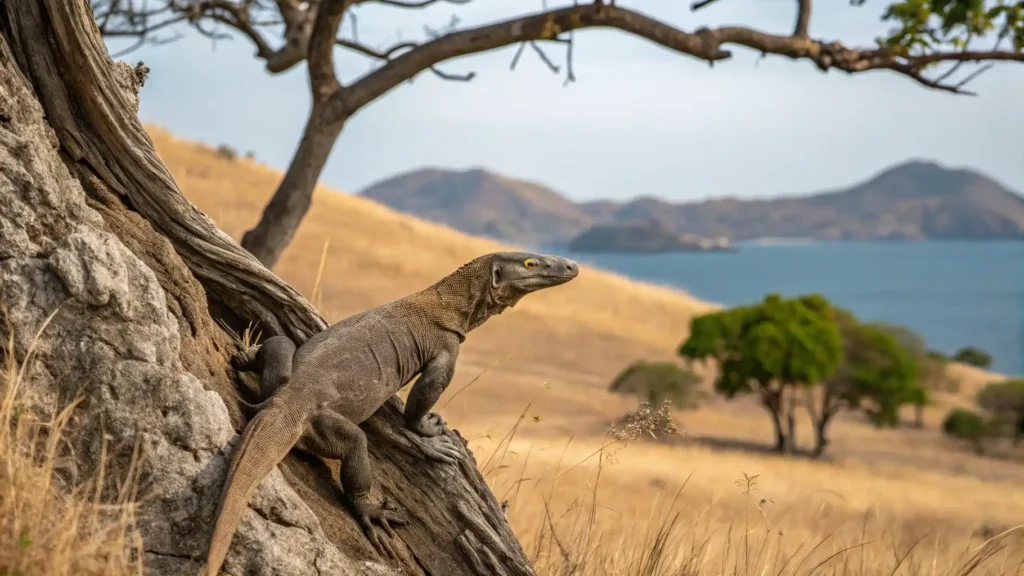
Juvenile Komodo dragons rely on tree climbing for several important reasons, and understanding these behaviors gives us a glimpse into the challenges they face in their early years.
Protection from Predators
One of the most fascinating yet harsh facts about Komodo dragons is that cannibalism is common among them. Adult dragons will not hesitate to prey on juveniles if given the opportunity. Climbing into the trees provides young dragons a much-needed refuge, placing them out of reach of their larger, more powerful relatives. You can imagine a tiny dragon, no bigger than a domestic cat, swiftly scrambling up a branch to avoid a lurking adult, it’s a dramatic survival tactic that highlights how evolution has shaped their behavior.
Access to Food
Trees aren’t just a hiding place; they’re also a rich source of nourishment for young dragons. Insects, small birds, lizards, and geckos inhabit the branches and foliage, providing a diet that is less competitive than the prey adults hunt on the ground. By foraging among the branches, juveniles can sustain themselves while avoiding conflict with older, stronger dragons. This clever use of vertical space demonstrates how they maximize their chances of survival using agility and strategy rather than brute strength.
Safety during Rest
Even when young Komodo dragons are not actively climbing, the trees serve as a secure resting spot. Nocturnal predators, snakes, or other threats on the forest floor pose a significant danger, so juveniles often sleep perched among branches. Here, they can conserve energy safely, while still being ready to escape if danger approaches. This behavior shows that even at a young age, Komodo dragons have evolved to combine vigilance with efficiency, ensuring that they grow strong enough to eventually join the ground-dwelling adults.
Why Adult Komodo Dragons Don’t Climb Trees
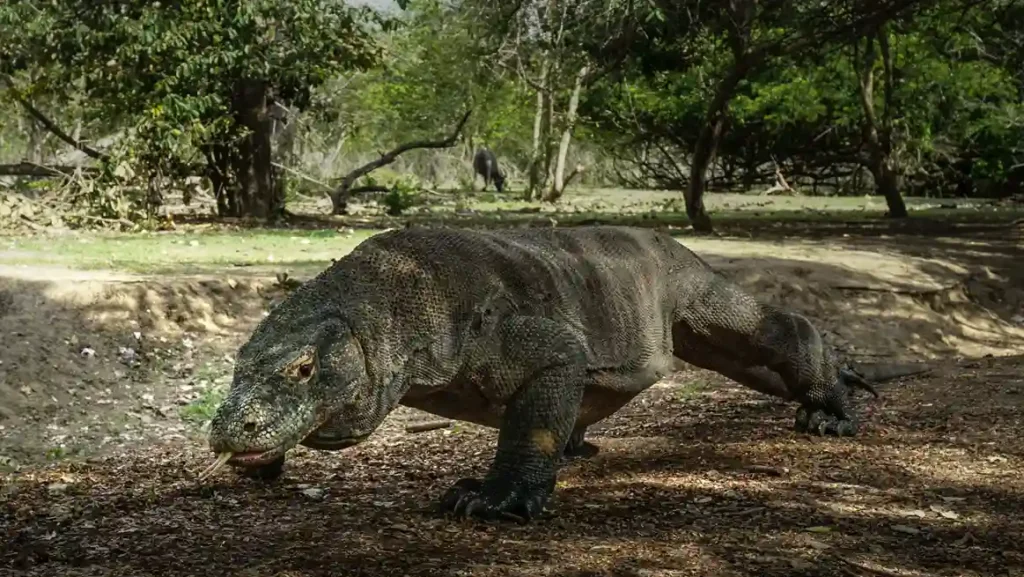
Adult Komodo dragons, in contrast to juveniles, are almost entirely terrestrial. Their massive size and weight make climbing impractical, and their lifestyle revolves around hunting and dominating the ground. Here are the main reasons why adults stay firmly on the earth:
- Size and Weight
Adult Komodo dragons can reach over 3 meters in length and weigh more than 70 kilograms. Their heavy, muscular bodies make it physically impossible to climb trees safely. Even attempting to climb could result in injury, so staying on the ground is the safest option for survival. - Hunting Strategy
Adults are apex predators that rely on stealth, ambush, and brute strength to capture prey. Deer, wild boars, and water buffalo form the bulk of their diet, and these prey animals are found on the ground. Tree climbing offers no advantage for hunting, so it has simply become unnecessary. - Territorial Dominance
Adult Komodo dragons patrol forests, grasslands, and beaches to establish territory and reduce competition. Staying on the ground allows them to control large areas and assert dominance without expending energy climbing trees, which juveniles use primarily to escape threats.
By remaining ground-bound, adult dragons optimize their energy for survival and hunting, making them the unrivaled rulers of Komodo Island’s ecosystems.
Read more: What Does a Komodo Dragon Eat? Discover the Diet of the World’s Largest Lizard Here!
How Komodo Dragons Climb
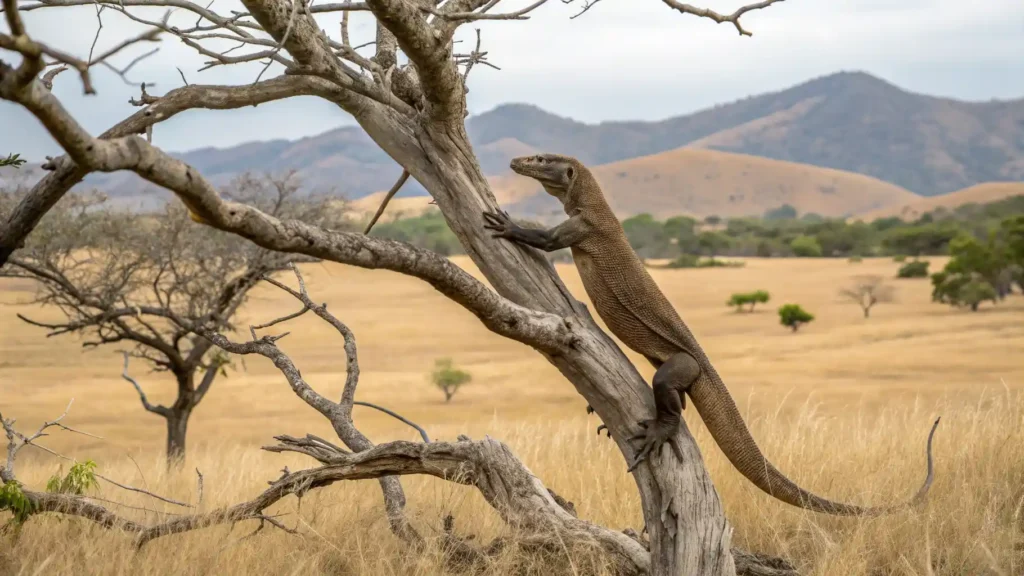
Although adult Komodo dragons cannot climb, juvenile dragons are surprisingly adept at it. Their climbing abilities are both fascinating and essential for survival. Here’s how they manage it:
- Claws and Grip
Juvenile Komodo dragons have sharp, curved claws that allow them to dig into bark and climb tree trunks efficiently. This grip is essential for maintaining stability while navigating vertical surfaces. - Strong, Flexible Limbs
Their muscular but lightweight limbs provide the strength and flexibility needed to propel themselves upward. They can pull and push against branches, using coordinated movements to ascend safely and quickly. - Balancing Tail
A juvenile dragon’s long, strong tail acts as a counterbalance while climbing. It helps them maintain stability on narrow branches or when making small leaps between limbs, ensuring they don’t fall while escaping predators or reaching higher perches. - Agility and Reflexes
Speed and reflexes are crucial. Young dragons can adjust their movements mid-climb, leap small distances, and react to threats with remarkable precision. This agility allows them to survive in a habitat full of dangers, including cannibalistic adults.
Through the combination of claws, limbs, tail, and agility, juvenile Komodo dragons demonstrate incredible climbing skills, which are vital for both feeding and avoiding danger.
Tips for Observing Komodo Dragons Safely
If you’re planning a trip to witness these magnificent reptiles, following a few key tips will make your experience safer and more memorable. By understanding their behavior, you can enjoy the wonder of Komodo dragons without any unnecessary risk.
- Go with a Professional Guide
Expert guides and park rangers know how Komodo dragons behave and can help you safely navigate the area. They also ensure you get the best vantage points for observing these incredible animals up close. - Keep a Safe Distance
Even juveniles have sharp claws and teeth, so maintaining a respectful distance is essential. Giving them space protects both you and the dragons, allowing them to act naturally without stress. - Choose the Right Time of Day
Early mornings or late afternoons are ideal for spotting young dragons climbing trees or adults hunting. These times also offer the softest light, perfect for photography and appreciating their natural movements. - Use Photography Tools Wisely
A good zoom lens lets you capture close-ups without approaching too closely. This way, you can document their behavior while ensuring the dragons remain undisturbed in their habitat. - Learn about Their Behavior
Knowing why juveniles climb trees and how adults hunt adds depth to your experience. Observing with this knowledge enhances your appreciation of their survival strategies and remarkable adaptations.
By following these tips, you’ll enjoy a safe, immersive, and educational experience while witnessing the extraordinary life of Komodo dragons in their natural environment.
Read more: Komodo Dragon Myths vs Facts: You Won’t Believe What’s Actually True!
Let’s See Komodo Dragons Climb Trees with Komodo Luxury!
In conclusion, juvenile Komodo dragons are skilled climbers, using trees for protection, food, and rest, while adults remain ground-bound, relying on strength and hunting prowess to dominate their environment. Observing this life cycle gives you a rare glimpse into their adaptability, intelligence, and survival strategies, an experience that’s both educational and awe-inspiring.
If you want to see Komodo dragons safely and comfortably in their natural habitat, the best way is to join a Komodo Island Tour with Komodo Luxury. From guided hikes to private vantage points, you can witness juveniles climbing trees, adults patrolling the savannah, and the full spectacle of Komodo National Park, all while enjoying the elegance and convenience of a luxury experience.
Whether it’s spotting a tiny dragon sprint up a branch or observing a massive adult hunting on the ground, Komodo Luxury ensures you connect with these incredible reptiles in a way that’s safe, immersive, and unforgettable. It’s the perfect blend of adventure, nature, and refined comfort for anyone seeking a once-in-a-lifetime wildlife encounter.