




Last updated: September 2026 · Prices & availability verified for the 2026/2027 season
Last updated: September 11, 2026
When you first see a Komodo dragon in the wild, it feels like stepping into a prehistoric world. These giants, with their muscular bodies, powerful tails, and intense gaze, command respect unlike any other reptile. But did you know that there are actually several other lizards that look like Komodo dragons scattered across the globe? While none are quite as iconic as the mighty Komodo of Indonesia, some of their close relatives and distant cousins share striking similarities in size, shape, and even behavior.
Spotting the lookalikes is a running game on our treks — water monitors on the Rinca boardwalk fool half our guests before the ranger-guide points out the difference, a highlight of every 3D2N shared departure.
As the operator that has run daily trips into Komodo National Park since 2015, our Komodo Luxury guides hear questions about the dragon’s look-alikes more than almost anything else.
In this article, we’ll explore what makes a lizard “Komodo-like,” introduce you to the most impressive lookalike species, and show you how you can meet the real Komodo dragon in style. If you’ve ever been fascinated by giant reptiles or dreamed of witnessing these incredible animals up close, this guide will help you understand their relatives and inspire your own luxury adventure to Komodo National Park.
Key Takeaways
- The Komodo dragon remains the largest living lizard on Earth, but several other monitor lizards around the world share its size, build, and predatory instincts.
- The crocodile monitor of New Guinea can grow even longer than a Komodo dragon, though it’s far slimmer and built for climbing trees rather than ambushing on the ground.
- The Asian water monitor is the second-largest lizard species and the most widespread Komodo lookalike, found from India to Indonesia and even in city canals.
- Australia is home to two strong contenders: the perentie, the continent’s largest lizard, and the lace monitor, a skilled climber with a similarly dragon-like silhouette.
- None of these lookalikes match the Komodo dragon’s venomous bite or exclusive island range, which is why the real animal can only be seen in the wild within Komodo National Park.
Komodo Dragon: The Largest Lizard in The World
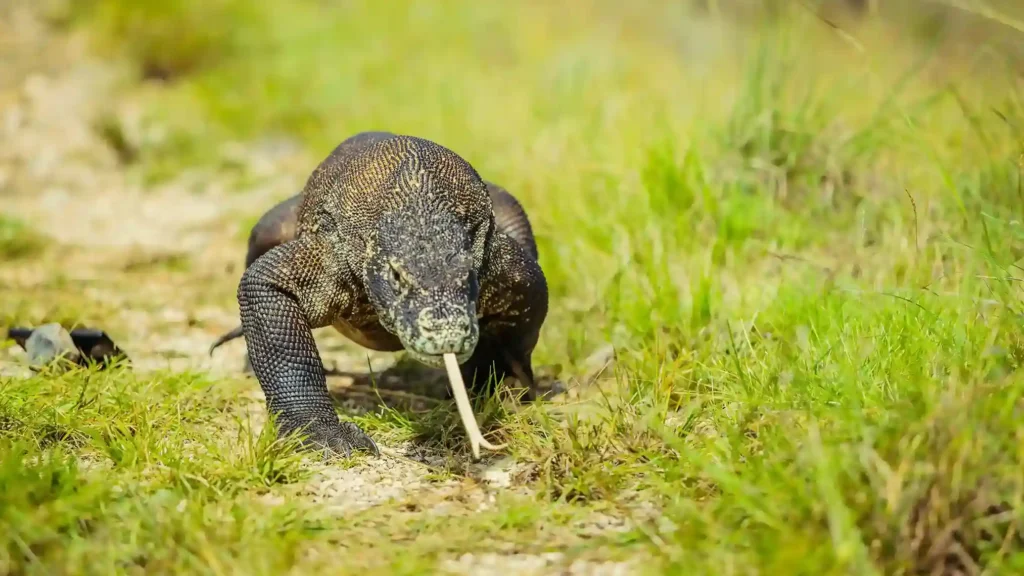
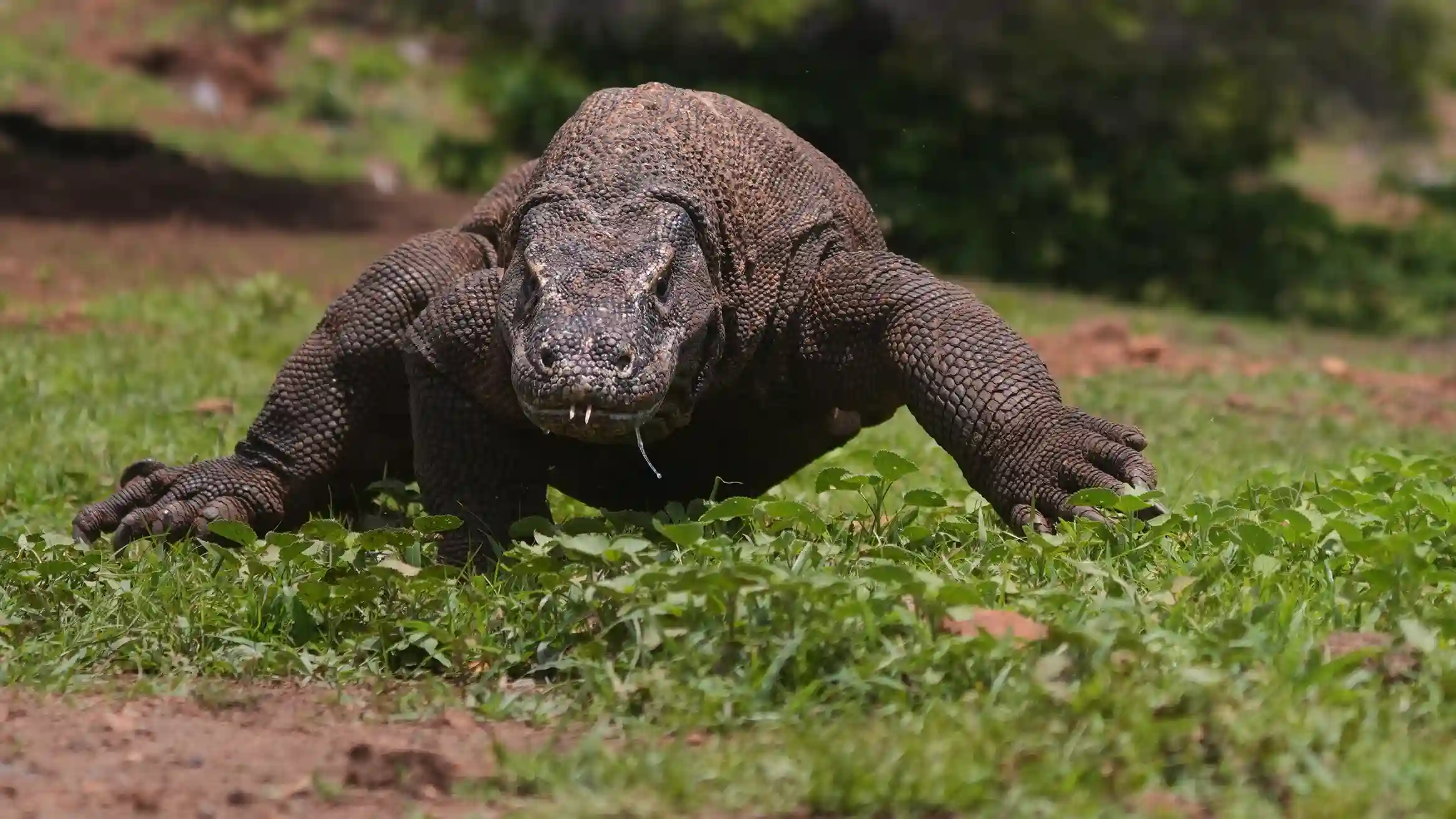
The Komodo dragon (Varanus komodoensis) is the largest living lizard on Earth, reaching up to 3 meters (10 feet) in length and weighing more than 100 kilograms. These apex predators are found only in Indonesia, specifically on Komodo, Rinca, Gili Motang, and parts of Flores Island. Their limited range makes them not only fascinating but also rare.
What makes them even more remarkable is their biology. With sharp, serrated teeth, strong jaws, and a venomous bite, Komodo dragons can take down prey much larger than themselves, from deer to wild boar. Their forked tongue allows them to detect scents from kilometers away, giving them an exceptional hunting advantage. Once they capture prey, they use flexible skulls and expandable stomachs to swallow large chunks of meat. This efficient digestion process means almost nothing goes to waste.
Komodo dragons have a venomous bite that contains over 50 different strains of toxic bacteria and toxins that can cause rapid blood loss and shock in their prey. It’s no wonder the Komodo dragon has become a global icon, its combination of strength, size, and predatory skill places it in a league of its own. But while Komodos hold the crown, other species around the world share enough similarities that they often get grouped as “Komodo-like.”
What Makes a Lizard “Komodo-like”?
When people search for lizards that look like Komodo dragons, they’re usually thinking about species that share similar traits in size, appearance, or even hunting style. Here are the main features that make a lizard feel “Komodo-like”:
- Impressive size
Komodo dragons hold the crown as the largest lizards in the world, but some close relatives can also grow over two meters long. Their sheer size immediately gives that ancient, dragon-like aura. - Muscular build
Just like Komodos, these lizards have thick, powerful bodies with strong legs, heavy tails, and armored skin. This robust physique makes them look like living relics from prehistoric times. - Predatory instincts
Many of these monitors are skilled hunters, feeding on mammals, birds, reptiles, or even carrion. Their opportunistic and sometimes aggressive hunting style mirrors the fearsome reputation of Komodo dragons. - Forked tongue & sharp teeth
A signature of the monitor lizard family is their flickering forked tongue, constantly sampling the air, paired with rows of sharp teeth perfect for tearing flesh. These details add to their intimidating, dragon-like image. - Similar habitats
Several of these species live in regions not too far from the Komodo dragon’s native islands, such as Southeast Asia and Australia. Because of this geographic closeness, they often get compared as “cousins” or smaller versions of Komodo dragons.
In short, a lizard that’s considered “Komodo-like” usually combines size, strength, and primal hunting behavior, giving you the impression of a dragon in the wild, even if it’s not the real thing.
Read more: How Big Are Komodo Dragons? Here’s Facts About Giant Creatures!
The top lizards that look like Komodo dragons
Now, let’s meet the heavyweights. These are the lizards that look like Komodo dragons, each remarkable in its own right. From the rainforests of New Guinea to the deserts of Australia, you’ll see just how diverse and widespread Komodo’s cousins truly are.
1. Crocodile monitor (Varanus salvadorii)
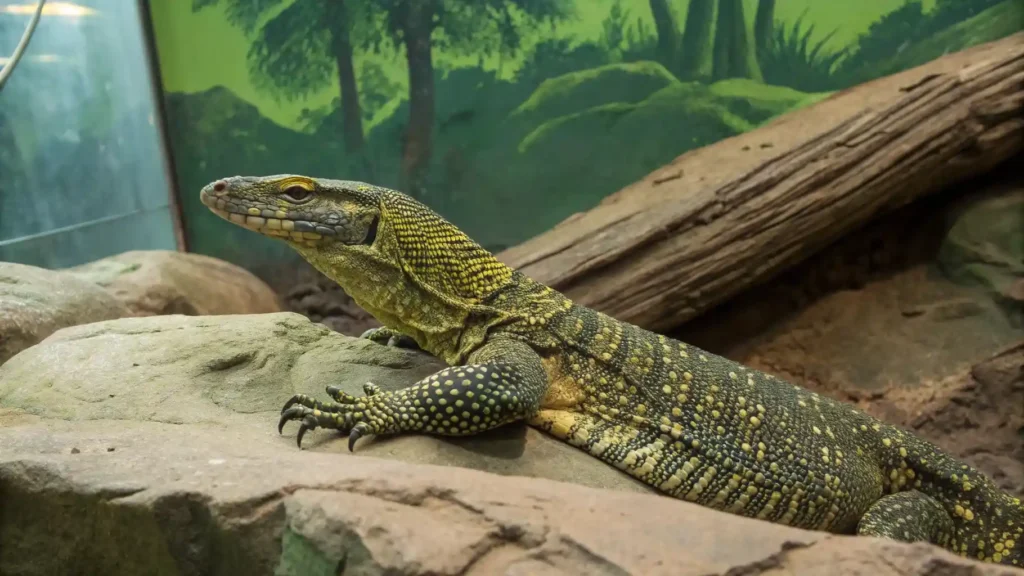
The crocodile monitor is often described as the longest lizard in the world. Found in the dense rainforests of New Guinea, this species can stretch well over 3 meters (10 feet), but it’s much slimmer than a Komodo. Its long tail makes up more than half its body length, giving it an agile, snake-like look. The crocodile monitor, native to New Guinea, is characterized by its dark green or black body with yellow spots and a long prehensile tail.
What makes it Komodo-like is its powerful head, long claws, and carnivorous diet. However, unlike the bulky Komodo, the crocodile monitor is built for climbing. It spends much of its life in the treetops, hunting birds and small mammals. If the Komodo dragon is the heavy-armored knight of the lizard world, the crocodile monitor is the swift, agile swordsman.
Encountering one in the wild is rare, but unforgettable. With its mottled dark-and-yellow skin and piercing gaze, it’s easy to see why locals revere it as a near-mythical creature.
2. Asian water monitor (Varanus salvator)
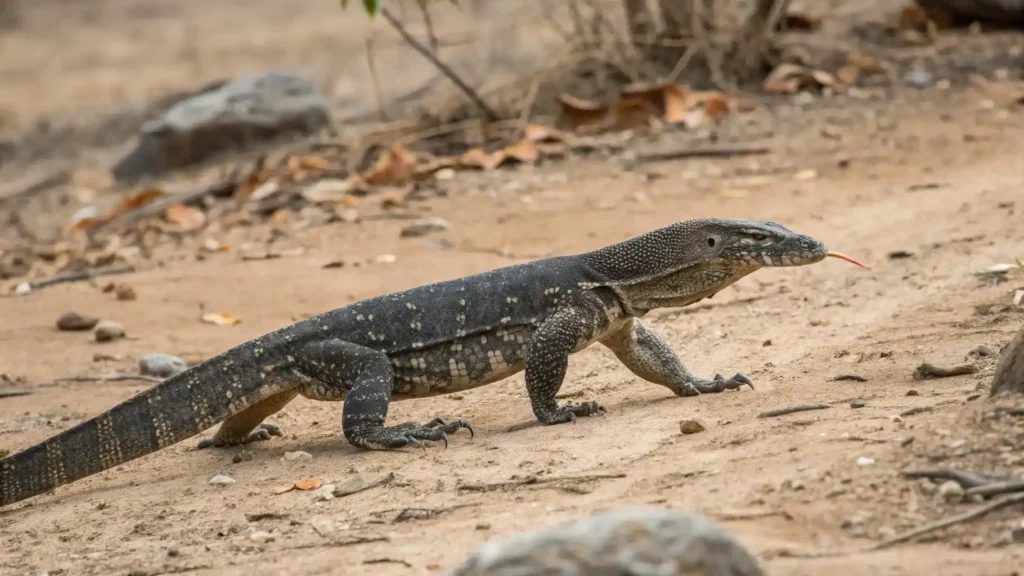
If you’ve ever traveled in Southeast Asia, chances are you’ve seen an Asian water monitor. This species is incredibly widespread, from Sri Lanka and India across Thailand, Malaysia, and Indonesia. It’s the second-largest lizard after the Komodo dragon. The Asian water monitor can reach over 6 feet in length, with some rare individuals exceeding 10 feet. With a heavy, muscular body that makes it one of the most obvious Komodo lookalikes.
Water monitors thrive near rivers, lakes, and even city canals. In Bangkok, it’s not unusual to spot one basking in a park or swimming across a pond. Their ability to adapt to human environments shows just how resilient and intelligent these reptiles are.
At a glance, you’d be forgiven for mistaking one for a smaller Komodo dragon. Their scales, head shape, and even their flickering forked tongue create the same ancient, dragon-like aura. The key difference is lifestyle: Komodos prefer dry savannahs and forests, while water monitors are semi-aquatic masters of both land and water.
3. Perentie (Varanus giganteus)
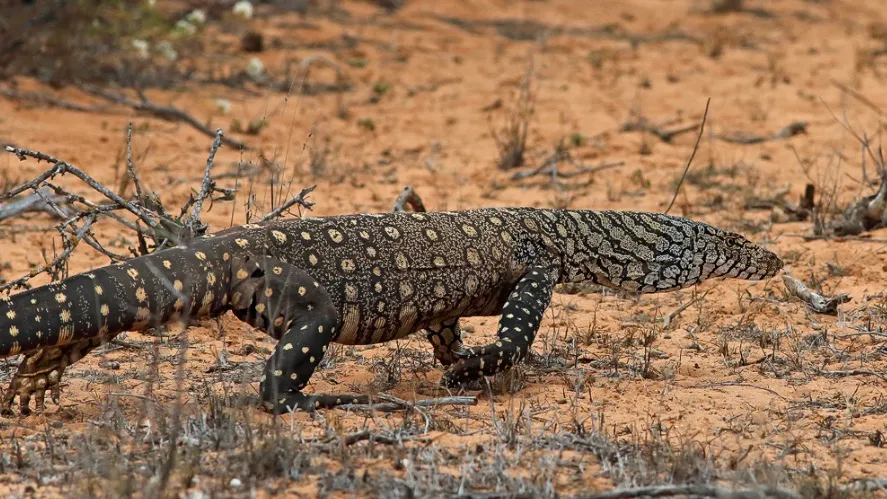
Head to the vast outback of Australia, and you might come across the perentie, the largest lizard on the continent. Reaching up to 2.5 meters, the perentie is not as massive as a Komodo, but its stocky build, strong limbs, and confident stride make it one of the most Komodo-like species outside Indonesia.
The perentie is a true apex predator in its environment. It hunts mammals, birds, and even other reptiles with surprising speed and stealth. Unlike the Komodo dragon, which often relies on ambush and venom to bring down large prey, the perentie uses bursts of speed and sheer power to overwhelm its target.
For travelers, spotting a perentie in the Australian desert is a once-in-a-lifetime thrill. Its bold, striking appearance makes you feel as though you’re seeing a miniature Komodo roaming the red sands of the outback.
4. Lace monitor (Varanus varius)
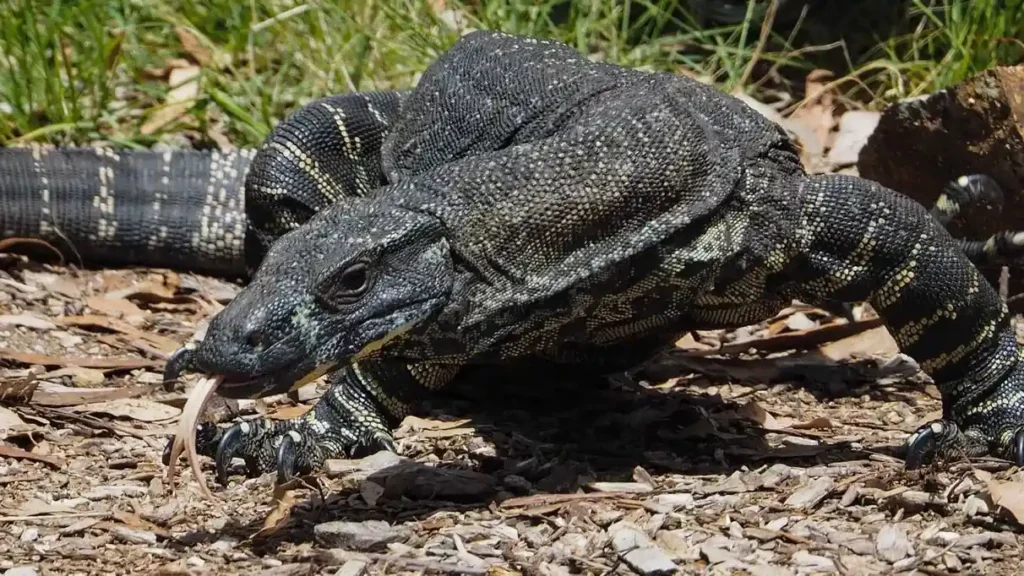
Another Australian native, the lace monitor is slightly smaller than the perentie but still a giant compared to most lizards. Growing up to 2 meters in length, it has a broad head, thick body, and long tail that give it the unmistakable silhouette of a Komodo dragon.
What sets the lace monitor apart is its climbing ability. These lizards are often found in trees, where they use their sharp claws and strong limbs to move with ease. Despite being smaller than Komodos, their powerful frame and dragon-like look make them a common subject of fascination for wildlife enthusiasts. If you’ve ever dreamed of seeing a Komodo but find yourself in Australia, the lace monitor is the closest relative you’ll encounter in the wild.
5. Nile monitor (Varanus niloticus)
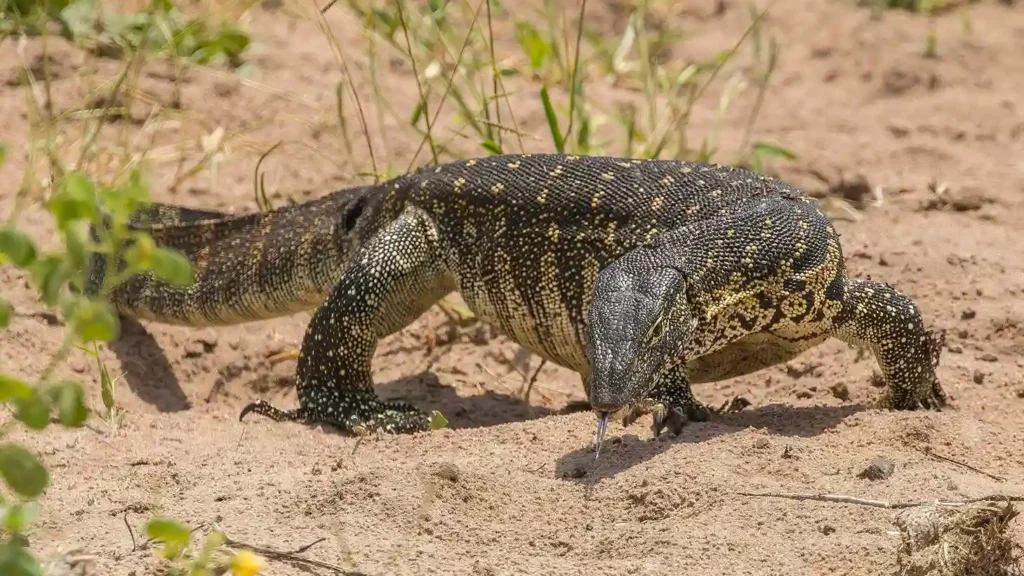
Across Africa, the Nile monitor reigns as the continent’s largest lizard. These reptiles grow up to 2.5 meters and can weigh more than 20 kilograms, making them another striking Komodo lookalike. With their robust body, muscular tail, and predatory nature, they share the same aura of power and danger.
Nile monitors are strong swimmers and often found near rivers and lakes. Like Komodos, they are opportunistic feeders, preying on fish, birds, small mammals, and carrion. Their dark, patterned skin adds to their imposing presence, especially when basking on a riverbank in the African sun. Though they live on a different continent, their similarities in size and build make them one of the closest living parallels to the Komodo dragon.
Read more: Monitor Lizard vs Komodo Dragon: Discover the King of Lizards
Let’s Encounter Komodo Dragon Easily with Komodo Luxury!
While learning about lizards that look like Komodo dragons is fascinating, nothing compares to seeing the real thing in the wild. Instead of only reading about them, you can join a Komodo Island Tour and step into the natural world where these incredible creatures have lived for millions of years.
With Komodo Luxury, your journey is more than just a tour, it’s an exclusive experience. You’ll sail aboard a luxury yacht across turquoise waters, guided by experts who know every corner of the Komodo National Park. From the moment you set foot on Komodo Island, you’ll witness these legendary Komodo dragons up close, while enjoying a seamless blend of safety, insight, and elegance.
Imagine returning from your adventure with not only breathtaking memories but also the feeling of having truly encountered one of Earth’s most extraordinary species. When you choose us, you can join a boat trip designed for those who value both discovery and comfort, ensuring your once-in-a-lifetime journey is as unforgettable as the dragons themselves.

Photos only go so far — the one place on earth to watch a wild Komodo dragon patrol a beach is Komodo National Park, and Komodo Luxury has been sailing guests there since 2015. Join a ranger-guided Komodo Island tour, spend a few nights on the water aboard a Komodo liveaboard, or keep it simple with a Komodo boat tour from Labuan Bajo. Our trips are rated 4.9/5 by more than 1,500 travelers, with TripAdvisor Travelers’ Choice awards in 2025 and 2026.
See the original and its imitators in one morning: dragon-and-monitor spotting comes with every trek on our Komodo sailing itineraries; keen herpers can brief with our naturalist guides on a private charter.
Written by the Komodo Luxury Expedition Team — licensed Komodo National Park operators guiding treks and crossings from Labuan Bajo since 2015. See our Komodo sailing tour packages.
To see what separates the real thing from its look-alikes, start with the Komodo dragon profile — size records, venom, and verified range maps.
Seeing Komodo Dragons in the Wild, Not in an Article
Everything on this page comes from the place itself — our crews walk guests past wild dragons on Komodo and Rinca every week. The most direct way to stand there is a 3D2N Komodo boat tour with a shared cabin from Labuan Bajo (from USD 300 per person), or a Komodo liveaboard if you want the ranger walks paired with the park’s best snorkelling. Park entry is set under Government Regulation No. 36/2024 as displayed by the Balai (IDR 250,000 per international visitor per day, IDR 50,000 per Indonesian visitor per day), confirmed by our desk as its own line on your invoice.