




Last updated: September 2026 · Prices & availability verified for the 2026/2027 season
Last updated: September 10, 2026
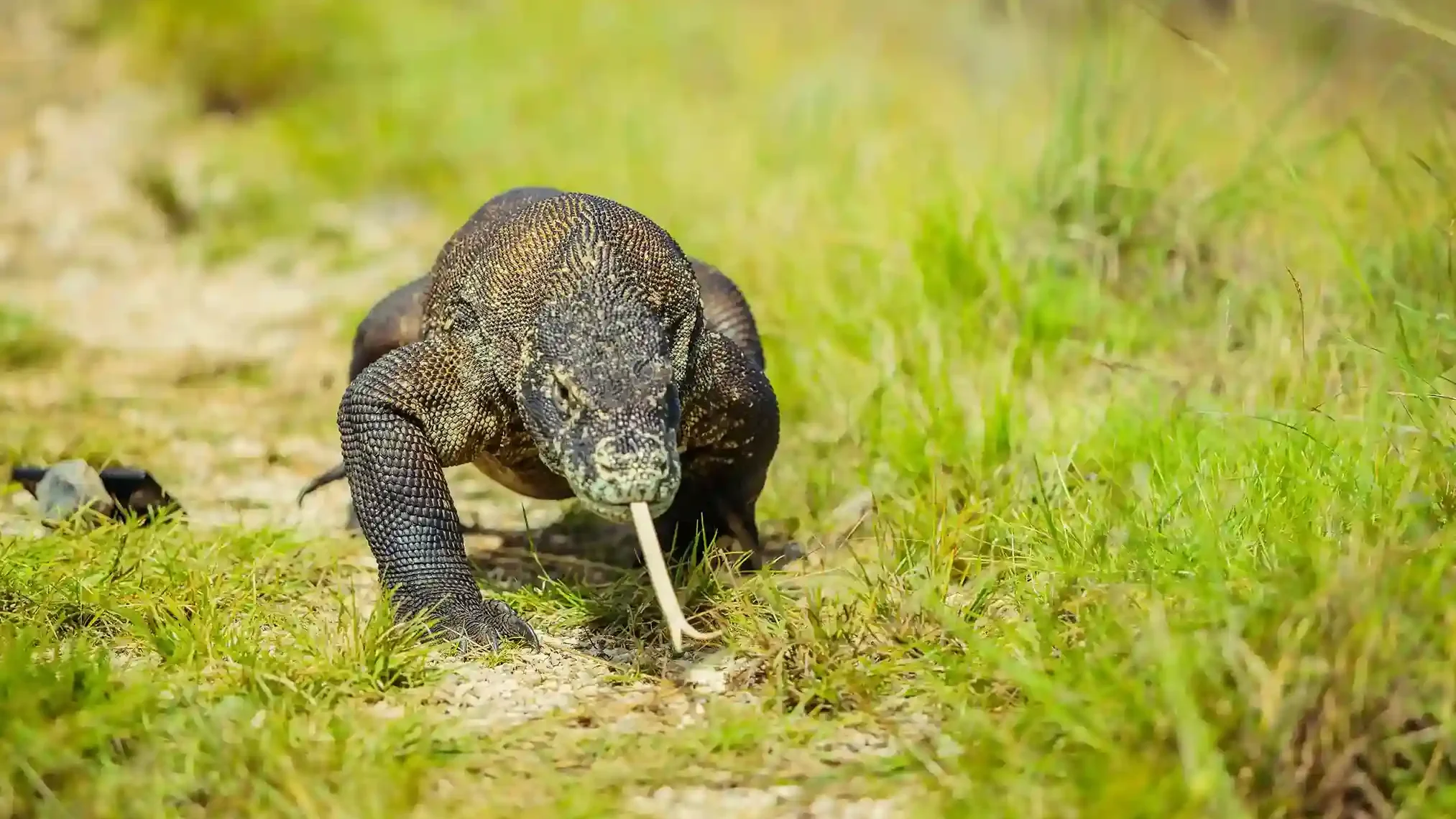
A Komodo dragon’s top speed is 18–20 km/h (11–12 mph) in short sprints — faster than most tourists expect from a 70–90 kg lizard, though only over a few dozen meters. They are ambush hunters, not chasers: a dragon relies on explosive acceleration at close range, not endurance. Here is how that speed compares to humans and its prey, and what it means when you meet one on a ranger-guided trek in Komodo National Park.
The Komodo dragon has always captured global attention. As the largest living lizard on Earth, it roams freely across the rugged islands of Komodo National Park, where our crews watch those short explosive bursts from the safety of the trail’s edge. With its muscular build, serrated teeth, and stealthy hunting strategy, the Komodo dragon is more than just a visual spectacle, it is a symbol of raw, prehistoric power.
Those explosive bursts are exactly why our ranger-guides set the trail formation on every trek — a standard feature of each 3D2N Komodo departure we sail.
But one question often arises among curious travelers and wildlife enthusiasts: how fast is a Komodo dragon? While it may look heavy and slow at first glance, this apex predator is surprisingly agile. Understanding its speed reveals the fascinating mechanics behind its hunting success and survival. In this article, you will explore how fast a Komodo dragon can move, what influences its speed, and what that means for those encountering it in the wild. Let’s dive in!
Key Takeaways
- A Komodo dragon’s top speed is 18 to 20 km/h, but only in short sprints covering a few dozen meters at most.
- It is an ambush hunter, not a chaser. It relies on a sudden burst of speed at close range rather than sustained pursuit.
- In water, it swims at a much slower steady pace of roughly 5 to 8 km/h, using its tail as the main source of propulsion.
- Speed depends heavily on age, terrain, and temperature, since it is cold blooded and needs a warm body to move at full power.
- Its real hunting advantage comes from patience and venom rather than speed, letting an escaped animal weaken and collapse over time.
How Fast Is a Komodo Dragon on Land?
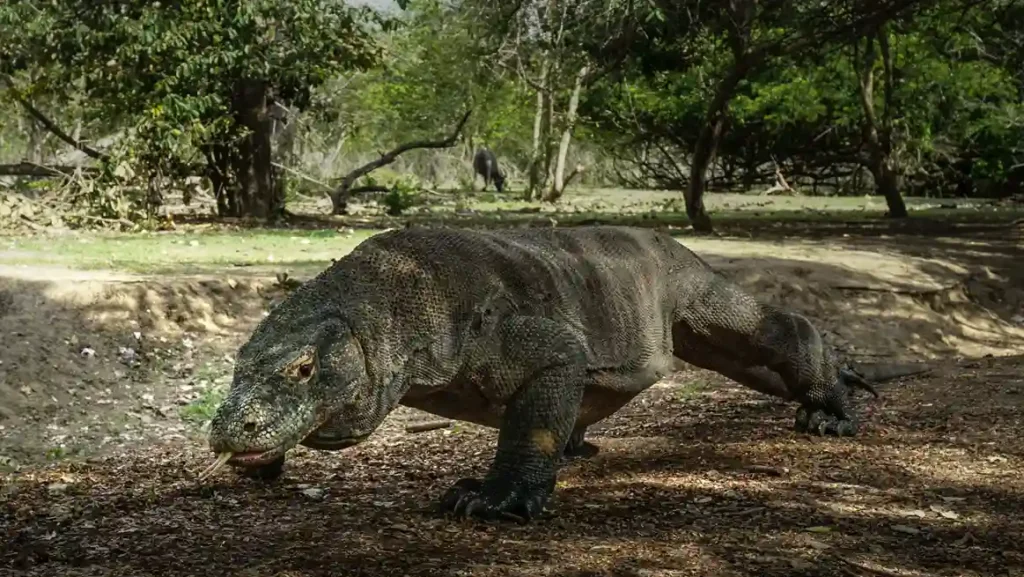
At a glance, the Komodo dragon looks like a slow, lumbering creature, more suited for lounging in the sun than chasing prey. But once it springs into action, this prehistoric predator proves it has more speed and agility than most would expect. On land, the Komodo dragon becomes a stealthy ambush hunter, capable of short but powerful bursts of movement. Understanding just how fast they can go and what drives that speed gives us a deeper look into how they survive and dominate their environment.
Komodo’s Maximum Speed on Land
Despite their massive build, adult Komodo dragons are capable of reaching speeds of up to 20 kilometers per hour (around 12.4 miles per hour) in short bursts. This top speed is usually used when lunging at prey or responding to perceived threats. These sprints rarely last long.
Komodo dragons do not rely on endurance; instead, they capitalize on the element of surprise. By striking swiftly, they aim to deliver a venomous bite that starts weakening the prey from the inside, even if the animal manages to escape. This strategy has worked for millions of years, a quick lunge, a single bite, and then a slow, confident pursuit until the prey collapses from blood loss or shock.
Factors Affecting Land Speed
Not all Komodo dragons move at the same pace. Their ability to sprint effectively depends on several natural factors:
- Age and Size
Younger Komodos tend to be more agile. They often escape predators, including adult dragons, by climbing trees or running quickly over uneven ground. Mature adults are heavier and slower in comparison, but they make up for it with brute force and experience. - Terrain
Flat, dry terrain allows dragons to move more efficiently. Savannas and dirt paths are ideal surfaces for short bursts of speed, while rocky slopes or dense forest can limit their mobility. - Temperature
As cold-blooded reptiles, Komodo dragons need external warmth to stay active. Their speed improves during the warmer parts of the day, especially late morning when their muscles are fully warmed by the sun. - Motivation
These dragons do not waste energy. They only run at top speed when necessary, whether it’s to chase prey, assert dominance, or escape a threat.
All these elements come together in the perfect moment, a brief window where the Komodo dragon turns from a slow mover to a rapid striker.
Read more: Can Komodo Dragons Jump? Here’s The Fact!
How Fast Is a Komodo Dragon in Water?
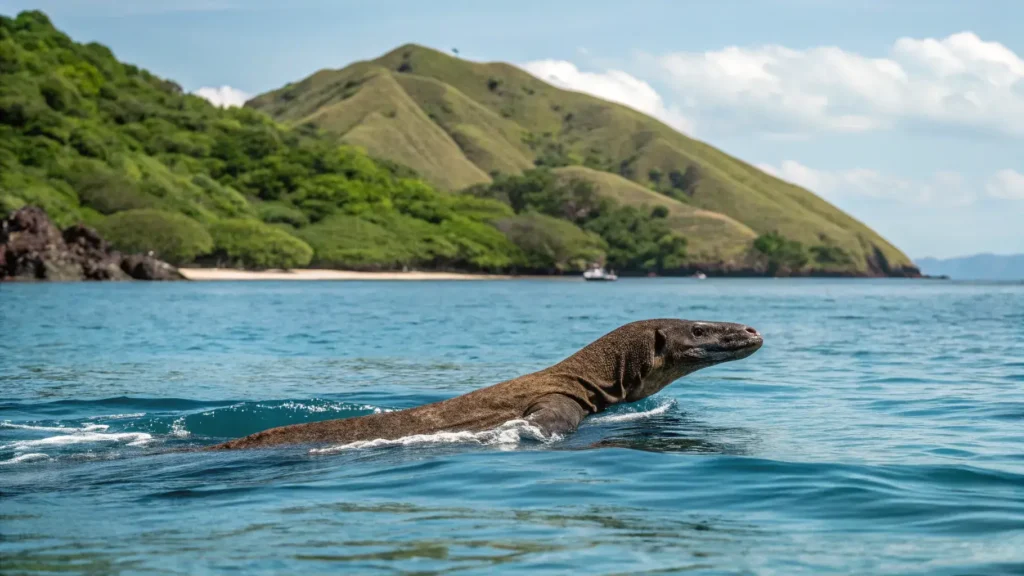
Their dominance on land is well documented, but what happens when a Komodo dragon enters the ocean? Surprisingly, these land-based reptiles are also competent swimmers. Surrounded by ocean in the Lesser Sunda Islands, Komodo dragons have evolved to navigate both environments with confidence. Whether crossing coastlines or moving between islands, they use their physical strength and natural instincts to swim effectively, even if not as swiftly as they move on land.
Komodo’s Maximum Speed in Water
While exact measurements vary, field observations suggest that Komodo dragons can swim at a steady pace of 5 to 8 kilometers per hour (roughly 3 to 5 miles per hour). This may not seem fast, but it is enough to allow them to traverse short coastal distances or cross narrow island channels. They swim with side-to-side movements of the body and use their long, muscular tail like a rudder and propeller.
Their limbs remain tucked close to reduce drag, while the head stays above the water’s surface for direction and breath control. There have even been recorded sightings of Komodo dragons swimming between neighboring islands, showing not only strength but also stamina and determination in the water.
Factors Affecting Water Speed
Just like on land, a Komodo dragon’s performance in water depends on a range of physical and environmental conditions:
- Tide and Currents
These dragons prefer calm seas. Strong currents can slow them down or redirect their path. Most Komodos avoid swimming in turbulent water unless absolutely necessary. - Body Strength
Bigger dragons have powerful tails that help push them forward, but excess weight can also slow them over longer distances. Younger dragons may be more nimble, while older ones rely more on strength and straight-line swimming. - Water Temperature
Warmer waters help maintain muscle responsiveness. In cooler water, a Komodo dragon may move more slowly and tire more quickly. - Purpose
Komodo dragons do not swim for leisure. They enter the water with a goal, to find food, escape danger, cool off, or claim new territory. These purposeful journeys dictate how far and how fast they go.
Though they are not aquatic animals by nature, Komodo dragons are more than capable of using water to their advantage, yet another reason why they remain one of the most impressive reptiles in the modern world.
Read more: Can Komodo Dragons Swim? Here’s the Fact!
So, How Fast Is a Komodo Dragon?
Speed isn’t what defines the Komodo dragon, but when needed, it’s a critical part of how this ancient reptile survives. On land, it can sprint at around 20 km/h, just enough to ambush prey with shocking force. In the water, it swims steadily at an estimated 5–8 km/h, crossing short coastal stretches with surprising ease.
But more than just its movement, the Komodo dragon impresses with its patience, precision, and adaptability. It doesn’t waste energy on unnecessary motion. Every step, every flick of the tongue, every sudden charge, it all serves a purpose. That’s what makes observing a Komodo dragon so compelling: you’re not just seeing speed; you’re witnessing strategy shaped by millions of years of evolution.
Tips for Observing Komodo Dragons in the Wild
Reading about Komodo dragons is fascinating, but seeing one in the wild is an experience that stays with you forever. These ancient reptiles may look calm and slow, but every move they make reflects millions of years of evolution as apex predators. With the right timing and preparation, your encounter with a Komodo dragon can be both safe and unforgettable.
Visitors can watch these short, explosive sprints from a safe distance on a guided Komodo boat tour, where national park rangers lead every landing on Komodo and Rinca Island.
Here are some essential tips to help you make the most of your wildlife adventure in Komodo National Park:
- Plan Your Visit for Early Morning or Late Afternoon
Komodo dragons are most active during cooler hours of the day. Early morning and late afternoon offer the best chance to see them walking, exploring their territory, or even hunting. Midday sun often sends them into the shade to rest, making sightings less likely. - Stay Quiet and Observant
Loud noises and sudden movements can disturb the natural rhythm of the wildlife. By keeping calm and moving slowly, you allow the Komodo dragons to behave as they would without human presence, a rare and rewarding sight for any traveler. - Focus on High-Activity Zones
Ask your guide to bring you to areas where Komodo dragons are more likely to be seen, such as near watering holes, coastal clearings, or trails used by prey animals like deer. These are the natural gathering points for Komodo activity. - Bring Binoculars or a Zoom Lens
To observe their movements safely and respectfully, it’s best to keep a healthy distance. A zoom lens or binoculars will let you study the way they move, scan their environment, and interact with other dragons, without getting too close. - Travel with a Trusted Local Guide
Visiting Komodo Island requires guidance from experienced professionals, not just for safety, but to truly appreciate the habitat and behavior of its iconic dragons. With a trusted operator like Komodo Luxury, you’ll enjoy expertly planned routes, knowledgeable local guides, and private experiences that bring you closer to these legendary creatures in the most responsible and comfortable way possible.
Ready to Witness the Komodo Dragon for Yourself with Komodo Luxury?
This article has uncovered how Komodo dragons move, with purpose, precision, and a surprising burst of power when the moment calls for it. Whether crossing land or water, these ancient predators rely on instinct, patience, and strength that have been refined over millions of years. But no description can truly capture what it feels like to see one up close, watching it glide across the terrain, scan its surroundings, or silently dominate its wild domain. When you’re ready to go beyond words and witness the real thing, consider joining a Komodo Island Tour with Komodo Luxury, where each journey is designed to connect you with the untamed heart of Komodo. Book your journey today, and let the wild welcome you.

Watch the sprint stories become real at a safe distance on tomorrow’s trek — included in all Komodo sailing packages; wildlife photographers can request the quiet early slot on a liveaboard.
Frequently Asked Questions
Written by the Komodo Luxury Expedition Team — licensed Komodo National Park operators guiding treks and crossings from Labuan Bajo since 2015. See our Komodo sailing tour packages.