



Last updated: September 2026 · Prices & availability verified for the 2026/2027 season
Last updated: September 09, 2026
This is the story our guides tell on the crossing from Labuan Bajo, the context behind the ranger-led trek that anchors every itinerary we sail, from 3D2N open trips to private expeditions through Komodo National Park. We’ve been introducing travelers to these living fossils since 2015, and the backstory is stranger than most guests expect: the Komodo dragon, or Varanus komodoensis, is the largest living lizard species on Earth, and most visitors get its evolutionary origin completely wrong. Here’s the full story: where it actually came from, when the West first found out about it, and why it survives nowhere else on the planet.
Belangrijkste punten
- The Komodo dragon evolved in Australia roughly 4 million years ago, not on the Indonesian islands where it lives today, fossils place it in Flores by around 1.4 million years ago.
- It’s the largest living lizard, reaching up to 3 metres and 150 kg, and an apex predator with a venomous, bacteria-laden bite.
- It shares a common ancestor with Megalania, an extinct 5+ metre Australian giant monitor, but the two are distinct species, not the same lineage.
- Its closest living relative is the lace monitor of eastern Australia.
- It survives today only because Wallacea’s isolation shielded it from the extinctions that wiped out its Australian relatives, with the Padar Island population itself going extinct in the 20th century.
- Western science only documented the species in 1910–1912, though the Manggarai people of Flores had long known and revered it as the ora.
- It’s currently listed as Endangered by the IUCN, protected primarily within Komodo National Park, a UNESCO World Heritage Site since 1991.
- It is not related to dinosaurs, the resemblance is convergent evolution, not shared ancestry.
komodovaraan Geschiedenis: Wanneer werd het voor het eerst ontdekt?
Although the Komodo dragon has lived for thousands of years in the Lesser Sunda Islands, it wasn’t until the early 20th century that the outside world learned about it. Rumours of a “land crocodile” (buaya darat) in the Lesser Sundas reached Dutch colonial officials for years before Lieutenant van Steyn van Hensbroek sailed to Komodo in 1910, following reports from local fishermen who’d long known the animal as the “ora” in the Manggarai language.
Not believing the stories at first, van Hensbroek went to see for himself. He secured a specimen and sent its skin and photographs to Pieter Antonie Ouwens, director of the zoological museum at Buitenzorg, today’s Bogor. Ouwens published the formal scientific description in 1912, naming it Varanus komodoensis, and within three years the colonial government had granted the species legal protection, an unusually fast conservation response for the era. Since then, the Komodo dragon has drawn global attention and was even dubbed “the last dinosaur” by the media, a nickname that, as you’ll see below, is more myth than fact.
Taxonomie en wetenschappelijke naam: waar past de „ komodovaraan ” in het taxonomische stelsel?
De Komodovaraan ( komodovaraan ) behoort tot de familie Varanidae (varanen), met naaste verwanten zoals de Aziatische en Australische varanen. De wetenschappelijke naam, Varanus komodoensis, werd door Ouwens gegeven ter ere van Komodo eiland. Deze reptielen hebben brede, platte koppen, afgeronde snuiten en gespierde staarten, wat bijdraagt aan hun kenmerkende uiterlijk. De taxonomie van deze soort was echter ooit onderwerp van discussie.
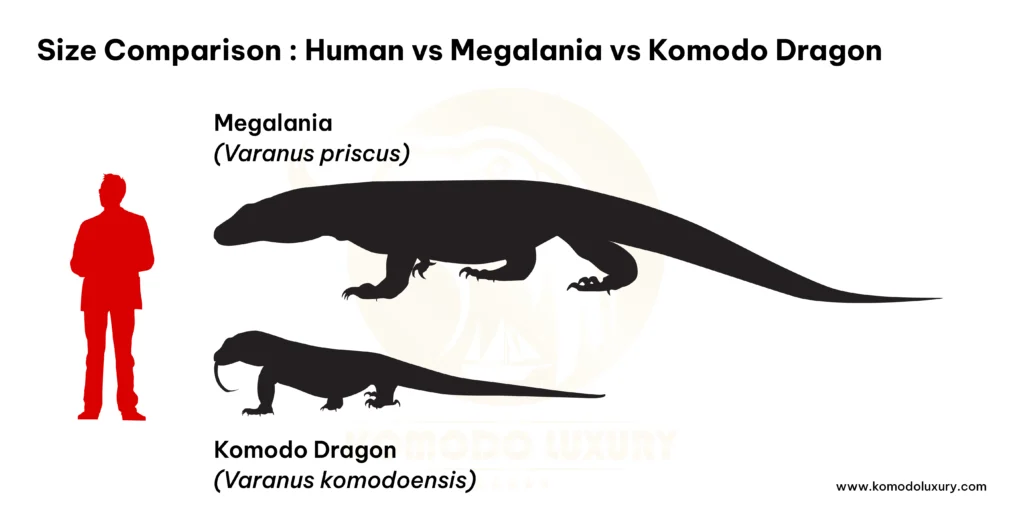
In de jaren twintig van de vorige eeuw dachten wetenschappers dat de reuzenvleermuis ( komodovaraan ) een ondersoort was van de uitgestorven Australische reuzensalamander Megalania prisca, die ongeveer 50.000 jaar geleden uitstierf. Uit DNA-analyse is echter gebleken dat de twee soorten verschillend zijn, ondanks dat ze een gemeenschappelijke voorouder hebben. Tegenwoordig wordt de komodovaraan erkend als een unieke soort die zich afzonderlijk heeft ontwikkeld in Indonesië. Als toproofdieren domineren ze hun ecosystemen en spelen ze een cruciale rol bij het handhaven van het evenwicht in hun leefgebieden. Bovendien bevat het speeksel van de komodovaraan potentieel schadelijke bacteriën en mogelijk giftige eigenschappen, die een cruciale rol spelen in zijn jacht- en roofstrategieën.
Megalania: Ancient Cousin, Not Ancestor
Australia’s Pleistocene savannas were once ruled by Varanus priscus, Megalania, a monitor lizard estimated at over 5 metres long, the largest terrestrial lizard known to science. Early 20th-century scientists actually thought the Komodo dragon was a subspecies of Megalania, but DNA analysis has since proven the two are separate species that share a common ancestor rather than a direct lineage.
Komodo dragons belong to that same giant-monitor radiation, close kin, not descendants. When Australia’s megafauna collapsed in the late Pleistocene, Megalania went with it. The smaller, island-isolated Komodo dragon survived, which is why Komodo National Park is sometimes called a living window into Ice Age Australia, the one place where the age of giant monitors never actually ended.
Lees meer: komodovaraan vs Megalania: een vergelijking tussen twee reusachtige hagedissen uit de geschiedenis
Evolutiegeschiedenis: Waar komt de komodovaraan vandaan, volgens de fossielenvondsten van de komodovaraan?
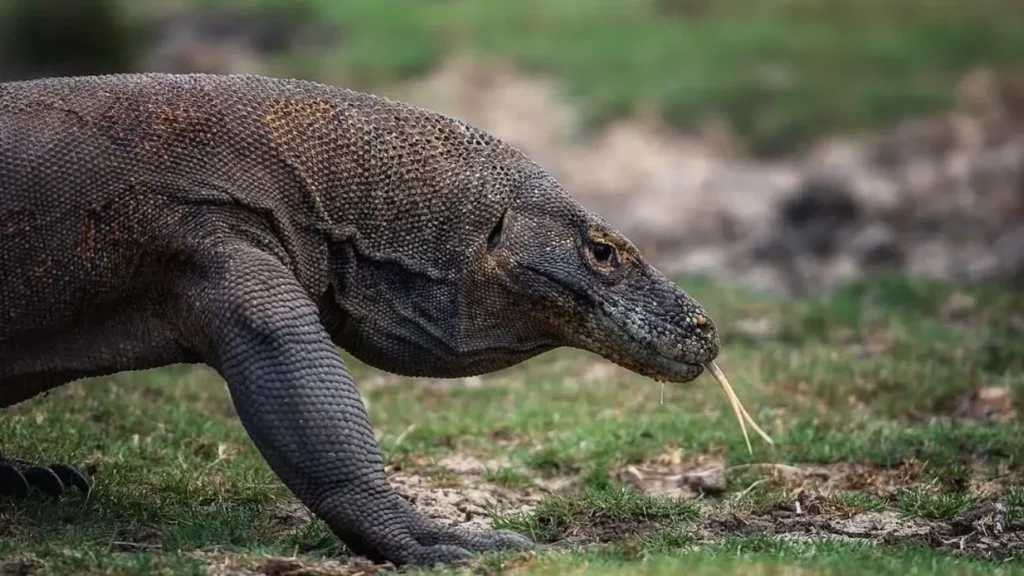
Here’s the part most people get backwards: the Komodo dragon is often assumed to be a purely Indonesian product, a modest monitor that grew huge in isolation on its islands. The fossil record tells a different story.
Fossil evidence published in 2009 by Scott Hocknull’s team, drawing on Queensland Museum material, shows the species evolved in Australia around four million years ago, as part of an entire radiation of giant monitor lizards, not a lone island oddity. Excavations in eastern Australia produced Varanus komodoensis fossils millions of years old, proving the species reached full size on a continent before it ever saw Flores. That finding quietly undermines the tidy textbook tale of “island gigantism”: the Queensland fossils indicate dragons were already dragon-sized in Australia, so the islands preserved their bulk rather than produced it.
From there, ancestors dispersed westward along the volcanic chain of the Lesser Sunda Islands using land bridges formed by falling sea levels. Fossils place dragons on Flores by roughly 1.4 million years ago, the lineage was established in Wallacea long before recorded history. On Flores, Rinca, and the surrounding islands, they evolved into apex predators, their size shaped by available prey, from small lizards to ancient pygmy elephants (Stegodon), with modern-day Javan rusa deer now their main food source.
Interestingly, a 2021 study by the Australian National University complicated the picture further, finding that the modern Komodo dragon population as we know it today actually diversified within Indonesia rather than being a simple direct transplant from Australia, opening ongoing scientific debate about exactly how the species became the dominant predator on these islands. Today’s dragons are best described as a relict giant: the last surviving member of an Australian dynasty, holding out on a handful of savanna islands.
The Evolutionary Timeline
| When | Event |
| ~4 million years ago | Komodo dragon lineage present in Australia (Hocknull et al., 2009; Queensland fossils, ~3.8–4 Ma) |
| ~1.4 million years ago | Fossils attributable to Komodo dragons appear on Flores, the lineage established in Wallacea |
| ~50,000–40,000 years ago | Giant relatives, including Megalania, vanish from Australia; the Komodo dragon becomes the last giant varanid |
| 1910 | Lieutenant van Steyn van Hensbroek investigates “land crocodile” reports on Komodo |
| 1912 | P.A. Ouwens formally describes Varanus komodoensis at Buitenzorg (Bogor) |
| 1915 | Dutch colonial authorities grant the species legal protection |
| 1980 / 1991 | Komodo National Park established; inscribed as UNESCO World Heritage Site |
Lees meer: Leeft de komodovaraan in Australië? Ontdek de feiten en ontdek de Komodo eiland!
Why Did Komodo Dragons Survive Only in Indonesia?
If the species evolved in Australia, why does it only exist in Indonesia today? The consensus explanation is isolation plus extinction elsewhere.
During Pleistocene ice ages, sea levels dropped by more than a hundred metres, narrowing the straits of Wallacea enough for a strong-swimming monitor lizard to island-hop westward along the volcanic chain. Crucially, Wallacea’s deep channels never closed completely, which kept Asian big cats, wild dogs, and other mainland carnivores out. When seas rose again, the populations on Flores and its satellite islands were cut off, and cut off, too, from the mainland catastrophes that later wiped out their Australian relatives. On their dry savanna islands, dragons kept what mattered: abundant deer and pig prey, no competing large carnivores, and (for most of history) no human hunting pressure heavy enough to erase them.
That balance is still dynamic, not static: the dragon population on Padar Island went extinct in the twentieth century after its prey base collapsed, which is part of why the species is now listed as Endangered on the IUCN Red List rather than the “Vulnerable” rating it held in earlier decades.
Is de „ komodovaraan ” een verwant van de dinosaurussen?
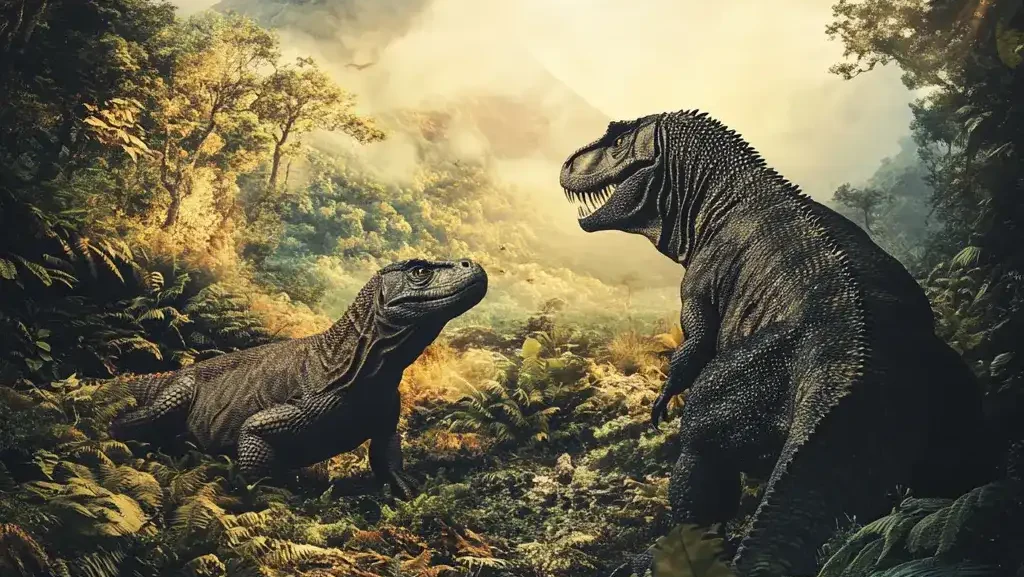
Hoewel de komodovaraan vaak een ‘levende dinosaurus’ wordt genoemd, is hij niet direct verwant aan dinosaurussen zoals de T-Rex of de Brachiosaurus. Dinosaurussen zijn 66 miljoen jaar geleden uitgestorven, terwijl de familie Varanidae pas zo’n 40 miljoen jaar geleden ontstond.
Er zijn echter enkele aanpassingsovereenkomsten tussen de Komodovaranen en dinosaurussen. Een voorbeeld hiervan is hun dodelijke beet, die schadelijke bacteriën bevat – vergelijkbaar met het idee van gif bij dinosaurussen. Dit fenomeen staat bekend als convergente evolutie, waarbij twee niet-verwante soorten vergelijkbare eigenschappen ontwikkelen als gevolg van vergelijkbare omgevingsdruk. Het gif van de Komodovaranen vertoont ook overeenkomsten met dat van slangen, aangezien beide gif gebruiken als jacht- of verdedigingsmechanisme tegen prooien of bedreigingen. Hoewel de komodovaraan geen echte dinosaurus is, heeft hij enkele overlevingskenmerken ontwikkeld die lijken op die van prehistorische roofdieren.
Wat zijn de mythen en de culturele betekenis van de ‘ komodovaraan ’?
For the Manggarai people of Flores, the Komodo dragon is far more than a giant lizard, it’s a mystical being intertwined with human life and spirituality. In the Komodo village telling, the Putri Naga, the Dragon Princess, bore twins: a human son, Si Gerong, and a dragon daughter, Orah. Raised apart, the two met as hunters chasing the same deer; when Si Gerong raised his spear against her, the princess appeared between them and revealed their kinship. To this day, islanders call the animals ora and treat them as kin, a living reason the community protected the species for generations before any statute did.
That belief in twin-sibling kinship has encouraged a genuine coexistence: locals traditionally avoid hunting the dragons, and in turn the dragons rarely pose a threat to people. The giant lizard is also seen as a guardian of nature, capable of sensing bad intentions and maintaining the balance of the ecosystem. You can go deeper into this tradition in the legend of the Komodo Dragon and in the Ora legend, which preserves the older, community-held version of the same story.
Why are Komodo dragons important? Ecologically, they’re the apex predator regulating deer, boar, and buffalo populations across the park. Scientifically, they’re a living window into large-varanid evolution stretching back to Australia. Culturally, they’re kin in the origin story of the island’s own people. Three reasons, one species, anchoring an entire UNESCO World Heritage Site.
Wat zijn 5 interessante weetjes over Komodovaranen?
While the Komodo dragon’s evolutionary history and cultural legends reveal its remarkable past and significance, there are also some fascinating biological and behavioral traits that make this giant lizard truly unique. Here are 5 interesting Komodo dragon facts that highlight their extraordinary adaptations and survival skills:
- De grootste levende hagedis – Volwassen Komodovaranen tot 3 meter lang worden en wel 150 kg wegen. Door hun enorme omvang zijn ze de grootste hagedissen die er vandaag de dag bestaan en direct te herkennen.
- Toproofdier – Komodovaranen aan de top van hun voedselketen; ze jagen op herten en kleinere reptielen en eten af en toe aas. Dankzij hun krachtige ledematen, scherpe klauwen en scherpe zintuigen zijn ze in het wild uiterst effectieve jagers.
- Giftige beet – Deze hagedissen hebben gifklieren die gifstoffen afgeven, en hun speeksel bevat schadelijke bacteriën. Door deze combinatie kunnen ze hun prooi verzwakken of verlammen, waardoor ze efficiënter kunnen jagen.
- Parthenogenese – Vrouwelijke Komodovaranen zich zonder mannetje ongeslachtelijk voortplanten en levensvatbare mannelijke nakomelingen voortbrengen. Dankzij dit zeldzame vermogen kunnen populaties zelfs in geïsoleerde omgevingen in stand blijven.
- Exceptional Swimming Ability – Komodo dragons can swim surprisingly well, allowing them to move between islands in their habitat. This skill helps them expand their territory and access new hunting grounds across the Indonesian archipelago.
Deze feiten over de komodovaraan geven een kijkje in hun buitengewone biologie en overlevingsstrategieën, en laten zien waarom ze worden beschouwd als een van de meest indrukwekkende reptielen ter wereld.
Lees meer: komodovaraan Mythen versus feiten: Je gelooft nooit water werkelijk waar is!
komodovaraan Leefgebied: Waar komen populaties van de „ komodovaraan ” voor?
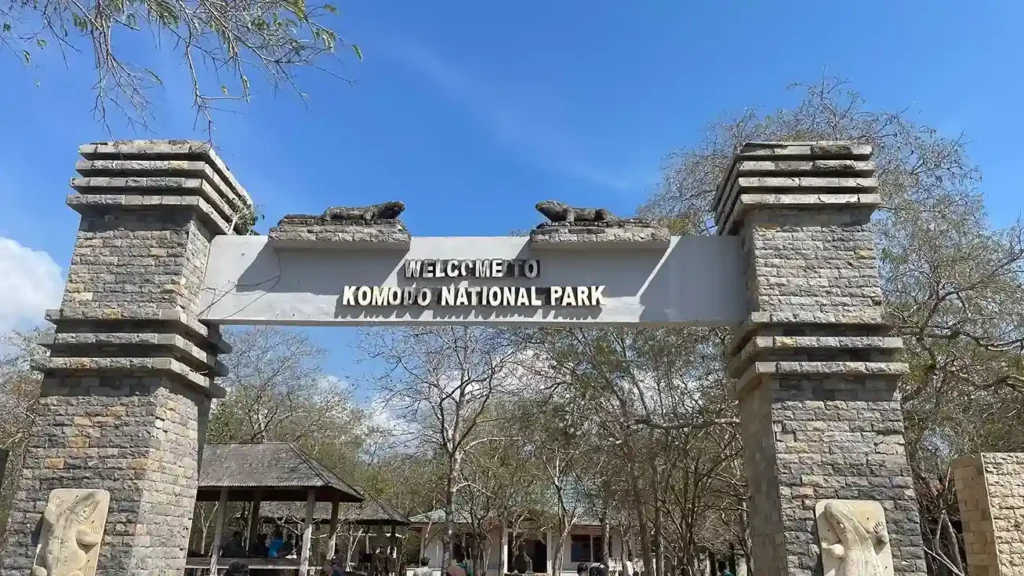
Komodovaranen Ze leven op vijf eilanden in het Indonesië: Komodo, Rinca, Flores, Gili Motang, Nusa Kode en Gili Dasami. Ze geven de voorkeur aan droge savanne, tropisch regenwoud en rotsachtige kustlijnen. Hoewel ze het goed doen in tropische regenwouden, zijn ze op deze eilanden ook te vinden in graslanden en struikgewas. De hoge temperaturen in de savanne helpen hen bij het jagen, aangezien ze in deze omgevingen afhankelijk zijn van korte snelheidsuitbarstingen om hun levende prooi in een hinderlaag te lokken.
Helaas wordt hun natuurlijke leefgebied bedreigd door klimaatverandering en menselijke activiteiten. De stijgende zeespiegel vormt een grote bedreiging voor het leefgebied van de Komodovaranen, waardoor hun populaties verder versnipperd en geïsoleerd raken. Dankzij inspanningen om deze dieren te beschermen via Nationaal Park Komodo, een UNESCO-werelderfgoedlocatie, hebben er met succes gezorgd dat meer dan 80% van de wereldwijde populatie van de komodovaraan behouden is gebleven. Dit park is niet alleen een toevluchtsoord voor de komodovaraan, maar ook voor andere zeldzame en bedreigde diersoorten.
Lees meer: komodovaraan Leefgebied: waar ze leven en hoe je ze kunt zien
Beschermingsstatus: Bescherming van de komodovaraan
The Komodo dragon is currently listed as Endangered on the IUCN Red List, an uplisting from its earlier “Vulnerable” status that reflects continued habitat loss, poaching pressure, and fragmentation across its already-restricted range. The Indonesian government established Komodo National Park in 1980, a UNESCO World Heritage Site now sheltering over 1,700 dragons, with ongoing habitat restoration, research, and education programs, and international trade in the species is prohibited under IUCN protections. One added genetic wrinkle: because parthenogenesis produces only male offspring, isolated populations can face female shortages and elevated inbreeding risk, adding another layer to long-term survival planning.
Lees meer: De geschiedenis van de Nationaal Park Komodo: een natuurwonder en UNESCO-werelderfgoed
Waar kun je in Nationaal Park Komodo veilig een ‘ komodovaraan ’ bezoeken?
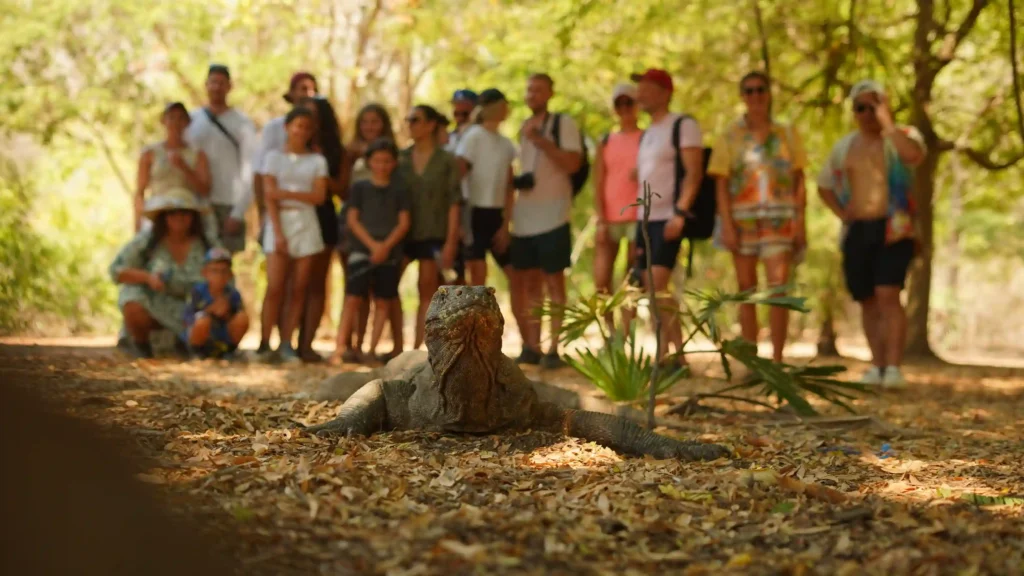
Hoewel het leefgebied van de komodovaraanzich over verschillende eilanden uitstrekt, zijn het eiland Komodo en het eiland Rinca de beste plekken om ze veilig te kunnen zien. Beide eilanden maken deel uit van het Nationaal Park Komodo, dat streng wordt beschermd. Hier worden bezoekers begeleid door lokale gidsen die experts zijn in het gedrag van de Komodovaranen en ervoor zorgen dat u ze veilig kunt observeren.
Dankzij strenge regels kunnen bezoekers de draken van dichtbij bekijken zonder bang te hoeven zijn aangevallen te worden – zolang ze zich maar aan de regels houden. Op deze twee eilanden leeft een voldoende grote populatie Komodovaranen, dus de kans dat je er een tegenkomt is erg groot. Je kunt er ook genieten van adembenemende natuurschoon, waaronder prachtige stranden en kristalhelder water.
Lees meer: Komodo eiland vs. het eiland Rinca: waar kun je het beste de ' Komodovaranen' zien?
Beleef een veilig avontuur en ontdek de „ komodovaraan ” met Komodo Luxury
For an adventure that’s not only exciting but also comfortable, Komodo Luxury offers complete tour packages to Komodo Island. Our tours include luxurious accommodations, experienced guides, and a strong focus on safety, allowing you to explore Komodo National Park with confidence.
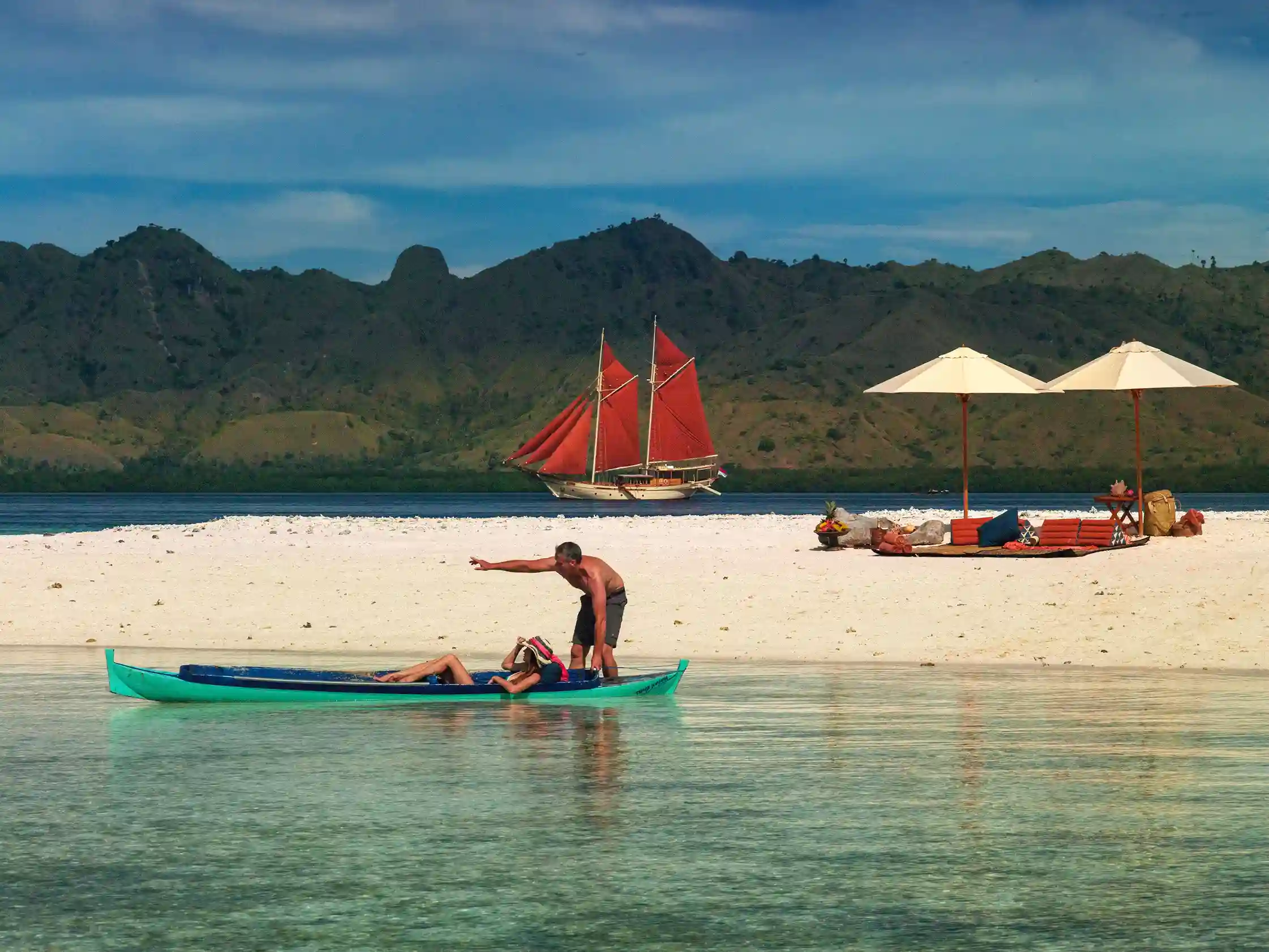
One of the most iconic ways to experience this journey is through a luxury phinisi Komodo, where you can sail across the islands on a beautifully crafted traditional vessel combined with modern luxury amenities. This experience allows you to enjoy curated island routes, personalized service, and breathtaking ocean views, giving you a seamless way to explore the habitat of Komodo dragons while traveling in comfort and style.
De „ komodovaraan ” is een levend bewijs van de wonderen van de evolutie in Indonesië. Van oeroude migraties en unieke aanpassingen tot boeiende culturele verhalen: de „ komodovaraan ” verdient het om als nationaal erfgoed te worden beschouwd. Deze „draak” met eigen ogen te zien is niet alleen een ongelooflijke ervaring, maar ook een waardevolle les over de kracht van de natuur en de biodiversiteit van Indonesië.
If you want to witness this once-in-a-lifetime experience, make sure to choose a trusted tour that combines safety, comfort, and education. Don’t miss out on the chance to see history unfold right in front of you. Book your Komodo Island tour today and witness the living history of the Komodo dragon!

Veelgestelde vragen over de geschiedenis en bezienswaardigheden v komodovaraan
Four million years of history are still walking around Komodo and Rinca Island today. Komodo Luxury brings guests face-to-face with them on sailing trips from Labuan Bajo, see the Komodo sailing trip itineraries for 2D1N and 3D2N routes.
Beleef deze geschiedenis op de plek waar het zich afspeelde: onze tochten combineren de Loh Liang-trektocht met Padar en de ‘ Roze Strand ’ in één rondwandeling — bekijk de Komodo- Reispakketten of stel een rustigere route samen via een duikcruise.
By the Komodo Luxury Expedition Team, a licensed Komodo National Park tour operator running daily expeditions from Labuan Bajo since 2015. Fleet, rates and itineraries: Komodo yacht charter.