

Nuota con i giganti


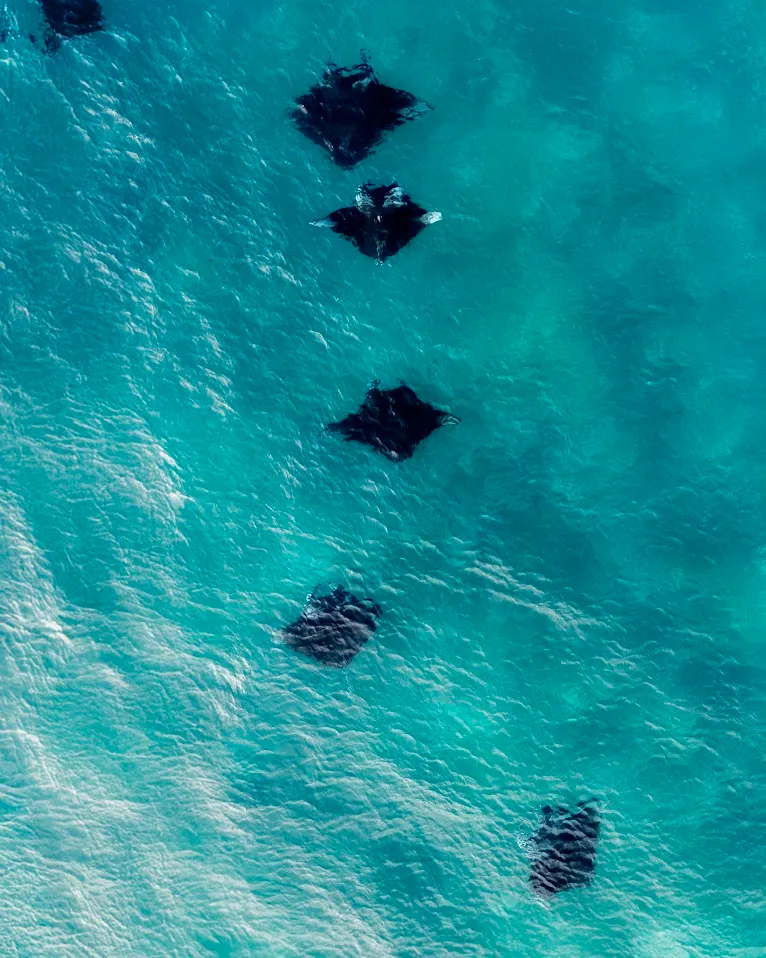
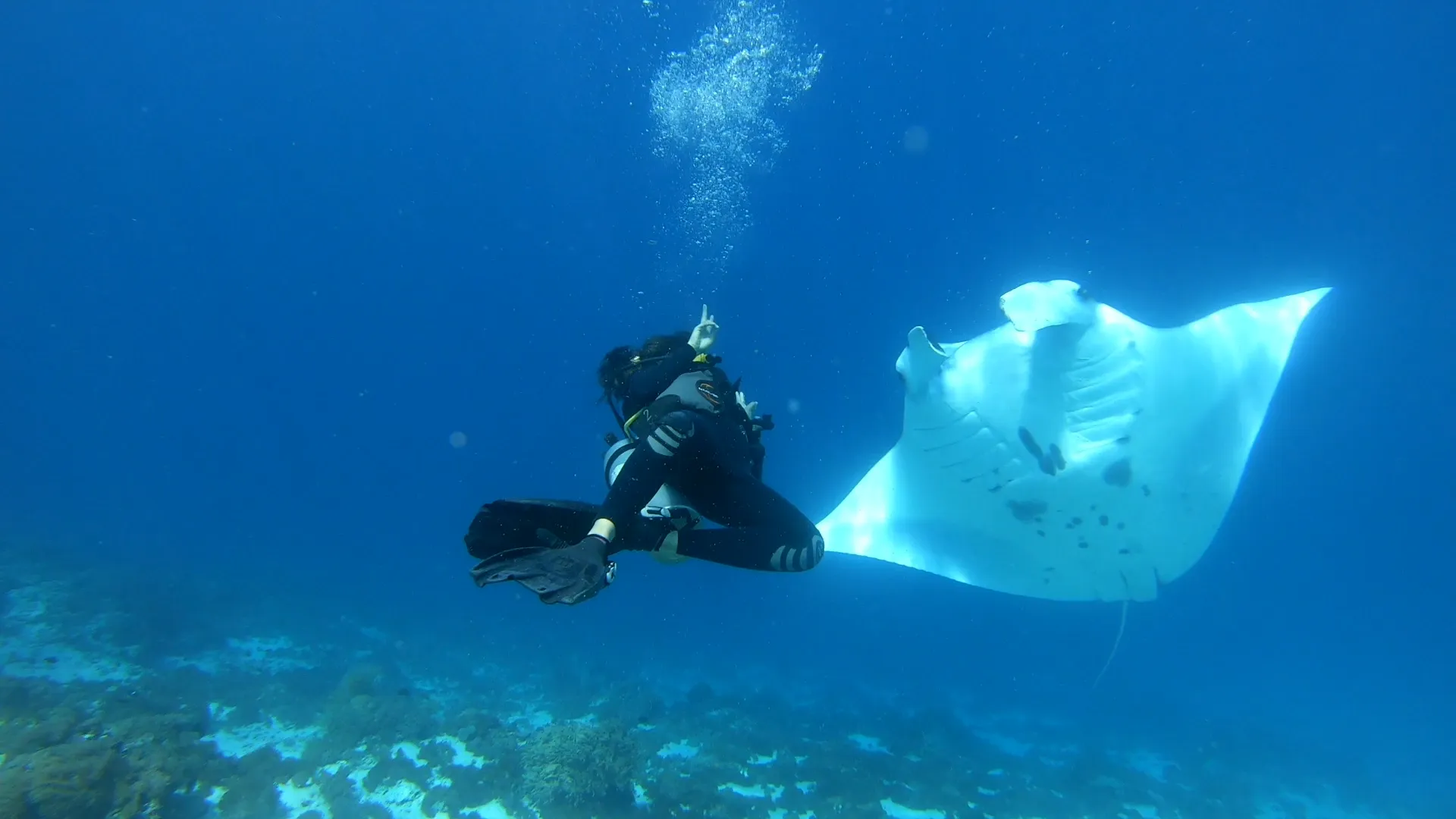
| Che cos’è | Karang Makassar — a kilometers-long shallow reef bank in the channel east of Komodo Island |
|---|---|
| Depth | Rubble-and-sand plateau in roughly 5–15 m of water |
| Accesso | ±1.5 hr by speedboat from Labuan Bajo; minutes from Taka Makassar |
| Stagione | Sightings year-round; largest feeding aggregations December–March |
| Formato | Drift by snorkel or scuba; guides read the tide and set the line |
| Full positions | See our Komodo National Park map |
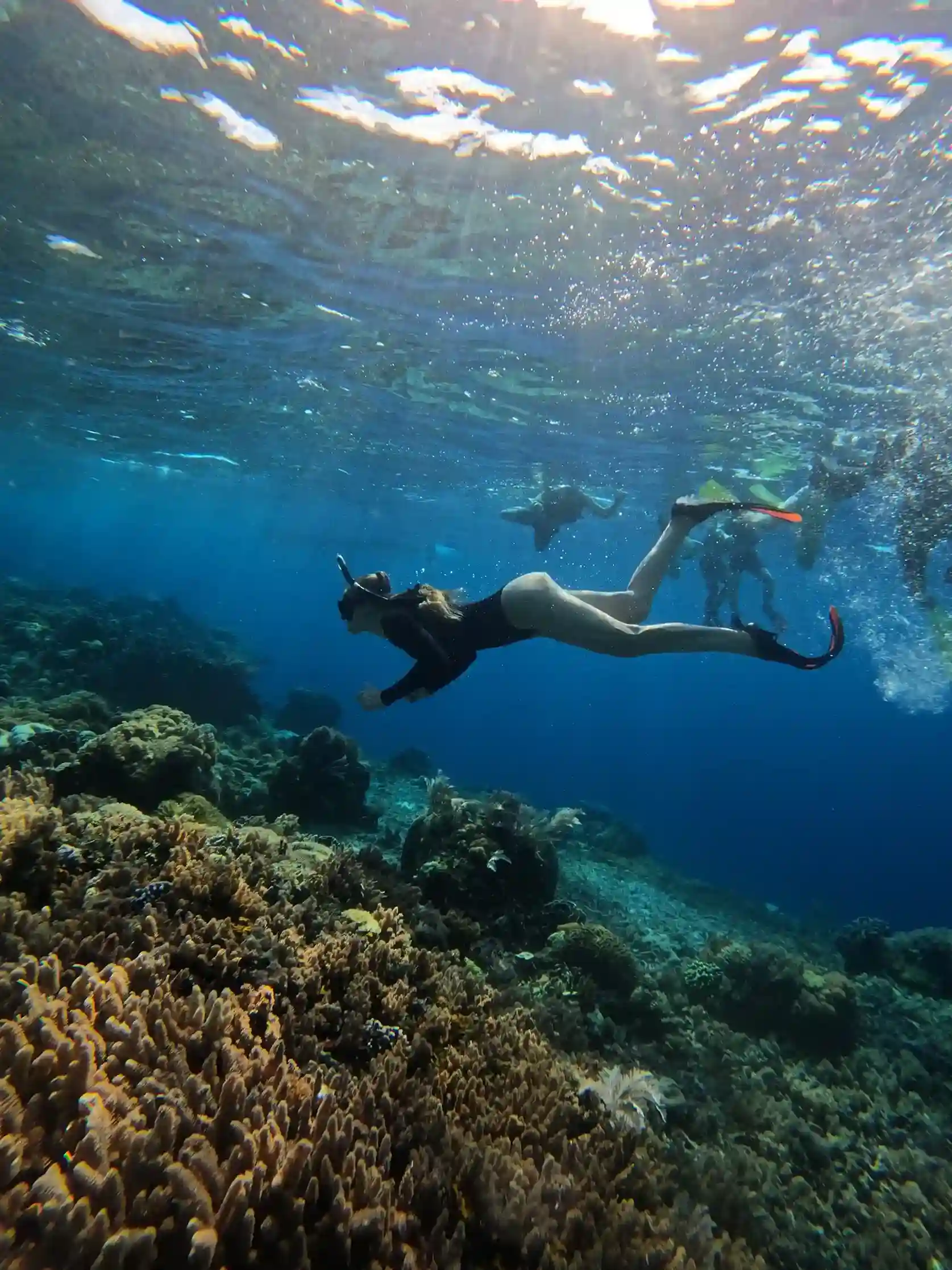
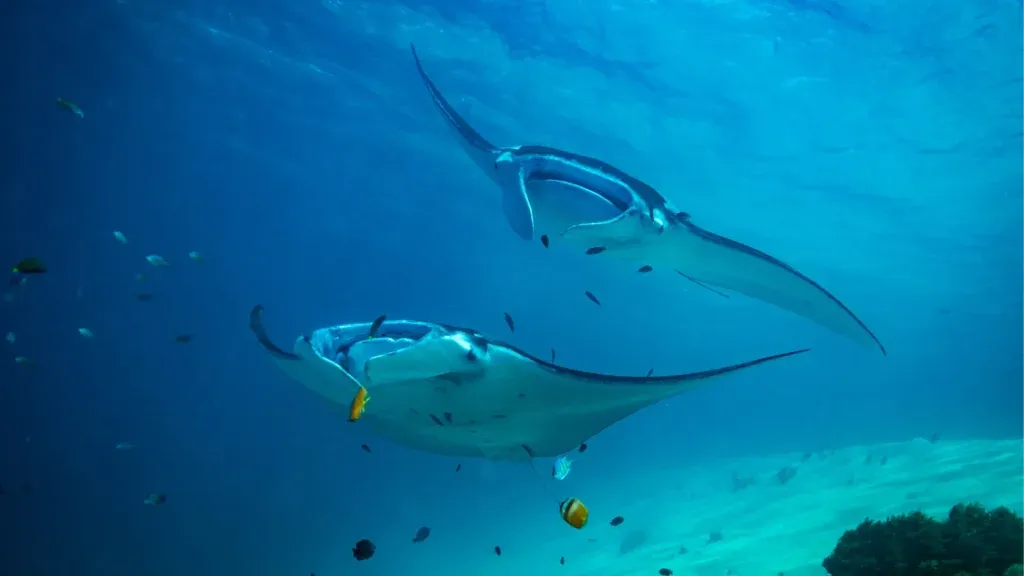
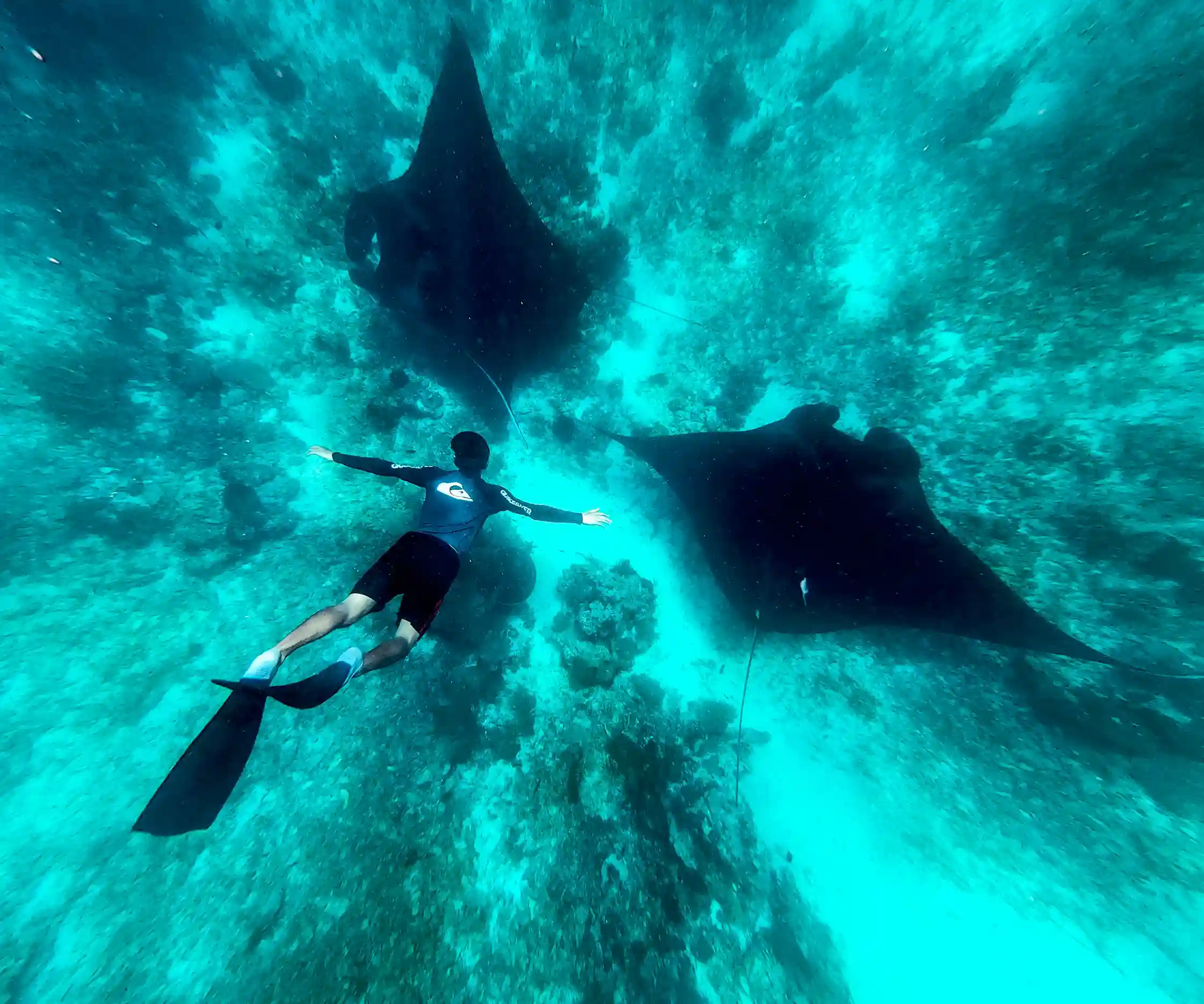
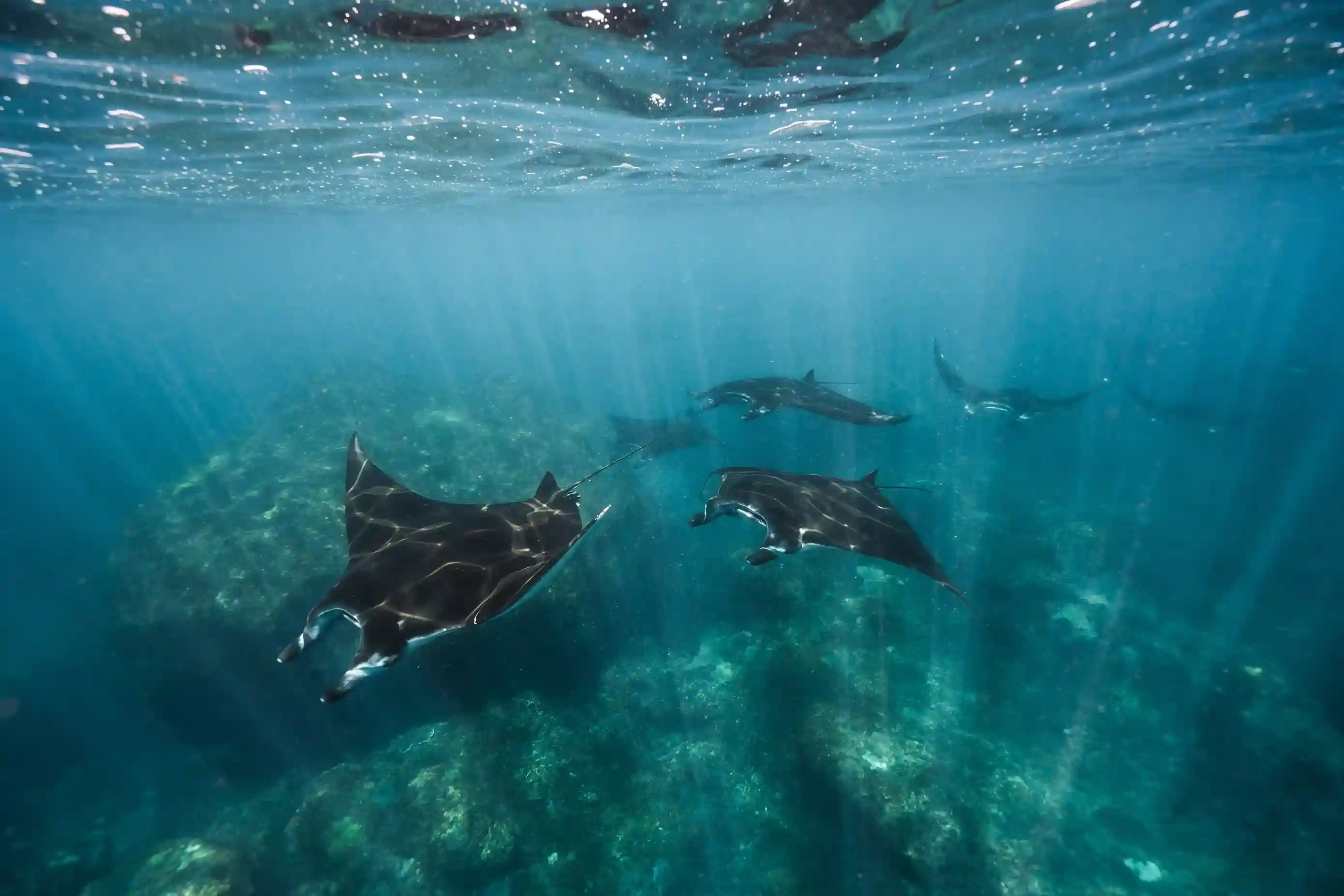
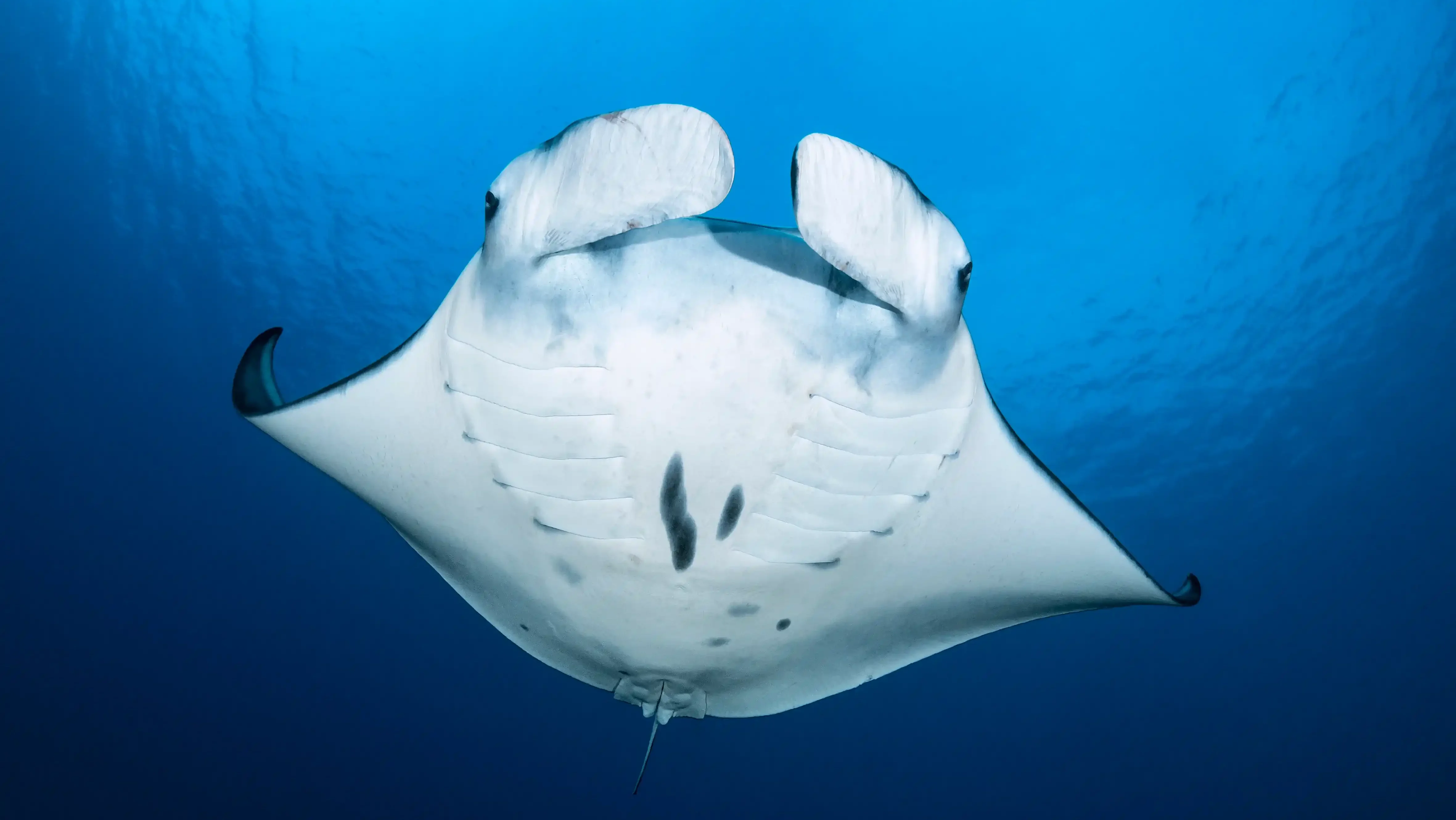
The mantas of Karang Makassar are reef manta rays, Mobula alfredi — filter feeders with wingspans commonly in the 3–4 m range, no barb and no teeth of concern. Each carries a unique pattern of spots on its belly, which is how researchers photo-identify individuals; Komodo’s protected waters are one of Indonesia’s strongholds for the species, and manta rays have been legally protected across Indonesian waters since 2014 — one of the largest manta sanctuaries in the world. They come to the plateau for two services: plankton carried on the tide, and cleaning stations where small wrasse pick their skin and gills clean.
| Fattore | Drift snorkel | Scuba dive |
|---|---|---|
| View | Mantas gliding below and rising to the surface to feed | Eye-level at the cleaning stations |
| Skill needed | Confident open-water swimming; fins mandatory | Comfort with drift diving and hook-free buoyancy |
| Best tide | Moderate flow, feeding lines near surface | Slack-to-building tide at the stations |
| Time in water | 20–40 min per drift, repeatable | ±50 min, one pass |
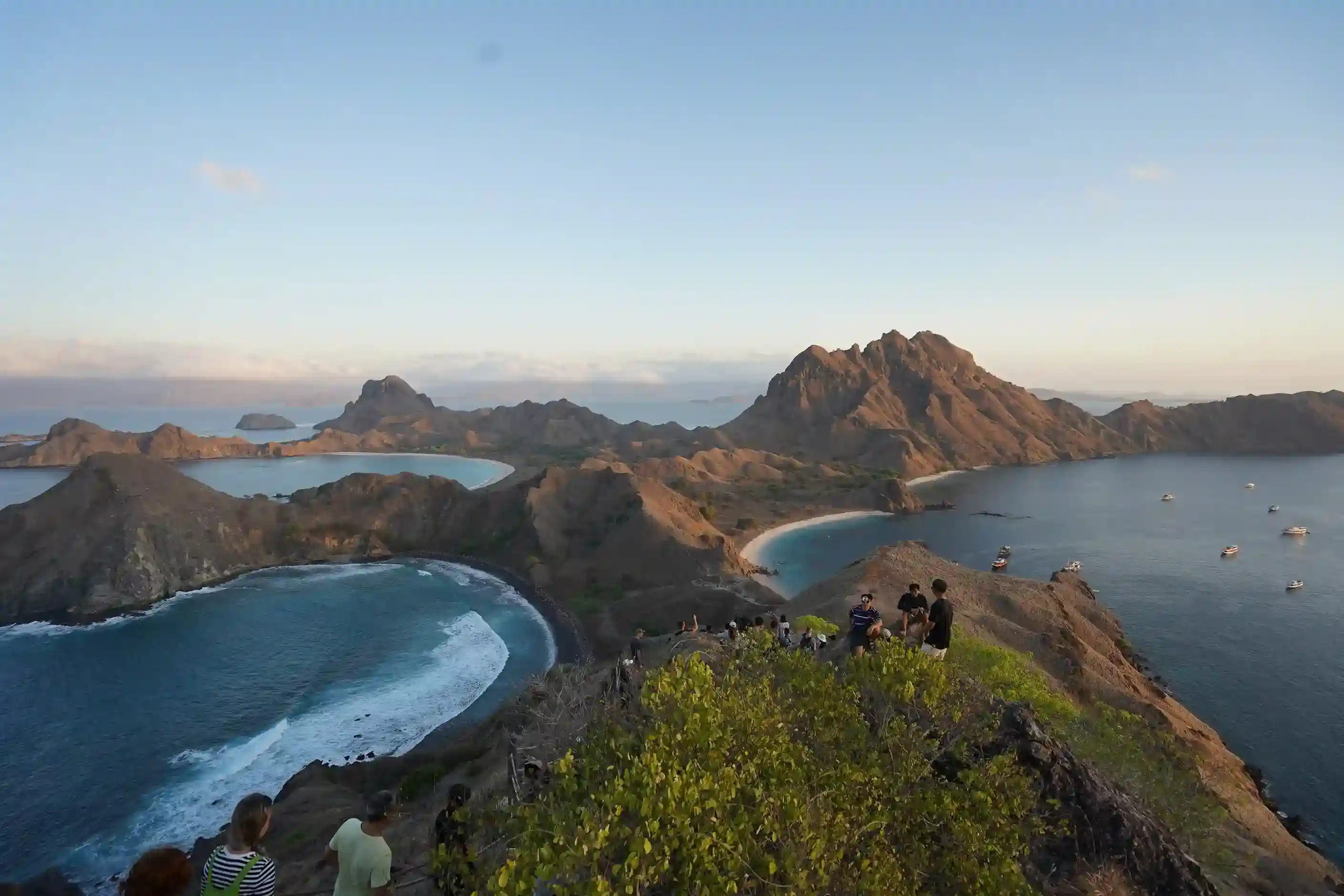
Honest operators say it plainly: Karang Makassar is a wild aggregation site, not an aquarium, and one drift in perfect conditions can still come up empty. The site itself softens the risk — the drift over the rubble bank turns up turtles, eagle rays, reef sharks resting in the rubble and thick snapper schools even on a manta-less pass — and geography does the rest: Taka Makassar is 10–15 minutes away for the surface interval, and a second drift on the next tide window is standard practice on our charters rather than a favor. Over a two- or three-day route the odds compound in your favor; that, more than luck, is why liveaboard guests almost always leave with their manta. The classic day loop runs Padar viewpoint at first light, Pink Beach mid-morning, Manta Point on the tide, then the sandbar — and snorkelers who want a calmer second water stop finish at Siaba’s turtle seagrass beds.
Plan your visit: Komodo Luxury (PT Komodo Bahari Nusantara, sailing Komodo since 2015) operates 9 owned phinisi and works with 200+ vetted partner yachts, rated 4.9/5 by more than 1,500 guests. Message our team on WhatsApp at +62 811-3823-875 or email [email protected] and we will match the right boat and route to your dates.
“Do we get to see sharks and mantas, or only the national park?” is one of the questions we hear most — at Karang Makassar, mantas are resident year-round with the strongest aggregations December to March; see the manta season guide.
Esperienze coinvolgenti
Attività
Immergiti in barriere coralline incontaminate, esplora isole remote e avvicina la fauna selvatica durante i nostri tour in barca a vela di lusso.
Viaggi esclusivi
Tour di lusso selezionati
Itinerari di lusso esclusivi, pensati per far scoprire esclusivo e le esperienze più esclusivo Indonesia
Domande e risposte
No. Le mante sono animali filtratori innocui, privi di spine velenose e che non mostrano alcun interesse per gli esseri umani. Spesso si avvicinano tranquillamente ai bagnanti. L'unica regola – non toccarle – è dettata da motivi di conservazione, non di sicurezza.
Le mante sono presenti tutto l'anno. Il picco di affluenza si registra tra settembre e novembre, con un altro periodo di grande affluenza tra febbraio e aprile (meno affollato). Il periodo tra maggio e agosto offre buone condizioni, anche se luglio e agosto sono i mesi più affollati.
La mattina presto (prima delle 9) è l'orario migliore: ci sono meno barche e il mare è più calmo. Chi ha noleggiato un'imbarcazione privata può accedere al sito prima degli altri per godersi un'esperienza più tranquilla.
In genere si avvistano da 2 a 6 mante per visita. Nei mesi di alta stagione è possibile avvistarne gruppi di oltre 10 esemplari. Gli avvistamenti sono molto frequenti, ma non sono mai garantiti.
Sì, per nuotatori esperti che si sentono a proprio agio in acque libere. I genitori dovrebbero valutare se i propri figli sono pronti, e le attrezzature possono essere adattate per i più piccoli.
Non consigliato se non ti immergi da più di 12 mesi. Le correnti possono essere forti: valuta di fare prima un'immersione di aggiornamento (ad esempio a Siaba Besar).
È inclusa nella maggior parte degli itinerari di più giorni, ma i percorsi vengono personalizzati in base alle preferenze degli ospiti, ai tempi e alle condizioni. Segnalatelo in anticipo per dare priorità alla vostra visita.
Manta Point Karang Makassar) è un sito relativamente poco profondo, con profondità che variano dai circa 5 metri delle stazioni di pulizia più superficiali ai circa 15 metri dell'altopiano principale. Questo profilo poco profondo è una delle caratteristiche distintive del sito: rende le mante accessibili sia agli amanti dello snorkeling che ai subacquei, e la luce in superficie crea condizioni eccezionali per fotografia subacquea. Non è necessario immergersi in profondità per vivere Manta Point indimenticabile Manta Point .
Sì — Manta Point una delle poche destinazioni al mondo dove è possibile avvistare le mante con regolarità durante tutto l'anno. Parco Nazionale di Komodo una popolazione stanziale di circa 1.200 mante di barriera, mentre le acque ricche di nutrienti e le stazioni di pulizia di Karang Makassar le attraggono costantemente in tutte le stagioni. Il picco di aggregazione si verifica in genere da ottobre a giugno, con il numero più elevato spesso osservato da novembre a marzo, quando le acque più fresche e ricche di plancton attirano le mante nella zona centrale. Gli avvistamenti rimangono affidabili per tutto il resto dell'anno.
Manta Point — officially Karang Makassar — is a 1.5 km drift over a rubble reef where reef manta rays gather to be cleaned, feed and, in season, train in courtship lines. It is the most reliable place in Komodo National Park to swim alongside mantas: boats drop snorkelers or divers up-current and the drift carries you over the cleaning stations. Sightings happen year-round, with the densest aggregations roughly December to February.
Manta Point is a boat-only site on the standard day-trip loop, usually visited right after Taka Makassar. The crew scans for wingtips from the flybridge, positions up-current, and guests drift the site in small groups. Park tickets apply; see current entrance fees.
High by wildlife standards — Karang Makassar is a cleaning-station aggregation site, not a random encounter spot. No operator can honestly promise a sighting, but most days deliver, and crews will make multiple drift passes when needed.
You should be comfortable in open water — it is a drift, so the current does the work while the boat follows the group. Life jackets and guide escort are standard for snorkelers.
Mantas are present all year. The biggest groups are usually seen from about December to February, when plankton-rich water draws feeding trains to the site.