



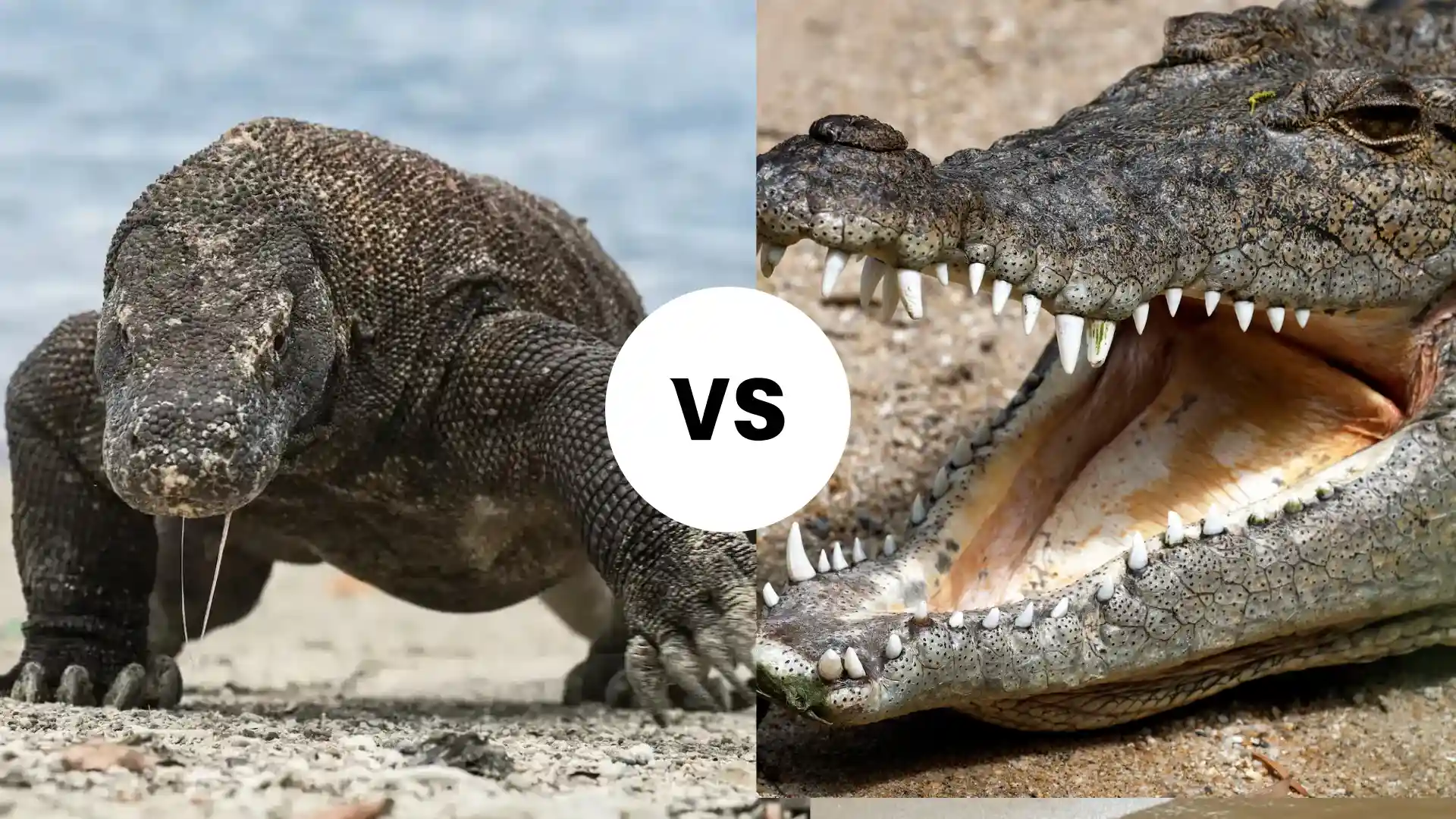
In a head-to-head fight, the Saltwater Crocodile would beat the Komodo Dragon. The crocodile’s sheer size (up to 6 meters and over 1,000 kg) and record bite force of roughly 3,700 psi overwhelm the Komodo Dragon’s 3-meter frame, comparatively weak bite, and slow-acting venom in almost any direct confrontation.
Ti sei mai chiesto chi avrebbe la meglio in uno scontro: un drago di Komodo un coccodrillo marino? Entrambe le creature sono al vertice della catena alimentare nei rispettivi habitat, ma differiscono notevolmente per dimensioni, forza e tecniche di caccia. Questi due temibili rettili sono entrambi cacciatori nati, ma cosa succederebbe se si affrontassero? Chi avrebbe la meglio?
In questo articolo analizzeremo tutto ciò che c'è da sapere sul drago di Komodo sul coccodrillo marino, mettendo a confronto le loro dimensioni, la velocità, i punti di forza e persino i punti deboli. Vediamo chi vincerà questa battaglia titanica.
drago di Komodo: il re dei rettili
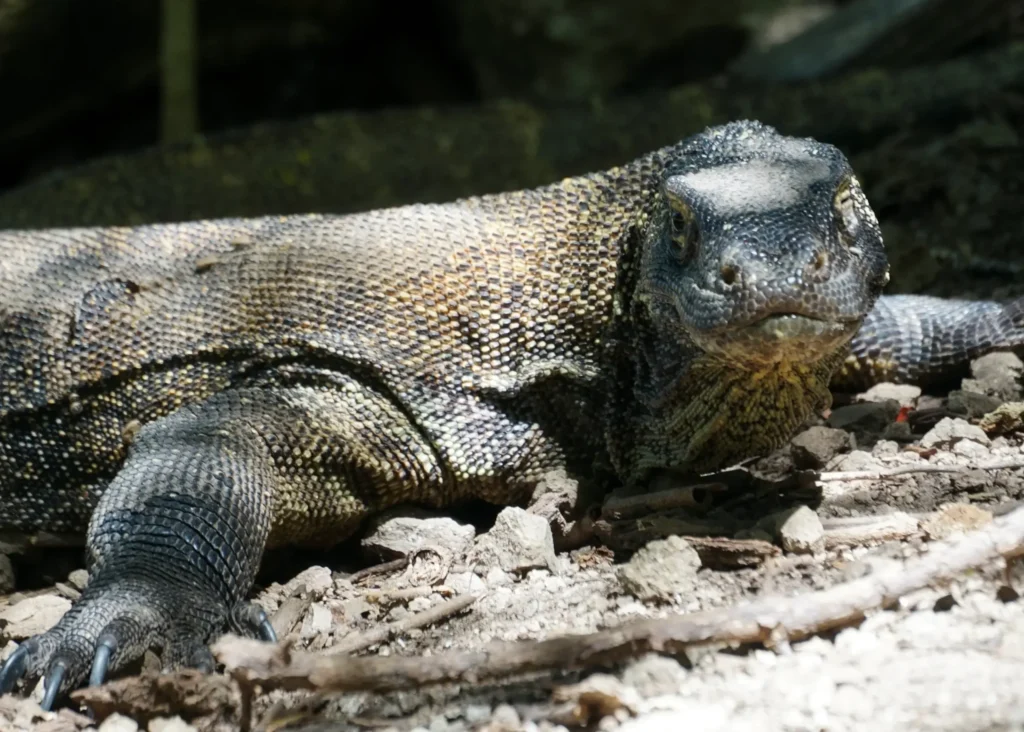
I drago di Komodo Isola di Komodo
The Komodo Dragon (Varanus komodoensis) is the largest living lizard in the world, native to a few Indonesian islands, including Komodo, Rinca, and Flores. These impressive creatures can grow to an average length of 2-3 meters (6-10 feet) and weigh around 70-90 kilograms (150-200 pounds). What makes them deadly isn’t just their size, though—it’s their venomous bite. A Komodo Dragon’s saliva contains deadly bacteria and venom that can cause massive blood loss, shock, and eventually, death. Komodo Dragons are ambush predators, attacking prey at high speeds with lacerating bites, but they do not inject venom like snakes.
Draghi di Komodo cacciatori solitari che si affidano alla furtività e alla pazienza per avvicinarsi di soppiatto alla preda. Sono in grado di raggiungere velocità fino a 20 km/h (12 mph) in brevi scatti, abbastanza veloci da sorprendere e abbattere animali come cervi, maiali e persino bufali d'acqua. Sebbene non siano fatti per lunghi inseguimenti, una volta che riescono a mordere la preda, spesso è solo questione di tempo prima che questa soccomba all'infezione o al veleno. Draghi di Komodo generalmente più veloci e agili sulla terraferma rispetto ai coccodrilli marini.
The science behind that bite is remarkable. In 2009, a research team led by Dr. Bryan Fry confirmed that Komodo Dragons possess genuine venom glands in the lower jaw, with ducts opening between the teeth. Rather than being injected like snake venom, the toxins seep into open wounds, where they prevent blood from clotting and cause a sharp drop in blood pressure—hastening shock and blood loss. This discovery largely overturned the older “dirty mouth” theory that credited only bacteria for the kill. Their roughly 60 curved, serrated teeth act like steak knives, slicing deep gashes that let the venom do its work.
Komodo Dragons are also equipped with an extraordinary sense of smell. Flicking a long, forked tongue and reading the air with a vomeronasal (Jacobson’s) organ on the roof of the mouth, they can detect carrion from several kilometers downwind. This lets them locate a wounded animal—or their own escaped prey—long after the initial ambush, a patient tracking strategy that suits their land-based hunting perfectly.
Habitat
Draghi di Komodo nelle savane aride, nelle praterie e nelle foreste cespugliose delle isole Indonesia.
Punti di forza
- Morso velenoso in grado di immobilizzare la preda nel corso del tempo.
- Mascelle potenti in grado di lacerare la carne.
- Brevi scatti di velocità, che li rendono abili cacciatori da agguato.
Punti deboli
- Resistenza limitata nei casi di inseguimenti prolungati.
- Non sono ben adattate all'acqua, il che limita il loro raggio d'azione nella caccia alla terraferma.
Leggi di Più: 11 drago di Komodo che ti sorprenderanno
Coccodrillo marino: il predatore al vertice della catena alimentare acquatica
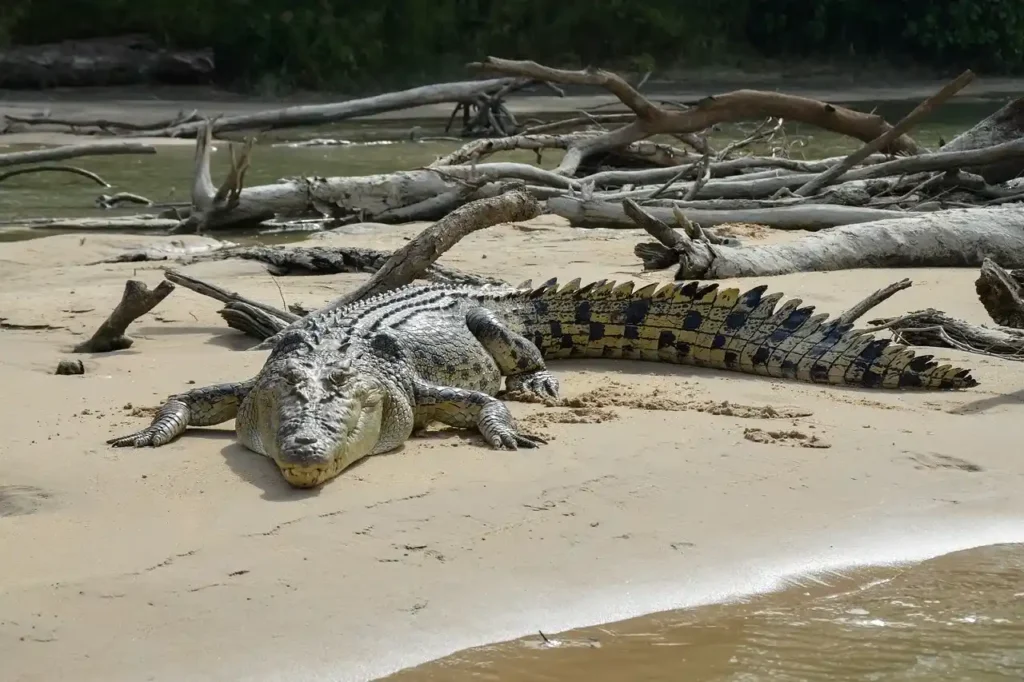
Coccodrillo (fonte: unsplash.com)
Il coccodrillo marino (Crocodylus porosus) non è solo il rettile vivente più grande, ma detiene anche il primato per la morsa più potente tra tutti gli animali della Terra. I coccodrilli marini sono dei veri giganti del regno animale, raggiungono oltre 6 metri (20 piedi) di lunghezza e pesano più di 1.000 chilogrammi (2.200 libbre). La forza del loro morso supera i 3.500 psi, abbastanza forte da frantumare le ossa e lacerare con facilità anche la pelle più spessa.
I coccodrilli marini sono predatori da agguato e cacciano principalmente in acqua, dove sono veloci e agili. Si nascondono appena sotto la superficie, in attesa del momento perfetto per sferrare un attacco a sorpresa alla loro preda. In acqua possono nuotare a velocità comprese tra i 24 e i 29 km/h (15-18 mph) e sono noti per attaccare qualsiasi cosa, dai pesci e dagli uccelli ai grandi mammiferi, compreso il bestiame.
Once a saltwater crocodile clamps down, escape is nearly impossible. To subdue and dismember larger prey, it performs the infamous “death roll”—spinning its entire body with explosive force to tear off chunks of flesh or drown a struggling animal. That grip is backed by the strongest bite ever directly measured in a living creature: in Gregory Erickson’s landmark 2012 study, a large Crocodylus porosus bit down at roughly 3,700 psi (about 16,460 newtons), enough to shatter bone.
Their range is vast for a reason. Special salt glands on the tongue let saltwater crocodiles tolerate seawater, so they patrol estuaries, mangroves, and open coastlines from eastern India through Southeast Asia to northern Australia—occasionally riding ocean currents between islands. They are also remarkably long-lived, with many individuals surviving well past 70 years in the wild, giving the biggest bulls decades to reach their record-breaking size.
Habitat
Questi coccodrilli vivono in ambienti di acqua salata e salmastra, tra cui fiumi, paludi, estuari e acque costiere, in tutto il Sud-Est asiatico, nell'Australia settentrionale e nelle regioni circostanti.
Punti di forza
- Il suo morso è talmente potente da poter frantumare le ossa.
- Le loro dimensioni e la loro forza straordinarie li rendono praticamente invincibili in acqua.
- L'agilità in acqua permette loro di attaccare con la rapidità di un fulmine.
Punti deboli
- Lento e goffo sulla terraferma.
- Per cacciare con efficacia dipende in larga misura dall'acqua.
drago di Komodo coccodrillo marino: confronto diretto
Caratteristiche | Drago di Komodo | Coccodrillo marino |
Dimensioni | 2-3 metri (6-10 piedi) | 5-6 metri (16-20 piedi) |
Peso | 70-90 kg (150-200 libbre) | 500-1.000 kg (1.100-2.200 libbre) |
Velocità | 20 km/h (12 mph) sulla terraferma | 24-29 km/h (15-18 mph) in acqua |
Punto di forza principale | Morso velenoso, mascelle affilate | Il morso più potente del regno animale |
Punto debole | Non resiste all'acqua | Mobilità limitata sulla terraferma |
Durata di vita | 30 anni | 70 anni |
Habitat | Savane, praterie aride | Fiumi, paludi, estuari |
Dieta | Carnivori (cervi, maiali, bufali) | Carnivoro (pesci, uccelli, mammiferi) |
Riproduzione | Depone circa 20 uova all'anno | Depone 40-50 uova all'anno |
drago di Komodo coccodrillo marino: tabella comparativa | Komodo Luxury
Principali differenze tra Draghi di Komodo i coccodrilli marini
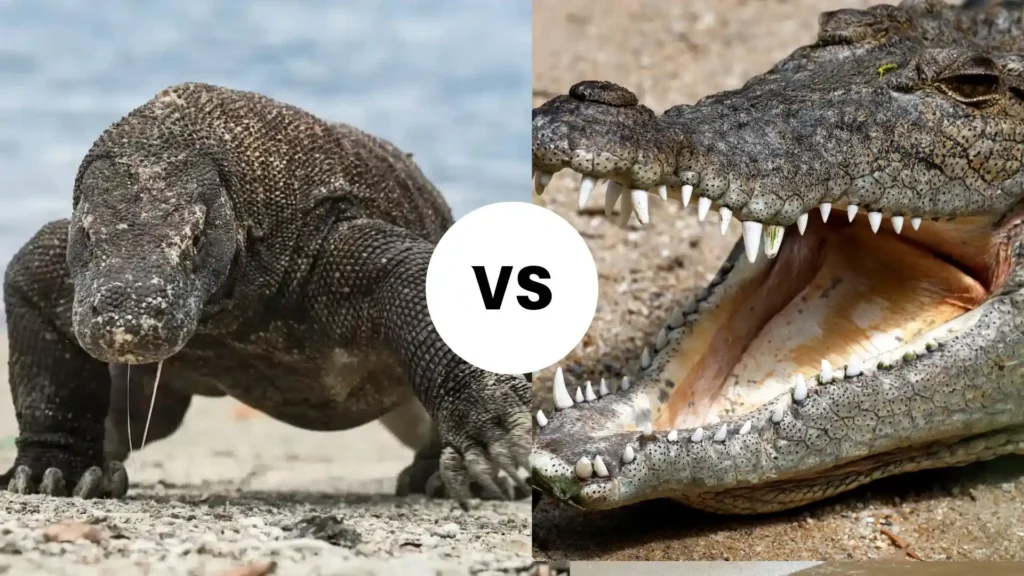
drago di Komodo coccodrillo | Komodo Luxury
Sebbene entrambi siano potenti predatori, presentano molte differenze. Ecco alcune delle principali differenze tra i due:
1. Fisico
Il drago di Komodo un corpo più affusolato e snello, fatto apposta per muoversi agilmente sulla terraferma. Al contrario, il coccodrillo marino è più massiccio, con una coda potente pensata per nuotare e muoversi in acqua.
2. Denti
Draghi di Komodo denti affilati come rasoi che li aiutano a lacerare la carne. I coccodrilli marini, invece, vantano denti grandi e potenti, progettati per afferrare e frantumare le ossa.
3. Dimensioni
I coccodrilli marini sono notevolmente più grandi dei Draghi di Komodo, spesso con peso e lunghezza più che raddoppiati, il che conferisce loro un notevole vantaggio in termini di dimensioni.
4. Colorazione
Draghi di Komodo solitamente un colore marrone scuro tendente al terroso o grigio, mentre i coccodrilli marini presentano una combinazione di tonalità marrone-verdastra con strisce nere, che garantiscono un eccellente mimetismo in acqua.
5. Struttura della pelle
I coccodrilli marini hanno una pelle spessa e corazzata, ricoperta da squame resistenti che offrono protezione contro gli attacchi fisici. Draghi di Komodo, pur avendo una pelle resistente, sono molto meno corazzati in confronto.
6. Forma della testa
Draghi di Komodo una testa stretta e allungata, mentre i coccodrilli marini presentano un muso largo e massiccio con muscoli mascellari possenti, ottimizzati per il loro morso potente.
drago di Komodo coccodrillo: sono pericolosi per l'uomo?
Both creatures can be incredibly dangerous to humans, though encounters are relatively rare.Komodo Dragons are not known to attack humans frequently, but when they do, their bites are highly lethal due to the venom and bacteria in their saliva. Even a small bite can lead to serious infections or worse if untreated. On the other hand, Saltwater Crocodiles are notorious for attacking humans, especially in areas where humans and crocs share close proximity to water. Their ambush tactics make them one of the deadliest reptiles in the world, with numerous documented cases of fatal crocodile attacks.
In short, both animals should be approached with extreme caution, though Saltwater Crocodiles have a much higher track record for attacking humans. Both Komodo Dragons and Saltwater Crocodiles can be dangerous to humans, but Saltwater Crocodiles have a higher track record of fatal attacks. While both predators can be dangerous in the wild, encounters with Komodo dragons are carefully managed in their natural habitat. When you explore the area with proper guidance, the experience becomes both safe and unforgettable.
Leggi di Più: Meraviglie della fauna selvatica: dai canguri australiani ai Draghi di Komodo Indonesia
Who Would Win? Komodo Dragon vs Crocodile Head-to-Head
Strip the fight down to the factors that actually decide a life-or-death clash, and the Saltwater Crocodile wins on almost every one. The table below scores each combat trait head-to-head:
Combat Factor | Drago di Komodo | Coccodrillo marino | Edge |
Max Size | 3 m (10 ft) | 6+ m (20 ft) | Crocodile |
Max Weight | ~90 kg (200 lbs) | 1,000+ kg (2,200 lbs) | Crocodile |
Bite Force | Weak for its size; kills via laceration + venom | ~3,700 psi (16,460 N) — strongest ever measured | Crocodile |
Primary Weapon | Venom & serrated teeth | Crushing bite & death roll | Crocodile |
On Land | Agile, 20 km/h | Slow, awkward | Drago di Komodo |
In Water | Poor swimmer | Dominant, 24-29 km/h | Crocodile |
Armor | Moderately tough skin | Thick, bony-plated hide | Crocodile |
Overall Verdict | Challenger | Winner | Crocodile |
Terrain is the one variable that gives the Komodo Dragon any hope. In water, the contest isn’t close—the crocodile is faster, heavier, and armored, and a single clamp-and-roll would end things in seconds. On land, the Komodo Dragon’s agility lets it dart around a sluggish crocodile and land slashing, venom-laced bites, but it still has to overcome an opponent that outweighs it more than ten times over. Its realistic path to victory isn’t a knockout; it’s a hit-and-retreat, then waiting hours or days for venom and blood loss to take hold.
In practice, this matchup is almost entirely hypothetical. Komodo Dragons are endemic to a handful of Indonesian islands, while saltwater crocodiles rule coastal estuaries and mangroves, so their paths rarely cross in a way that would trigger a genuine fight. When we weigh raw combat ability, though, the crocodile’s overwhelming size, armor, and bite make it the clear favorite in any direct confrontation.
Conclusione: chi vincerebbe in uno scontro?
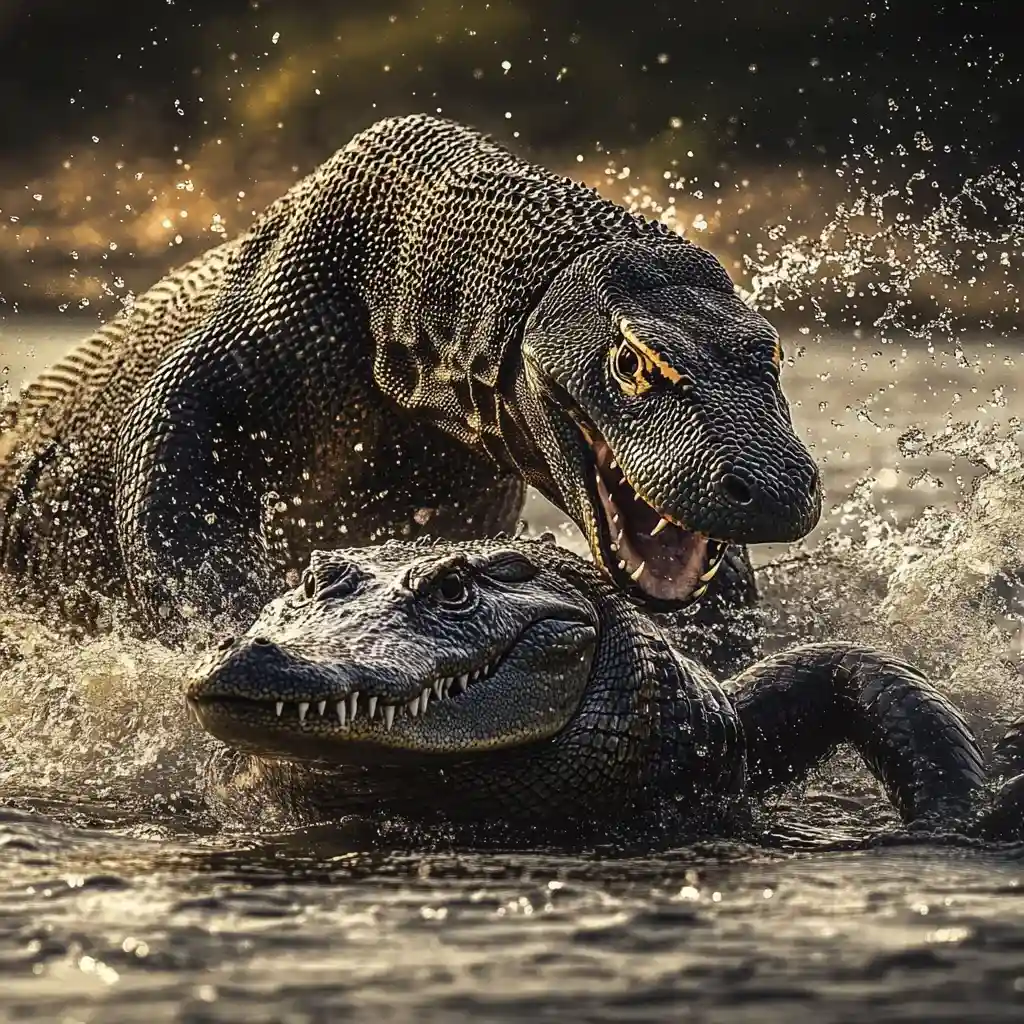
Illustrazione: drago di Komodo coccodrillo – Komodo Luxury
If a Komodo Dragon were to face off against a Saltwater Crocodile, the Saltwater Crocodile would likely come out on top. Its immense size, brute strength, and bone-crushing bite give it a significant advantage in a direct confrontation. However, the Komodo Dragon isn’t without its deadly assets, especially its venomous bite, which could eventually prove fatal—but in a drawn-out battle, the Crocodile would likely win before that venom takes effect. If you are interested in seeing the Komodo Dragon live in its natural habitat, visit Komodo Island and enjoy an extraordinary experience through the Komodo Island Tour Package offered by Komodo Luxury. It is a rare opportunity to see one of the world’s most iconic predators in its natural habitat. Many travelers choose a Labuan Bajo yacht rental to enjoy a more controlled and comfortable journey, allowing you to explore Komodo National Park while observing wildlife from a safe distance. Don’t let space run out! Book now!