




Last updated: September 2026 · Prices & availability verified for the 2026/2027 season
Last updated: September 05, 2026
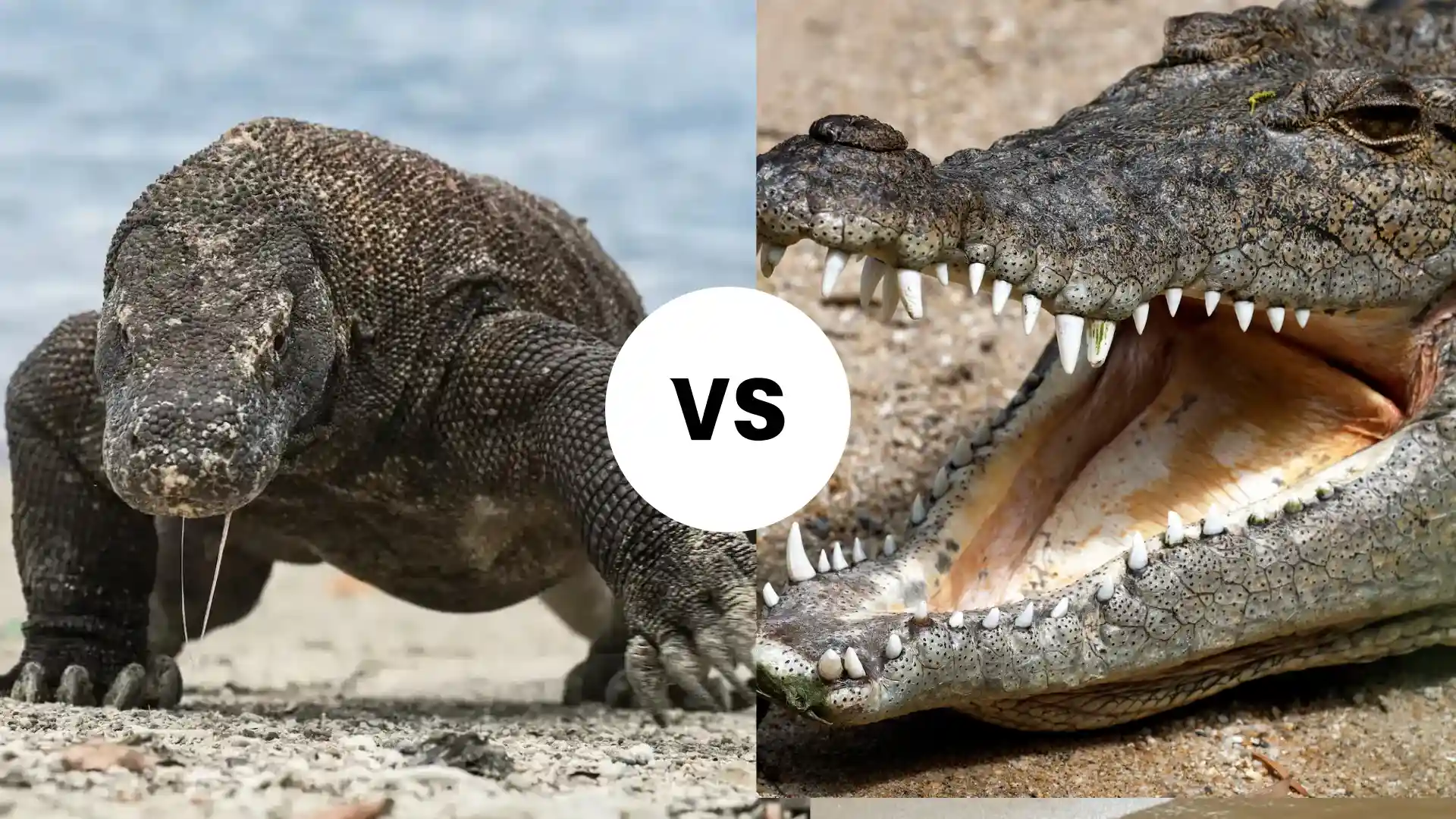
In a head-to-head fight, the Saltwater Crocodile would beat the Komodo Dragon. The crocodile’s sheer size (up to 6 meters and over 1,000 kg) and record bite force of roughly 3,700 psi overwhelm the Komodo Dragon’s 3-meter frame, comparatively weak bite, and slow-acting venom in almost any confrontation.
It’s a matchup our ranger-guides field constantly, dragon trekking is part of every itinerary we run, from the 3D2N shared sailing trip to multi-week charters, and guests debate it on the sundeck between Rinca and Padar almost every crossing. The salties, conveniently, stay out of the park entirely, so the two never actually meet on our routes, which is exactly why the question keeps coming up. This article breaks down the full picture: size, speed, bite force, and hunting style for both animals, then scores them head-to-head to see who really comes out on top.
Punti chiave
- In a straight fight, the Saltwater Crocodile wins on almost every measurable trait, backed by a bite force of roughly 16,414 newtons compared to the Komodo dragon’s 148 newtons, making it the strongest bite ever directly measured in a living animal.
- The Komodo dragon compensates with a completely different strategy, relying on around 60 serrated teeth and an anticoagulant venom that causes prolonged bleeding rather than trying to overpower its opponent in a single strike.
- Size and terrain decide almost everything in this matchup, since the crocodile’s weight and swimming speed make water a lopsided fight, while the dragon’s agility on land is the only real edge it has.
- This confrontation is almost entirely hypothetical in the wild, because saltwater crocodiles don’t inhabit the dragons’ core territory inside Komodo National Park, so the two predators’ paths rarely cross.
- Both animals can be dangerous to humans, but saltwater crocodiles carry a significantly higher track record of fatal attacks, which is why licensed ranger guidance remains essential when visiting either species’ habitat.
drago di Komodo: il re dei rettili
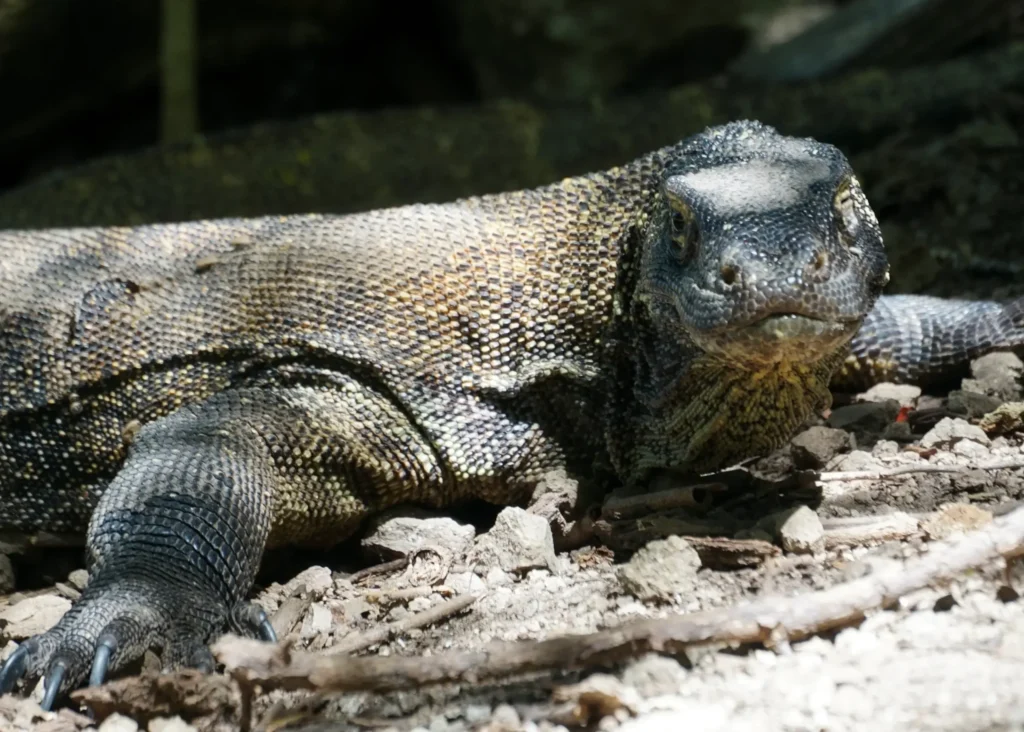
I drago di Komodo Isola di Komodo
drago di Komodo Il varano diKomodo (Varanus komodoensis) è la lucertola vivente più grande del mondo, originaria di alcune isole indonesiane, tra cui Komodo, Rinca e Flores. Queste imponenti creature possono raggiungere una lunghezza media di 2-3 metri (6-10 piedi) e pesare circa 70-90 chilogrammi (150-200 libbre). Ciò che li rende letali, però, non è solo la loro taglia, bensì il loro morso velenoso. La saliva di un varano di Komodo ( drago di Komodo) contiene batteri letali e veleno in grado di provocare una massiccia perdita di sangue, shock e, infine, la morte. I varani di Komodo ( Draghi di Komodo ) sono predatori da agguato, che attaccano le prede ad alta velocità con morsi laceranti, ma non iniettano veleno come i serpenti.
Draghi di Komodo cacciatori solitari che si affidano alla furtività e alla pazienza per avvicinarsi di soppiatto alla preda. Sono in grado di raggiungere velocità fino a 20 km/h (12 mph) in brevi scatti, abbastanza veloci da sorprendere e abbattere animali come cervi, maiali e persino bufali d'acqua. Sebbene non siano fatti per lunghi inseguimenti, una volta che riescono a mordere la preda, spesso è solo questione di tempo prima che questa soccomba all'infezione o al veleno. Draghi di Komodo generalmente più veloci e agili sulla terraferma rispetto ai coccodrilli marini.
La scienza che sta dietro a quel morso è straordinaria. Nel 2009, un gruppo di ricerca guidato dal dottor Bryan Fry ha confermato che l’ Draghi di Komodo possiede vere e proprie ghiandole velenifere nella mascella inferiore, con dotti che si aprono tra i denti. Anziché essere iniettate come il veleno dei serpenti, le tossine penetrano nelle ferite aperte, dove impediscono la coagulazione del sangue e provocano un brusco calo della pressione arteriosa, accelerando lo shock e la perdita di sangue. Questa scoperta ha in gran parte ribaltato la precedente teoria della «bocca sporca», che attribuiva la causa della morte esclusivamente ai batteri. I loro circa 60 denti ricurvi e seghettati agiscono come coltelli da bistecca, provocando profondi tagli che consentono al veleno di agire.
Draghi di Komodo sono inoltre dotati di uno straordinario senso dell’olfatto. Muovendo rapidamente la lunga lingua biforcuta e analizzando l’aria grazie all’organo vomeronasale (di Jacobson) situato sul palato, sono in grado di individuare le carcasse a diversi chilometri di distanza, sottovento. Ciò permette loro di localizzare un animale ferito — o una preda che è sfuggita — molto tempo dopo l’agguato iniziale, una strategia di tracciamento paziente che si adatta perfettamente alla loro caccia terrestre.
Habitat
Draghi di Komodo nelle savane aride, nelle praterie e nelle foreste cespugliose delle isole Indonesia.
Punti di forza
- Morso velenoso in grado di immobilizzare la preda nel corso del tempo.
- Mascelle potenti in grado di lacerare la carne.
- Brevi scatti di velocità, che li rendono abili cacciatori da agguato.
Punti deboli
- Resistenza limitata nei casi di inseguimenti prolungati.
- Non sono ben adattate all'acqua, il che limita il loro raggio d'azione nella caccia alla terraferma.
Leggi di Più: 11 drago di Komodo che ti sorprenderanno
Coccodrillo marino: il predatore al vertice della catena alimentare acquatica
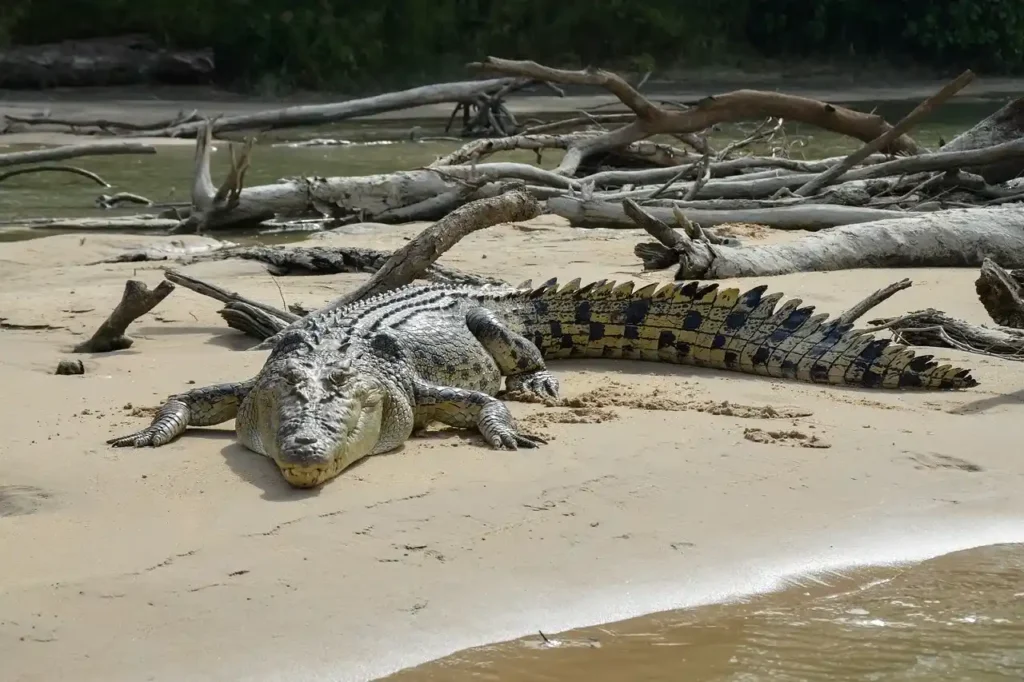
Coccodrillo (fonte: unsplash.com)
Il coccodrillo marino (Crocodylus porosus) non è solo il rettile vivente più grande, ma detiene anche il primato per la morsa più potente tra tutti gli animali della Terra. I coccodrilli marini sono dei veri giganti del regno animale, raggiungono oltre 6 metri (20 piedi) di lunghezza e pesano più di 1.000 chilogrammi (2.200 libbre). La forza del loro morso supera i 3.500 psi, abbastanza forte da frantumare le ossa e lacerare con facilità anche la pelle più spessa.
I coccodrilli marini sono predatori da agguato e cacciano principalmente in acqua, dove sono veloci e agili. Si nascondono appena sotto la superficie, in attesa del momento perfetto per sferrare un attacco a sorpresa alla loro preda. In acqua possono nuotare a velocità comprese tra i 24 e i 29 km/h (15-18 mph) e sono noti per attaccare qualsiasi cosa, dai pesci e dagli uccelli ai grandi mammiferi, compreso il bestiame.
Una volta che un coccodrillo marino stringe la presa, sfuggire è quasi impossibile. Per sottomettere e smembrare prede più grandi, esegue il famigerato “rotolamento mortale”: fa ruotare tutto il corpo con forza esplosiva per strappare pezzi di carne o annegare un animale che si dimena. Quella presa è supportata dal morso più potente mai misurato direttamente in una creatura vivente: nello studio fondamentale condotto da Gregory Erickson nel 2012, un grande Crocodylus porosus ha morso con una forza di circa 3.700 psi (circa 16.460 newton), sufficiente a frantumare le ossa.
Il loro areale è vasto per un motivo ben preciso. Grazie a speciali ghiandole salini situate sulla lingua, i coccodrilli marini tollerano l’acqua di mare, e per questo pattugliano estuari, mangrovie e coste aperte dall’India orientale attraverso il Sud-Est asiatico fino all’Australia settentrionale, lasciandosi occasionalmente trasportare dalle correnti oceaniche tra un’isola e l’altra. Sono inoltre straordinariamente longevi: molti esemplari sopravvivono ben oltre i 70 anni in natura, il che concede ai maschi più grandi decenni di tempo per raggiungere le loro dimensioni da record.
Habitat
Questi coccodrilli vivono in ambienti di acqua salata e salmastra, tra cui fiumi, paludi, estuari e acque costiere, in tutto il Sud-Est asiatico, nell'Australia settentrionale e nelle regioni circostanti.
Punti di forza
- Il suo morso è talmente potente da poter frantumare le ossa.
- Le loro dimensioni e la loro forza straordinarie li rendono praticamente invincibili in acqua.
- L'agilità in acqua permette loro di attaccare con la rapidità di un fulmine.
Punti deboli
- Lento e goffo sulla terraferma.
- Per cacciare con efficacia dipende in larga misura dall'acqua.
drago di Komodo coccodrillo marino: confronto diretto
Caratteristiche | Drago di Komodo | Coccodrillo marino |
Dimensioni | 2-3 metri (6-10 piedi) | 5-6 metri (16-20 piedi) |
Peso | 70-90 kg (150-200 libbre) | 500-1.000 kg (1.100-2.200 libbre) |
Velocità | 20 km/h (12 mph) sulla terraferma | 24-29 km/h (15-18 mph) in acqua |
Punto di forza principale | Morso velenoso, mascelle affilate | Il morso più potente del regno animale |
Punto debole | Non resiste all'acqua | Mobilità limitata sulla terraferma |
Durata di vita | 30 anni | 70 anni |
Habitat | Savane, praterie aride | Fiumi, paludi, estuari |
Dieta | Carnivori (cervi, maiali, bufali) | Carnivoro (pesci, uccelli, mammiferi) |
Riproduzione | Depone circa 20 uova all'anno | Depone 40-50 uova all'anno |
drago di Komodo coccodrillo marino: tabella comparativa | Komodo Luxury
Principali differenze tra Draghi di Komodo i coccodrilli marini
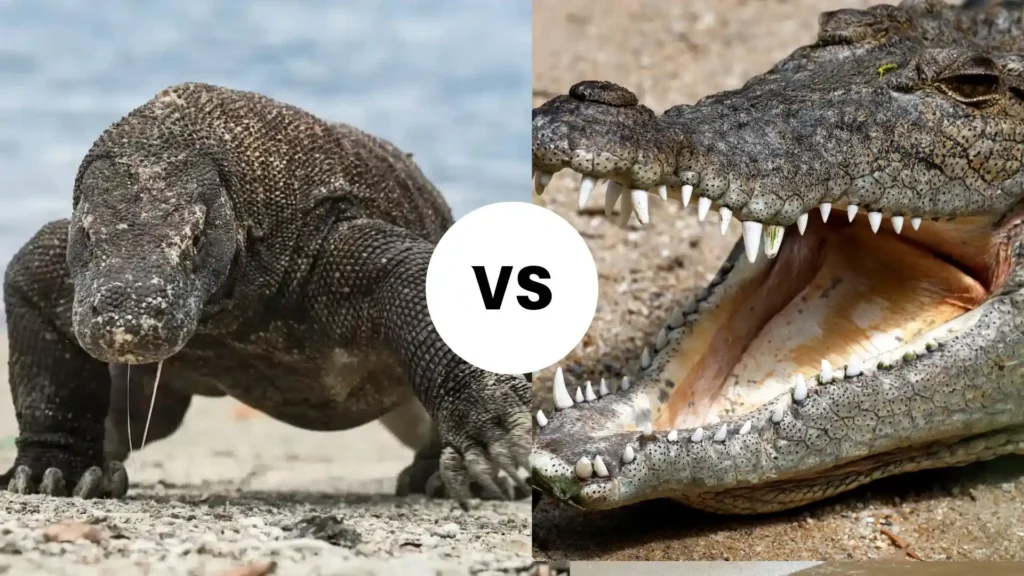
drago di Komodo coccodrillo | Komodo Luxury
Sebbene entrambi siano potenti predatori, presentano molte differenze. Ecco alcune delle principali differenze tra i due:
1. Fisico
Il drago di Komodo un corpo più affusolato e snello, fatto apposta per muoversi agilmente sulla terraferma. Al contrario, il coccodrillo marino è più massiccio, con una coda potente pensata per nuotare e muoversi in acqua.
2. Denti
Draghi di Komodo denti affilati come rasoi che li aiutano a lacerare la carne. I coccodrilli marini, invece, vantano denti grandi e potenti, progettati per afferrare e frantumare le ossa.
3. Dimensioni
I coccodrilli marini sono notevolmente più grandi dei Draghi di Komodo, spesso con peso e lunghezza più che raddoppiati, il che conferisce loro un notevole vantaggio in termini di dimensioni.
4. Colorazione
Draghi di Komodo solitamente un colore marrone scuro tendente al terroso o grigio, mentre i coccodrilli marini presentano una combinazione di tonalità marrone-verdastra con strisce nere, che garantiscono un eccellente mimetismo in acqua.
5. Struttura della pelle
I coccodrilli marini hanno una pelle spessa e corazzata, ricoperta da squame resistenti che offrono protezione contro gli attacchi fisici. Draghi di Komodo, pur avendo una pelle resistente, sono molto meno corazzati in confronto.
6. Forma della testa
Draghi di Komodo una testa stretta e allungata, mentre i coccodrilli marini presentano un muso largo e massiccio con muscoli mascellari possenti, ottimizzati per il loro morso potente.
drago di Komodo coccodrillo: sono pericolosi per l'uomo?
Entrambe le creature possono essere incredibilmente pericolose per l’uomo, sebbene gli incontri siano relativamente rari. Non è noto che i coccodrilli di fiume (Draghi di Komodo ) attacchino spesso gli esseri umani, ma quando lo fanno, i loro morsi sono altamente letali a causa del veleno e dei batteri presenti nella loro saliva. Anche un piccolo morso può portare a gravi infezioni o, se non curato, a conseguenze ancora più gravi. D'altra parte, i coccodrilli marini sono noti per attaccare gli esseri umani, specialmente nelle zone in cui questi ultimi e i coccodrilli vivono in stretta vicinanza all'acqua. Le loro tattiche di agguato li rendono uno dei rettili più letali al mondo, con numerosi casi documentati di attacchi mortali da parte di coccodrilli.
In breve, entrambi gli animali vanno affrontati con estrema cautela, sebbene i coccodrilli marini abbiano un numero di attacchi all’uomo molto più elevato. Sia i coccodrilli d’ Draghi di Komodo e che quelli marini possono essere pericolosi per l’uomo, ma i coccodrilli marini hanno un numero maggiore di attacchi mortali. Sebbene entrambi i predatori possano essere pericolosi in natura, gli incontri con Draghi di Komodo vengono gestiti con attenzione nel loro habitat naturale. Quando si esplora la zona con una guida esperta, l’esperienza diventa sicura e indimenticabile.
Leggi di Più: Meraviglie della fauna selvatica: dai canguri australiani ai Draghi di Komodo Indonesia
Chi vincerebbe? Confronto diretto tra “ drago di Komodo ” e “Crocodile”
Strip the fight down to the factors that actually decide a life-or-death clash, and the Saltwater Crocodile wins on almost every one. On raw power it isn’t close: a large saltwater crocodile bites at roughly 16,414 newtons, the strongest bite ever directly measured in a living animal (Erickson et al., PLoS ONE 2012), versus roughly 148 newtons for a Komodo dragon (D’Amore et al., 2011), more than 100 times the force. The table below scores every combat trait head-to-head:
| Fattore di combattimento | Drago di Komodo | Coccodrillo marino | Edge |
| Dimensione massima | 3 m (10 piedi) | 6+ m (20 ft) | Coccodrillo |
| Peso massimo | circa 90 kg (200 libbre) | Oltre 1.000 kg (2.200 libbre) | Coccodrillo |
| Forza di morso | ~148 N — kills via laceration + venom | ~16,414 N — strongest ever measured | Coccodrillo |
| Arma principale | Veleno e denti seghettati | Morso schiacciante e rotolata mortale | Coccodrillo |
| Sulla terraferma | Agile, 20 km/h | Lento, goffo | Drago di Komodo |
| In acqua | Non sa nuotare bene | Dominante, 24-29 km/h | Coccodrillo |
| Armatura | Buccia moderatamente dura | Pelle spessa e ricoperta di placche ossee | Coccodrillo |
| Giudizio complessivo | Challenger | Vincitore | Coccodrillo |
The dragon simply fights a different way. Rather than trying to match that crushing force, around 60 serrated, steak-knife teeth open deep wounds, while anticoagulant venom (Fry et al., PNAS 2009) keeps the bleeding going, a slash-and-wait strategy rather than a knockout blow. Terrain is the one variable that gives the Komodo Dragon any hope: in water, the contest isn’t close, since the crocodile is faster, heavier, and armored, and a single clamp-and-roll would end things in seconds. On land, the dragon’s agility lets it dart around a sluggish crocodile and land slashing, venom-laced bites, but it still has to overcome an opponent that outweighs it more than ten times over. Its realistic path to victory isn’t a knockout, it’s a hit-and-retreat, then waiting hours or days for venom and blood loss to take hold.
In practice, this matchup is almost entirely hypothetical. Komodo Dragons are endemic to a handful of Indonesian islands, while saltwater crocodiles are absent from the dragons’ core islands in Komodo National Park, so their paths rarely cross in a way that would trigger a genuine fight. When we weigh raw combat ability, though, the crocodile’s overwhelming size, armor, and bite make it the clear favorite in any direct confrontation.
More head-to-heads: monitor lizard vs Komodo dragon and the full Komodo dragon profile. Watch apex predators on their own islands from a Komodo sailing tour or private boat charter.
Meet Komodo Dragon in Its Own Habitat with Komodo Luxury
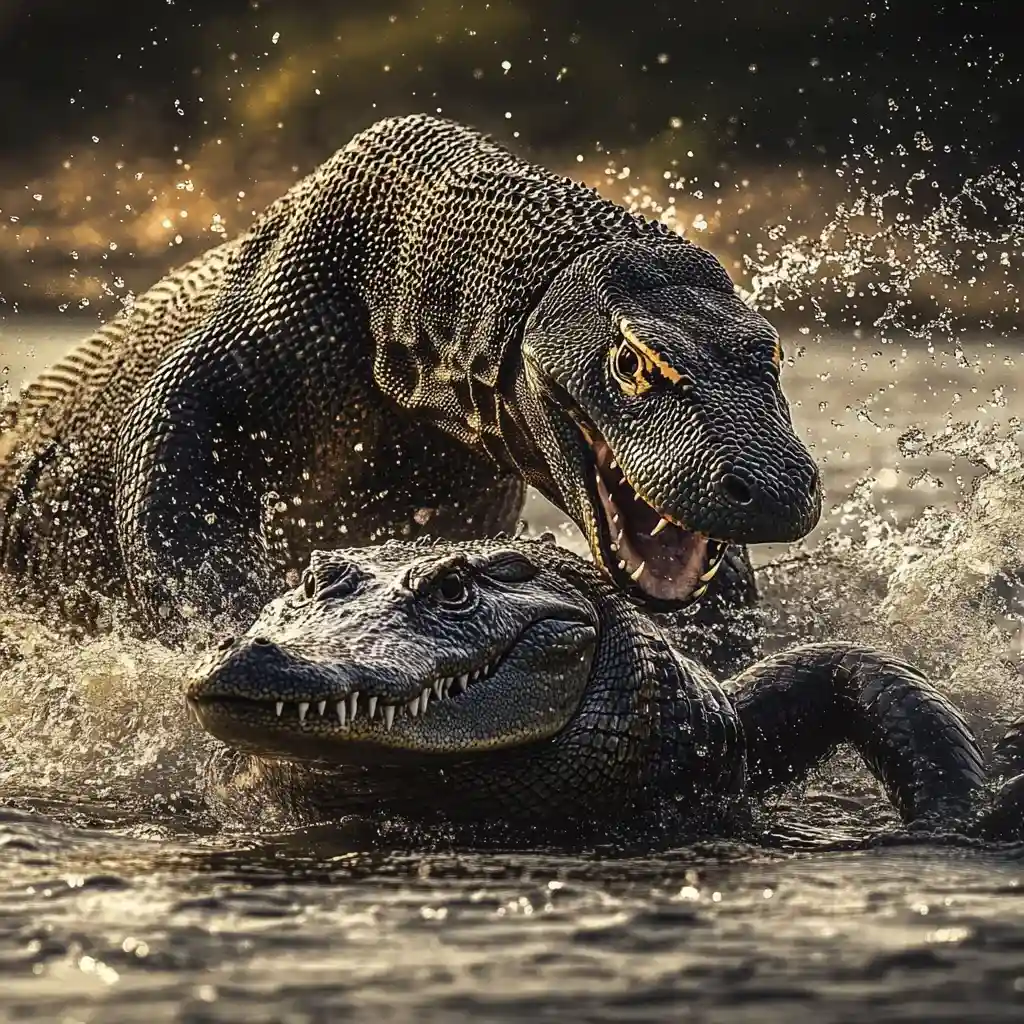
Illustrazione: drago di Komodo coccodrillo – Komodo Luxury
Se un coccodrillo del drago di Komodo dovesse scontrarsi con un coccodrillo marino (Saltwater Crocodile), quest’ultimo avrebbe probabilmente la meglio. Le sue dimensioni imponenti, la forza bruta e il morso in grado di frantumare le ossa gli conferiscono un vantaggio significativo in uno scontro diretto. Tuttavia, il coccodrillo del drago di Komodo non è privo di armi letali, in particolare il suo morso velenoso, che potrebbe alla fine rivelarsi fatale; ma in uno scontro prolungato, il coccodrillo marino vincerebbe probabilmente prima che il veleno faccia effetto. Se siete interessati a vedere l’ drago di Komodo o dal vivo nel suo habitat naturale, visitate Isola di Komodo e godetevi un’esperienza straordinaria grazie al pacchetto turistico “Isola di Komodo ” offerto da Komodo Luxury. È un’occasione rara per osservare uno dei predatori più iconici del mondo nel suo habitat naturale. Molti viaggiatori scelgono un Labuan Bajo noleggio yacht per godersi un viaggio più tranquillo e confortevole, che vi permetterà di esplorare l’ Parco Nazionale di Komodo e osservando la fauna selvatica da una distanza di sicurezza. Non lasciate che i posti si esauriscano! prenota ora!

Se questo incontro ti ha incuriosito riguardo all’animale vero e proprio, puoi osservare i varani di Komodo ( Draghi di Komodo ) nel loro habitat naturale durante un’escursione in barca su Parco Nazionale di Komodo. Komodo Luxury organizza tutto l’anno partenze condivise e private phinisi da Labuan Bajo ; il tour condiviso di Komodo tour in barca è il punto di accesso più semplice.
Domani mattina sarà possibile visitare solo una di queste due località a piedi. L’escursione “Dragon trekking ” è inclusa in tutti i pacchetti “Vela Komodo ”; i subacquei possono aggiungere un’immersione nella barriera corallina senza coccodrilli a Batu Bolong con un crociera immersioni itinerario.
A cura del team di spedizione dell’ Komodo Luxury — un tour operator autorizzato Parco Nazionale di Komodo che dal 2015 organizza spedizioni giornaliere con partenza da Labuan Bajo . Flotta, tariffe e itinerari: Komodo noleggio yacht.
Sei curioso di sapere come se la cava il drago al di là di questo confronto? La pagina definitiva “ drago di Komodo ” raccoglie in un unico posto tutti i confronti, i dati e le osservazioni sul campo.