





Last updated: September 2026 · Prices & availability verified for the 2026/2027 season
Last updated: September 09, 2026
This is the story our guides tell on the crossing from Labuan Bajo, the context behind the ranger-led trek that anchors every itinerary we sail, from 3D2N open trips to private expeditions through Komodo National Park. We’ve been introducing travelers to these living fossils since 2015, and the backstory is stranger than most guests expect: the Komodo dragon, or Varanus komodoensis, is the largest living lizard species on Earth, and most visitors get its evolutionary origin completely wrong. Here’s the full story: where it actually came from, when the West first found out about it, and why it survives nowhere else on the planet.
Punti chiave
- The Komodo dragon evolved in Australia roughly 4 million years ago, not on the Indonesian islands where it lives today, fossils place it in Flores by around 1.4 million years ago.
- It’s the largest living lizard, reaching up to 3 metres and 150 kg, and an apex predator with a venomous, bacteria-laden bite.
- It shares a common ancestor with Megalania, an extinct 5+ metre Australian giant monitor, but the two are distinct species, not the same lineage.
- Its closest living relative is the lace monitor of eastern Australia.
- It survives today only because Wallacea’s isolation shielded it from the extinctions that wiped out its Australian relatives, with the Padar Island population itself going extinct in the 20th century.
- Western science only documented the species in 1910–1912, though the Manggarai people of Flores had long known and revered it as the ora.
- It’s currently listed as Endangered by the IUCN, protected primarily within Komodo National Park, a UNESCO World Heritage Site since 1991.
- It is not related to dinosaurs, the resemblance is convergent evolution, not shared ancestry.
drago di Komodo Storia: quando è stato scoperto per la prima volta?
Although the Komodo dragon has lived for thousands of years in the Lesser Sunda Islands, it wasn’t until the early 20th century that the outside world learned about it. Rumours of a “land crocodile” (buaya darat) in the Lesser Sundas reached Dutch colonial officials for years before Lieutenant van Steyn van Hensbroek sailed to Komodo in 1910, following reports from local fishermen who’d long known the animal as the “ora” in the Manggarai language.
Not believing the stories at first, van Hensbroek went to see for himself. He secured a specimen and sent its skin and photographs to Pieter Antonie Ouwens, director of the zoological museum at Buitenzorg, today’s Bogor. Ouwens published the formal scientific description in 1912, naming it Varanus komodoensis, and within three years the colonial government had granted the species legal protection, an unusually fast conservation response for the era. Since then, the Komodo dragon has drawn global attention and was even dubbed “the last dinosaur” by the media, a nickname that, as you’ll see below, is more myth than fact.
Tassonomia e nome scientifico: dove si colloca l’ drago di Komodo ?
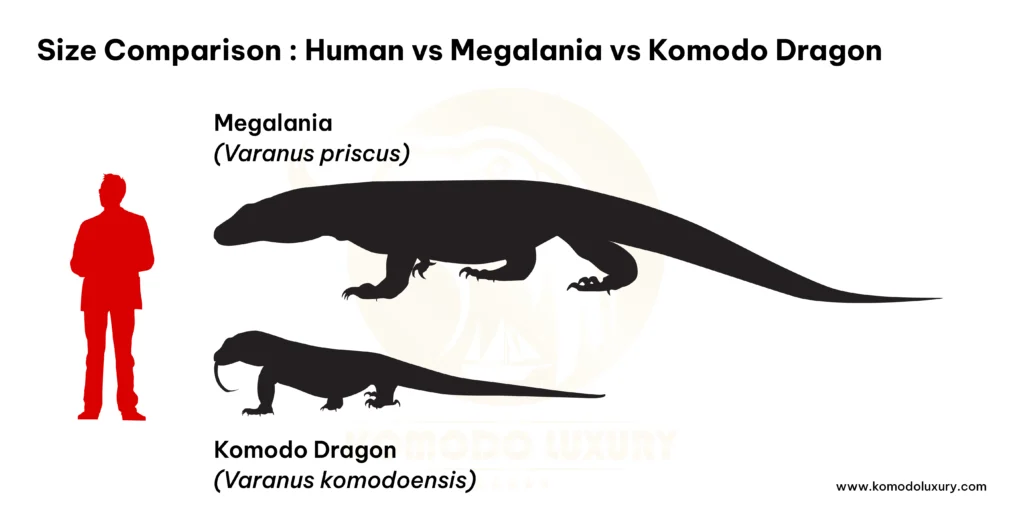
L'drago di Komodo e appartiene alla famiglia dei Varanidae (varani), con parenti stretti quali i varani asiatici e australiani. Il suo nome scientifico, Varanus komodoensis, fu coniato da Ouwens in onore di Isola di Komodo. Questi rettili presentano teste larghe e piatte, muso arrotondato e code muscolose, caratteristiche che contribuiscono al loro aspetto distintivo. Tuttavia, la sua tassonomia è stata in passato oggetto di dibattito.
Negli anni ’20, gli scienziati ritenevano che l’ drago di Komodo e fosse una sottospecie della lucertola gigante australiana estinta Megalania prisca, scomparsa circa 50.000 anni fa. Tuttavia, le analisi del DNA hanno dimostrato che le due specie sono diverse, nonostante condividano un antenato comune. Oggi, l’ drago di Komodo è riconosciuta come una specie unica che si è evoluta separatamente in Indonesia. In quanto predatori al vertice della catena alimentare, questi animali dominano i propri ecosistemi, svolgendo un ruolo cruciale nel mantenimento dell’equilibrio dei loro habitat. Inoltre, la saliva dell’ drago di Komodo contiene batteri potenzialmente nocivi e proprietà forse velenose, che svolgono un ruolo cruciale nelle sue strategie di caccia e predazione.
Megalania: Ancient Cousin, Not Ancestor
Australia’s Pleistocene savannas were once ruled by Varanus priscus, Megalania, a monitor lizard estimated at over 5 metres long, the largest terrestrial lizard known to science. Early 20th-century scientists actually thought the Komodo dragon was a subspecies of Megalania, but DNA analysis has since proven the two are separate species that share a common ancestor rather than a direct lineage.
Komodo dragons belong to that same giant-monitor radiation, close kin, not descendants. When Australia’s megafauna collapsed in the late Pleistocene, Megalania went with it. The smaller, island-isolated Komodo dragon survived, which is why Komodo National Park is sometimes called a living window into Ice Age Australia, the one place where the age of giant monitors never actually ended.
Leggi di Più: drago di Komodo vs Megalania: a confronto due lucertole giganti della storia
Storia evolutiva: da dove proviene l’ drago di Komodo , secondo i reperti fossili riportati su * drago di Komodo*?
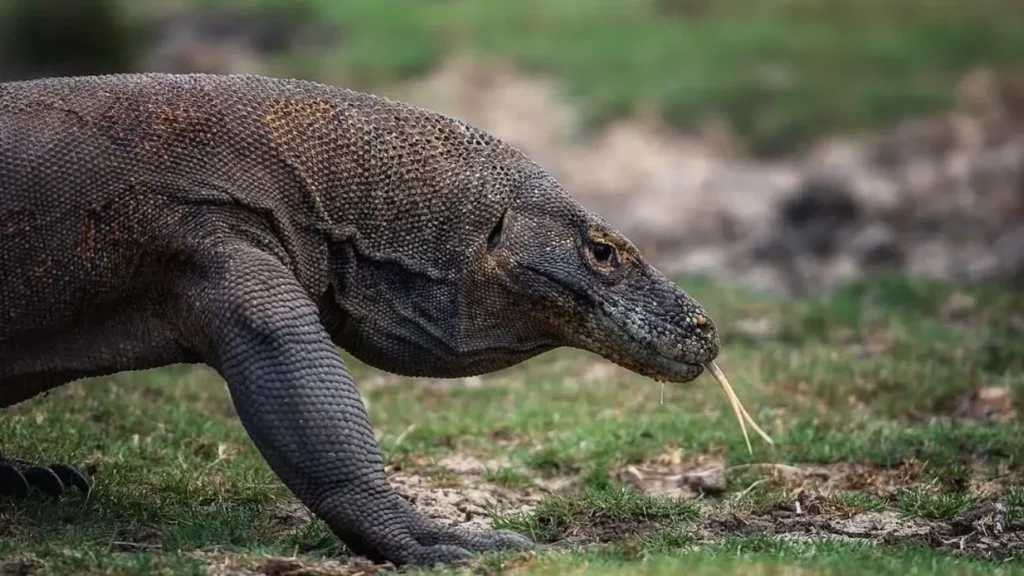
Here’s the part most people get backwards: the Komodo dragon is often assumed to be a purely Indonesian product, a modest monitor that grew huge in isolation on its islands. The fossil record tells a different story.
Fossil evidence published in 2009 by Scott Hocknull’s team, drawing on Queensland Museum material, shows the species evolved in Australia around four million years ago, as part of an entire radiation of giant monitor lizards, not a lone island oddity. Excavations in eastern Australia produced Varanus komodoensis fossils millions of years old, proving the species reached full size on a continent before it ever saw Flores. That finding quietly undermines the tidy textbook tale of “island gigantism”: the Queensland fossils indicate dragons were already dragon-sized in Australia, so the islands preserved their bulk rather than produced it.
From there, ancestors dispersed westward along the volcanic chain of the Lesser Sunda Islands using land bridges formed by falling sea levels. Fossils place dragons on Flores by roughly 1.4 million years ago, the lineage was established in Wallacea long before recorded history. On Flores, Rinca, and the surrounding islands, they evolved into apex predators, their size shaped by available prey, from small lizards to ancient pygmy elephants (Stegodon), with modern-day Javan rusa deer now their main food source.
Interestingly, a 2021 study by the Australian National University complicated the picture further, finding that the modern Komodo dragon population as we know it today actually diversified within Indonesia rather than being a simple direct transplant from Australia, opening ongoing scientific debate about exactly how the species became the dominant predator on these islands. Today’s dragons are best described as a relict giant: the last surviving member of an Australian dynasty, holding out on a handful of savanna islands.
The Evolutionary Timeline
| When | Event |
| ~4 million years ago | Komodo dragon lineage present in Australia (Hocknull et al., 2009; Queensland fossils, ~3.8–4 Ma) |
| ~1.4 million years ago | Fossils attributable to Komodo dragons appear on Flores, the lineage established in Wallacea |
| ~50,000–40,000 years ago | Giant relatives, including Megalania, vanish from Australia; the Komodo dragon becomes the last giant varanid |
| 1910 | Lieutenant van Steyn van Hensbroek investigates “land crocodile” reports on Komodo |
| 1912 | P.A. Ouwens formally describes Varanus komodoensis at Buitenzorg (Bogor) |
| 1915 | Dutch colonial authorities grant the species legal protection |
| 1980 / 1991 | Komodo National Park established; inscribed as UNESCO World Heritage Site |
Leggi di Più: drago di Komodo vive in Australia? Scopri la verità ed esplora l'Isola di Komodo!
Why Did Komodo Dragons Survive Only in Indonesia?
If the species evolved in Australia, why does it only exist in Indonesia today? The consensus explanation is isolation plus extinction elsewhere.
During Pleistocene ice ages, sea levels dropped by more than a hundred metres, narrowing the straits of Wallacea enough for a strong-swimming monitor lizard to island-hop westward along the volcanic chain. Crucially, Wallacea’s deep channels never closed completely, which kept Asian big cats, wild dogs, and other mainland carnivores out. When seas rose again, the populations on Flores and its satellite islands were cut off, and cut off, too, from the mainland catastrophes that later wiped out their Australian relatives. On their dry savanna islands, dragons kept what mattered: abundant deer and pig prey, no competing large carnivores, and (for most of history) no human hunting pressure heavy enough to erase them.
That balance is still dynamic, not static: the dragon population on Padar Island went extinct in the twentieth century after its prey base collapsed, which is part of why the species is now listed as Endangered on the IUCN Red List rather than the “Vulnerable” rating it held in earlier decades.
L'drago di Komodo e è un parente dei dinosauri?
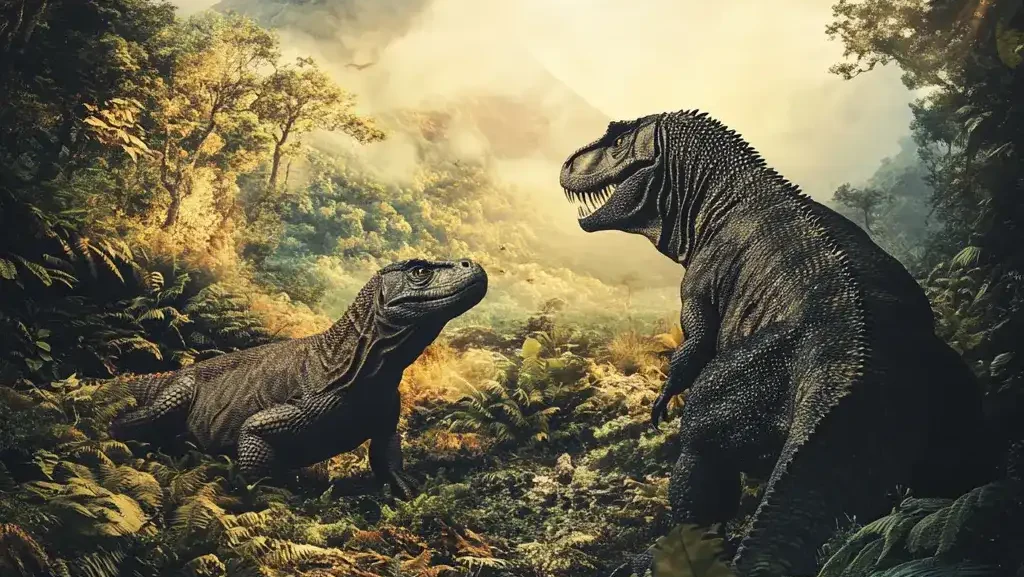
Sebbene venga spesso definito un “dinosauro vivente”, l’ drago di Komodo o non è direttamente imparentato con dinosauri come il T-Rex o il Brachiosauro. I dinosauri si estinsero 66 milioni di anni fa, mentre la famiglia dei Varanidi è comparsa solo circa 40 milioni di anni fa.
Tuttavia, esistono alcune somiglianze adattative tra l’ Draghi di Komodo e e i dinosauri. Un esempio è il loro morso letale, che contiene batteri nocivi — simile al concetto di veleno nei dinosauri. Questo fenomeno è noto come evoluzione convergente, in cui due specie non imparentate sviluppano tratti simili a causa di pressioni ambientali analoghe. Anche il veleno dell’ Draghi di Komodo presenta somiglianze con quello dei serpenti, poiché entrambi utilizzano il veleno come meccanismo di caccia o di difesa contro le prede o le minacce. Sebbene l’ drago di Komodo e non sia un vero e proprio dinosauro, ha sviluppato alcune caratteristiche di sopravvivenza che ricordano quelle degli antichi predatori.
Quali sono i miti e il significato culturale dell’ drago di Komodo?
For the Manggarai people of Flores, the Komodo dragon is far more than a giant lizard, it’s a mystical being intertwined with human life and spirituality. In the Komodo village telling, the Putri Naga, the Dragon Princess, bore twins: a human son, Si Gerong, and a dragon daughter, Orah. Raised apart, the two met as hunters chasing the same deer; when Si Gerong raised his spear against her, the princess appeared between them and revealed their kinship. To this day, islanders call the animals ora and treat them as kin, a living reason the community protected the species for generations before any statute did.
That belief in twin-sibling kinship has encouraged a genuine coexistence: locals traditionally avoid hunting the dragons, and in turn the dragons rarely pose a threat to people. The giant lizard is also seen as a guardian of nature, capable of sensing bad intentions and maintaining the balance of the ecosystem. You can go deeper into this tradition in the legend of the Komodo Dragon and in the Ora legend, which preserves the older, community-held version of the same story.
Why are Komodo dragons important? Ecologically, they’re the apex predator regulating deer, boar, and buffalo populations across the park. Scientifically, they’re a living window into large-varanid evolution stretching back to Australia. Culturally, they’re kin in the origin story of the island’s own people. Three reasons, one species, anchoring an entire UNESCO World Heritage Site.
Quali sono 5 curiosità sui Draghi di Komodo?
While the Komodo dragon’s evolutionary history and cultural legends reveal its remarkable past and significance, there are also some fascinating biological and behavioral traits that make this giant lizard truly unique. Here are 5 interesting Komodo dragon facts that highlight their extraordinary adaptations and survival skills:
- La lucertola più grande del mondo – Draghi di Komodo adulti Draghi di Komodo raggiungere i 3 metri di lunghezza e pesare fino a 150 kg. Le loro dimensioni enormi li rendono le lucertole più grandi esistenti al mondo e immediatamente riconoscibili.
- Predatore al vertice della catena alimentare – Draghi di Komodo il vertice della loro catena alimentare, cacciando cervi, rettili più piccoli e, occasionalmente, nutrendosi di carogne. I loro arti possenti, gli artigli affilati e i sensi acuti li rendono cacciatori estremamente efficaci in natura.
- Morso velenoso – Queste lucertole possiedono ghiandole velenifere che rilasciano tossine e la loro saliva contiene batteri nocivi. Questa combinazione le aiuta a indebolire o immobilizzare la preda, rendendo la caccia più efficace.
- Partenogenesi – Le femmine Draghi di Komodo riprodursi asessualmente senza l'intervento di un maschio, generando prole maschile vitale. Questa rara capacità consente alle popolazioni di sopravvivere anche in ambienti isolati.
- Exceptional Swimming Ability – Komodo dragons can swim surprisingly well, allowing them to move between islands in their habitat. This skill helps them expand their territory and access new hunting grounds across the Indonesian archipelago.
Queste curiosità su drago di Komodo offrono uno spaccato della loro straordinaria biologia e delle loro strategie di sopravvivenza, mettendo in luce il motivo per cui sono considerati tra i rettili più straordinari del pianeta.
Leggi di Più: drago di Komodo Miti contro realtà: non crederete a cosaè vero in realtà!
drago di Komodo Habitat: dove si trovano le popolazioni di “ drago di Komodo ”?
Draghi di Komodo vivono su cinque isole dell’ Indonesia: Komodo, Rinca, Flores, Gili Motang, Nusa Kode e Gili Dasami. Prediligono la savana arida, la foresta tropicale e le coste rocciose. Sebbene prosperino nelle foreste tropicali, su queste isole si possono trovare anche nelle praterie e negli habitat di boscaglia. Le temperature elevate della savana li aiutano a cacciare, poiché in questi ambienti fanno affidamento su brevi scatti di velocità per tendere agguati alle loro prede vive.
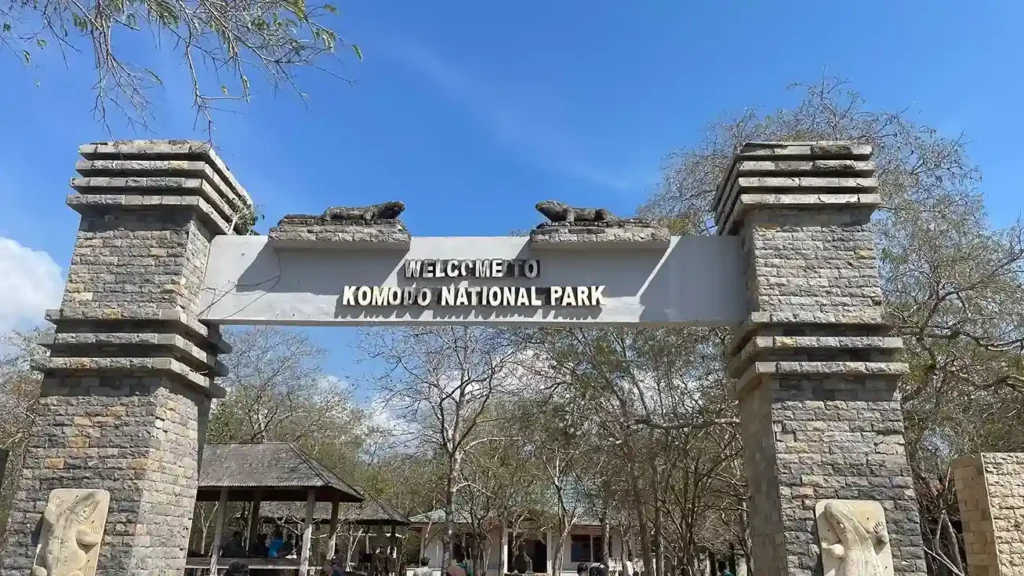
Purtroppo, il loro habitat naturale è minacciato dai cambiamenti climatici e dalle attività umane. L’innalzamento del livello del mare rappresenta una grave minaccia per l’habitat dell’ Draghi di Komodo, causando un’ulteriore frammentazione e isolamento delle sue popolazioni. Tuttavia, gli sforzi volti a proteggerle attraverso Parco Nazionale di Komodo, sito patrimonio mondiale dell’UNESCO, sono riusciti a preservare con successo oltre l’80% della popolazione mondiale di drago di Komodo . Questo parco non è solo un rifugio per l’ drago di Komodo, ma anche per altre specie rare e in via di estinzione.
Leggi di Più: drago di Komodo Habitat: dove vivono e come avvistarli
Stato di conservazione: Tutela della drago di Komodo
The Komodo dragon is currently listed as Endangered on the IUCN Red List, an uplisting from its earlier “Vulnerable” status that reflects continued habitat loss, poaching pressure, and fragmentation across its already-restricted range. The Indonesian government established Komodo National Park in 1980, a UNESCO World Heritage Site now sheltering over 1,700 dragons, with ongoing habitat restoration, research, and education programs, and international trade in the species is prohibited under IUCN protections. One added genetic wrinkle: because parthenogenesis produces only male offspring, isolated populations can face female shortages and elevated inbreeding risk, adding another layer to long-term survival planning.
Leggi di Più: La storia del Parco Nazionale di Komodo: una meraviglia naturale e patrimonio dell'UNESCO
Dove è possibile consultare in tutta sicurezza un medico specializzato in medicina del sonno ( drago di Komodo ) a Parco Nazionale di Komodo?
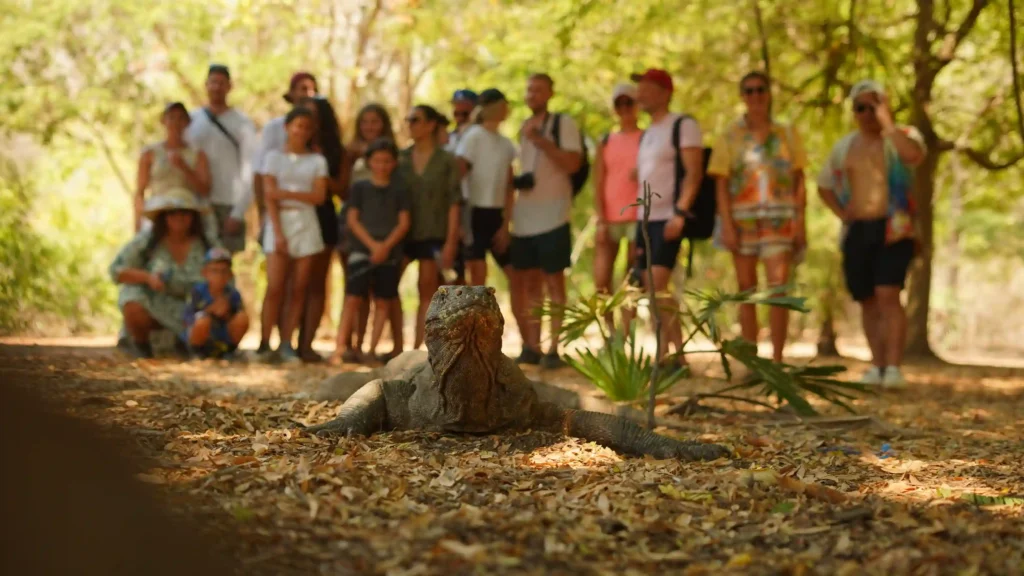
Sebbene l'habitat dell'drago di Komodosi estenda su diverse isole, i luoghi migliori per osservarli in tutta sicurezza sono l'isola di Komodo e Isola di Rinca. Entrambe le isole fanno parte del Parco Nazionale di Komodo, un’area fortemente protetta. Qui, i visitatori sono accompagnati da guide locali esperte nel comportamento dell’ Draghi di Komodo , che garantiscono un’osservazione in tutta sicurezza.
Grazie alle rigide norme in vigore, i visitatori possono avvicinarsi ai draghi senza temere di essere attaccati, purché rispettino le regole. Queste due isole ospitano una popolazione abbastanza numerosa di Draghi di Komodo, quindi le probabilità di incontrarne uno sono molto elevate. Potrete inoltre ammirare paesaggi naturali mozzafiato, tra cui splendide spiagge e acque cristalline.
Leggi di Più: Isola di Komodo Isola di Rinca: quale è la migliore per vedere Draghi di Komodo?
Goditi un'avventura in tutta sicurezza alla scoperta dell'drago di Komodo e con Komodo Luxury
For an adventure that’s not only exciting but also comfortable, Komodo Luxury offers complete tour packages to Komodo Island. Our tours include luxurious accommodations, experienced guides, and a strong focus on safety, allowing you to explore Komodo National Park with confidence.
One of the most iconic ways to experience this journey is through a luxury phinisi Komodo, where you can sail across the islands on a beautifully crafted traditional vessel combined with modern luxury amenities. This experience allows you to enjoy curated island routes, personalized service, and breathtaking ocean views, giving you a seamless way to explore the habitat of Komodo dragons while traveling in comfort and style.
L’ drago di Komodo è una testimonianza vivente delle meraviglie dell’evoluzione in Indonesia. Dalle antiche migrazioni e dagli adattamenti unici alle affascinanti storie culturali, l’ drago di Komodo merita di essere considerato un tesoro nazionale. Ammirare questo “drago” di persona non è solo un’esperienza incredibile, ma anche una preziosa lezione sul potere della natura e sulla biodiversità di Indonesia.
If you want to witness this once-in-a-lifetime experience, make sure to choose a trusted tour that combines safety, comfort, and education. Don’t miss out on the chance to see history unfold right in front of you. Book your Komodo Island tour today and witness the living history of the Komodo dragon!

Domande frequenti sulla storia e le attrazioni turistiche dell'drago di Komodo
Four million years of history are still walking around Komodo and Rinca Island today. Komodo Luxury brings guests face-to-face with them on sailing trips from Labuan Bajo, see the Komodo sailing trip itineraries for 2D1N and 3D2N routes.
Rivivi questa storia proprio dove è avvenuta: i nostri itinerari combinano il trekking di Loh Liang con Padar e l’ Spiaggia Rosa e in un unico percorso ad anello — dai un’occhiata al Komodo Pacchetti Viaggio oppure pianifica un itinerario più tranquillo su un crociera immersioni.
By the Komodo Luxury Expedition Team, a licensed Komodo National Park tour operator running daily expeditions from Labuan Bajo since 2015. Fleet, rates and itineraries: Komodo yacht charter.