




Last updated: September 2026 · Prices & availability verified for the 2026/2027 season
Last updated: September 04, 2026
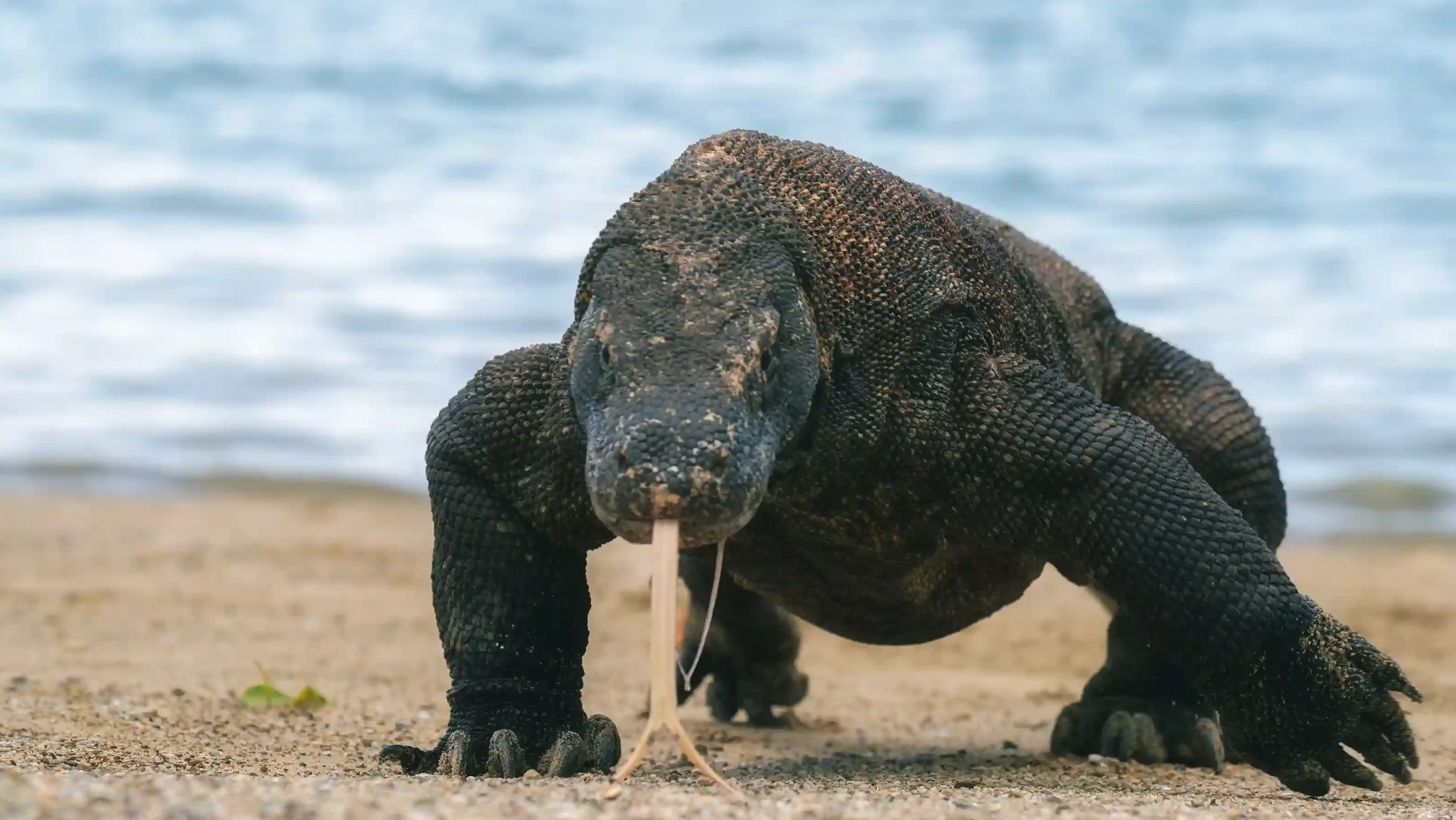
Are Komodo dragons, those giant predators from Indonesia, venomous? The short answer is yes, and it took modern science nearly three decades to prove it. Hidden in their lower jaw are true venom glands, delivering compounds that stop blood from clotting and drop prey’s blood pressure. For wildlife enthusiasts, understanding the real science (not the old bacteria myth) is essential before planning a trip to see them in their natural habitat.
Having worked alongside park rangers on every trek since 2015, the Komodo Luxury team has watched hundreds of safe dragon encounters, and the science behind that famous bite is worth understanding before you go. Let’s explore some intriguing facts here!
Punti chiave
- Komodo dragons have around 60 curved, serrated, iron-reinforced teeth and venom that prevents blood clotting, lowers blood pressure, and can induce shock.
- The venom was scientifically confirmed in 2009 by Fry et al. in Proceedings of the National Academy of Sciences, which identified anticoagulant and hypotension-inducing toxins in Komodo dragon venom.
- The long-standing theory that bacteria were the main cause of dangerous Komodo dragon bites was proposed in 1981 but later disproven, with a 2013 microbiology study finding that their mouths were no dirtier than those of other carnivores.
- Komodo dragons can sprint at around 18–20 km/h, although they can only maintain this speed over short distances.
- Human bites are extremely rare, with Komodo National Park records documenting 36 reported bite incidents between 1974 and 2023, including five fatalities.
- Visitors can safely see Komodo dragons through mandatory ranger-escorted trekking inside Komodo National Park, where certified rangers follow strict distance and safety protocols.
Draghi di Komodo i sono pericolosi per l'uomo?
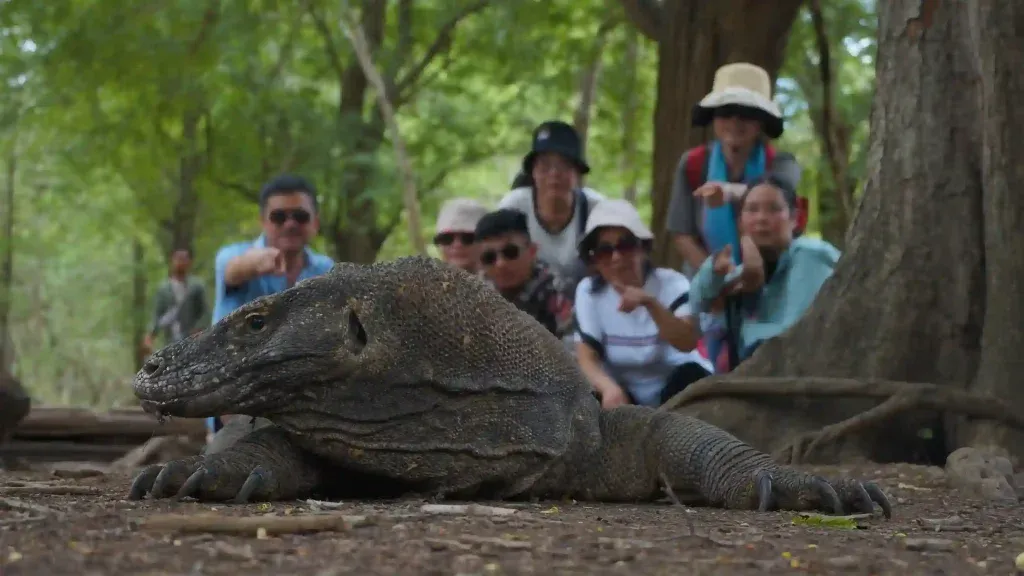
While Komodo dragons are venomous, attacks on humans are extremely rare. According to data from Komodo National Park, between 1974 and 2023 there have been only 36 recorded bites, resulting in 5 fatalities. Typically, Komodo dragons only attack when they feel threatened or when their territory or food source is disturbed.
Documented bites over the decades have overwhelmingly involved local villagers, rangers handling animals, or people who broke distance rules, not tourists on guided treks. Dragons do not see humans as prey; nearly every incident traces back to surprise, food smells, or someone getting far too close for a photo. Millions of visitors have walked Komodo and Rinca with rangers without incident.
While encounters are generally safe when guided properly, the experience becomes far more enjoyable when everything is well-organized. Joining a professionally arranged Komodo sailing trip allows you to explore the islands with expert guides, ensuring both safety and a deeper understanding of these fascinating creatures.
Leggi di Più: Un “ drago di Komodo ” può divorare un essere umano intero? La verità su questo potente predatore
Are Komodo Dragons Venomous, or Is It Bacteria?
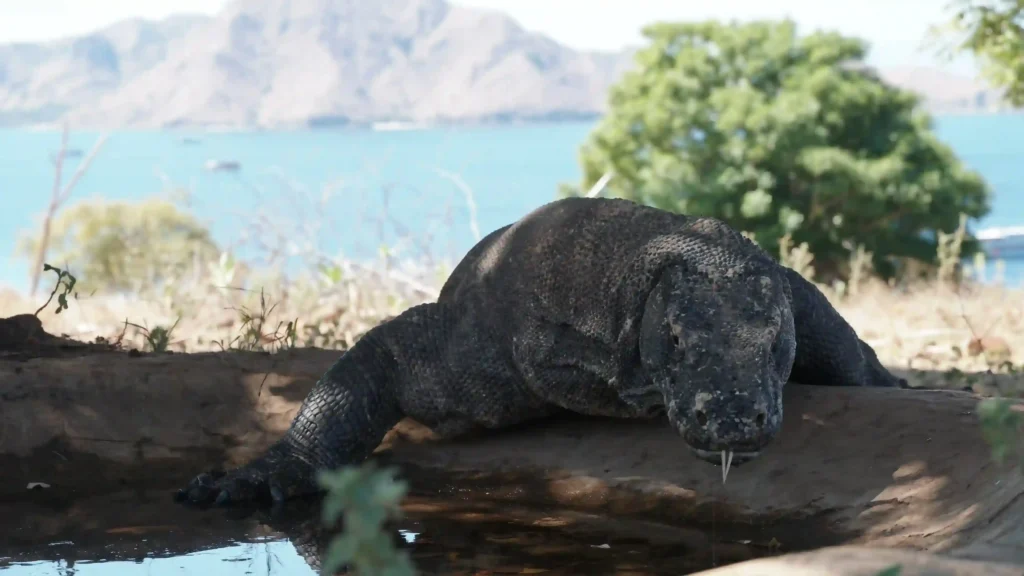
For nearly three decades, the accepted explanation came from biologist Walter Auffenberg’s 1981 field monograph: dragons supposedly harbored virulent bacteria in their saliva, and prey that escaped a bite would later die of sepsis. It was a memorable story, and it spread through documentaries and guidebooks worldwide.
Then came a landmark study in 2009. Venom researcher Dr. Bryan Fry, of the University of Queensland, led a team that ran a surgically excised gland from a terminally ill zoo dragon through MRI imaging and mass spectrometry. The results, published in the Proceedings of the National Academy of Sciences, showed a complex, multi-compartment venom gland, among the most structurally sophisticated ever described in a reptile, with ducts opening between the teeth of the lower jaw. The venom contained proteins that inhibit blood clotting, dilate blood vessels, and induce hypotension and shock.
The bacteria theory took its final blow in 2013, when a team including infectious-disease specialist Dr. Ellie Goldstein sampled the mouths of wild and captive dragons and found ordinary reptilian oral flora, nothing exceptionally septic. The scientific consensus today is clear: the Komodo dragon is a genuinely venomous lizard, the largest in the world.
Cosa contiene drago di Komodo ?
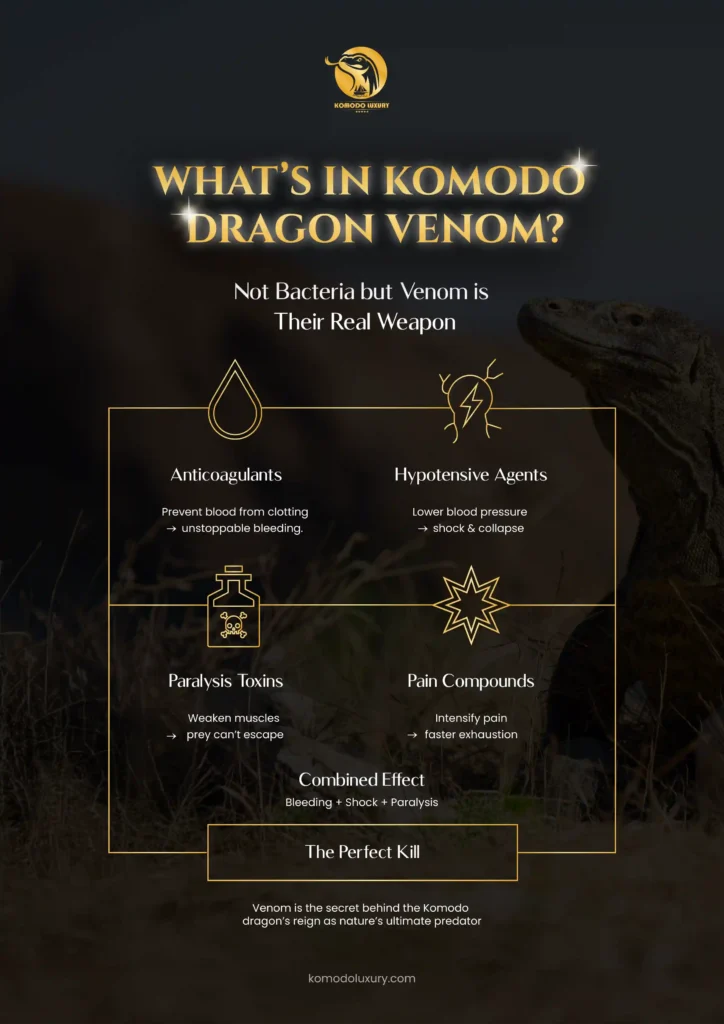
Komodo dragons possess a unique and powerful venom that plays a crucial role in their hunting and feeding strategies. If you’ve ever wondered what does komodo dragon venom do, the answer lies in its complex blend of proteins and enzymes designed to weaken prey rapidly and efficiently. Their venom contains potent anticoagulants that prevent blood from clotting, causing fast and continuous blood loss. It also triggers a sudden drop in blood pressure, making it difficult for the prey to escape or fight back. The combined effects leave the victim severely weakened, allowing the Komodo dragon to overpower it with ease.
One of the most fascinating aspects of Komodo dragon venom is how its toxins and enzymes work together. These proteins act synergistically to accelerate blood loss and induce shock. The anticoagulants keep the blood flowing, leading to intense hemorrhaging, while the enzymes help the toxins spread quickly throughout the prey’s body. This explains what does komodo dragon venom do during an attack, it disables even large animals like deer and water buffalo, making Komodo dragons incredibly effective apex predators in their natural environment.
In che modo i " Draghi di Komodo " cacciano utilizzando il loro veleno?
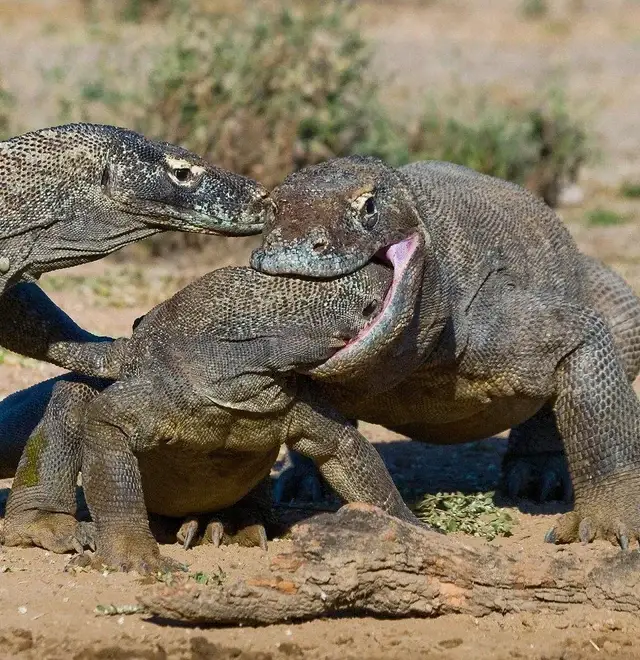
The hunting strategy of Komodo dragons is unique. Rather than killing their prey instantly, they bite and release it, allowing the venom to do the work. As it spreads, the prey becomes weaker, eventually collapsing due to blood loss or shock, a process that can take several hours or even days. This patient, delayed-kill style is exactly what field researchers observed decades before the venom itself was confirmed (see above): animals that escaped an initial bite often collapsed far from where they were attacked.
Once the prey is too weak to fight back, the Komodo moves in to feed. With sharp teeth and powerful jaws, they can devour up to 80% of their body weight in a single meal. Deer, wild boars, and even water buffalo fall victim to their venomous bite.
Why Are Komodo Dragon Teeth So Effective?
A dragon’s skull generates a relatively weak bite for its size, but its teeth make up for it. Each of the ~60 teeth is curved backward and finely serrated like a steak knife, a shape paleontologists compare directly to carnivorous theropod dinosaurs. Teeth are shed and replaced continually throughout the dragon’s life.
In 2024, a team led by Dr. Aaron LeBlanc at King’s College London added a remarkable detail: the serrations and tips of Komodo teeth are coated with a concentrated layer of iron, an adaptation that keeps the cutting edges sharp. It’s one more piece of evidence that this animal is a purpose-built predator, not a scavenger that lucked into a septic bite.
Cosa succede dopo il morso di un “ drago di Komodo ”?
Bleeding and shock from the venom (described above) are only part of the picture, there’s also a timeline to how prey actually dies. In addition to venom, the Komodo dragon’s saliva carries ordinary bacteria that infect the open wound, adding a secondary complication on top of the venom’s effects. After a few hours, depending on the severity of the bite, the prey typically succumbs to the combined effects of shock, blood loss, and infection. This efficient system of predation is what makes the Komodo dragon one of the most formidable predators in its environment.
For humans, the same combination applies, which is why a bite is treated as a serious medical event, not just a laceration. There is no specific antivenom; treatment focuses on controlling bleeding, managing shock, and preventing infection with antibiotics. That is exactly why the national park never allows unescorted trekking.
drago di Komodo Venom contro Snake Venom
Draghi di Komodo Sono velenosi, ma come si confronta il loro veleno con quello dei serpenti? Sebbene entrambe le creature utilizzino il veleno per sopraffare le prede, esistono differenze fondamentali. Il veleno dei drago di Komodo contiene proteine che impediscono la coagulazione del sangue e provocano una rapida perdita ematica nelle prede, proprio come alcuni dei serpenti più velenosi al mondo, ad esempio il taipan dell’entroterra. Tuttavia, a differenza dei serpenti, i Draghi di Komodo possiedono anche potenti proprietà antibatteriche nella saliva, che consentono loro di nutrirsi di carne in decomposizione in tutta sicurezza. Ciò rende il veleno del varano di Komodo sia letale che utile per la loro sopravvivenza come predatori al vertice della catena alimentare in natura.
Read more: Komodo Dragon Venom vs Snake Venom: Which is More Dangerous?
Can you see Komodo dragons up close safely?
Yes, with rangers, on the official trails of Komodo and Rinca Islands, it is one of the world’s great wildlife encounters. Every Komodo Luxury itinerary includes ranger-led dragon trekking, whether you join a shared open trip, book a private trip for your own group, or explore the islands on a day-format Komodo boat tour from Labuan Bajo. Our crews brief every guest on dragon etiquette before landing, and our guides coordinate directly with park rangers on trail conditions and recent dragon activity.
Trips are operated end-to-end by Komodo Luxury, a registered Indonesian PT under Juara Holding Group Limited with 1,500+ verified guest reviews (4.9/5 across Google and TripAdvisor).
How Do Rangers Keep Visitors Safe?
Seeing a Komodo dragon in its natural habitat is both thrilling and awe-inspiring, and with the right preparation and expert guidance, it’s also safe. Our guides walk these trails with national park rangers almost every day of the season, and the protocol is refreshingly simple and disciplined:
- Ranger escort, always. Every trekking group is led by a certified ranger carrying the iconic two-meter forked staff, used to gently pin a curious dragon’s neck at a safe angle if one approaches.
- Minimum distance. You’ll keep roughly 5 meters from any dragon, more from nesting females, who are notably more defensive.
- Stay grouped, move calmly. No running, no sudden movements, no wandering off marked trails. Dragons read erratic movement as prey behavior.
- No food on the trail. Dragons can smell carrion from kilometers away with their forked tongues; snacks stay on the boat.
- Tell your ranger about open wounds. If you have a bleeding cut, you’ll be asked to inform your ranger so extra spacing can be arranged, a precaution built on the dragon’s extraordinary sense of smell.
- Photos on the ranger’s terms. The famous “perspective shots” happen only where and when the ranger says the angle is safe.
In our experience, guests are consistently surprised by how calm the encounters feel. Dragons mostly conserve energy in the shade; the drama is in their presence, not their behavior. The first and most crucial step to a secure experience is booking a Komodo Island Tour with a reputable, licensed operator, well-planned routes, certified rangers, and enforced protocols are what keep the excellent safety record intact.
Scopri “ Draghi di Komodo ” con il nostro tour “ drago di Komodo ”
Sebbene gli Draghi di Komodo abbiano effettivamente del veleno nella saliva, questo dato scientifico non dovrebbe dissuadervi dal vivere l’esperienza di osservare uno dei rettili più affascinanti della natura. Con una guida adeguata, chiare regole di sicurezza e un approccio rispettoso nei confronti del loro habitat, il rischio che si verifichi un incidente è minimo.
Se non vedete l’ora di ammirare di persona questi giganti mozzafiato, senza rinunciare al comfort né alla tranquillità, la soluzione che fa per voi èl’tour di gruppo Komodo di Komodo Luxury. Immergetevi nella straordinaria fauna selvatica di Indonesia, scoprite le meraviglie diParco Nazionale di Komodo e create ricordi indimenticabili in una delle destinazioni più esotiche del mondo.
Per i viaggiatori alla ricerca di un modo più esclusivo e personalizzato di esplorare Parco Nazionale di Komodo, scegliere un’esperienza di lusso a Komodo noleggio yacht offre non solo comfort, ma anche privacy e flessibilità. Con un equipaggio privato e un programma su misura itinerario, potrete godervi incontri con la fauna selvatica, tra cui avvistamenti di drago di Komodo , in un ambiente più rilassato e premium .
Sei pronto per un’esperienza indimenticabile all’ Tour Komodo?Prenota oggi stesso il tuo tour con Komodo Luxury oggi stesso e lascia che ci occupiamo noi di ogni dettaglio del tuo viaggio irripetibile!

FAQs about Komodo Dragon Venom
By the Komodo Luxury Expedition Team, a licensed Komodo National Park tour operator running daily expeditions from Labuan Bajo since 2015. Fleet, rates and itineraries: Komodo yacht charter.