

Berenang Bersama Raksasa


| Apa itu | Karang Makassar — a kilometers-long shallow reef bank in the channel east of Komodo Island |
|---|---|
| Depth | Rubble-and-sand plateau in roughly 5–15 m of water |
| Akses | ±1.5 hr by speedboat from Labuan Bajo; minutes from Taka Makassar |
| Musim | Sightings year-round; largest feeding aggregations December–March |
| Format | Drift by snorkel or scuba; guides read the tide and set the line |
| Full positions | See our Komodo National Park map |
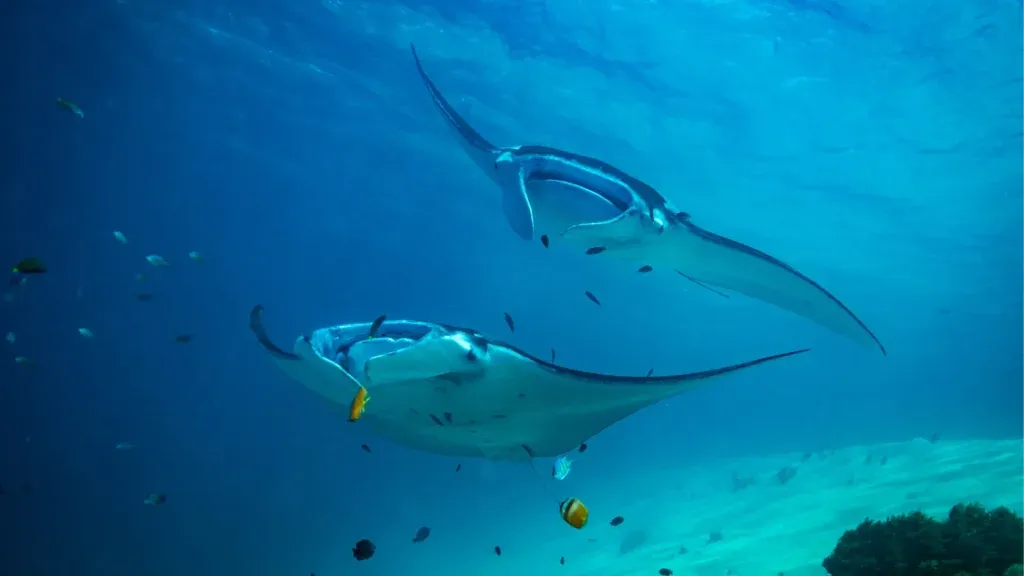
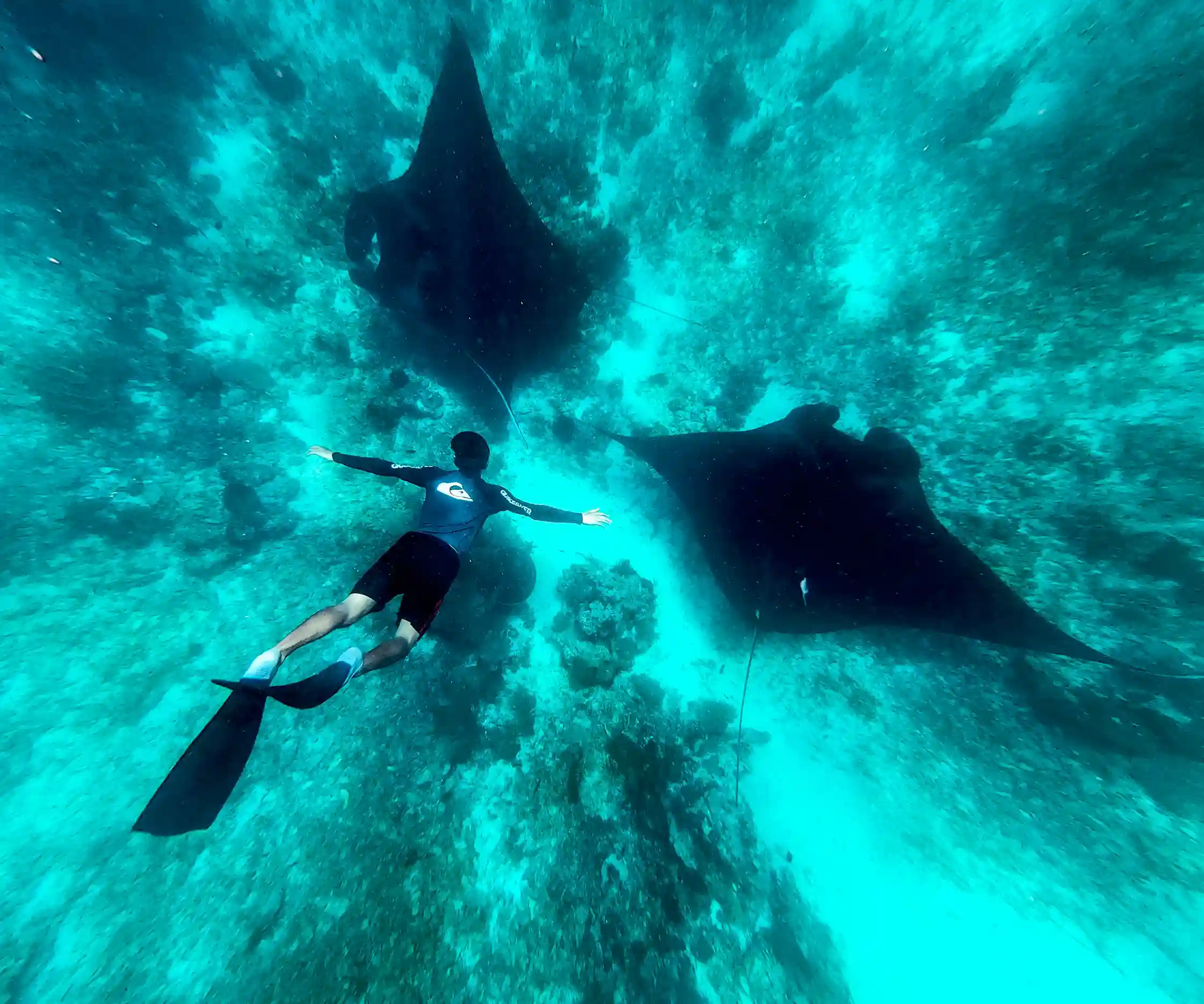
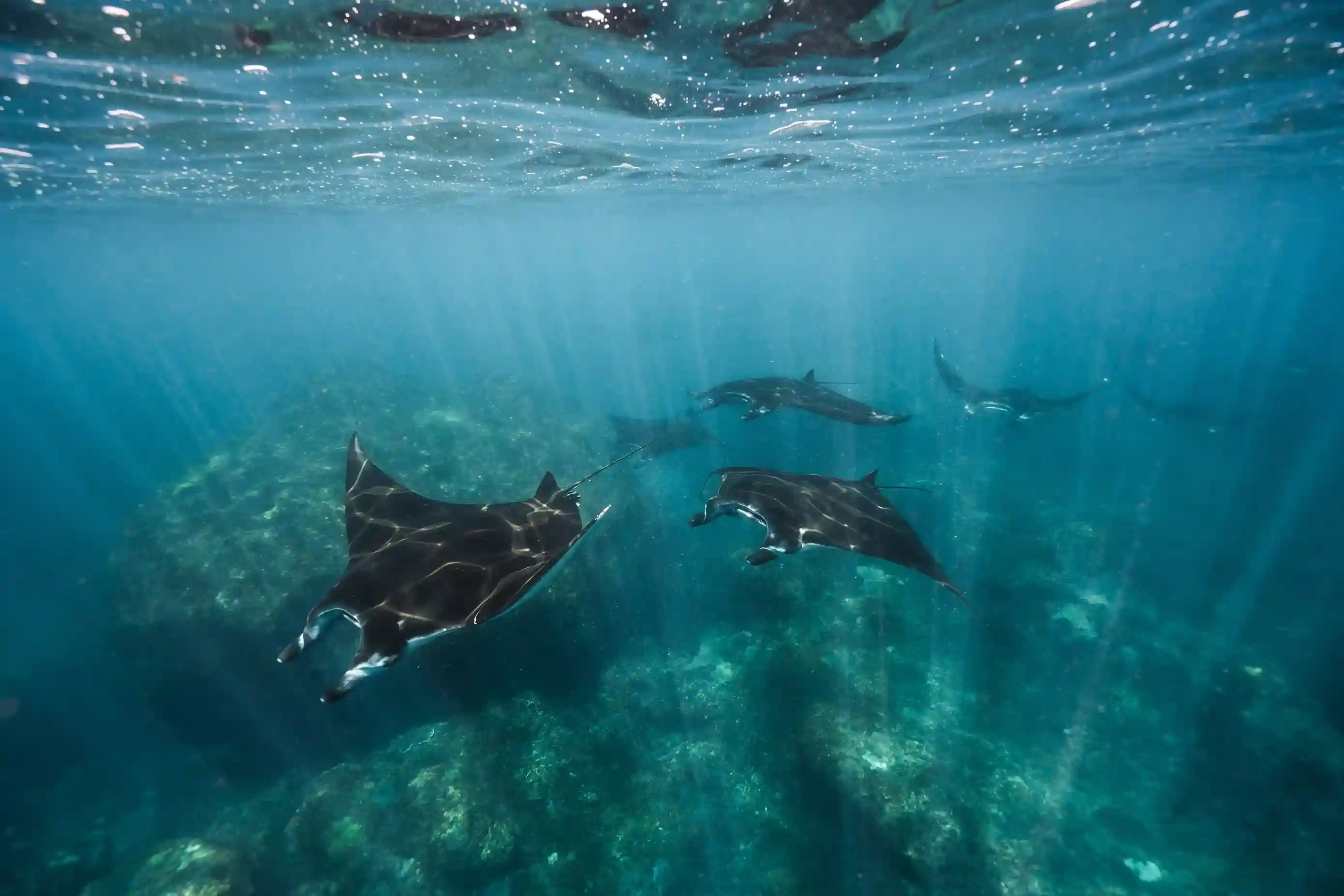
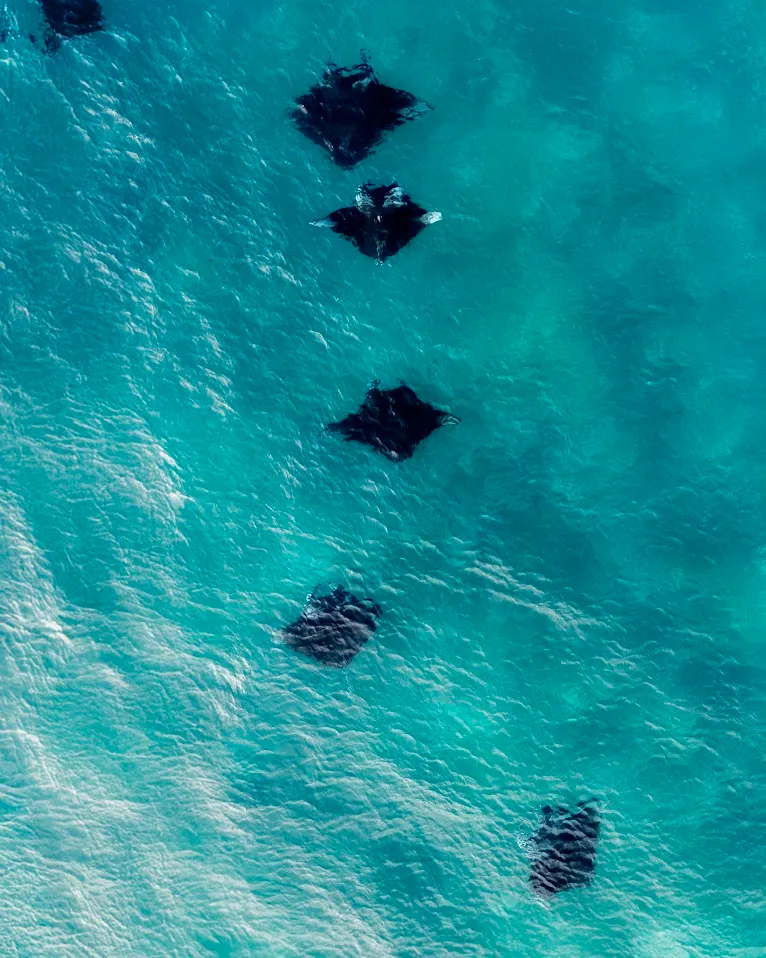
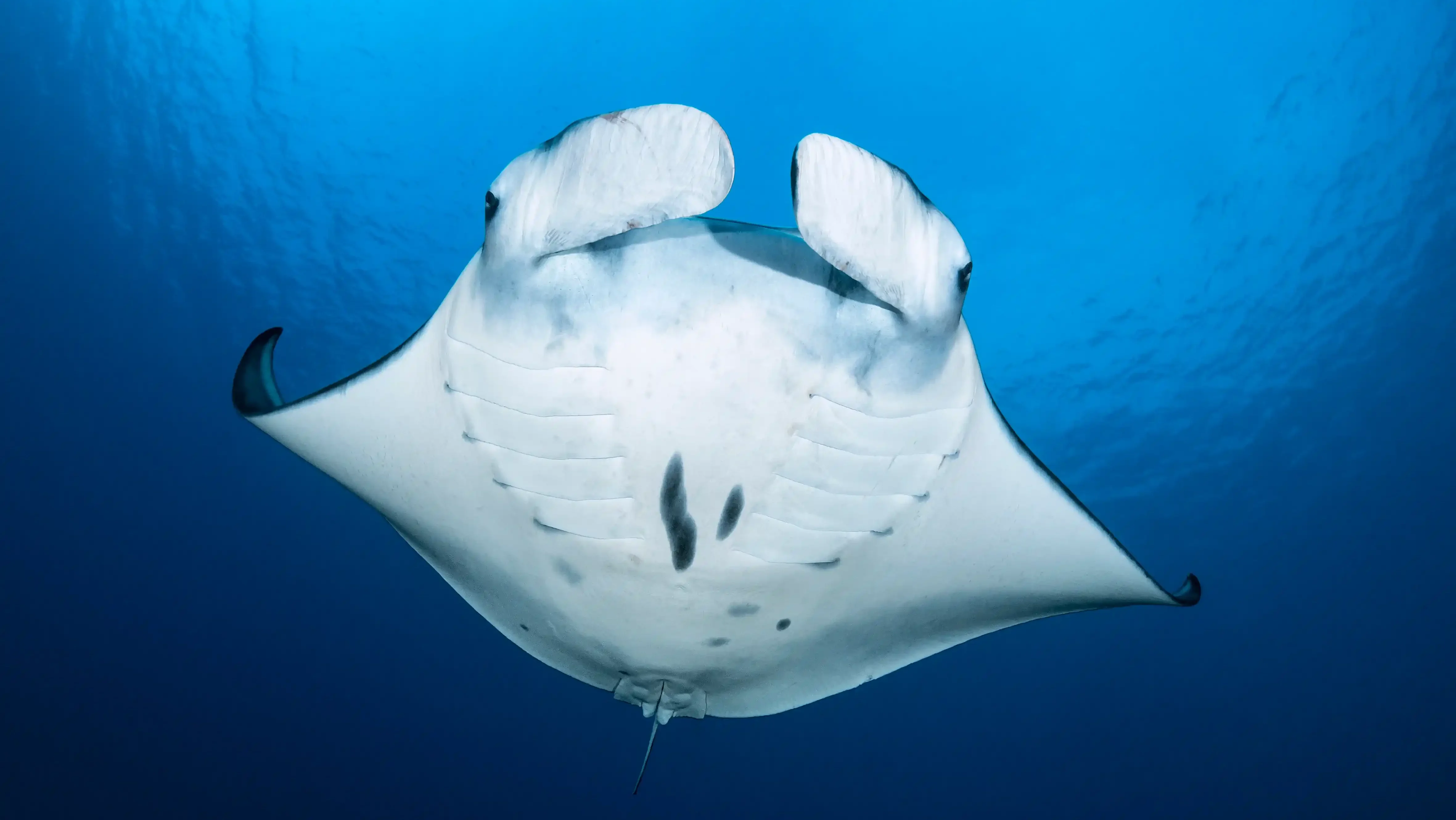
The mantas of Karang Makassar are reef manta rays, Mobula alfredi — filter feeders with wingspans commonly in the 3–4 m range, no barb and no teeth of concern. Each carries a unique pattern of spots on its belly, which is how researchers photo-identify individuals; Komodo’s protected waters are one of Indonesia’s strongholds for the species, and manta rays have been legally protected across Indonesian waters since 2014 — one of the largest manta sanctuaries in the world. They come to the plateau for two services: plankton carried on the tide, and cleaning stations where small wrasse pick their skin and gills clean.
| Faktor | Drift snorkel | Scuba dive |
|---|---|---|
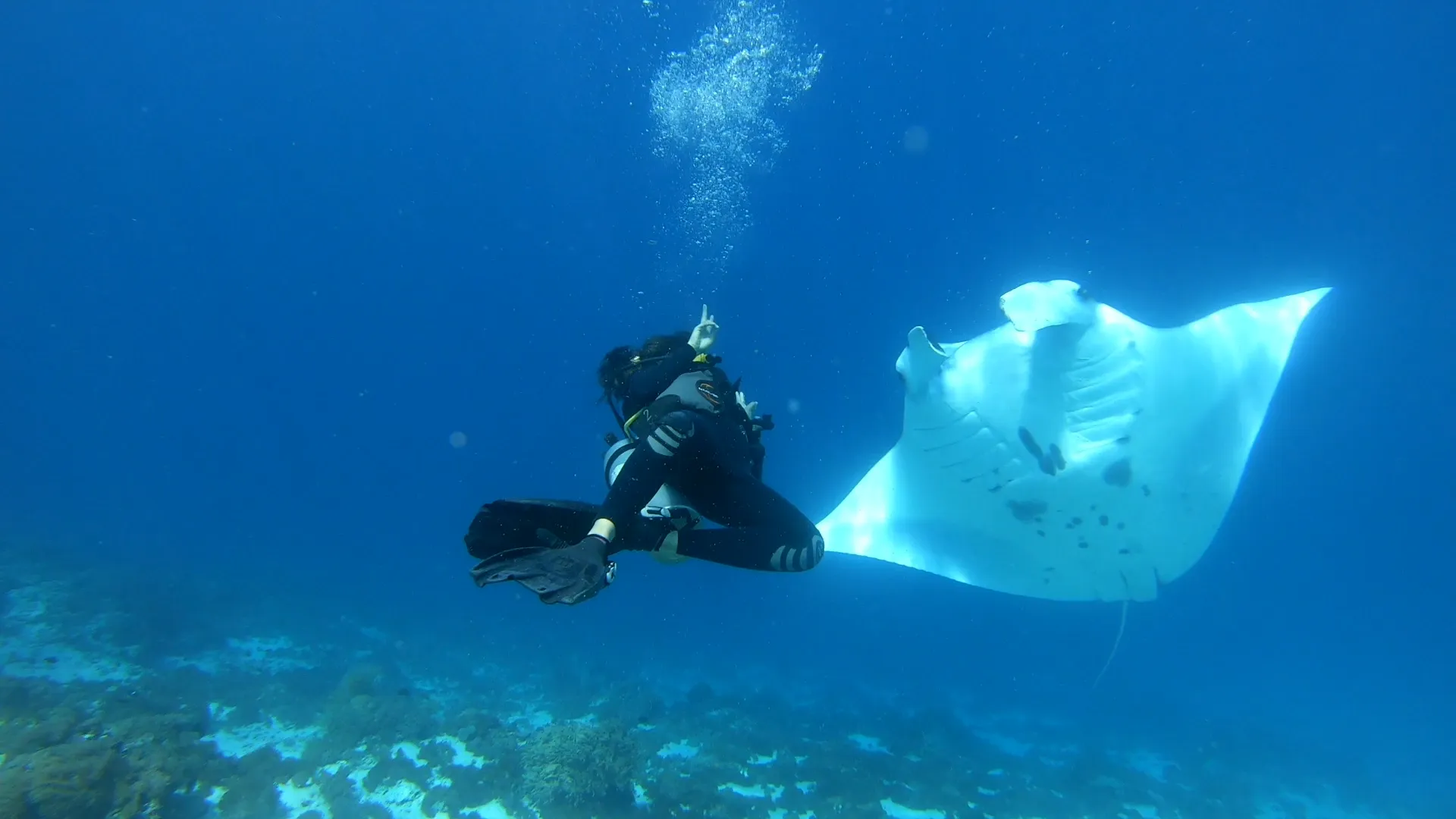
| View | Mantas gliding below and rising to the surface to feed | Eye-level at the cleaning stations |
| Skill needed | Confident open-water swimming; fins mandatory | Comfort with drift diving and hook-free buoyancy |
| Best tide | Moderate flow, feeding lines near surface | Slack-to-building tide at the stations |
| Time in water | 20–40 min per drift, repeatable | ±50 min, one pass |
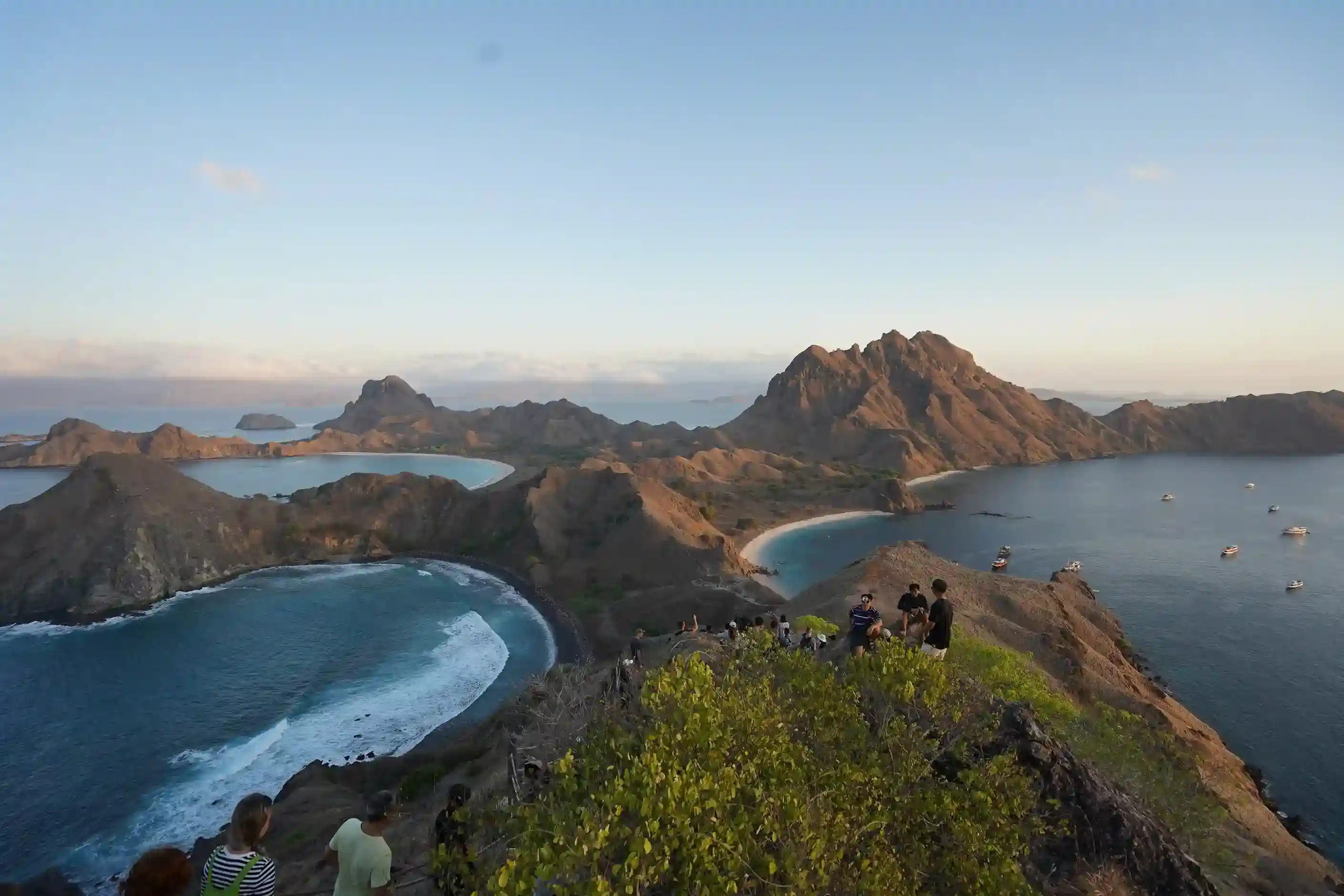
Honest operators say it plainly: Karang Makassar is a wild aggregation site, not an aquarium, and one drift in perfect conditions can still come up empty. The site itself softens the risk — the drift over the rubble bank turns up turtles, eagle rays, reef sharks resting in the rubble and thick snapper schools even on a manta-less pass — and geography does the rest: Taka Makassar is 10–15 minutes away for the surface interval, and a second drift on the next tide window is standard practice on our charters rather than a favor. Over a two- or three-day route the odds compound in your favor; that, more than luck, is why liveaboard guests almost always leave with their manta. The classic day loop runs Padar viewpoint at first light, Pink Beach mid-morning, Manta Point on the tide, then the sandbar — and snorkelers who want a calmer second water stop finish at Siaba’s turtle seagrass beds.
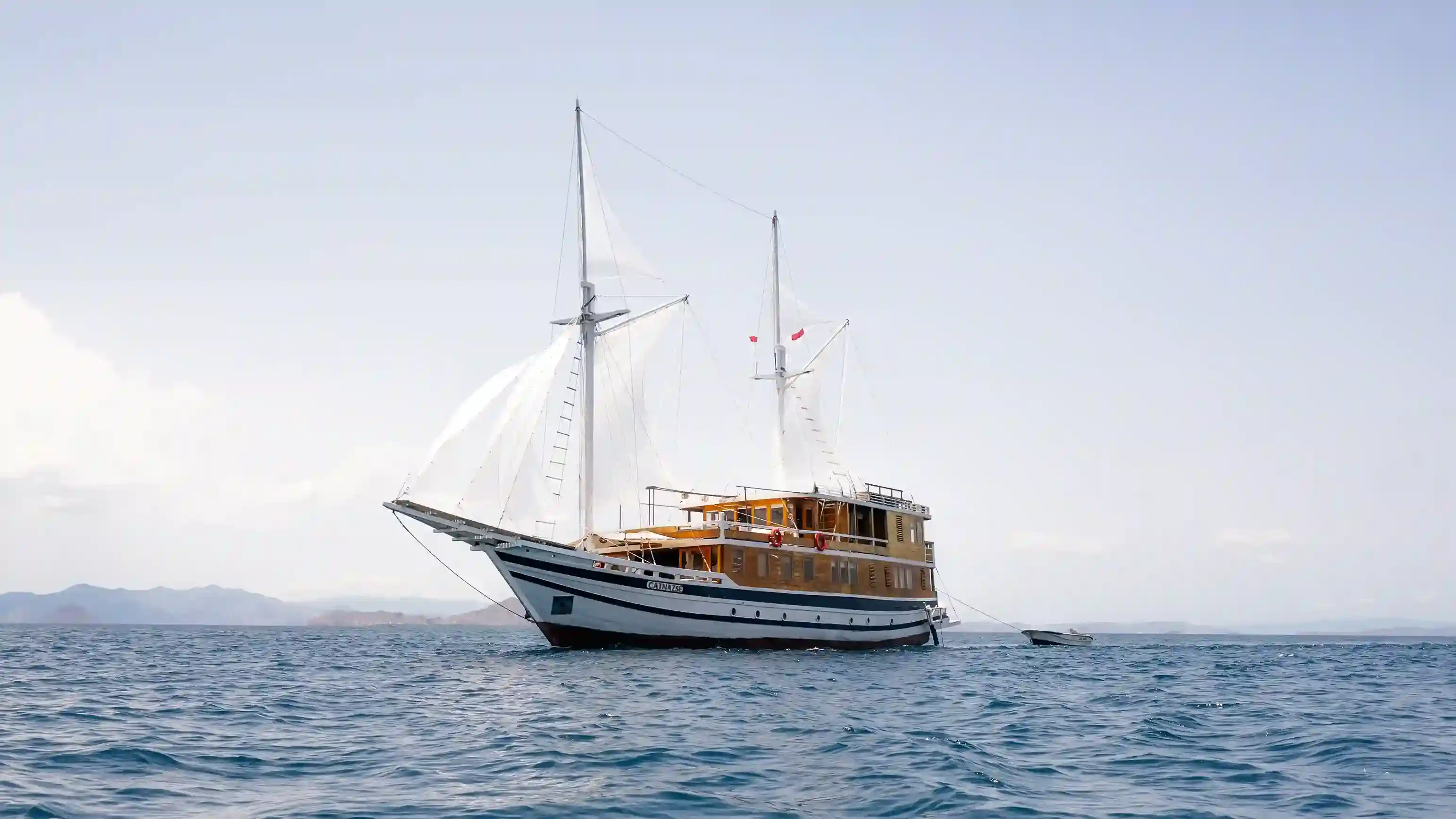
Plan your visit: Komodo Luxury (PT Komodo Bahari Nusantara, sailing Komodo since 2015) operates 9 owned phinisi and works with 200+ vetted partner yachts, rated 4.9/5 by more than 1,500 guests. Message our team on WhatsApp at +62 811-3823-875 or email [email protected] and we will match the right boat and route to your dates.
“Do we get to see sharks and mantas, or only the national park?” is one of the questions we hear most — at Karang Makassar, mantas are resident year-round with the strongest aggregations December to March; see the manta season guide.
pengalaman yang mendalam
Kegiatan
Menyelami terumbu karang yang masih alami, menjelajahi pulau-pulau terpencil, dan berinteraksi dengan satwa liar selama tur berlayar mewah kami.
Perjalanan Eksklusif
Tur Mewah yang Dipilih Secara Khusus
Paket wisata mewah unggulan yang dirancang khusus untuk memperkenalkan destinasi dan pengalaman paling eksklusif di Indonesia
Pertanyaan & Jawaban
Tidak. Ikan pari manta adalah hewan pemakan saringan yang tidak berbahaya; mereka tidak memiliki duri beracun dan tidak tertarik pada manusia. Mereka sering mendekati para perenang dengan tenang. Satu-satunya aturan—jangan menyentuh mereka—adalah demi konservasi, bukan demi keselamatan.
Ikan manta dapat ditemui sepanjang tahun. Puncak kemunculan massal terjadi pada bulan September–November, dengan periode lain yang juga ramai pada Februari–April (namun tidak sepadat periode sebelumnya). Bulan Mei–Agustus menawarkan kondisi yang baik, meskipun periode Juli–Agustus merupakan waktu yang paling ramai.
Pagi-pagi sekali (sebelum pukul 09.00) adalah waktu terbaik—jumlah Kapal lebih sedikit Kapal kondisi laut lebih tenang. Penyewa kapal pribadi dapat tiba di lokasi lebih awal untuk menikmati suasana yang lebih tenang.
Biasanya terlihat 2–6 ekor manta per kunjungan. Pada bulan-bulan puncak, bisa saja terlihat kelompok yang terdiri dari 10 ekor atau lebih. Penampakan manta sangat konsisten, namun tidak pernah bisa dijamin.
Ya, untuk perenang yang sudah mahir dan nyaman berenang di perairan terbuka. Orang tua disarankan untuk menilai kesiapan anak-anak mereka, dan pengaturan dapat disesuaikan untuk tamu yang lebih muda.
Tidak disarankan jika Anda belum pernah menyelam selama lebih dari 12 bulan. Arus di sini bisa sangat kencang—pertimbangkan untuk melakukan penyelaman penyegaran (misalnya, di Siaba Besar) terlebih dahulu.
Tempat ini biasanya termasuk sebagian besar rencana perjalanan berhari-hari, namun rute dapat disesuaikan dengan preferensi tamu, waktu, dan kondisi. Sampaikan hal ini sebelumnya agar kunjungan Anda dapat diprioritaskan.
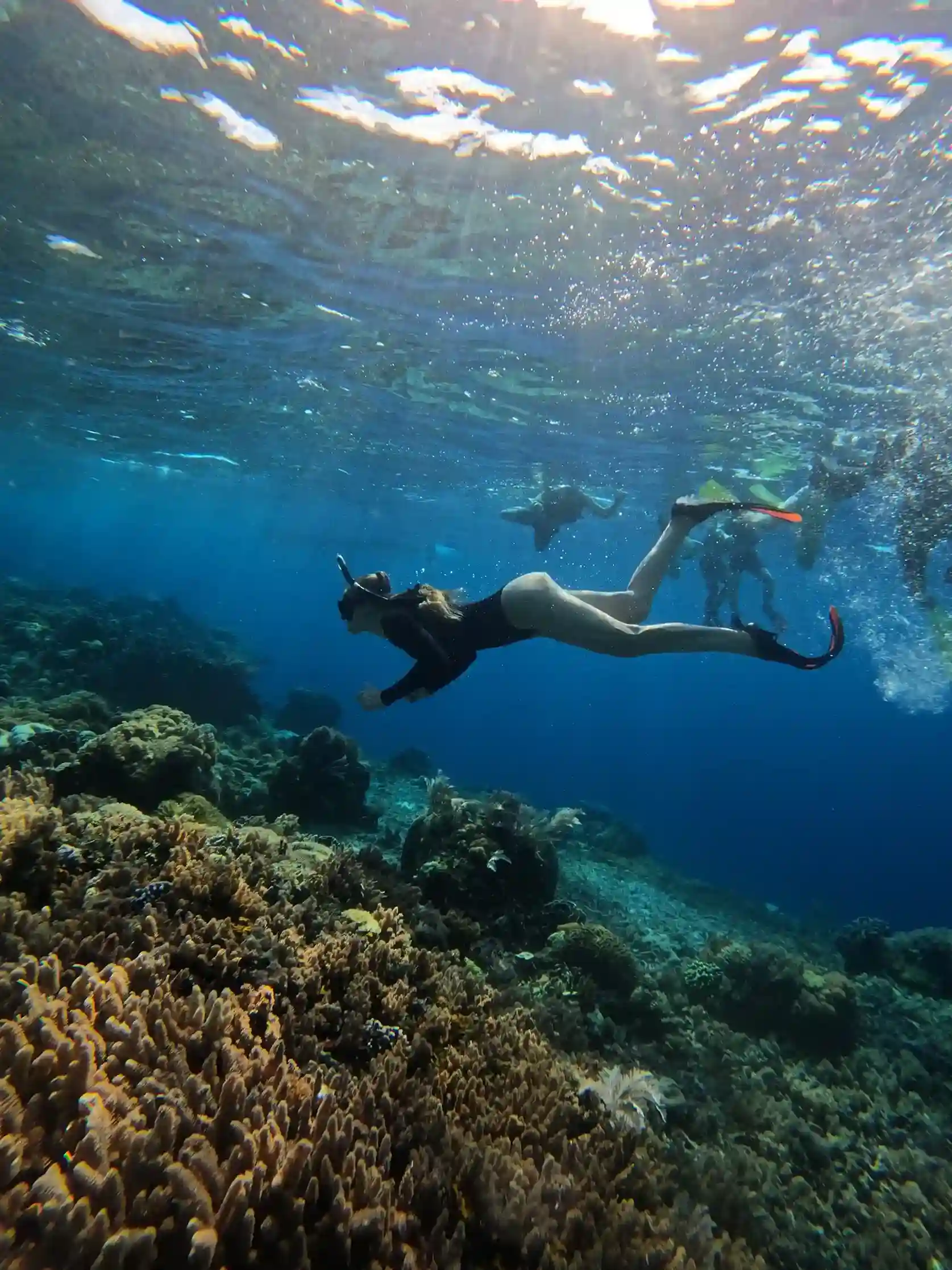
Manta Point (Karang Makassar) adalah lokasi yang relatif dangkal, dengan kedalaman berkisar antara sekitar 5 meter di tempat pembersihan yang paling dangkal hingga sekitar 15 meter di dataran utama. Profil dangkal ini merupakan salah satu ciri khas lokasi ini — hal ini membuat ikan pari manta dapat dijangkau oleh para penyelam snorkel maupun penyelam scuba, dan cahaya permukaan menciptakan kondisi yang luar biasa untuk fotografi bawah air. Tidak perlu menyelam dalam-dalam untuk mendapatkan pengalaman yang luar biasa Manta Point yang luar biasa.
Ya — Manta Point adalah salah satu dari sedikit destinasi pari manta di dunia yang menawarkan penampakan sepanjang tahun. Taman Nasional Komodo populasi sekitar 1.200 ekor pari manta terumbu karang, dan perairan Karang Makassar yang kaya nutrisi serta stasiun pembersihan menarik mereka secara konsisten sepanjang musim. Puncak kerumunan biasanya terjadi dari Oktober hingga Juni, dengan jumlah terbanyak sering terlihat dari November hingga Maret ketika air yang lebih dingin dan kaya plankton menarik pari manta ke zona tengah. Penampakan tetap dapat diandalkan sepanjang sisa tahun.
Manta Point — officially Karang Makassar — is a 1.5 km drift over a rubble reef where reef manta rays gather to be cleaned, feed and, in season, train in courtship lines. It is the most reliable place in Komodo National Park to swim alongside mantas: boats drop snorkelers or divers up-current and the drift carries you over the cleaning stations. Sightings happen year-round, with the densest aggregations roughly December to February.
Manta Point is a boat-only site on the standard day-trip loop, usually visited right after Taka Makassar. The crew scans for wingtips from the flybridge, positions up-current, and guests drift the site in small groups. Park tickets apply; see current entrance fees.
High by wildlife standards — Karang Makassar is a cleaning-station aggregation site, not a random encounter spot. No operator can honestly promise a sighting, but most days deliver, and crews will make multiple drift passes when needed.
You should be comfortable in open water — it is a drift, so the current does the work while the boat follows the group. Life jackets and guide escort are standard for snorkelers.
Mantas are present all year. The biggest groups are usually seen from about December to February, when plankton-rich water draws feeding trains to the site.